
Monarch Butterfly


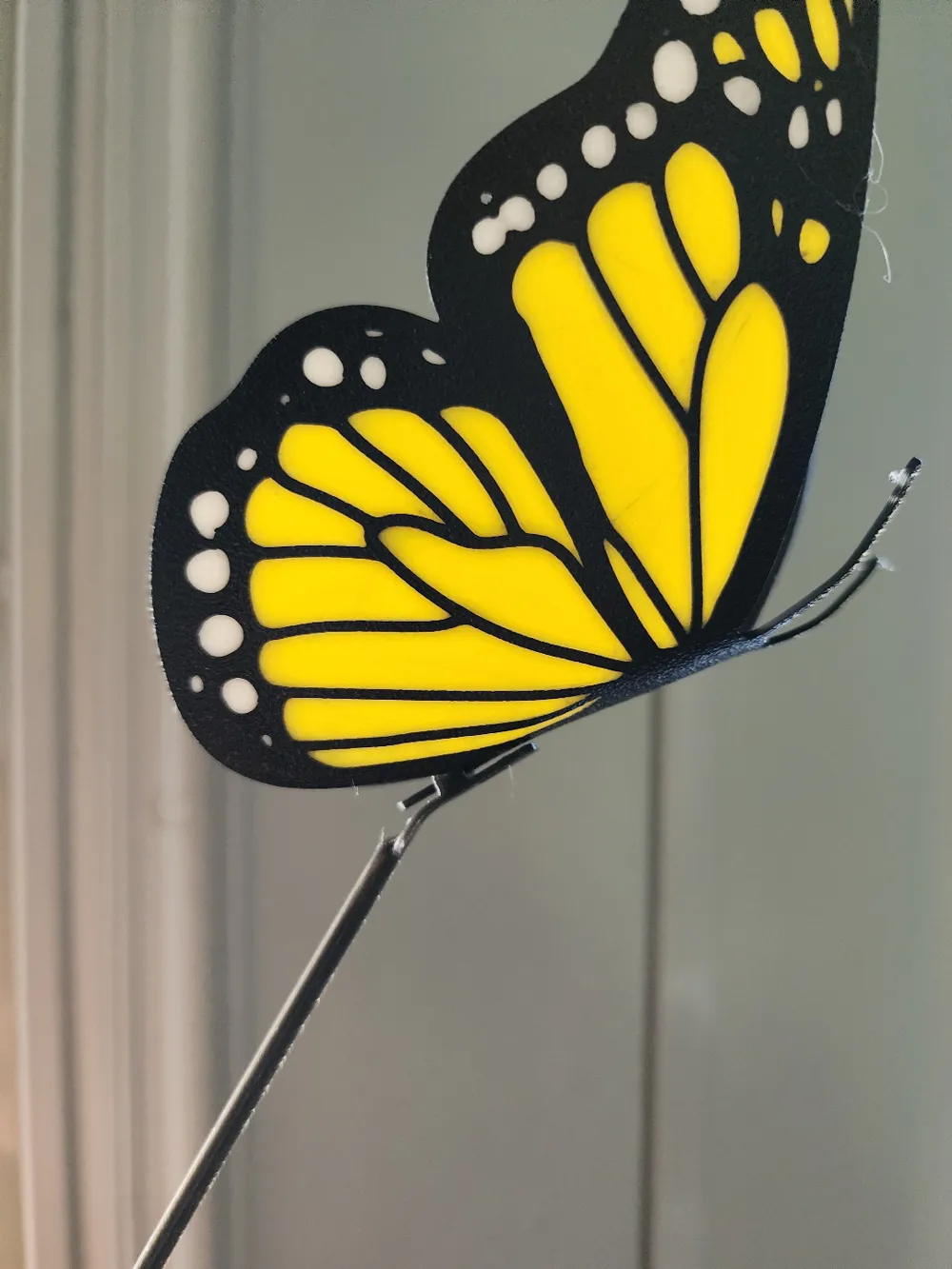


Print Profile(3)


Description
Membership
ABOUT THE MONARCH
Every fall, as cold weather approaches, millions of these delicate insects leave their home range in Canada and the United States and begin flying south. They travel between 1,200 and 2,800 miles or more from the northeast United States, and southeast Canada to the mountain forests in central Mexico, where they find the right climate conditions to hibernate from the beginning of November to mid-March.
Adult monarch butterflies possess two pairs of brilliant orange-red wings, featuring black veins and white spots along the edges. Each adult butterfly lives only about four to five weeks.
Monarchs are on the the WWF endangered species list. WWF’s 2013 report from Mexico showed that the number of monarch butterflies wintering there was at its lowest in 20 years. The number is measured by the amount of forest they occupy, and in 2013 the number of butterfly acres decreased from approximately seven to three. Abnormal patterns of drought and rainfall in the U.S. and Canada breeding sites may have caused adult butterfly deaths and less plant food for caterpillars. Fewer butterflies up north mean fewer then migrate south to Mexico for the winter.
- WWF
https://www.worldwildlife.org/species/monarch-butterfly
SYMBOLISM
In a nod to their life cycle, from egg to caterpillar to butterfly, monarchs can represent transformation and rebirth to some people. They might view a monarch sighting as a sign of upcoming change or a new direction in their life.
PRINTING
Designed to be printed using multi-color printers, this monarch is only 1mm thick to allow the wings and body to be shaped to closely resemble an actual Monarch.
How do I bend the wings?
There are several ways to do this, I personally use a small heat gun to bend them.
I do not have a heat gun
The glass temperature of PLA is approximately 60C. And since most 3D printers have heated beds, then you can actually use the bed to get the print up to the glass temperature. The model being 1mm thick allows this to happen easily.
- First, remove the print once the job is complete.
- Heat the bed to 70C.
- Place the print on the bed and place a large flat object over the print to prevent warping. (i.e. a book or a spare bed plate)
- After a few minutes, the print should have reached the glass temperature for PLA. Gently pry the print off and the wings should feel soft and will be able to flex.
- Mold the wings to the desired position and allow to cool.
- Enjoy!
*UPDATE* - 2024-05-06
There are two holes on the edges of the wings, these can be used to suspend the model.
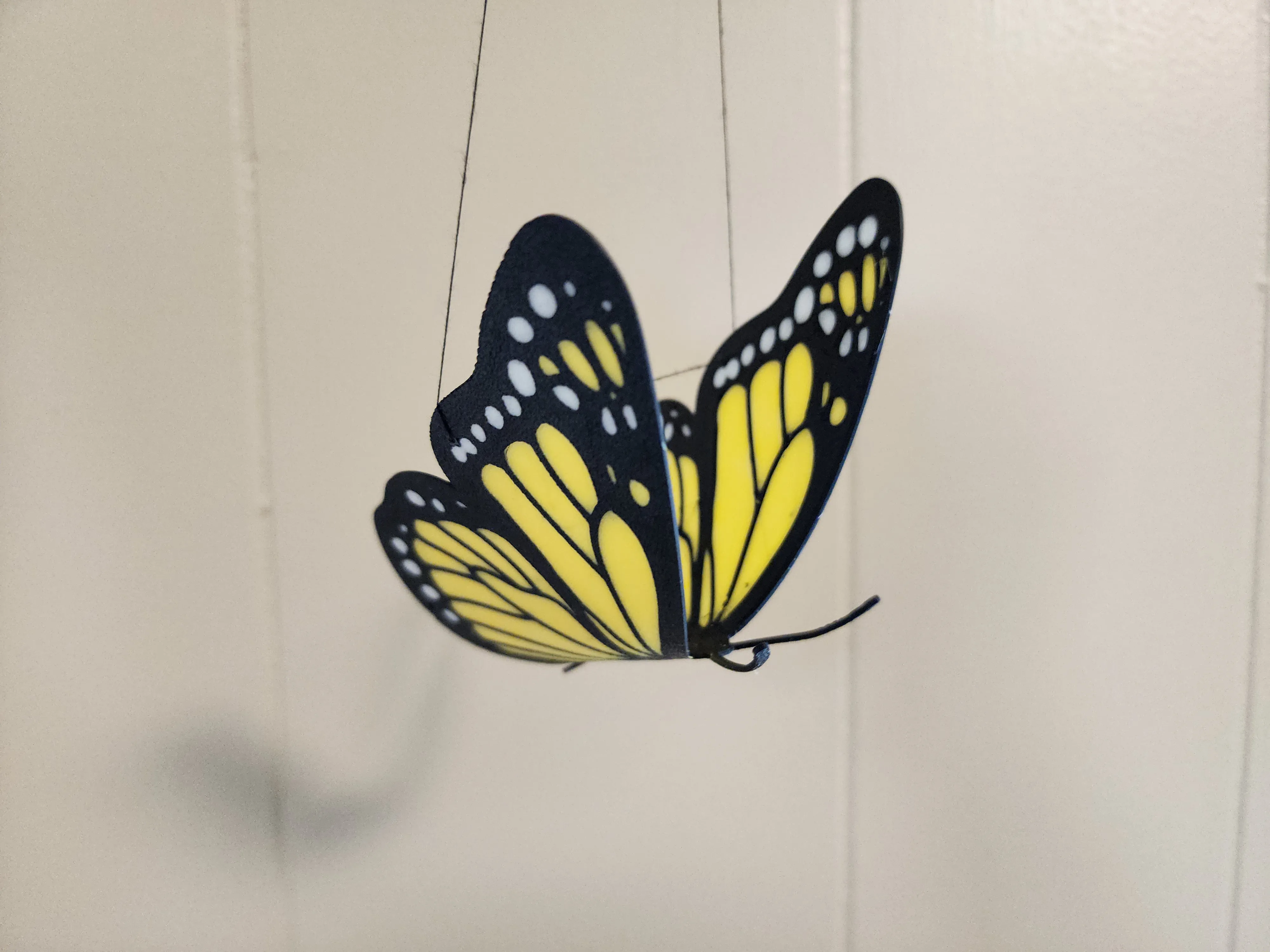
Also included a model for a stand, although this is still a work in progress.
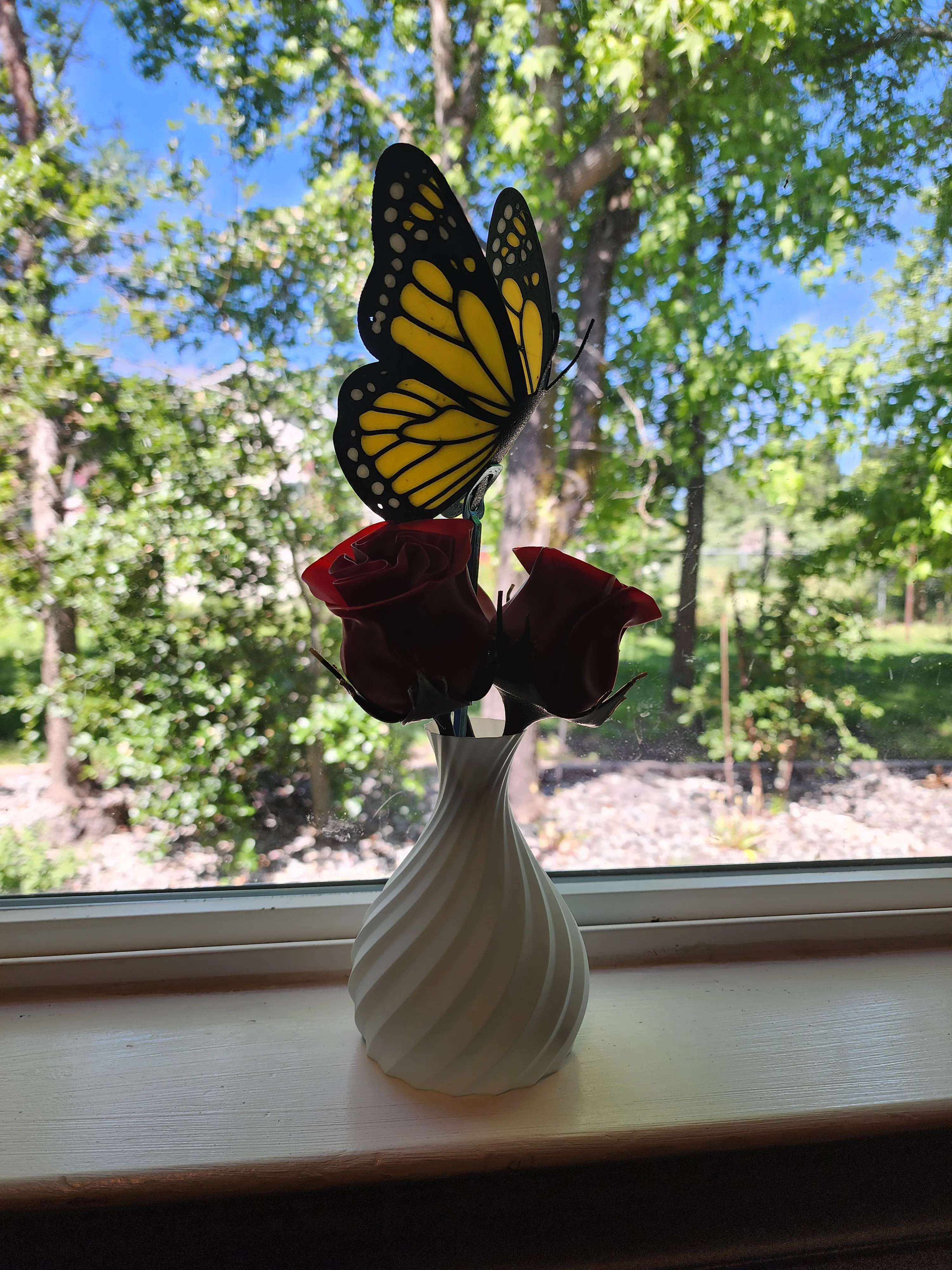
*UPDATE* - 2024-05-12
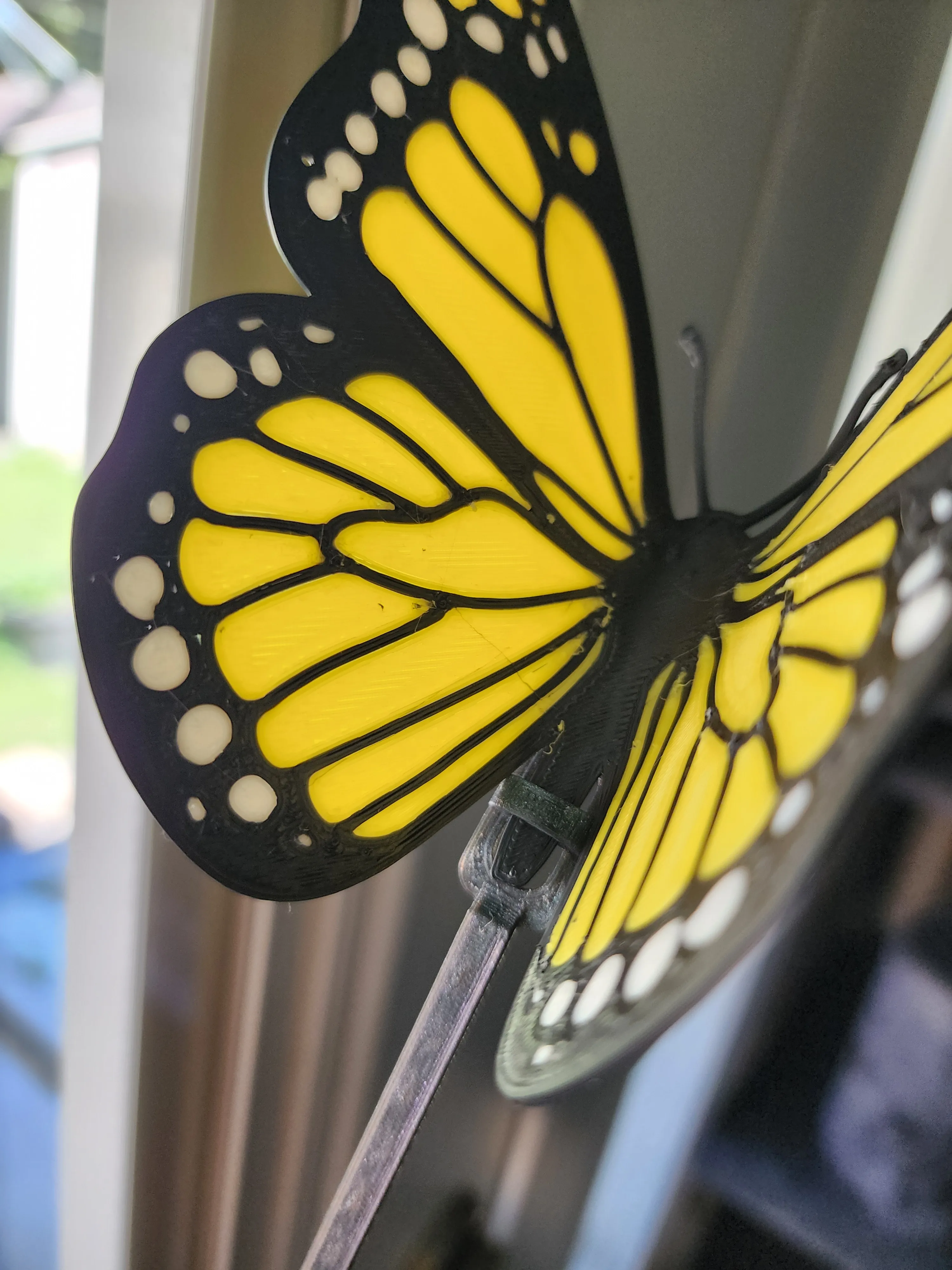
Updated the stand to include a slot for a bit more stability.
License



Comment & Rating (421)