
Portable Airhorn

Print Profile(3)


Description
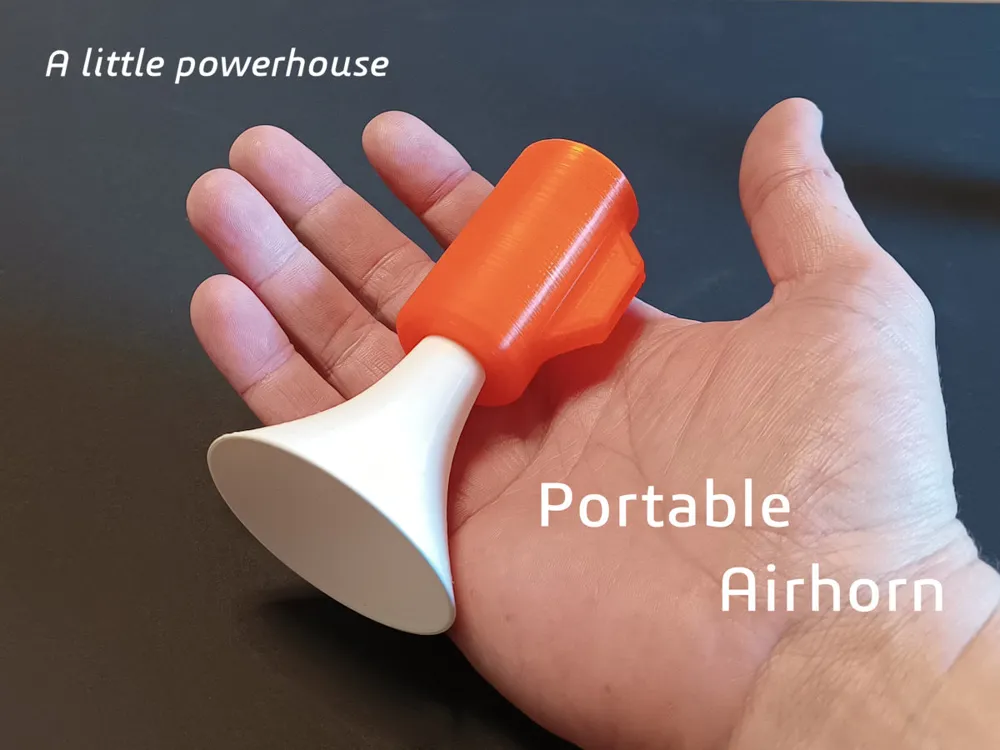
This little powerhouse knows how to produce a sound that will scare you!
Very easy printing. All parts can be printed without support.
I printed them with 0.4 nozzle and 0.2 layer thickness and 20% infill.
For the small horn you can use a brim, but I printed without brim.
Print all as positioned in the STL's
Simple assembly without glue or rubber bands.
Printing and assembly
Before assembling, check the Membrane Cap and the left recess from the Housing where it is placed if there are no rough parts after printing. If so, sand them smooth.
The membrane for creating the sound can be made from a (thin) plastic bag. I used a PE food bag, but feel free to experiment with other types of bags. Do not use thicker plastic.
There is play between the 2 parts. If this turns out not to be enough for your print, print the membrane cap slightly smaller. After installation, the membrane cap must clamp properly!
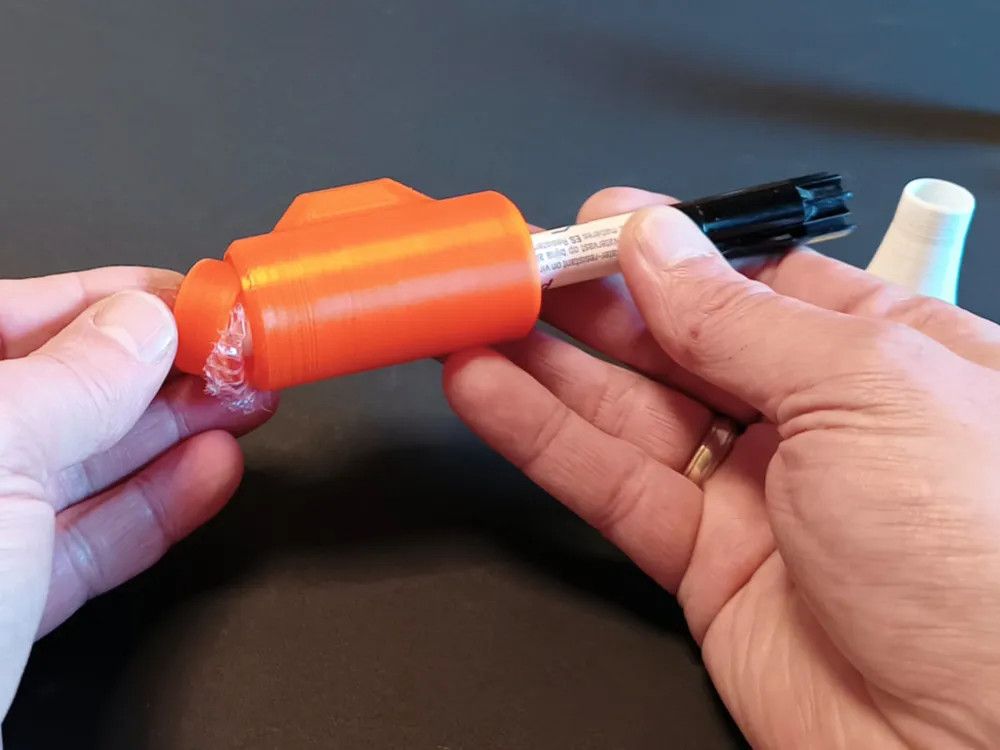
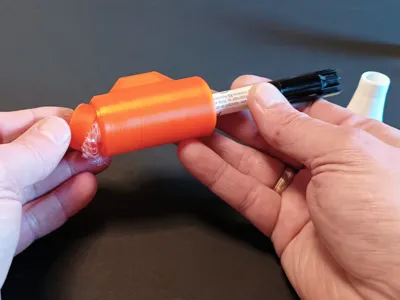
If you want to replace the membrane, you can easily remove the membrane cap with a pen or something similar. Simply push it out again via the connection of the air horn.
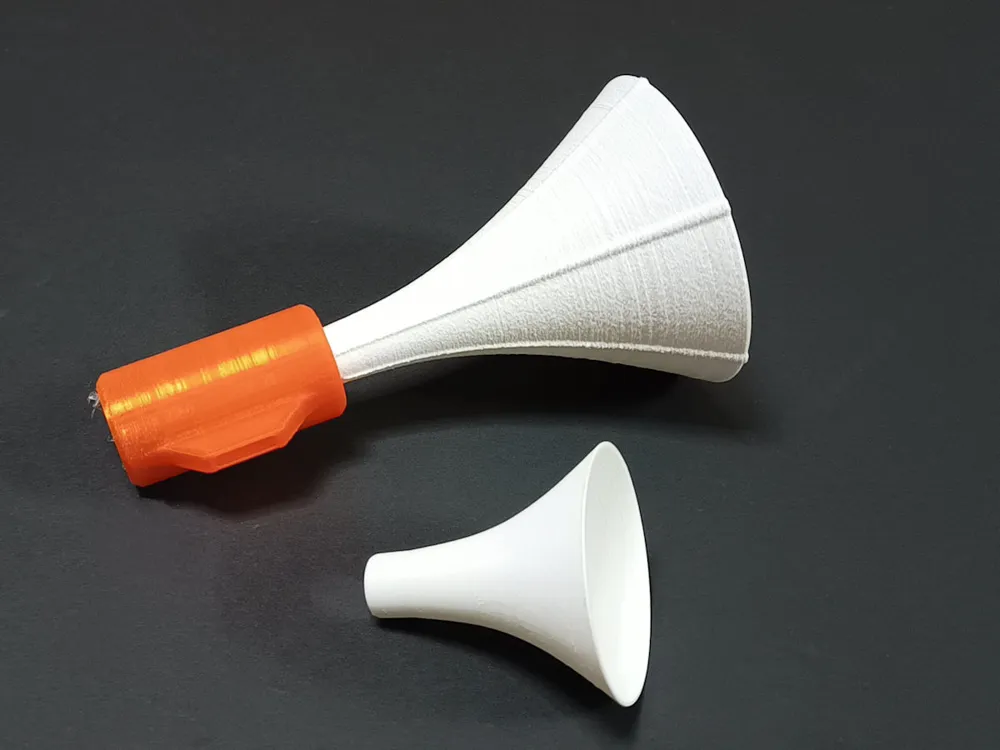
A small airhorn and a larger one (more luxurious and thicker) have been added.
The air horns can be scaled in length (Z) producing lower and heavier tones.
Example how to assemble and the sound (not unimportant): if you haven't watched (listened to) it yet, see the video above.
Place a plastic bag (only one layer) over the Membrane Cap and push it in. The Membrane Cap should not be pressed too tightly. Play with the distance a bit. If you have pressed too far, pull them back with the bag.
When the cap is too tight it is a screeching sound. Try pulling the cap back a tiny bit! (you can see me doing it in the video also) There are basicly 2 sounds: one with the cap very tight (very screechy) and a tiny bit more space where the whole membrame vibrates. Sometimes blowing harder will enter the second stage.
License

You shall not share, sub-license, sell, rent, host, transfer, or distribute in any way the digital or 3D printed versions of this object, nor any other derivative work of this object in its digital or physical format (including - but not limited to - remixes of this object, and hosting on other digital platforms). The objects may not be used without permission in any way whatsoever in which you charge money, or collect fees.


Comment & Rating (240)