
Stand + LCD 1602 I2C Enclosure
Print Profile(1)
Bill of Materials


Description
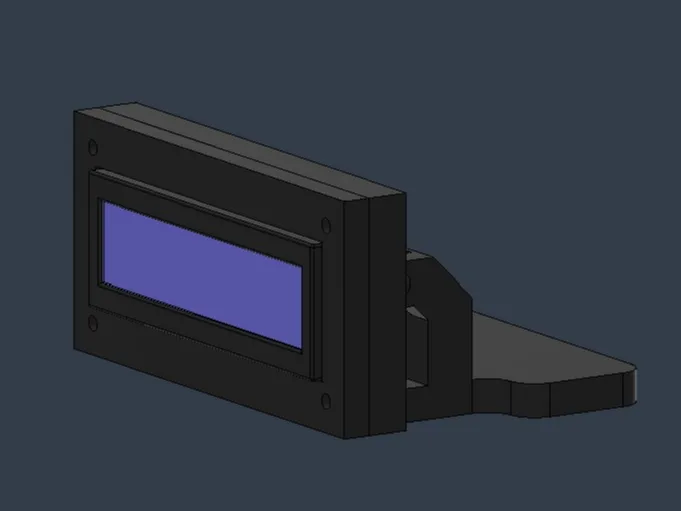
Tiltable Stand and Case for LCD 1602 I2C Display / Adjustable LCD Enclosure
Project Description
A practical and robust desk stand with an integrated enclosure, specifically designed to house classic LCD 1602 screens equipped with a rear I2C module. It is the ideal accessory to give a professional and tidy look to your projects with Arduino, Raspberry Pi, or any DIY electronics setup.
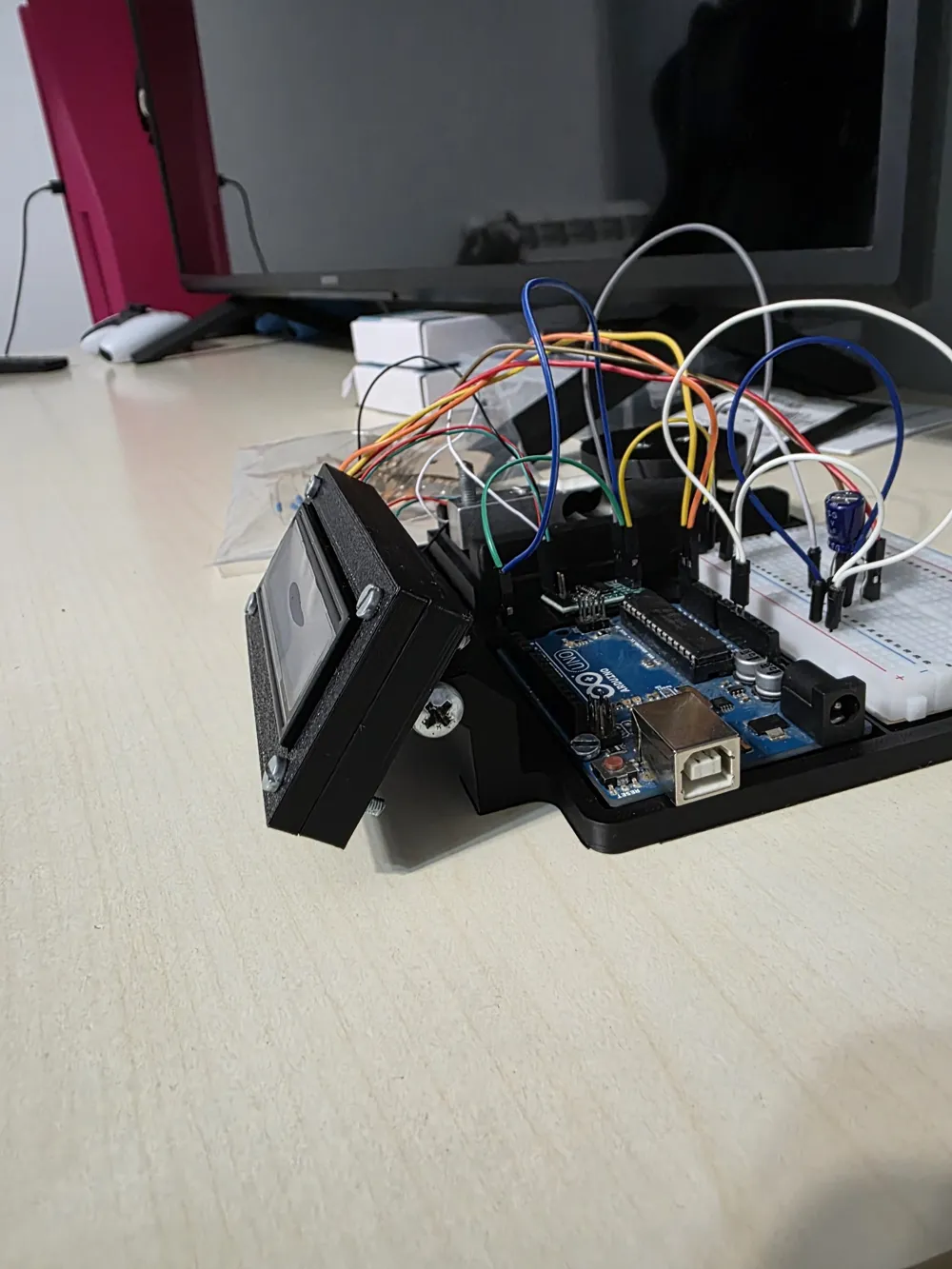
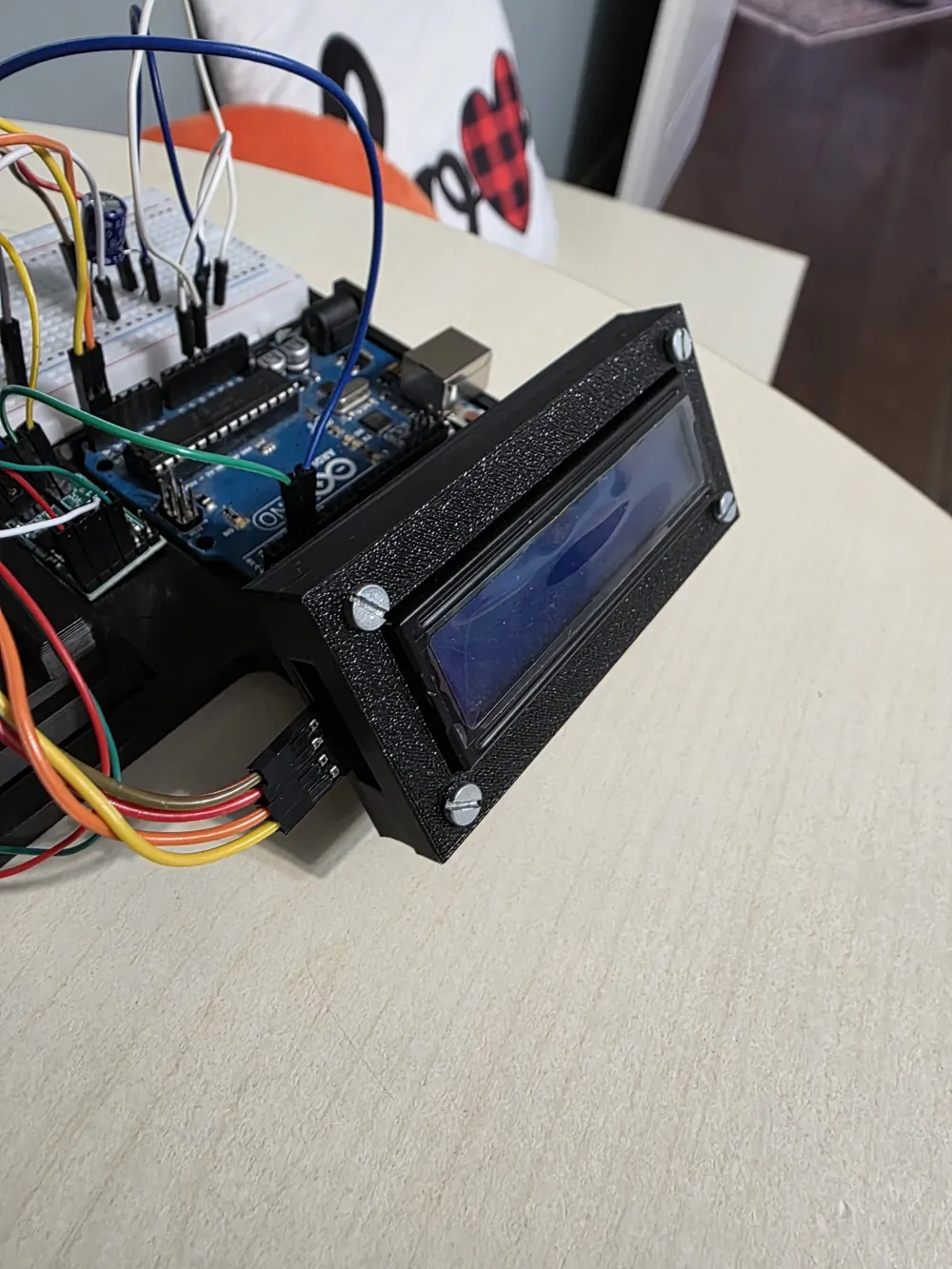
The design consists of a protective shell for the display and a solid support base, joined by a side hinge. This hinge structure allows you to adjust the screen's tilt, always ensuring a perfect viewing angle based on your workstation. The base also features a flat design, perfect for being fixed to a surface or for housing small additional components.
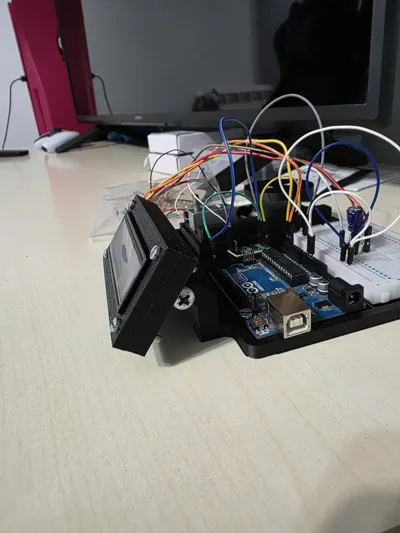
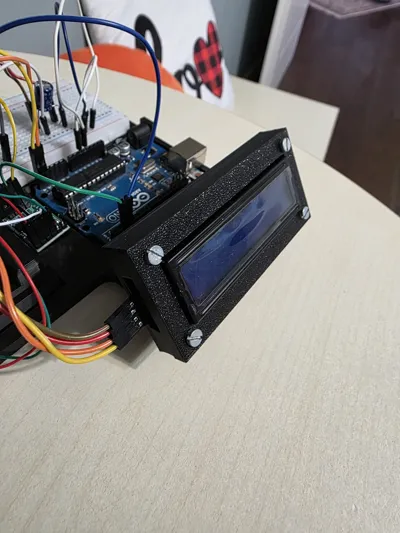
⚠️ Important note on real print photos
In the photographs of the printed and assembled object in the gallery, you will notice that the stand's base is much wider. That is a custom version I created for a specific project, structured to also fix an Arduino Uno board, a breadboard, and a load cell on the same base. The files you are downloading on this page correspond to the clean and standard version you see in the CAD renders: a compact and minimal support base, perfect for integration into any of your projects without extra bulk!
3D Printing Tips
This model does not require special care and was designed to be printed with extreme ease.
- Material: The model was tested and made in PLA, which ensures excellent structural rigidity and a clean finish. Of course, you can also use PETG or ABS according to your preferences.
- Supports: Required only for suspended parts (overhangs). Depending on the orientation chosen in the slicer for the various components, simply activate standard supports (or tree supports) to support only bridges or holes.
- Walls and Infill: 3 perimeters (wall loops) and an infill of 15-20% are recommended to give the right solidity to the hinge pins and the screen frame.
Assembly
Assembly is intuitive and fast:
- Insert the LCD 1602 display into the front case (the side opening was designed to allow I2C pins to be accessible, so rotate the display to align the pins with the opening).
- Align the holes of the two parts of the case and insert 4 M3X30 screws.
- Align the joint part of the assembled screen case with that of the stand.
- Use an M5X60 screw to join the two parts and tighten until the desired resistance for tilting is achieved.
License

You shall not share, sub-license, sell, rent, host, transfer, or distribute in any way the digital or 3D printed versions of this object, nor any other derivative work of this object in its digital or physical format (including - but not limited to - remixes of this object, and hosting on other digital platforms). The objects may not be used without permission in any way whatsoever in which you charge money, or collect fees.


Comment & Rating (0)