
SmartLid - Smart Sourdough Starter Lid
Print Profile(3)

Description
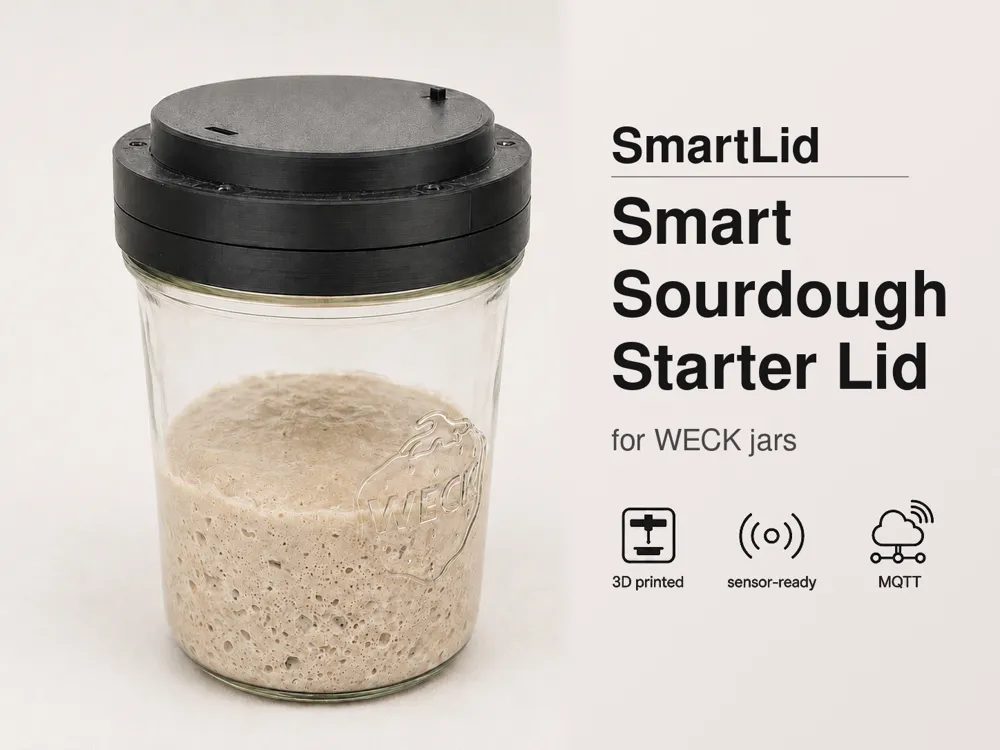
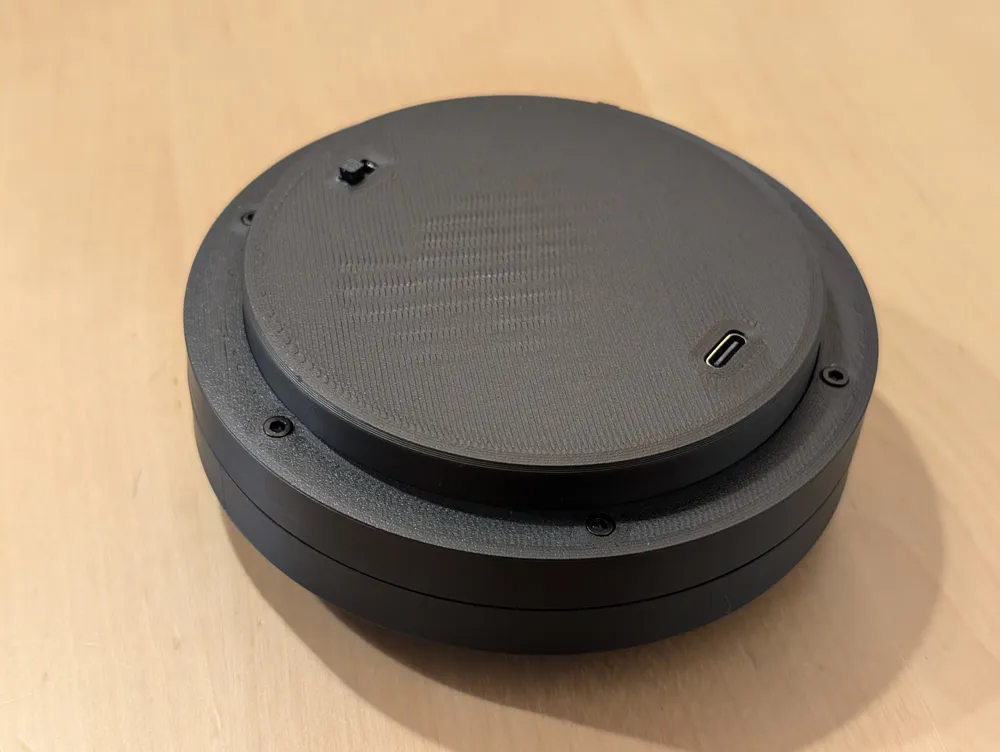
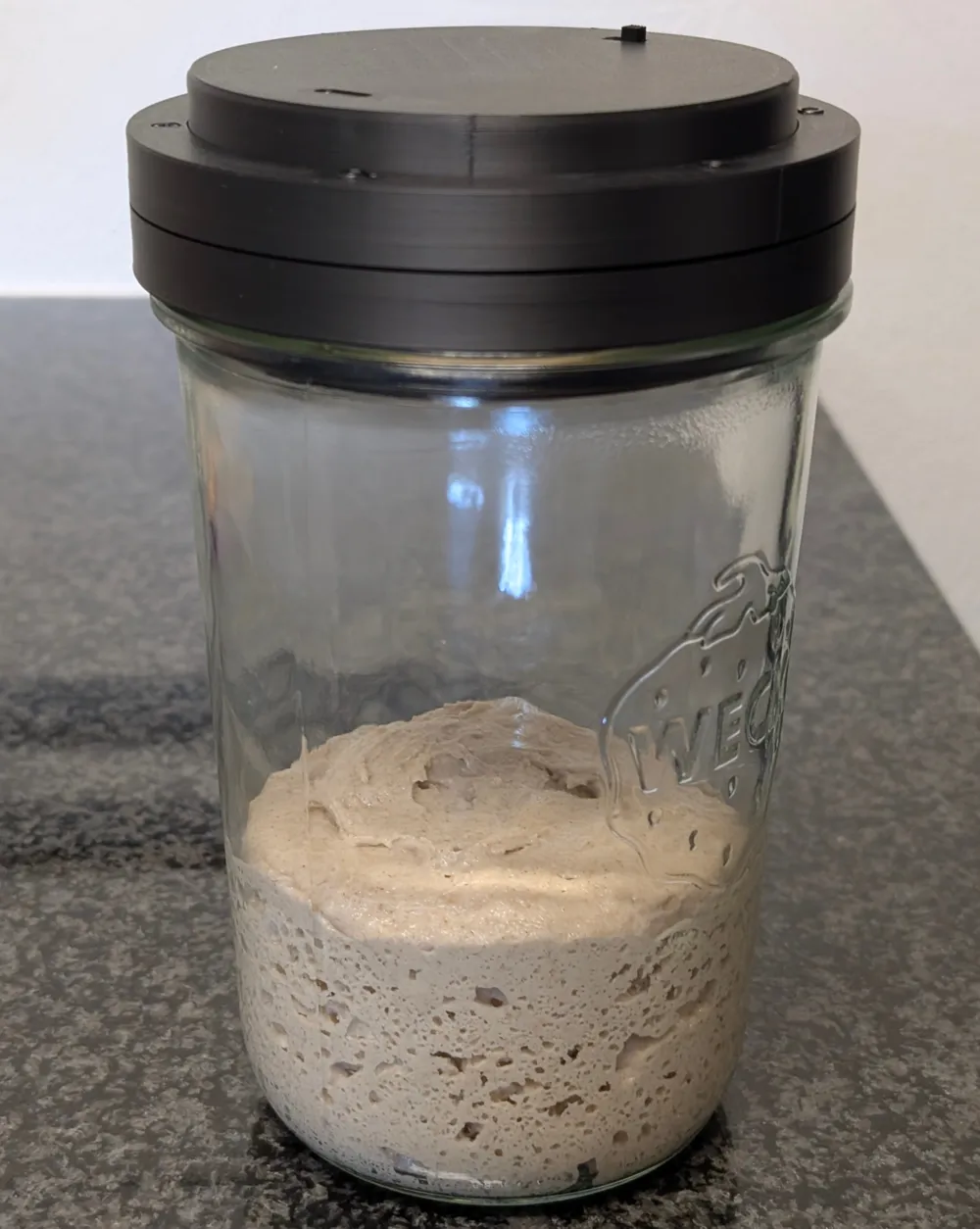
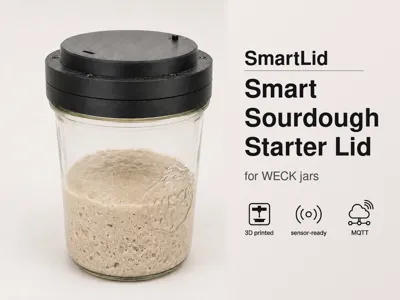
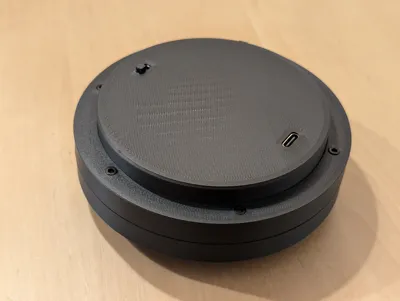
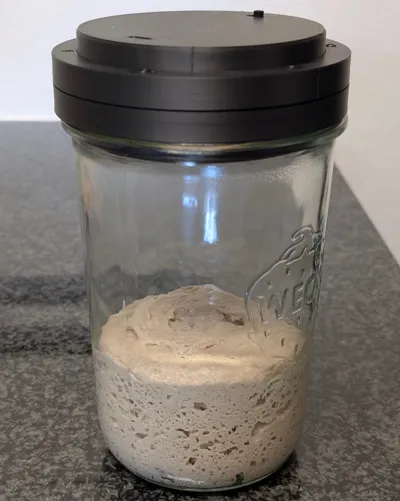
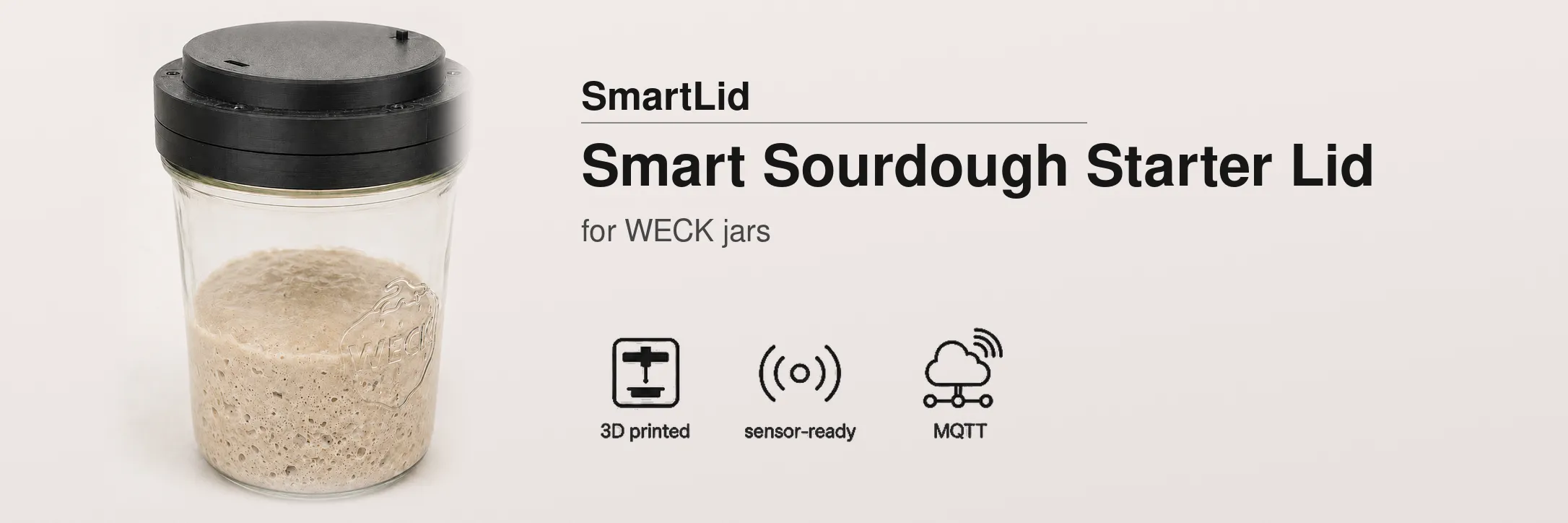
SmartLid - Smart Sourdough Starter Lid for WECK-jars
is a wireless, battery-powered smart sensor lid for monitoring sourdough starter rise, temperature, humidity, and battery status.
It is a complete DIY solution designed to monitor the most important parameters of your starter, helping you identify the perfect time for feeding, baking, or refrigeration. Take the guesswork out of your baking and leverage peak yeast activity for consistently better bread!
The device operates fully wireless, powered by a rechargeable LiPo battery, and transmits measurements via Wi-Fi using MQTT to your smart home setup.
Features
- Growth Tracking: Measure and understand the rise of your starter (in mm and %).
- Climate Monitoring: Track temperature and humidity inside the jar environment.
- Battery Powered: Fully wireless operation with battery voltage logging and status monitoring.
- Smart Home Integration: Data transmission via Wi-Fi (MQTT) for easy tracking over time.
- Low-Power Design: Utilizes ESP32 deep sleep to maximize battery life.
Required Components
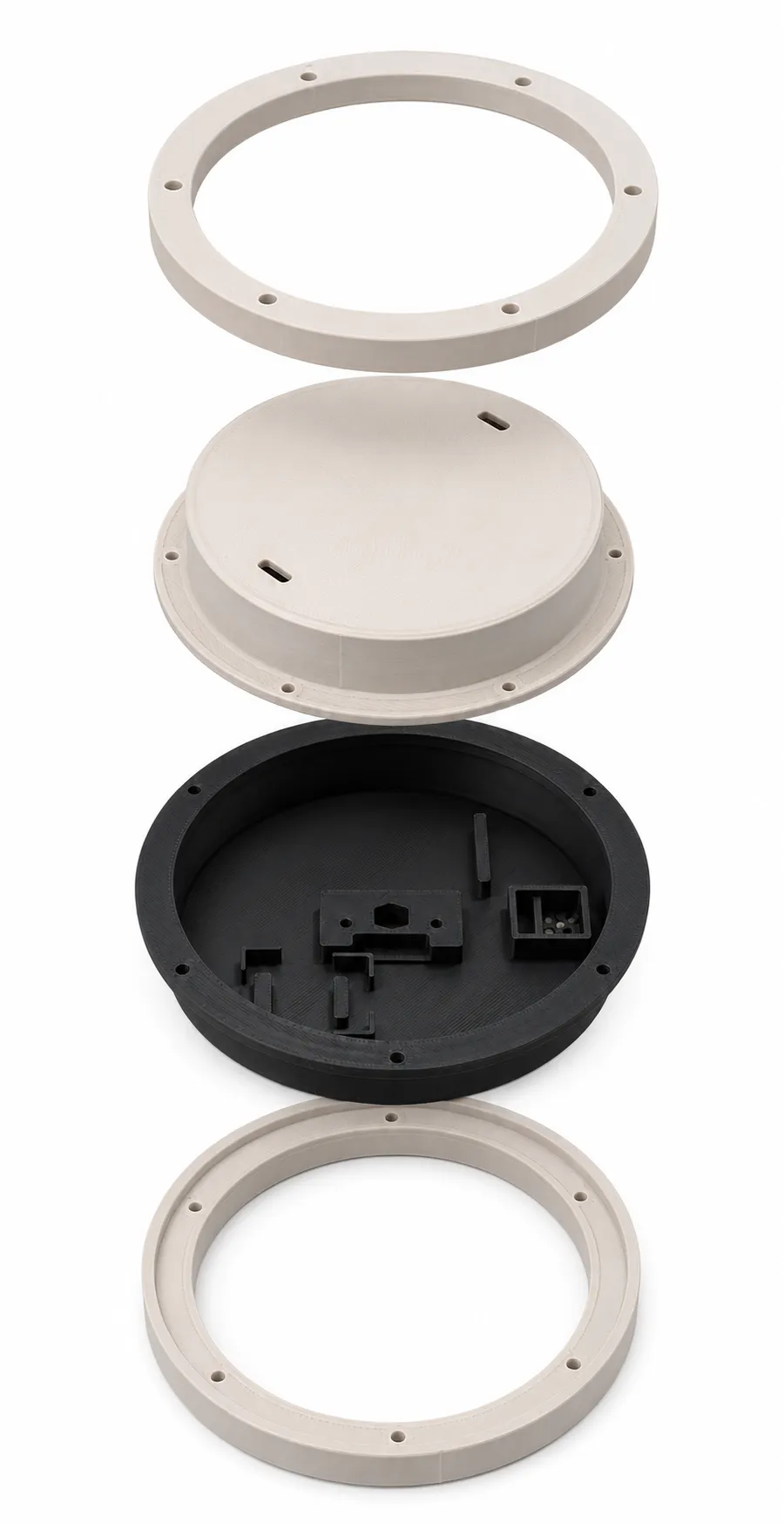
Printed Parts
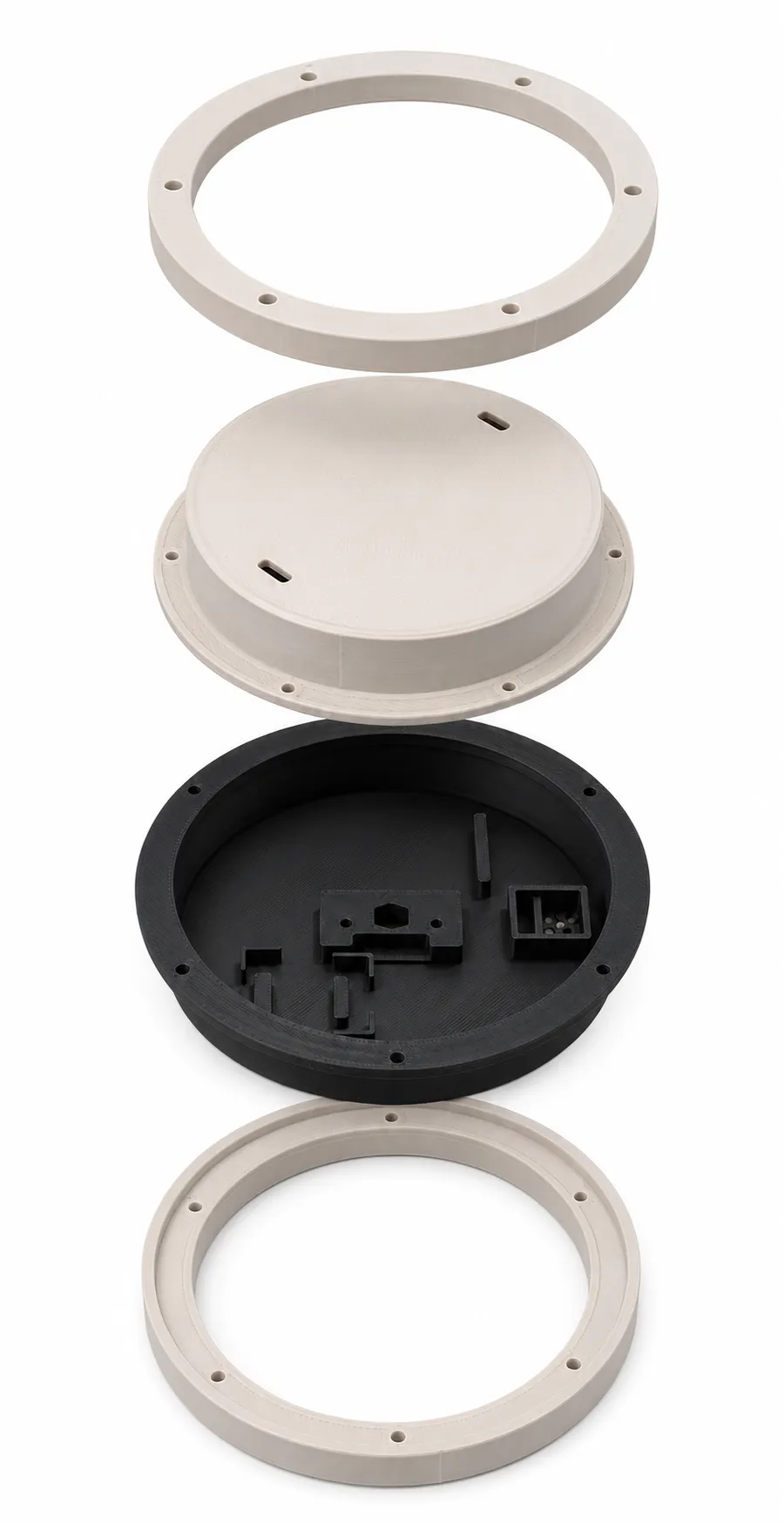
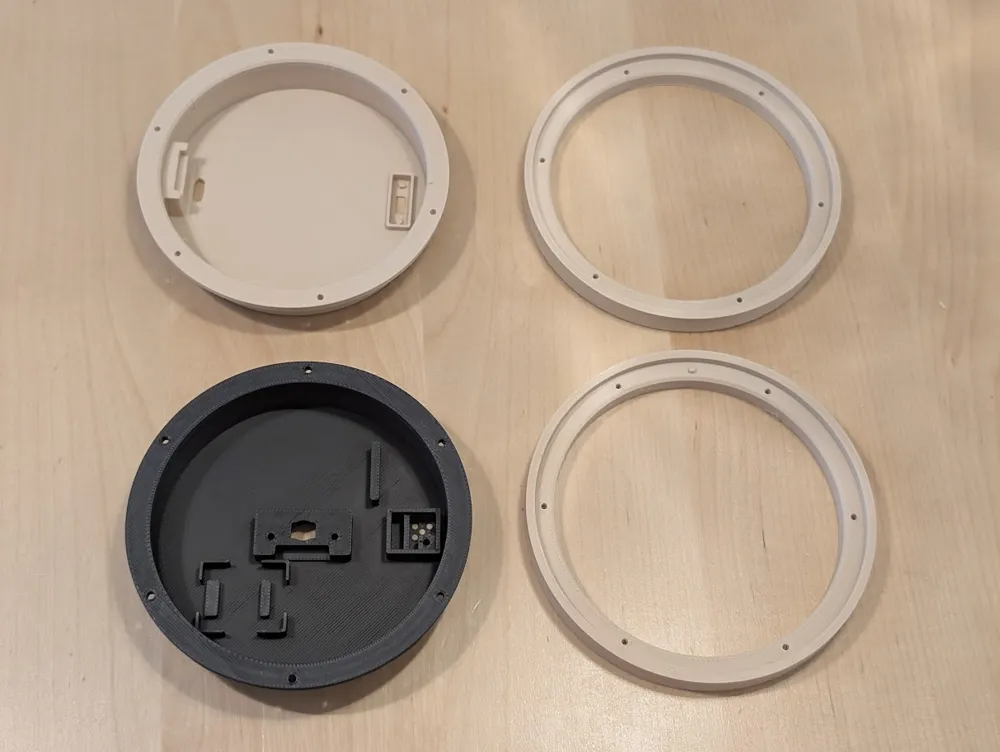
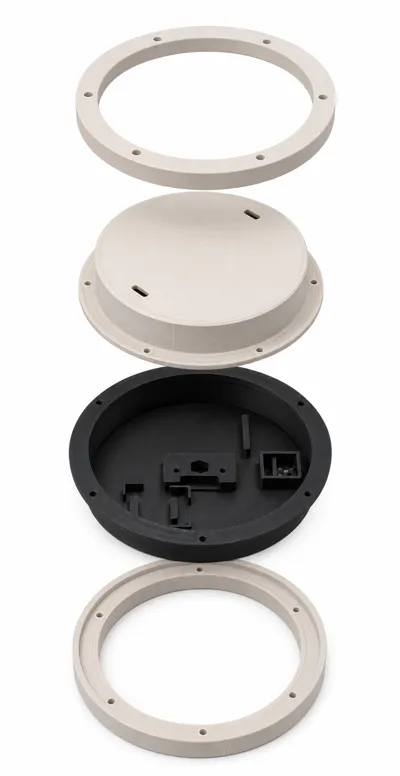
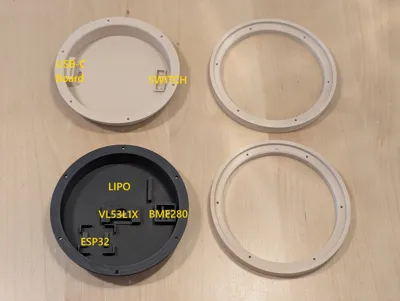
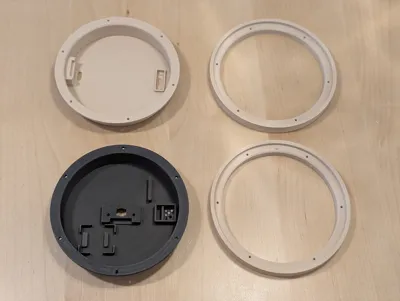
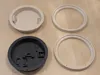
- Main Sensor Body (Lid)
- Upper Electronics Cover
Upper & Lower Mounting Rings
Electronics
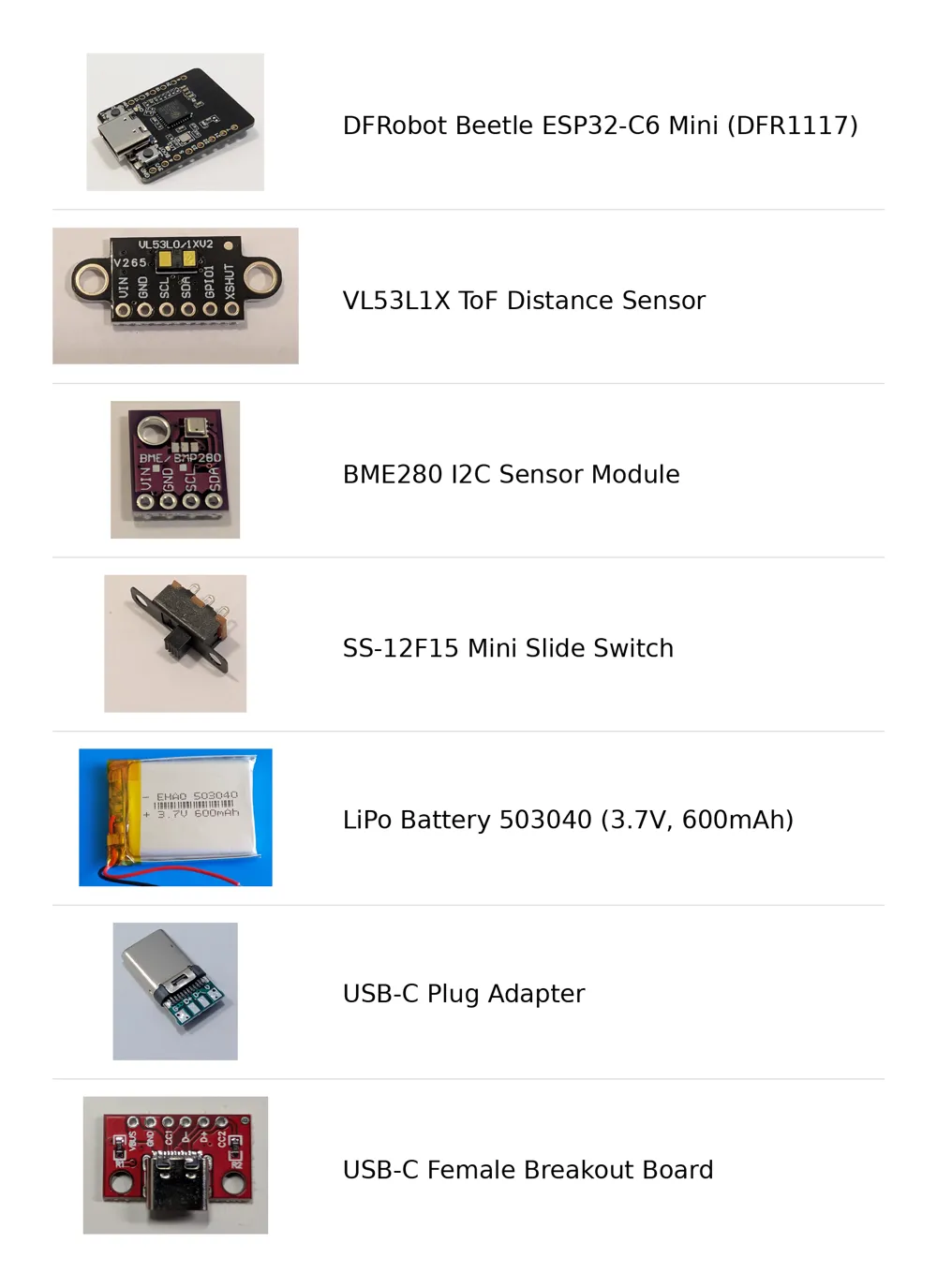
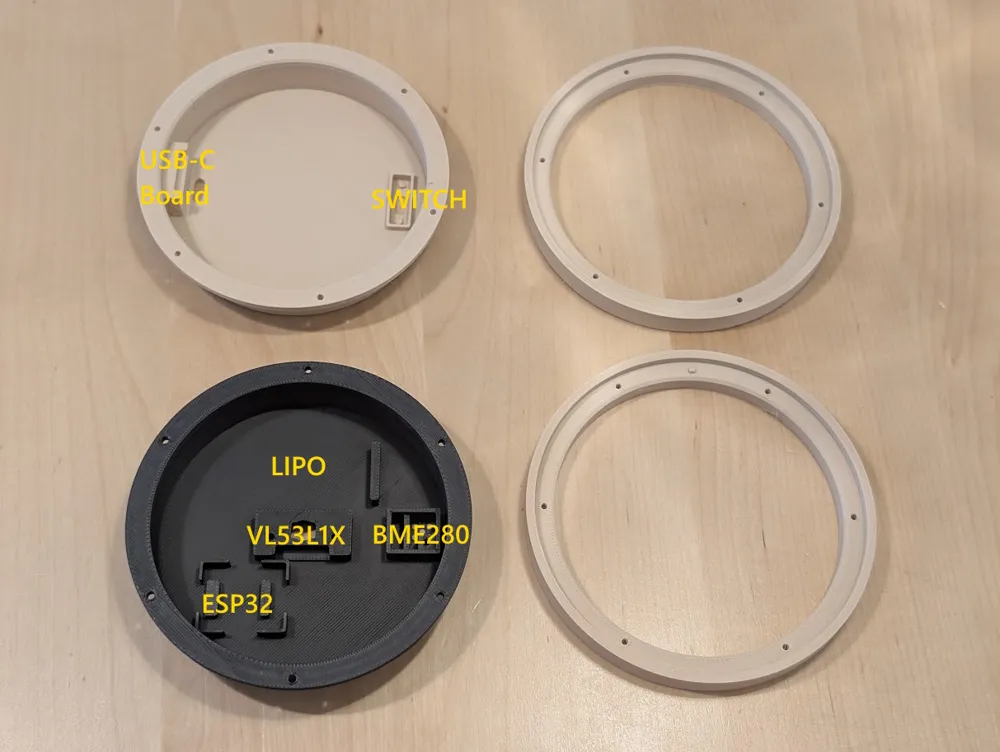
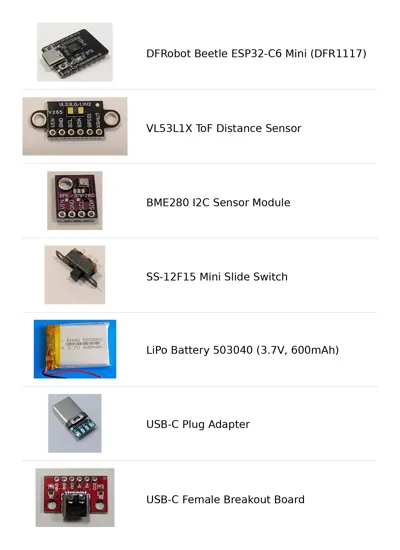
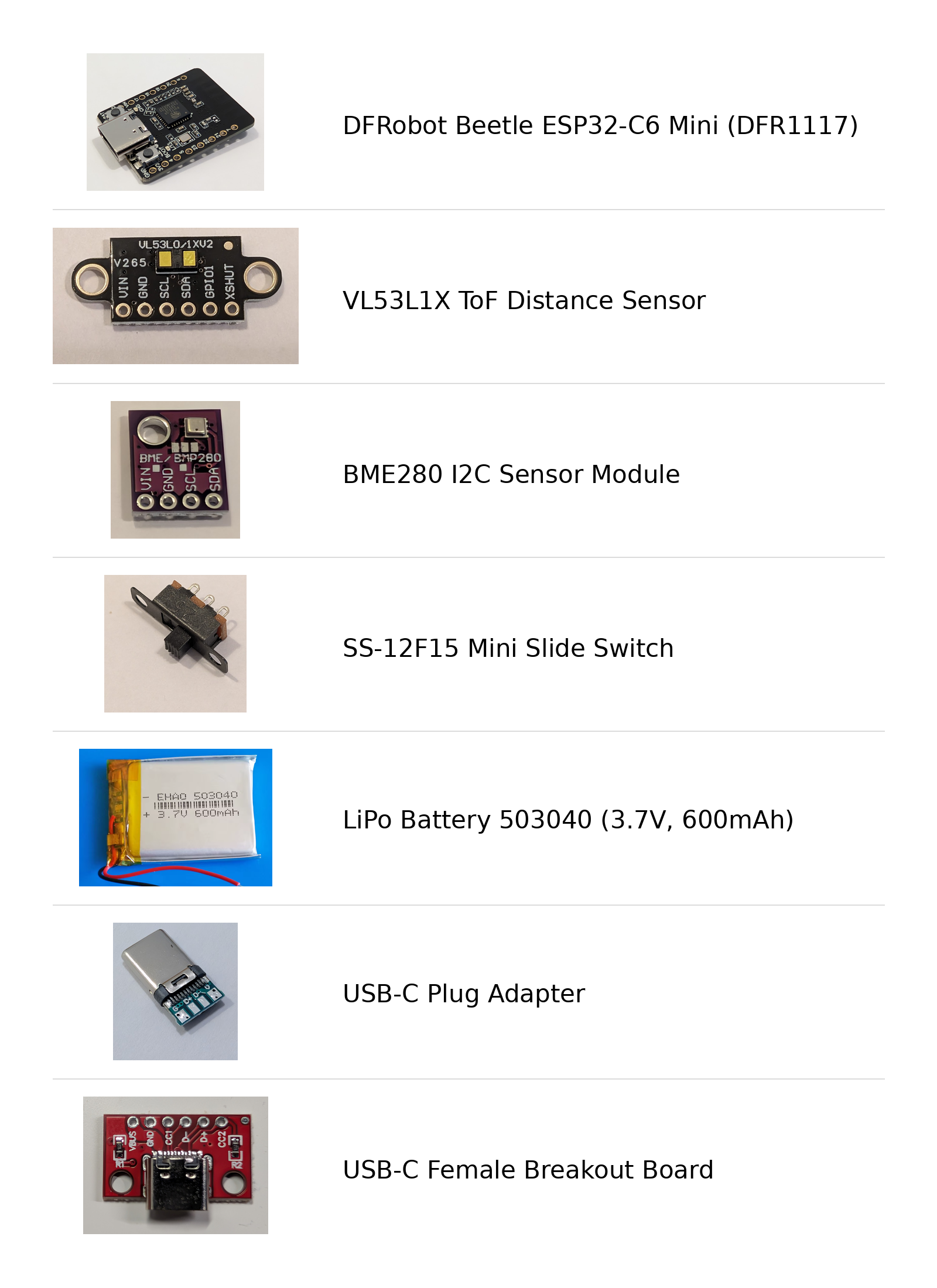
- Microcontroller: DFRobot Beetle ESP32-C6 Mini (DFR1117)
- Climate Sensor: Compact 4-pin BME280
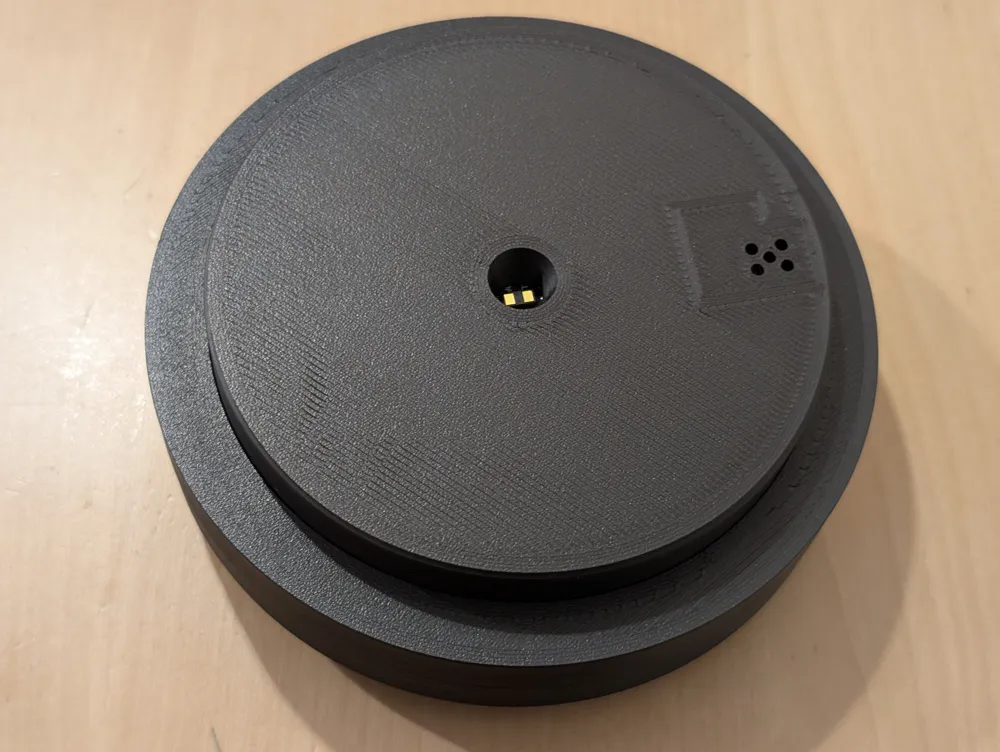
- Distance Sensor: VL53L1X ToF (Time-of-Flight) sensor
- Battery: 3.7 V LiPo battery (Type 503040)
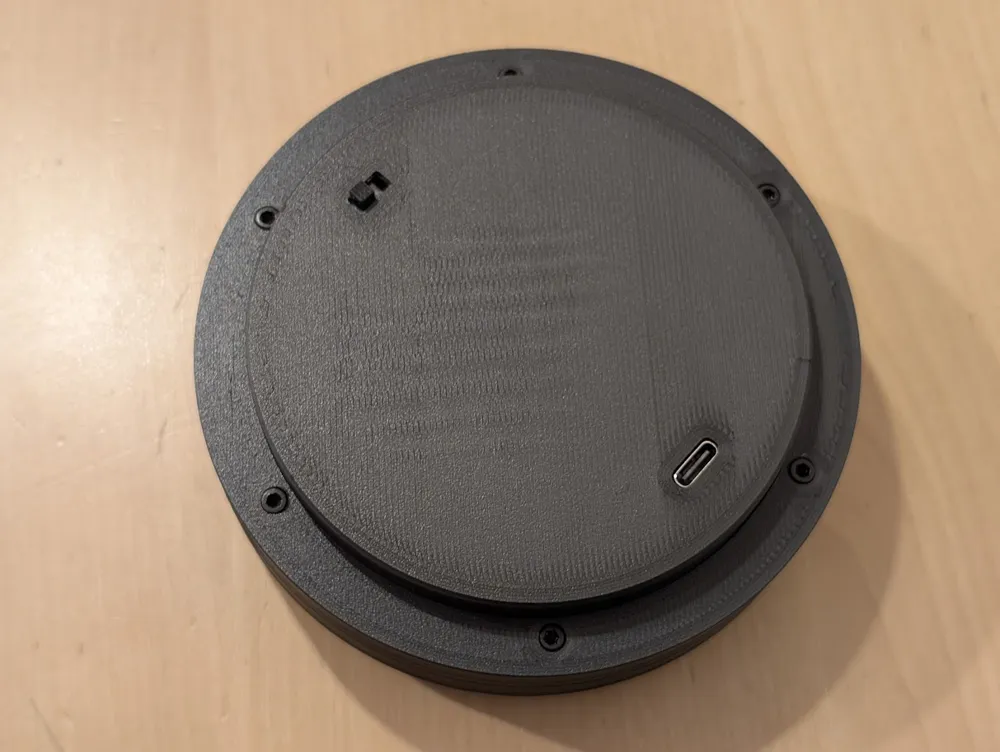
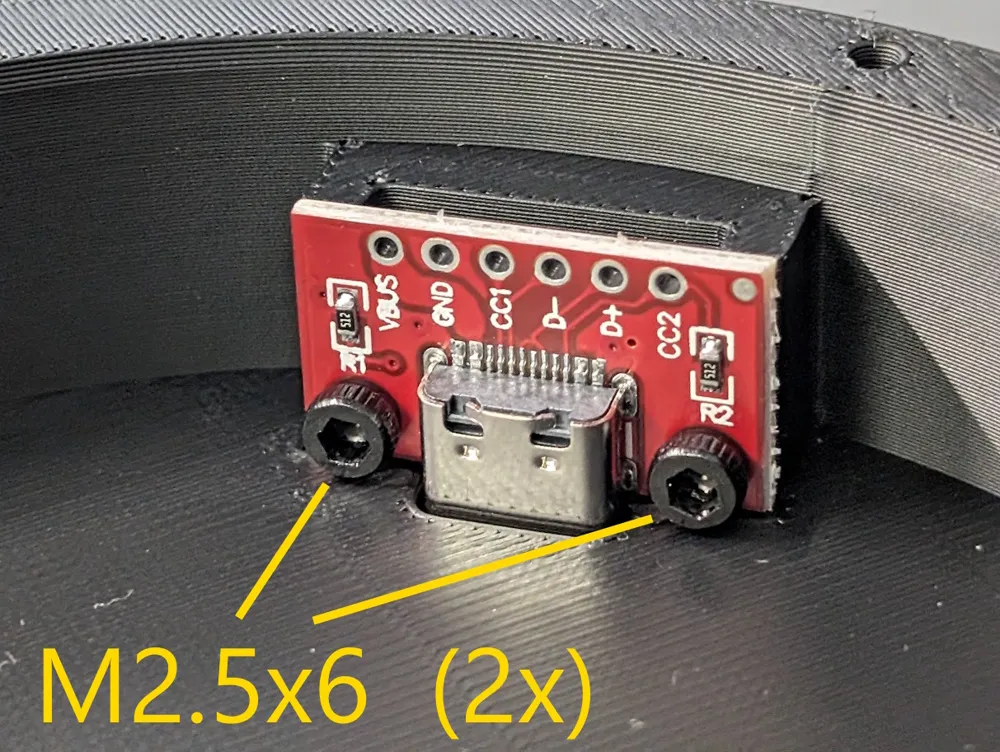
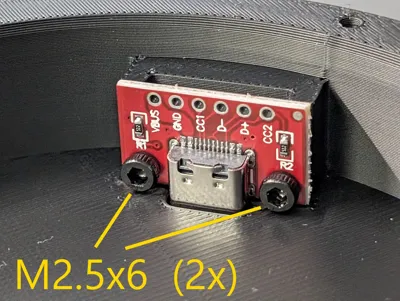
- Power/Charging: USB-C female breakout board + USB-C plug
Switch: SS-12F15 slide switch (handle length: min. 3 mm)
(as there are several variants of some parts, ensure that you chose the correct parts. Please see github for detailed information)
Fasteners
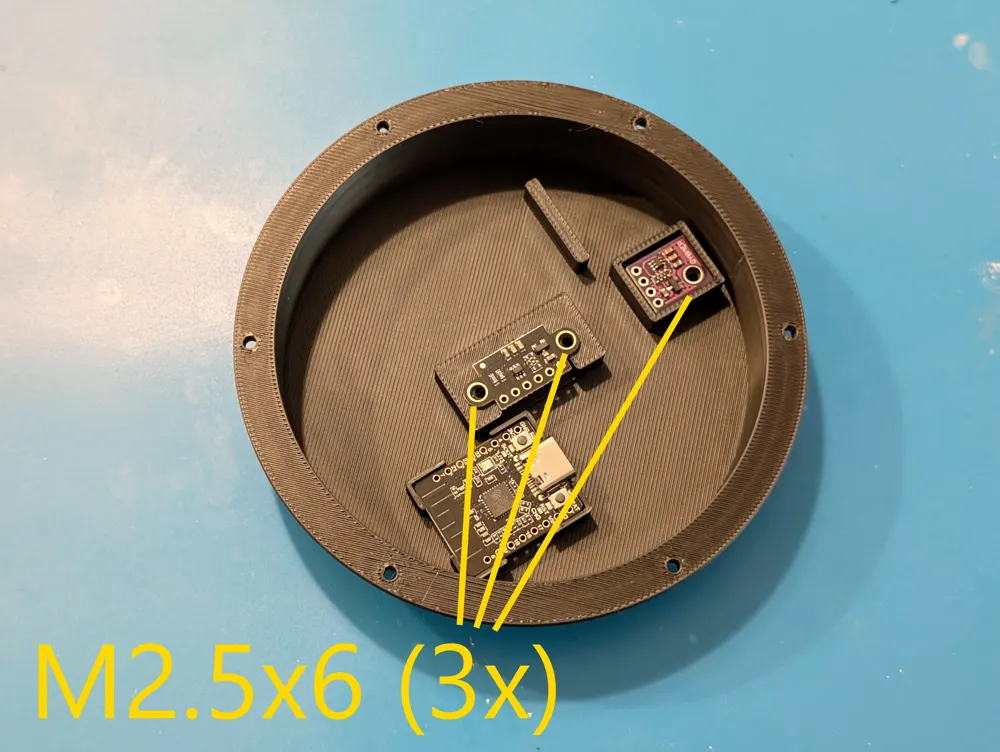
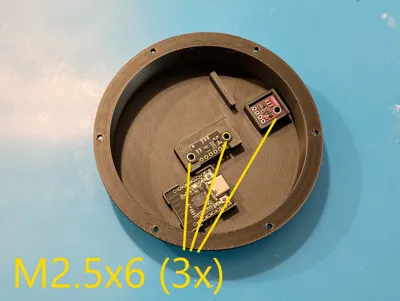
- 5 x M2.5 x 6 mm screws
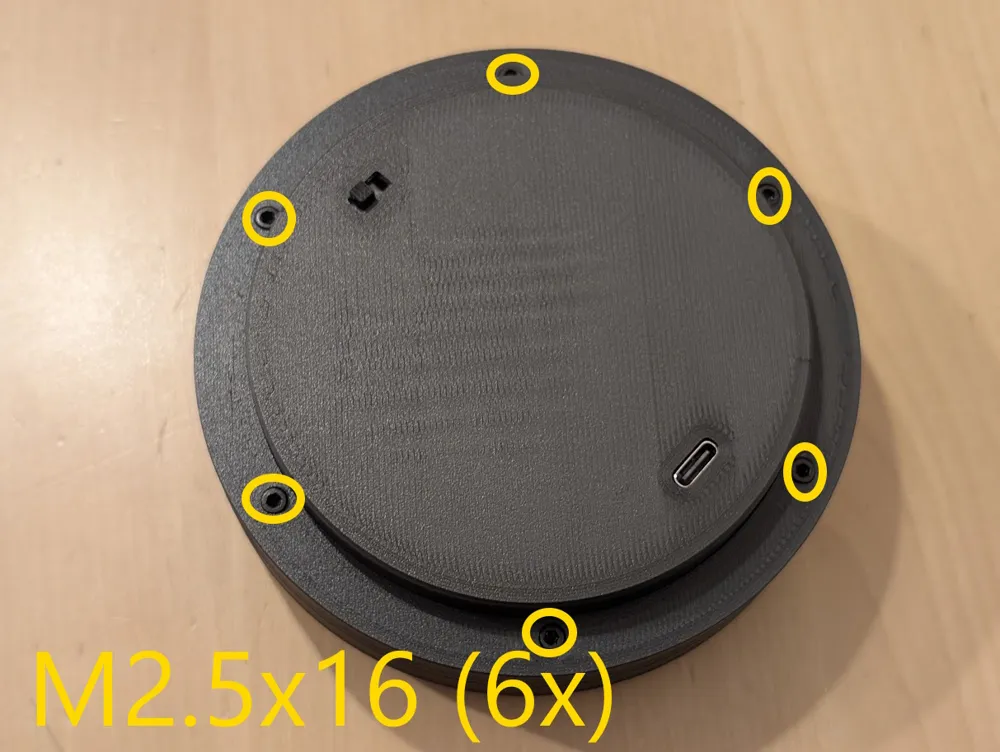
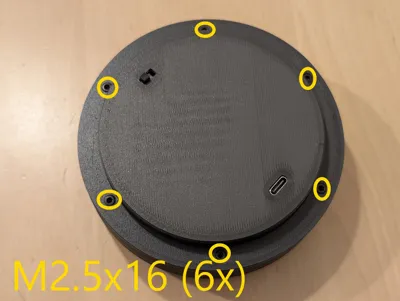
6 × M2.5 × 16 mm screws
Compatible Glass Jars
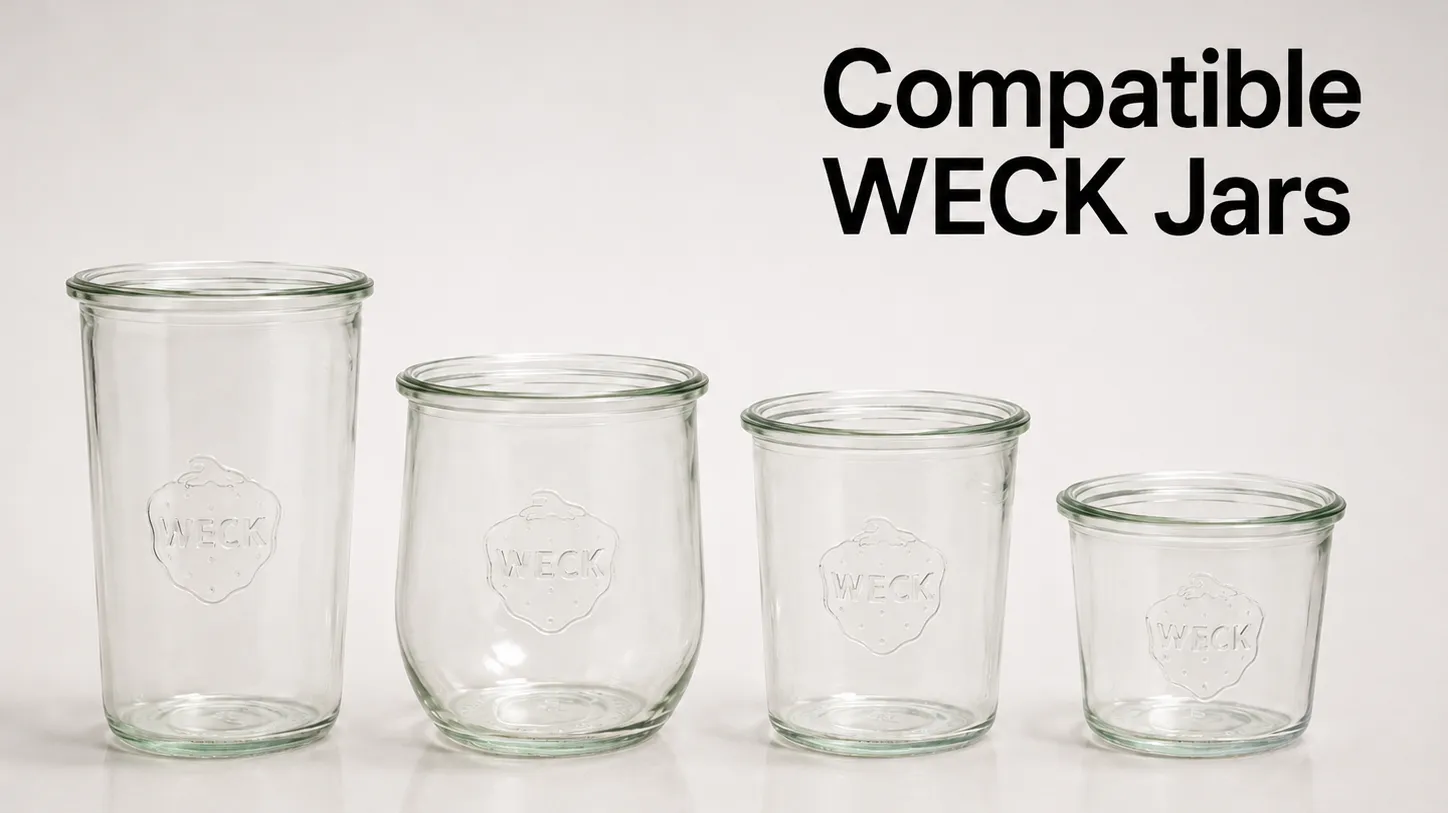
The design is specifically tailored for WECK Rundrand 100 (RR100) jars, including:
- WECK tapered jar 500/580 ml (WECK 742)
- WECK tapered jar 750/850 ml (WECK 743)
- WECK tulip jar 950/1062 ml (WECK 745)
- WECK tapered jar 900/1000 ml (WECK 908)
Using a different jar? Let me know in the comments! (including inner and outer diameter at the top of the jar) If there is enough demand, I will design and upload matching adapter rings.
Note: Other WECK jars using the RR100 lid size should fit as well. A sufficiently tall jar is highly recommended so the starter never touches the lid or electronics, even at peak rise!
Software & Integration
The complete firmware and setup documentation are available on GitHub:
The firmware is optimized for the DFRobot Beetle ESP32-C6 and publishes all sensor data natively via MQTT.
Data Collection & Visualization
To use this project, an MQTT broker is required. Popular solutions include:
- Brokers: Home Assistant + Mosquitto, ioBroker, Node-RED, OpenHAB, or standalone Mosquitto on a Raspberry Pi/NAS.
- Dashboards: Home Assistant Dashboards, ioBroker VIS, InfluxDB + Grafana, or custom MQTT dashboards.
example of measurement graph (with grafana):

How It Works & Configuration
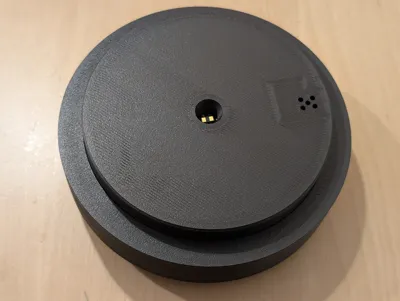
The SmartLid replaces the standard glass lid of your WECK jar. The VL53L1X Time-of-Flight sensor measures the exact distance to the starter's surface to calculate the growth percentage. Simultaneously, the BME280 tracks the microclimate.
To save power, the ESP32 remains in deep sleep, wakes up at your defined interval, reads the sensors, transmits the data via Wi-Fi, and instantly goes back to sleep.
Fully Configurable: Via the firmware, you can easily adjust the measuring intervals, jar height, sensor calibration offsets, and Wi-Fi/MQTT credentials.
Battery-Powered Operation
The device is designed to operate wirelessly from a rechargeable LiPo battery.
During normal use, the ESP32 wakes up only for a short time, reads all sensors, publishes the data via MQTT, and then returns to deep sleep. This greatly reduces power consumption compared to continuous operation.
Estimated runtime with 10-minute measurement intervals: at least one week.
Printing & Assembly Notes
- Print Profile: It is highly recommended to use the provided print profile.
- Material Recommendation: PLA or PETG is recommended.
- Supports: The two rings should be printed without supports. The main sensor body and upper cover require supports. Make sure to completely clean all support remnants, especially along the continuous outer rim where the parts seal.
- Tolerances: Screw holes are designed to fit standard calibrations. However, since printers vary, feel free to leave a comment if you run into fitment issues!
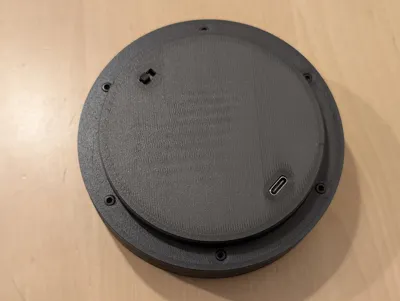
Assembly: The stack order is: Lower Ring ➔ Main Sensor Body ➔ Upper Electronics Cover ➔ Upper Ring. Detailed step-by-step assembly instructions can be found on GitHub
Disclaimer
Food Safety
Depending on printer type, material, print settings and post-processing, the printed parts cannot be considered food-safe.
Avoid direct contact between the Sourdough Monitor and your starter. Use sufficiently tall jars so that the starter cannot reach the electronics.
This project is intended as a monitoring lid, not as a food-contact container surface.
LiPo Batteries
Lithium polymer batteries can present a fire hazard if damaged, short-circuited, improperly charged, or misused.
Build and use this project at your own risk.
Always use appropriate charging electronics, avoid mechanical damage to the battery, and never leave charging batteries unattended.
Do not use damaged, swollen, punctured, or overheated LiPo batteries.
General Disclaimer
This project is provided as-is without warranty. Assembly and operation are entirely at the user's own risk.
The author assumes no responsibility for damage, injury, food contamination, battery failure, or incorrect assembly.
Boost Me (for free)
If you like and find my model useful, feel free to leave a like, comment, or boost.
License



Comment & Rating (0)