
Pet Wheelchair TPU / PETG
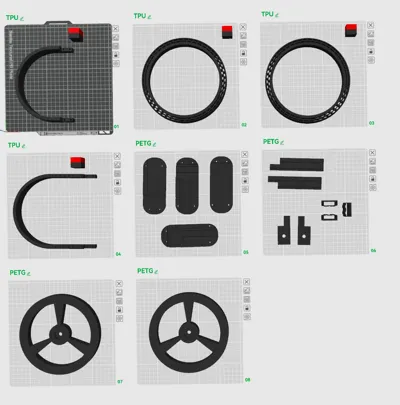
Print Profile(1)
Bill of Materials



Description
UPDATED 29/06/2026
The rim dimensions have been adjusted, as previously too much pressure had to be applied to the TPU, causing it to weaken. Now it fits with just a little pressure, and the movement is smoother!
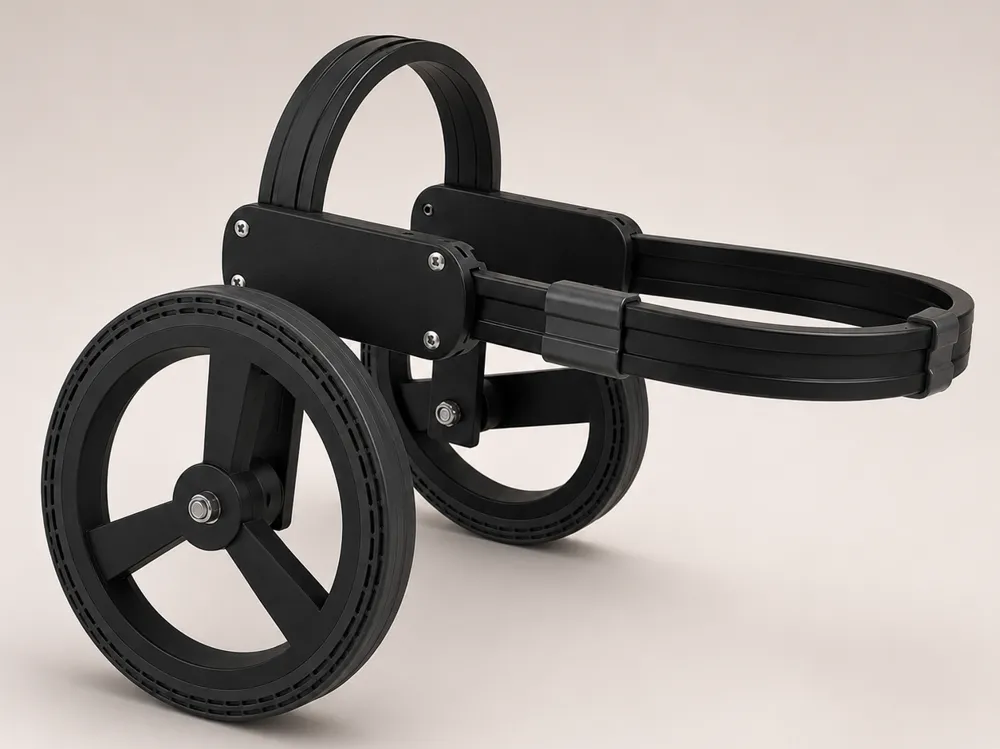
Custom Pet Wheelchair TPU / PETG
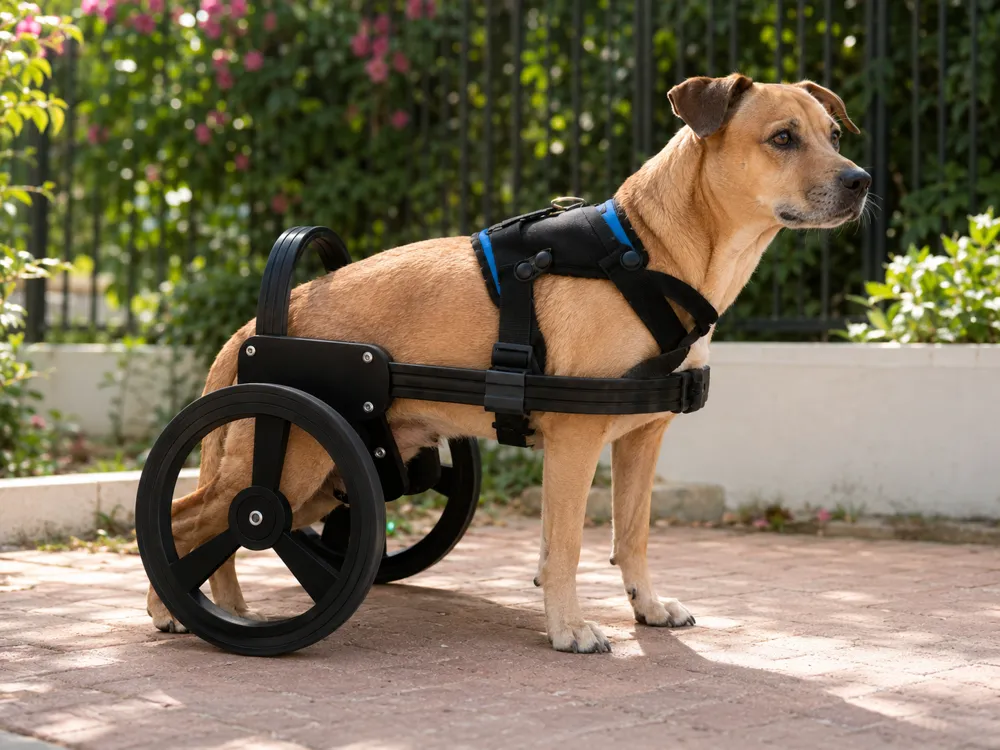
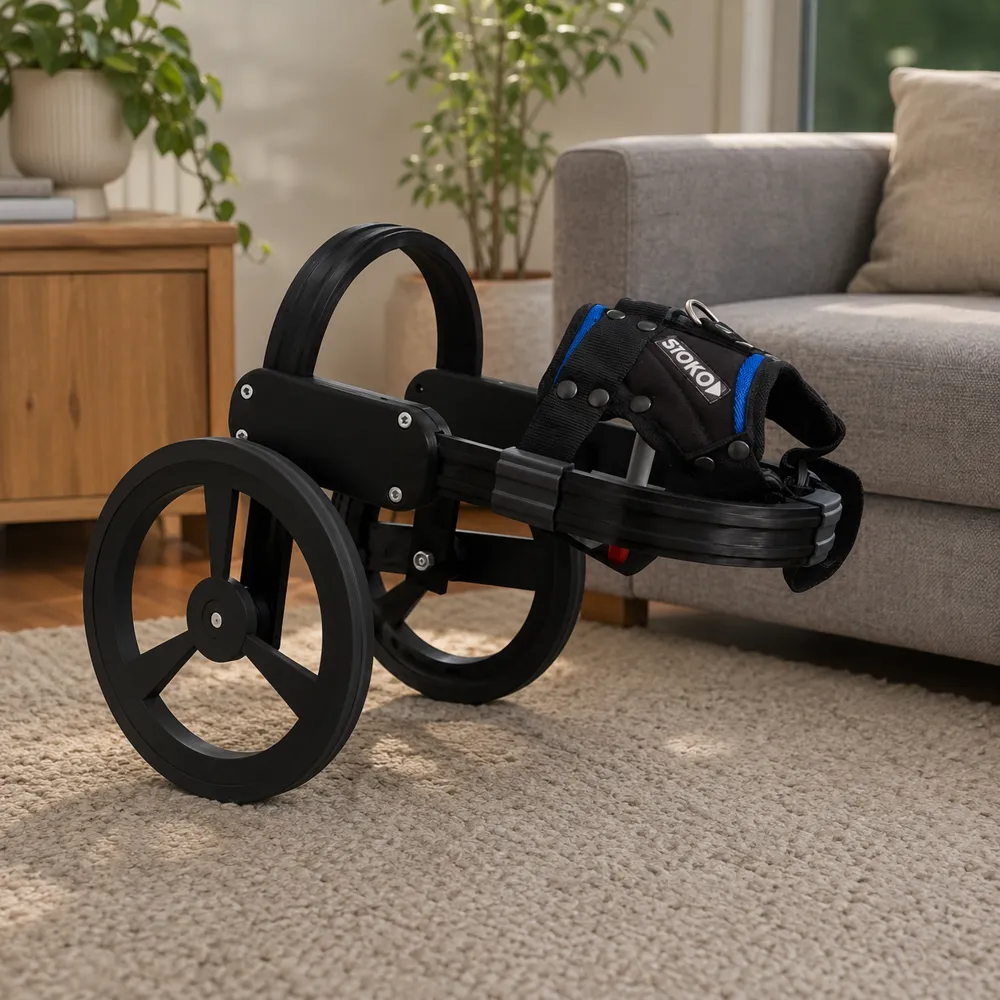
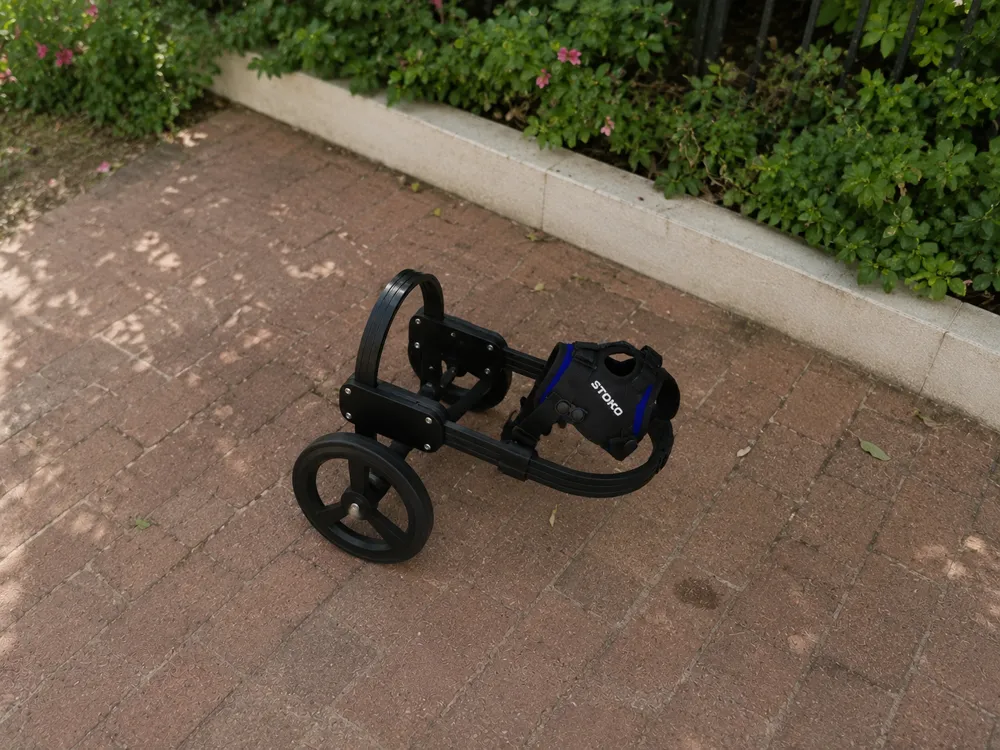
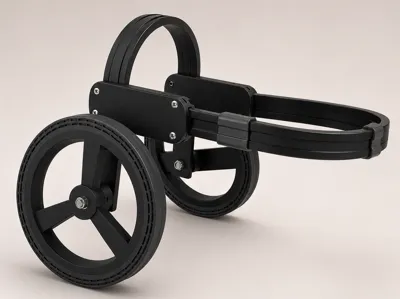
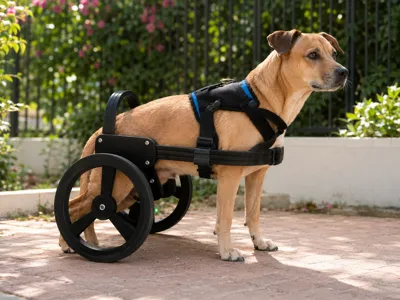
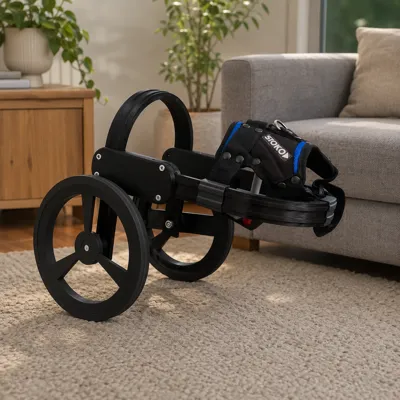
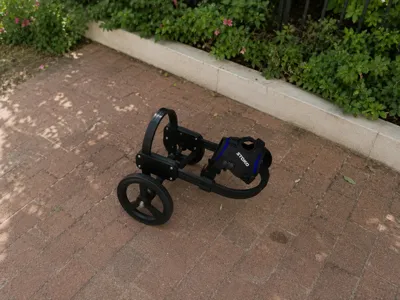
This is a custom 3D printed pet wheelchair designed as a functional support frame for small pets with reduced rear leg mobility.
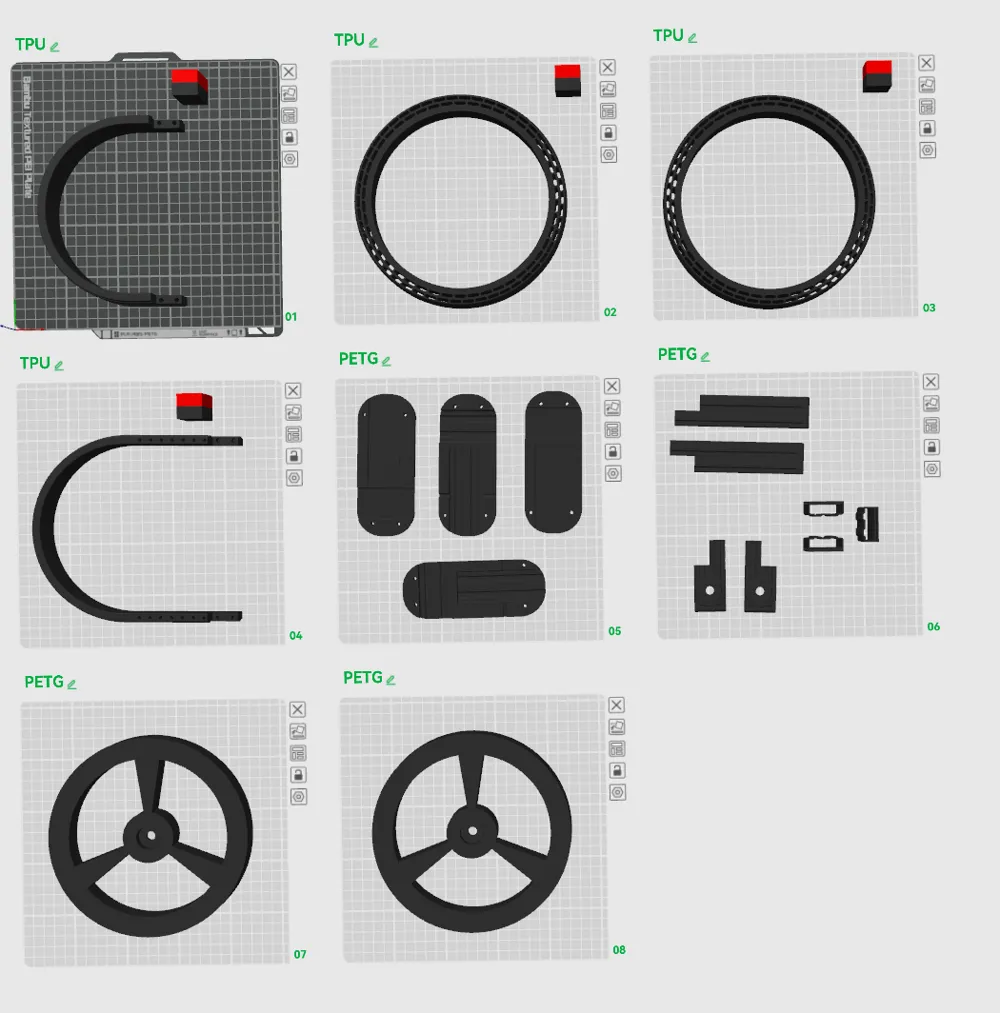
The wheelchair combines rigid PETG structural parts with flexible TPU parts to provide strength, durability, comfort and better impact absorption. PLA can also be used as support material or support interface to improve surface quality and make support removal easier.
The model is designed to be assembled with common hardware parts such as bearings, threaded rod, nuts, screws and an adjustable dog harness.
Required materials:
For 1 complete pet wheelchair:
608 2RS bearings 8x22x7 mm: 4 pieces
M8 threaded rod: 1 piece, approx. 1 meter
M8 nuts: 8 pieces
M8 washers: 8 to 12 pieces
M4 screws: approx. 20 pieces
M4 nuts: approx. 20 pieces
M4 washers: 20 to 30 pieces
Adjustable padded dog harness: 1 piece
PETG filament: for the rigid / structural parts
TPU filament: for flexible parts / tires / comfort areas
PLA filament: optional for supports or support interface
For the M4 screws, it is best to buy a small assortment, for example with M4x12, M4x16, M4x20 and M4x25 mm, because the exact length may vary slightly depending on each part.s
Important about the harness:
The dog harness is not 3D printed and must be purchased separately. It is used to secure the pet comfortably to the wheelchair frame. The correct harness size must be chosen according to the pet’s body size, weight and comfort.
Recommended print settings:
Layer height: 0.20 mm
Infill: 25%
PETG walls: 4 to 5 walls
TPU walls: 3 to 4 walls
Recommended infill pattern: Gyroid
Recommended speed: around 40 mm/s for safe and reliable functional printing
First layer speed: around 20 mm/s
Support interface speed: around 25 mm/s
Support material: PLA can be used as support or support interface where needed
Printing notes:
For PETG structural parts, use enough walls to improve strength around screw holes, joints and bearing areas.
For TPU parts, slower speeds are recommended to improve reliability and avoid extrusion issues.
For parts with bearings, screws or tight fits, check the dimensions after printing and adjust tolerances if necessary.
Assembly notes:
Insert the 608 2RS bearings into the wheel hub area.
Use the M8 threaded rod as the main wheel axle.
Use M8 nuts to secure the axle system.
Use M4 screws and M4 nuts for the joints and frame assembly.
Attach the adjustable padded dog harness to secure the pet comfortably to the frame.
Safety note:
This model may require adjustments depending on the size, weight, body shape and mobility needs of the pet. Always check the fit carefully before use. The pet should be supervised while using the wheelchair.
This is not a certified medical or veterinary device. Please consult a veterinarian or pet mobility specialist if the pet has serious mobility, spine, hip or leg problems.
Boost Me (for free)
Give me a boost so I can keep creating designs that help those most in need!
License

You shall not share, sub-license, sell, rent, host, transfer, or distribute in any way the digital or 3D printed versions of this object, nor any other derivative work of this object in its digital or physical format (including, but not limited to, publishing derivative works outside the Makerworld platform or hosting on other digital platforms). The objects may not be used without permission in any way whatsoever in which you charge money or collect fees. Subject to the above restrictions, derivative works may be published only within the Makerworld platform, and all such derivative works must be licensed under the same SDFL‑C license, without modification or additional terms. You may download the digital versions of this object, 3D print it, and display images, videos, or usage demonstrations of 3D printed versions of the object on personal social media platforms or Makerworld official channels, provided that no digital versions of the object are shared or distributed.


Comment & Rating (9)