
Print Profile(3)
Description
Boost Me (for free)
Every boost brings me one step closer to upgrading to an X2D. Thank you for supporting my future projects! 🚀
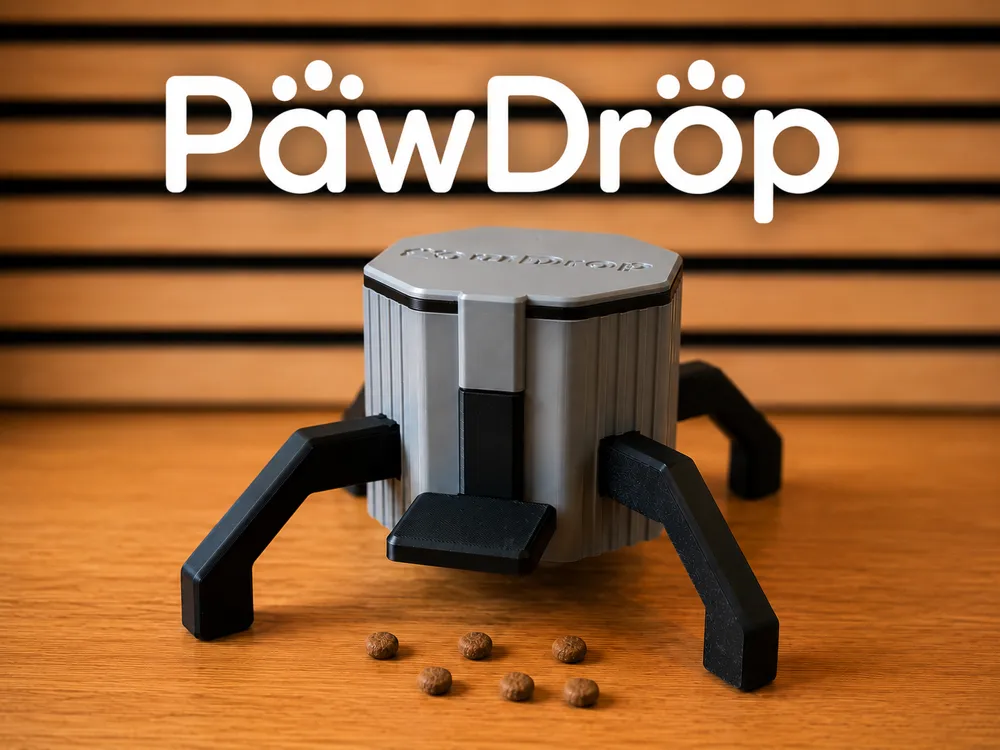
PawDrop – Paw-Operated Feeder

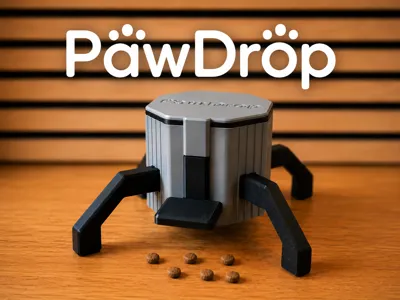
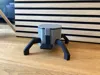
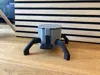
Meet PawDrop, an interactive pet training feeder created for the MakerWorld Pet Feeder Design Contest and designed around Bambu Lab’s new PLA Pure.
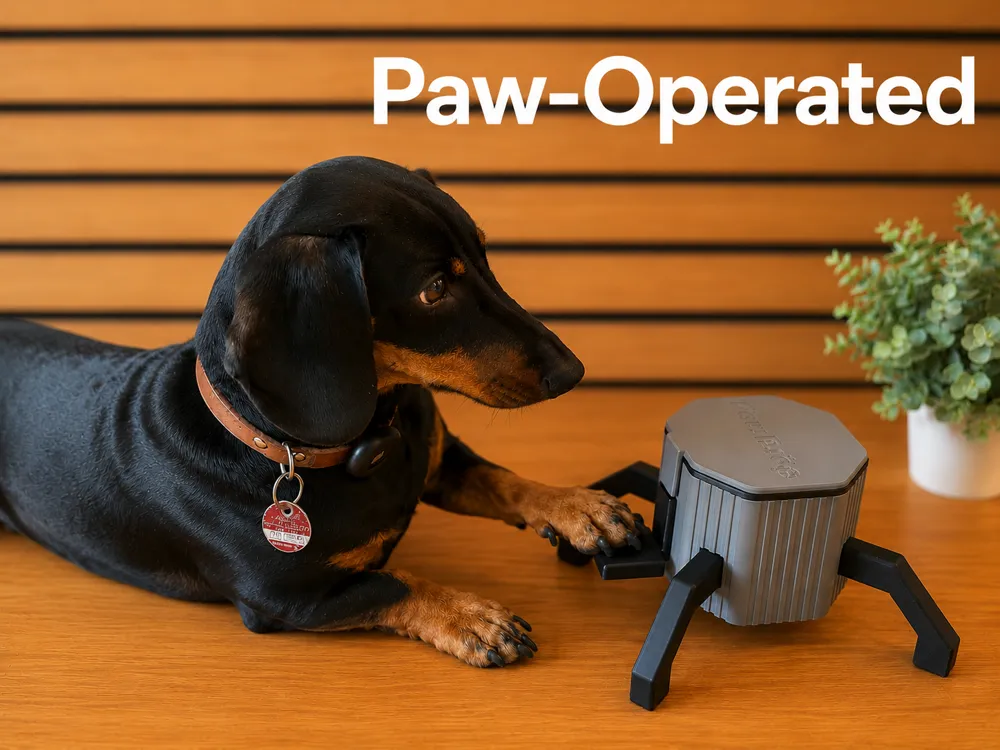
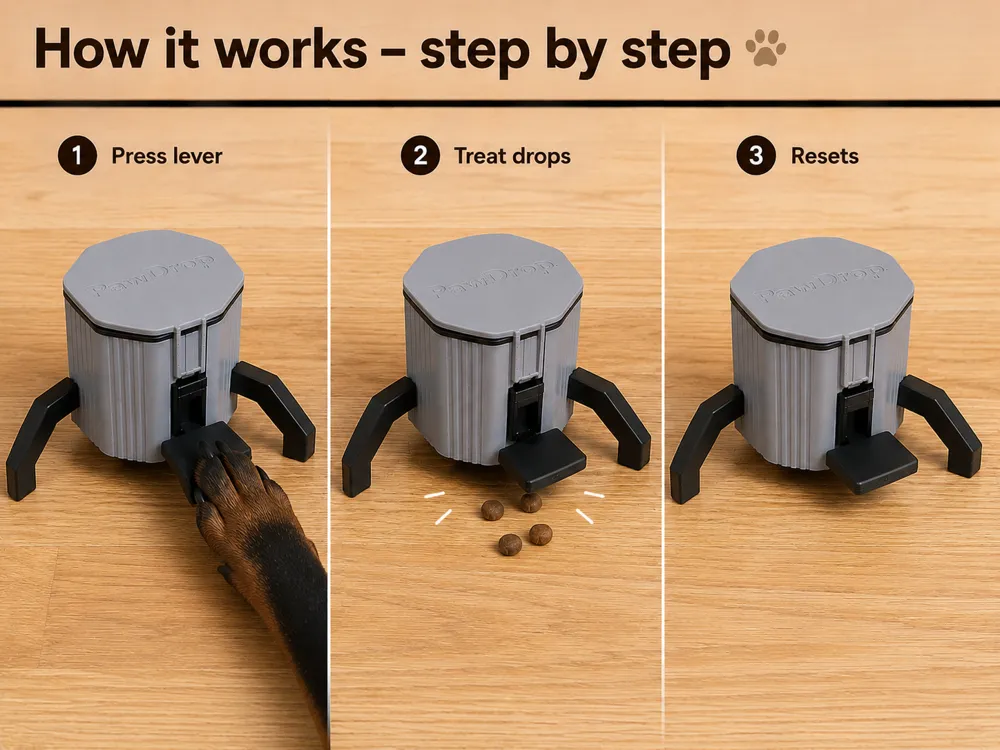
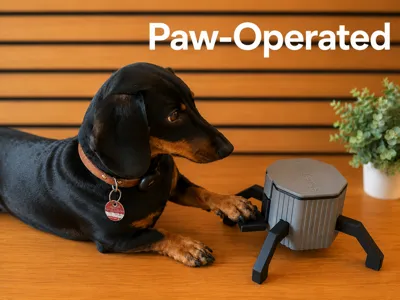
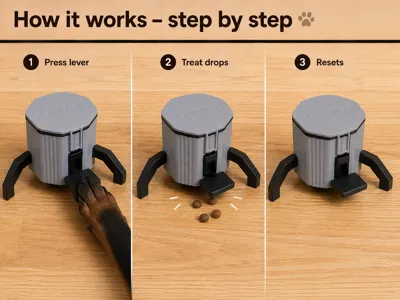
Unlike a traditional automatic feeder, PawDrop is operated by the pet itself:
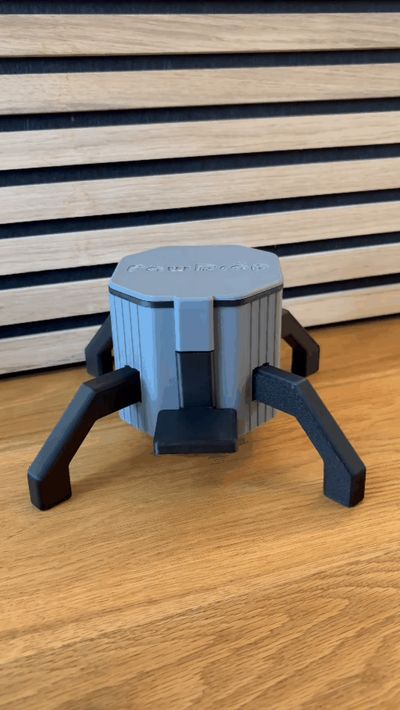
- The pet presses the front lever with its paw
- The internal opening releases small treats
A printed PETG spring automatically resets the mechanism
- PawDrop is immediately ready for the next round
This turns treat time into a simple and rewarding enrichment activity.
Why PawDrop?
- Paw-operated mechanical design
- No electronics or batteries
- No screws, glue or purchased hardware
- Fully 3D printable
- Printed PETG reset spring
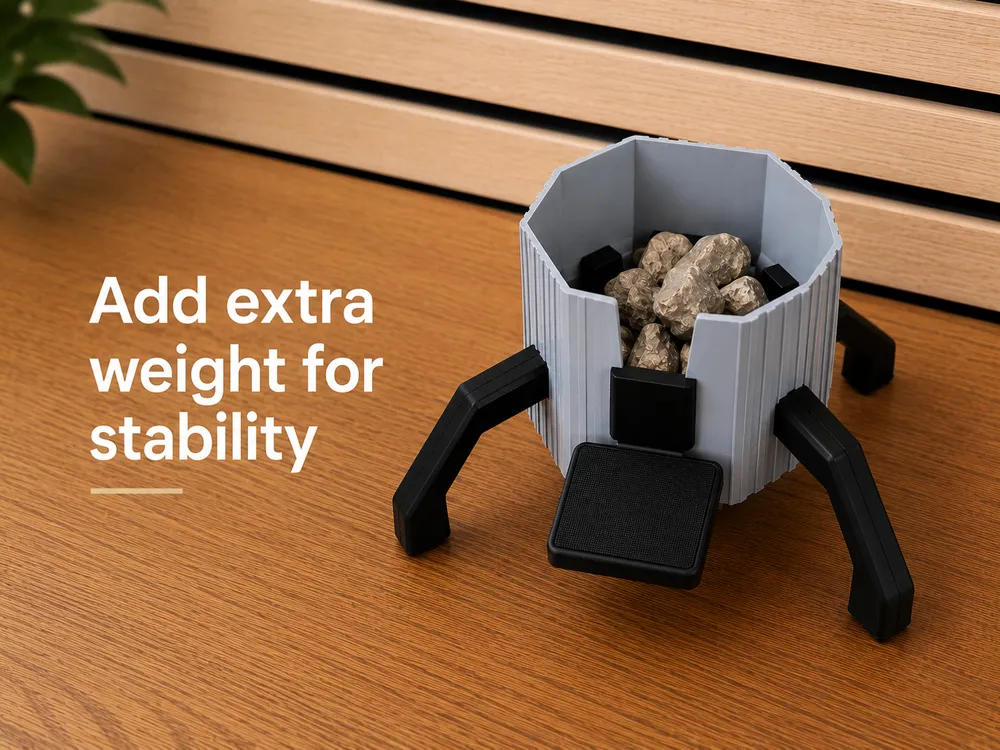
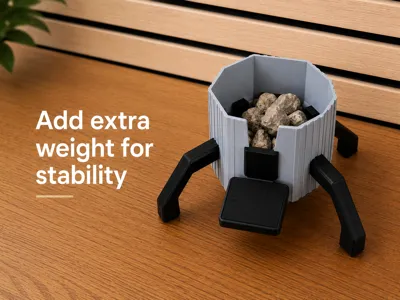
- Optional ballast compartment for extra stability
- Designed and tested on the Bambu Lab A1 Mini
- Simple five-step assembly
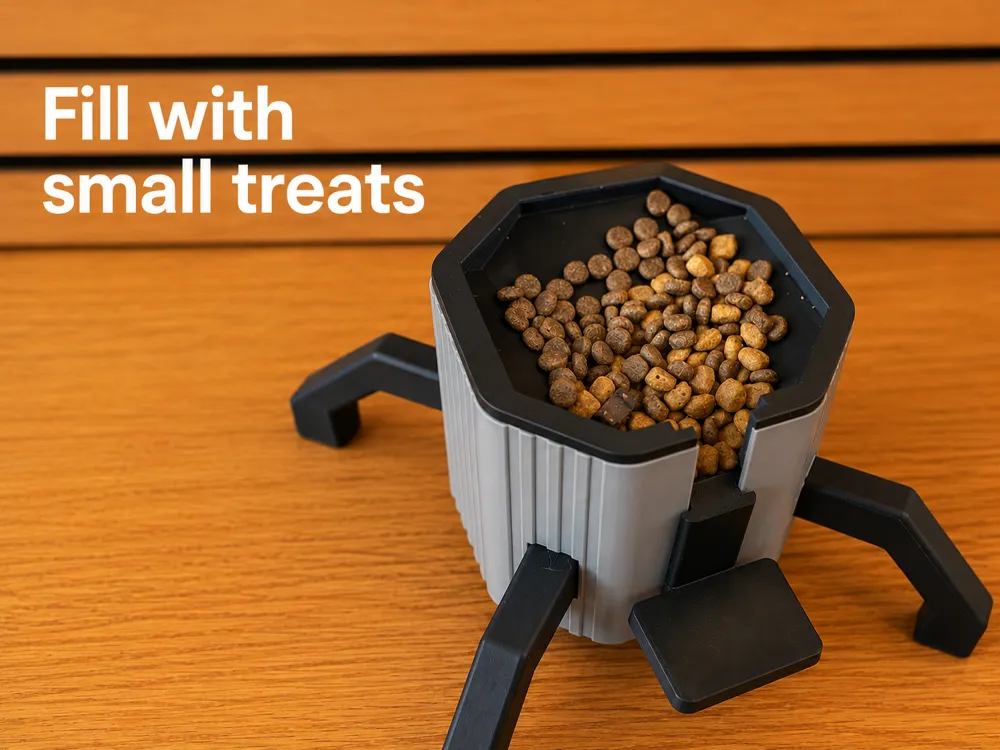
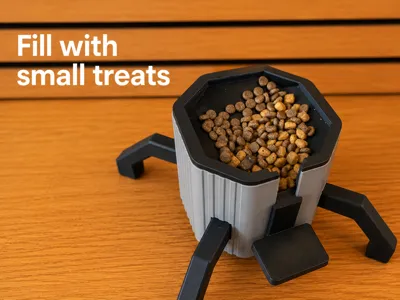
- Suitable for small dry treats or kibble
The wide stance provides excellent stability. For especially enthusiastic pets, the hollow space underneath the inlay can also be filled with clean stones or another suitable weight before the inlay is installed.
Materials
The main components can be printed in PLA Pure:
- Body
- Legs
- Lever
- Inlay
- Lid
PLA Pure was chosen because its clean formulation and very low printing emissions make it especially interesting for objects used around pets and inside the home.
Important: Print the spring in PETG
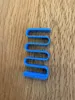
The red spring must be printed in PETG.
During testing, PETG provided the best combination of flexibility, spring force and durability. A PLA spring may work initially but can fatigue or break after only a few activations.
The spring is intentionally printed in a contrasting color so that the mechanical reset system remains slightly visible.
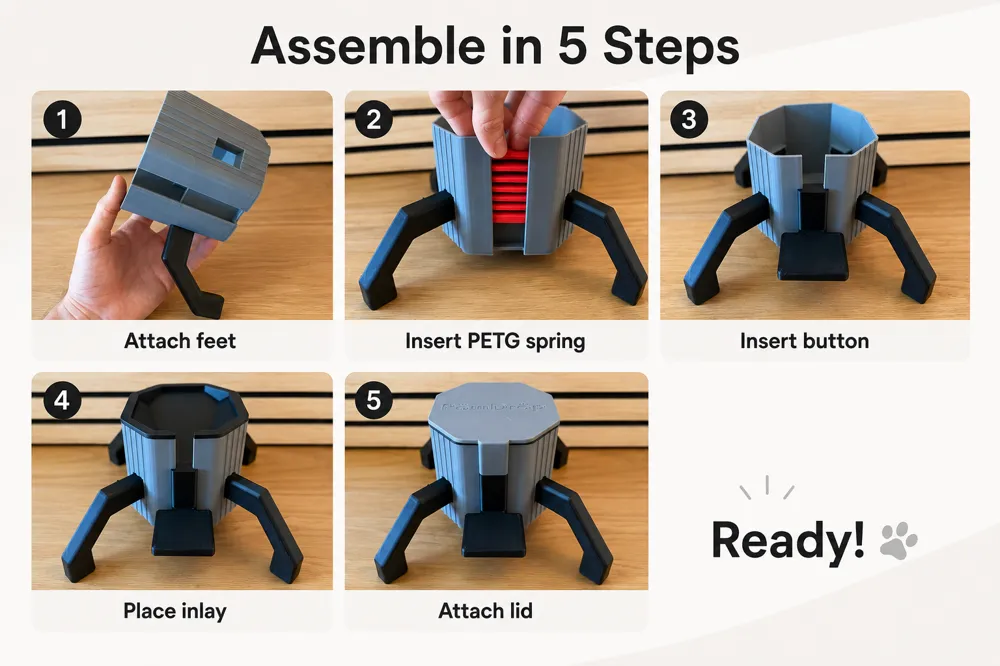
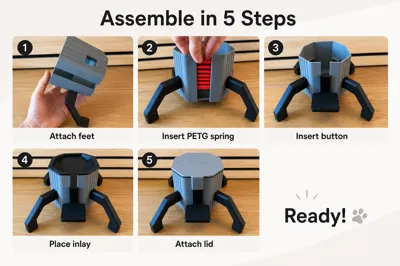
Assembly
- Attach the legs to the body
- Insert the PETG spring
- Insert the front lever
- Place the inlay inside the body
- Attach the lid
No tools are required.
How to use PawDrop
Fill the container with small, dry treats. Start by demonstrating the mechanism and pressing the lever yourself. Once your pet understands where the reward comes from, encourage it to touch and press the lever with its paw.
Keep the first training sessions short and positive.
Printing notes
PawDrop was designed to fit within the 180 × 180 mm build volume of the A1 Mini. The A1 Mini print profile is therefore divided across multiple plates.
The color combination is completely optional. Only the spring material is functionally important.
Safety and hygiene
Use PawDrop only with appropriately sized dry treats and supervise your pet during use.
Although PLA Pure uses ingredients certified for food-contact applications, the safety and cleanability of a finished FDM print also depend on the printer, nozzle, printing environment and maintenance. Clean the accessible parts regularly, inspect them for damage and replace worn components when necessary.
Do not use PawDrop with wet or sticky food.
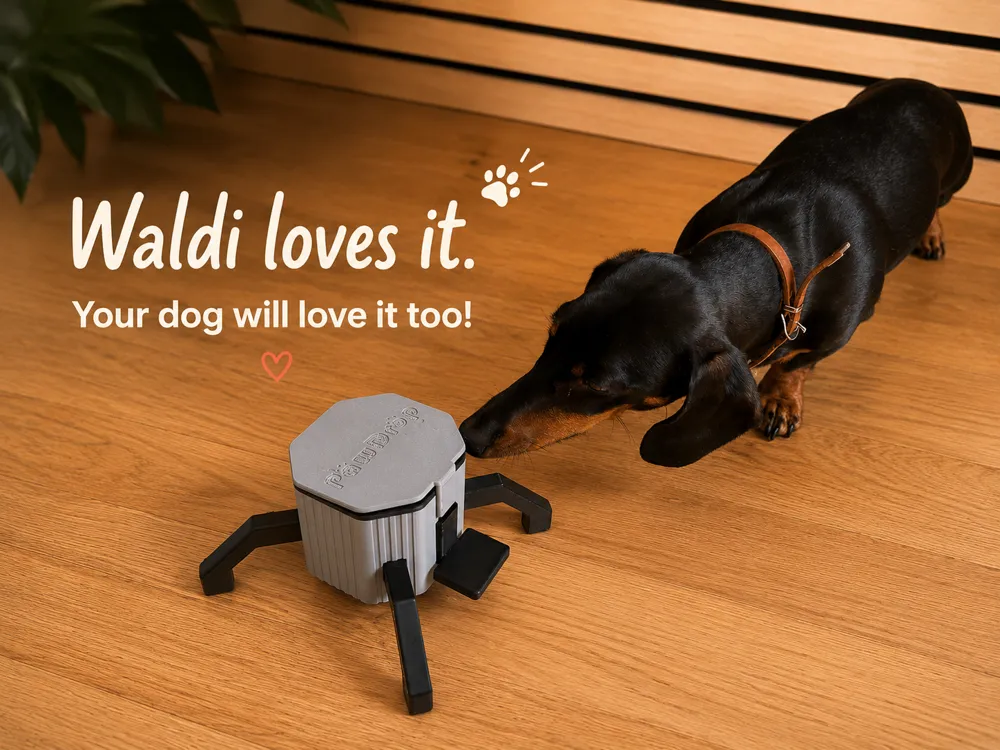
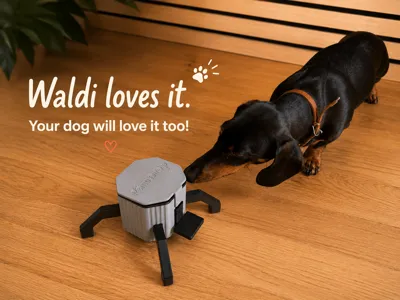
Designed, printed and tested with the help of Waldi, PawDrop’s official Chief Tester. 🐾
UPDATE:
A second print profile with a lighter spring is now included for users who prefer an easierer paw press.
License

You shall not share, sub-license, sell, rent, host, transfer, or distribute in any way the digital or 3D printed versions of this object, nor any other derivative work of this object in its digital or physical format (including, but not limited to, publishing derivative works outside the Makerworld platform or hosting on other digital platforms). The objects may not be used without permission in any way whatsoever in which you charge money or collect fees. Subject to the above restrictions, derivative works may be published only within the Makerworld platform, and all such derivative works must be licensed under the same SDFL‑C license, without modification or additional terms. You may download the digital versions of this object, 3D print it, and display images, videos, or usage demonstrations of 3D printed versions of the object on personal social media platforms or Makerworld official channels, provided that no digital versions of the object are shared or distributed.


Comment & Rating (30)