
Fortified Wall Collection - D&D Board Game
Print Profile(1)
Description
🏰 Linear Wall Collection (Best fortified)
✨ General overview
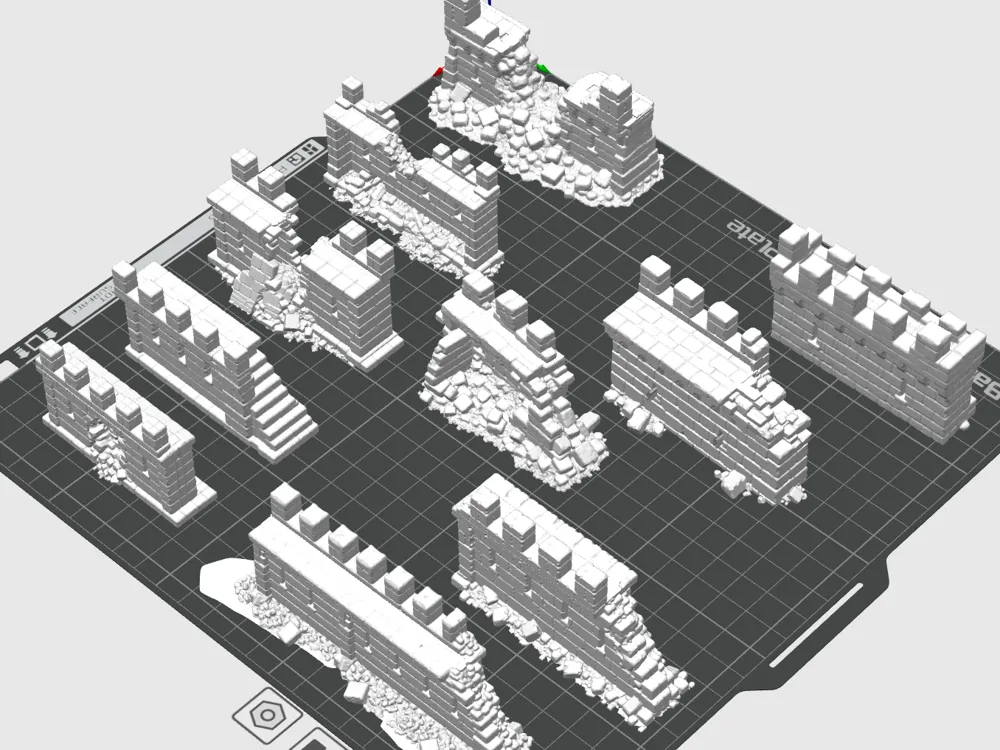
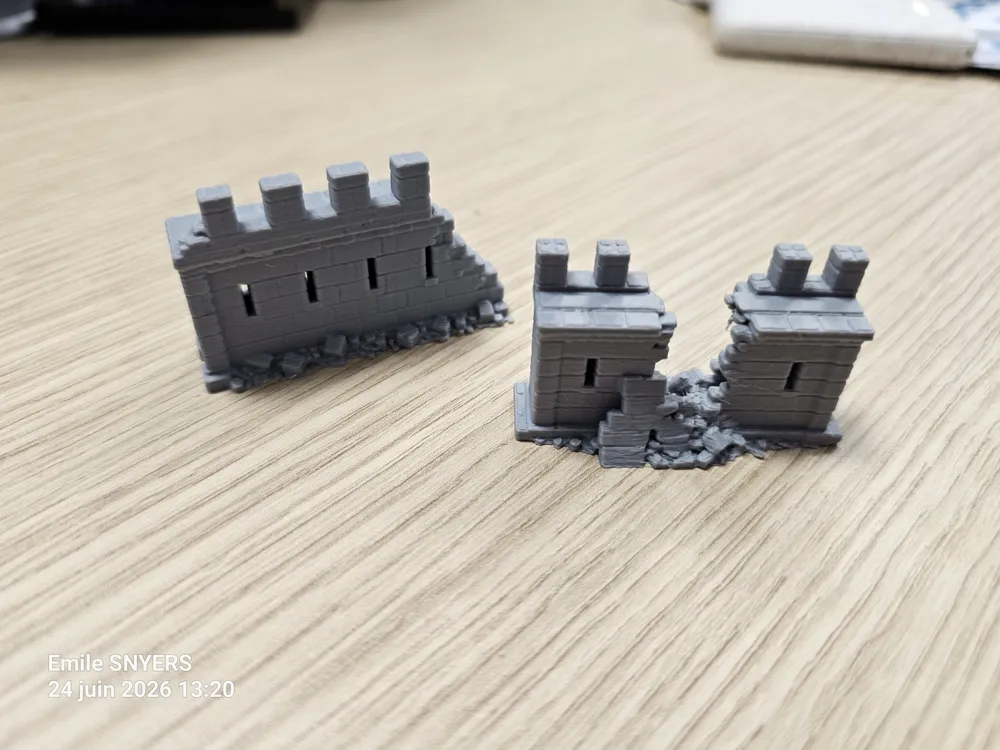
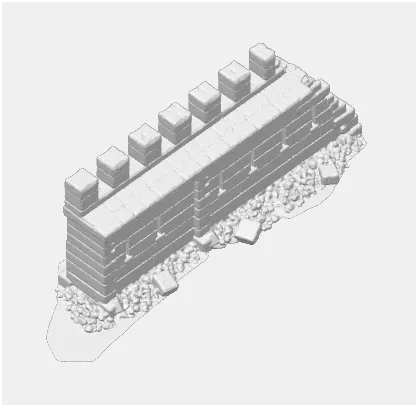
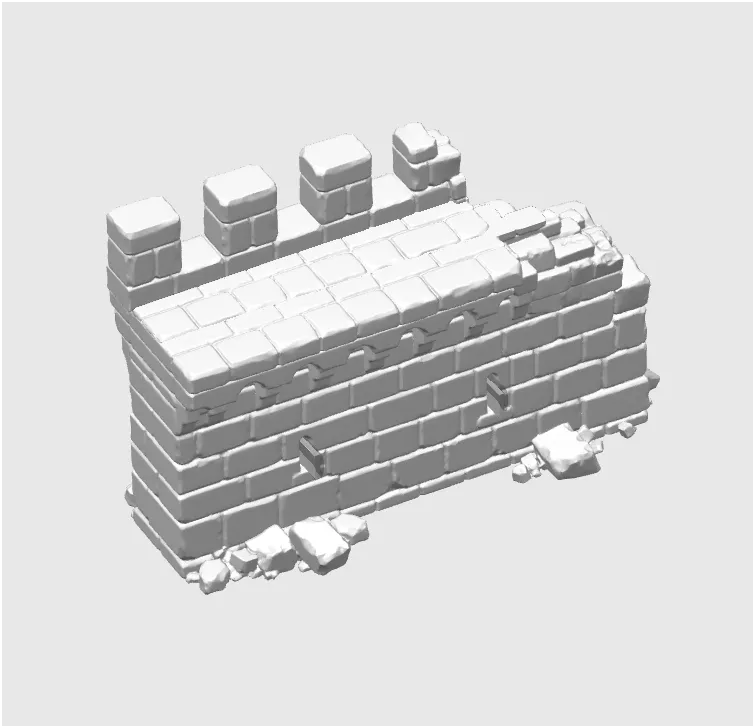
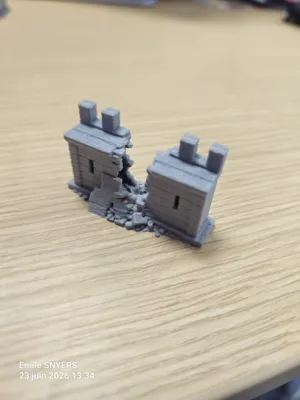
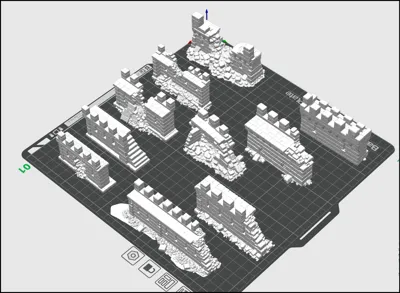
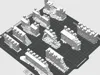
This collection brings together several sections of linear walls, designed for role-playing games, board games, wargames, dioramas, and fantasy medieval scenery.
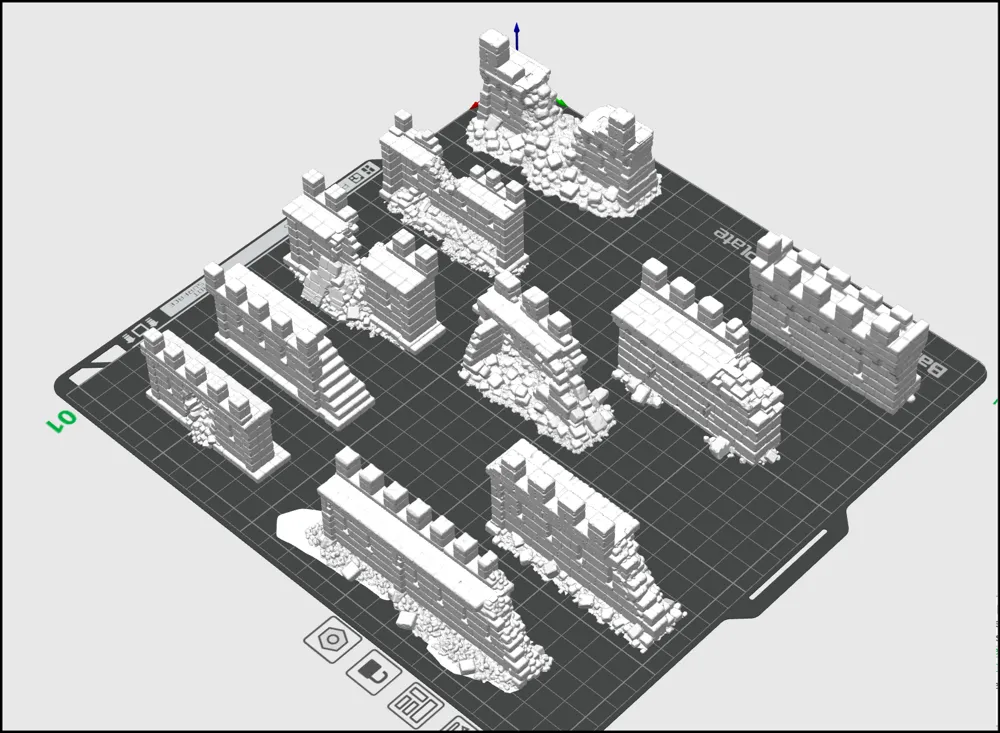
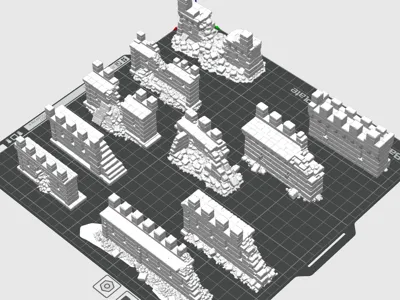
The set is composed of several different fortified walls, but designed to work together. The pieces share a common architectural style, similar size, and visual coherence so that they can be easily added to a game table.
Each element can be used alone, but the main interest of this collection is to be able to assemble several sections to create a wall, a defense line, a ruin, a destroyed passage or a siege decor.
🧱 Collection Content
| Number | Model Type | Description | |
|---|---|---|---|
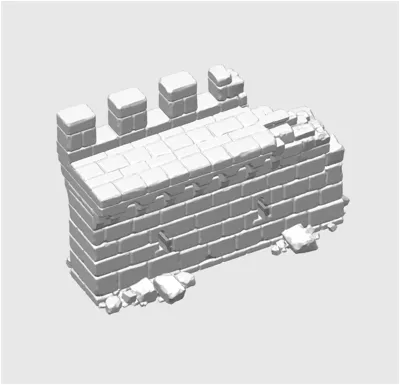
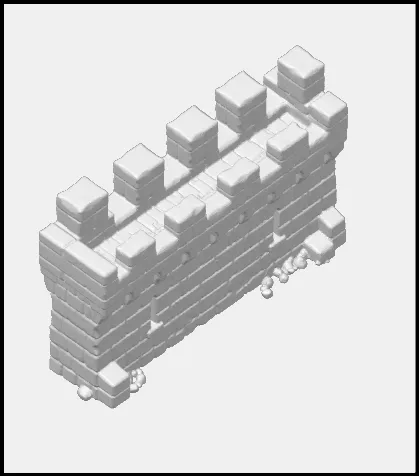 | Model 1 | Intact fortified wall | Classic wall section, ideal as a scenery base. |
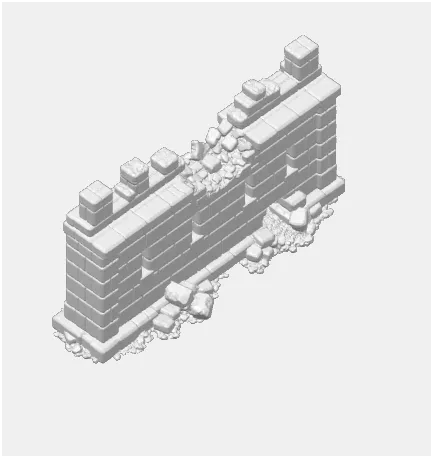
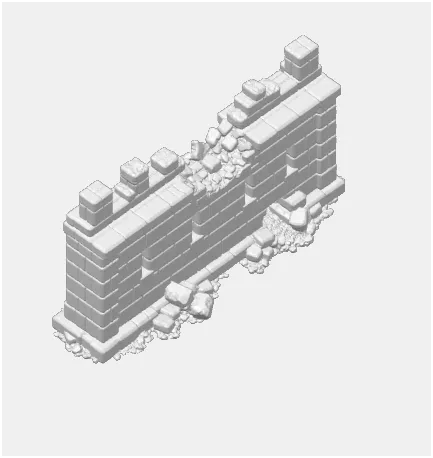 | Model 2 | Damaged wall | Variant with visible damage, perfect for representing an aging or attacked wall. |
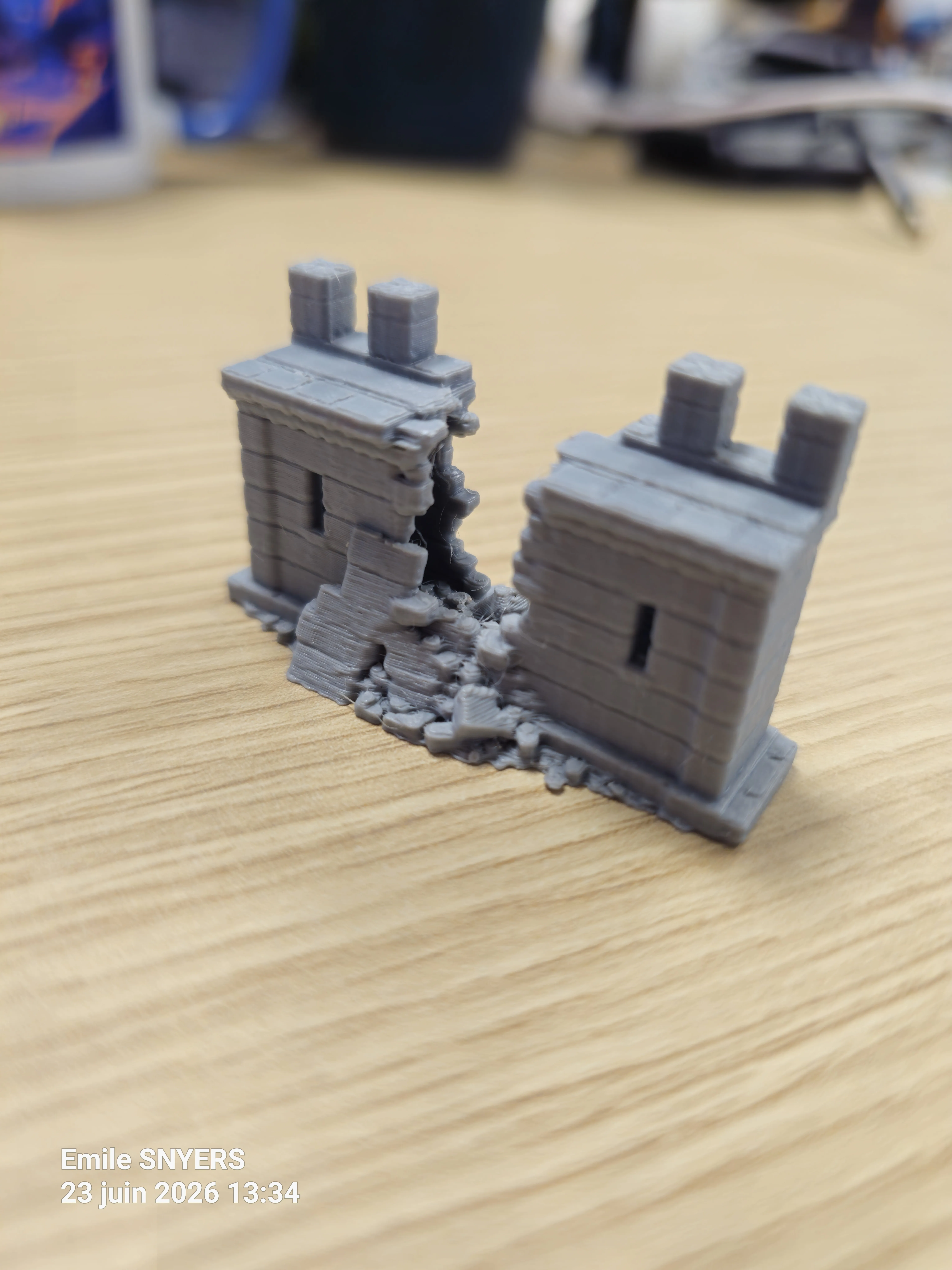
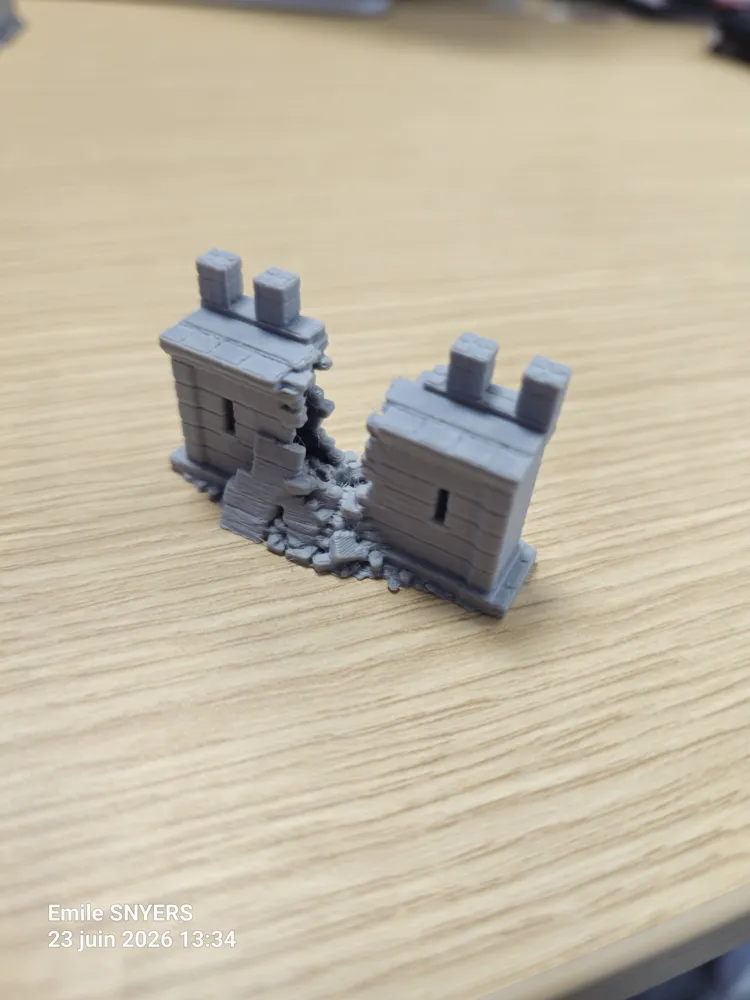
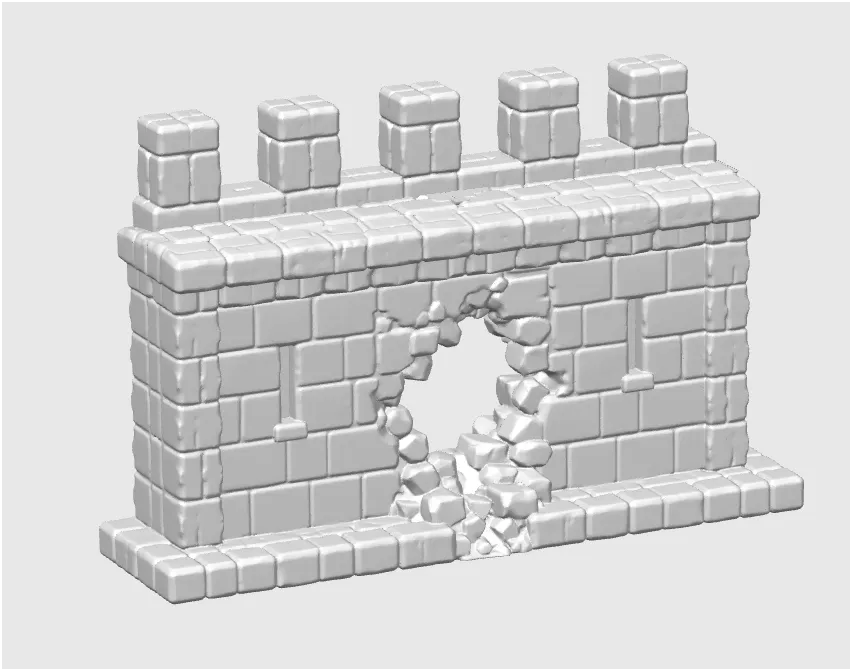
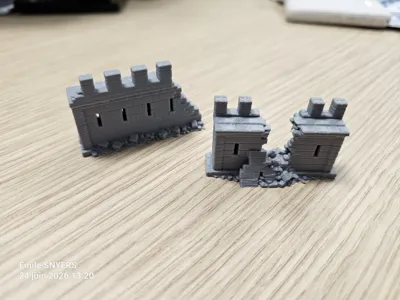
| Model 3 | Section with breach | Partially open wall, useful for creating a passage or a destroyed area. |
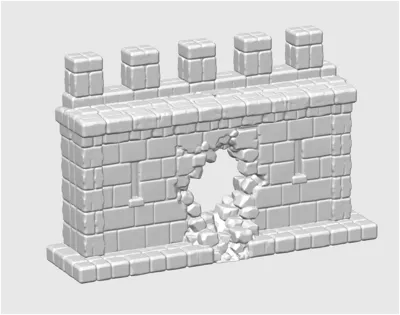
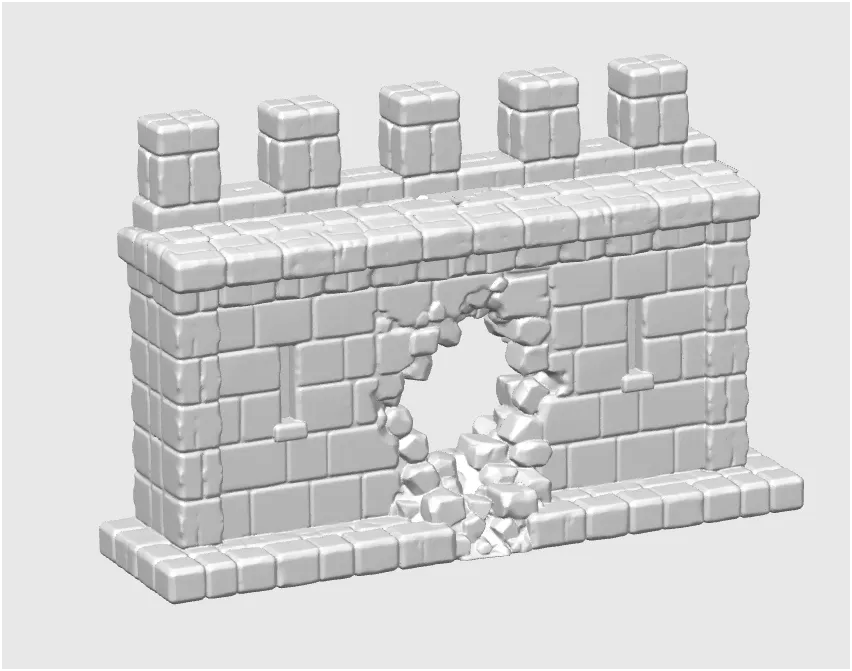 | Model 4 | Central opening | Variant with hole or opening in the center of the wall. |
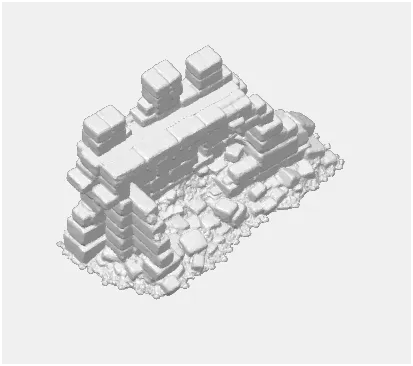
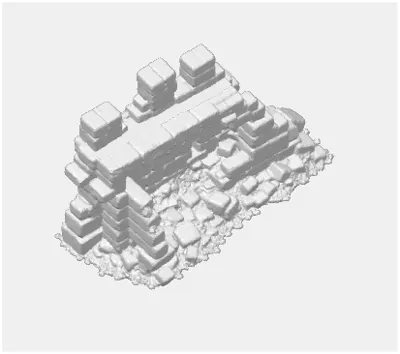
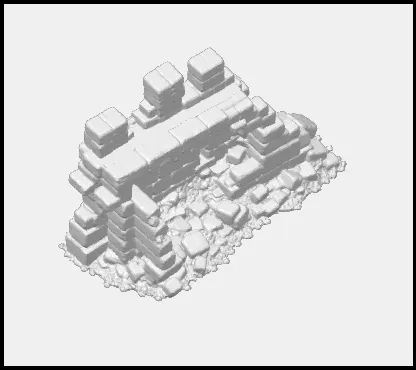 | Model 5 | Debris on the ground | Section accompanied by collapsed stones and pieces to enhance the ruin effect. |
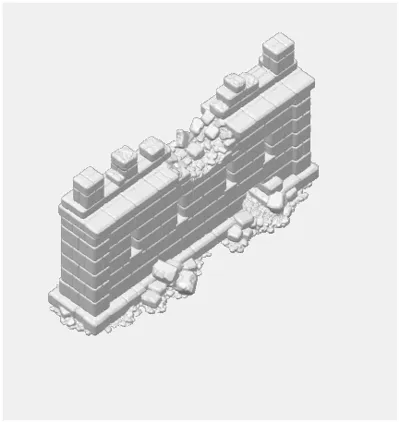
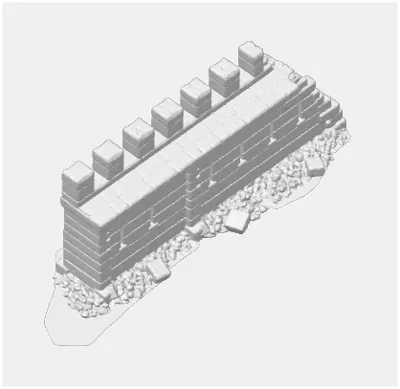
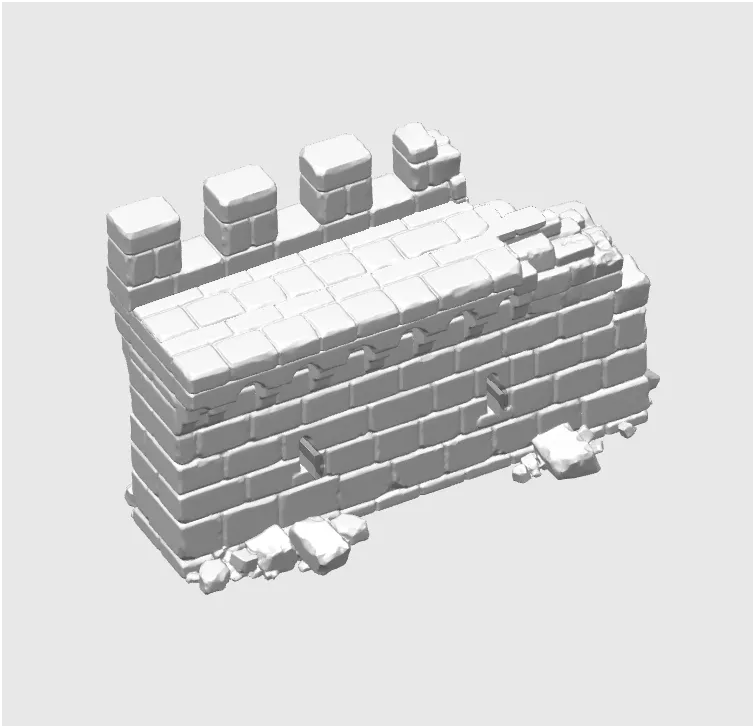 | Model 6 | Damaged on the edge
| Section primarily intact along its length but damaged at the ends |
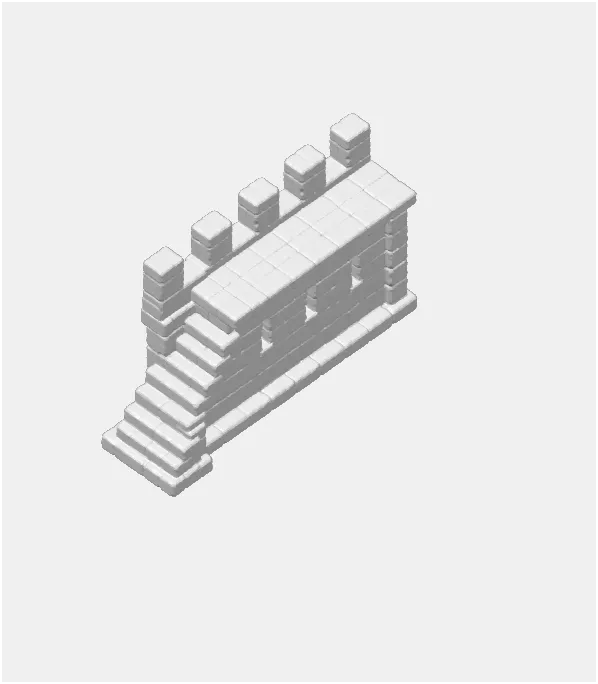
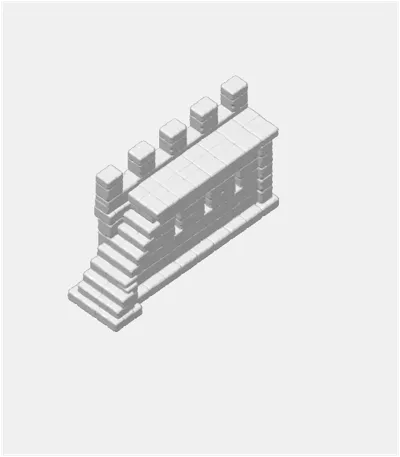
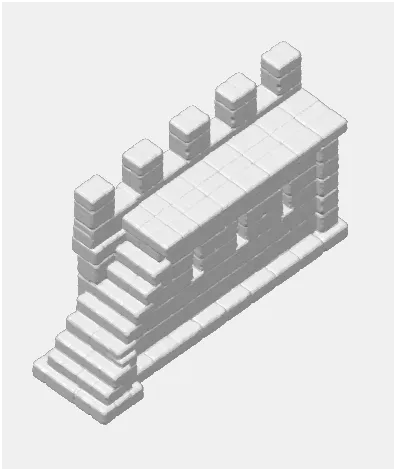 | Model 7 | Variant with stairs | Wall with rear access, allowing for the suggestion of a patrol path or a defensive area. |
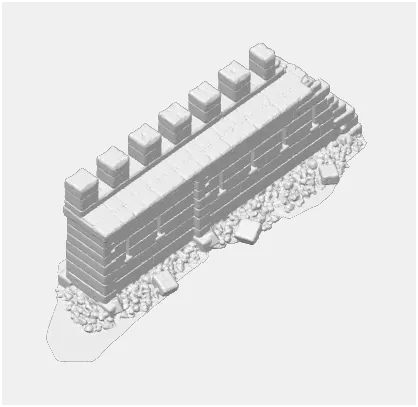 | Other variants | Extended version | Similar to model number 6, but with twice the length. |
The models are intentionally similar in style to form a coherent collection. The differences between the variants allow for the creation of more natural scenes, without giving the impression of always using the same wall.
🎲 Examples of possible uses
This collection can be used in several contexts.
🧙 Games and adventures
- Fantasy medieval role-playing games
To represent a wall, a fortress, a ruin, or a dangerous passage. - Board games and adventure games
To enrich a board with physical 3D printed elements. - Wargames and miniature battles
To create defense lines, obstacles, cover areas, or battle scenery. - Dungeon or fortress scenes
To build outdoor environments around a dungeon, a citadel, or an ancient rampart.
🏗️ Dioramas and models
- Medieval or fantasy dioramas
To create a fixed scene with ruins, soldiers, miniatures, or buildings. - Decorative models
To create a small rampart, siege, or ruin scene for display. - Shelf or display case decoration
The walls can be printed and painted to become decorative elements.
🌿 Broader decorative uses
- Miniature garden decoration
Possible for decorative displays, provided an outdoor-suitable material is used. - Aquarium decor
Use possible only with a suitable material, such as PETG, and after complete verification of compatibility with water, fish, and aquarium conditions. - Use with figures or toys
The models can serve as scenery for figures, toys, or dioramas, even if they are not designed directly for a specific scale. - Medieval diorama.
- Fantasy model.
- Display case or shelf decoration.
- Small hand-painted decor.
🔮 Upcoming collections planned
This collection is the beginning of a series of modular medieval sceneries.
Other compatible models may be published later, including:
- corner walls;
- round or square towers;
- fortified gates;
- complementary rampart sections;
- more advanced ruins;
- medieval buildings;
- dungeon elements;
- scenery accessories.
The objective is to gradually build a complete and coherent collection, allowing for the creation of larger and more varied fantasy medieval scenes.
💬 Your feedback is welcome
Feel free to leave a comment if you like this collection, if you have ideas for improvement, or if you would like to see certain elements in future publications.
Suggestions are useful for improving future models: new shapes, variants, wall types, dimensions, complementary elements, or scenery ideas.
🤝 Transparency on creation
This project was created with the help of artificial intelligence, particularly from Meshy.ai.
I want to state this clearly for transparency. AI was used for generation, inspiration, and the creation of 3D shapes.
Human work was then carried out to select the models, prepare the files, organize the collection, verify overall coherence, and make the elements usable for 3D printing.
Thank you for your interest, happy printing, and good adventures around the table! 🏰🎲
Documentation (1)
License



Comment & Rating (0)