
4" Fan - Fur & Chill | HEPA Bed Cooling System
Print Profile(2)
Description
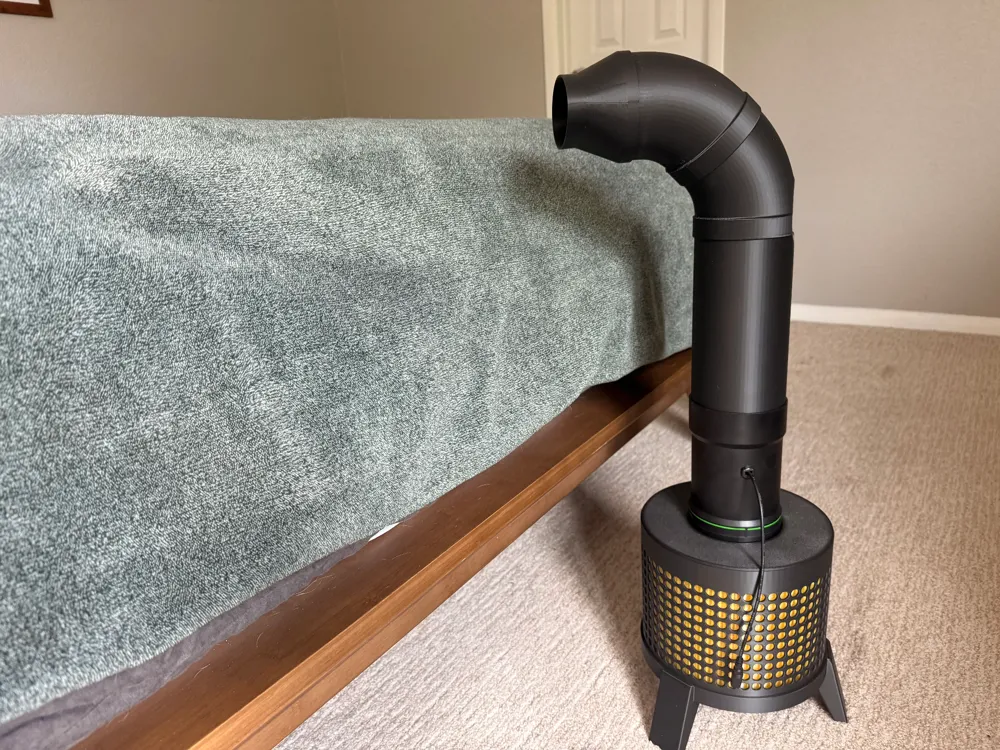

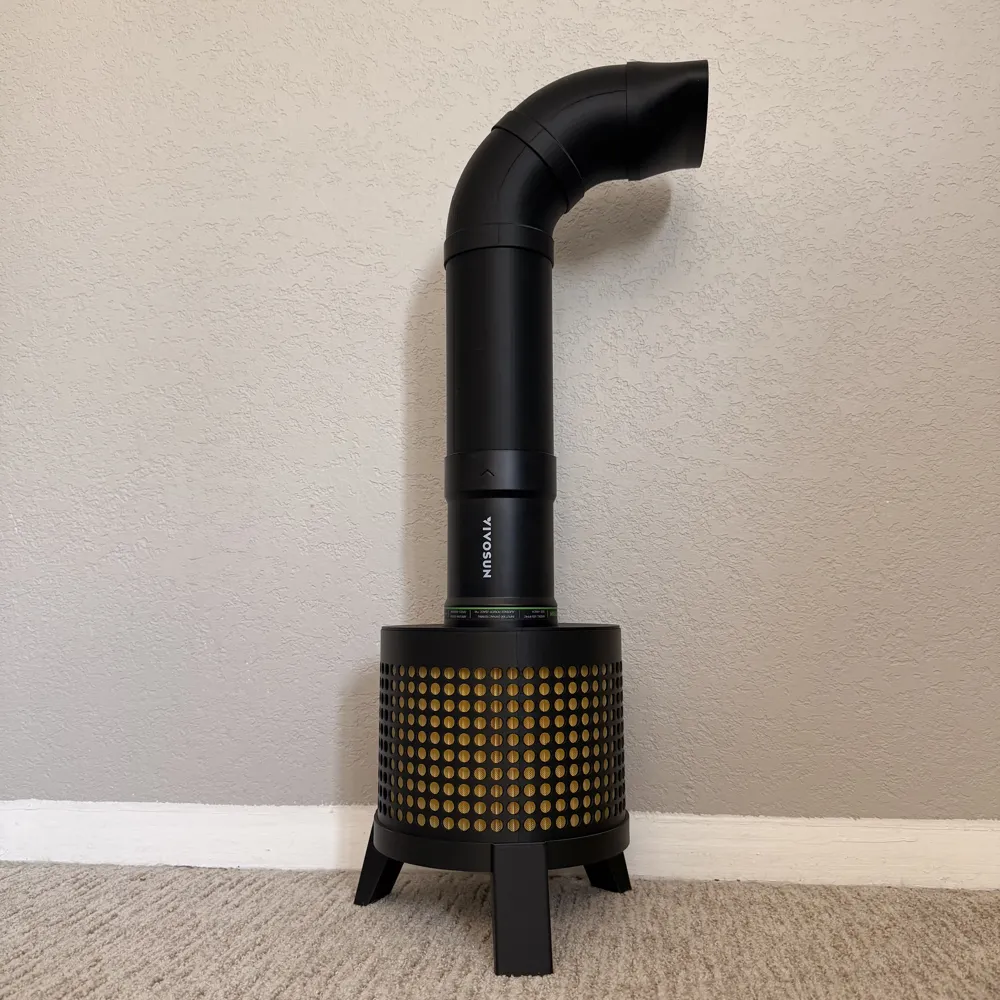
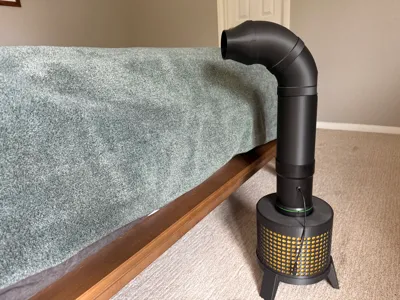
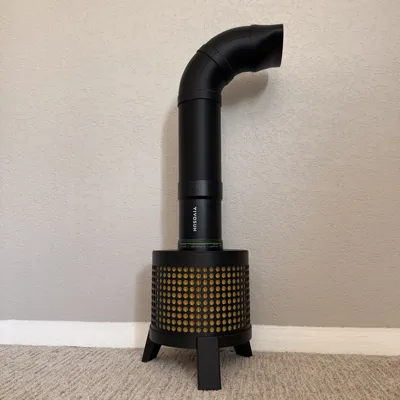
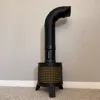
The Overachiever: Fur & Chill 4" Edition
I designed the Fur & Chill 6" Edition first. Then I tested a 4" fan out of curiosity. I didn't expect much. 130 CFM vs 345 CFM is not a fair fight on paper. Turns out fluid dynamics had other plans.
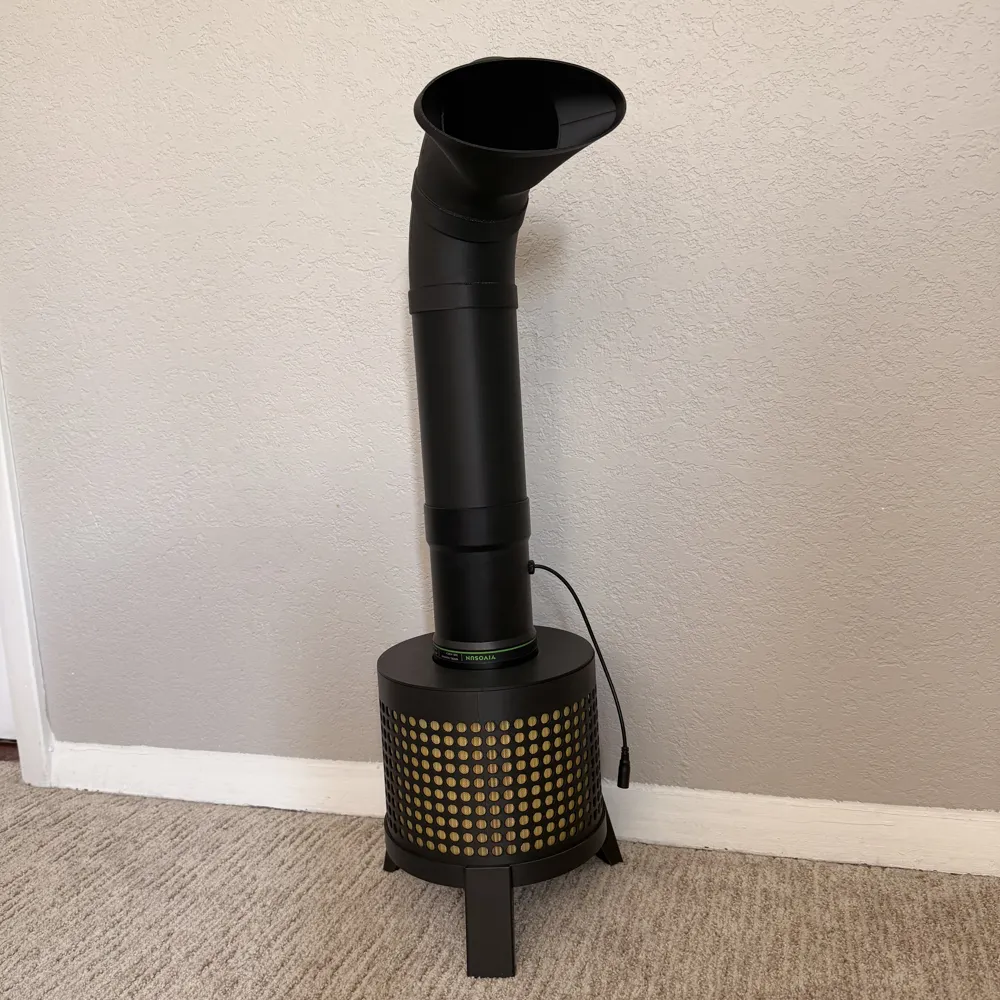
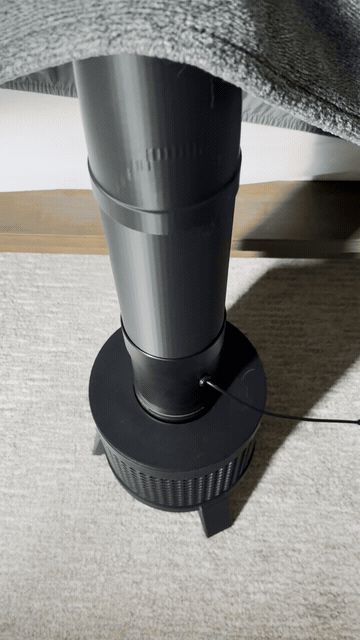
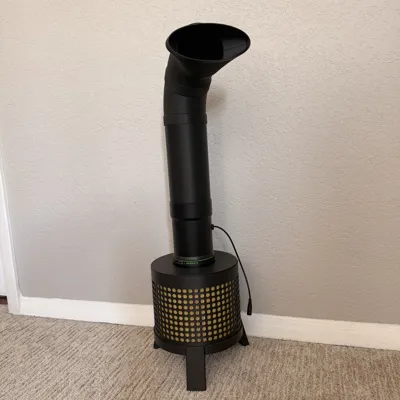
The 4" fan's higher velocity through a smaller duct punches through the HEPA filter more efficiently than the higher volume 6" fan. Pair that with a redesigned oval nozzle and the result is strong, directed airflow in a quieter, more compact, and cheaper package. This is my recommended version for most people.
That said, the 6" isn't obsolete. If you run it on a larger bed, want maximum volume of air moving under the covers, or just sleep like you're trying to recreate a wind tunnel, the 6" still delivers. But for a typical setup where you want effective cooling without waking your partner with fan noise, the 4" is the sweet spot.
The Problem
BUT WAIT — THERE'S MORE AIRFLOW! (Somehow)
Got hot flashes? Partner stealing all the cool air? Just generally melting into your mattress like a forgotten popsicle? I have a solution for you. It only requires a printer, some filament, and the willingness to spend way too many evenings measuring air velocity with an anemometer like a completely normal person.
I stumbled across Paul 2 Travel's brilliant Bed Rocket and immediately thought, "yes, this is exactly what I need." Except I share a house with an 86lb drooling fur monster whose entire life purpose appears to be shedding, and a cat who bullies both of us. Pointing a fan at your bed while living with these two is less "refreshing sleep experience" and more "marinating in a fur tornado all night."
Fur & Chill was inspired by Paul 2 Travel's Bed Rocket, which is still a fantastic solution if you don't need filtration and want something that uses less filament. Go give it a look.
What Fan Do I Need?
Vivosun 4" inline fan: Affordable, widely available, and apparently better at this than it has any right to be.
Tested filter: Levoit Core 300 replacement filter, widely available, affordable, with multiple compatible third-party options if you want to save a few dollars.
A Note on Filters
Not all HEPA filters are created equal for this application. I tested a Shop-Vac HEPA filter and it decimated airflow. Shop-Vac filters are optimized for suction, not continuous airflow from an inline fan. Expect 85%+ airflow loss. Hard pass.
Stick to a dedicated air purifier HEPA filter. These are designed for consistent airflow resistance and work significantly better with inline fans.
I also tested the Levoit Core Mini filter hoping for a more compact option. It reduced airflow to a very gentle breeze. If there's demand I'm happy to upload an adapter for it, but expect lighter airflow.
Assembly Instructions
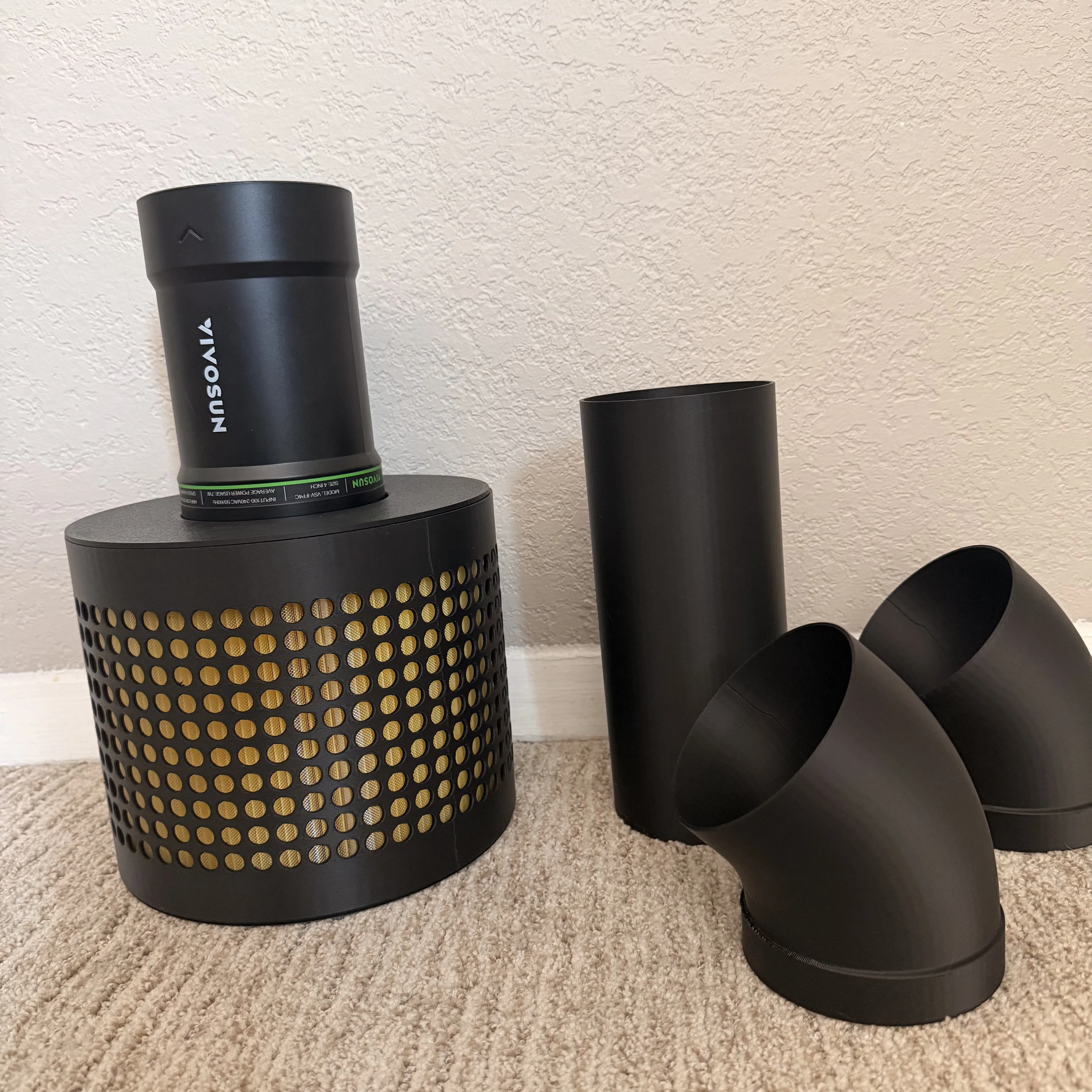
Step 1 — Filter & Canister
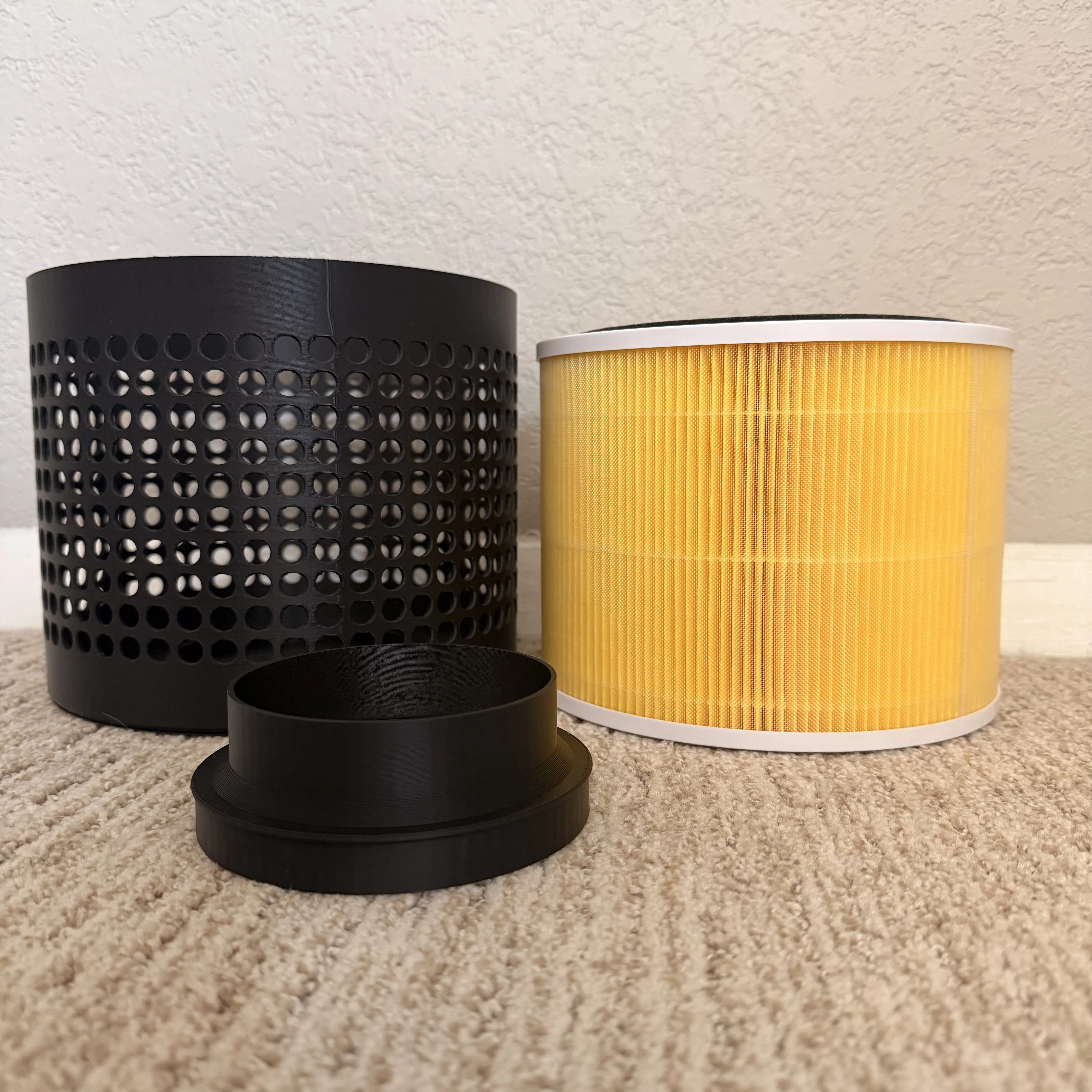
Drop the HEPA filter into the canister. Attach the adapter to the top of the canister (it's a tight fit, expect to “pop” it in)
Step 2 — Fan
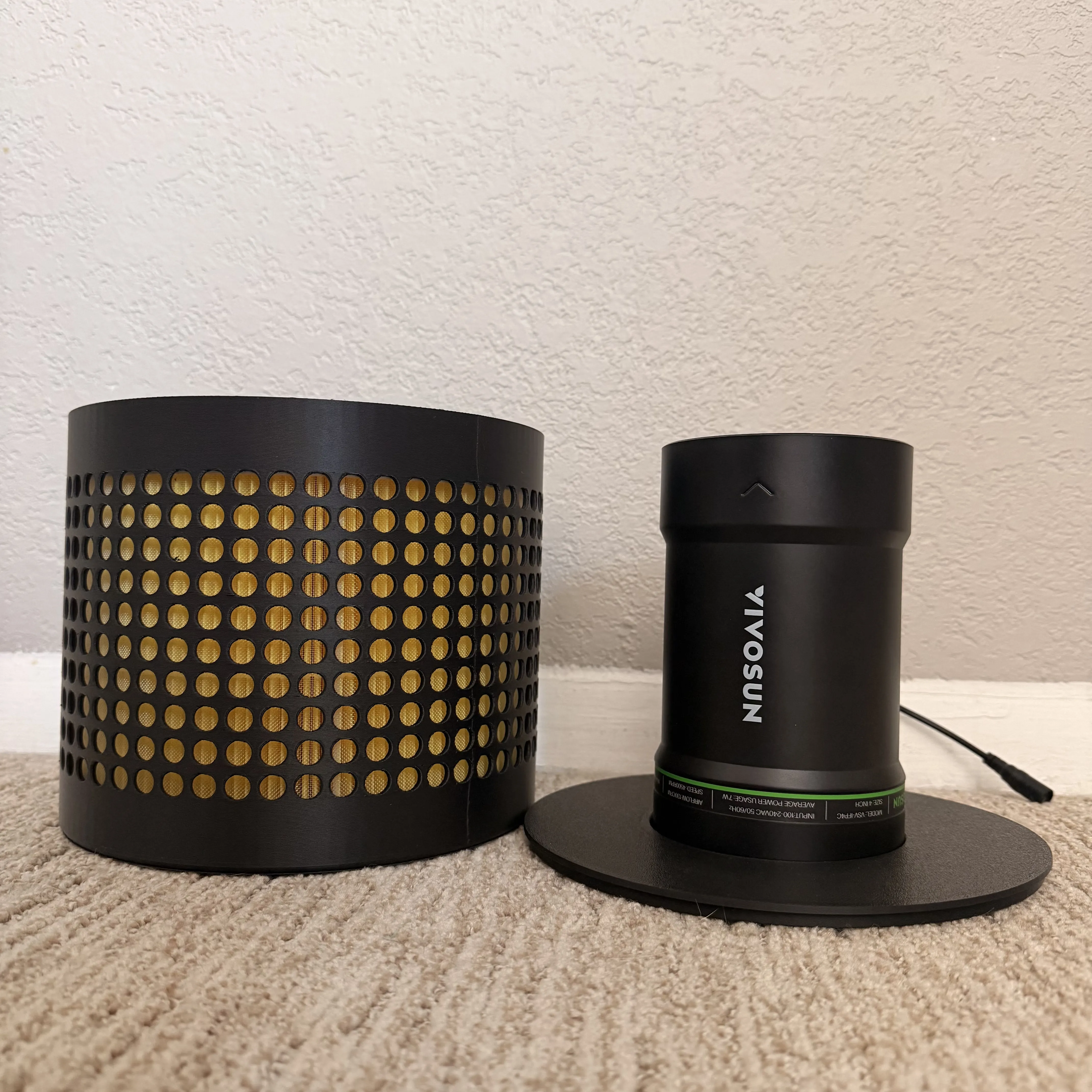
Slide the collar/skirt onto the fan, then press the fan into the adapter until seated. There are markings on the fan to tell you which direction air flows.
Step 3 — Ductwork
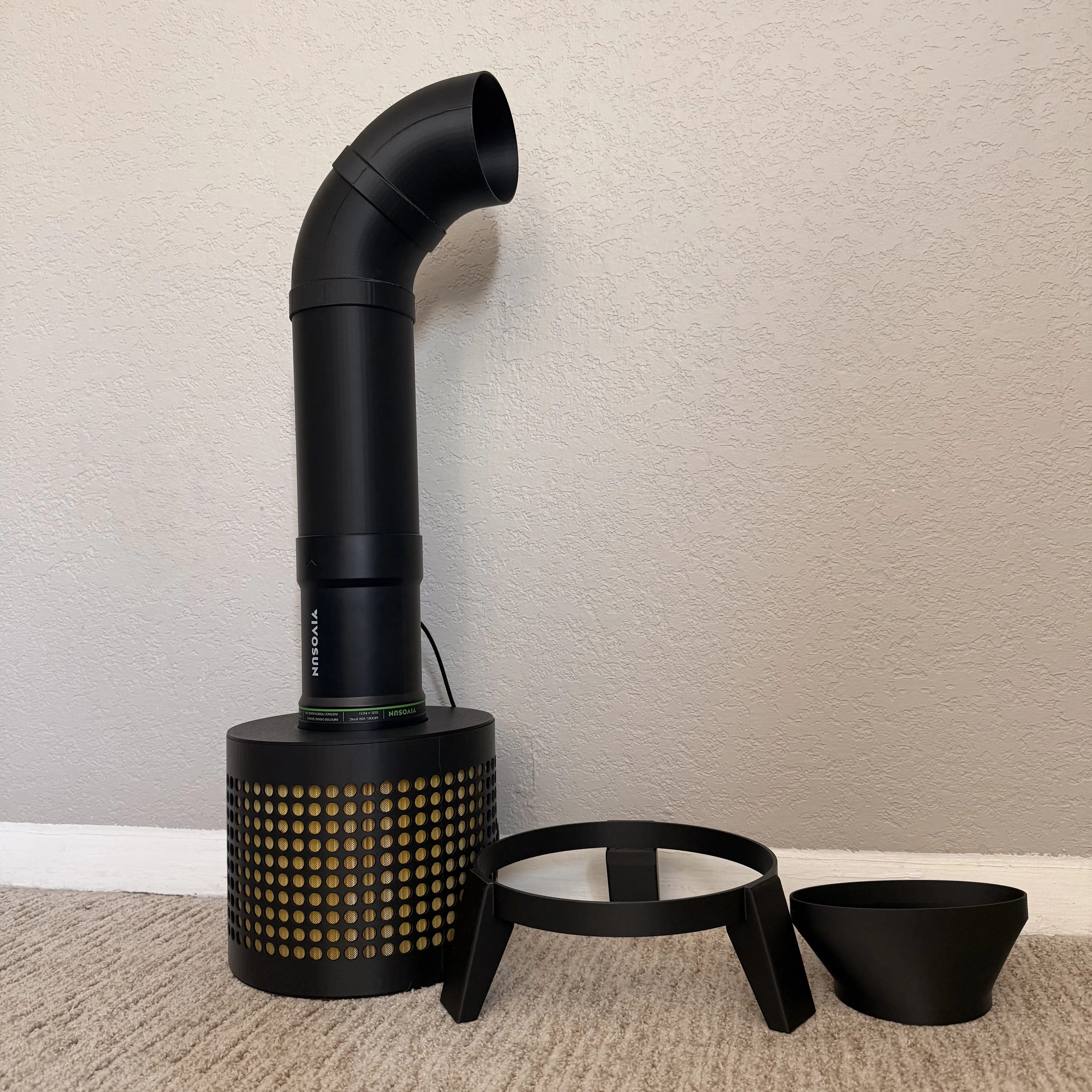
Connect the long cylinder to the top of the fan. If additional height is needed, attach the optional height extender first (not pictured). Connect the first 45° elbow to the cylinder, then attach the second 45° elbow to the first.
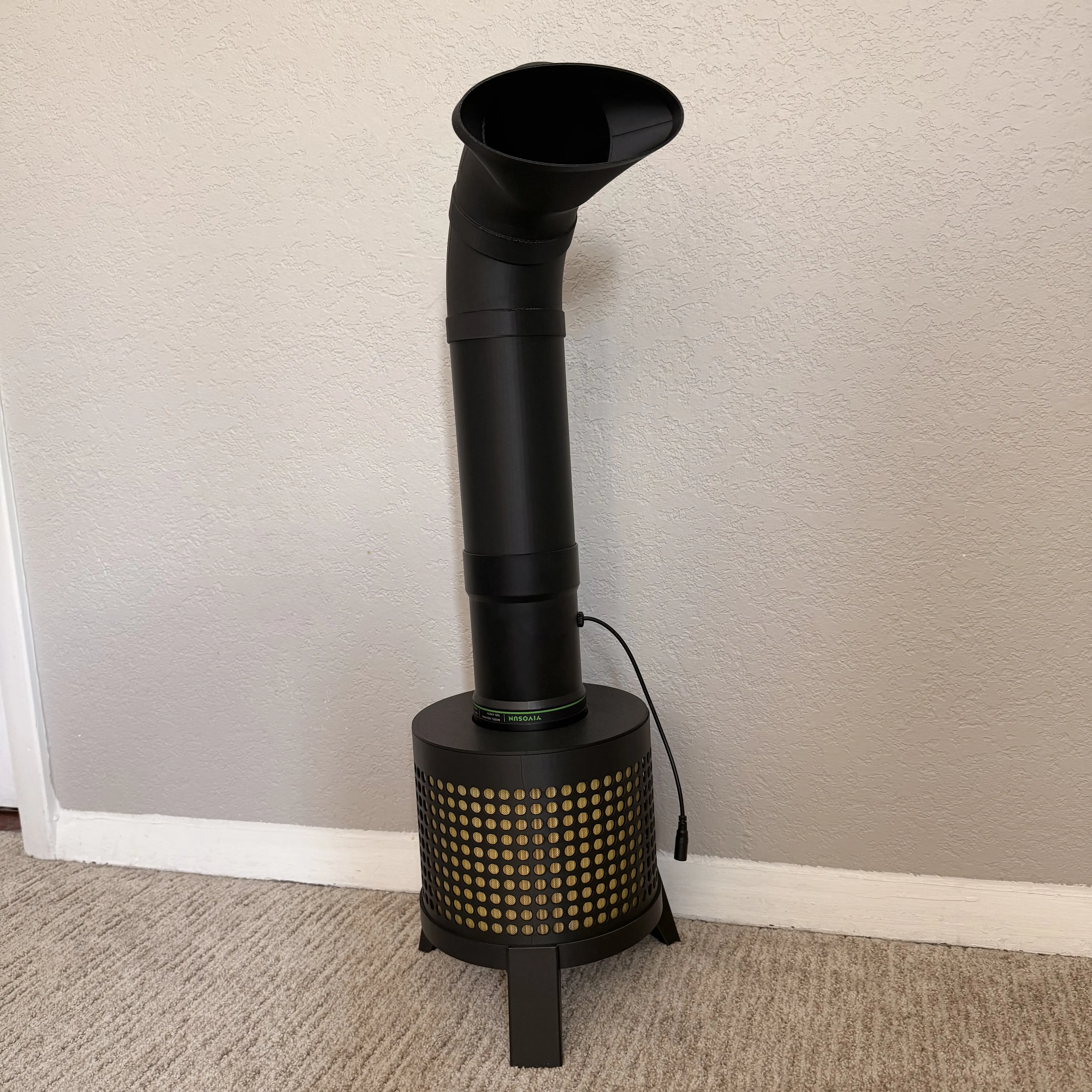
Step 4 — Nozzle & Base
Attach the nozzle to the final elbow. Set the completed assembly into the leg ring base and orient the nozzle toward the head of the bed.
License

You may create derivative works based on this object, provided that all such derivative works are published exclusively on the MakerWorld platform and include proper attribution to the original creator. You may not share, upload, host, distribute, or publish this object—or any derivative work of this object—on any other digital platform, marketplace, or distribution channel. Commercial use of this object and any derivative works is strictly prohibited. This includes, but is not limited to, selling, renting, sublicensing, or using the object in any context in which you receive monetary compensation or other financial benefits.


Comment & Rating (10)