
TURTLE: Holonomic Monopod Coaxial-Swerve XRP Robot
Print Profile(1)
Description
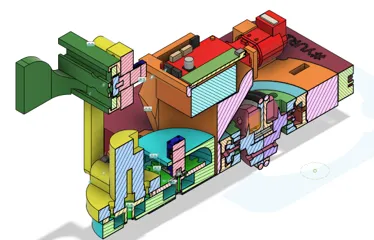
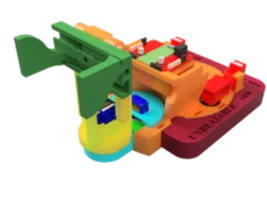
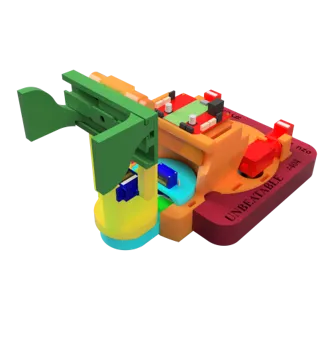
TURTLE: Holonomic Monopod Coaxial-Swerve XRP Robot
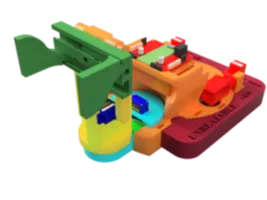
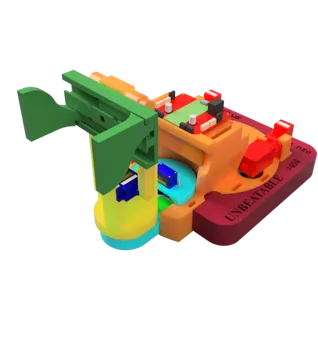
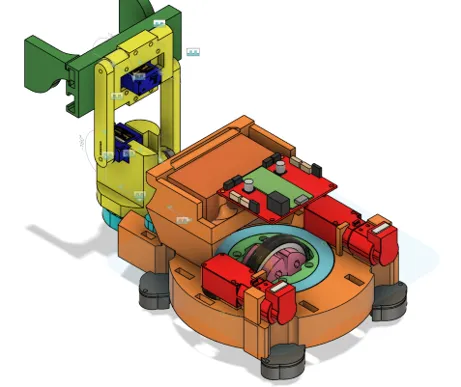
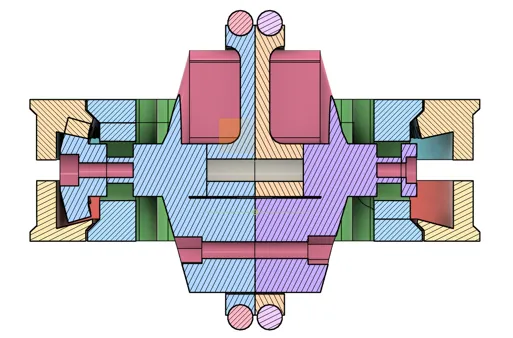
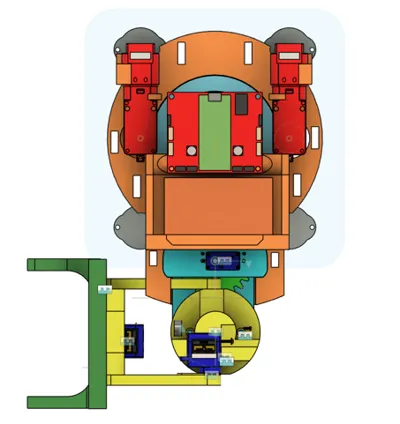
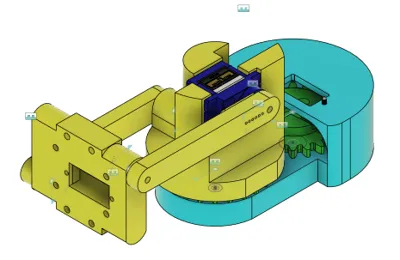
Welcome to the TURTLE (Translational Universal Robotic Two-Axis Linkage Elevator) —a complete, ground-up overhaul of the generic SparkFun/Cornell Experiential Robotics Platform (XRP) kit into a high-performance, holonomic powerhouse. Engineered specifically for the 2026 Bhartiya Yantra Khel Mahotsav (BYKM) Fire and Rescue Game, this design pushes the absolute limits of small-scale 3D-printed mobile robotics.
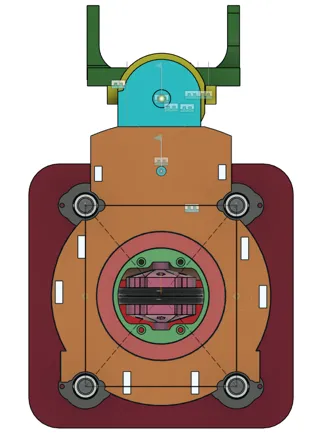
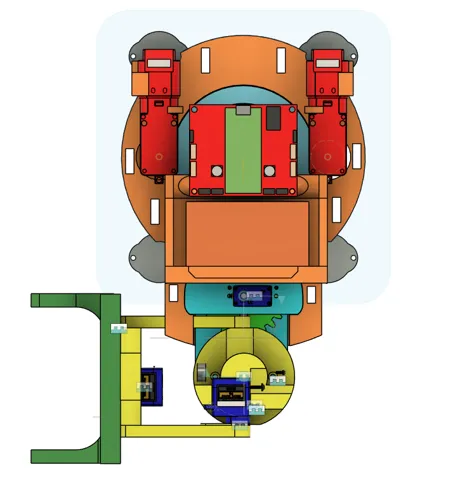
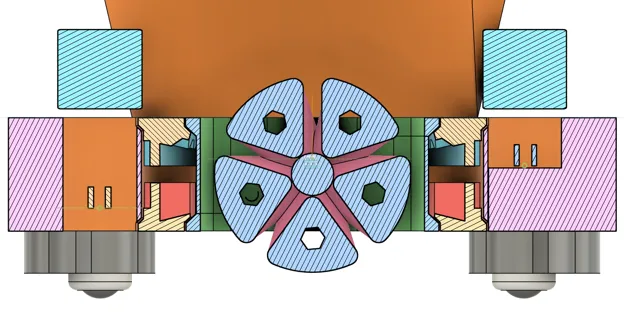
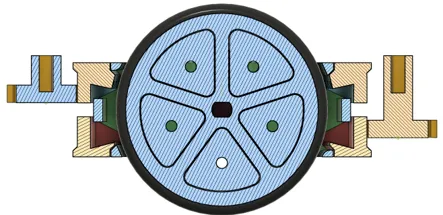
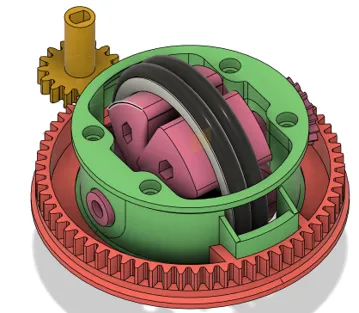
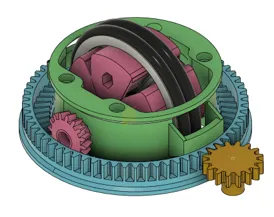
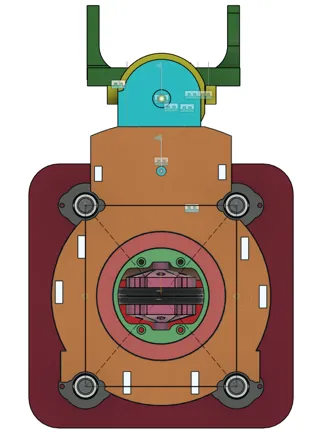
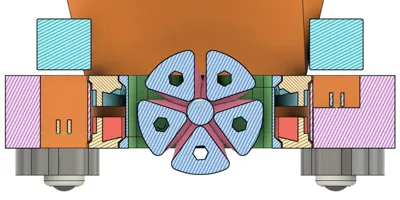
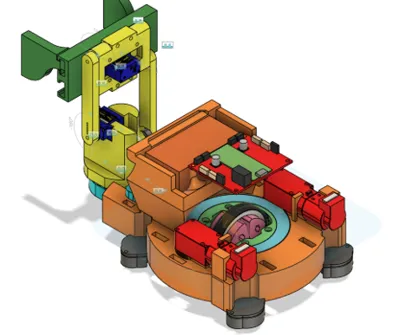
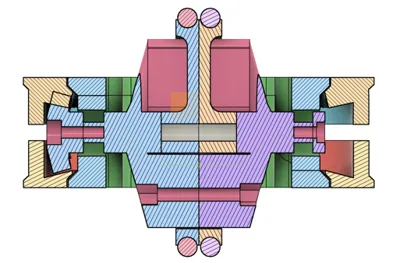
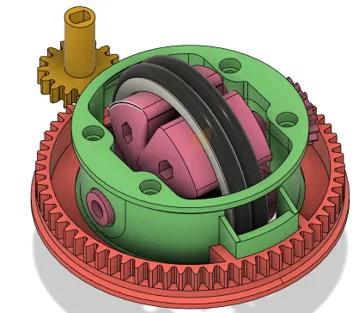
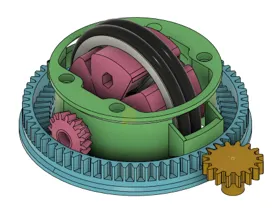
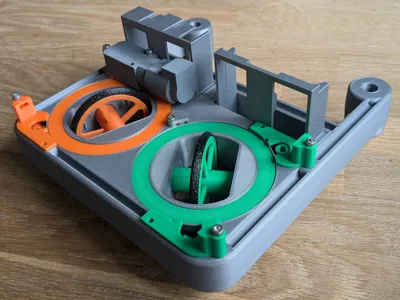
Instead of sticking to standard, sluggish tank or space-consuming mecanum drives , we built a novel monopod coaxial-swerve drive module directly into the center of the chassis, complemented by a precision virtual four-bar linkage arm and parallel gripper.
Important Note: The Default Castor Wheels Are Awful!
Let’s be real: the default castor wheels included in the stock XRP kit can be described in two words: "not desirable." They are dimensionally bulky and act like literal vacuums for dust and hair. Over time, this buildup induces massive friction, completely destroying the robot's ability to drive in a straight line. Cleaning them is a nightmare that will actively ruin your wheels.
The Fix: This CAD build completely ditches them. We redesigned the layout to accommodate highly compact N20-style ball castor wheels. They offer near-zero friction, fit our custom compact footprint perfectly, and won't collect field sediment.
Key Design & Engineering Features
1. Monopod Coaxial-Swerve Drivetrain
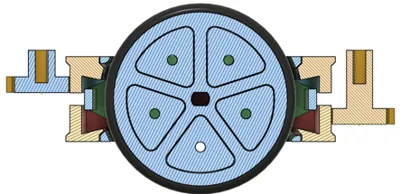
True Holonomic Vectoring: Uses two independent motors operating through a custom 4:1 bevel gear reduction stage to independently control drive speed and wheel heading orientation.
Pure 2D Translation: Operating as a centralized monopod, the distance vector from the center of mass is zero
Drive Inversion Firmware Optimization: The system automatically calculates the shortest angular path to a new target heading; if a turn exceeds 90°, it flips the motor direction and steers to the antipodal angle, cutting tracking times in half!
DOCX
2. Virtual Four-Bar Linkage Arm
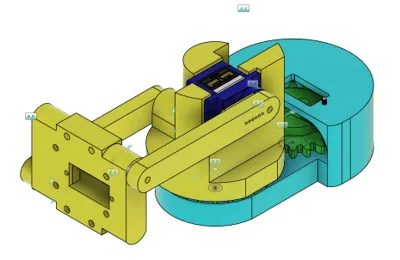
Ground-Hugging Reach: Boasts a maximum extension range up to 160mm while maintaining an explicit 15° incline block to seamlessly clear internal chassis boundaries.
Parallel Plane Tracking: The custom four-bar geometry ensures the end-effector claw is always perfectly locked parallel to the arena floor, completely eliminating driver tracking error or adjustment delays.
Size Constraint Bypass: By utilizing a minimized "virtual linkage" footprint, the entire arm can fold a full 90° vertical, tucking safely inside the rigid 25cm starting box requirements.
3. High-Capacity Parallel Gripper
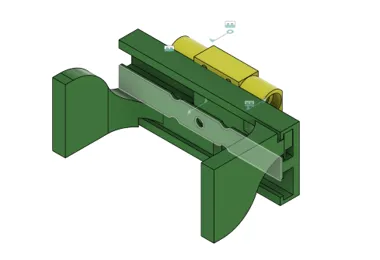
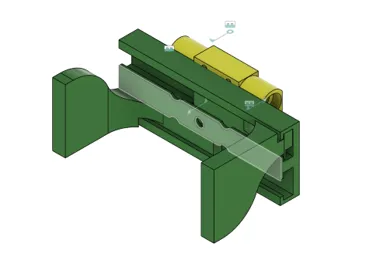
Double Element Payload: Specifically engineered with an optimized 1.25-module rack-and-pinion span to securely clasp up to two game blocks at once (80mm combined span + 10mm structural buffer).
Deterministic Tracking: Unlike traditional sweeping pivot claws, the linear parallel extension keeps the center of mass completely uniform, allowing for flawless item pickup even under low-clearance conditions.
4. Optimized Integration Chassis
Built with a integrated form-fitting perimeter channel optimized to carry a flexible TPU safety bumper to comfortably absorb field collisions.
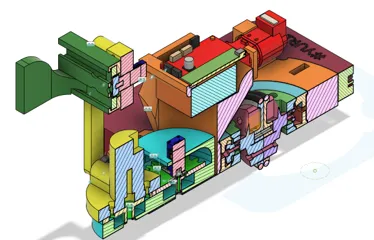
Keeps the electronics board, battery payload, and arm actuator mounts efficiently tiered to drop the center of mass right over the central coaxial pod.
📐 Print & Assembly Guidelines
- Bumper Stage: Flexibles (TPU / 95A).
- Bevel Gears & Linkages: Tough filaments highly recommended (PETG, ABS, or PA-CF) printed at dense shell thicknesses.
Accuracy Advice: We recommend lightly sanding the outer tracking tracks of the main outer gears and applying a small amount of mechanical grease inside the pod chamber to smooth out printer tolerance deviations.
Designed by Team Bishop’s Undri (Pune, MH, India) If you are using this code block, compiling this project, or adapting our monopod swerve concept for your local STEM/XRP chapters, drop a comment below—we'd love to see your builds!
Documentation (1)
This remix is based on

License



Comment & Rating (0)