
"My Mini Animal World" Scene-based Science Education Tool
Print Profile(3)
Bill of Materials






Description
Boost Me (for free)
If you like this model, please boost me for free, and I will create more interesting models!
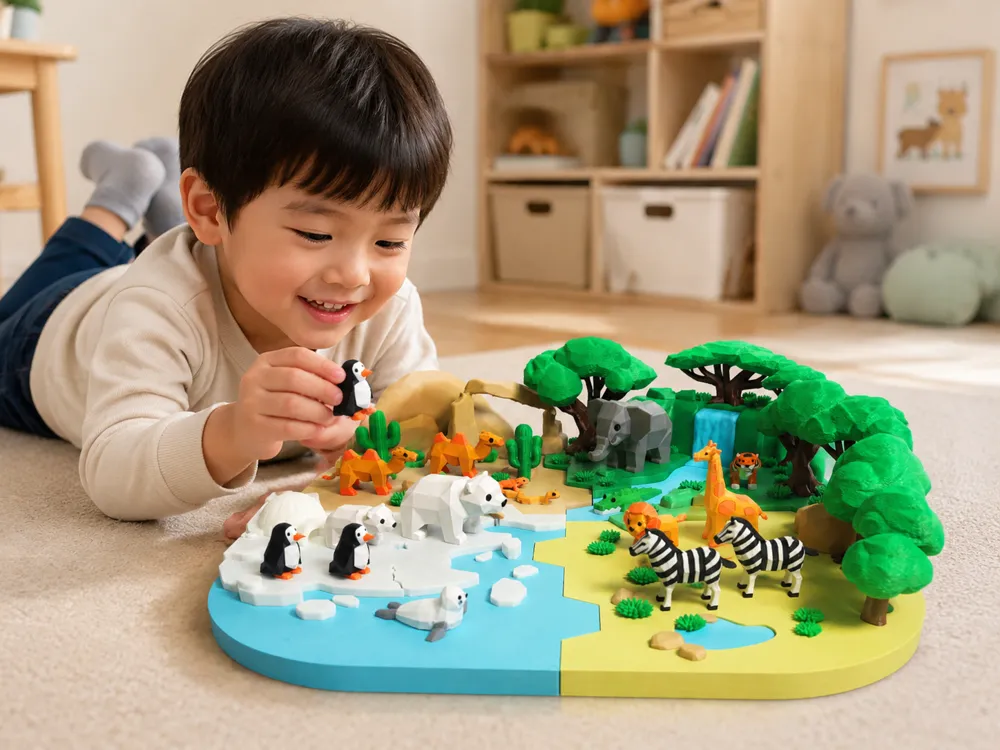
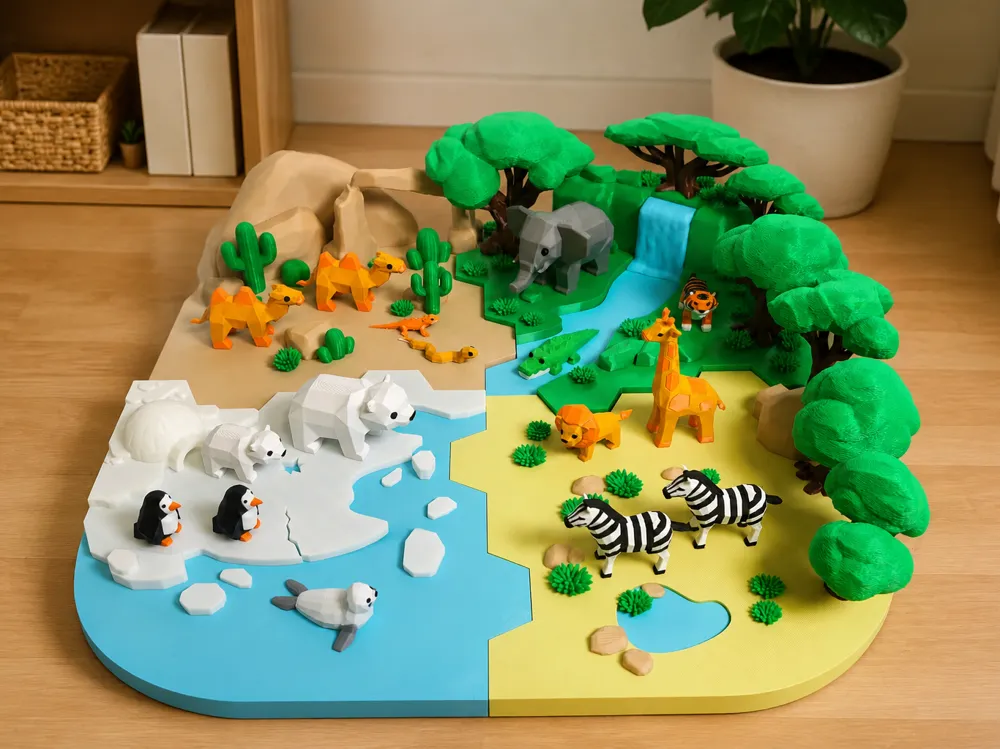
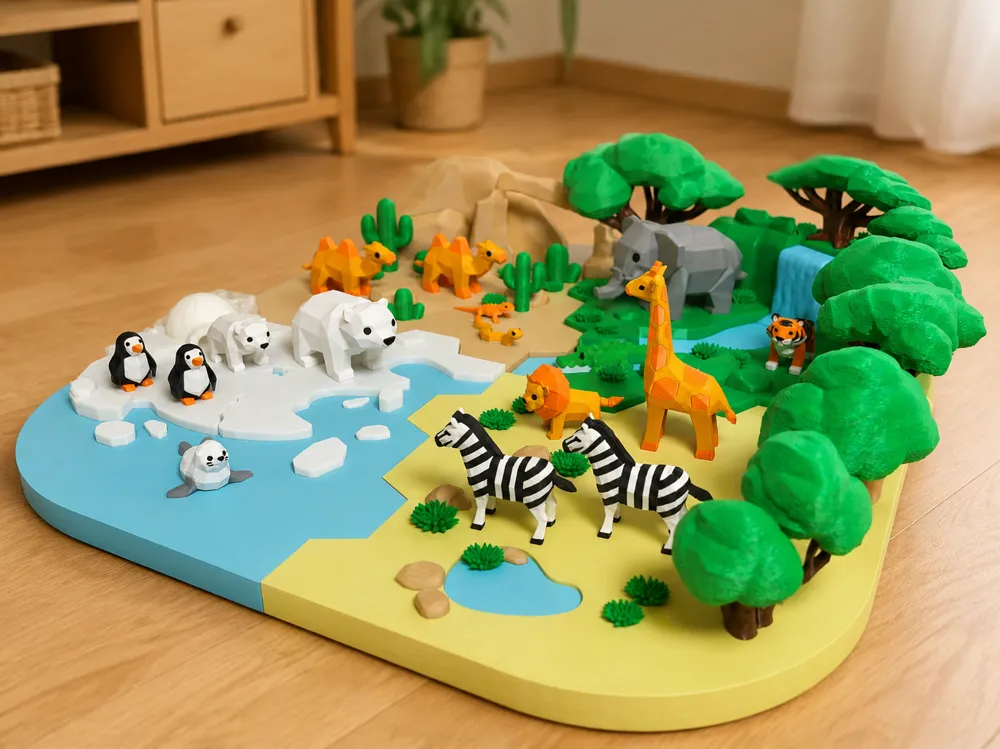
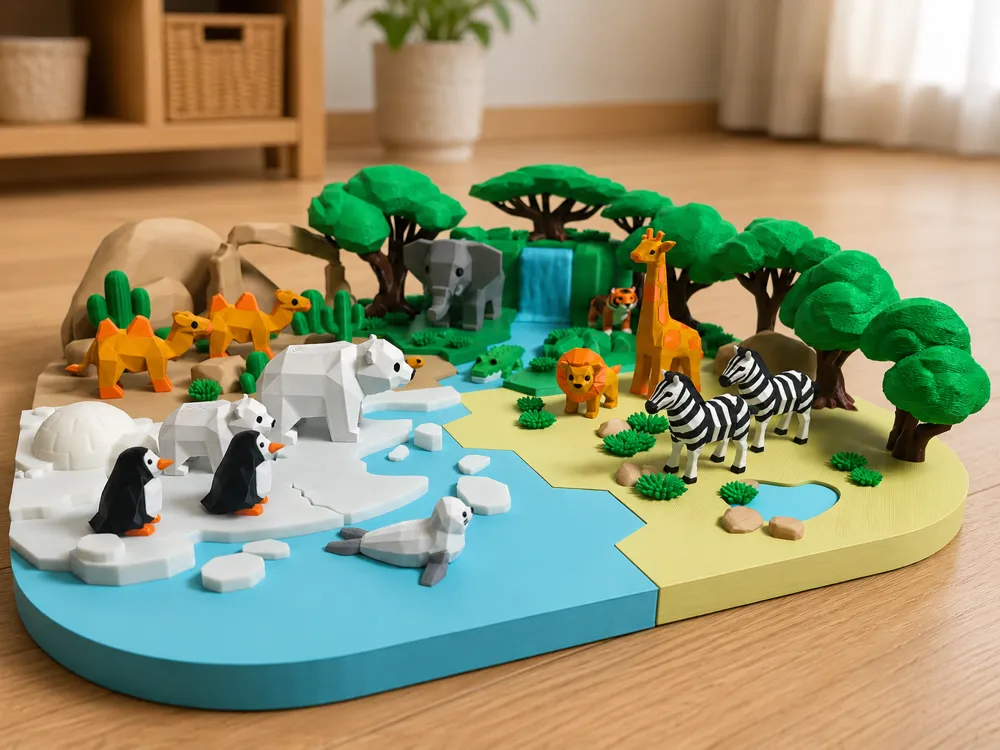
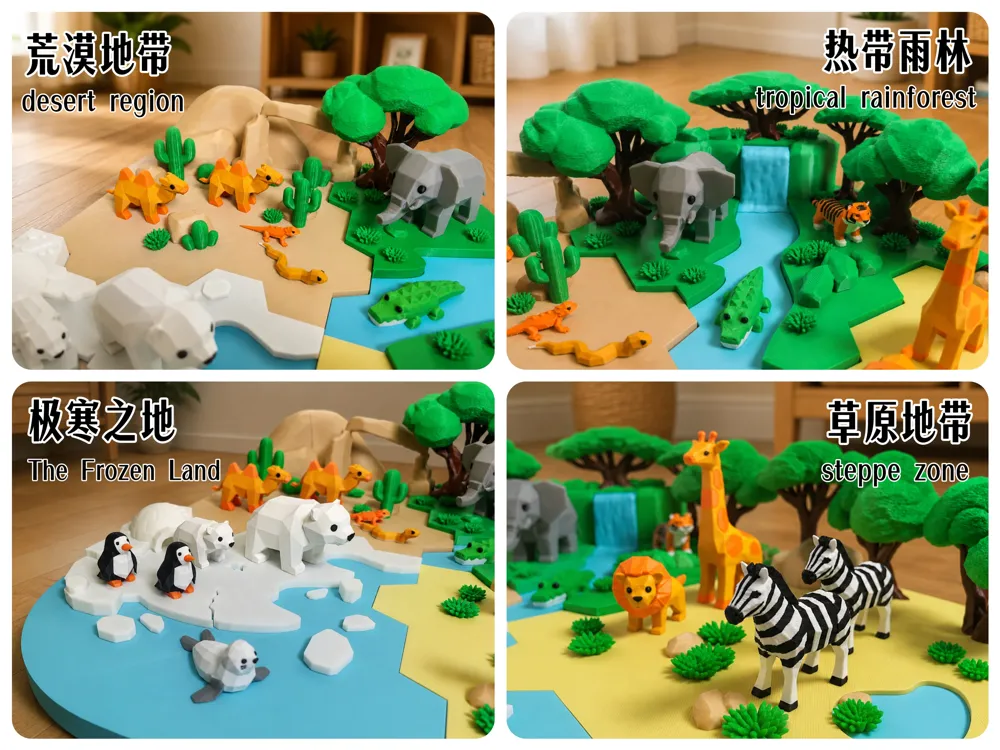
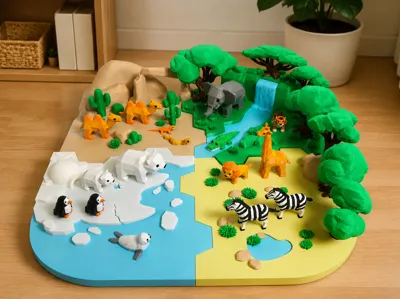
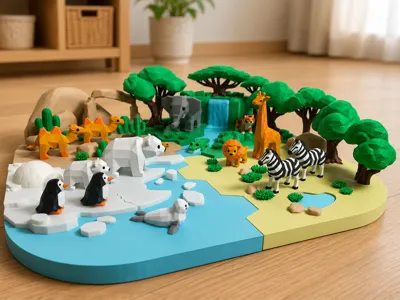
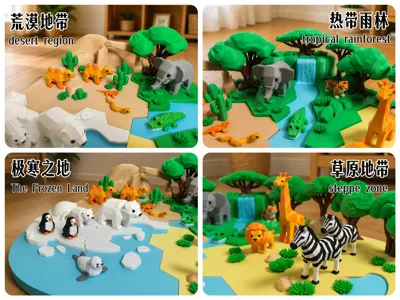
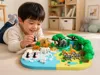
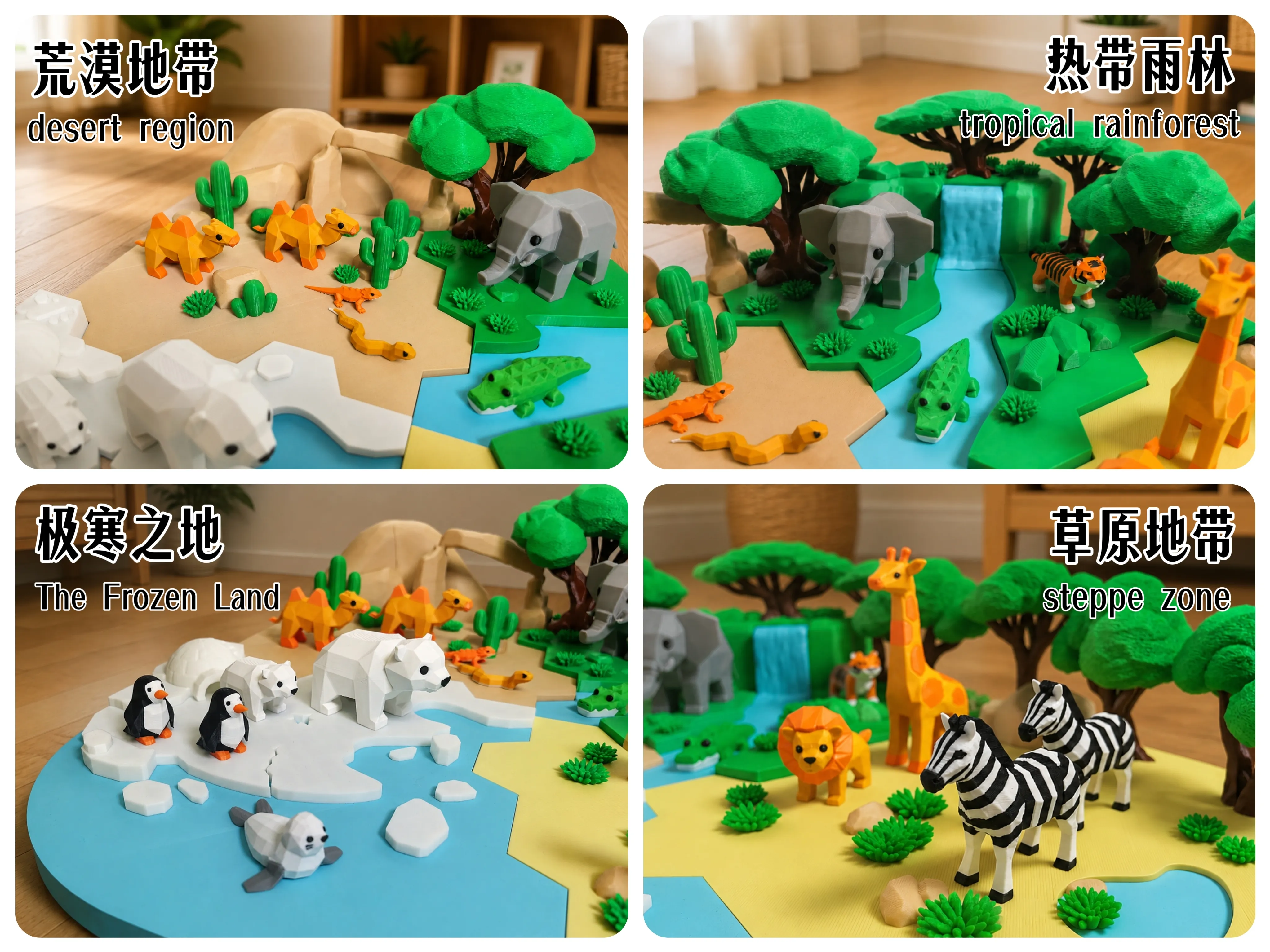
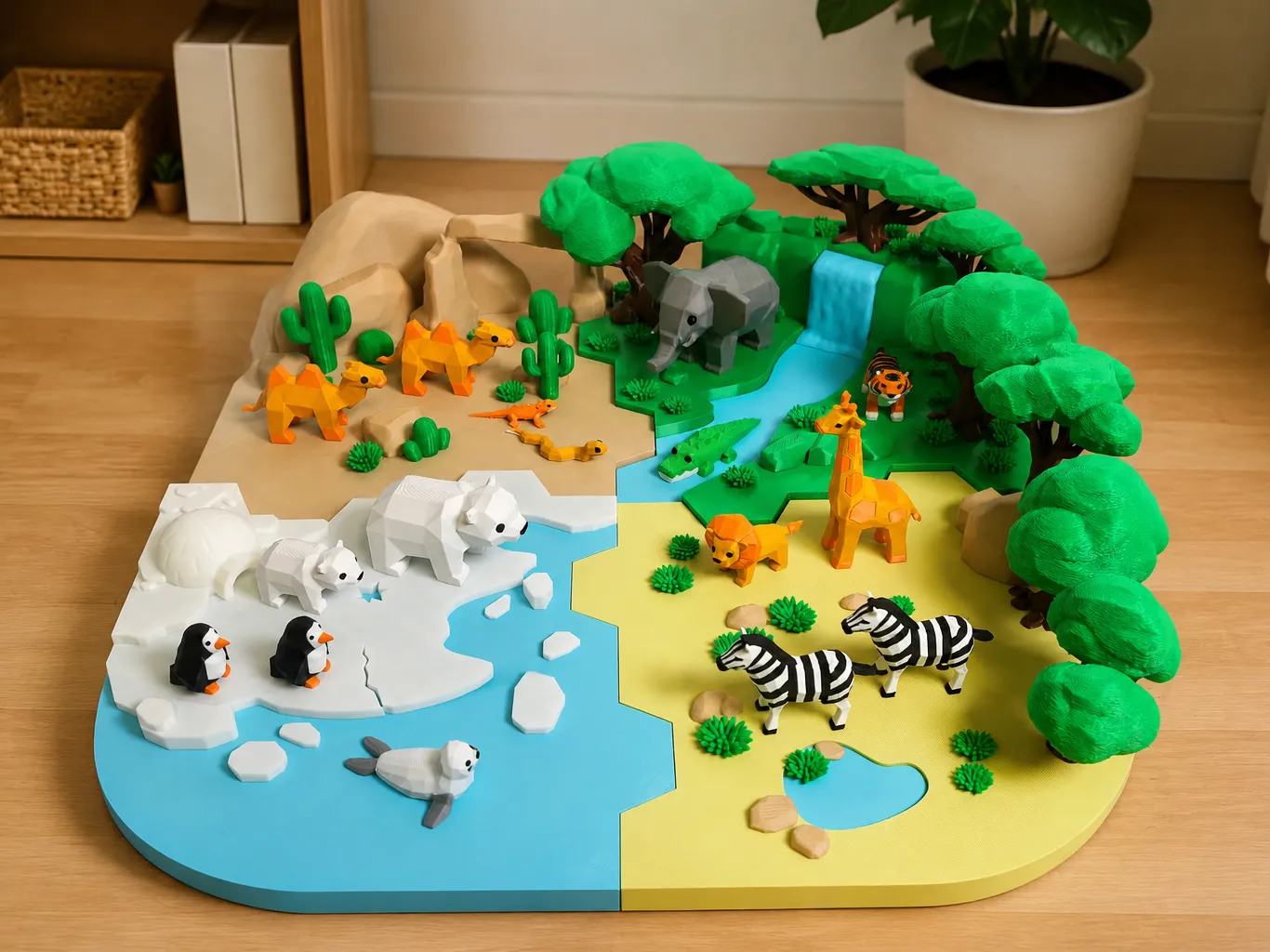
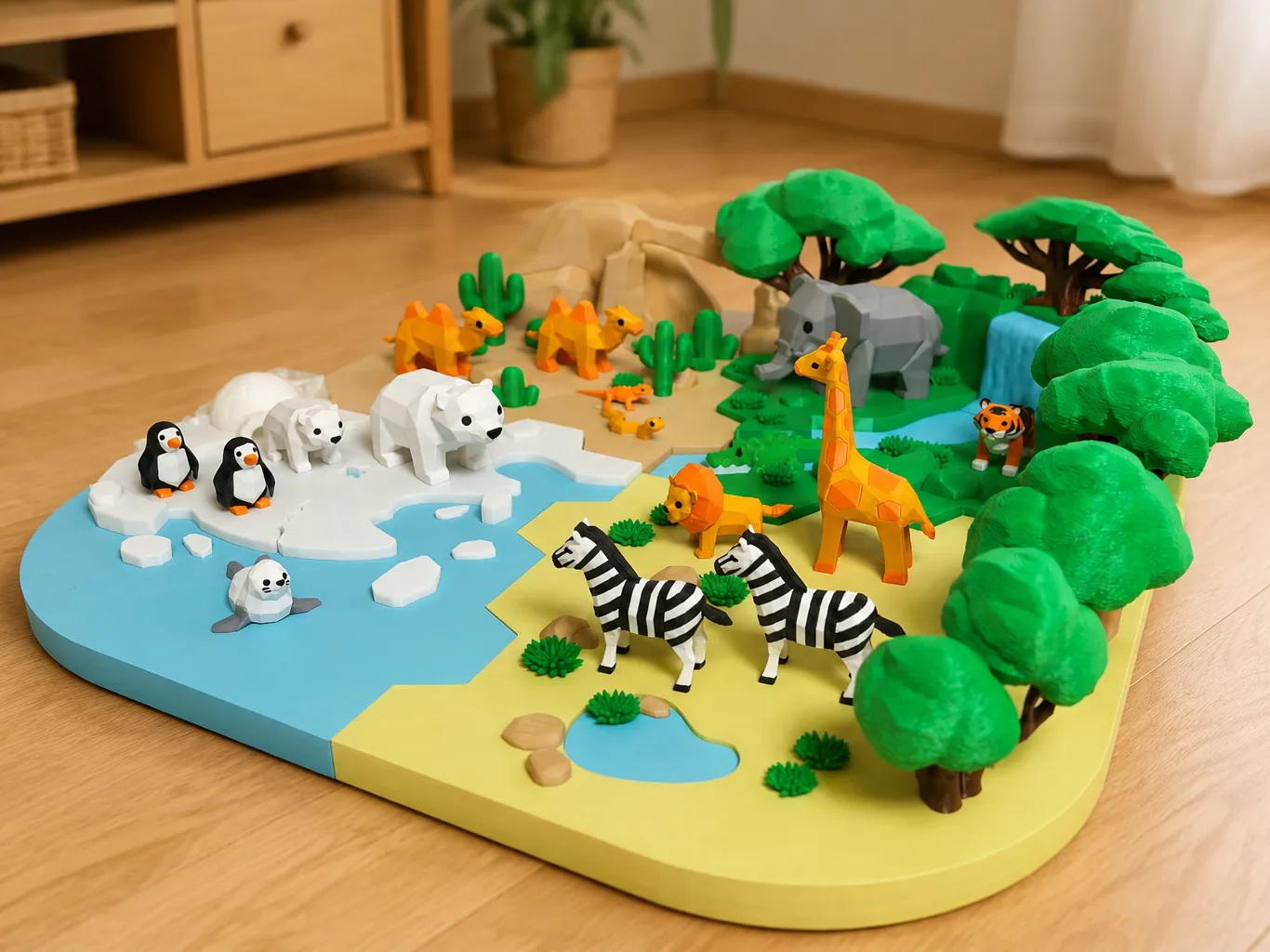
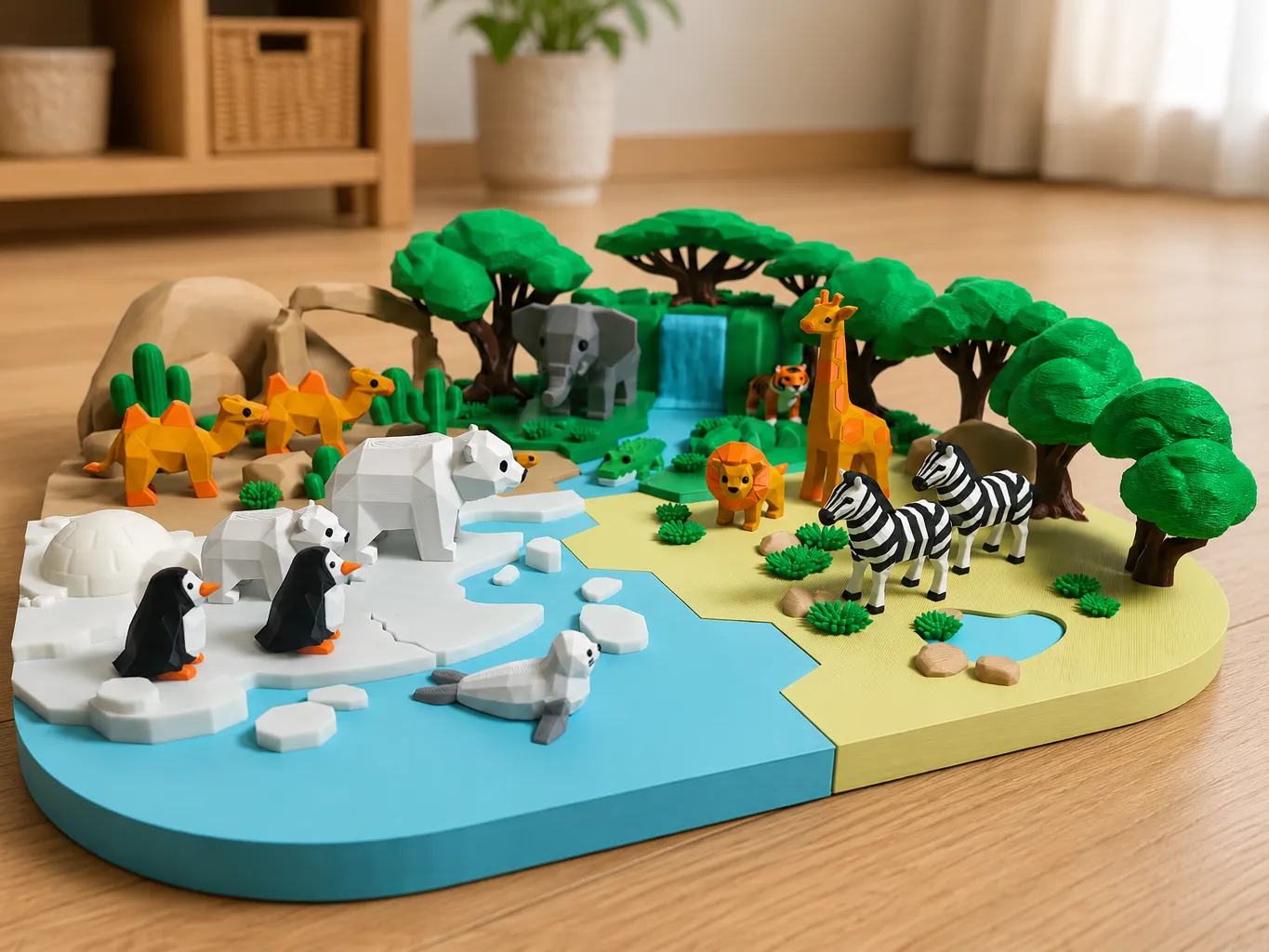
This set of "My Mini Animal World" scene-based science education tools is designed for children's natural enlightenment and biological science education. Centered on four ecological scenarios: extremely cold regions, deserts, tropical rainforests, and grasslands, it integrates representative animals, habitat environments, and ecological common sense into touchable and interactive three-dimensional scenes, breaking the limitations of traditional "text-only, view-only" science popularization, allowing children to achieve immersive enlightenment through hands-on exploration.
Modular Scene Design
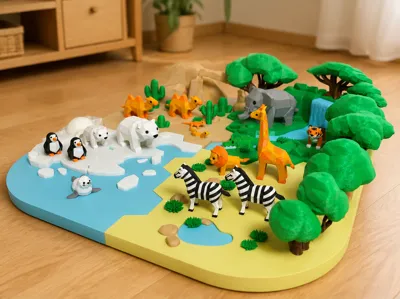
Detachable and combinable scene modules support adjusting the display focus according to science themes (e.g., separately displaying extremely cold or grassland ecosystems) to adapt to different teaching scenarios.
Sensory and Hands-on Abilities
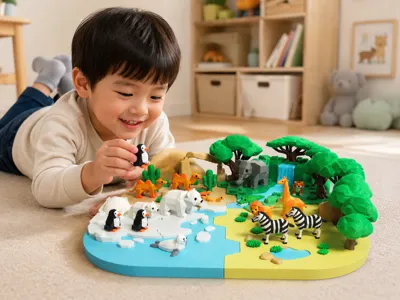
With low-poly style three-dimensional models, children can exercise hand-eye coordination and fine motor skills by touching, grasping, and arranging them, while enriching their sensory experience through scene modules of different colors and forms.
Multi-dimensional Enlightenment on Biodiversity Knowledge
Through species comparisons in the four major ecological regions, children are guided to observe animal external features, dietary differences, and survival strategies: the distribution differences between carnivores (tMigers, lions) and herbivores (zebras, giraffes), the body sizes and structural characteristics of different animals, and the special survival skills of animals in extremely cold/desert environments. This helps children establish a basic understanding of "biodiversity" and cultivates their observation skills and curiosity towards nature.
Scene-based Interaction Enhances Science Memory
Unlike static models, children can independently arrange animals and build scenes. During hands-on activities, they actively explore questions such as "Can different animals live in the same environment?" and "Why do animals in extremely cold environments have thick 'insulation layers'?" This transforms passive knowledge reception into active exploration, significantly improving the efficiency of science knowledge retention and fostering the budding of scientific thinking.
Model Details:
Dimensions: 40cm long, 40cm wide
Filament: PLA is recommended for better printing results
Note: Some parts of this model require multi-color printing, with a maximum of 4 colors per single accessory.
License

You shall not share, sub-license, sell, rent, host, transfer, or distribute in any way the digital or 3D printed versions of this object, nor any other derivative work of this object in its digital or physical format (including - but not limited to - remixes of this object, and hosting on other digital platforms). The objects may not be used without permission in any way whatsoever in which you charge money, or collect fees.


Comment & Rating (4)