
Sudoku Junior
Print Profile(3)
Bill of Materials







Description
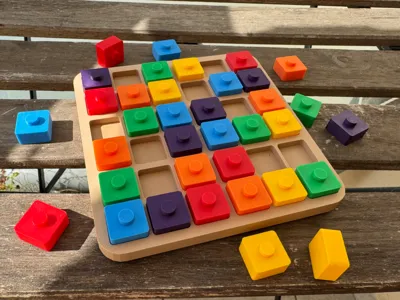
Sudoku Junior: In Full Color! 🎨🧩
What is it?
Sudoku Junior is a mini version of the traditional 9x9 puzzle. It works on the exact same logical principles but uses a smaller grid, fewer numbers, and a slightly different shape for its internal sections, making it faster and easier to solve. It is primarily designed for children between 5 and 8 years old (roughly from the last year of preschool to 3rd grade). However, rather than an exact age, it really depends on the child's previous experience with numbers and logic.
Why is it ideal for these ages?
- The perfect bridge: The traditional 9x9 sudoku is often too overwhelming for young children, while the 4x4 version becomes too easy too quickly. The 6x6 offers just the right balance of challenge.
- Less frustration: Instead of filling in grids of 9 numbers, they only have to manage rows and columns of 6. This requires a shorter attention span and keeps them from getting tired halfway through.
- Cognitive development: At these ages (5–8 years old), children are developing logical-mathematical thinking, attention to detail, and patience. This format is ideal for training those skills without causing stress.
What do I need?
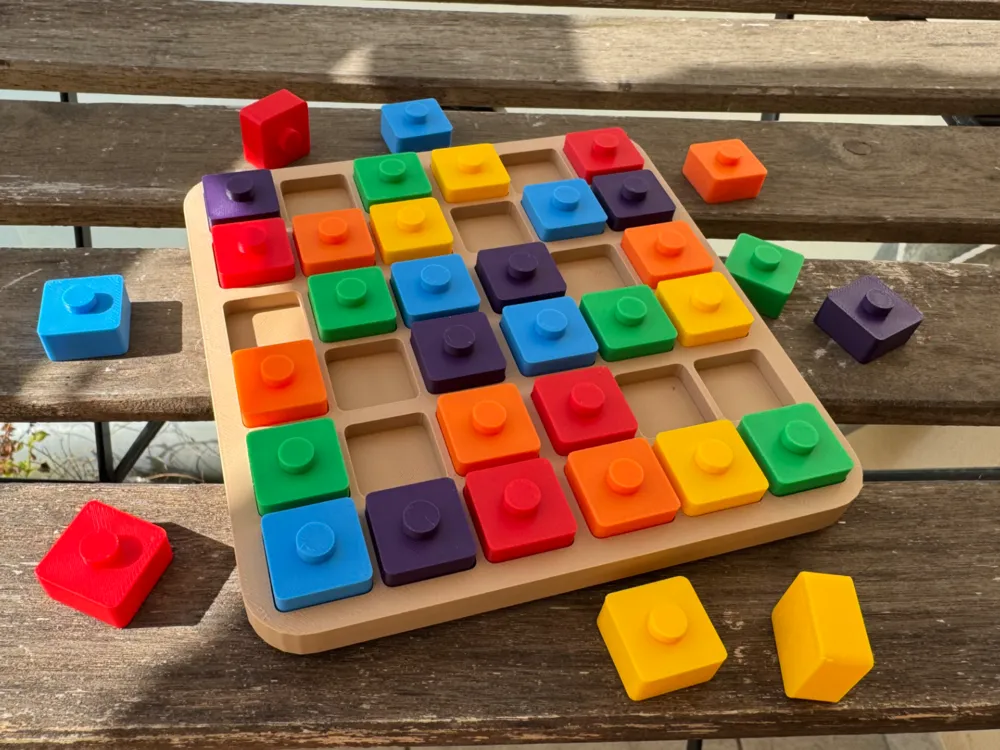
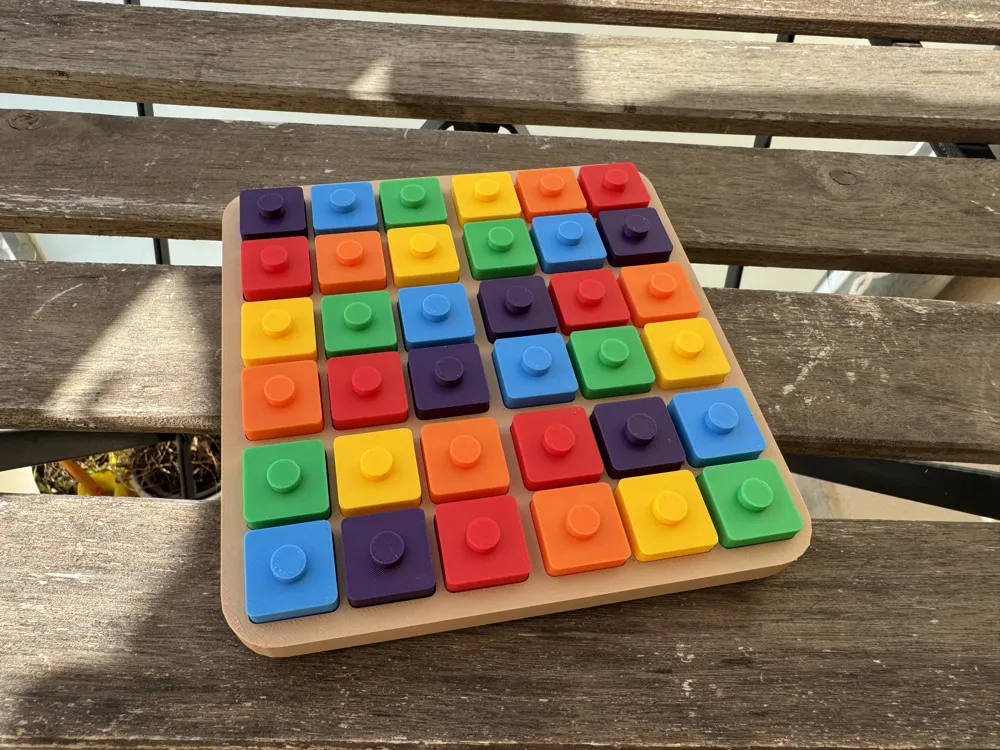
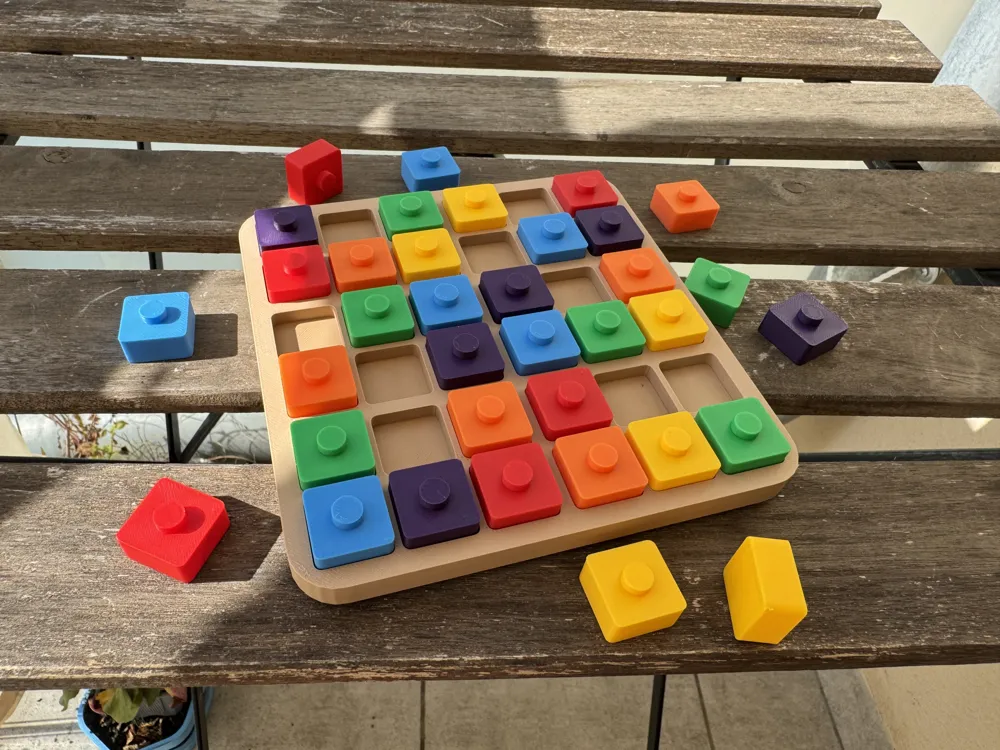
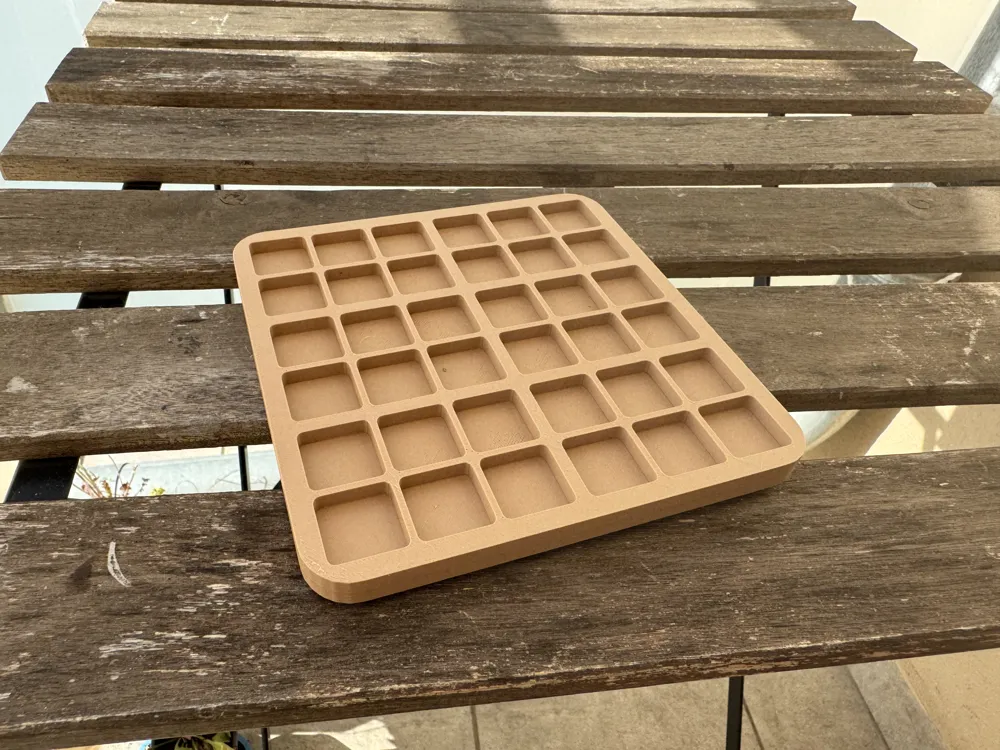
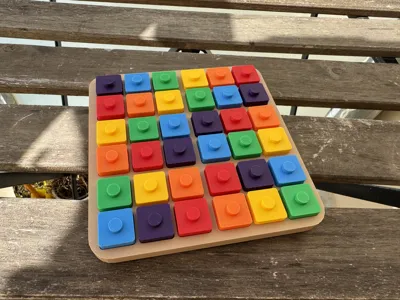
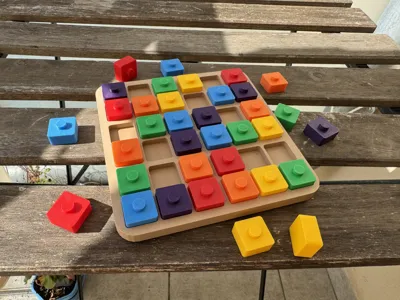
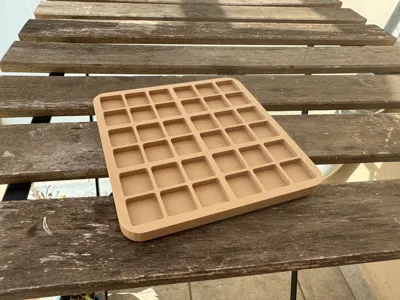
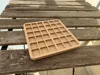
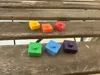
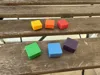
You need one (1) game board preferably in a nice neutral color. You'll also need six (6) game pieces in each of the six (6 colors) for a total of 36 pieces. Game pieces can be flat or pegged, choose your style and grip or combine both to differentiate fixed puzzle pieces and player's ones.
How do you play?
Instead of numbers, we play on a small 6x6 grid using 6 vibrant colors (red, blue, green, purple, orange and yellow).
The challenge is to fill in the empty squares by following a very simple rule:
- Each color must appear only once in each row.
- Each color must appear only once in each column.
- Each color must appear only once in each 3x2 mini-grid (the four regions the board is divided into).
💡 Why is it great for them?
It offers the perfect logical challenge for developing minds without the overwhelming size of a standard puzzle. It’s the perfect step up from the 4x4, adding just enough extra challenge.
Boost Me (for free)
You can help me design and test more models with simple gesture.
The booklet
Check the documentation section for the booklet with puzzles they are color coded from easier to harder: 🔵 begginner, 🟢 easy, 🟡 medium, 🔴 hard.
License

You shall not share, sub-license, sell, rent, host, transfer, or distribute in any way the digital or 3D printed versions of this object, nor any other derivative work of this object in its digital or physical format (including - but not limited to - remixes of this object, and hosting on other digital platforms). The objects may not be used without permission in any way whatsoever in which you charge money, or collect fees.


Comment & Rating (4)