Search models, users, collections, and posts

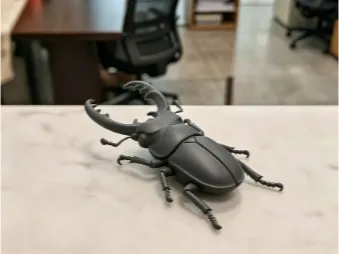
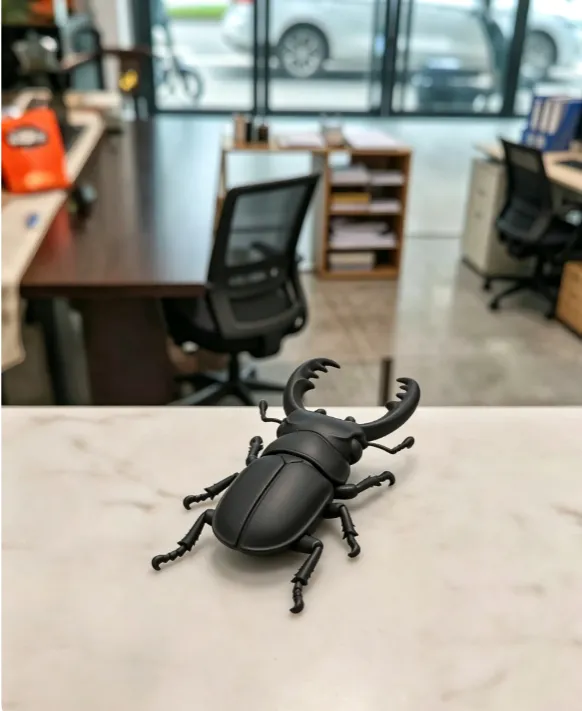
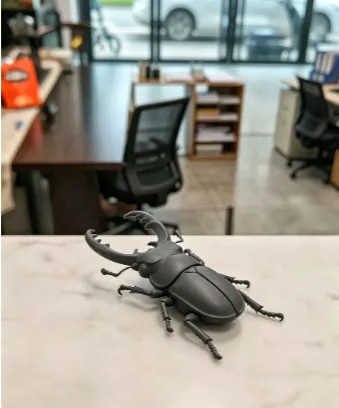
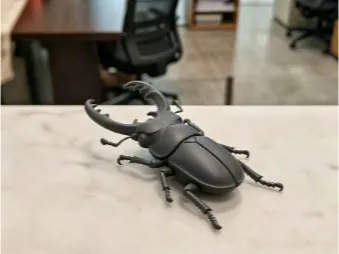
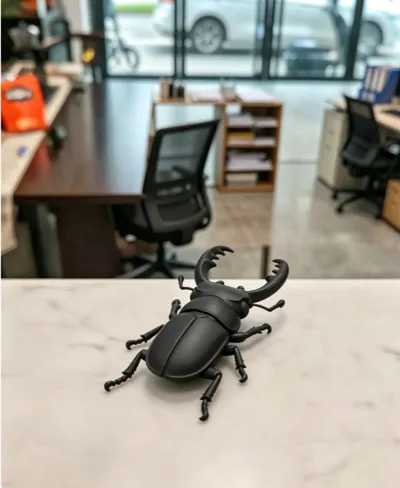
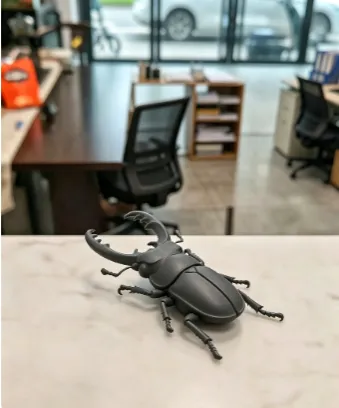
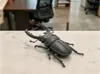
Stag Beetle - Dorcus titanus platymelus
IP Report
Print Profile(1)
0.2mm layer, 3 walls, 20% infill
Designer
1.4 h
1 plate
Open in Bambu Studio
Boost
2
6
0
0
3
2
Released
Description
Content has been automatically translated.
Dorcus titanus platymelus
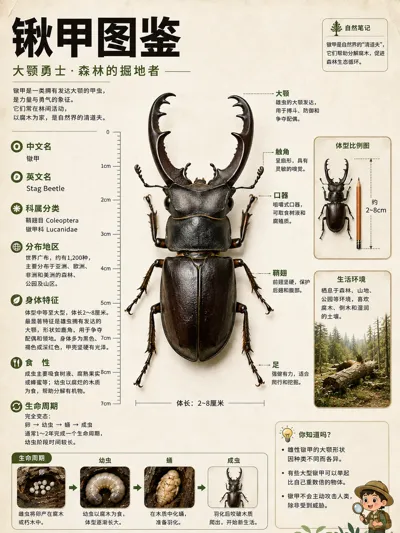
I. Classification and Distribution
- Taxonomic Status: Insecta → Coleoptera → Lucanidae → Dorcus; it is a subspecies of **Dorcus titanus**.
- Native Distribution: Widely distributed in areas south of the Yangtze River in China, parts of North China, as well as Korea, Japan, Vietnam, etc.; commonly found in low-altitude broadleaf secondary forests, orchards, and bamboo forests.
- Conservation Status: Not classified as a national key protected wild animal, thus without legal protection, but wild populations rely on mature decaying wood environments, so large-scale wild capture that destroys habitats is not permissible; artificially bred individuals can be legally used for ornamental purposes and as model material.
II. Morphological Characteristics (Sexual dimorphism is extremely pronounced)
- Male (common prototype for models)
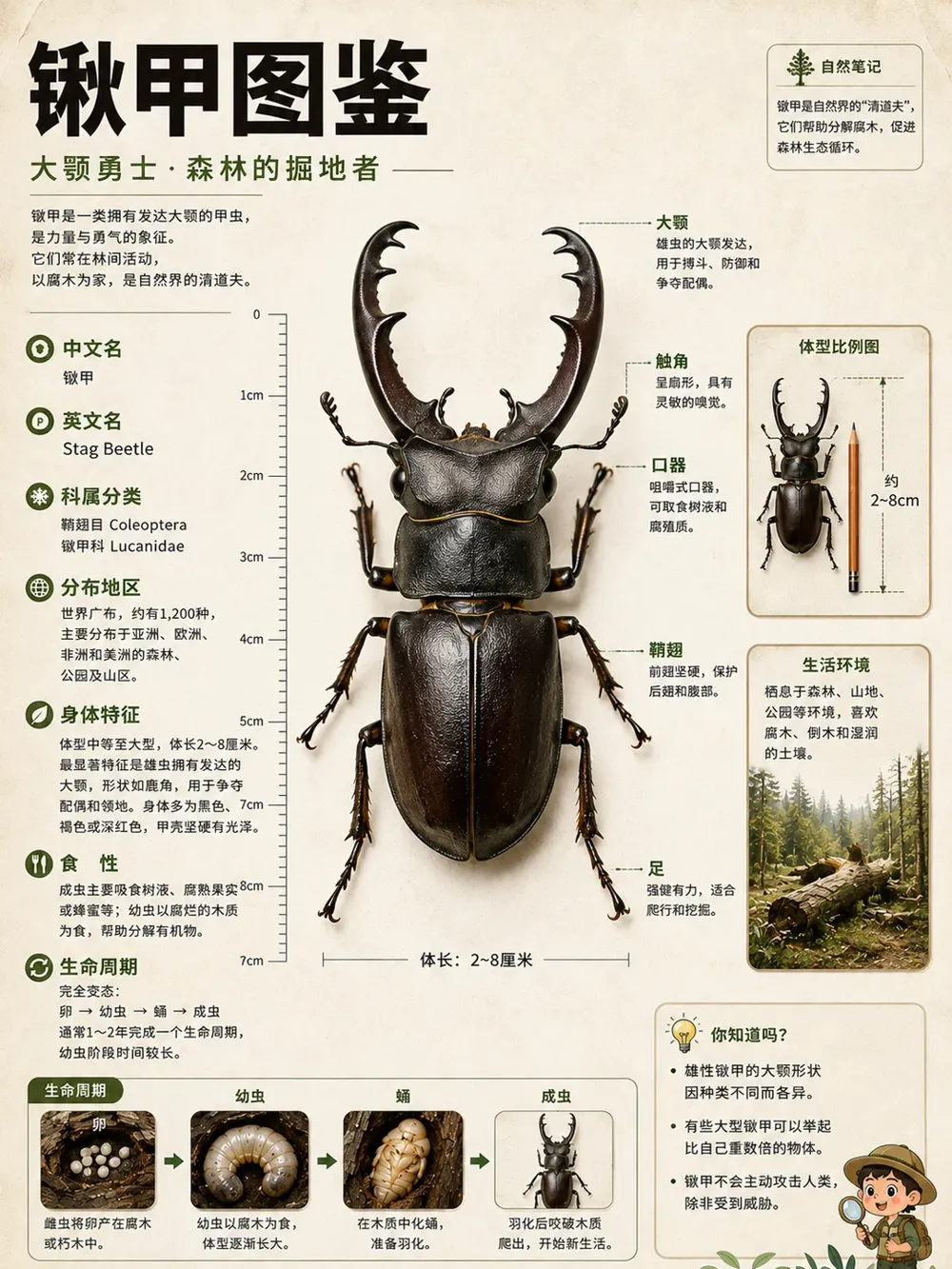
- Body size: Body length varies greatly (males can be large, medium, or small individuals), large males can reach 80+ mm in body length;
- Characteristic robust flat mandibles, with distinct teeth on the inner side of the mandibles; tooth shape varies depending on individual size; broad head, thick prothorax;
- Body color: Mostly dark brown to black, with a matte texture on the body surface, some individuals have slightly reddish-brown edges on their elytra, no strong metallic reflection;
- Mandible use: Fighting weapon for males to compete for food, territory, and mates.
- Female
- Significantly smaller than males, body length mostly 30–40 mm;
- No exaggerated mandibles, small and rounded head, understated appearance; body color similar to males, appearing more modest;
- Females are responsible for drilling into decaying wood to lay eggs and are central to population reproduction.
Male
Female
III. Life History and Habits
- Larva: Typical grub-like, milky white C-shape; lives in decaying wood or fermented sawdust of broadleaf trees (such as oak, camphor); feeds on humus and decaying wood; larval stage is very long (1–2 years), temperature affects development speed; mature larvae pupate in decaying wood.
- Adult
- Emergence period: Mostly in summer, adult lifespan can reach 6–12 months under artificial rearing;
- Diet: In the wild, they feed on tree sap, ripe fruits (such as peaches, lychees); in artificial rearing, specialized beetle jelly, bananas, etc., are commonly used;
- Nocturnal, weak phototaxis, mostly hide in tree hollows or under decaying wood during the day;
- During fights, males will clamp onto their opponents with their mandibles, attempting to flip them over.
IV. Easy Distinctions & Trivia
- Distinguishing Dorcus titanus platymelus vs. Metalleifer Stag Beetle: Dorcus titanus platymelus has robust and flat mandibles, and a heavy build; Metalleifer stag beetles have slender, sickle-shaped mandibles and an overall delicate build.
- Distinguishing Dorcus titanus platymelus vs. Rhinoceros Beetle: Dorcus titanus platymelus fights with its mandibles and has no horns; male Rhinoceros Beetles have a head horn + thoracic horn and no giant mandibles.
- Male body size differentiation is greatly influenced by nutrition during the larval stage: only with abundant food and a stable environment during the larval stage can they develop into large males; insufficient nutrition results in small males.
License

This user content is licensed under a Standard Digital File License.
You shall not share, sub-license, sell, rent, host, transfer, or distribute in any way the digital or 3D printed versions of this object, nor any other derivative work of this object in its digital or physical format (including - but not limited to - remixes of this object, and hosting on other digital platforms). The objects may not be used without permission in any way whatsoever in which you charge money, or collect fees.


Comment & Rating (0)