
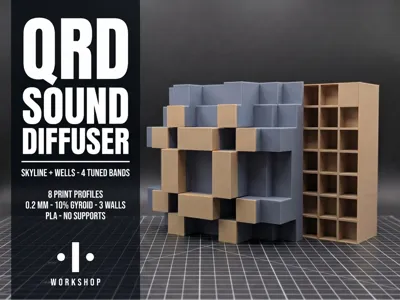
QRD Sound Diffuser Set – 4 Tuned Bands
Print Profile(6)
Description
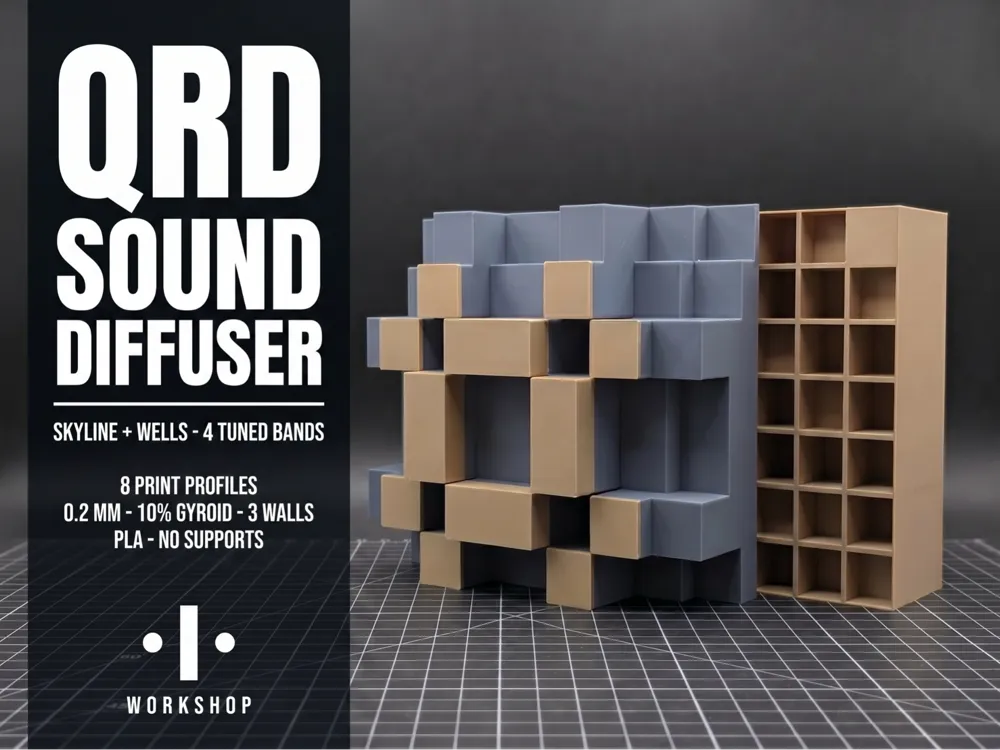
🎛️ Real Acoustic Diffusion — Engineered, Not Eyeballed
This is a set of four genuinely engineered quadratic-residue diffusers (QRD) — the same number-theory math used in professional recording studios and concert halls since the 1970s — each tuned to a different frequency band so you can treat a whole room, not just one slice of the spectrum.
Foam absorbs. A diffuser scatters. Foam soaks up energy (mostly the highs) and can leave a room dull and lifeless. A diffuser scatters reflections evenly in every direction — killing flutter echo and harsh first reflections without deadening the room. That is exactly why mix rooms put diffusion behind the listening position: the room stays alive and the stereo image snaps into focus.
📐 Why Four Tiles?
A diffuser only works between two frequencies set by its geometry: well depth sets the lowest scattered frequency; well width sets the highest. One tile physically cannot cover speech, guitars and cymbals at once — so this set splits the spectrum across four tuned tiles:
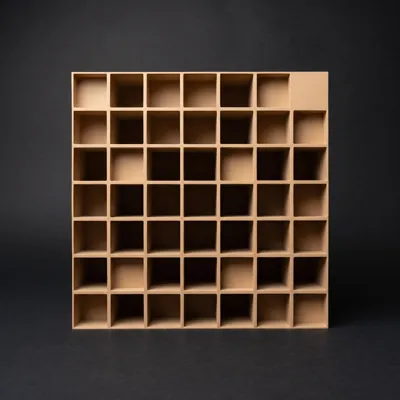
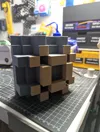
- 🟤 LOW-MID “Voice” — 252 mm, 100 mm deep — ~1.5–5 kHz. The vocal-presence band. Behind the mic in a vocal booth, or the rear wall of a mix room. The workhorse for voice. Full-bed print — needs an A1 or a bed ≥260 mm (see Print Settings).
- 🟠 MID “All-Rounder” — 150 mm, 70 mm deep — ~2.1–8.8 kHz. The widest single-tile bandwidth in the set (over two octaves). If you print only one, print this.
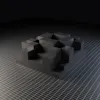
- 🟡 UPPER-MID “Slim” — 150 mm, 35 mm deep — ~4.2–8.8 kHz. Low-profile for doors, narrow walls and reflection points where 70 mm is too chunky.
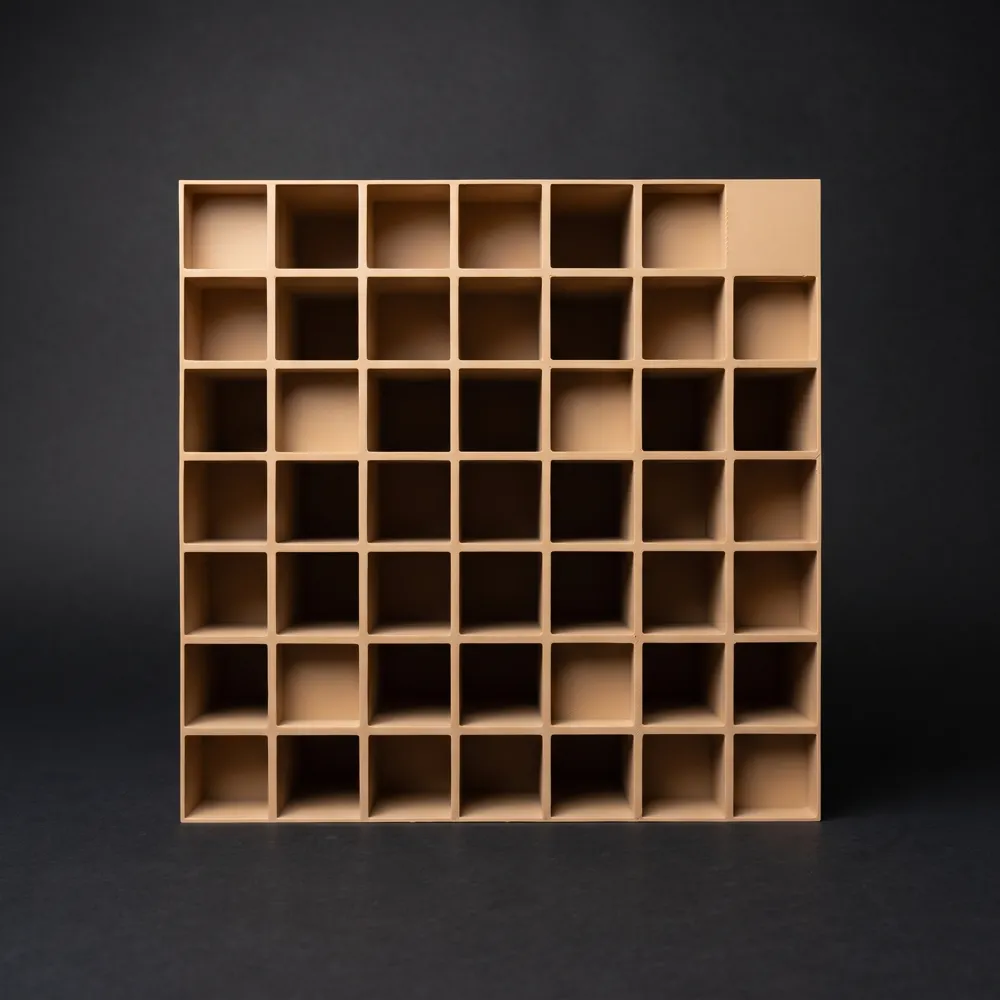
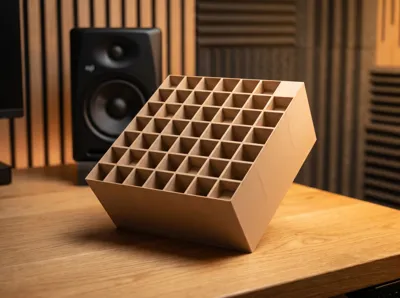
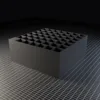
- ⚪ HIGH “Air & Detail” — 150 mm, 11×11 grid — ~5.2–14.7 kHz. Fine grid for cymbal sizzle, sibilance and “air” — desk reflections and near-field treatment.
🏙 Two Constructions — Both Included for Every Band
Same quadratic-residue math, same scatter — pick by taste, or print both:
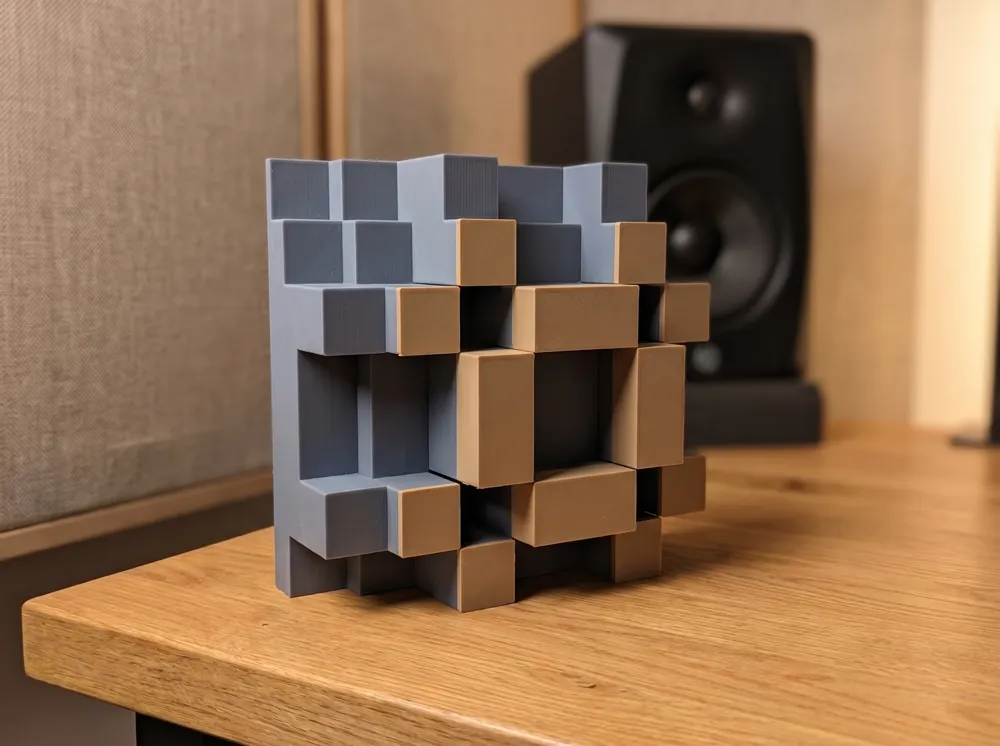
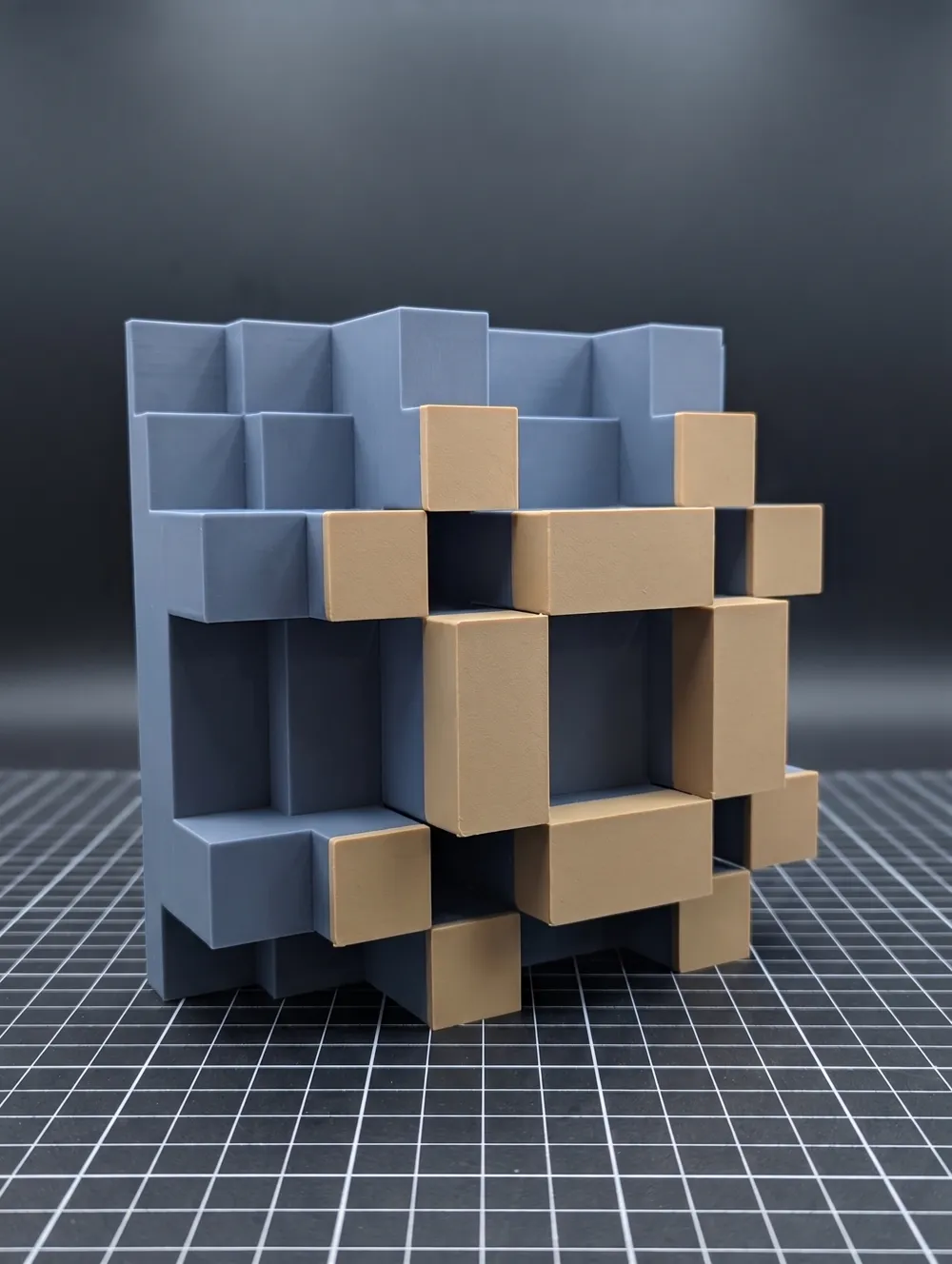
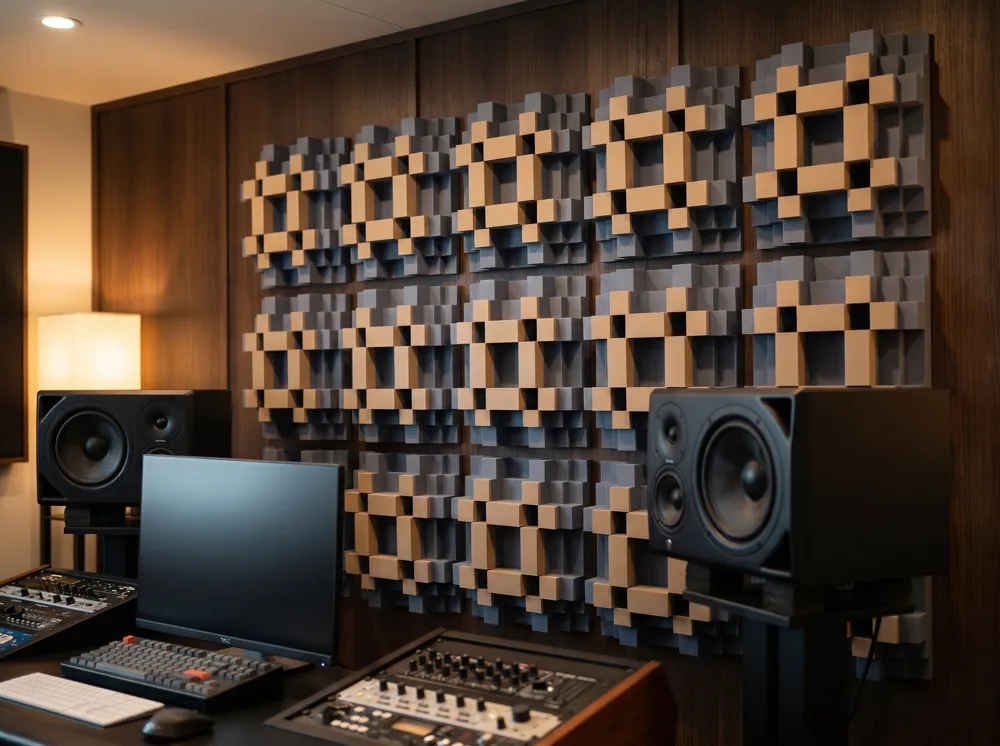
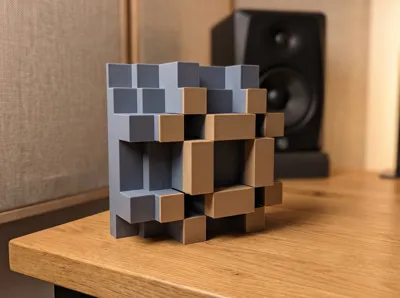
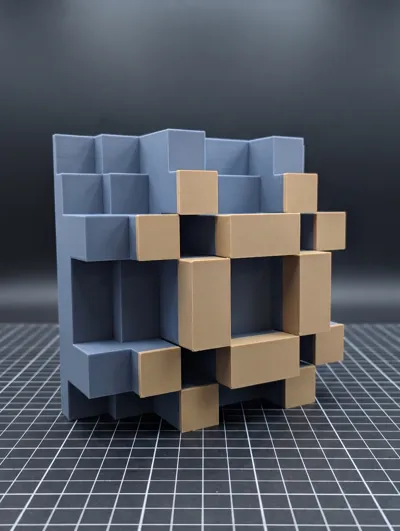
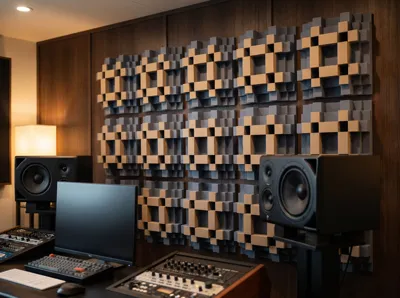
- Skyline blocks — solid varying-height columns, the iconic “city skyline” studio look. No grid lines, chunky and robust. The construction of the most famous 2D diffuser ever made.
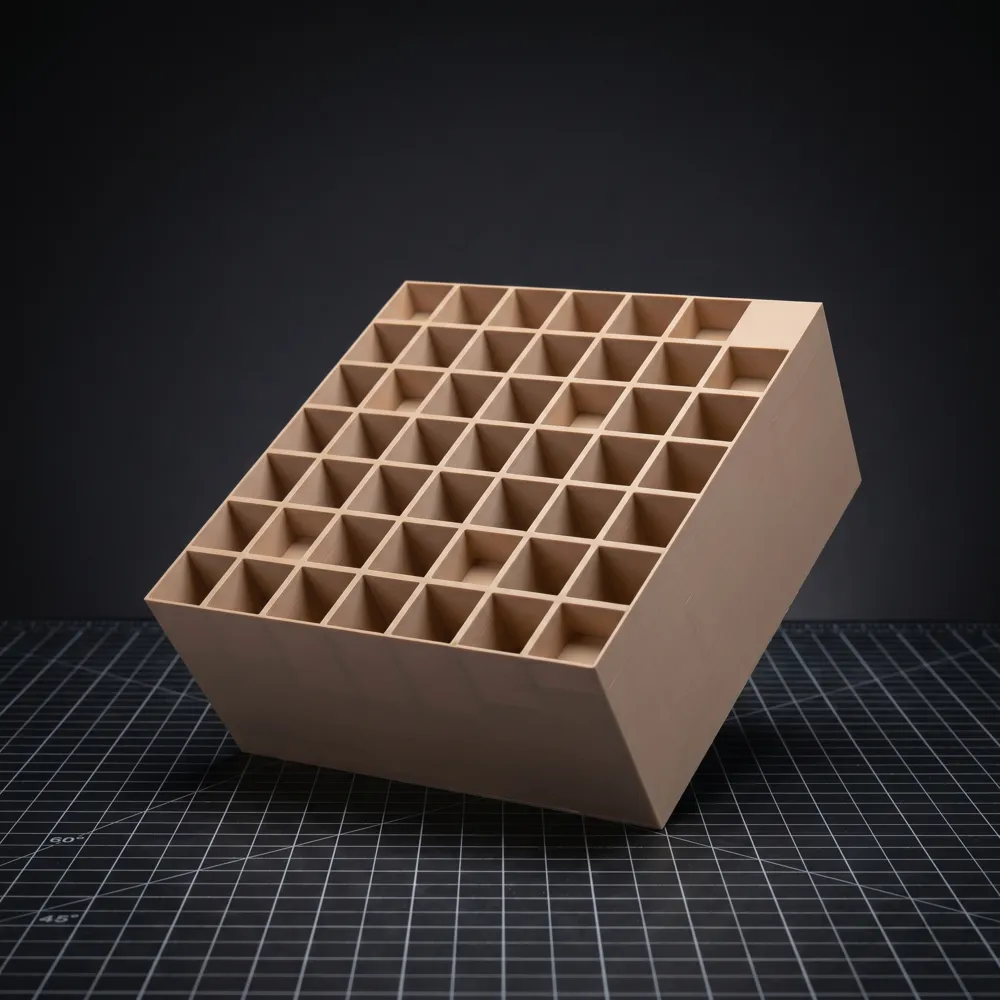
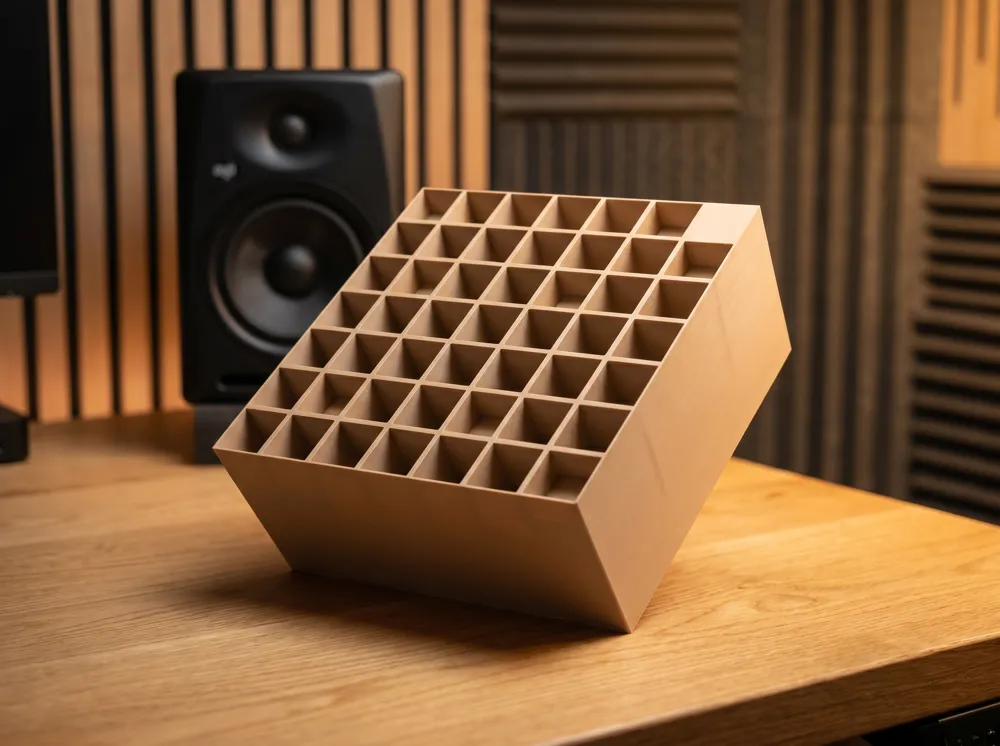
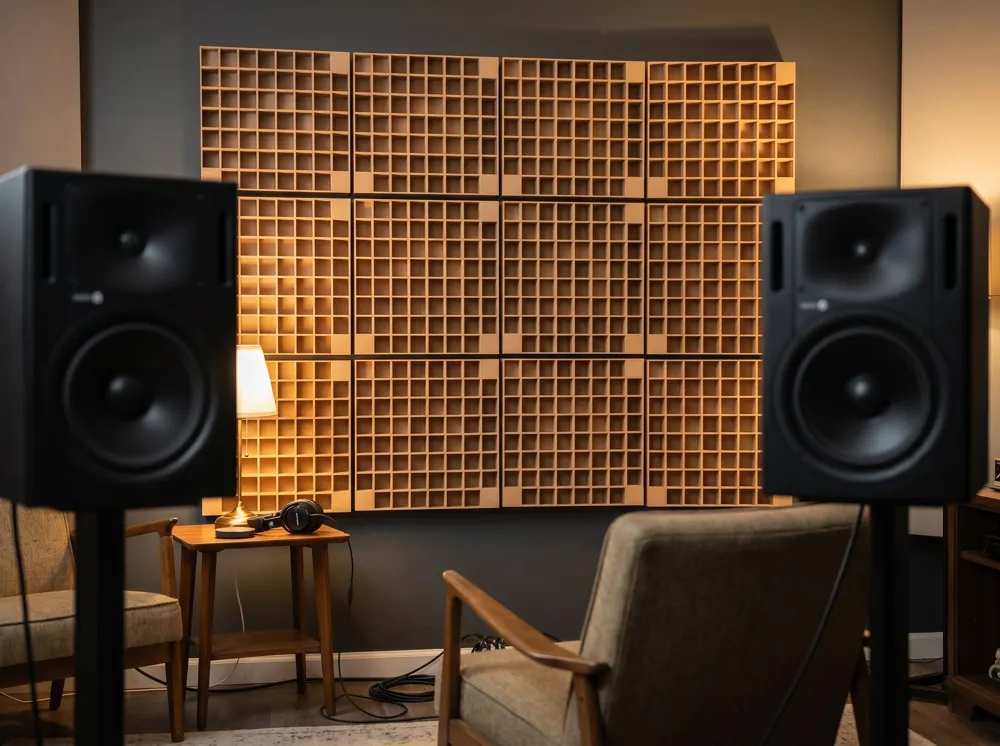
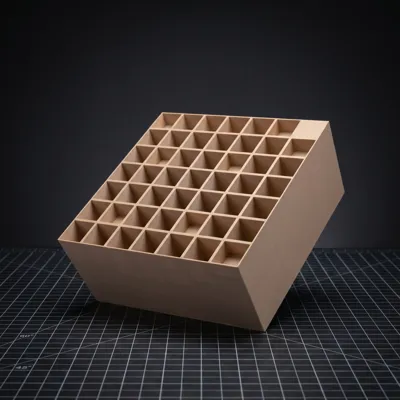
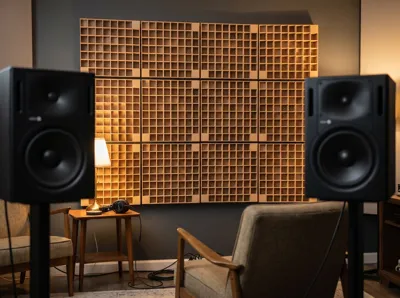
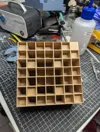
- Finned wells — the textbook Schroeder construction: every cell is an isolated quarter-wave well, exactly what the design equations model. The purist’s pick, strongest at steep off-axis angles.
They tile seamlessly. Skyline tiles continue the pattern automatically; well tiles carry half-width border walls that fuse into one continuous grid. Mix bands, cover a wall, make it look like sculpture — because it is.
🔬 The Science (with receipts)
- Well depths follow the quadratic-residue sequence s = (x² + y²) mod N (N prime), from Schroeder’s 1979 JASA paper — number theory guarantees the reflected energy spreads evenly into all diffraction orders.
- The tuning equations (f₀ = c·s_max / (2·N·d_max) and f_max ≈ c / 2w) come from D’Antonio & Konnert and the Cox & D’Antonio textbook — every band number here was computed, not invented.
- This is a 2D (“skyline-style”) grid that scatters hemispherically — in every direction — unlike the half-cylinder scatter of 1D groove diffusers.
- Diffusion behind the listening position is textbook control-room design (the LEDE concept).
- 3D-printed QRDs are not a gimmick: peer-reviewed studies have printed and measured this exact geometry class and matched theory.
All four tiles stay near a ~3:1 depth-to-width ratio — clear of the deep-narrow-well regime where diffusers start absorbing instead of scattering.
🖨️ Print Settings
- Orientation: flat on the bed, wells / blocks facing up.
- Supports: none — every cavity opens upward.
- Layer height: 0.2 mm (0.28 mm is fine on the big 252 tile to save time).
- Walls: 3 · Infill: ~10% gyroid.
- Material: PLA is perfect — it is a wall panel, not a bumper. Matte filament looks incredible.
- Bed: the three 150 mm tiles fit any 256 mm bed (P1S / X1C / A1). The 252 mm LOW-MID uses the full bed: print it on an A1 (its whole 256 mm plate is usable) or any printer with a bed ≥260 mm (H2D…). P1S/X1C reserve an 18×28 mm wipe cut-out in the front-left corner, so they cannot take a full-width 252 mm part in one piece.
🧱 Mounting & Placement
- Mount with double-sided foam tape, Command strips, or screws through the base.
- Wall-mount “-mount” versions included (all 8 tiles): a +6 mm back slab with 4 blind holes for M3 heat-set inserts (Ø4.0 × 6.5 mm — fits the common M3×5.7 brass insert). Holes sit on a 100×100 mm grid (150 mm tiles) or 200×200 mm grid (252 mm tile) — drill the same grid in your panel and screw the tiles on from behind (M3 screws). Acoustics are unchanged: the wells/columns are identical, only the solid backing is thicker.
- Mixing: rear wall at ear height, behind the listening position.
- Recording: the wall facing the mic, or a vocal booth.
- Listening & hi-fi: first-reflection points and the wall behind the speakers.
- Arrays: tile 2×2 or 3×3 — more area means more diffusion, and arrays extend low-frequency performance.
❓ FAQ
Does printed plastic really diffuse sound? Yes. The scattering is set by the geometry (depths and widths), not the material — measured studies confirm printed QRDs perform as the math predicts.
Diffuser or absorber — which do I need? Usually both. Absorb harsh first reflections; diffuse the rear wall to keep the room lively. This set is the diffusion half.
Which one should I print first? The MID “All-Rounder” — widest bandwidth, 150 mm, prints fast.
Skyline or Wells? Most people hang the Skyline (the look); engineers print the Wells (theory fidelity). Identical scatter math.
Why does the LOW-MID say A1? The 252 mm tile needs the full plate. On the A1 all 256 mm are usable, so it fits with room to spare; P1S/X1C keep a wipe zone in the front-left corner that a full-width part cannot clear. Any bed ≥260 mm works too. Want a two-piece split for P1S/X1C? Ask in the comments.
Custom size or band? It is a fully parametric original design — just ask in the comments.
📦 What’s Included
16 print-ready Bambu-native 3MF files — 4 frequency bands × 2 constructions (Skyline + Wells), each in a flat-back version (tape/strip mounting) and a “-mount” wall-mount version (M3 heat-set insert bosses for panel mounting). 100% original clean-room geometry. License: Standard Digital File License. Designed and tuned by THE WORKSHOP. If you print one, post a Make — I’d love to see it. 🎚️
License

You shall not share, sub-license, sell, rent, host, transfer, or distribute in any way the digital or 3D printed versions of this object, nor any other derivative work of this object in its digital or physical format (including - but not limited to - remixes of this object, and hosting on other digital platforms). The objects may not be used without permission in any way whatsoever in which you charge money, or collect fees.


Comment & Rating (3)