
Wastewater Treatment - Lamella Clarifier Teaching Model
Print Profile(1)
Description
Lamella Clarifier 3D Teaching Model (Structure and Function Introduction)
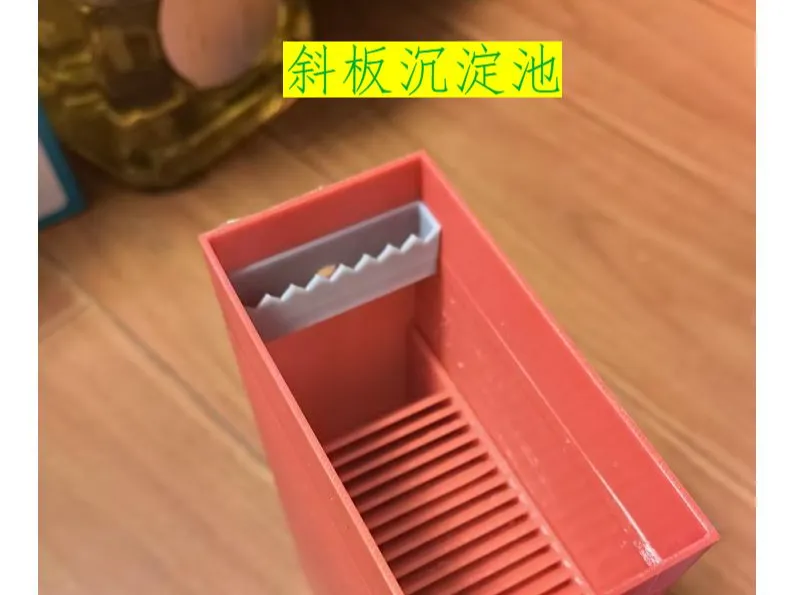
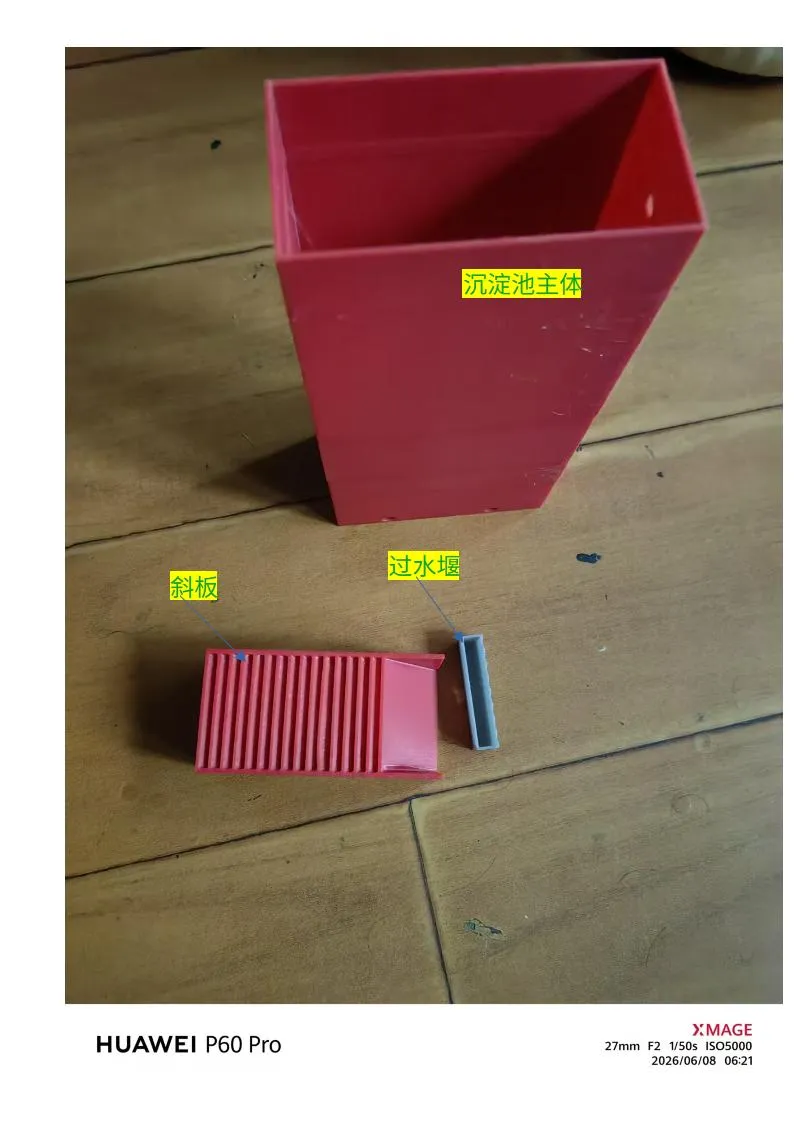
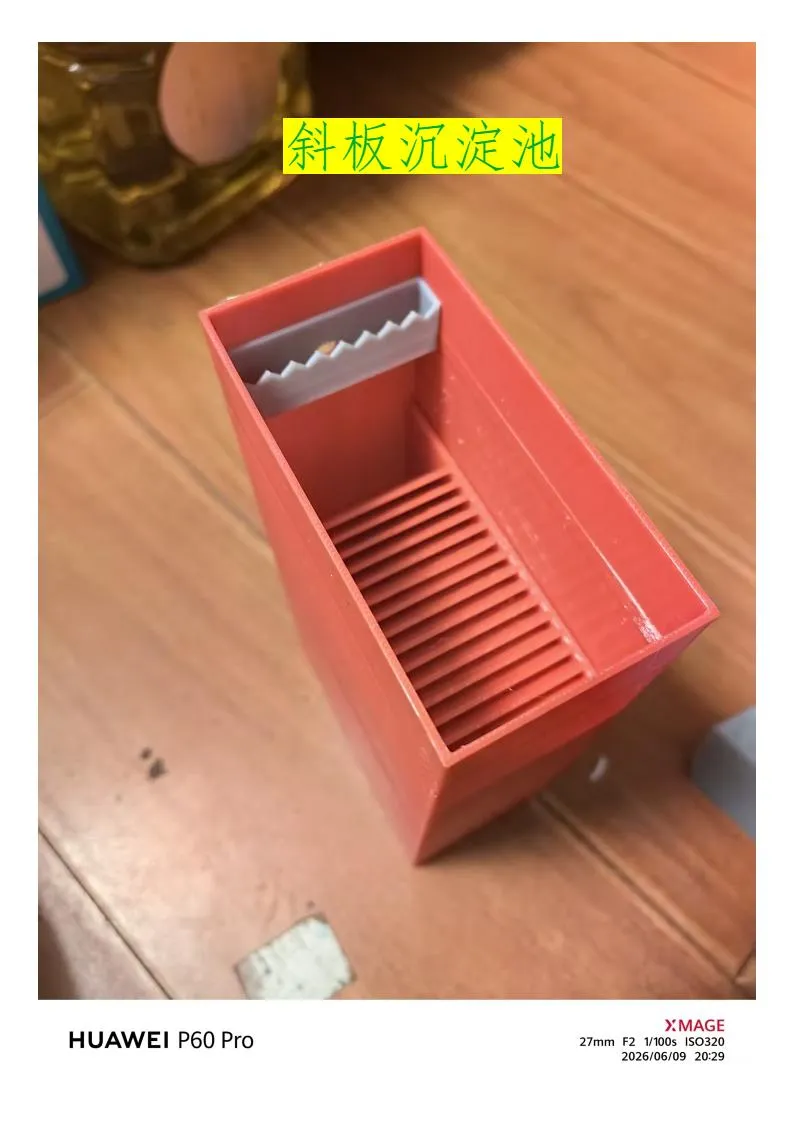
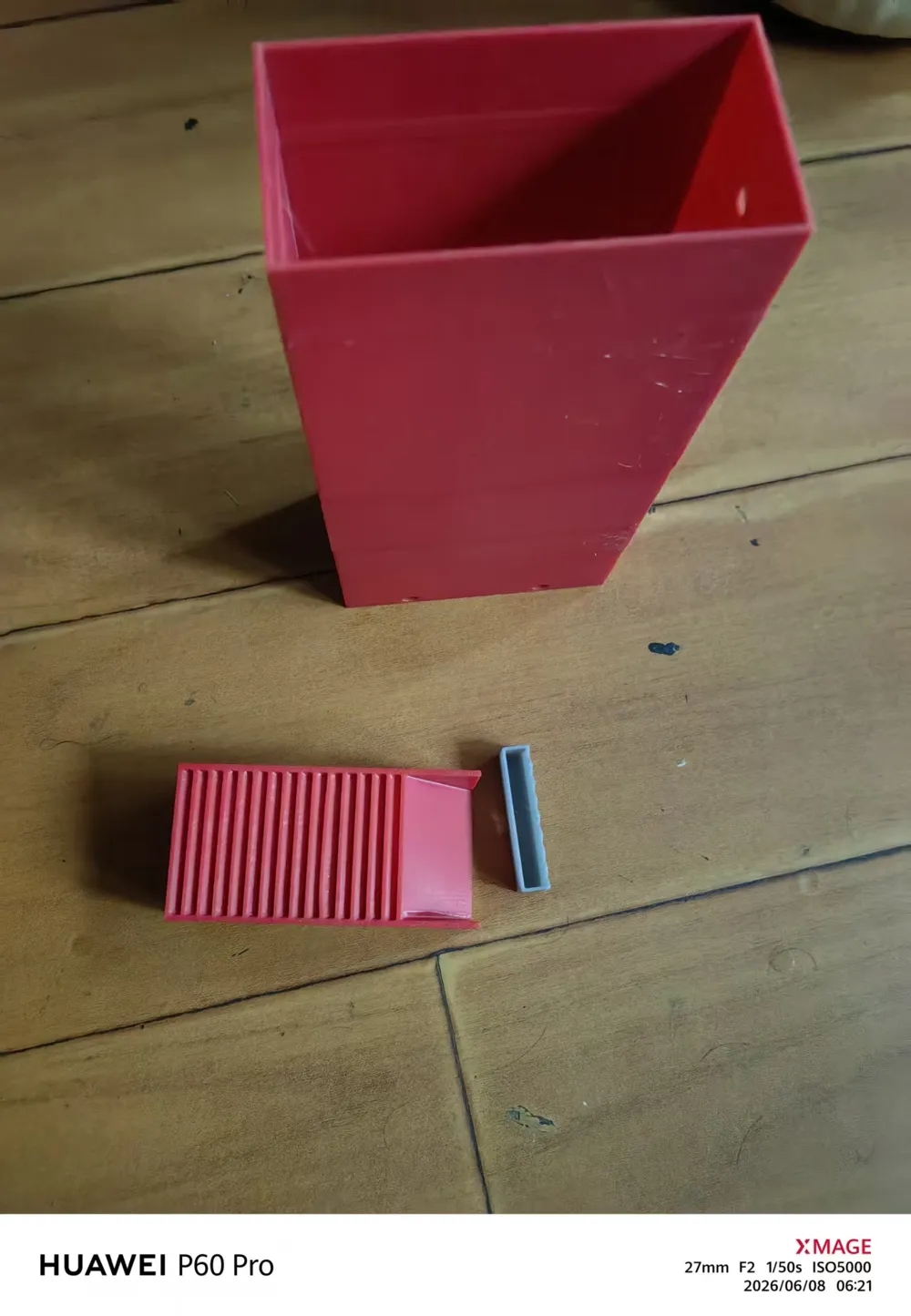
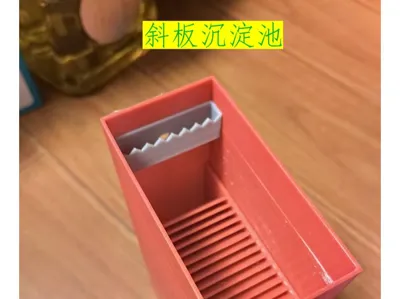
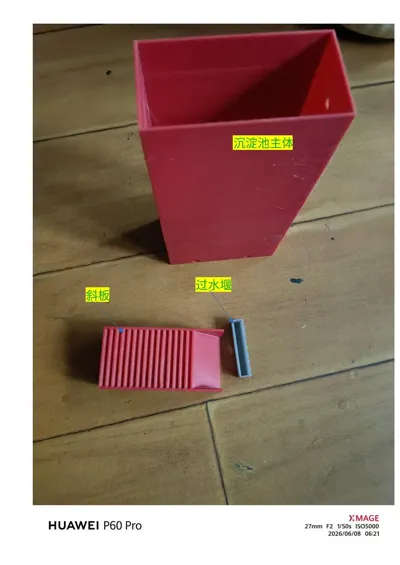
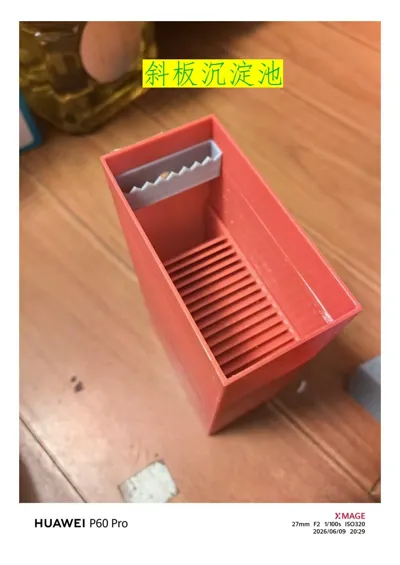
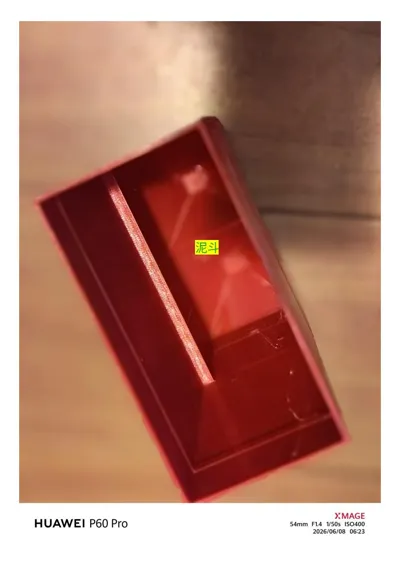
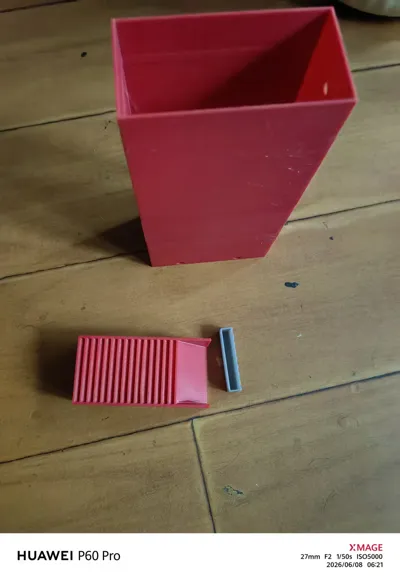
This model is designed based on the "shallow tank sedimentation" principle, demonstrating the core working process of a lamella clarifier with a 1:1 process logic. The overall dimensions of the model are 10 cm in length, 5 cm in width, and 21 cm in height. It consists of three detachable and assemblable components: the main body, lamella plates, and effluent weir, facilitating disassembly during teaching to observe the internal flow paths and sludge movement.
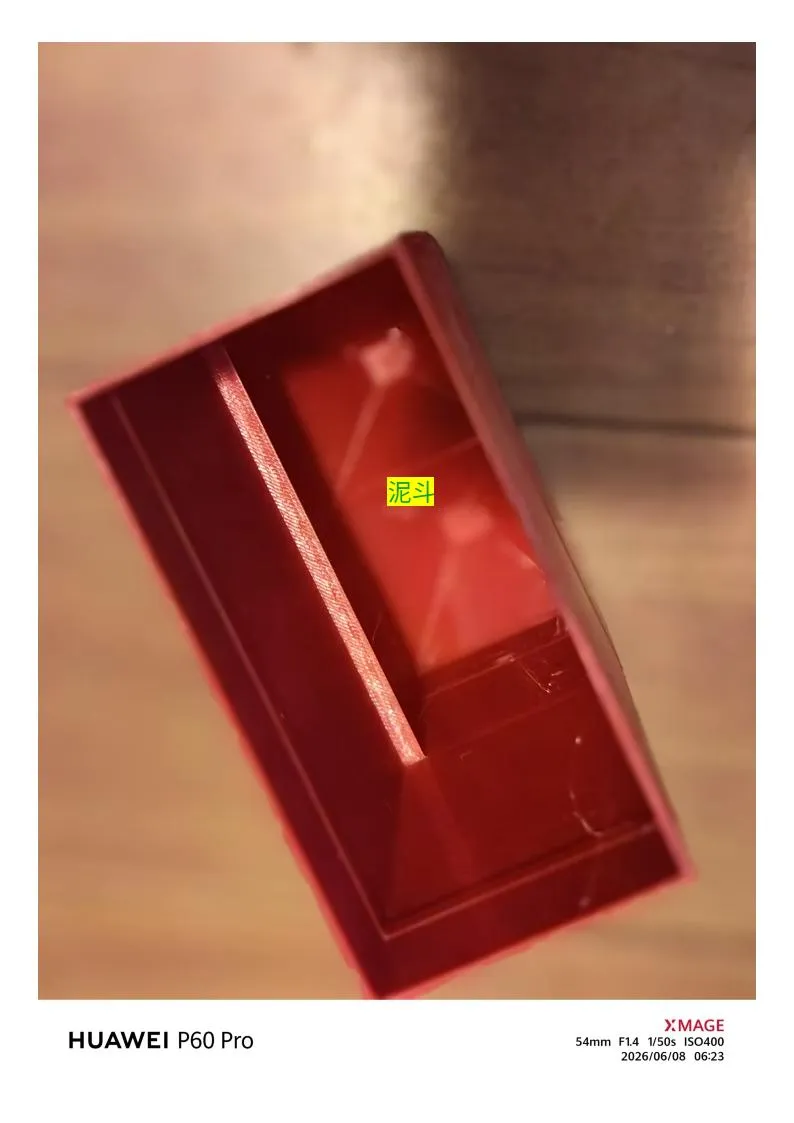
Main Body: A rectangular tank body, integrating an influent port, an effluent port, and two sludge discharge ports at the bottom. The influent port is located in the side influent zone of the tank, and the effluent port is below the effluent weir; the two sludge discharge ports are symmetrically arranged at the bottom of the tank, both with a diameter of 5.8 mm, and can be used to simulate gravity sludge discharge or connected to soft tubes to control the sludge discharge cycle.
Lamella Plates: A set of parallel plates inclined inside the tank, simulating a lamella sedimentation unit in actual engineering. Functionally, it significantly shortens the particle settling distance and increases the effective sedimentation area, allowing water to form a stable laminar flow between the plates, and suspended particles, after colliding with the lamella plates, slide along the plate surface into the sludge hopper at the bottom.
Effluent Weir: A collection device located at the top outlet of the tank, using a sawtooth or flat-top weir form to ensure uniform overflow of the supernatant, preventing short-circuiting and turbulence from affecting the effluent quality.
Operational Functional Parameters
The model is designed for a treatment flow rate of 1.5 m³/d, corresponding to a surface loading of 0.65 m³/(m²·h). Under these operating conditions, the model can capture particles with a minimum diameter of 0.22 μm, far exceeding the separation limit of ordinary sedimentation tanks, visually demonstrating the high-efficiency removal capability of lamella sedimentation for ultrafine particles.
Key Teaching Functions
- Demonstrate the entire process of sludge-water separation: influent → settling between lamella plates → sludge sliding into the bottom sludge hopper → clear water flowing out via the effluent weir.
- By controlling the opening and closing of the two 5.8 mm sludge discharge ports, demonstrate intermittent sludge discharge, continuous sludge discharge, and sludge hopper concentration effects.
- Adjusting the influent flow rate can verify the impact of changes in surface loading on effluent turbidity, quantitatively understanding the relationship between shallow tank theory and critical settling velocity.
- The three components are detachable and assemblable, facilitating cleaning of the lamella plates and observation of the internal structure, and can also simulate operating conditions such as lamella plate blockage or sludge discharge port malfunction.
License

You shall not share, sub-license, sell, rent, host, transfer, or distribute in any way the digital or 3D printed versions of this object, nor any other derivative work of this object in its digital or physical format (including - but not limited to - remixes of this object, and hosting on other digital platforms). The objects may not be used without permission in any way whatsoever in which you charge money, or collect fees.


Comment & Rating (0)