
Parametric Angled Barbed Hose Adapter – Metric
Print Profile(1)
Description
Boost Me (for free)
If this model is useful for your workshop, prototypes or DIY hose routing projects, a Boost would be greatly appreciated. It helps me keep developing practical, tested and fully parametric functional parts.
Description
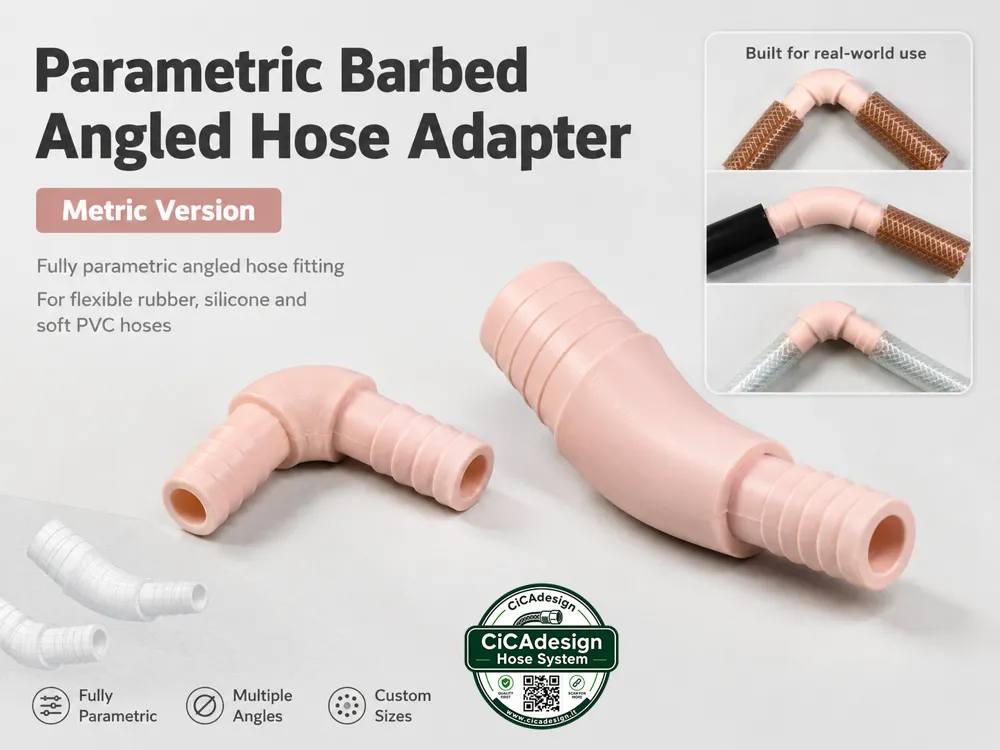
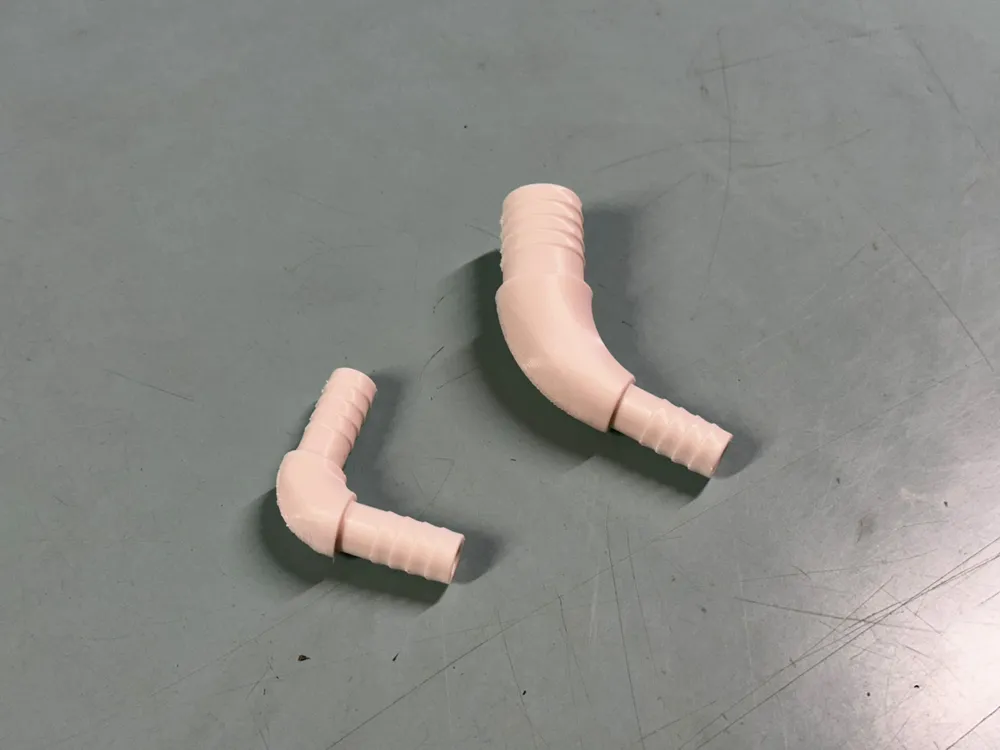
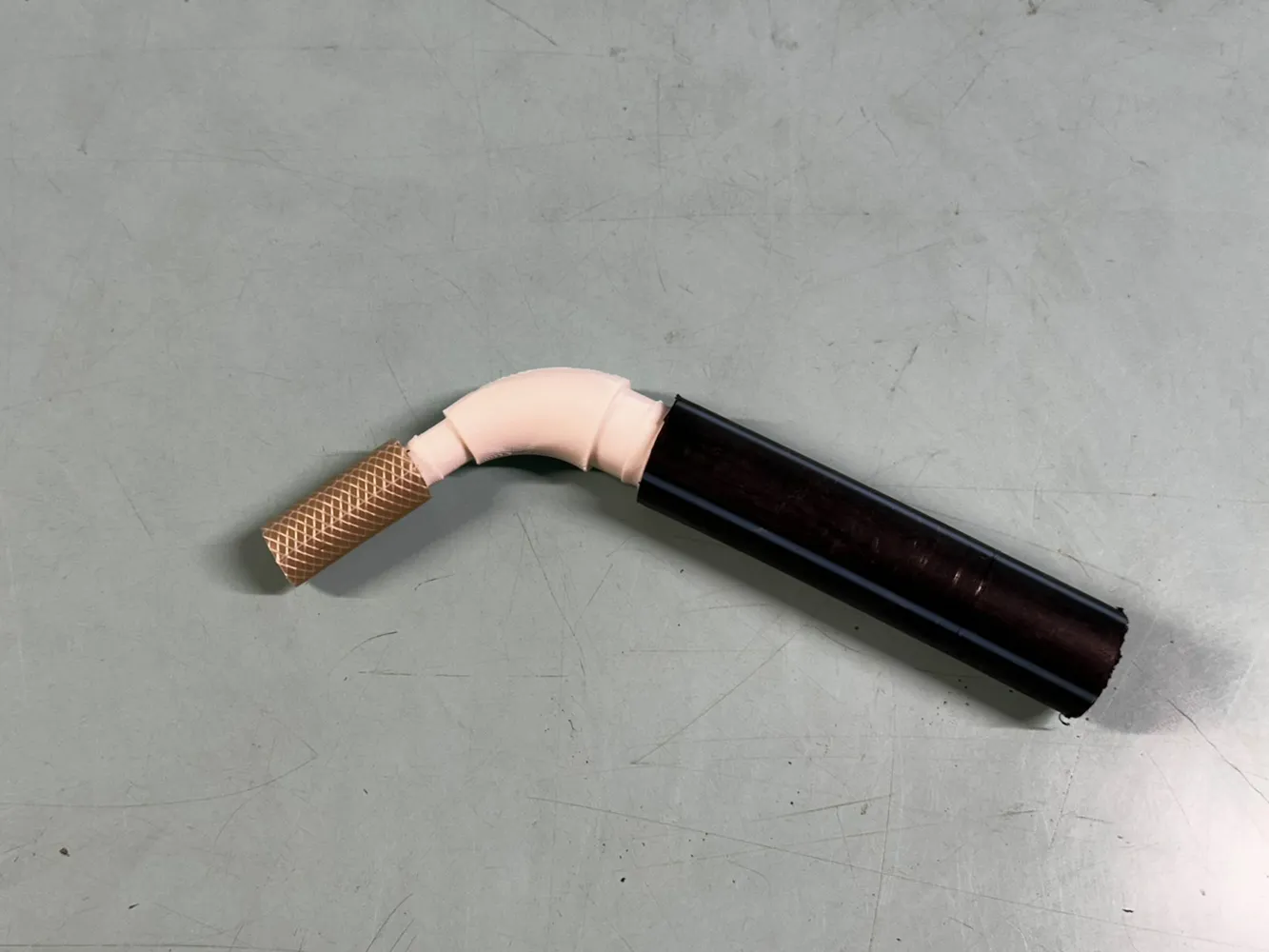
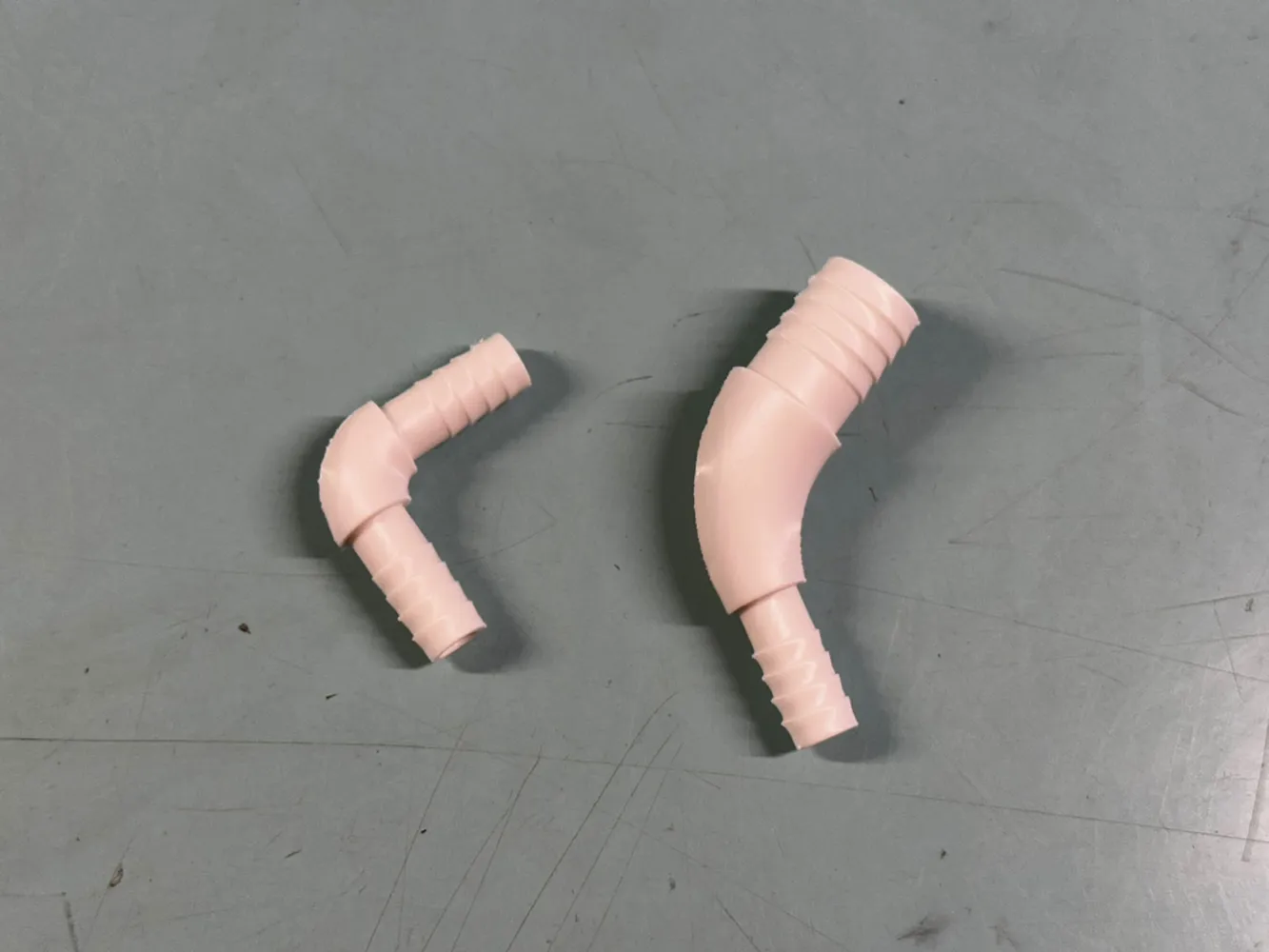
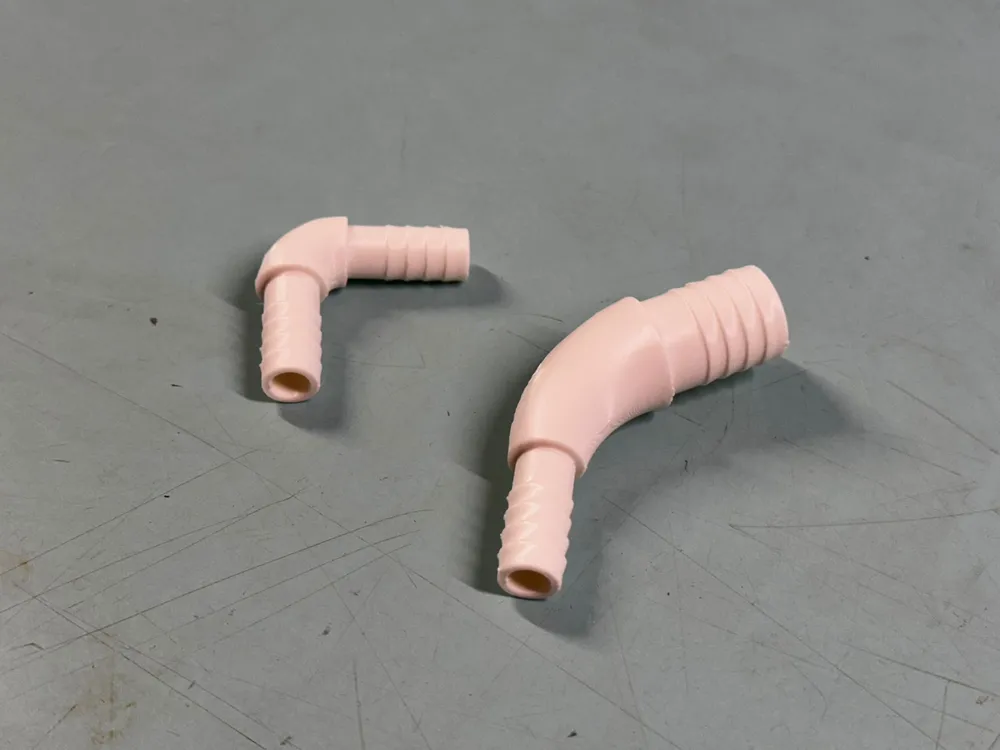
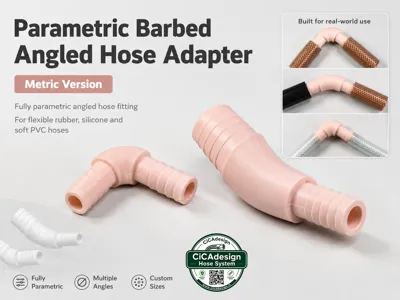
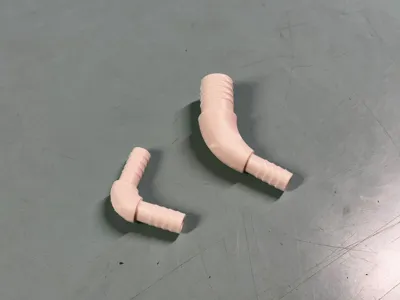
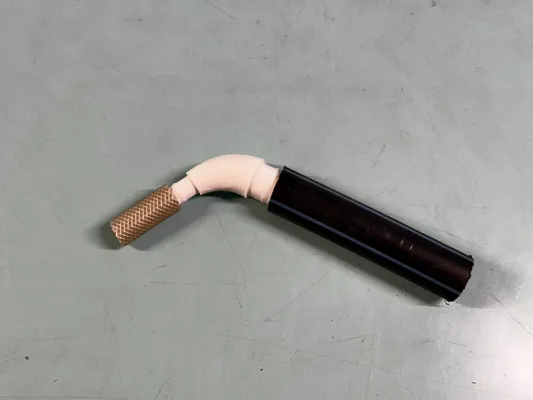
This is a parametric angled barbed hose adapter designed for flexible rubber, silicone and soft PVC tubes.
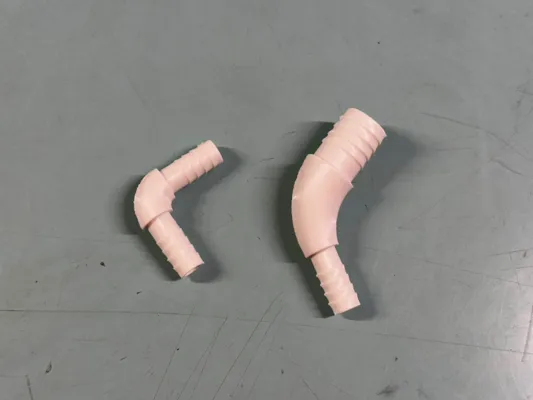
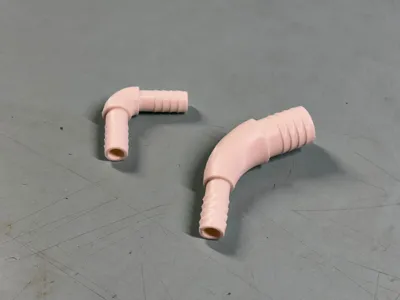
The model creates an angled hose connector with two barbed hose ends:
A side
B side
The B side is intended to be equal to or larger than the A side.
This is the metric version of the model.
All editable dimensions are expressed in millimeters.
The design can be customized directly in Fusion 360 / MakerWorld Customizer by changing the main parameters, allowing users to create different angled hose adapters for flexible hose routing, compact bends, transitions and light-duty workshop connections.
It is intended for light-duty workshop, DIY, maker, hobby and utility use, such as:
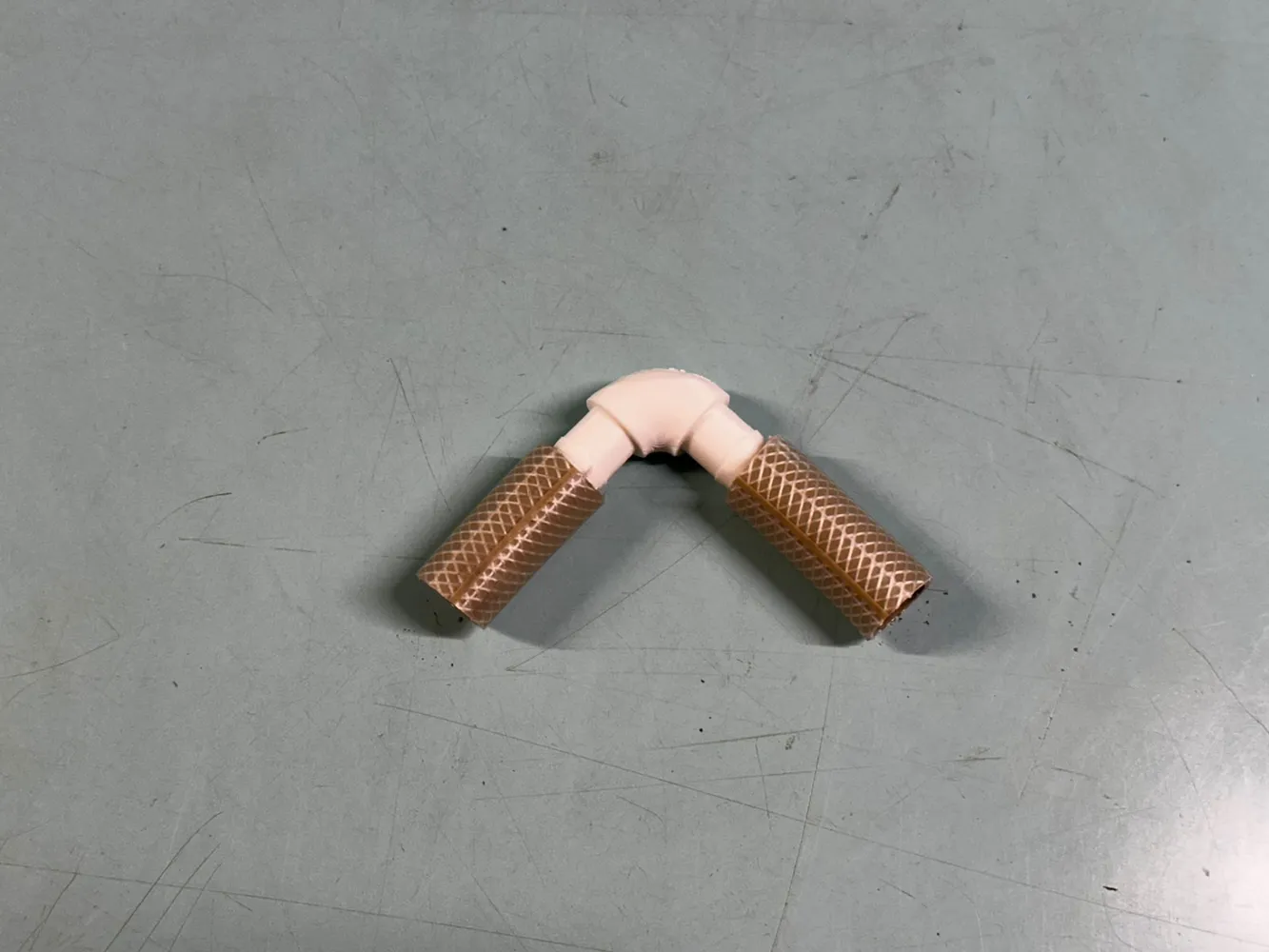
flexible rubber hose routing
silicone tube connections
soft PVC tube adapters
low-stress drain or vent lines
custom workshop hoses
prototype hose routing
maker projects and experimental setups
non-critical fluid or air routing
airflow redirection
compact hose bends
utility hose transitions
The barbs are automatically scaled from the hose diameter, wall thickness and grip level, so the user does not need to manually adjust many technical values.
Part of the CiCadesign Parametric Hose Connector System
This model is part of a growing set of functional, customizable hose and tube adapters designed for workshop, DIY, prototyping, light-duty routing and experimental setups.
Other connector variants are available on my profile, including straight, T, Y, angled, barbed, smooth sleeve, Metric and Inch Preset versions.
Important Geometry Note
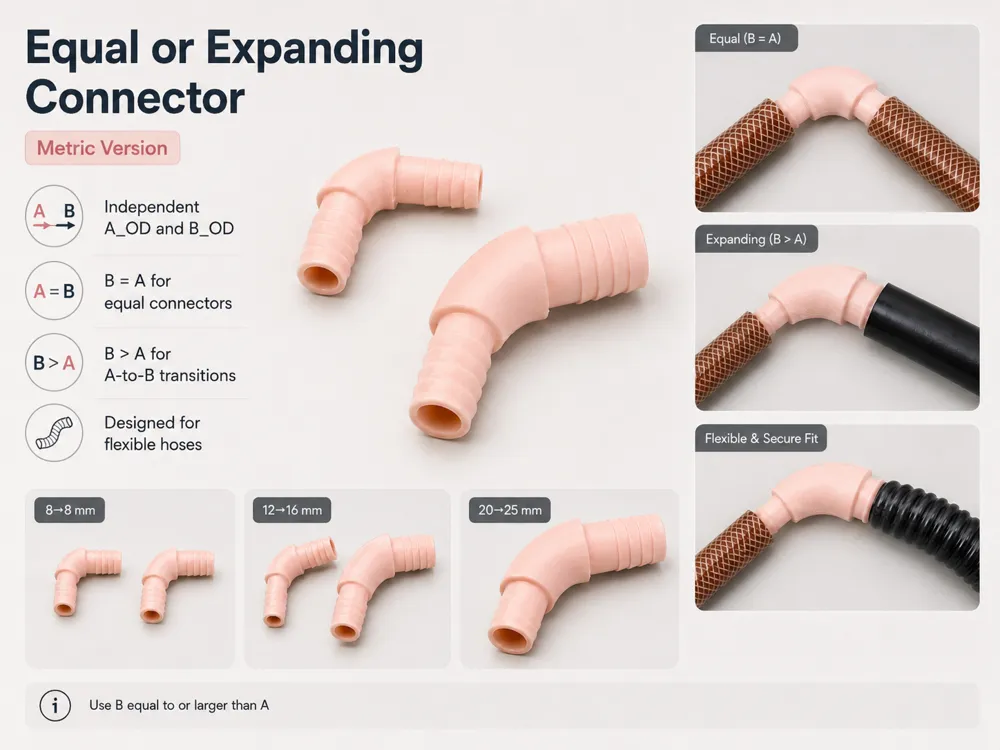
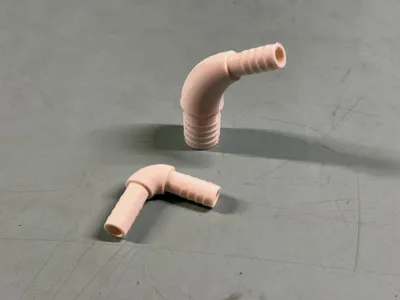
In this metric angled adapter, the two hose branches can have different outside barb diameters.
The main editable diameters are:
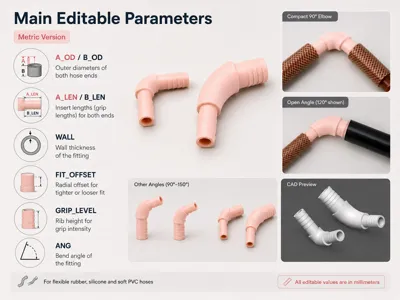
A_OD
B_OD
A_OD controls the outside diameter of the first barbed hose connection.
B_OD controls the outside diameter of the second barbed hose connection.
This model is designed with the following rule:
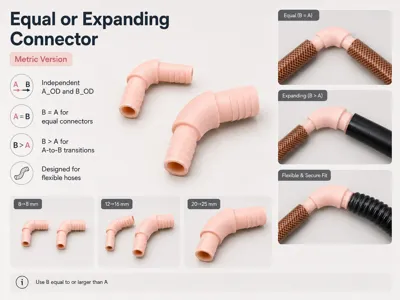
B_OD should be equal to or larger than A_OD.
This makes the adapter suitable for:
equal angled hose connectors
reduced-to-larger hose transitions
compact elbow hose routing
angled workshop adapters
light-duty directional hose routing
custom flexible tube transitions
It is not intended for cases where B is smaller than A.
For best results, use:
B_OD = A_OD for a simple equal angled connector
B_OD > A_OD for an expanding angled hose adapter
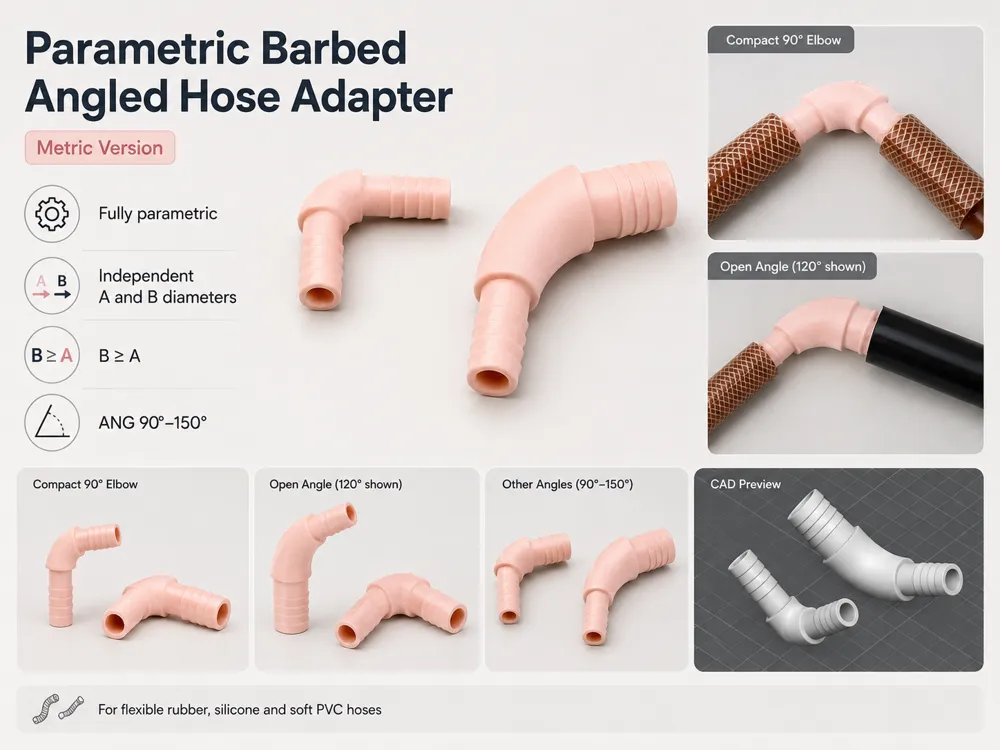
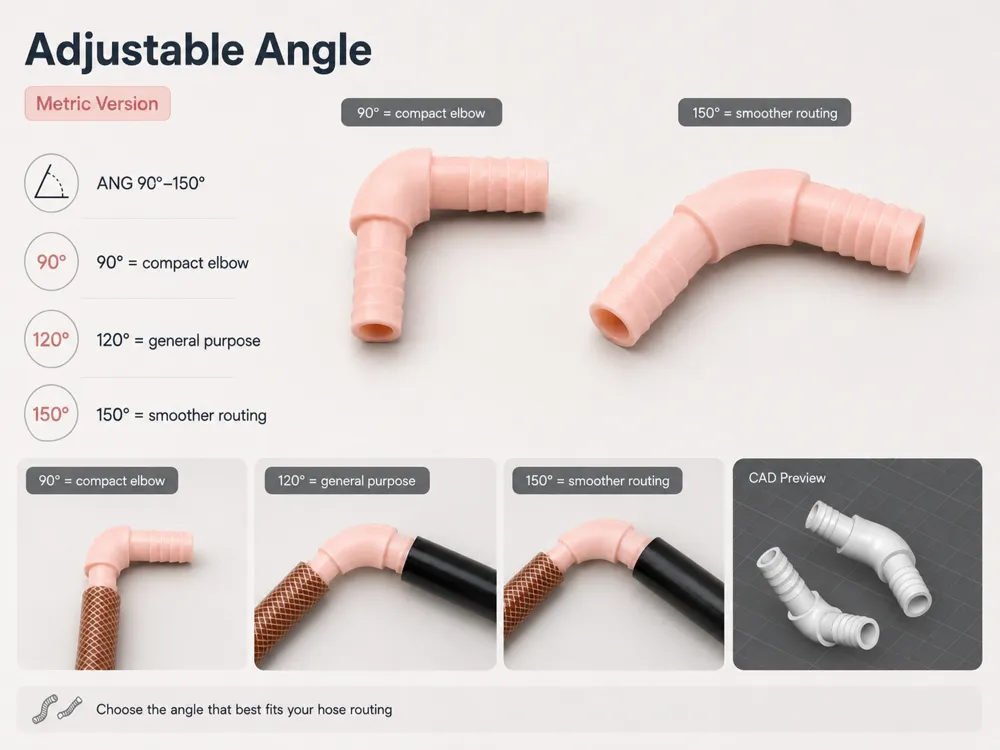
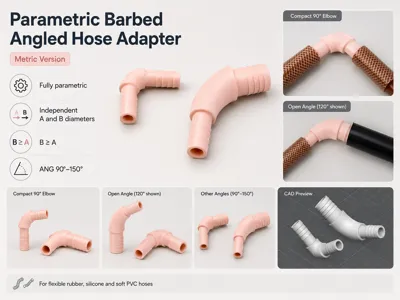
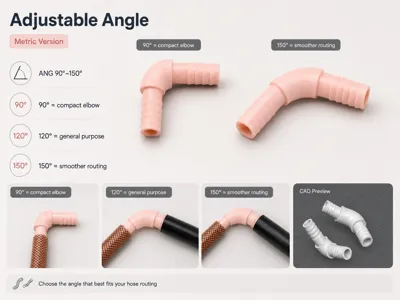
The ANG parameter controls the angle between the A side and the B side.
A smaller angle creates a tighter elbow.
A larger angle creates a more open, smoother hose direction change.
Recommended ANG range:
90° to 150°
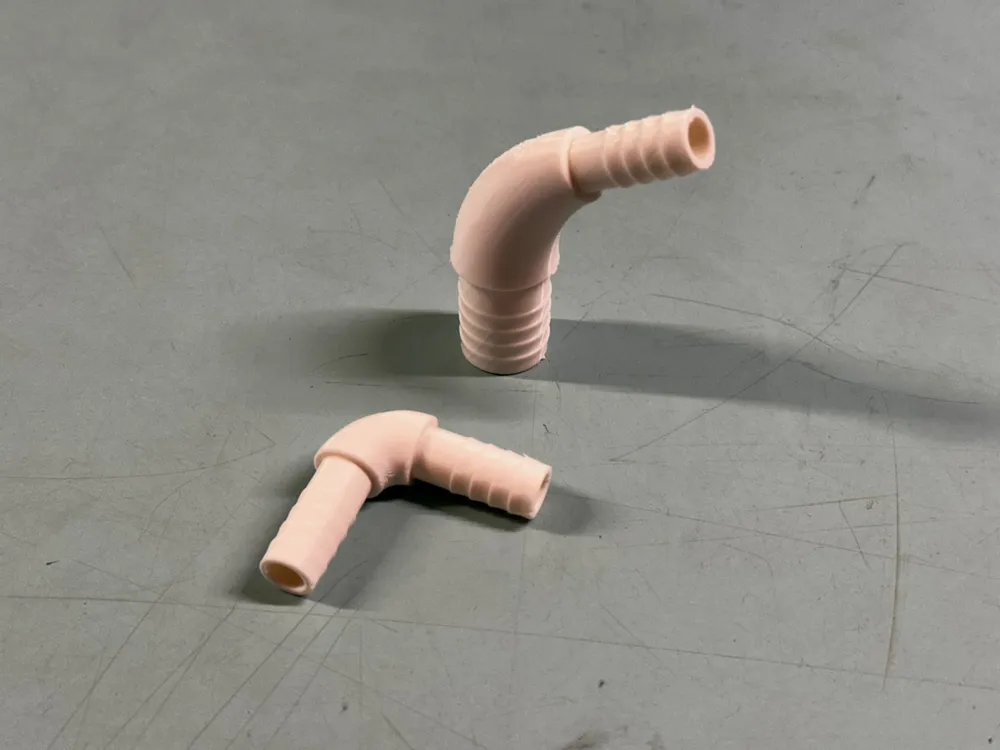
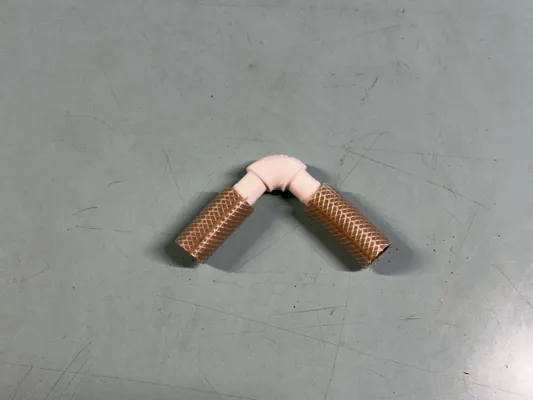
90° creates a classic elbow-style connector.
120° is a good general-purpose angled adapter.
150° creates a soft, open bend with smoother hose routing.
Main Features
Fully parametric angled hose adapter
Metric version
All dimensions in millimeters
Two barbed hose connections
Independent A and B diameters
B diameter equal to or larger than A diameter
Adjustable angle between A and B
Angle range from 90° to 150°
Custom insertion length for each side
Automatic barb scaling
Adjustable grip level
Internal through-hole
Reinforced curved body
Designed for flexible hoses
Suitable for equal or expanding angled adapters
Practical workshop-oriented design
Printable on standard FDM printers
Designed to be printed strong, with many walls / almost solid profiles
Recommended Parameters
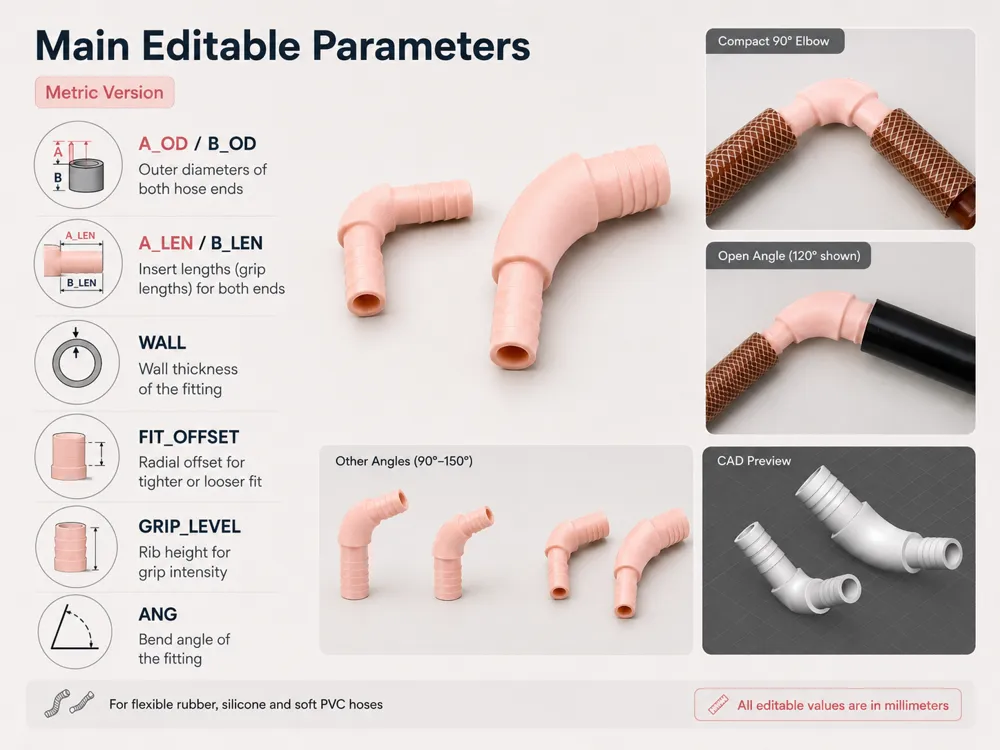
The most important editable parameters are:
| Parameter | Description |
|---|---|
| A_OD | Outside diameter of the A barbed hose section |
| B_OD | Outside diameter of the B barbed hose section |
| A_LEN | Insertion length of the A hose side |
| B_LEN | Insertion length of the B hose side |
| WALL | Wall thickness |
| FIT_OFFSET | Diameter correction for tighter or looser hose fit |
| GRIP_LEVEL | Barb aggressiveness / holding strength |
| ANG | Angle between A side and B side |
Suggested Parameter Ranges
| Parameter | Suggested range | Recommended default |
|---|---|---|
| A_OD | 6–40 mm | 12 mm |
| B_OD | 6–40 mm | 16 mm |
| A_LEN | 20–50 mm | 32 mm |
| B_LEN | 20–50 mm | 36 mm |
| WALL | 1.2–3.4 mm | 2.4 mm |
| FIT_OFFSET | -0.3 to +0.5 mm | 0 mm |
| GRIP_LEVEL | 0–3 | 3 |
| ANG | 90–150° | 120° |
Important rule:
B_OD must be equal to or larger than A_OD.
Recommended practical sizes:
| A_OD | Suggested B_OD values |
|---|---|
| 6 mm | 6 / 8 / 10 mm |
| 8 mm | 8 / 10 / 12 mm |
| 10 mm | 10 / 12 / 16 mm |
| 12 mm | 12 / 16 / 20 mm |
| 16 mm | 16 / 20 / 25 mm |
| 20 mm | 20 / 25 / 32 mm |
| 25 mm | 25 / 32 / 40 mm |
| 32 mm | 32 / 40 mm |
Parameter Meaning
A_OD
Controls the outside diameter of the A barbed hose section.
Use this value according to the internal diameter of the smaller flexible hose.
Example:
| Hose ID | Suggested A_OD |
|---|---|
| 8 mm hose | 8 mm |
| 10 mm hose | 10 mm |
| 12 mm hose | 12 mm |
| 16 mm hose | 16 mm |
| 20 mm hose | 20 mm |
| 25 mm hose | 25 mm |
| 32 mm hose | 32 mm |
For flexible hoses, the outside diameter of the printed barb is usually set close to the hose internal diameter.
A small positive FIT_OFFSET can be used if a tighter fit is needed.
B_OD
Controls the outside diameter of the B barbed hose section.
B_OD should be equal to or larger than A_OD.
Use this value according to the internal diameter of the larger flexible hose.
Example:
| A_OD | B_OD | Use |
|---|---|---|
| 8 mm | 8 mm | Equal angled connector |
| 8 mm | 10 mm | Small expanding elbow |
| 10 mm | 12 mm | Light hose transition |
| 12 mm | 16 mm | Common workshop adapter |
| 16 mm | 20 mm | Medium hose transition |
| 20 mm | 25 mm | Larger utility hose adapter |
| 25 mm | 32 mm | Large light-duty hose transition |
| 32 mm | 40 mm | Large workshop routing adapter |
A_LEN
Controls the insertion length of the A hose side.
Longer A_LEN gives:
better hose retention
more barb contact area
stronger mechanical hold
more space for multiple barbs
Shorter A_LEN gives:
more compact adapter
faster print
less material use
Recommended starting values:
| A_OD diameter | Suggested A_LEN |
|---|---|
| 6–8 mm | 20–25 mm |
| 10–12 mm | 25–32 mm |
| 16 mm | 30–38 mm |
| 20–25 mm | 35–45 mm |
| 32 mm | 45–55 mm |
B_LEN
Controls the insertion length of the B hose side.
Because B is usually equal to or larger than A, B_LEN can be slightly longer than A_LEN.
Recommended starting values:
| B_OD diameter | Suggested B_LEN |
|---|---|
| 6–8 mm | 22–26 mm |
| 10–12 mm | 28–34 mm |
| 16 mm | 32–40 mm |
| 20–25 mm | 38–48 mm |
| 32–40 mm | 48–65 mm |
WALL
Controls the wall thickness of the adapter.
Recommended values:
| Use | Suggested WALL |
|---|---|
| Small light-duty fittings | 1.4–1.8 mm |
| General use | 1.8–2.4 mm |
| Larger fittings | 2.4–3.2 mm |
| Stronger workshop use | 3.0 mm or more |
For small diameters, avoid using too large a wall thickness because the internal hole may become too restricted.
For larger diameters, increasing WALL improves strength around the curved transition area.
FIT_OFFSET
Controls the final barb diameter correction.
Use it to compensate for hose flexibility, material shrinkage and printer tolerance.
| FIT_OFFSET | Effect |
|---|---|
| -0.2 mm | Slightly looser fit |
| 0 mm | Nominal size |
| +0.2 mm | Tighter fit |
| +0.4 mm | Stronger interference fit |
For flexible rubber hoses, a small positive value can improve grip.
For harder hoses, start with 0 mm or a small negative value.
GRIP_LEVEL
Controls how aggressive the barb geometry is.
| Grip Level | Use |
|---|---|
| 0 | Very soft grip / easy removal |
| 1 | Light grip |
| 2 | Standard grip |
| 3 | Stronger grip, recommended with hose clamp |
Recommended starting value:
GRIP_LEVEL = 3
Use GRIP_LEVEL = 3 when the hose is soft enough or when using a hose clamp.
For very rigid hoses, reduce the grip level or use a lower FIT_OFFSET.
ANG
Controls the angle between the A hose side and the B hose side.
Recommended range:
90°–150°
| ANG | Use |
|---|---|
| 90° | Compact elbow / tight routing |
| 105° | Slightly open elbow |
| 120° | General-purpose angled adapter |
| 135° | Smooth routing bend |
| 150° | Wide, open angle with softer hose direction change |
The default value is intended as a practical general-purpose starting point.
Recommended default:
ANG = 120°
Example Metric Presets
| Preset | Hose sides | Use |
|---|---|---|
| 8 × 8 mm / 90° | 8 mm to 8 mm | Small equal elbow |
| 8 × 10 mm / 120° | 8 mm to 10 mm | Small expanding angled adapter |
| 10 × 12 mm / 120° | 10 mm to 12 mm | Light hose transition |
| 12 × 16 mm / 120° | 12 mm to 16 mm | General workshop adapter |
| 16 × 20 mm / 120° | 16 mm to 20 mm | Medium utility hose adapter |
| 20 × 25 mm / 135° | 20 mm to 25 mm | Larger flexible hose transition |
| 25 × 32 mm / 135° | 25 mm to 32 mm | Large workshop hose adapter |
| 32 × 40 mm / 150° | 32 mm to 40 mm | Large open-angle routing adapter |
Naming logic:
A × B / ANG
Example:
12 × 16 mm / 120°
means:
12 mm A hose side
16 mm B hose side
120° angle between the two hose directions
Printing Recommendations
Recommended materials:
| Material | Recommendation |
|---|---|
| ASA | Best choice for stronger and more heat-resistant parts |
| PETG | Good general-purpose option |
| PA / PA-CF | Excellent if available, especially for demanding workshop use |
| PLA | Only for indoor, light-duty, non-warm applications |
Suggested print settings:
| Setting | Recommendation |
|---|---|
| Layer height | 0.16–0.24 mm |
| Walls/perimeters | 6–10 |
| Recommended profile | 10 walls for an almost solid part |
| Top/bottom layers | 5–7 |
| Infill | 40–100% |
| Material | ASA or PETG recommended |
| Supports | May be required depending on orientation |
| Brim | Recommended for ASA |
| Orientation | Angled or optimized for branch strength |
For this type of small functional fitting, I recommend using many walls rather than relying only on infill.
The print profile can use 10 walls/perimeters to make the part almost solid, improving mechanical strength, hose clamp resistance and durability around the curved body.
This is especially useful because the part is small, hollow and mechanically stressed by hose insertion, hose removal and possible clamp pressure.
Print Orientation Notes
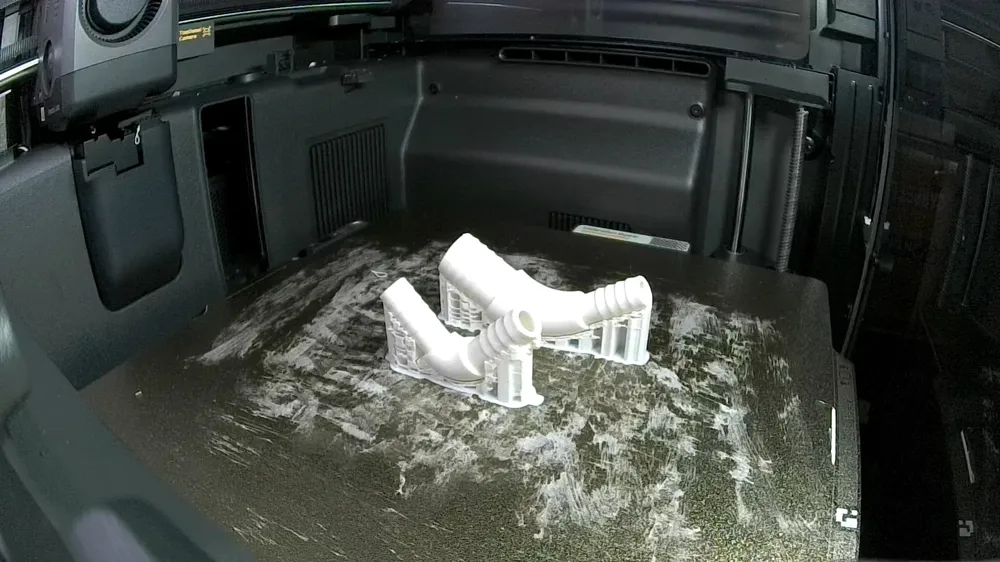
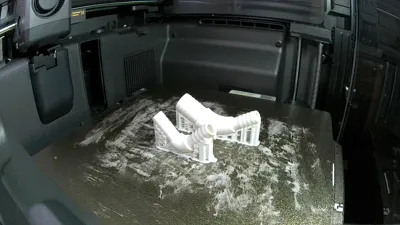
For this angled fitting, the recommended orientation is to print the model with the angle bisector perpendicular to the build plate.
This means the adapter should be positioned so that the bend is balanced between the A side and the B side, with the angle split evenly around the vertical print direction.
This is the best general-purpose orientation because it helps balance strength, supports and layer direction around the curved transition.
Recommended options:
Option 1 — Angle bisector vertical — recommended
Orient the model so that the bisector of the A/B angle is perpendicular to the build plate.
Option 2 — One hose end vertical
Useful for improving one hose end surface, but it may make the opposite side weaker or require more support.
Option 3 — Slightly tilted body
Useful only if you need to optimize supports, surface quality or bed contact.
For stronger parts, use ASA, PETG, PA or PA-CF, many walls/perimeters, good layer bonding and test carefully before real use.
Suggested Use
Measure the internal diameter of both flexible hoses.
Set:
A_OD according to the smaller hose internal diameter.
B_OD according to the larger hose internal diameter.
Then:
Use GRIP_LEVEL = 3 as a starting point.
Use FIT_OFFSET = 0 mm for the first test.
Adjust ANG depending on the required hose routing.
Use ANG = 90° for compact elbow routing.
Use ANG = 120° for general use.
Use ANG = 135° or 150° for smoother open routing.
Print a small test version if needed.
Increase FIT_OFFSET slightly if the hose is too loose.
Reduce FIT_OFFSET if the hose is too tight.
Use hose clamps where needed.
Test carefully before real use.
Important Safety Notes
This model is intended for non-critical, light-duty and hobby use only.
Do not use this printed part for:
high-pressure systems
compressed air safety-critical systems
fuel lines
brake lines
hydraulic systems
drinking water systems
food-contact use
medical use
hot fluids
toxic or hazardous chemicals
any application where failure could cause injury, damage or leakage of dangerous substances
3D printed parts can fail depending on:
material
print orientation
layer adhesion
temperature
chemical exposure
hose stiffness
clamp pressure
mechanical stress
UV exposure
long-term creep
Always test the part carefully before use.
Use hose clamps where needed.
The designer is not responsible for misuse or damage caused by improper application.
Print Profile Note
This is a fully parametric Fusion 360 / MakerWorld Customizer model.
The project is intended to let users generate their own custom hose fitting size rather than relying only on fixed-size print profiles.
The model has been personally tested on a Qidi Plus 4, and I now also use a Bambu Lab H2D.
For the provided profile, I recommend using 10 walls/perimeters to obtain an almost solid functional part.
Users should still slice the generated version according to their printer, material, hose dimensions and intended use.
Verified community print profiles are welcome and appreciated.
Customizer Note
The parametric version is intended to be edited from Fusion 360 / MakerWorld Customizer — PC version.
Bambu Handy is mainly intended for direct printing from ready print profiles and may not provide full access to editable custom parameters.
For best results, use the MakerWorld Customizer from a desktop browser.
Range consigliati da mettere nel Customizer
Questi secondo me sono i range più sensati:
| Parameter | Min | Max | Default | Step |
|---|---|---|---|---|
| A_OD | 6 | 32 | 12 | 1 |
| B_OD | 6 | 40 | 16 | 1 |
| A_LEN | 20 | 55 | 32 | 1 |
| B_LEN | 22 | 65 | 36 | 1 |
| WALL | 1.4 | 3.5 | 2.2 | 0.1 |
| FIT_OFFSET | -0.3 | 0.5 | 0 | 0.1 |
| GRIP_LEVEL | 0 | 3 | 3 | 1 |
| ANG | 90 | 150 | 120 | 5 |
License

You shall not share, sub-license, sell, rent, host, transfer, or distribute in any way the digital or 3D printed versions of this object, nor any other derivative work of this object in its digital or physical format (including - but not limited to - remixes of this object, and hosting on other digital platforms). The objects may not be used without permission in any way whatsoever in which you charge money, or collect fees.


Comment & Rating (0)