
Print Profile(1)
Description
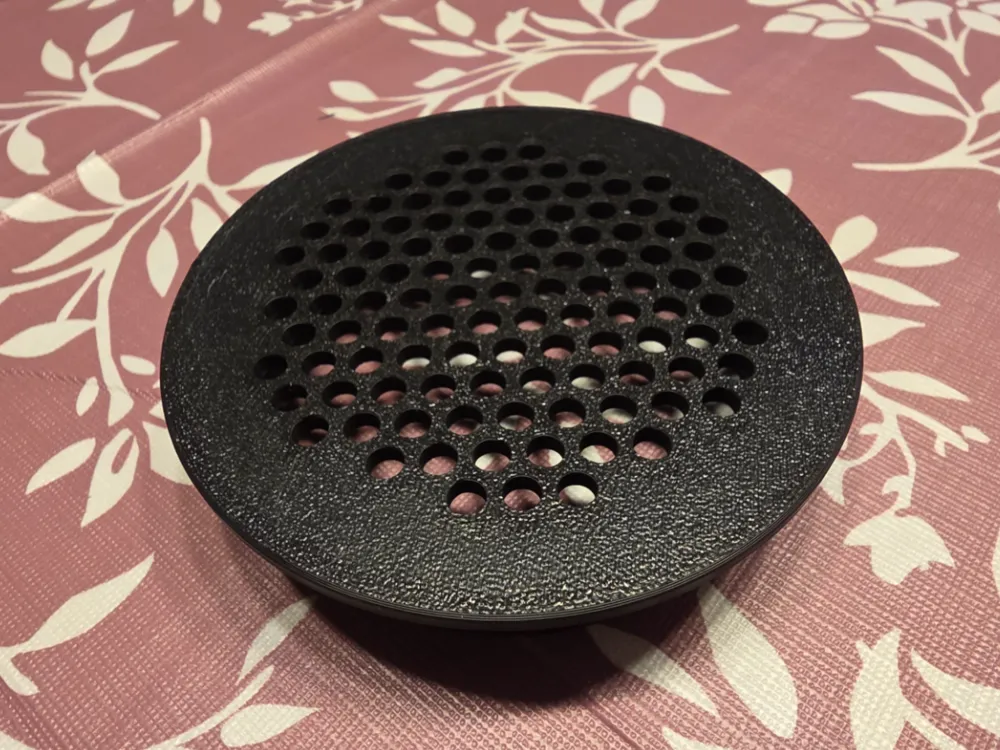
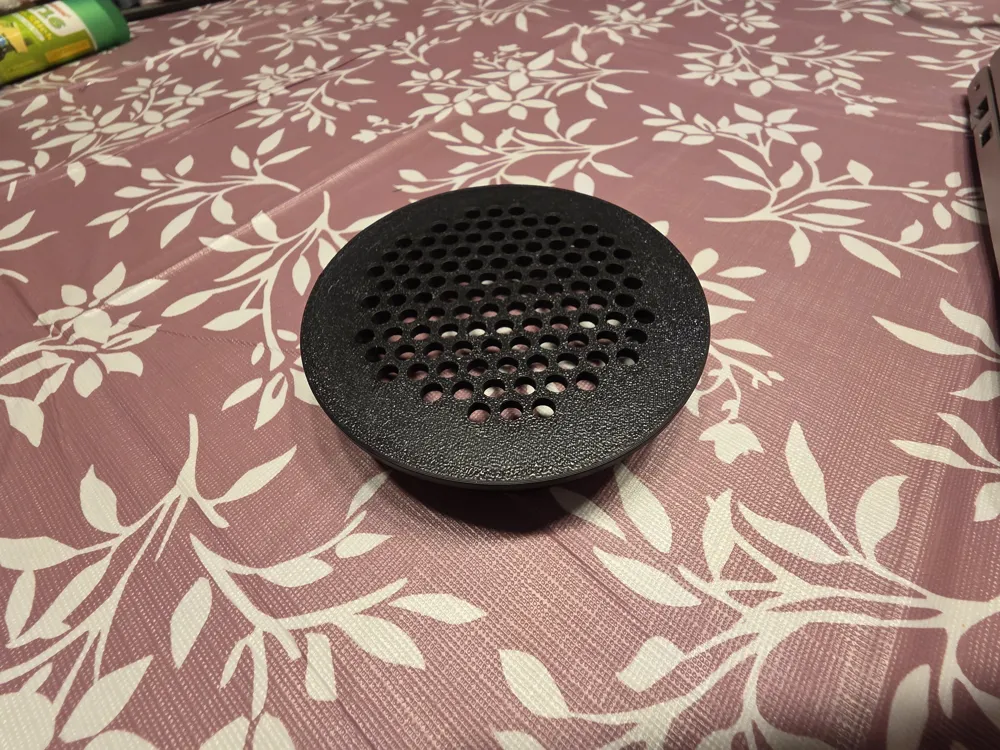
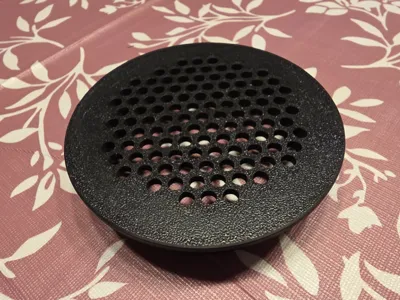
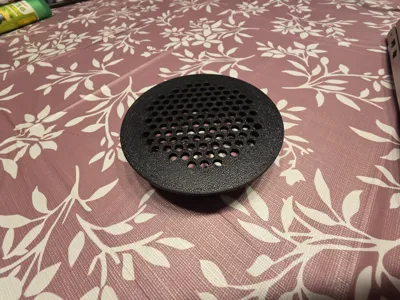
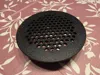
DN100 Drainage Pipe End Cap – Vented & Rodent-Proof | conical press-fit + snap-lock
Description
A vented end cap for a DN100 corrugated drainage pipe (~100 mm outer diameter). It closes off the visible end of the pipe while still letting excess water drain out — and keeps mice, rats and other animals from crawling in.
I made this because the store-bought cap was expensive and completely closed — no holes, so water couldn't escape and it just trapped debris. This printed version is cheap, lets water through, blocks animals, and locks into the pipe instead of falling off.
How it works
- Vented face — 109 holes at 5 mm. Big enough to let excess water out (the water that no longer fits through the pipe's own slots), small enough to keep mice, rats and other critters out. ~40 % open area over the bore.
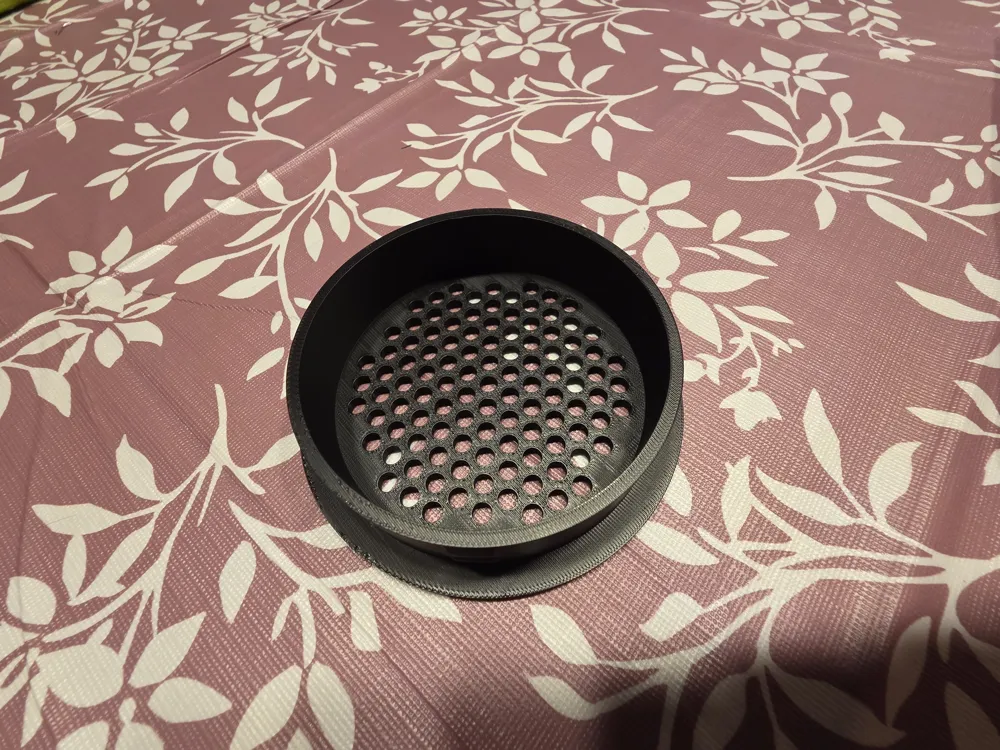
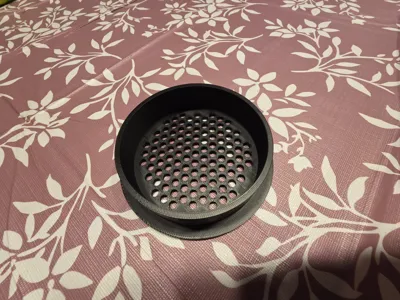
- Conical (tapered) press-fit skirt. The insert tapers slightly (Ø 90.7 → 92 mm), so it goes in easily and tightens as you push — a snug, wobble-free seat.
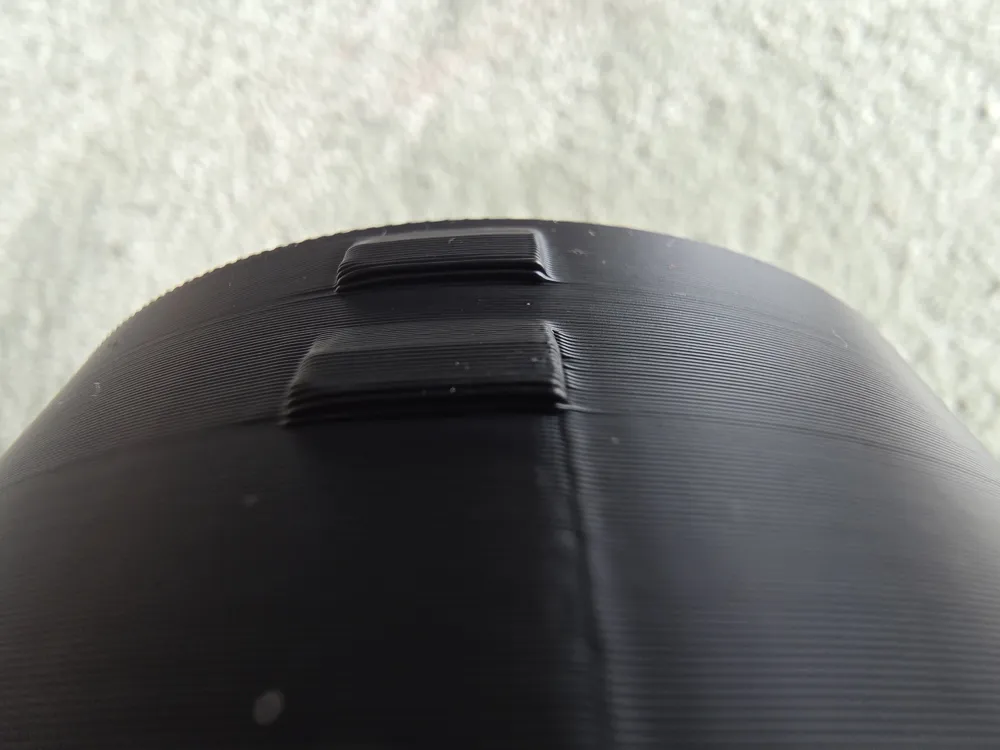
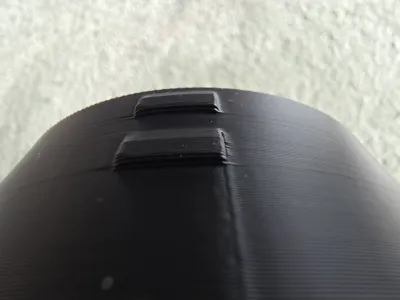
- Sawtooth snap lugs. Small lugs on the skirt drop into the pipe's corrugation valley: easy to push in, resists being pushed or pulled back out.
- Flange / collar at the face. Overhangs the pipe end so the cap can't slide into the pipe, and gives you a lip to grip and pry it back out.
- Prints standing, flange down, no supports.
Designed for these pipe dimensions (measured)
- DN100 corrugated drainage pipe: inner contact Ø ~92 mm, outer Ø ~100 mm
- Corrugation pitch (valley to valley) 7.5 mm, valley width ~2.8 mm
- ⚠️ Measure your own pipe with calipers first — drainage pipes vary by manufacturer. If your inner diameter differs, scale the model uniformly in your slicer to match (e.g., 98 % or 102 %). The cap still holds by friction even if the snap lugs don't perfectly line up with your corrugation pitch.
Key specs
- Overall height ~26 mm · Flange Ø 106 mm · Insertion depth ~23 mm
- Wall thickness 3 mm · Face plate 3.5 mm · 109 vent holes @ 5 mm
- ~30 cm³ of filament · prints in well under an hour
Recommended print settings
- Material: ASA recommended. This cap sits at the exposed, daylight end of the pipe, so it sees sun — ASA is UV- and weather-resistant and holds up outdoors. PETG also prints fine and is tough, but may not stay UV-stable long-term in direct sun, so treat it as a budget alternative.
- Printer: an enclosed printer is recommended for ASA (e.g., Bambu Lab P2S) — on an open machine ASA tends to warp, especially on the large flat flange. On an open printer, PETG is the easier choice.
- Orientation: flange (face) down on the plate, no supports. The big flat flange gives excellent bed adhesion (helps a lot against ASA warping). All overhangs print fine; the small snap lugs print as minor bumps.
- Layer height 0.2 mm · 4 wall loops · 40 % gyroid infill · 5 top/bottom layers
- Precise Wall: ON — keeps the conical surface and snap-lug edges clean for a predictable fit. Requires Developer Mode in Bambu Studio (enable it, then restart).
- ASA temps: nozzle ~250–260 °C, bed ~90–100 °C, warm enclosure, part-cooling fan low (~10–30 %) to protect layer adhesion.
- PETG temps (alternative): nozzle ~250 °C, bed ~70 °C, fan ~40 %.
- Brim recommended (5 mm outer) — the footprint is a ring, the brim keeps it anchored for the first layers.
Assembly
- Deburr and clean the pipe end.
- Push the cap into the drainage pipe — light at first, then tighter (the conical skirt), until the snap lugs click into a corrugation valley.
- The flange seats against the pipe end — it can't slide in, and the lip lets you pull/pry it out later.
- Optional — silicone: run a bead of silicone around the cap-to-pipe joint before inserting. This seals the ring gap (so water can only leave through the holes), adds permanent hold, and closes the last edge gap against small animals. Note: silicone makes later removal harder — skip it if you want the cap to stay easily removable.
Material & longevity (honest)
ASA was chosen for UV and weather resistance at the exposed pipe end. A printed part won't match the lifespan of an injection-molded fitting, and the practical limit is layer adhesion under freeze–thaw and weather rather than the material itself — but in ASA, outdoors, expect years of service. The optional silicone bead noticeably improves durability and sealing.
Files & customizing
- Upload includes the STL (and a sliced .3mf print profile for one-click printing).
- To fit a different pipe: scale the STL uniformly in your slicer to your measured inner diameter. Small differences (a few %) are fine; the friction fit is forgiving.
Note / disclaimer
For non-pressurized drainage only — not for pressurized lines, drinking water, or pressurized sewage. Not a replacement for a certified pipe fitting. Use at your own risk.
—
Designed, printed and tested in ASA on a Bambu Lab P2S.
License



Comment & Rating (0)