
NO AMS Anatomical Shoulder Joint (CT scan)
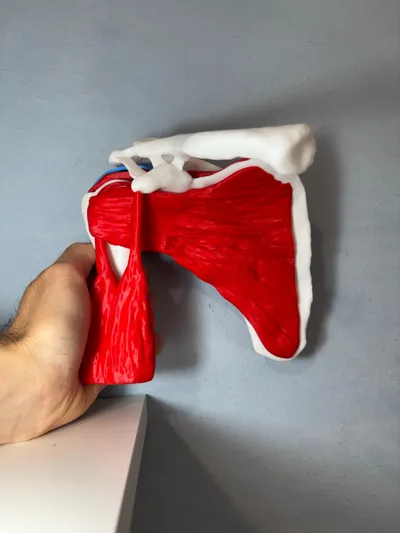
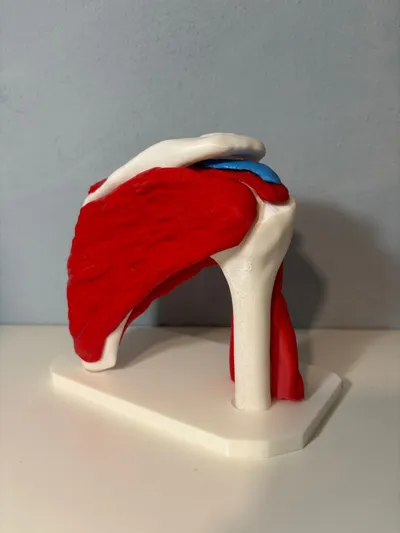
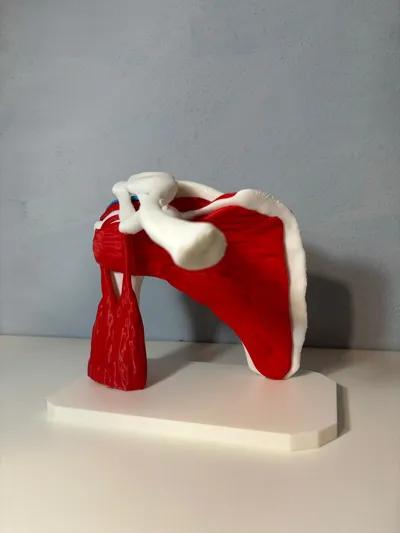
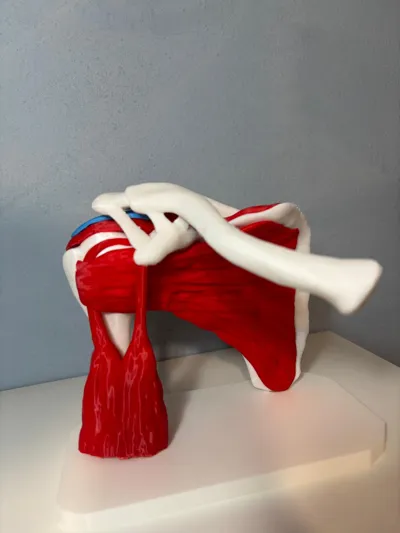
Print Profile(4)




Description
🦴🦴🦴CHECK MY NEW ANATOMICAL MODELS: KNEE and SHOULDER 🦴🦴🦴
Hold a medically accurate piece of human anatomy right in your hands! (Read the last sentence for a curiosity question!)
Boost Me (for free)
Want more anatomical models? Boost this 🙂
🩻 Overview 🩻
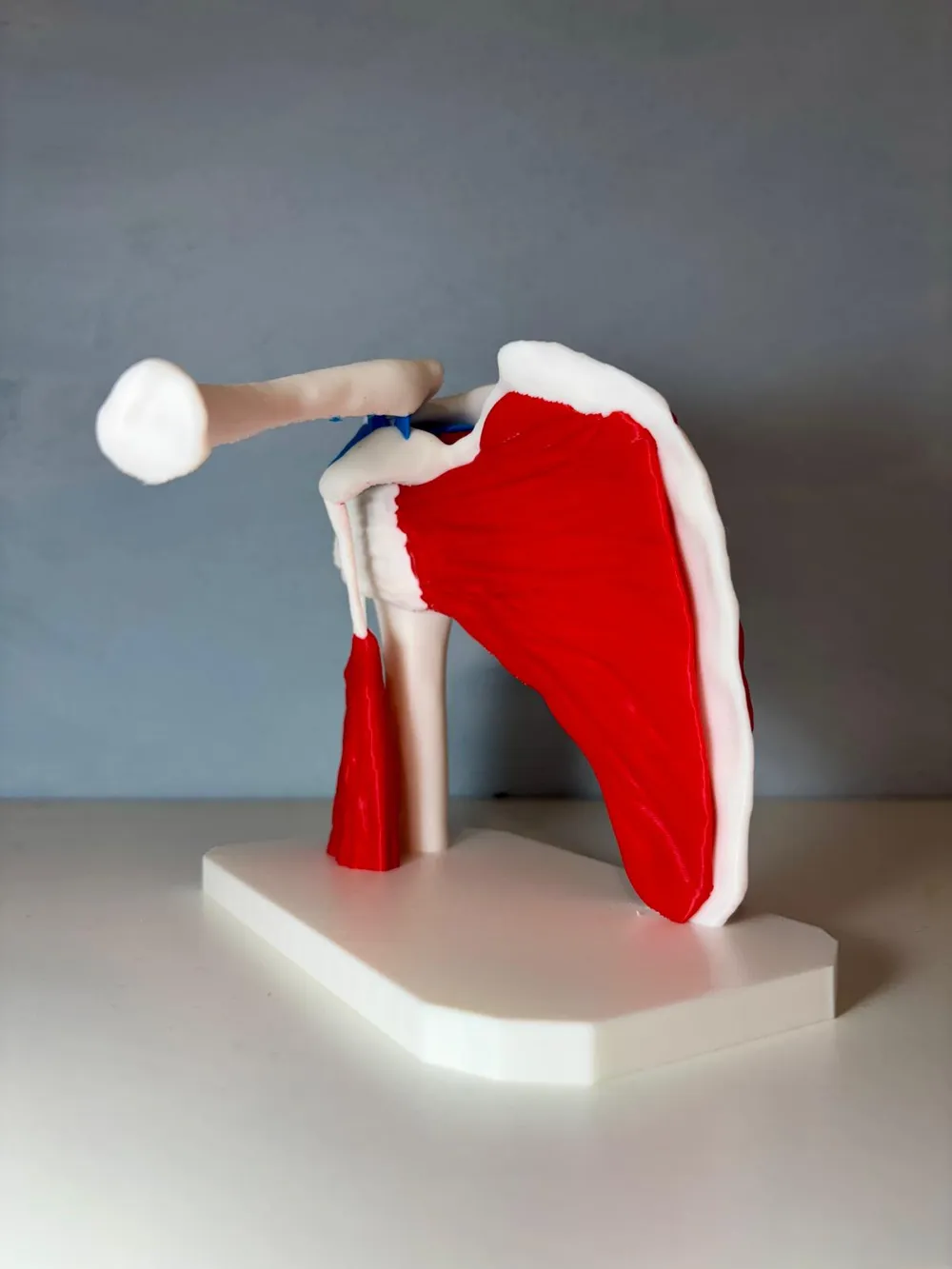
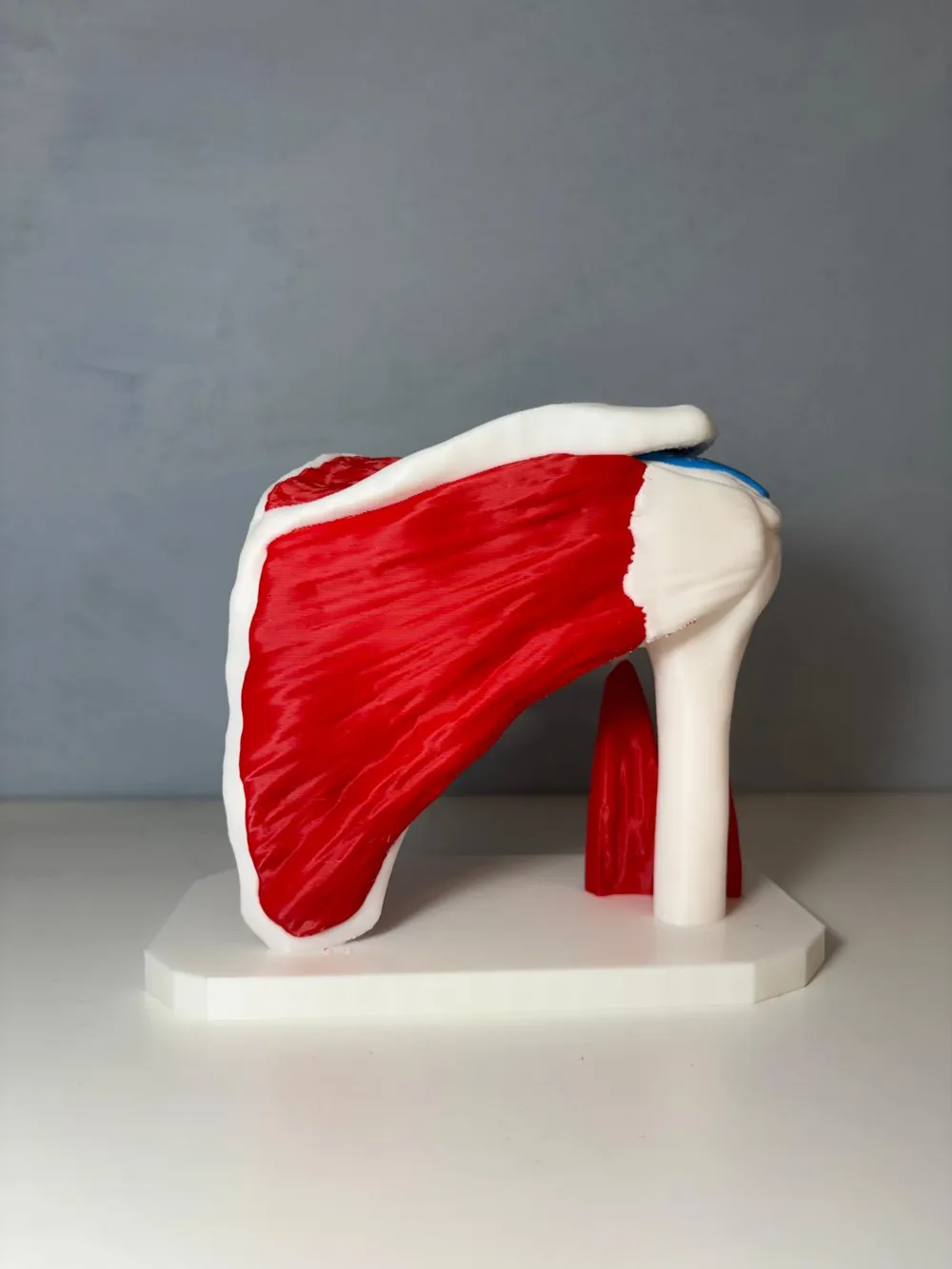
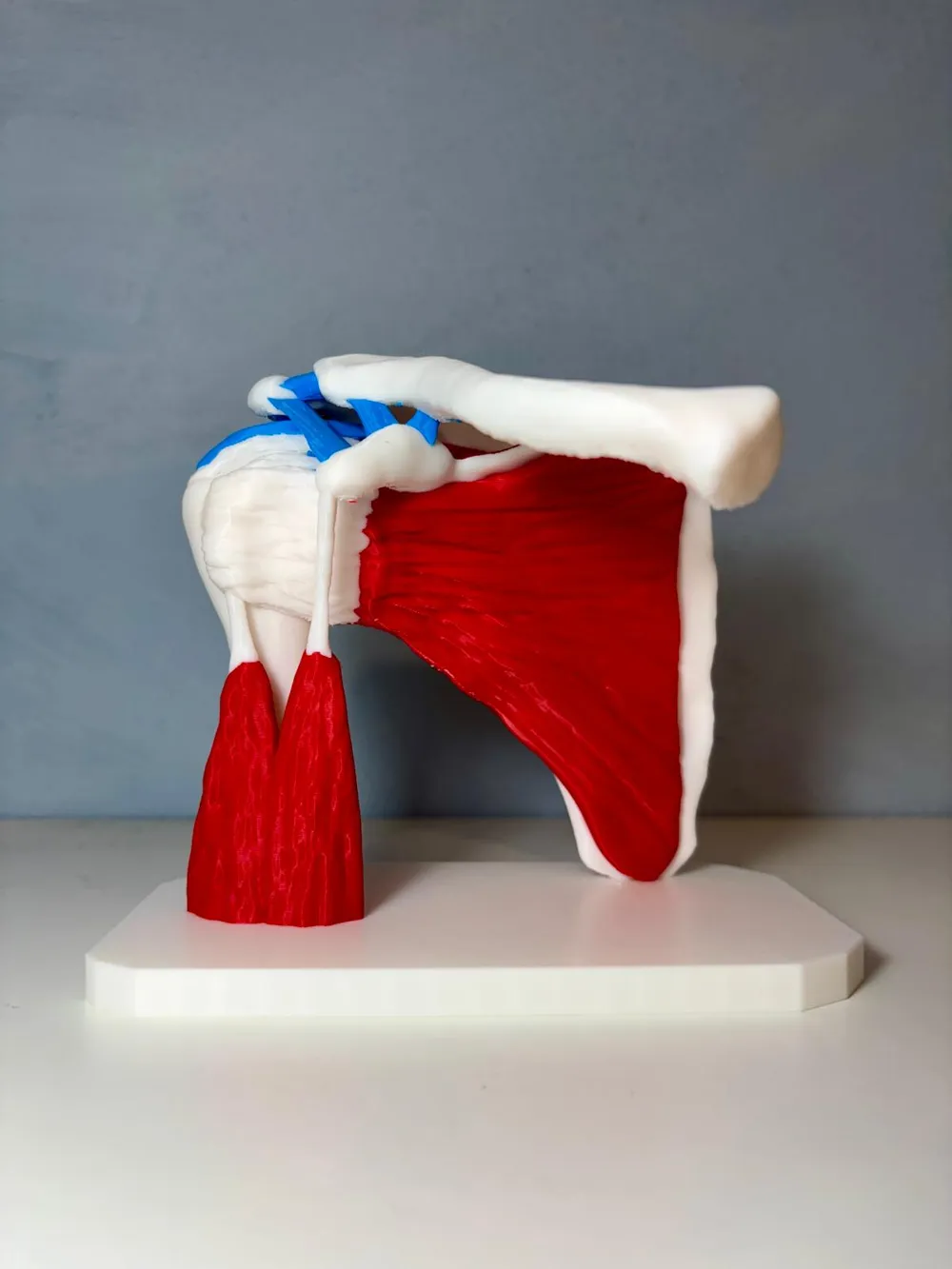
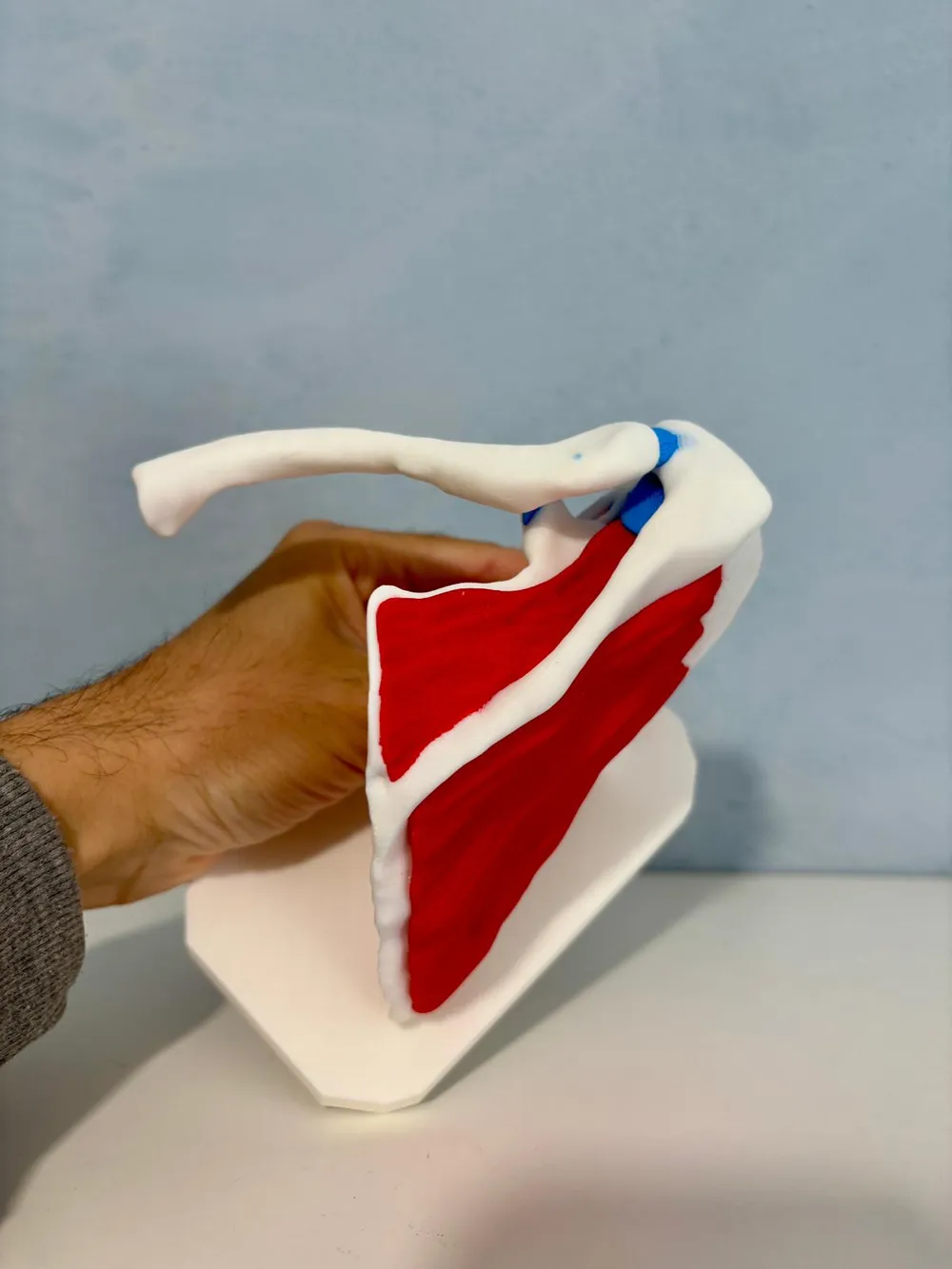
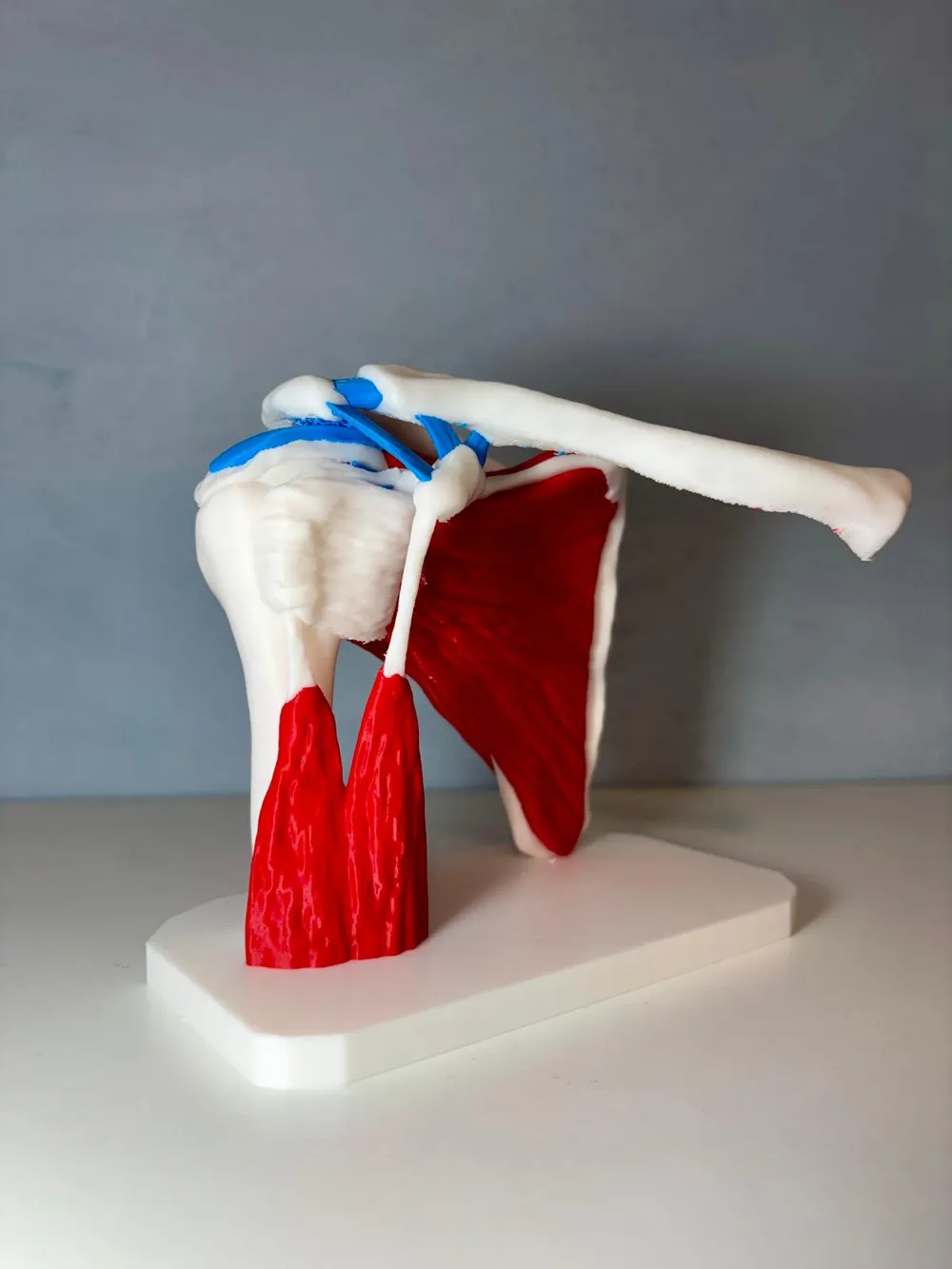
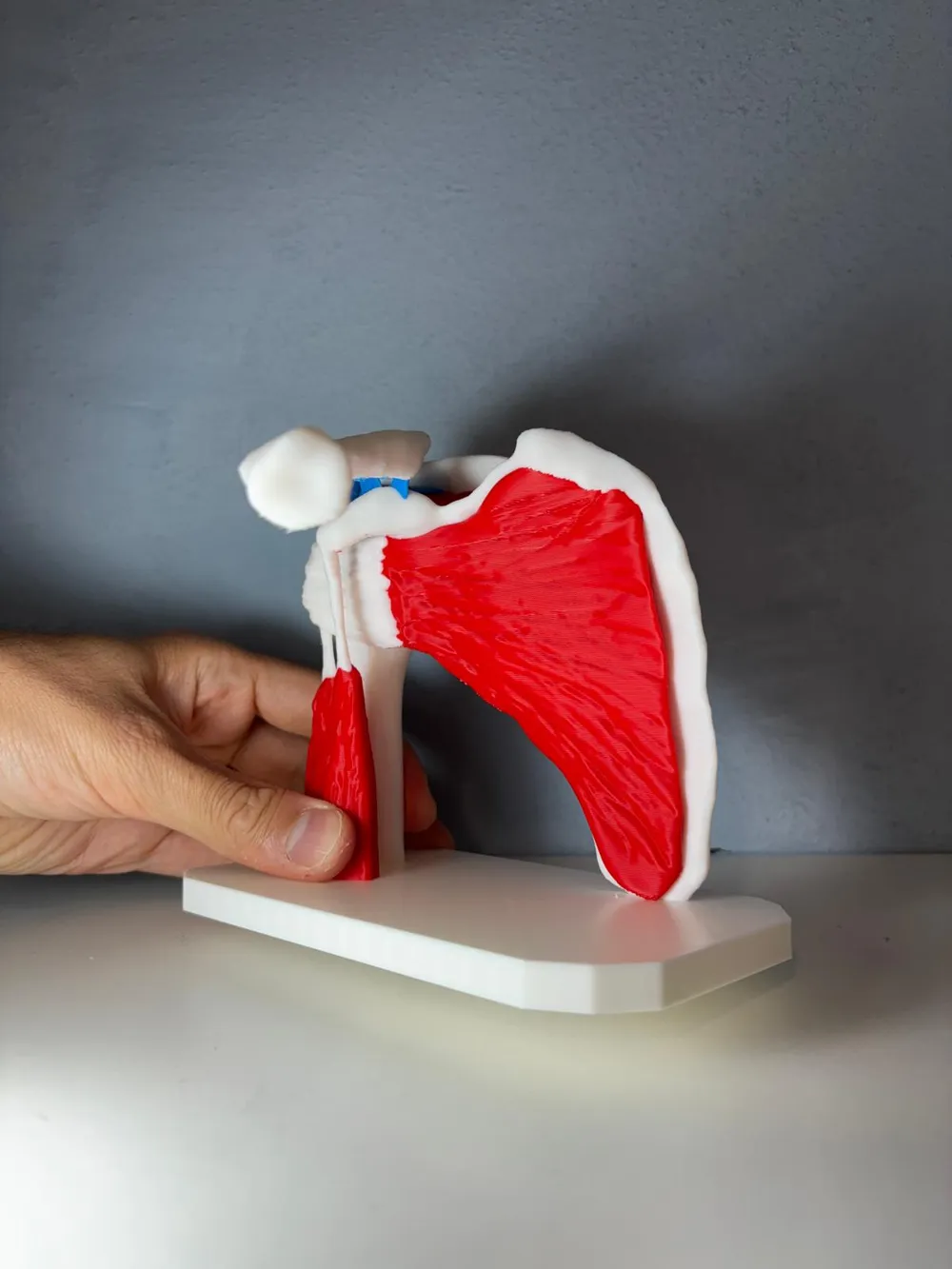
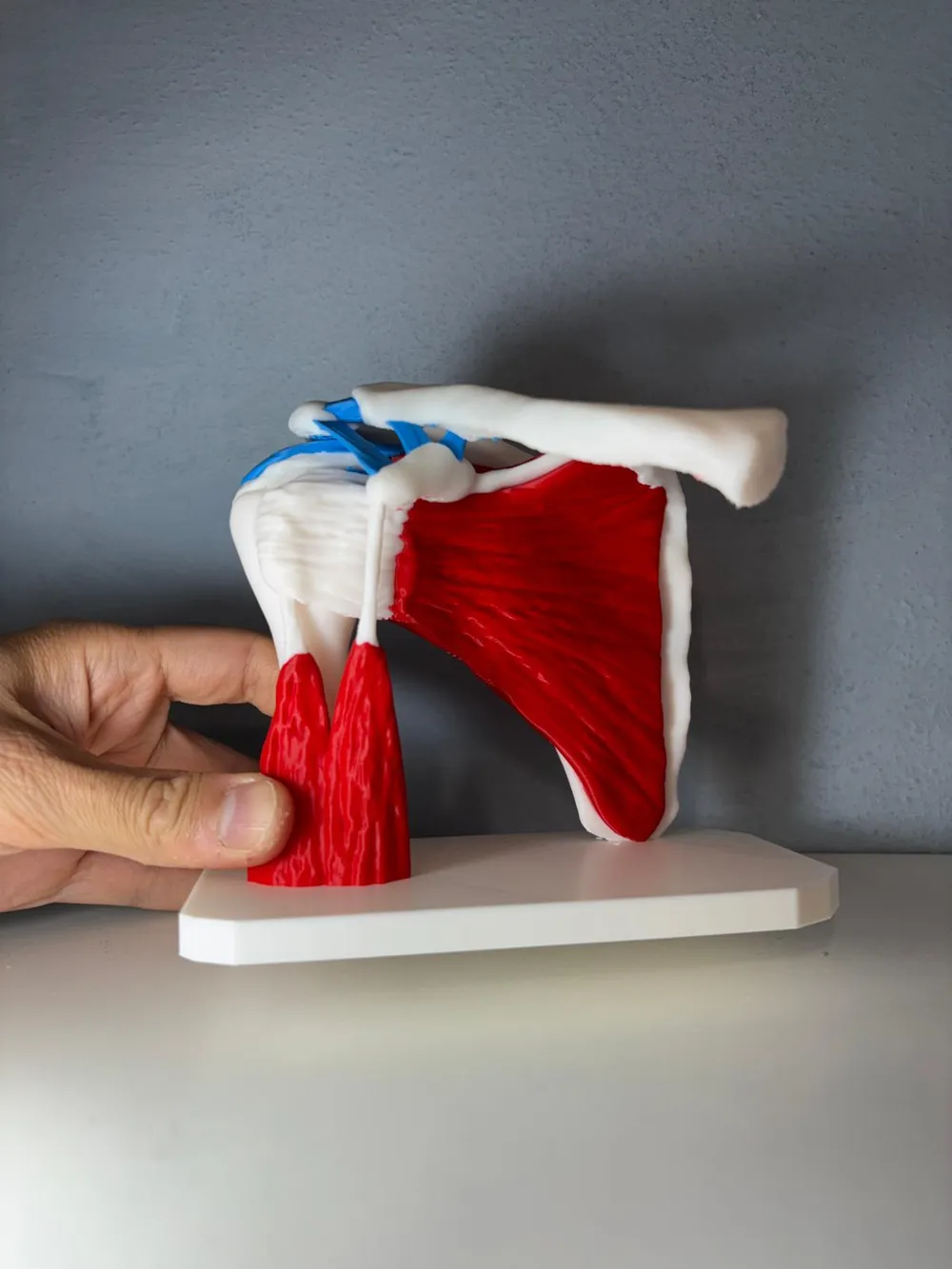
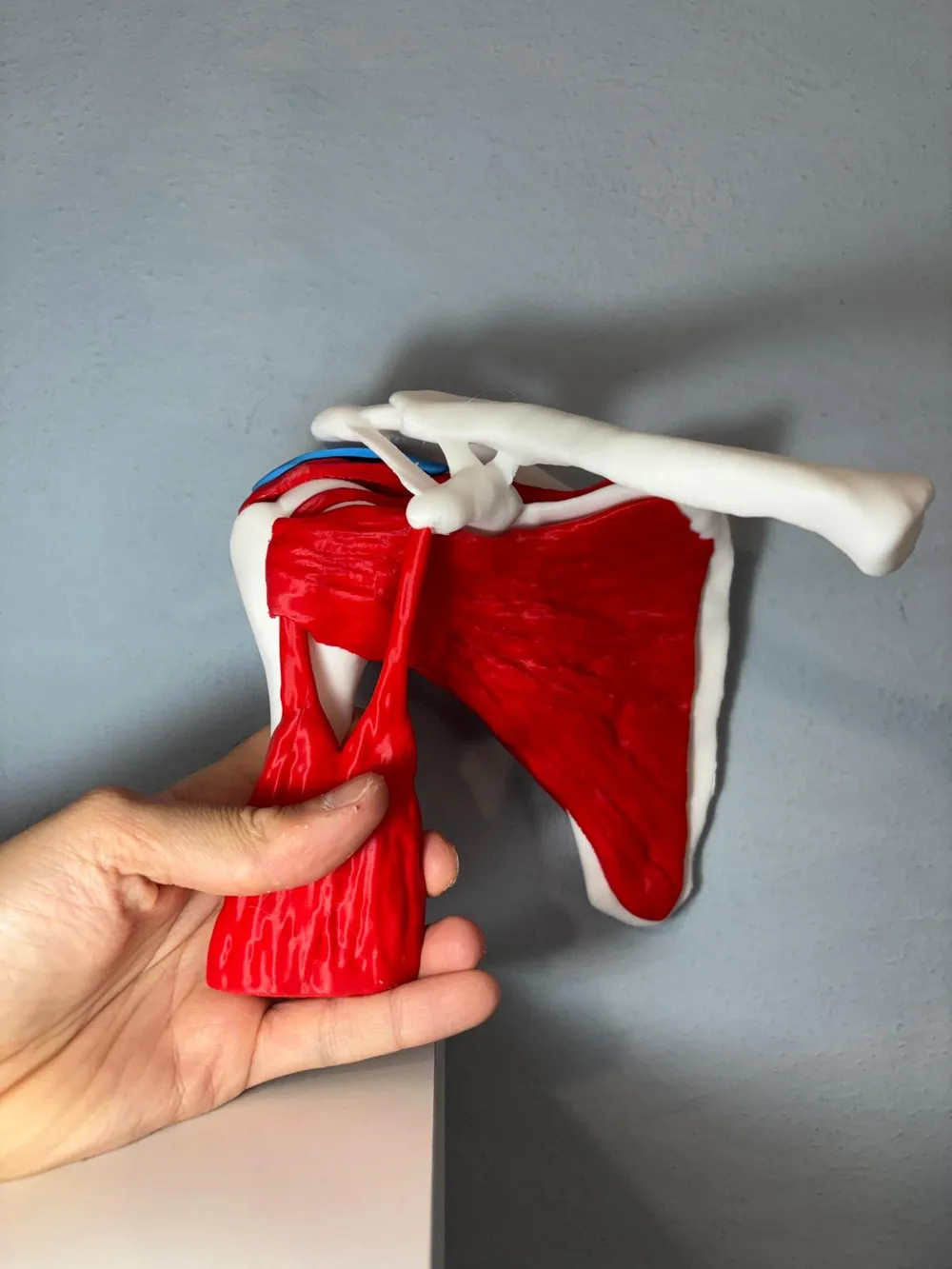
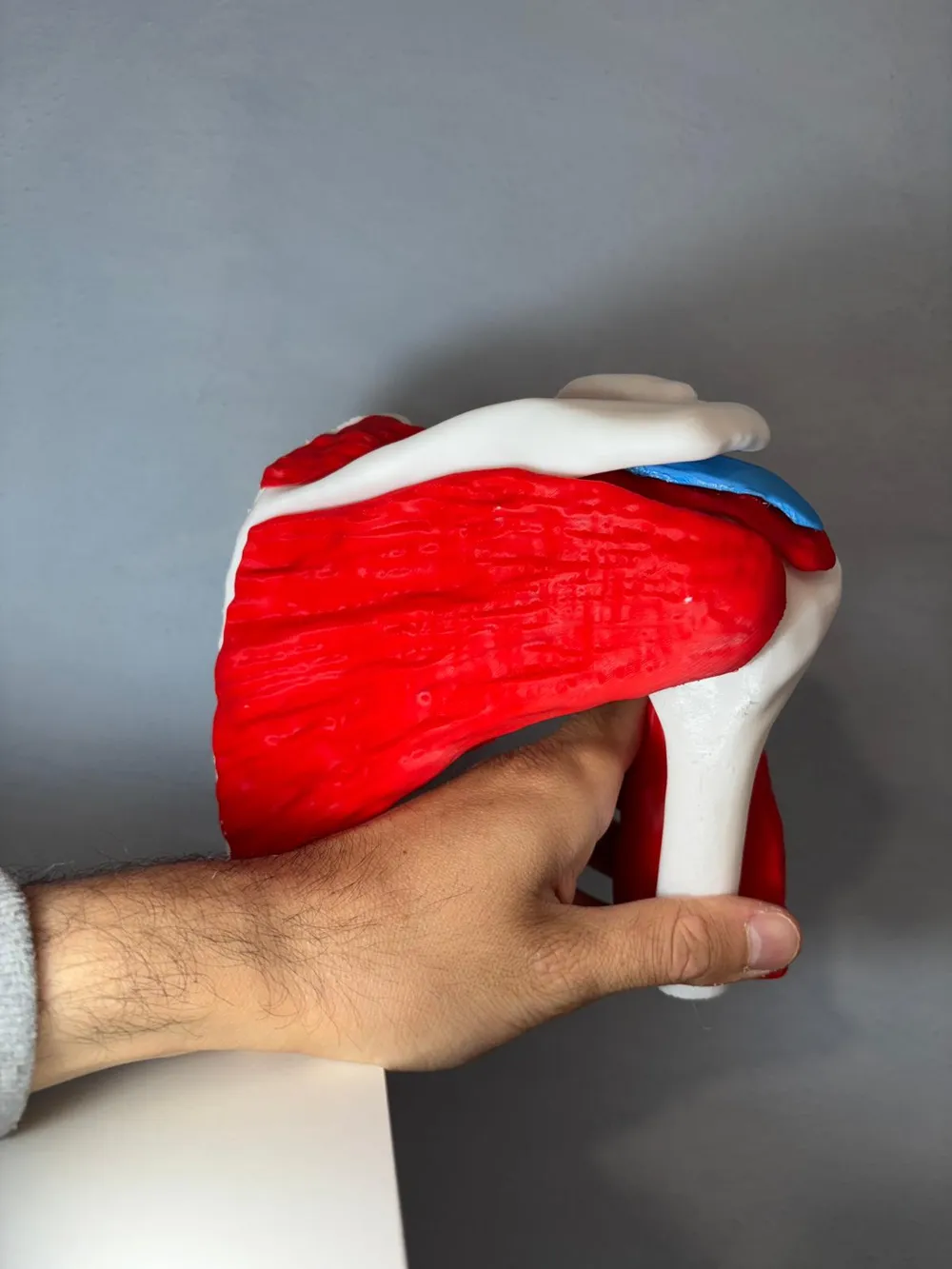
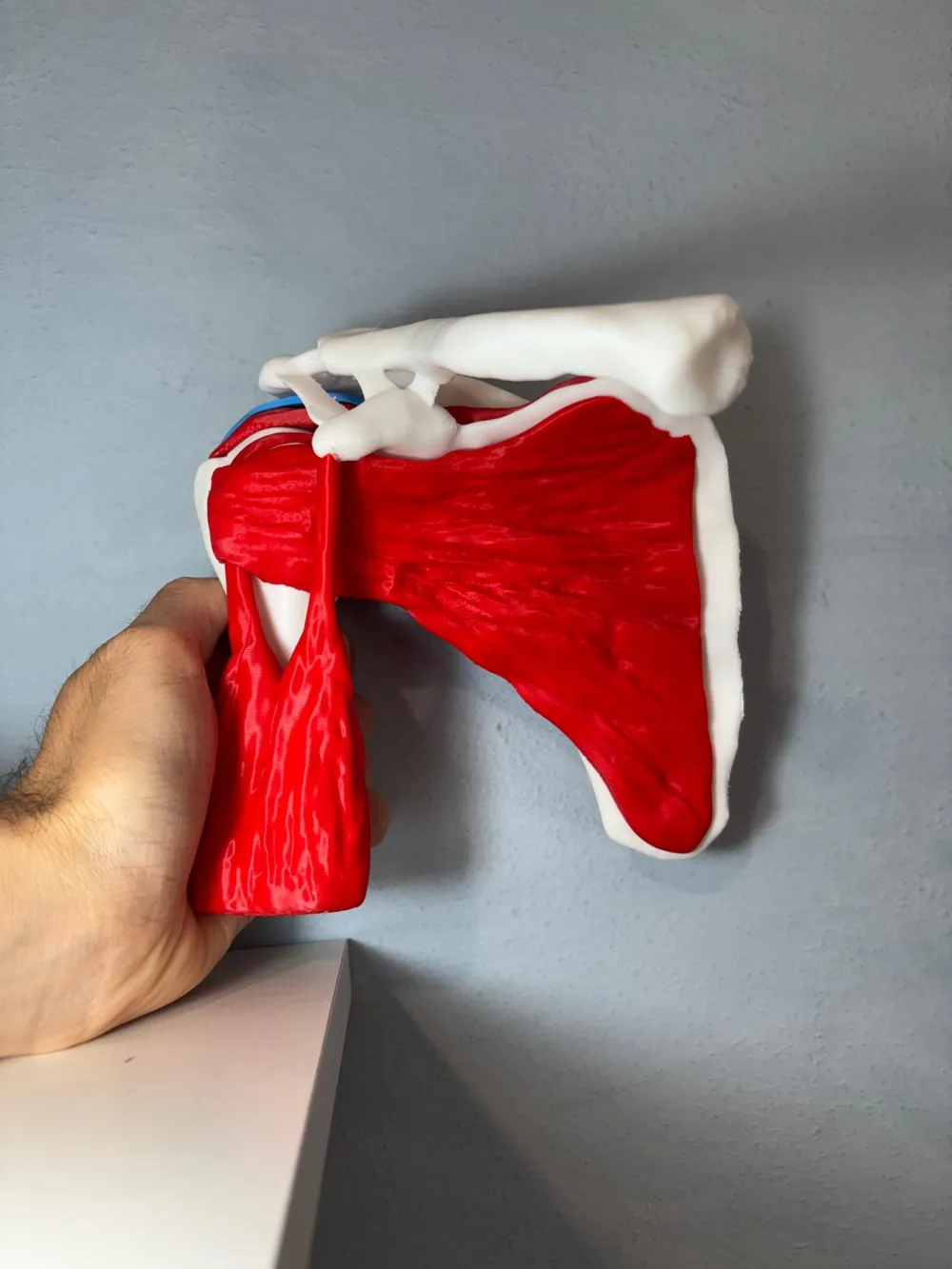
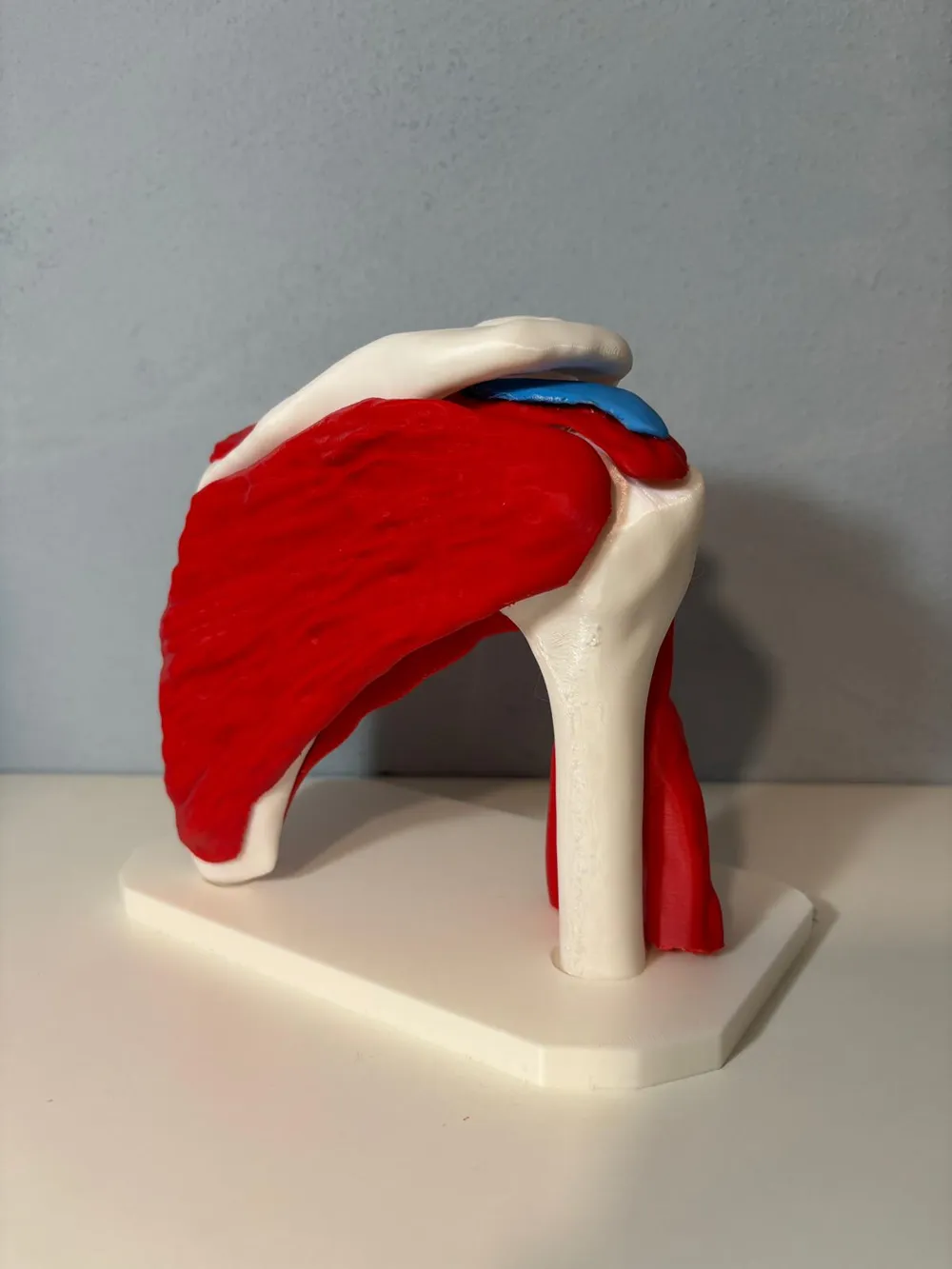
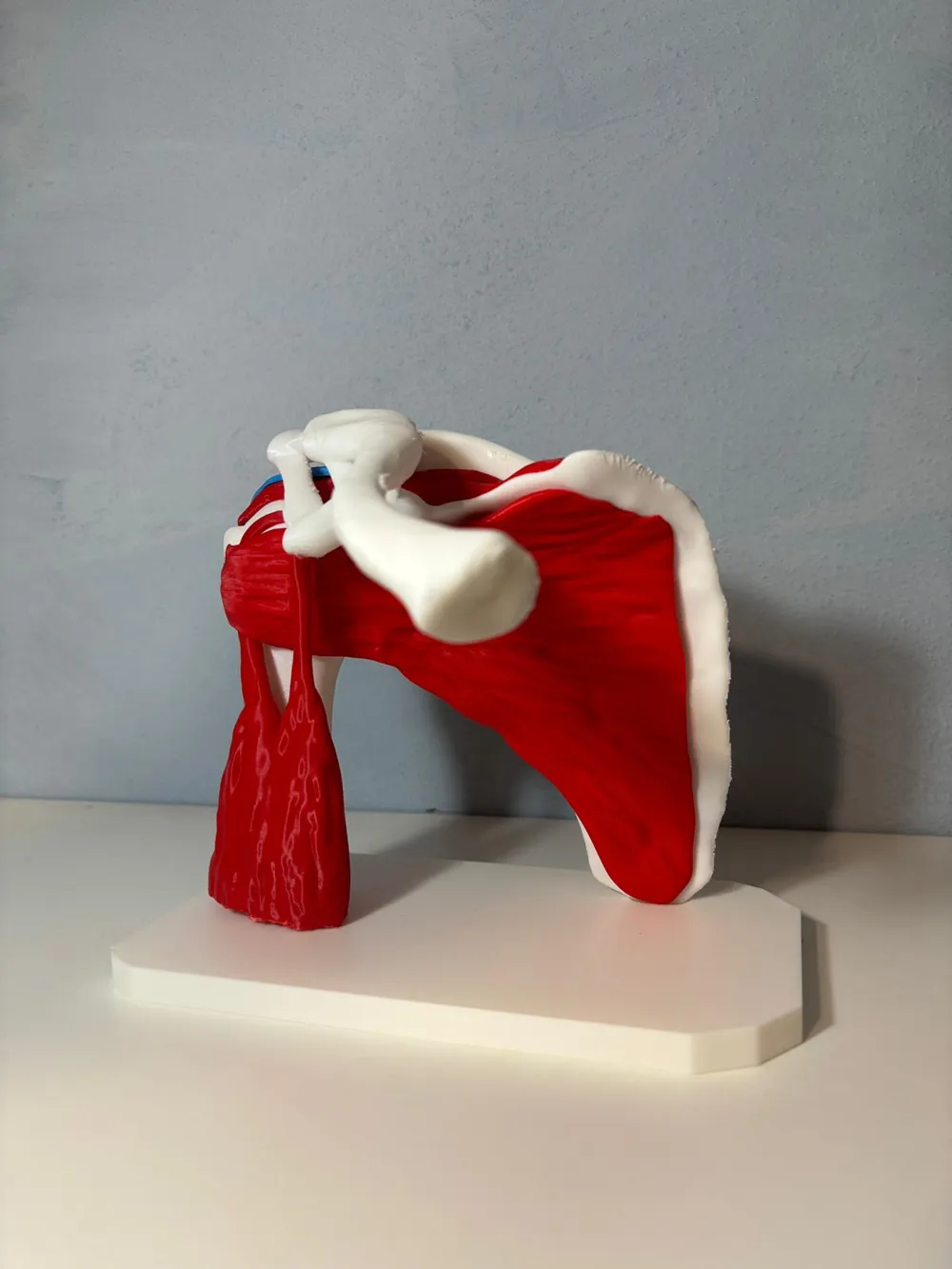
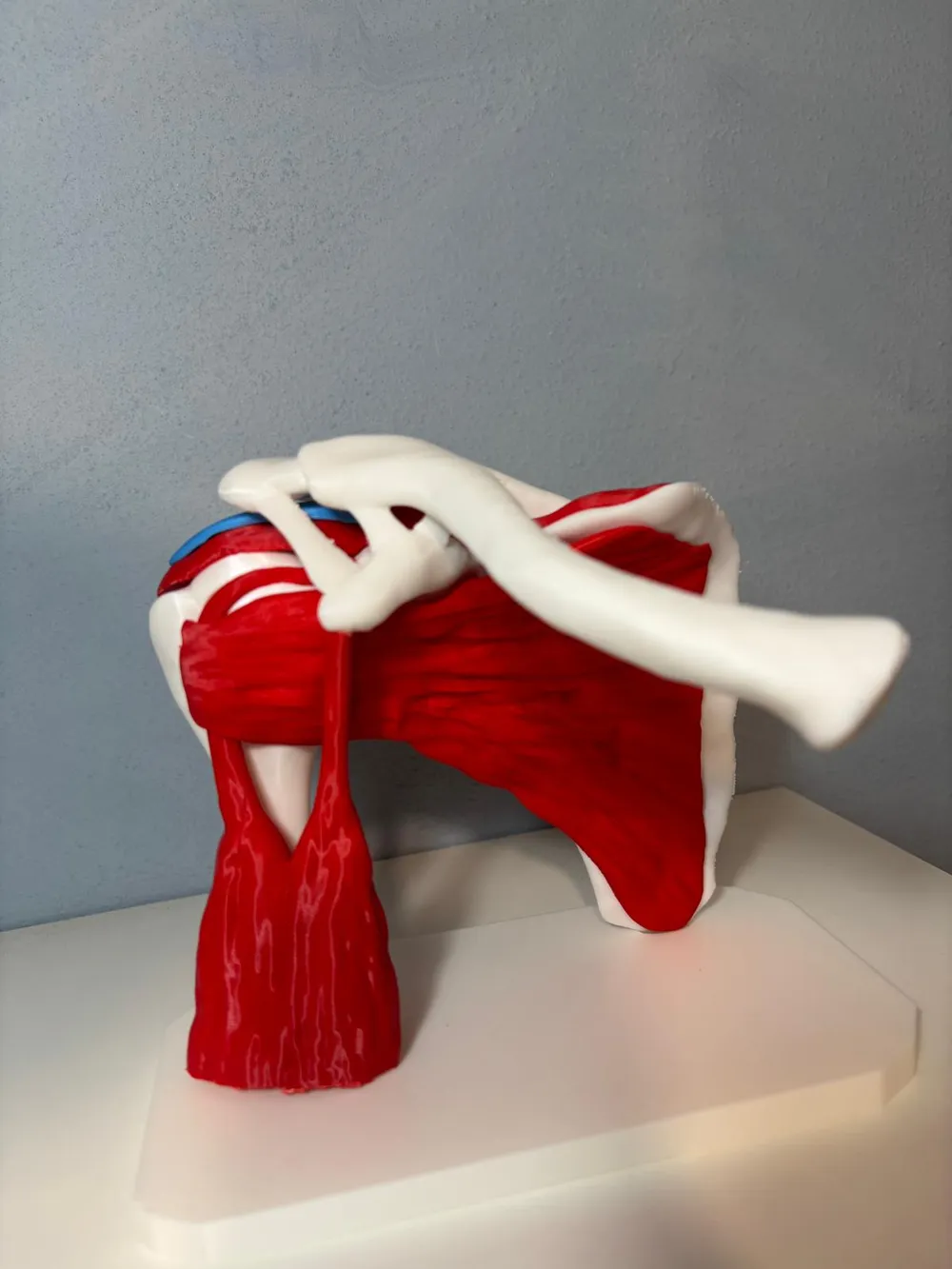
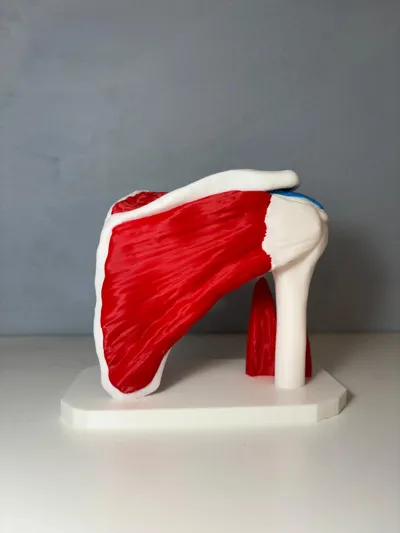
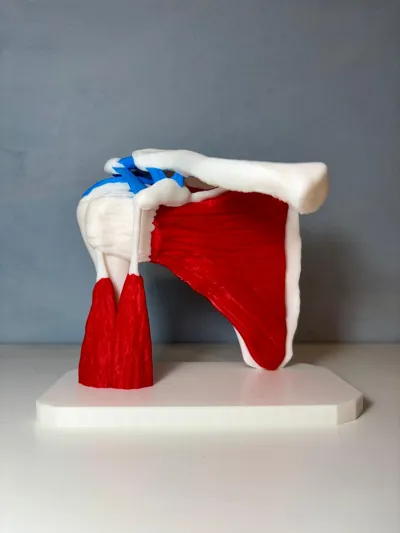
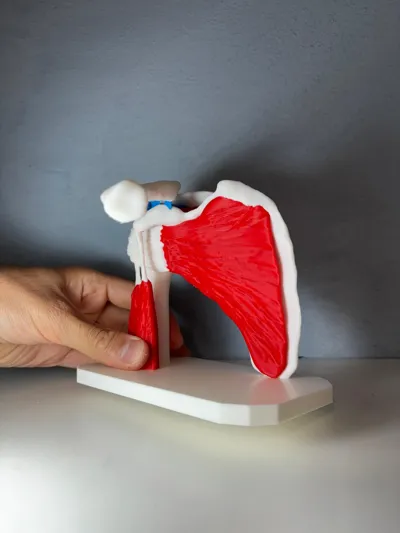
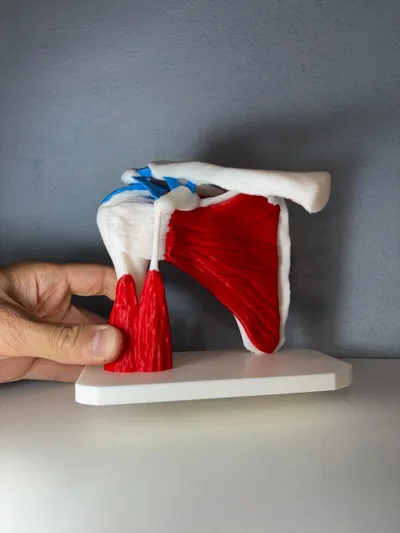
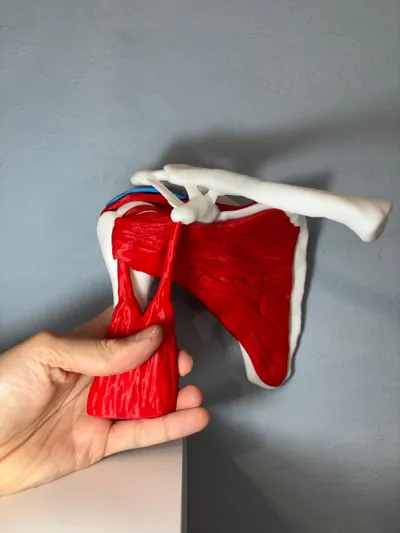
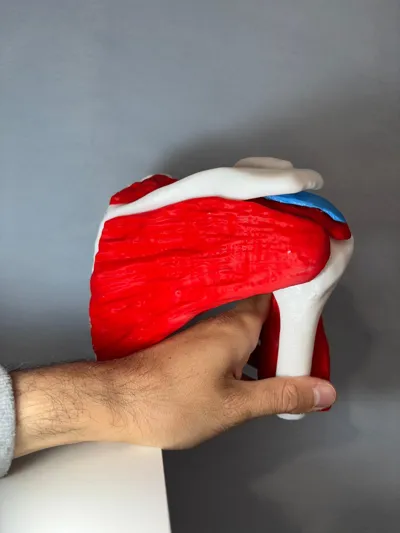
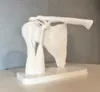
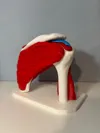
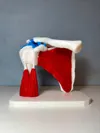
This advanced 3D model is a highly detailed representation of the human shoulder (glenohumeral) joint, developed through a hybrid medical and digital workflow. The skeletal framework was extracted directly from real CT scans to ensure an anatomically correct bone morphology. The surrounding soft tissues were subsequently hand-modeled in Blender, carefully crafted based on anatomical studies and medical literature.
To ensure the best possible 3D printing experience and educational clarity, this model focuses on the primary structures. Some minor or overlapping anatomical elements were intentionally omitted, providing a clean, understandable, and highly printable display piece without overwhelming the slicer or the viewer.
🦴 Included Anatomical Structures
The model highlights the key bony landmarks and major soft tissues crucial for understanding shoulder biomechanics:
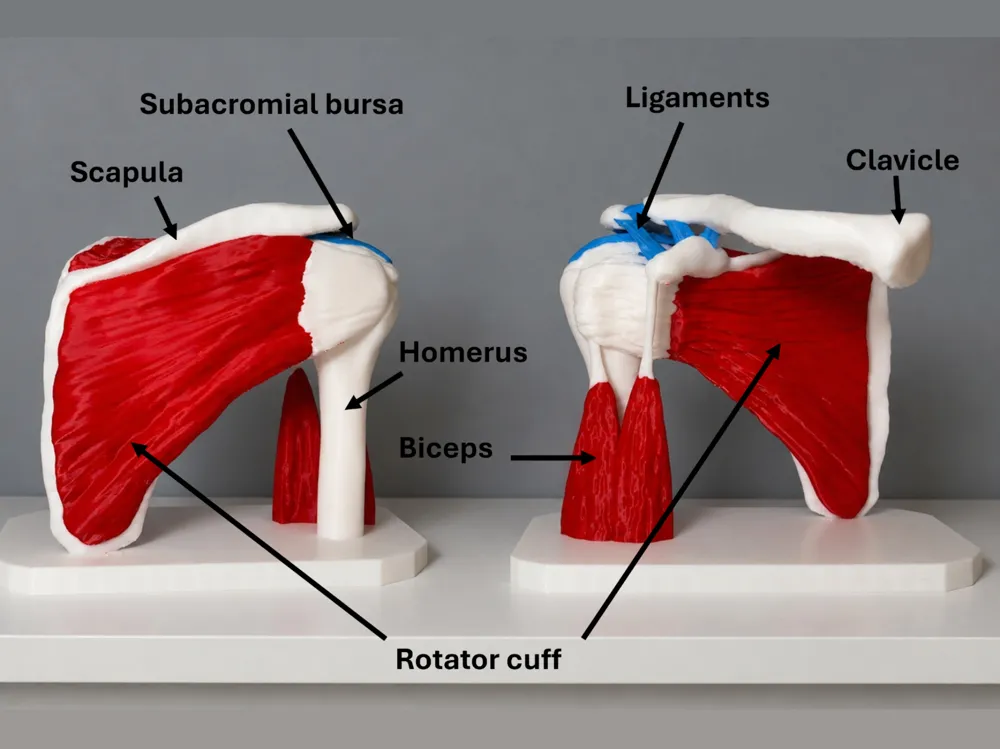
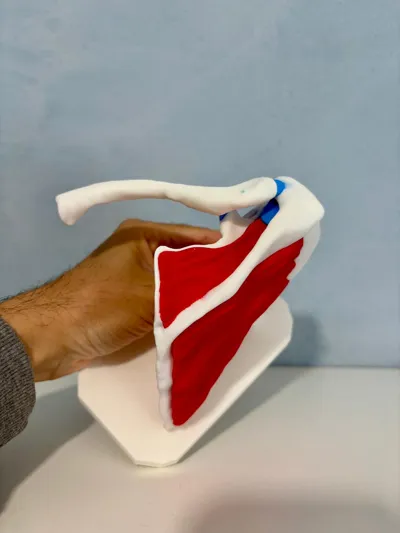
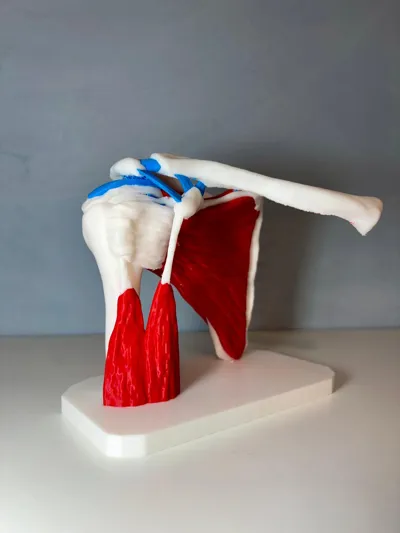
- Skeletal Framework (CT Extracted): Scapula (Shoulder Blade), Clavicle (Collarbone), and Humerus (Upper arm bone), featuring accurate articular surfaces and bone topography.
- 💪 Muscular System (Blender Modeled): Key musculature, including major components of the rotator cuff and biceps, which are essential for shoulder stability and movement.
🔗 Ligaments & Connective Tissue (Blender Modeled): Essential stabilizing ligaments and capsular elements highlighting the articulation points.
🎯 Intended Use
- Education & Study: A brilliant hands-on visual aid for medical students, anatomy classes, and healthcare professionals.
- Clinical Communication: Perfect for physical therapists and orthopedic specialists to easily explain shoulder mechanics, impingements, or rotator cuff injuries to their patients.
Advanced 3D Printing Showcase: A fantastic display piece that highlights the precision of your printer on complex organic shapes.
💡 Print Settings & Recommendations
- Material: This model has been fully designed and optimized for standard PLA. No flexible or exotic filaments are required.
- Versatile Print Profiles: To make this model accessible to everyone, I will be uploading dedicated print profiles for both AMS and non-AMS setups.
- The multicolor profile is organized to maximize visual contrast and educational value. Based on the provided images, the recommended color mapping is:
- Bone White: Skeletal structures (Scapula, Clavicle, Humerus) and tendons.
- Red: Musculature (Rotator cuff and supporting muscles).
- Blue: Ligaments, and capsular structures.
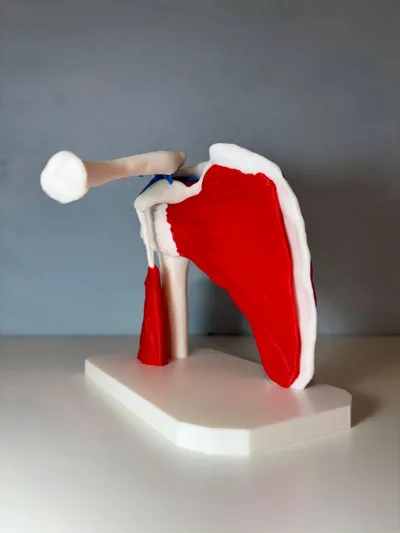
- Different colors are presented in the non-AMS setup for printing reasons.
SIMPLY INSTRUCTIONS FOR THE NO-AMS PROFILE
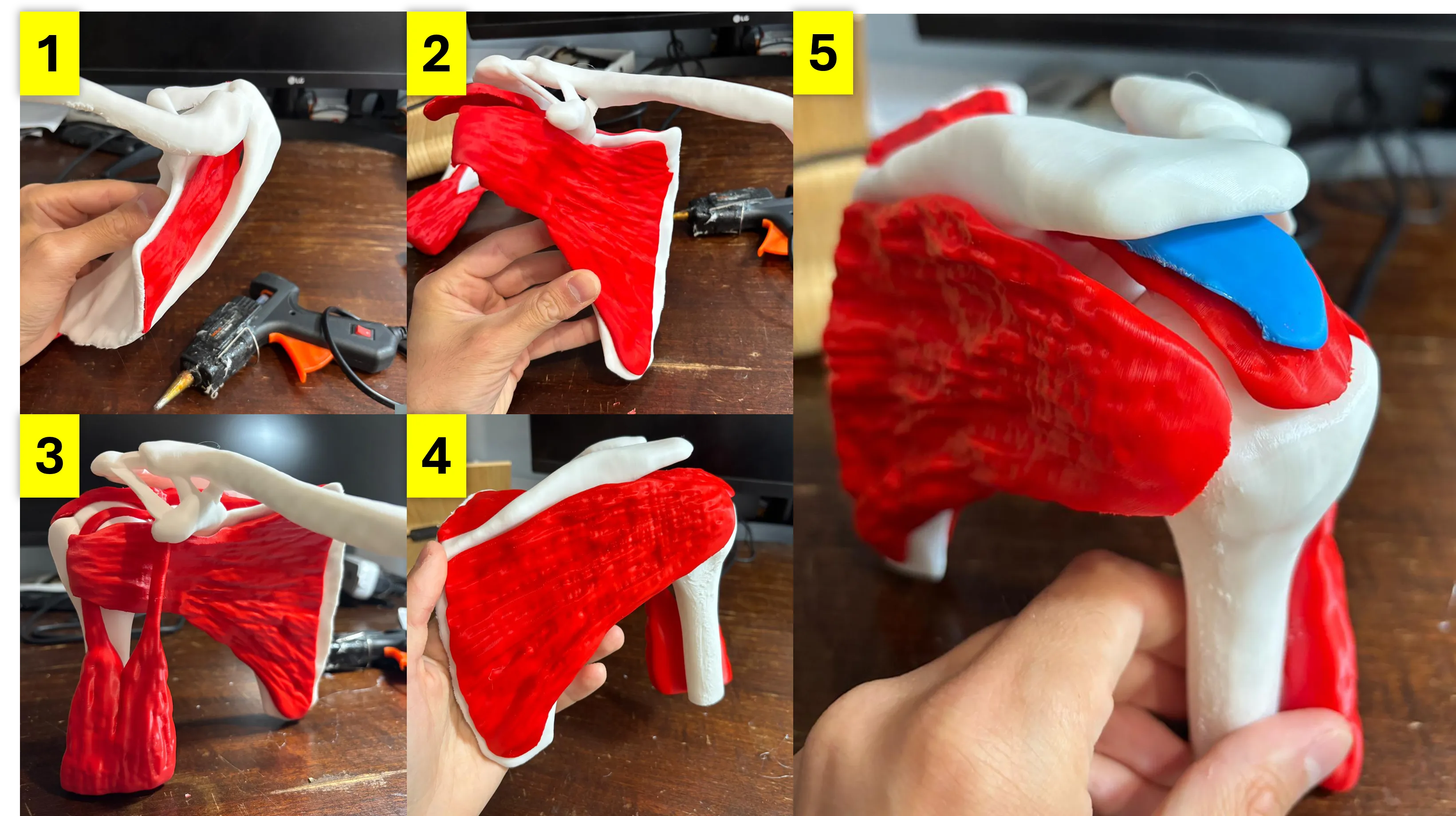
⚠️ Disclaimer: This model is intended strictly for educational, illustrative, and hobbyist purposes. It is not a clinical tool and does not replace professional medical advice, diagnosis, or treatment.
For the most interested ones, a bit of anatomy! 🤓🫀🔬
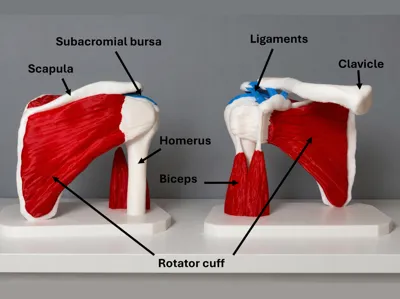
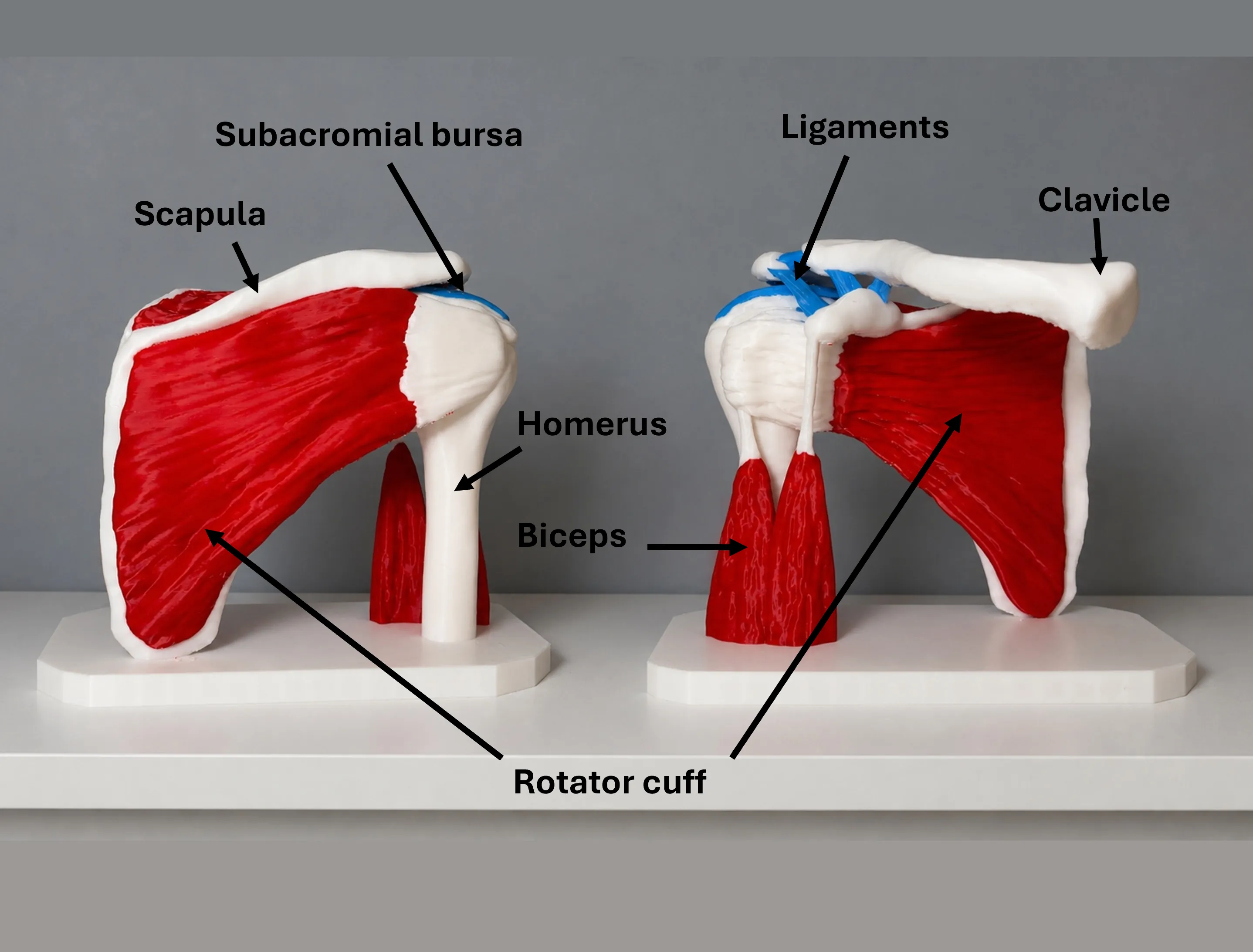
The shoulder, or shoulder girdle, is a complex system designed to give the upper limb a very wide range of motion, with bones, muscles, tendons, and ligaments working together. In my model, the labeled parts show both the supporting framework and the soft tissues that stabilize movement.
Bones 🦴
The scapula is a flat triangular bone at the back of the thorax, and it provides attachment for many shoulder muscles. The humerus is the upper arm bone, and its rounded head articulates with the scapula to form the glenohumeral joint, which is the main shoulder joint. The clavicle acts like a strut between the sternum and the scapula, helping keep the shoulder positioned away from the chest wall so the arm can move freely.
Soft tissues 💪
The rotator cuff is made of four muscles and their tendons, and its main job is to keep the head of the humerus centered while the arm moves and rotates. The tendons connect muscle to bone, and the long head of the biceps tendon also contributes to shoulder stability as it passes near the joint. The ligaments connect bone to bone and reinforce the joint capsule, helping prevent excessive movement and instability. The subacromial bursa is a small fluid-filled sac that reduces friction between the acromion and the rotator cuff tendons during arm elevation.
A question for the more curious viewer: Why does the biceps tendon anchor to the scapula instead of attaching directly to the humerus? Let me know in the comments!
License

You shall not share, sub-license, sell, rent, host, transfer, or distribute in any way the digital or 3D printed versions of this object, nor any other derivative work of this object in its digital or physical format (including - but not limited to - remixes of this object, and hosting on other digital platforms). The objects may not be used without permission in any way whatsoever in which you charge money, or collect fees.


Comment & Rating (8)