
Print Profile(1)
Description
Model name
KG DN110 to DN100 Drainage Pipe Adapter — conical press-fit + snap ring (parametric)
Description
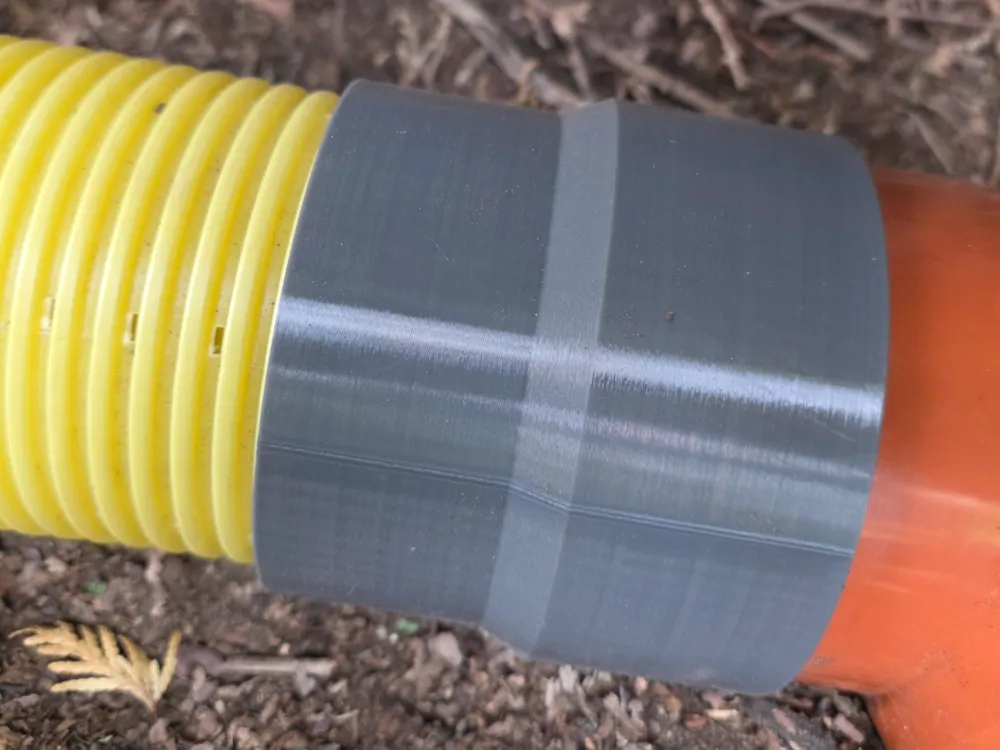
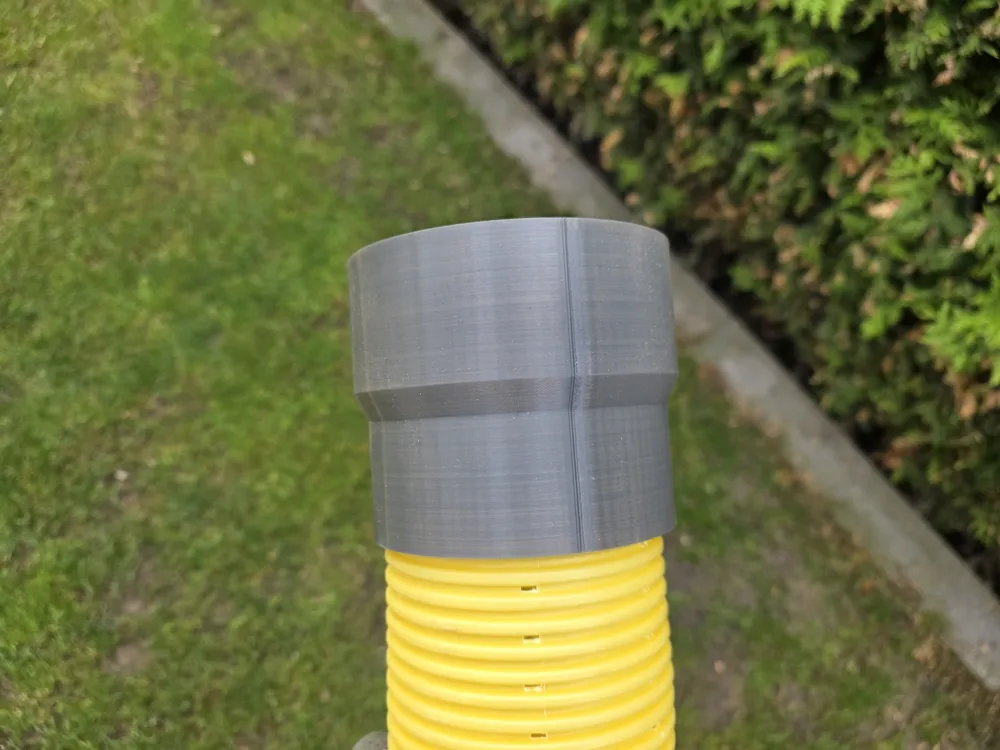
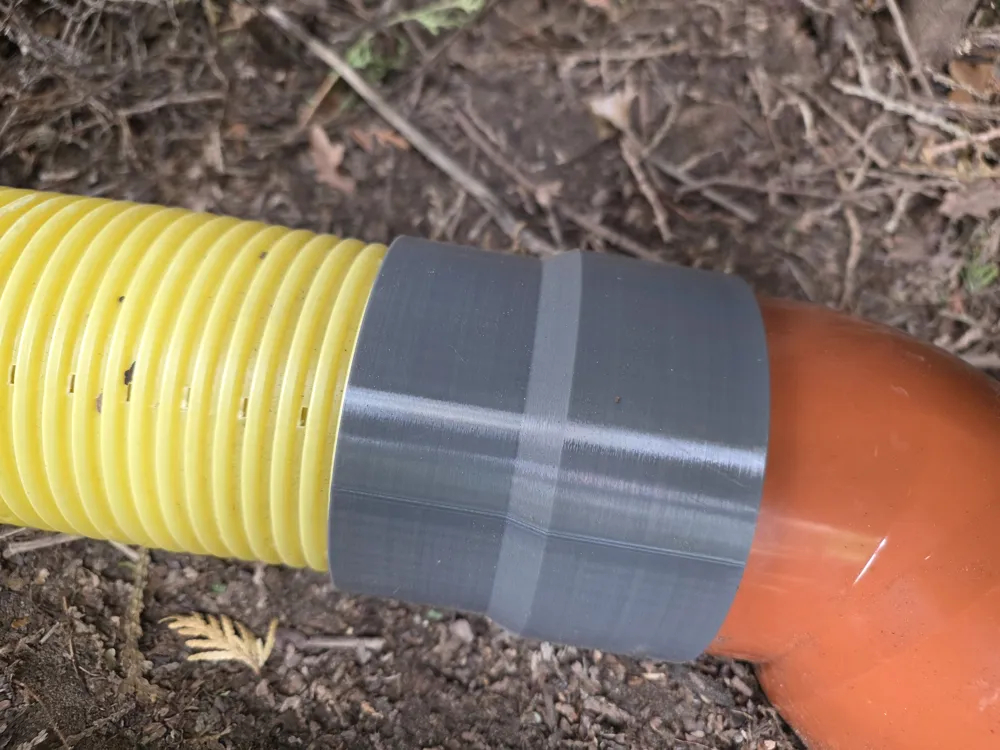
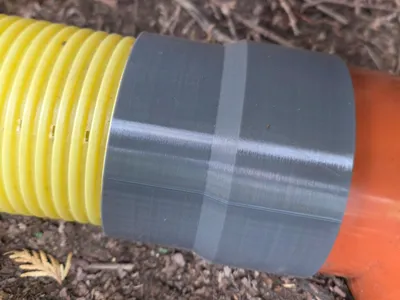
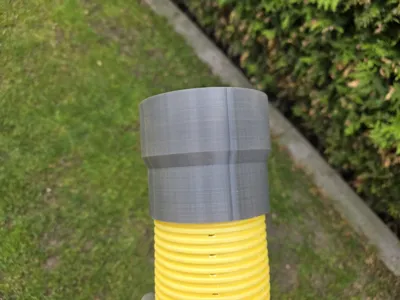
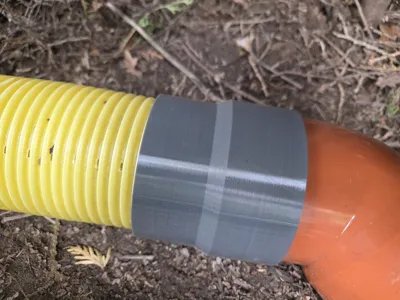
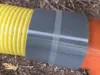
A two-socket adapter that connects a KG DN110 sewer/drain pipe (German standard, 110 mm outer diameter) to a corrugated DN100 drainage pipe (100 mm outer diameter). Both pipes simply push into the adapter. Designed for buried use — garden and property drainage.
I made this because the store-bought adapter was expensive and at the same time felt flimsy. This printed version is cheap, solid, and you can dial in the fit to your exact pipes.
How it works
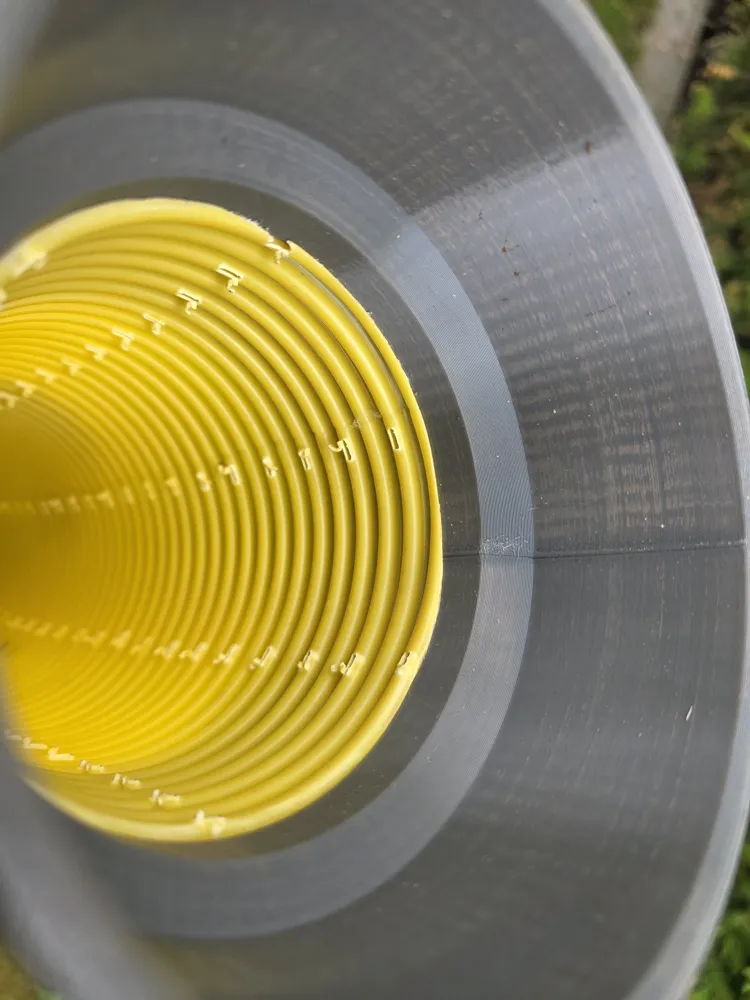
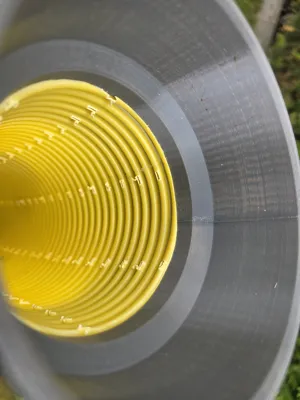
- Conical (tapered) sockets on both sides — the pipe wedges in for a tight, wobble-free fit instead of rattling around.
- Sawtooth snap ring on the drainage side — sits in a corrugation valley: easy to push in, resists pulling out.
- Prints standing up, no supports (all overhangs ≤ 45°).
Designed for these pipe dimensions
- KG DN110 pipe: outer Ø ~110.8 mm (measured)
- DN100 corrugated drainage pipe: outer Ø ~100.8 mm, valley width ~3 mm
- ⚠️ Measure your own pipes with calipers first — dimensions vary by brand. If they differ, adjust the parametric .scad (see Remix below).
Key specs
- Overall height: ~99 mm · Outer Ø ~119 mm (KG) / ~109 mm (drainage)
- Wall thickness: 4 mm · Insertion depth: 40 mm per side · ~170 cm³ of filament
Recommended print settings (PETG)
- Material: PETG recommended — tough, good layer bonding, moisture resistant. (No UV underground, so PETG's UV weakness doesn't matter here.) ASA also works on enclosed printers.
- Orientation: standing (KG mouth down), no supports
- Layer height 0.2 mm · 4 wall loops · 40 % gyroid infill · 5 top/bottom layers
- Nozzle 250 °C · Bed 70 °C · Part cooling fan ~40 % (don't go higher — protects layer adhesion)
- Brim required (outer brim, 5 mm) — the footprint is just a thin ring
- On textured PEI with PETG, apply a thin layer of glue stick to protect the plate
Assembly
- Deburr and clean the pipe ends.
- Push the KG pipe into the KG side — it's a firm press-fit (a rubber mallet helps).
- Push the drainage pipe into the drainage side until the snap ring engages.
- Apply silicone to both joints before inserting — seals against silt/soil ingress and adds a little extra hold.
- Wrap the adapter and both joints with a waterproof / self-amalgamating (e.g. bitumen) tape. Underground this is not about UV — it keeps water out of the print's layer lines (freeze–thaw protection) and shields the part from soil contact, which meaningfully extends its life.
Remix / customize (parametric, OpenSCAD)
The .scad is fully parametric. Main parameters at the top of the file:
- kg_pipe_od, drain_pipe_od — your measured pipe outer diameters
- kg_tc — KG press-fit tightness at the base (default −0.45 = firm; looser: −0.3 or −0.2)
- bead_h — snap ring engagement depth (tighter 1.4 / looser 0.9)
- bead_offset — snap ring position
- wall — wall thickness (5–6 for more strength)
Tip: when unsure, set short insertion depths first (kg_sd = 12; dr_sd = 15;) and test a short stub against real pipe offcuts before printing the whole part.
Material & longevity (honest)
Buried, there's no UV, so PETG's main weakness is removed. The limiting factor is layer adhesion under freeze–thaw cycling and soil load — not the material itself. Expect many years of service, but a printed part will not match the lifespan of an injection-molded PVC fitting. The silicone + protective wrap noticeably improve durability.
Note / disclaimer
Intended for non-pressurized drainage only — not for pressurized lines, drinking water, or pressurized sewage. Not a replacement for certified pipe fittings. Use at your own risk.
Designed, printed and tested in PETG on a Bambu Lab P2S.
License



Comment & Rating (2)