
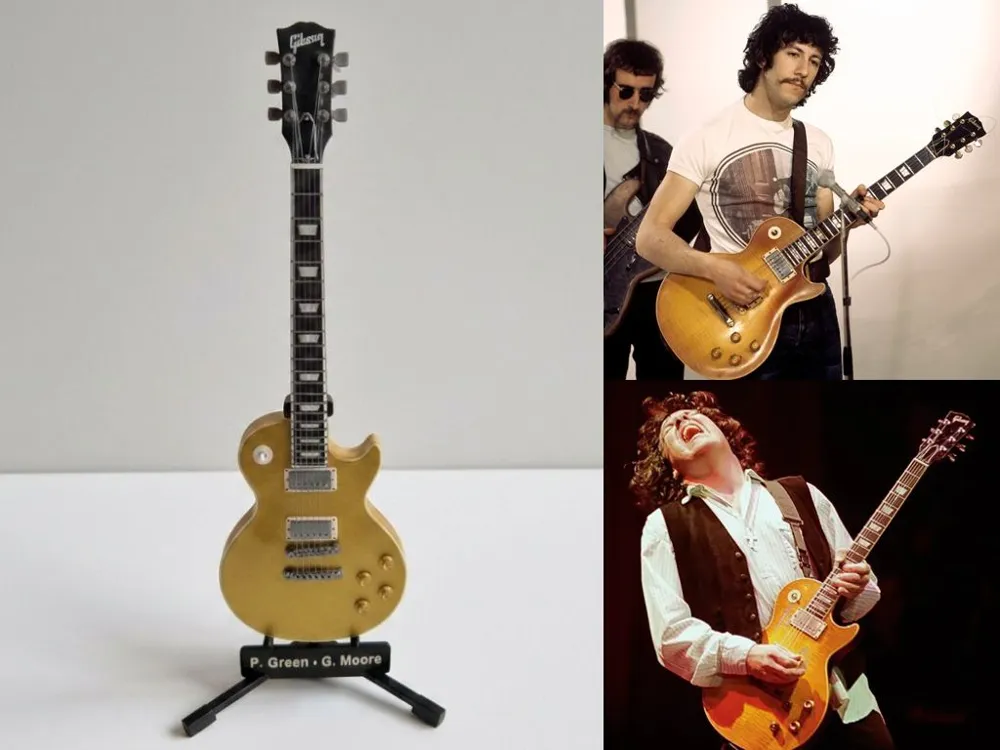
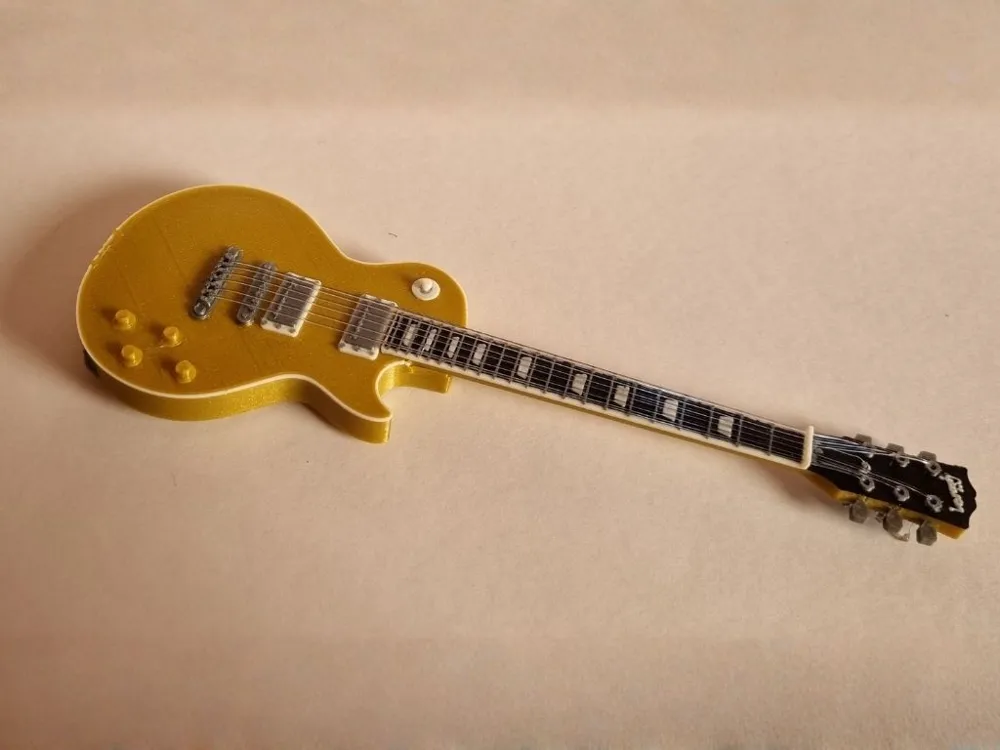
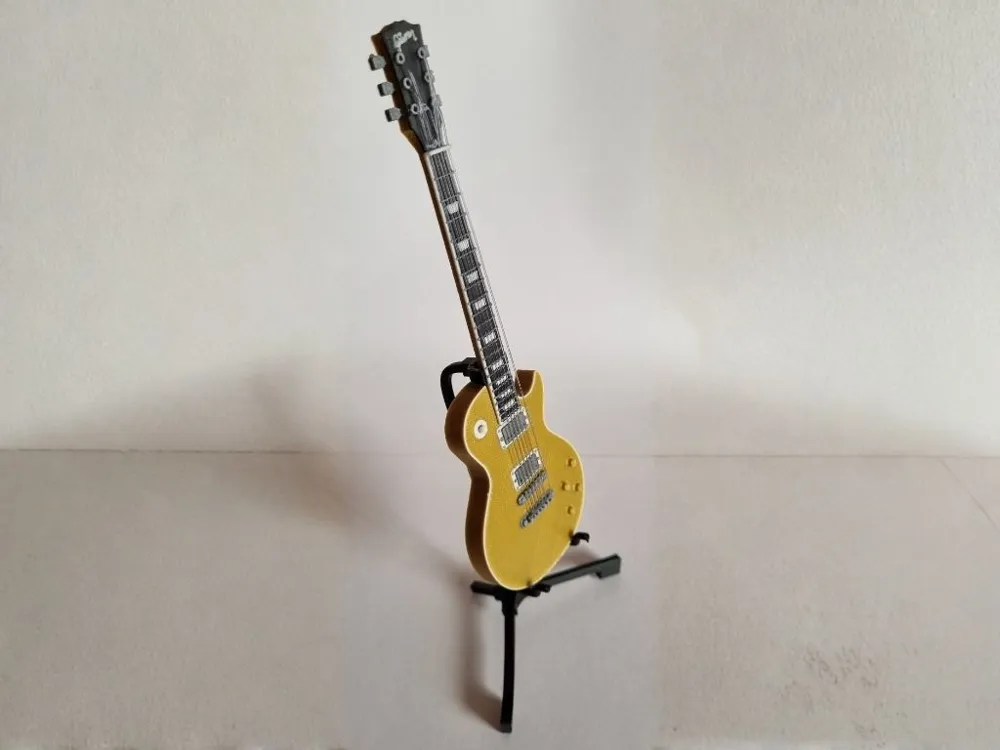
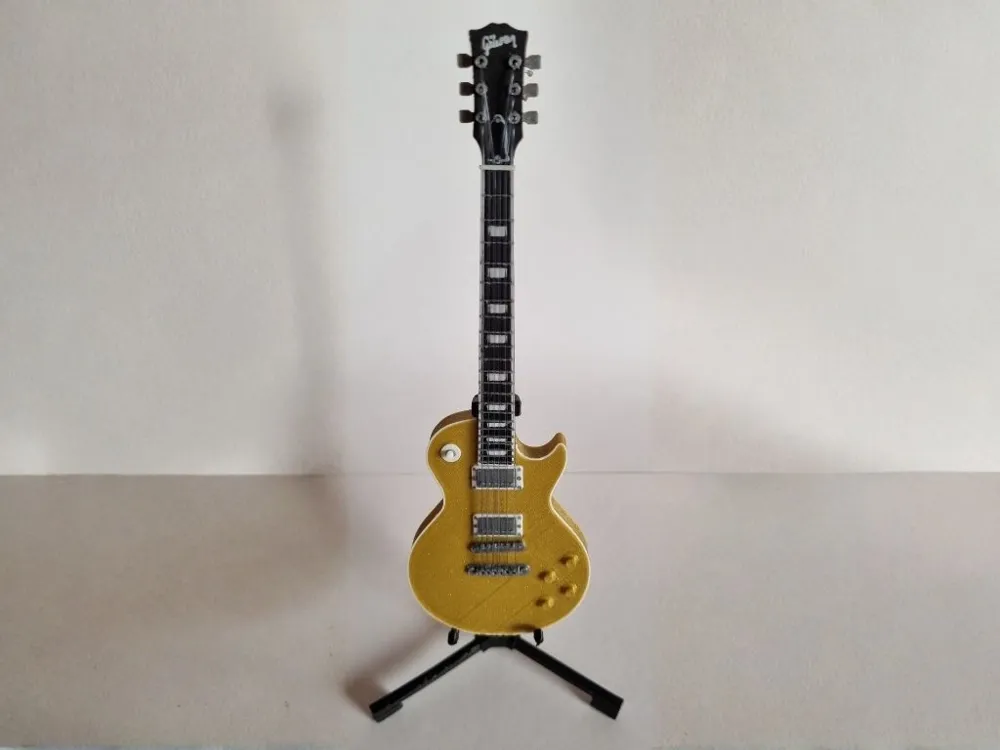
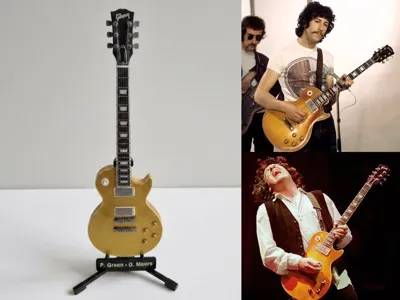
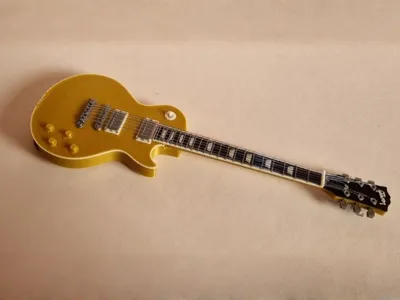
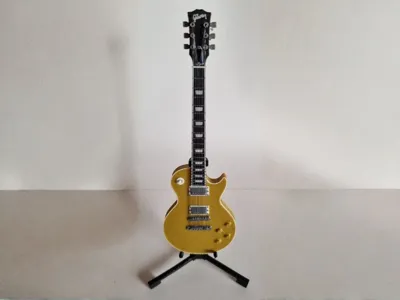
Guitar 17cm c/Cordas - LP Peter Green - Gary Moore
Print Profile(2)
Description
Gibson Les Paul Standard 1959
"Greeny"
Peter Green (Fleetwood Mac & John Mayall & The Bluesbreakers)
Gary Moore (Thin Lizzy)
This guitar is part of the “Iconic Rock Guitars” collection
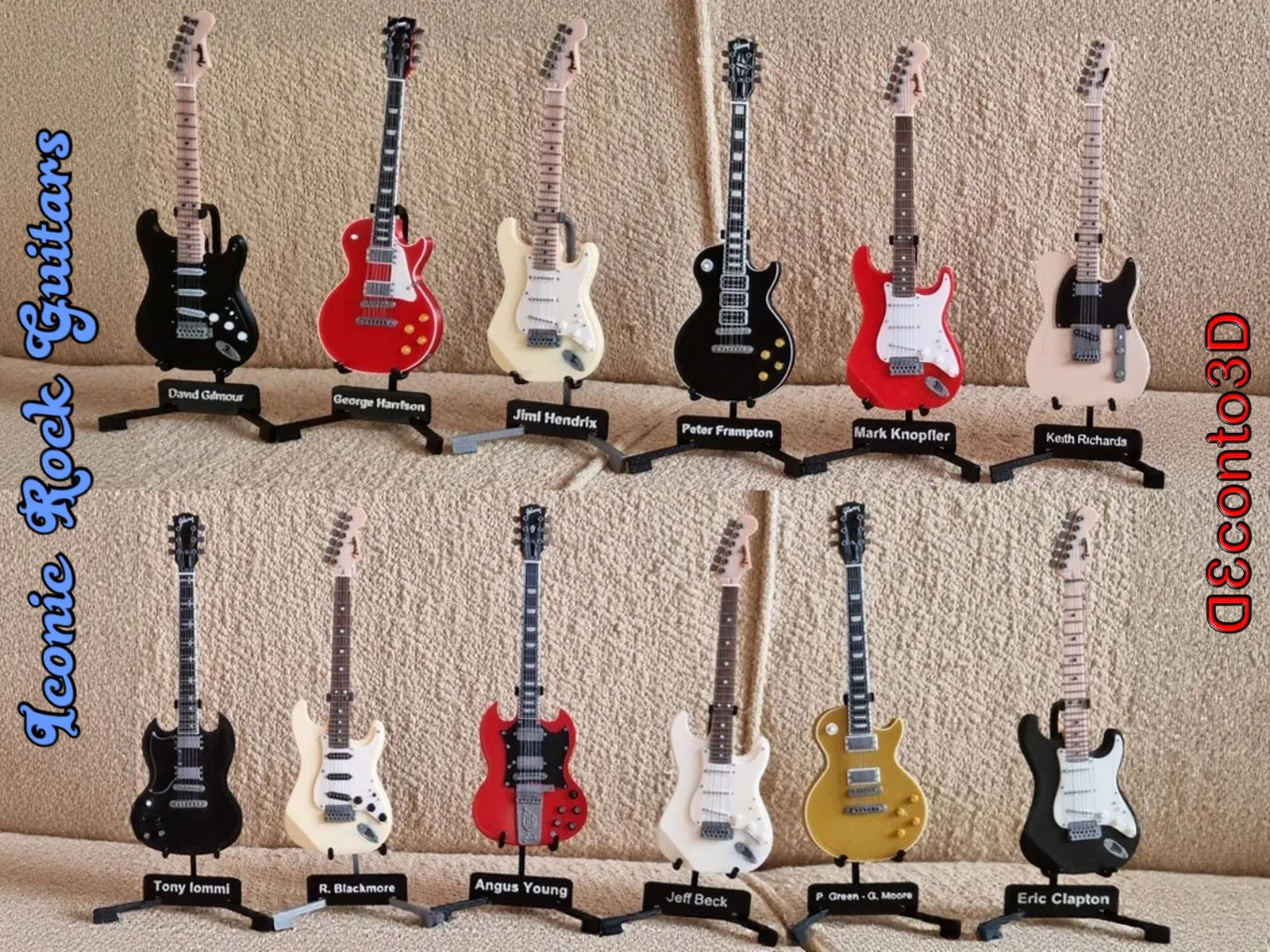
https://makerworld.com/collections/11905717
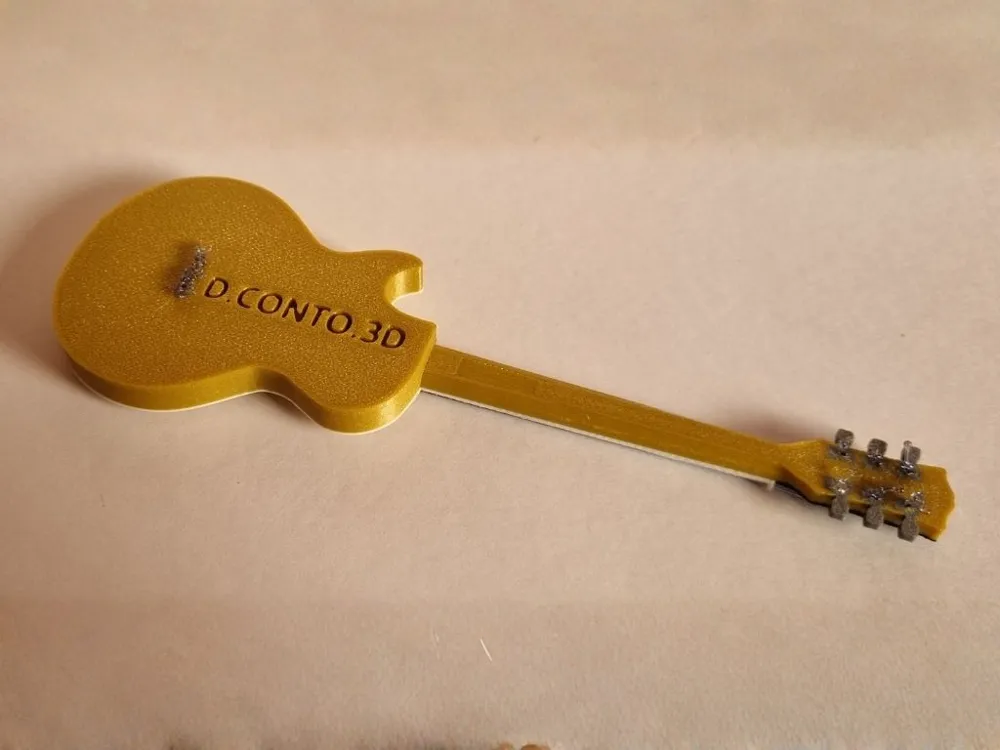
Printing – Quick and easy, no supports. The models in this collection were designed so that their details are visible at a layer height of 0.2 mm, however, if print time is not an issue, you can achieve better results with smaller layer heights.
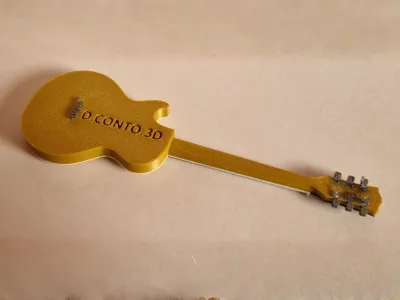
Assembly – To glue the neck to the body you can use superglue, however, I recommend using a fusion glue, such as Revell or Tamiya, as there will be considerable tension from the strings. I usually allow 12 hours for the glue to dry and cure.
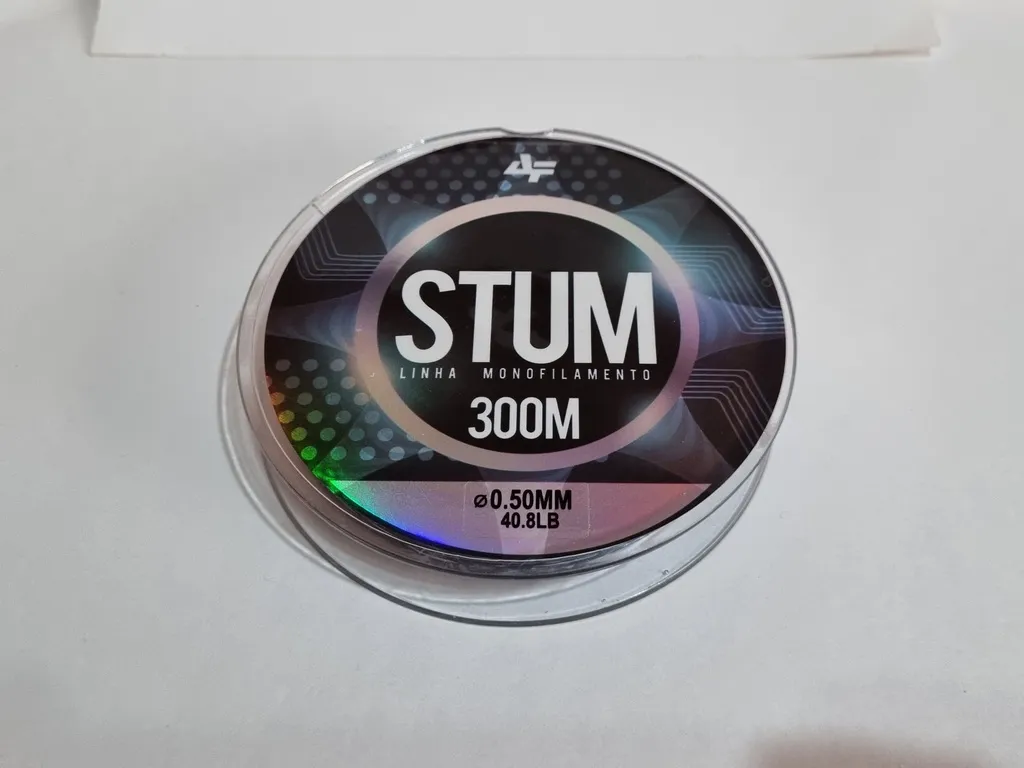
Stringing – This is the only part that is a bit tricky, but it's what really sets it apart from other models. Be patient and you will succeed. The strings are made with 0.5 mm fishing line, in the grayest color you can find.
- use a pin to ensure that the holes through which the strings will pass are unobstructed, being careful with the nut, which is very fragile;
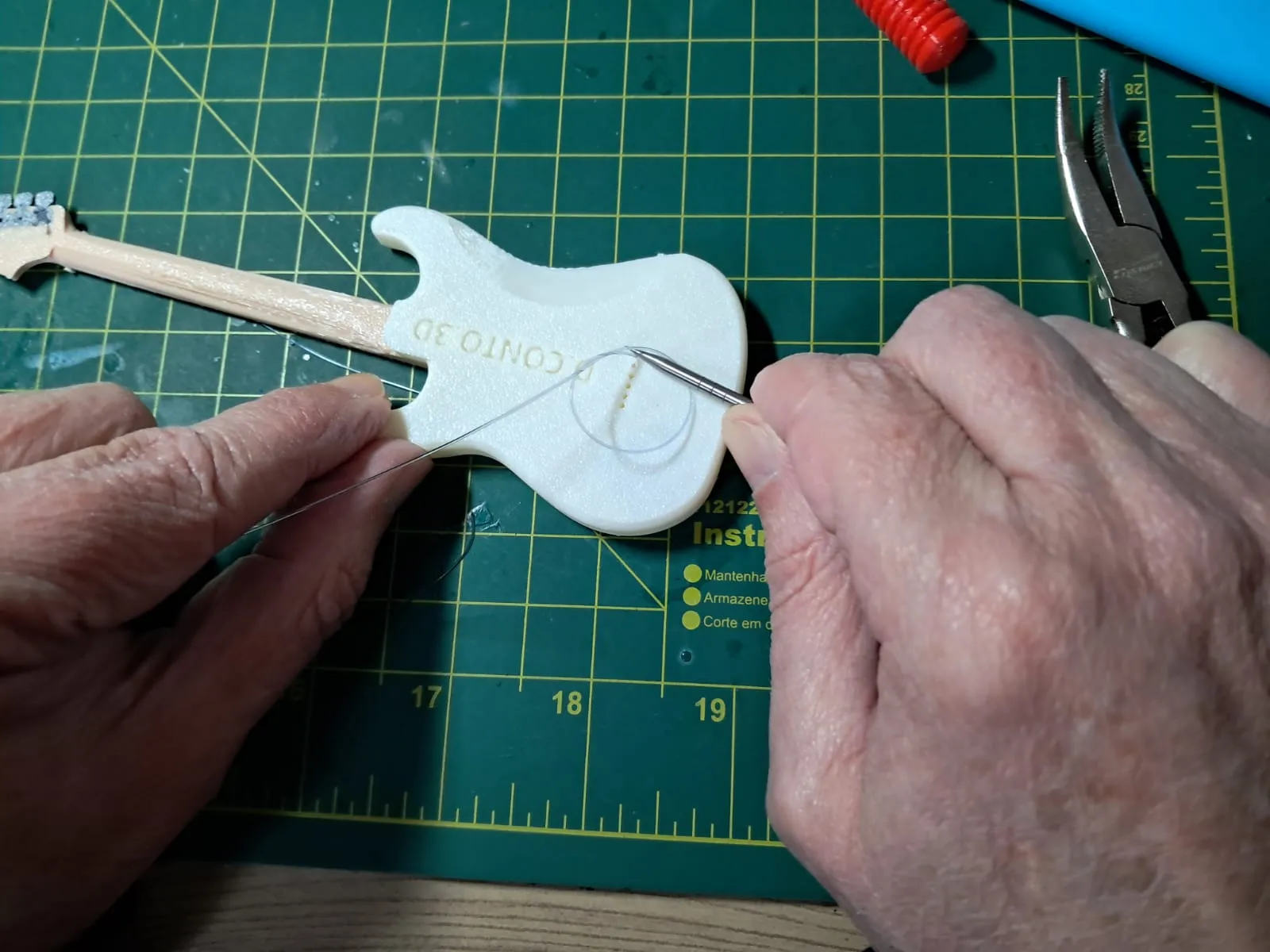
- cut a generous piece of line and thread it through the nut, headstock, and bridge;
- flip the guitar over and tie two simple, firm knots behind the headstock; cut the excess and melt the remaining end with a lighter;
- now for the final knot, at the back of the bridge, where the string should be taut; make a simple loop, stretch the string, and hold it taut with a small pointed tool placed inside the loop (see photo); then gradually close the loop until it lightly grips the tool before removing it and tightening the knot; tie a second knot so that it sits below the first knot; cut the excess and melt the remaining end; done (I needed 3 or 4 attempts to get it right).
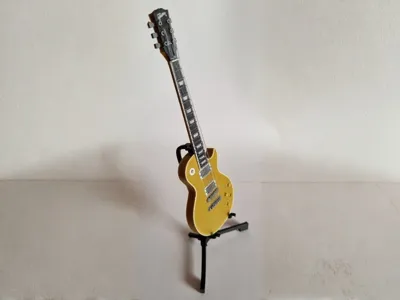
Stands – I used the custom3dmodels stand, scaled to 115%.
link: https://makerworld.com/en/models/1242179-guitar-stand-guitar-miniatures-collection#profileId-1262924
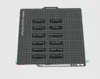
Tags – I have provided a separate file for the plates with the guitarists' names.
History
(https://www.thaliacapos.com)
It's not uncommon for old Les Pauls to pass through the hands of more than one legendary guitarist. Ask any Gibson guitar aficionado and they'll tell you: vintage 1950s Les Pauls have a special charm. They're not exactly easy to come by, which is why they're shared among several guitarists. But the definitive Les Paul, passed down from generation to generation, is undoubtedly the "Greeny Moore". A 1959 Les Paul like no other, it is one of the most iconic Gibson guitars ever produced and has passed through the hands of not two, but three true guitar legends.
Peter Green may not be a household name to the uninitiated. But, for disciples of British blues, he is a colossal influence. The man who replaced Eric Clapton in John Mayall and the Bluesbreakers, Green founded the original lineup of Fleetwood Mac, with his bluesy touch.
The 1959 Les Paul was bought by Green during his time with the Bluesbreakers, supposedly for the equivalent of $300 second-hand, around 1966. There were many other 1959 Les Pauls circulating at the time, but Greeny's sounded different from all of them. Why? Because one of the pickups is installed backward. This means that when both pickups are engaged in the middle position, the instrument sounds more like a Fender Stratocaster than a Gibson Les Paul.
There was much speculation about why Greeny's Les Paul ended up that way. In reality, the pickup was installed that way from the start as a factory error, a fact confirmed by legendary guitar technician Jol Dantzig when he examined the guitar in 1984.
Those familiar with Fleetwood Mac's early work probably know the sad story of Peter Green's mental health struggles throughout the 70s. By the turn of the decade, Green began to destabilize, completely losing interest in music. It was at this time that he lent the guitar to a then-unknown teenage guitar prodigy he had befriended, named Gary Moore. Moore was eventually convinced by Green to buy the instrument – Peter wanted to ensure "it would have a good home" – for the same $300 Green had paid for it.
The Les Paul soon became Moore's signature instrument, just as it had been Green's. He played it on his 1973 solo debut, throughout his tenure with Thin Lizzy, and on his most emblematic solo track, "Parisienne Walkways," from 1978. He even used the guitar in a tribute to its former owner, Peter Green's covers album "Blues for Greeny," in 1995.
In 2006, due to financial problems, Moore sold the guitar. In 2014, it was acquired for $2 million by Kirk Hammett of Metallica.
License

You shall not share, sub-license, sell, rent, host, transfer, or distribute in any way the digital or 3D printed versions of this object, nor any other derivative work of this object in its digital or physical format (including - but not limited to - remixes of this object, and hosting on other digital platforms). The objects may not be used without permission in any way whatsoever in which you charge money, or collect fees.


Comment & Rating (1)