
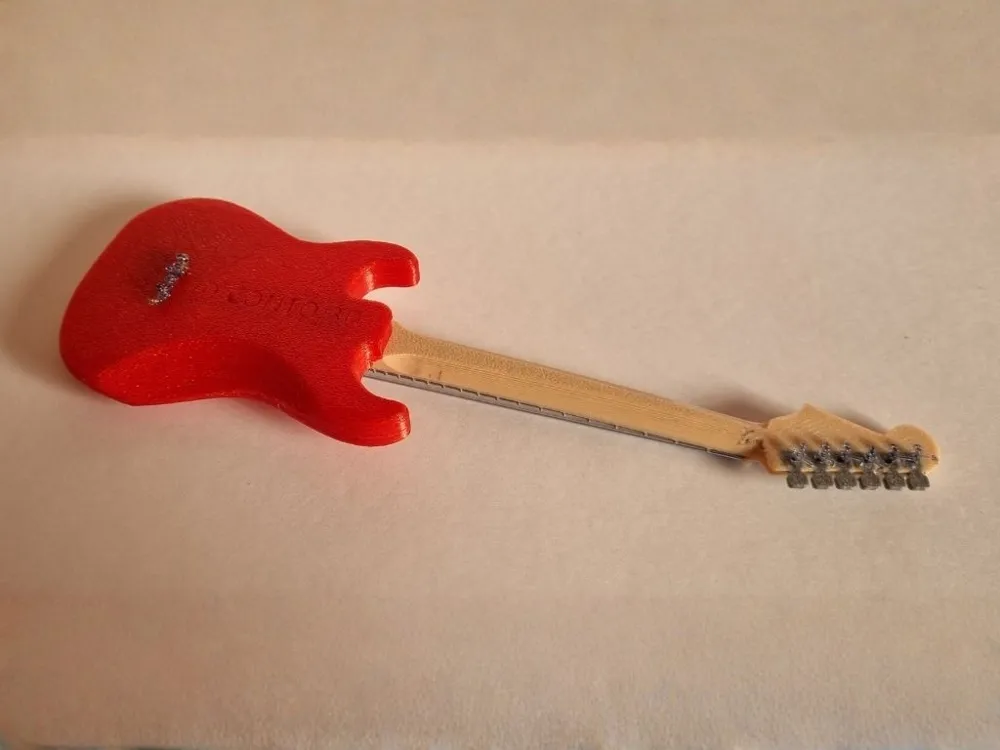
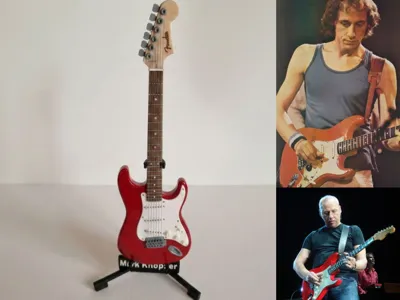
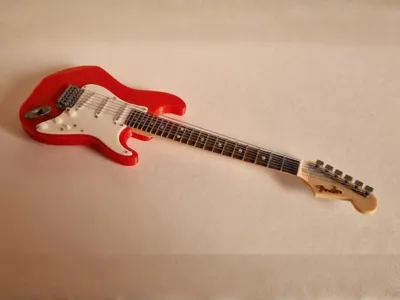
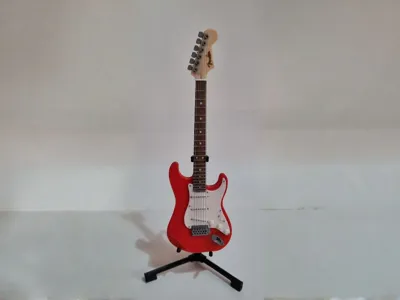
Guitar 17cm w/Strings - Fender Strat Mark Knopler
Print Profile(2)
Description
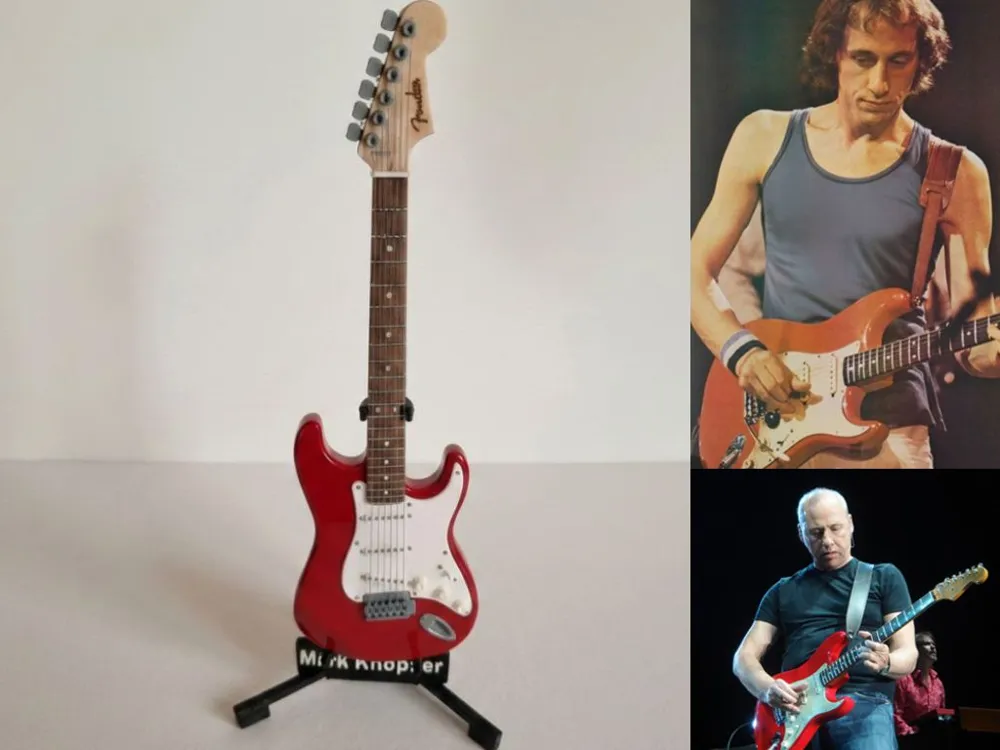
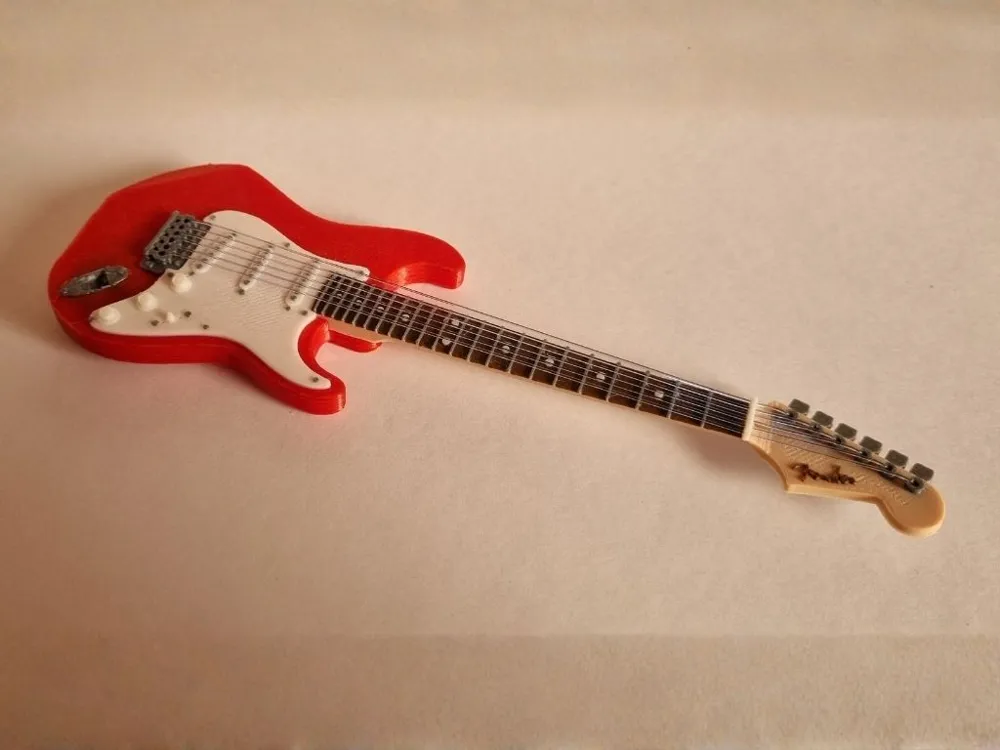
Fender Stratocaster 1961
Mark Knopfler (Dire Straits)
This guitar is part of the "Iconic Rock Guitars" collection
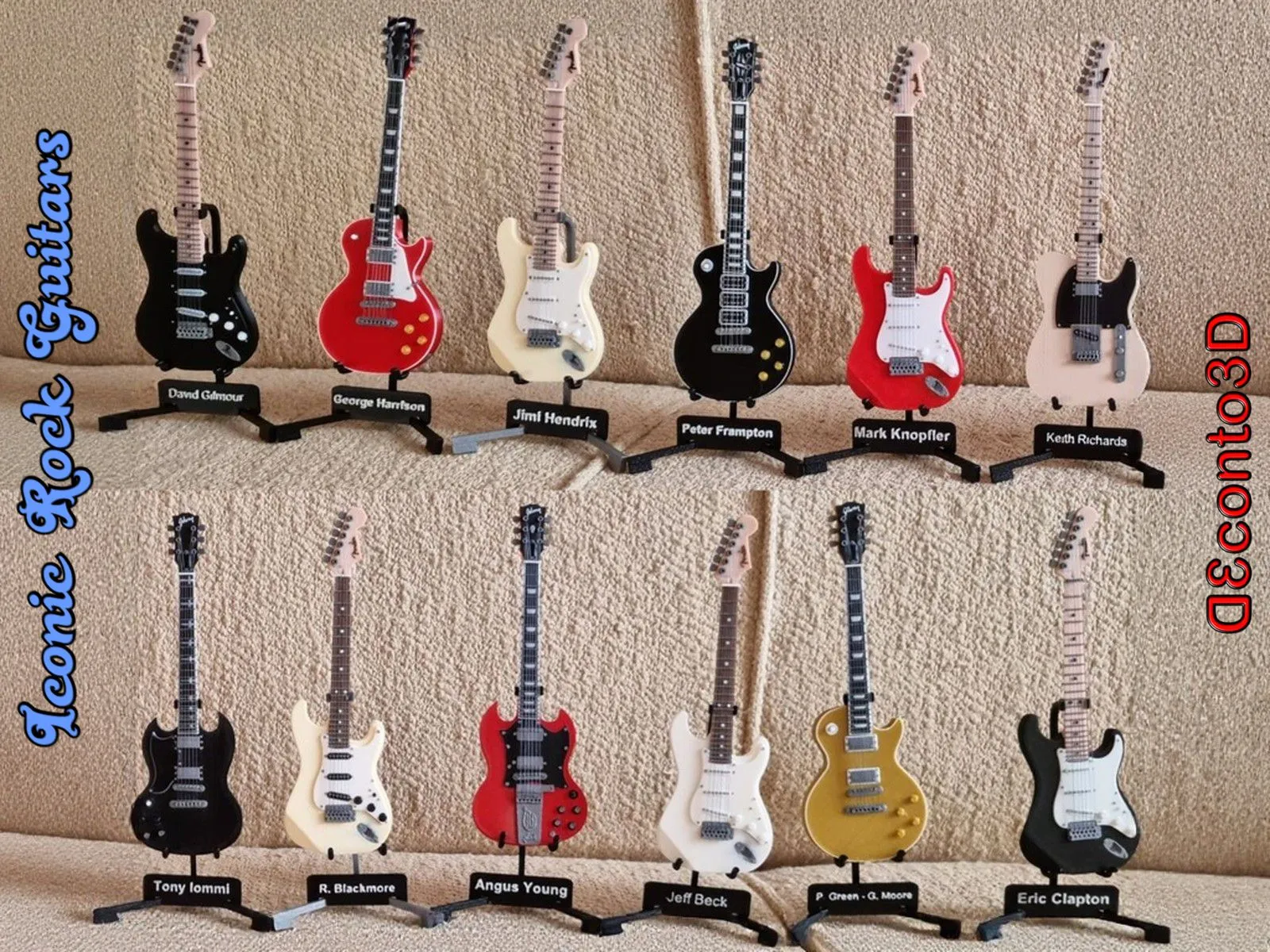
https://makerworld.com/collections/11905717
Printing – Quick and easy, no supports needed. The models in this collection were designed so that their details are visible at a layer height of 0.2 mm; however, if print time is not an issue, you can achieve better results with smaller layer heights.
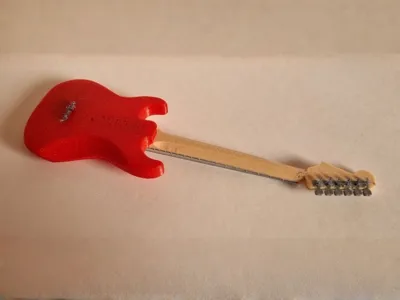
Assembly – To glue the neck to the body you can use superglue; however, I recommend using a fusion glue, such as Revell or Tamiya, as there will be considerable tension from the strings. I usually allow 12 hours for the glue to dry and cure.
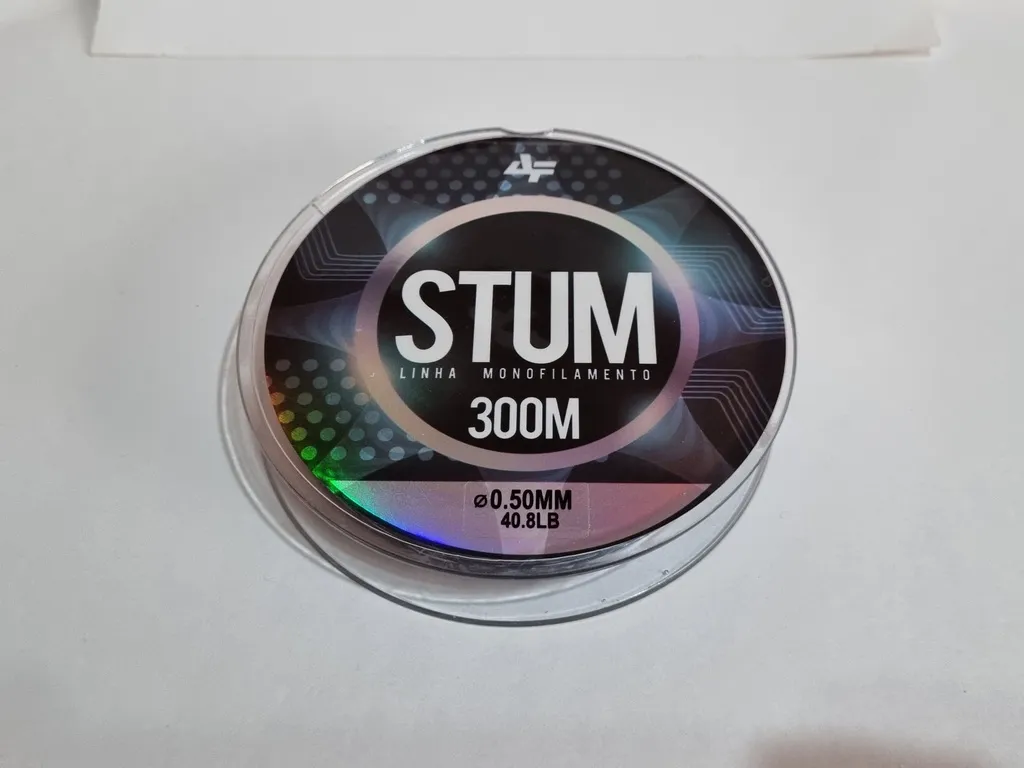
Stringing – This is the only slightly difficult part, but it's what really sets it apart from other models. Be patient and you will succeed. The strings are made with 0.5 mm fishing line, in the grayest color you can find.
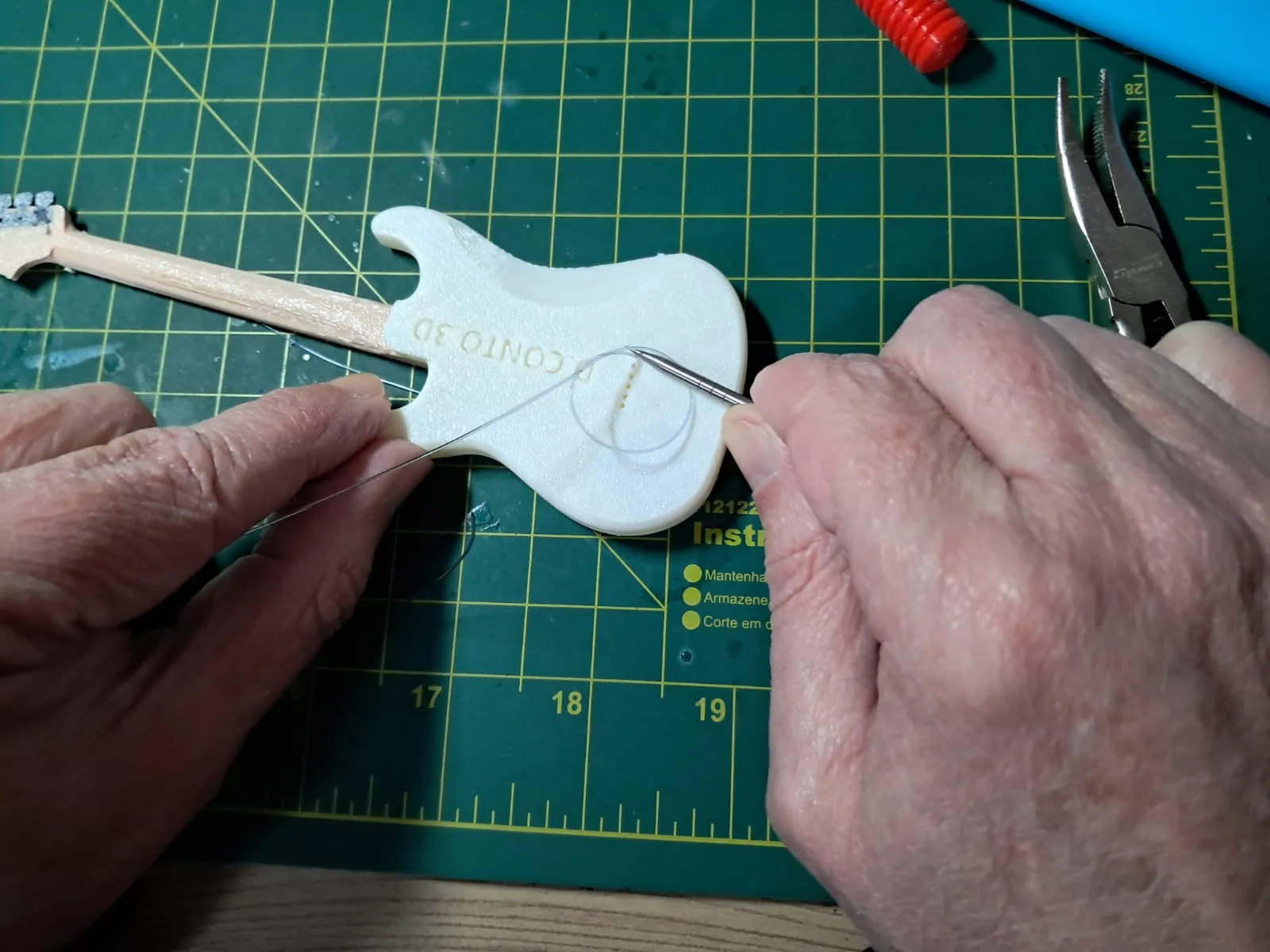
- use a pin to ensure that the holes through which the strings will pass are unobstructed, being careful with the nut, which is very fragile;
- cut a generous piece of line and pass it through the nut, headstock, and bridge;
- flip the guitar over and tie two simple, firm knots behind the headstock; cut off the excess and melt the remaining tip with a lighter;
- now for the final knot, at the back of the bridge, where the string should be stretched; make a simple loop, stretch the string, and hold it taut with a small-tipped tool that fits inside the loop (see photo); then close the loop until it lightly grips the tool before removing it and tying the knot; tie a second knot so that it is below the first knot; cut off the excess and melt the remaining tip; done (I needed 3 or 4 attempts to get it right).
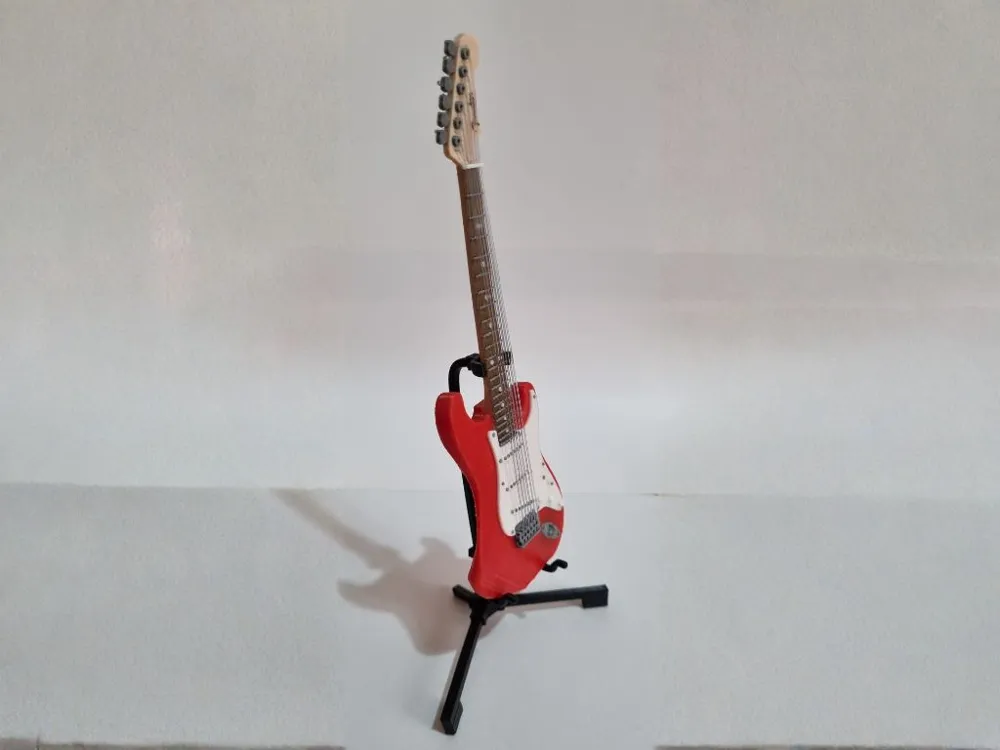
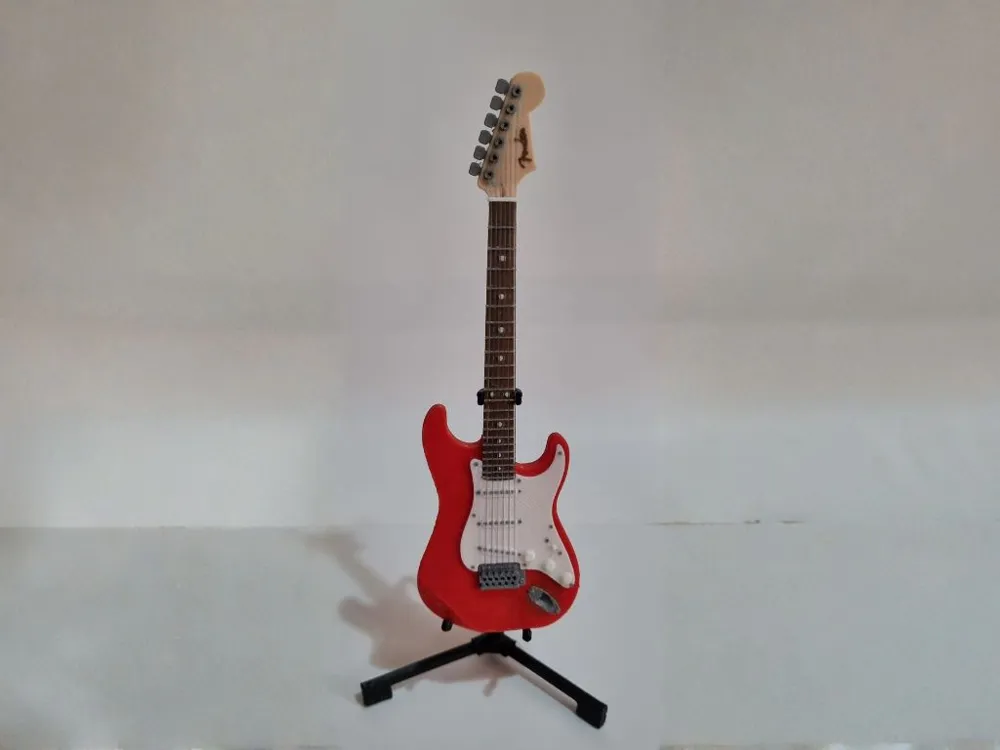
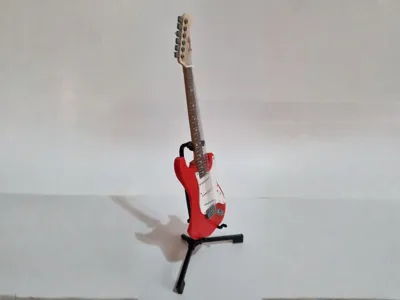
Stand – I used the stand from custom3dmodels, scaled up to 115%.
link: https://makerworld.com/en/models/1242179-guitar-stand-guitar-miniatures-collection#profileId-1262924
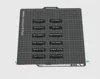
Tags – I have provided a separate file for the plates with the names of the guitarists.
History
(Marco Pala - whiplash.net)
Despite having a very interesting solo career for years, Mark will always be known for his work with Dire Straits, between the late 70s and early 90s. A loyal user of Gibson Les Paul (he owns a beautiful collection of "vintage" guitars), Mark was looking for a specific tone to use in a song he had composed on his old National aluminum acoustic guitar (the same one that appears on the cover of the iconic album "Brothers In Arms"), called "Sultans Of Swing". In the summer of 1977, Mark acquired a red 1961 Fender Stratocaster (serial #68354), with a dark rosewood fretboard, which greatly helped to modulate his playing style. Enthusiastic, he soon after acquired another red Strat, from 1957 (which differs by its light maple fretboard), and for some time, Fenders were his favorite guitars, used on the first two Dire Straits albums and tours. It's difficult to establish which of the two Strats recorded "Sultans Of Swing", released on the band's first album (in 1978), but Mark himself attributes to his '61 Strat the status of a "trademark" of his unique sound, at the forefront of the band that made him famous. The guitar is still in Mark's possession today and was mostly used in recordings (he has been using it on tours since 2001, but from the 70s to the 90s he preferred to travel with the '57 Strat, Les Pauls, or guitars from other brands, such as Schecter and Pensa Shur). Over the years, Mark made some modifications to the guitar: he changed the volume knob, the neck pickup (which he uses more than the bridge one) was replaced with a DiMarzio FS-1, and the body was repainted in the 90s (with a dubious "cracked" finish). However, around 2001, Mark decided to restore the guitar's original characteristics, as it was a real "vintage" instrument from an important Fender era: it was repainted with its original color and the DiMarzio pickup was replaced with a Fender Custom Shop pickup.
License

You shall not share, sub-license, sell, rent, host, transfer, or distribute in any way the digital or 3D printed versions of this object, nor any other derivative work of this object in its digital or physical format (including - but not limited to - remixes of this object, and hosting on other digital platforms). The objects may not be used without permission in any way whatsoever in which you charge money, or collect fees.


Comment & Rating (0)