
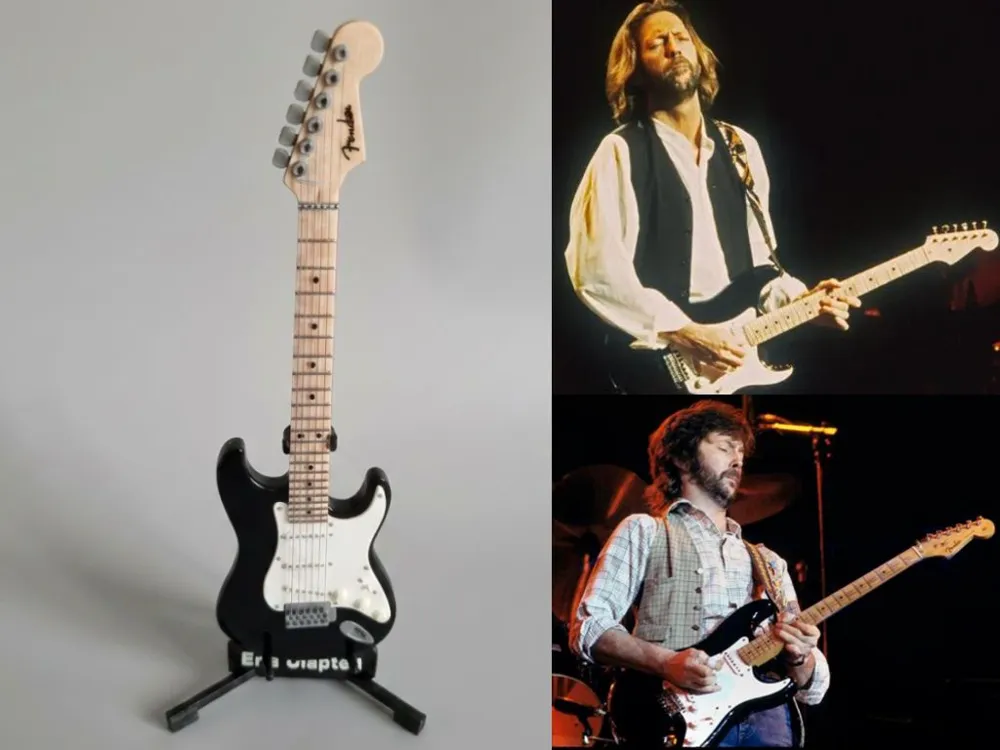
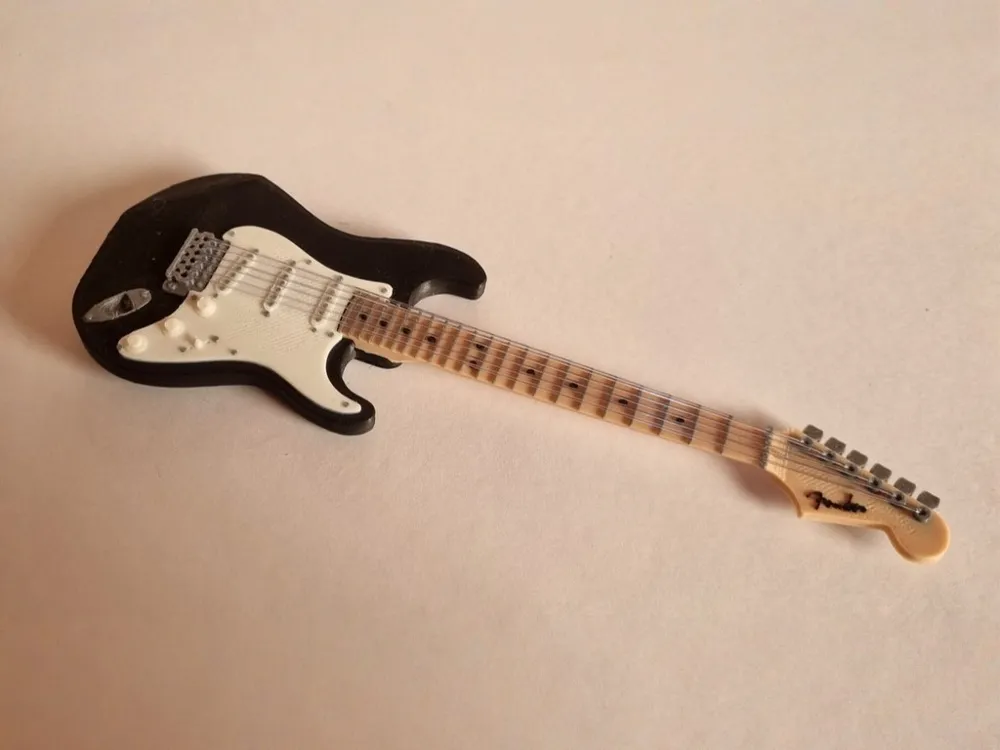
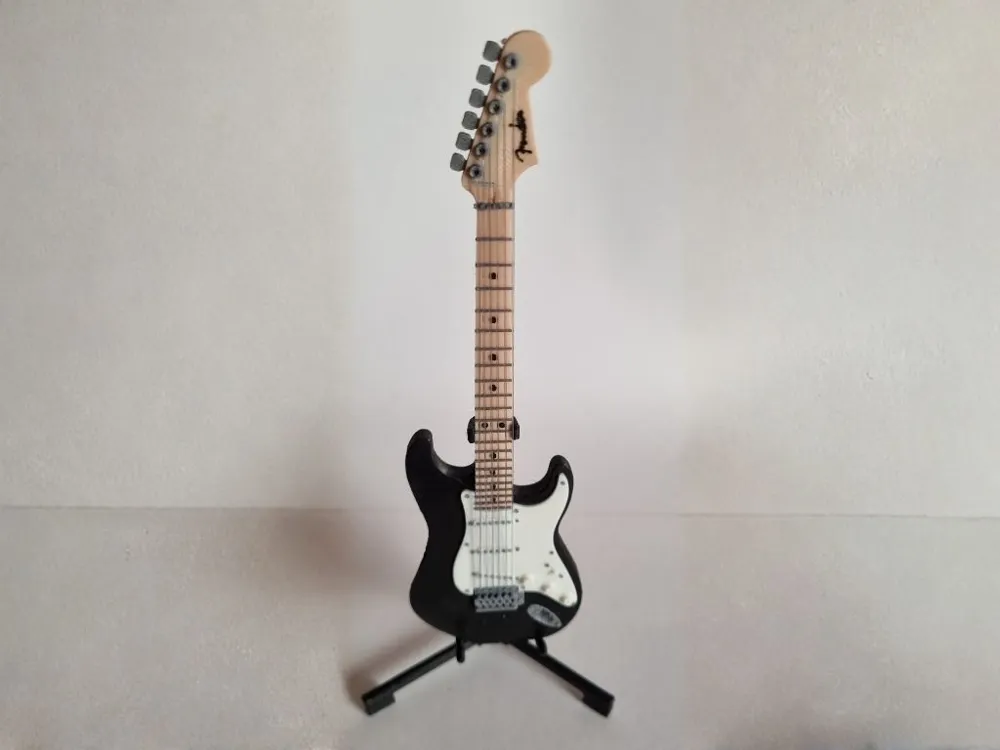
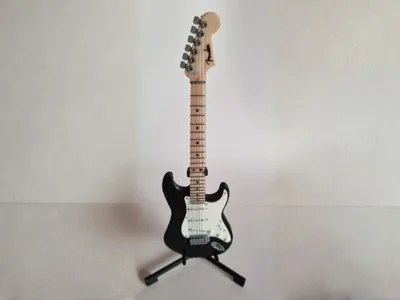
Guitar 17cm with strings - Fender Strat Eric Clapton
Print Profile(2)
Description
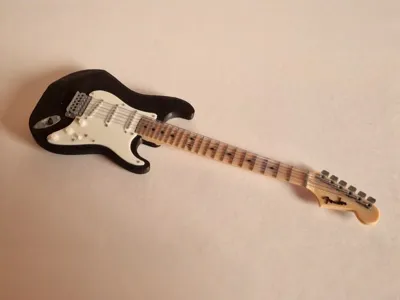
Fender Stratocaster 1956/1957
"Blackie"
Eric Clapton
This guitar is part of the “Iconic Rock Guitars” collection
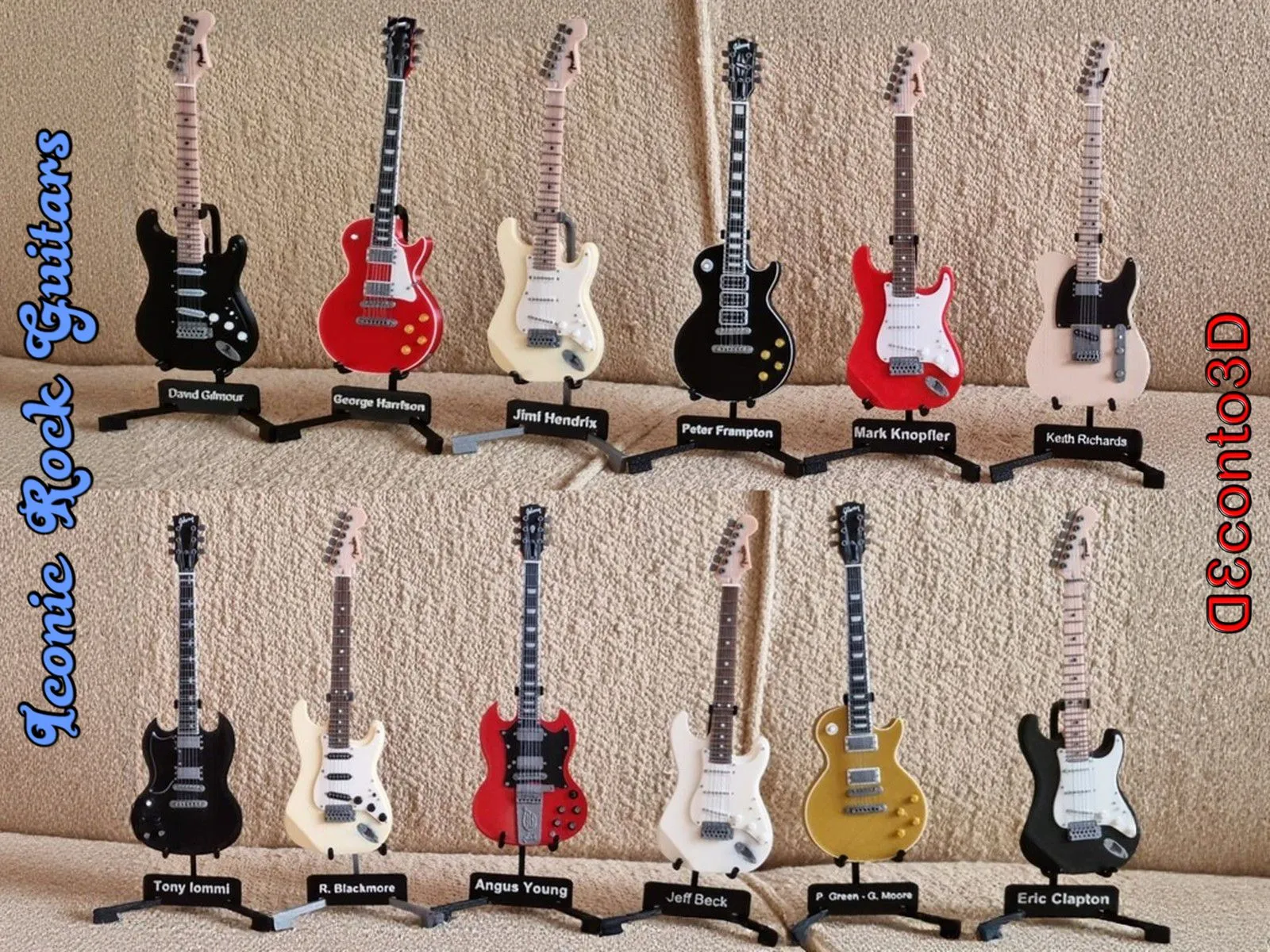
https://makerworld.com/collections/11905717
Printing – Fast and easy, no supports. The models in this collection were designed so that their details are visible at a 0.2 mm layer height, however, if print time is not an issue, you can achieve better results with smaller heights
Assembly – To glue the neck to the body you can use superglue, however I recommend using a fusion glue, like Revell or Tamiya, as there will be considerable tension from the strings. I usually leave it for 12 hours for the glue to dry and cure
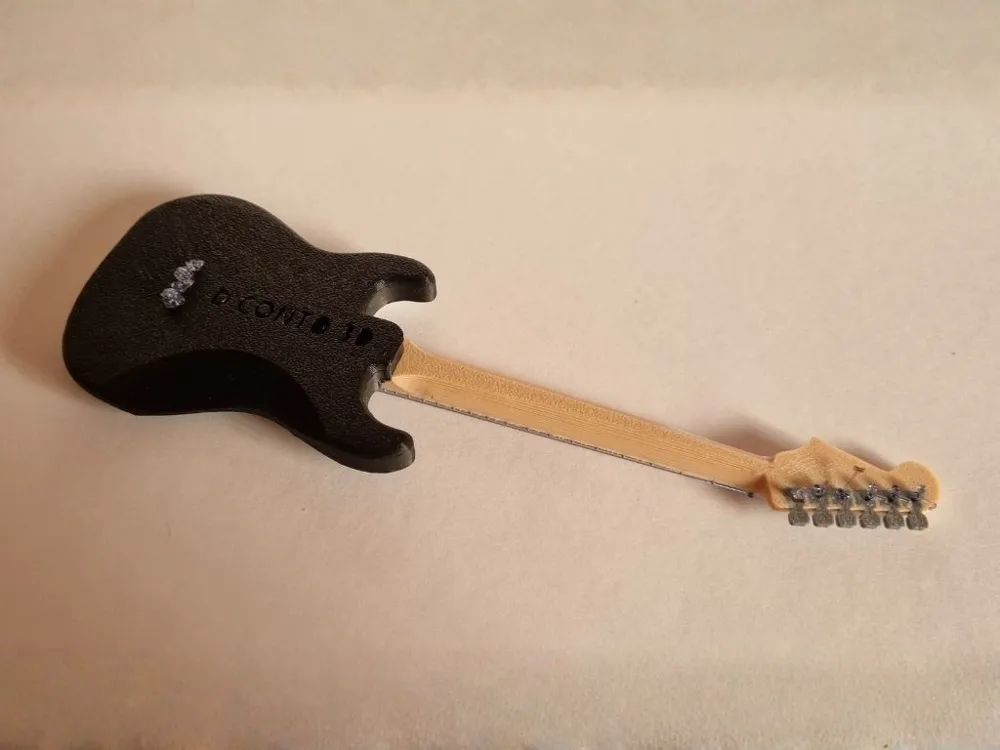
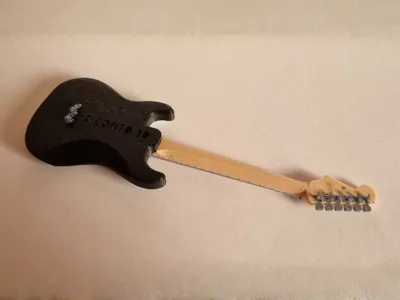
Stringing – This is the only slightly difficult part, but it's what really makes this model different from others. Be patient and you will succeed. The strings are made of 0.5 mm fishing line, in the grayest color you can find

- use a pin to ensure the holes through which the strings will pass are clear, taking care with the nut, which is very fragile
- cut a generous length of line and pass it through the nut, headstock, and bridge
- flip the guitar over and tie two simple, firm knots behind the headstock; cut the excess and melt the remaining tip with a lighter
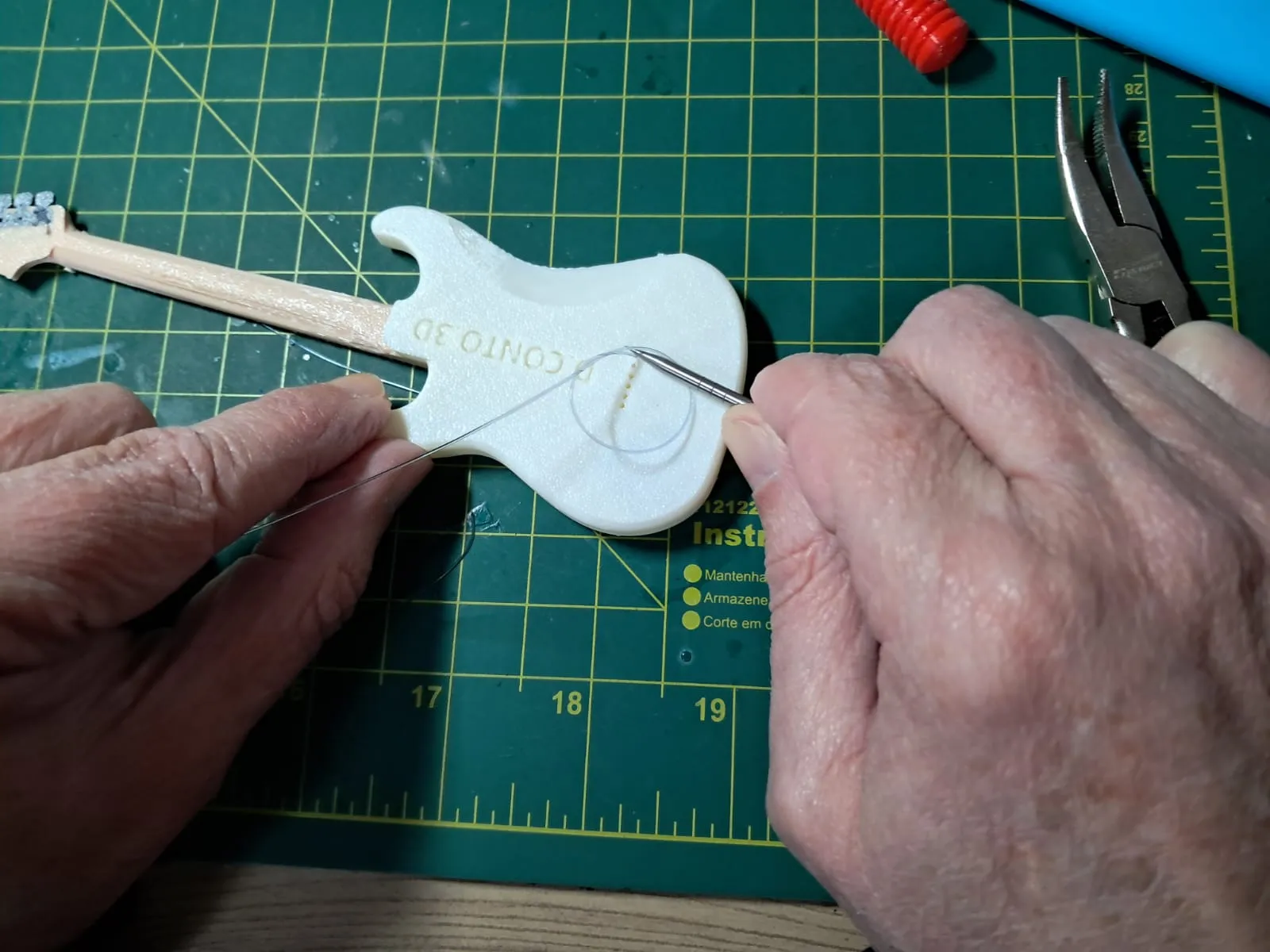
- now for the final knot, at the back of the bridge, where the string should be taut; make a simple loop, stretch the string, and hold it taut with a small pointed tool that fits inside the loop (see photo); then gradually close the loop until it lightly grips the tool before removing it and tightening the knot; tie a second knot below the first one; cut the excess and melt the remaining tip; done (I needed 3 or 4 attempts to get it right)
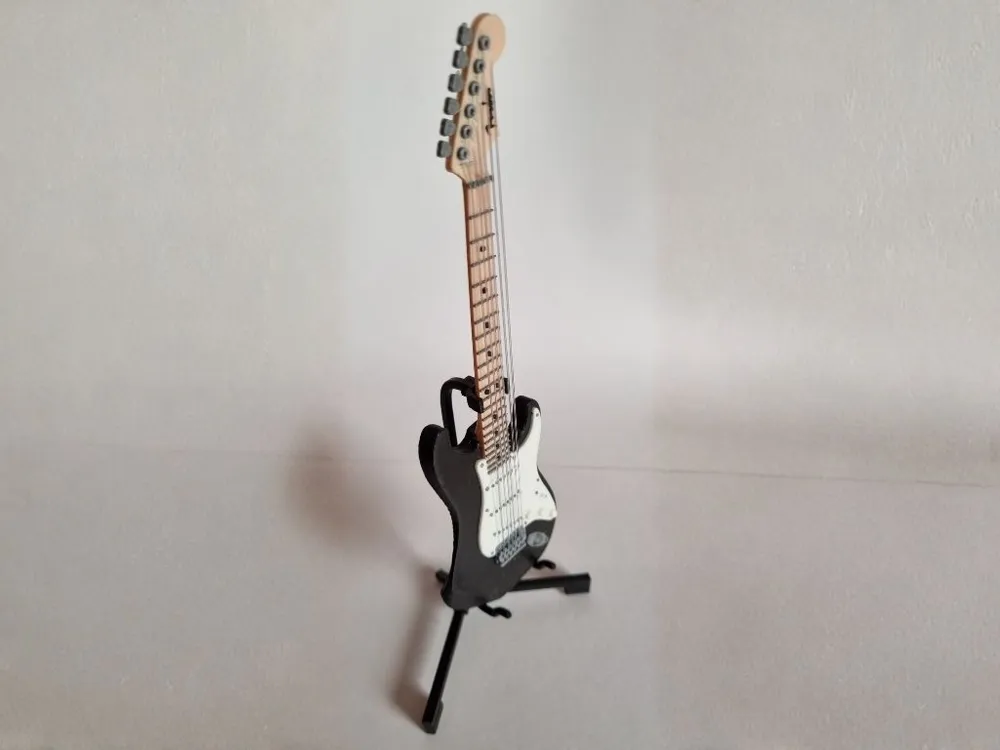
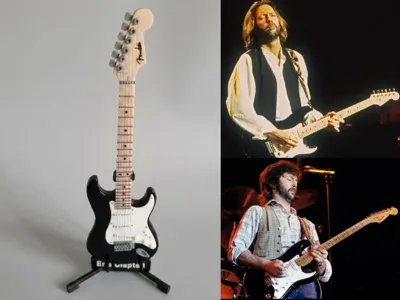
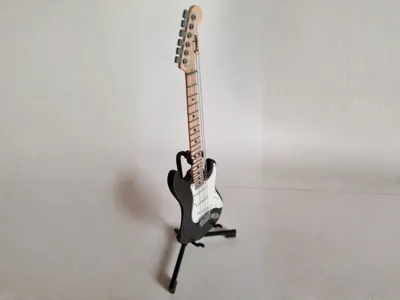
Stands – I used the stands from custom3dmodels, enlarged to 115%
link: https://makerworld.com/en/models/1242179-guitar-stand-guitar-miniatures-collection#profileId-1262924
Nameplates – I provided a separate file for the nameplates with the guitarists' names
History
(Marco Pala - whiplash.net)
In the 60s, Eric Clapton was considered a guitar "god" in England, having fronted the legendary band Cream and also serving as a "sideman" for John Mayall and The Bluesbreakers. He was known for using Gibson guitars, so much so that he was partly responsible for many musicians' obsession with the 1959 Les Paul Standard, which was already rare at the time. But after witnessing a performance by a young American named Jimi Hendrix, Clapton was stunned. How was that possible? Annoyed, the "god" decided to reinvent himself. Thus began his magnificent solo career, always featuring an unmistakable Fender Stratocaster. If Hendrix could do all that with a Strato, so could he. In 1970, Clapton bought six original 50s Stratocasters and gave three of them as gifts to friends (specifically, George Harrison, Pete Townshend, and Steve Winwood). The other three were disassembled, and from their best parts, a single Stratocaster was built, the most iconic guitar of "Slow Hand's" career, nicknamed "Blackie" because of its black color. A Fender Stratocaster "frankenstein" with a 1956 body and a 1957 neck. He used it as his main instrument between 1973 and 1985 until retiring it from tours, switching to "signature" models made by Fender based on his original. In 2004, Blackie was auctioned (along with other legendary guitars by Clapton and other musicians) for the benefit of an institution founded by the guitarist (Crossroads Centre) for the princely sum of US$ 959,500. Curiosity: until the turn of the 60s to the 70s, Fender did not produce black Stratocasters, meaning Blackie's body was originally another color and was later repainted
License

You shall not share, sub-license, sell, rent, host, transfer, or distribute in any way the digital or 3D printed versions of this object, nor any other derivative work of this object in its digital or physical format (including - but not limited to - remixes of this object, and hosting on other digital platforms). The objects may not be used without permission in any way whatsoever in which you charge money, or collect fees.


Comment & Rating (1)