
Land Rover Light Weight Dutch Army Version
Print Profile(0)
Description
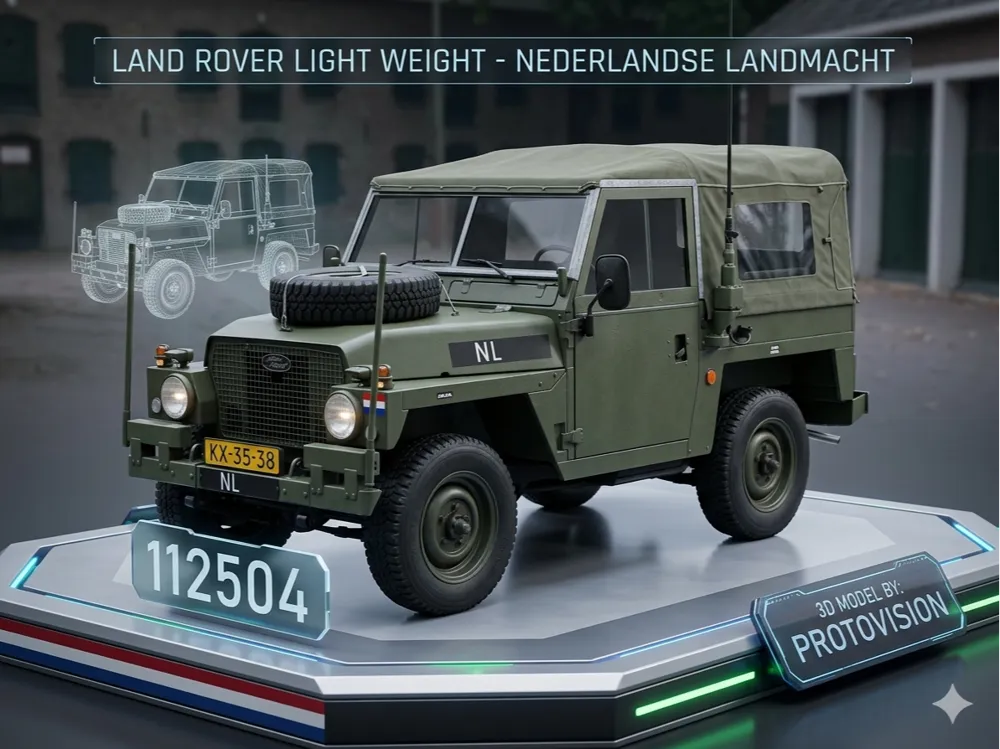
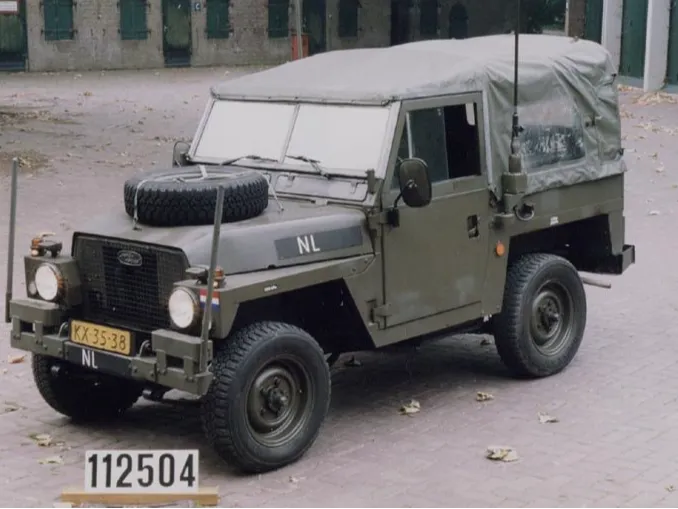
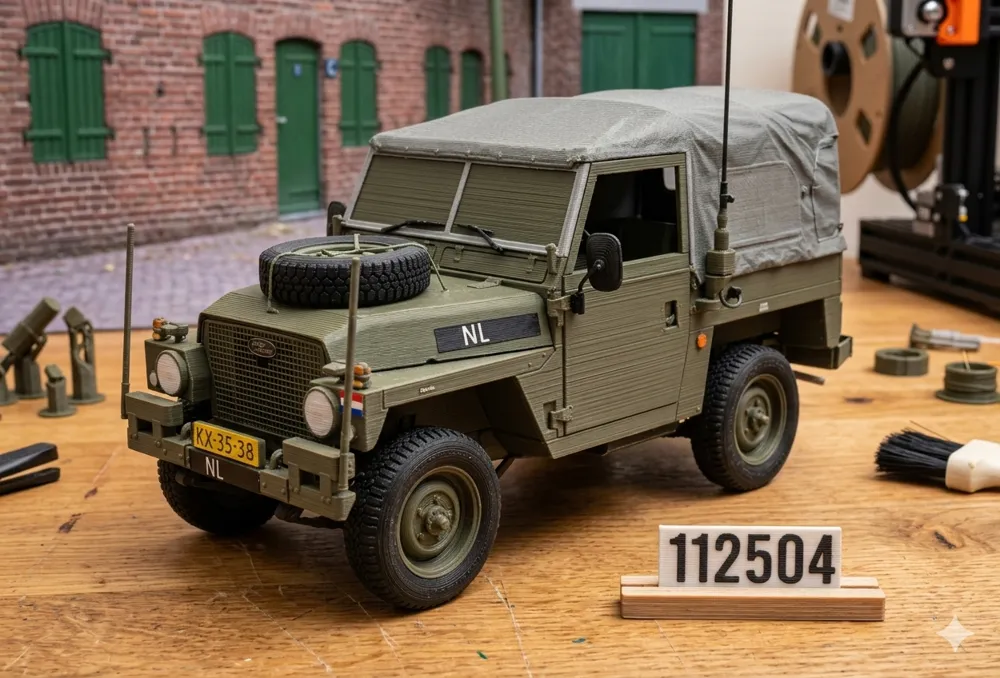
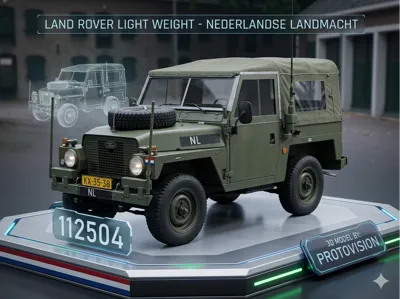
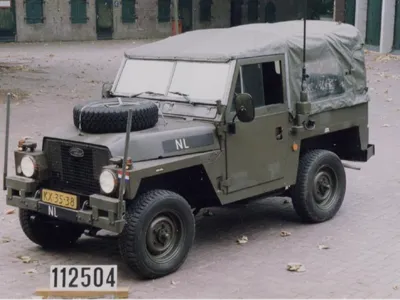
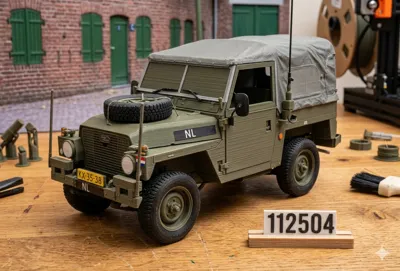
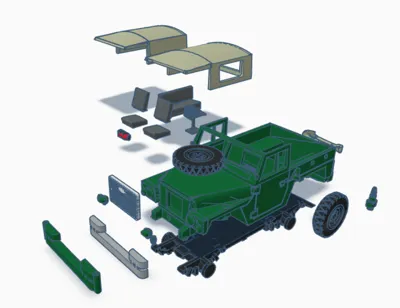
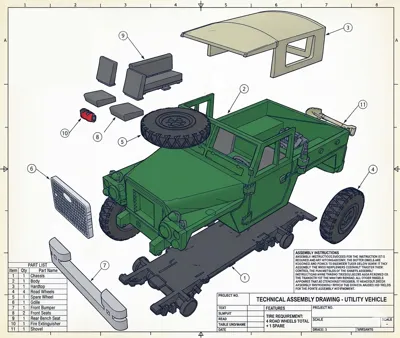
De Land Rover Lightweight (officieel de Half-Ton of 88 Lightweight) is een van de meest karakteristieke voertuigen van de Koninklijke Landmacht (KL). De auto werd eind jaren 60 ontwikkeld voor het Britse leger en werd begin jaren 70 door Nederland in gebruik genomen
Het unieke uiterlijk en de constructie hebben een puur functionele en militaire reden
**Why is it called "Lightweight"?**
The name is a bit ironic: road-ready, it is almost as heavy as a standard civilian Land Rover Series. The crux lay in NATO's **strategic air transport requirements** around 1960. The helicopters at the time (such as the Westland Wessex) could not lift a standard Land Rover
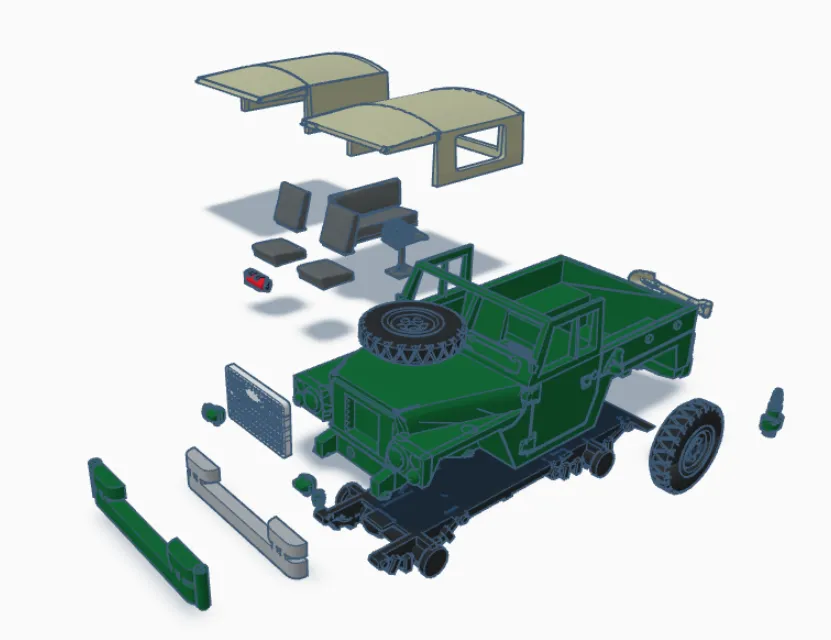
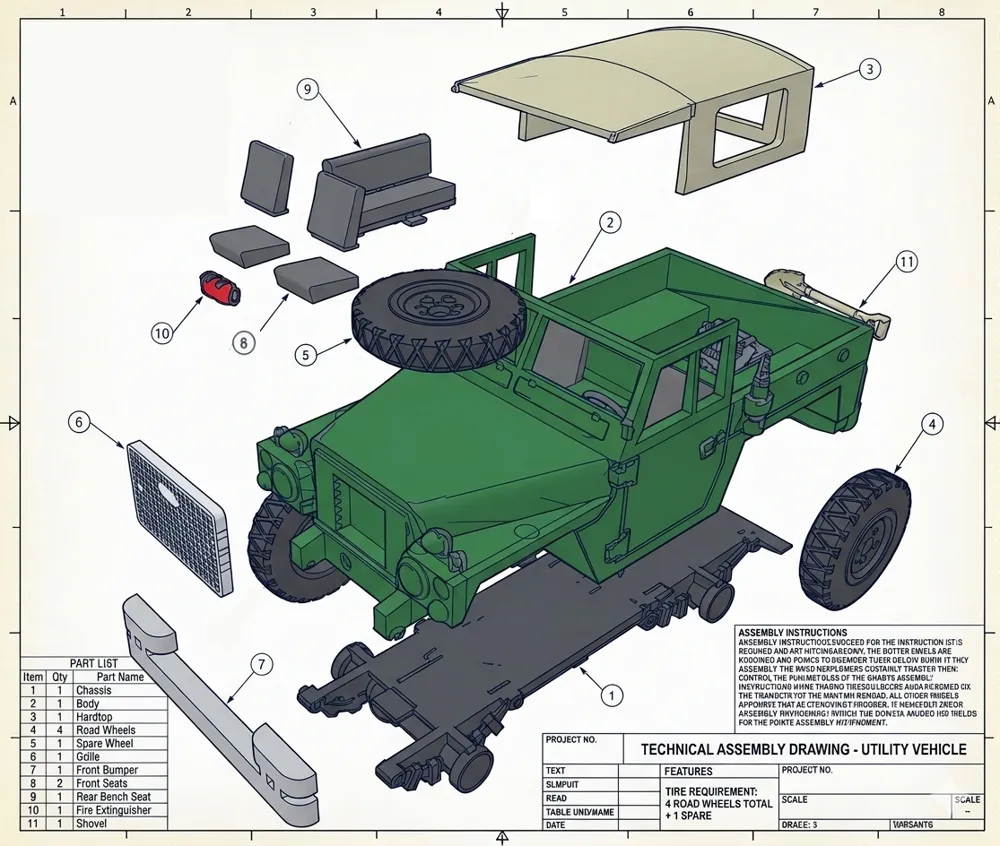
The Lightweight was designed so that all body parts could be disassembled within minutes without tools:
- The upper half of the doors could be removed
- The windshield could be folded down or completely removed
- The hood, canvas roof, wheel arch extensions, and bumper sections could be detached
Without these parts, the 'stripped' car was light enough to be slung under a helicopter or compact enough to fit into a cargo plane. Once on the ground, the crew reassembled the parts
**Specific characteristics of the Dutch 'KL' Lightweight**
The Royal Netherlands Army purchased approximately 4,400 units of the Lightweight (both Series IIA and Series III). The Dutch variants differed significantly from the British versions:
- **The engine**: While the British used petrol versions, the KL deliberately chose the **2.25-liter four-cylinder diesel engine** (with 51 hp) for logistical reasons (diesel was the standard fuel within the KL)
- **The lighting**: Typically Dutch were the large, square military top signals (indicators) on the front and rear mudguards. The specific military blackout switch (for darkened convoy drives) was also present
- **Two fuel tanks**: A 45-liter fuel tank was located under both the driver's and passenger's seats, which could be switched independently
- **Dijkstra boxes**: Many Dutch Lightweights were equipped with large wooden or steel boxes on the back (the so-called Dijkstra boxes) for additional storage space
- **24-Volt system**: The vehicles were equipped with a heavy 24V electrical system (instead of 12V) so they could power heavy military radio equipment (such as the RT-3600 radios)
**Driving Experience: Hard Work**
Ask any former conscript and they immediately recall its raw character. There was no comfort:
- **Noise**: At a top speed of barely 90 km/h, the diesel engine made so much noise that earplugs were not a luxury
- **Steering and shifting**: No power steering, a heavy clutch, and a gearbox that had to be operated with military precision (and sometimes double-declutching)
- **Suspension**: Thanks to the stiff leaf springs, the car bounced over barracks complexes and heathlands (such as the military bases in 't Harde or Havelte)
Although maintenance mechanics at the time (due to the many modifications and fault-prone technology) were sometimes less enthusiastic, the Lightweight is nowadays an absolute **cult classic** and a beloved collector's item in the world of historical military vehicles
Are you yourself busy with the restoration of a Lightweight, or do you want to know more about a specific version (such as the ambulance or radio vehicle version)?
License

You shall not share, sub-license, sell, rent, host, transfer, or distribute in any way the digital or 3D printed versions of this object, nor any other derivative work of this object in its digital or physical format (including - but not limited to - remixes of this object, and hosting on other digital platforms). The objects may not be used without permission in any way whatsoever in which you charge money, or collect fees.


Comment & Rating (8)