
Print Profile(1)
Description
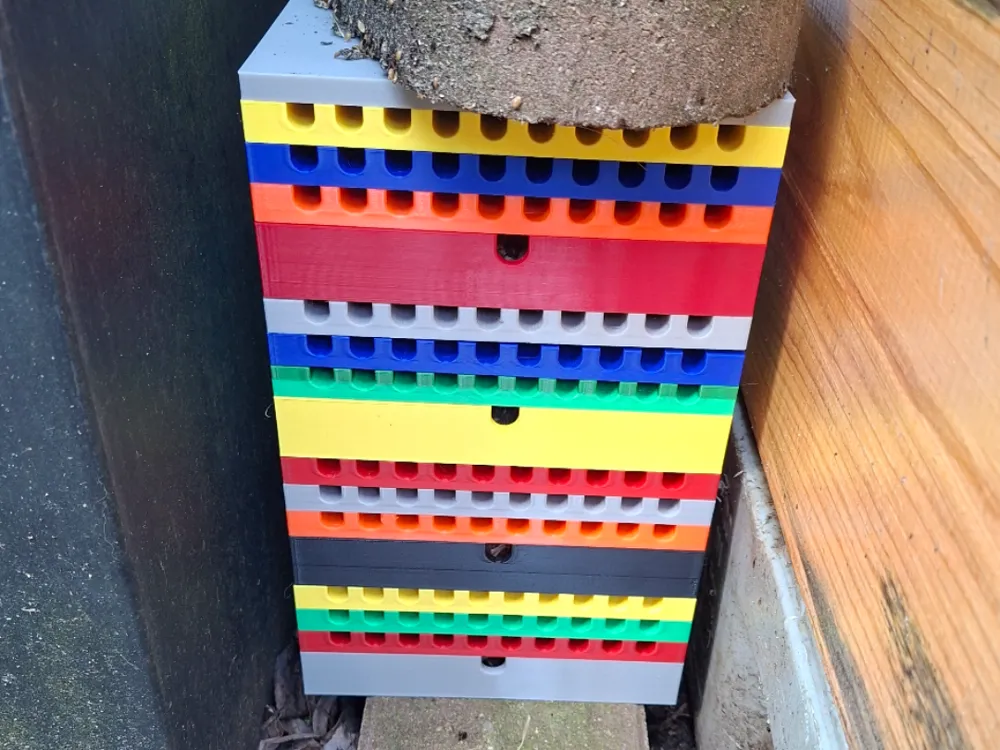
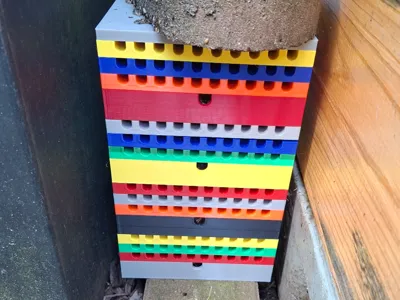
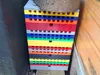
🐝 Wild Bee Nesting Aid / Wild Bee Hotel 🐝
🌟 About the Project
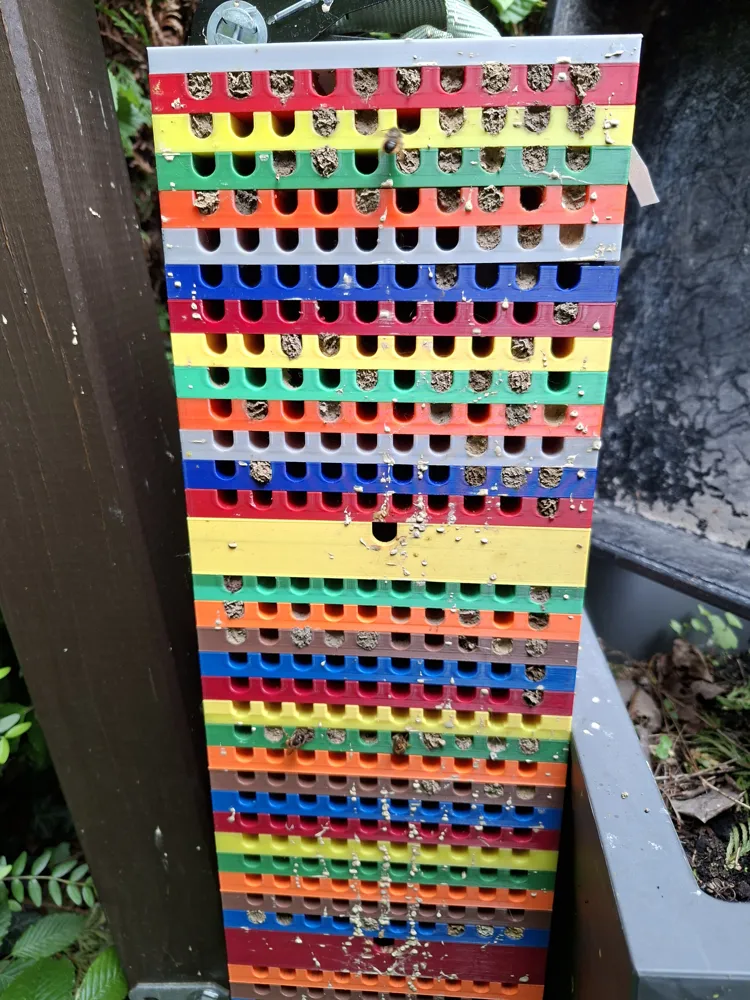
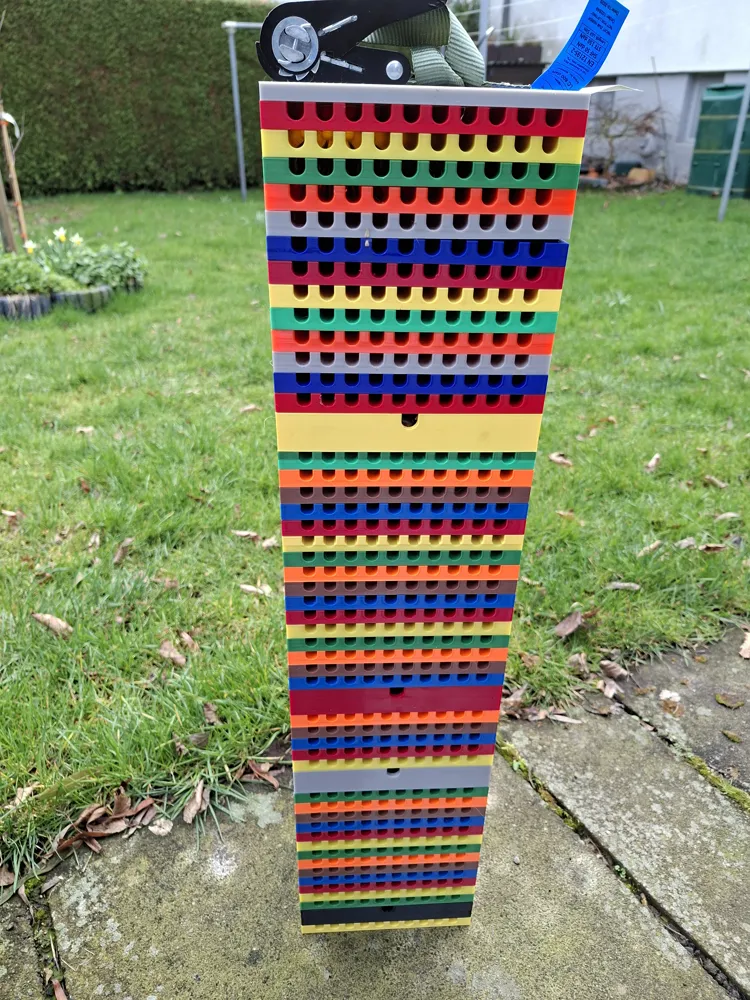
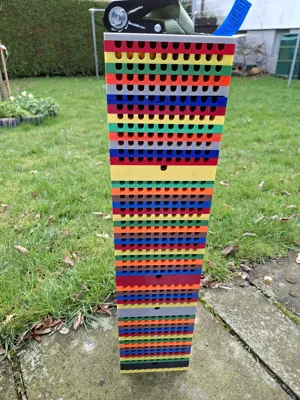
With this nesting aid, you actively support nature conservation and offer native wild bees a safe place to nest. Wild bees are indispensable pollinators for our ecosystems and often no longer find enough natural nesting sites in modern gardens. This model was specially developed to meet the needs of bees and can be easily printed on all Bambu Lab printers. Thanks to its modular design, the nesting aid can be extended as desired, so there are no limits to its height or the number of nesting aids.
🛠️ Design Highlights
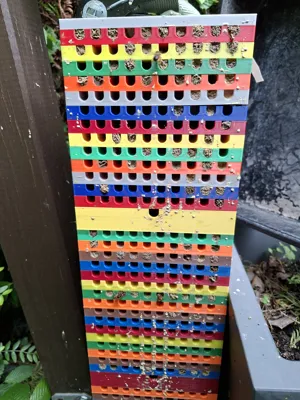
- Species-appropriate Tube Sizes: The nesting tunnels have an ideal diameter of 10 mm to attract various wild bee species (such as the red mason bee or the horned mason bee).
- Sufficient Depth: The tubes have a diameter of 10 mm so that the bees can safely create several brood cells one behind the other.
- Clean Edges: The design is optimized so that the entrances are printed smoothly. Sharp edges must be avoided so as not to injure the delicate wings of the insects.
- Bambu Studio optimized: The `.3mf` print file contains the complete print profile for all required objects and is ready for the slicer.
🖨️ Print Settings & Material Recommendation
- Material: PETG or ABS are strongly recommended! The nesting aid hangs outdoors and is exposed to direct weather. PLA can soften and deform in summer.
- Layer Height: 0.20 mm (offers a perfect compromise between print time and smooth surface quality).
- Walls: 3 to 4 walls for optimal stability and weather resistance.
- Infill: 15% - 20% (Gyroid or Cubic).
- Support: No support structures needed (Print-in-Place).
- Important note on quality: Make sure your filament is dry. So-called "stringing" (fine threads) inside the tubes are often avoided by bees. If threads do occur, carefully remove them after printing with a small drill, a round file, or a pipe cleaner.
- Color Variety: Wild bees are not colorblind. The more colorful and vibrant you make all the objects, the better wild bees can orient themselves and more easily find their respective entrance again to place their offspring.
📍 Tips for Placement
For the nesting aid to be well accepted, please observe the following basic points:
- Orientation: The openings should face **south or southeast** to receive plenty of warming sun in the morning.
- Weather protection: Place the model slightly protected from rain and direct sunlight.
- Secure Hold: Ensure a firm base and weigh down the cover with a simple heavy stone.
- Food supply: A natural garden or balcony with native wildflowers nearby significantly increases the success rate.
🍂 Care in Autumn and Spring
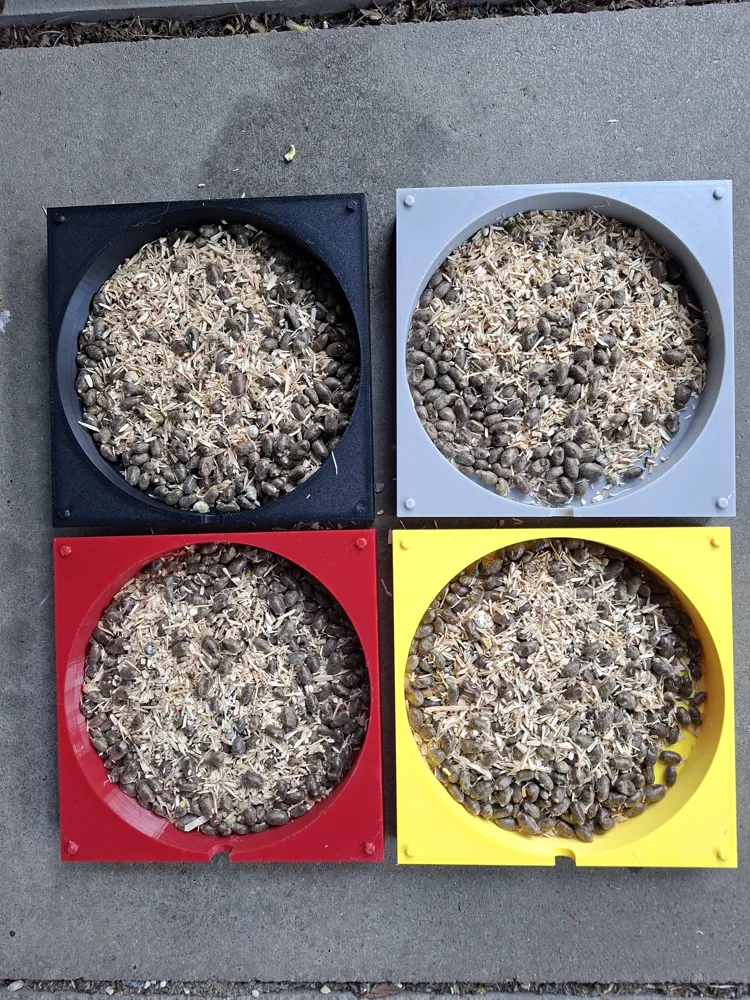
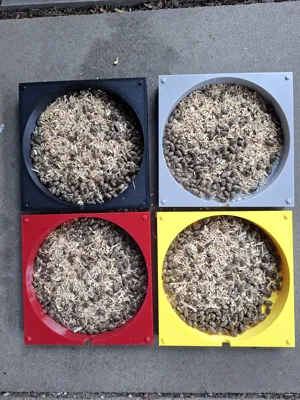
Wild bees are loyal to their location, and the nesting aid takes advantage of a special characteristic of wild bees when their offspring hatch: when they leave the emergence box, they automatically fly back to the entrance and thus immediately find the empty and optimal entrances for egg-laying.
- Spring (Setup): The new nesting aid can be set up between March (when the first blossoms appear) and the end of May. By June, the wild bees have finished their work and are no longer active.
- Autumn (Cleaning): The nesting aid is disassembled from early to mid-November, and the finished cocoons of the wild bees are removed from the individual tunnels. The cocoons are cleaned of mites and other contaminants using water baths or a soft brush.
- Wintering: For wintering, you can place them in the brood tray and reassemble the nesting block in its old place.
So you only need to be active once a year at most!
🤝 Feedback
If you like the model, I would appreciate a like, a boost, and of course, photos of your printed nesting aid – especially when the first residents move in!
Do you have suggestions for improvement or questions? Please let me know in the comments.
Have fun printing and observing the bees and actively protecting nature! 🌻🐝
If you like my print profile, I would be very happy to receive a "⭐⭐⭐⭐⭐" rating.
Boost Me (for free)
Thank you for your support!
License

You shall not share, sub-license, sell, rent, host, transfer, or distribute in any way the digital or 3D printed versions of this object, nor any other derivative work of this object in its digital or physical format (including - but not limited to - remixes of this object, and hosting on other digital platforms). The objects may not be used without permission in any way whatsoever in which you charge money, or collect fees.


Comment & Rating (0)