
Wide Base Aroid Planter for Moss Pole Plants
Print Profile(8)
Bill of Materials

.jpg)

.jpg)


Description
Anti-Tip Moss Pole Planter System
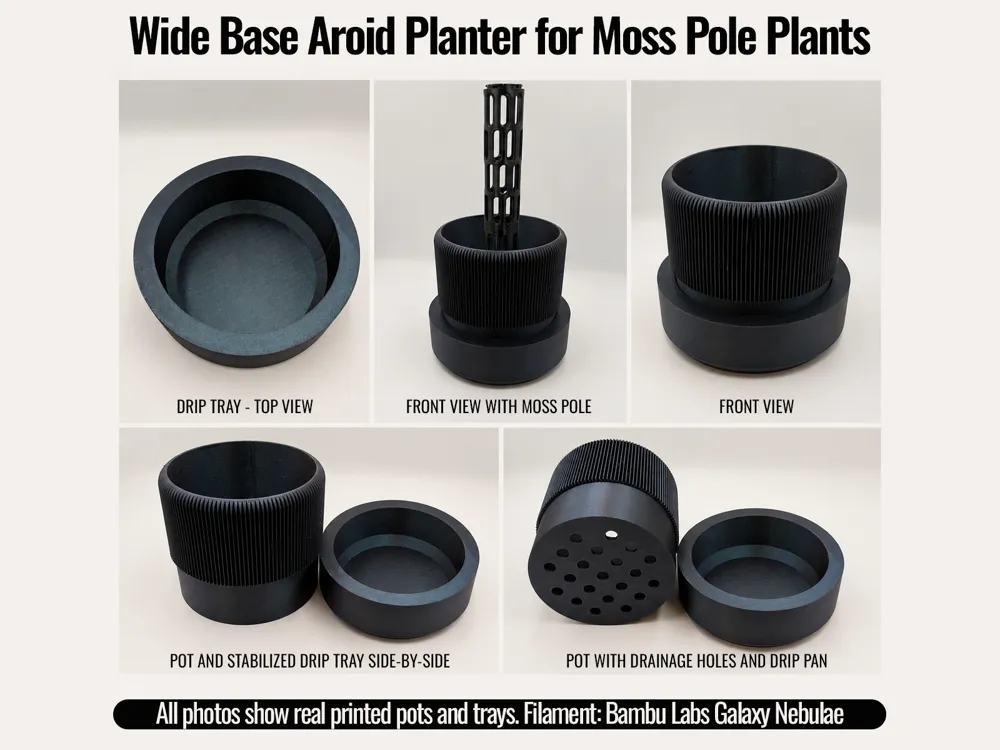
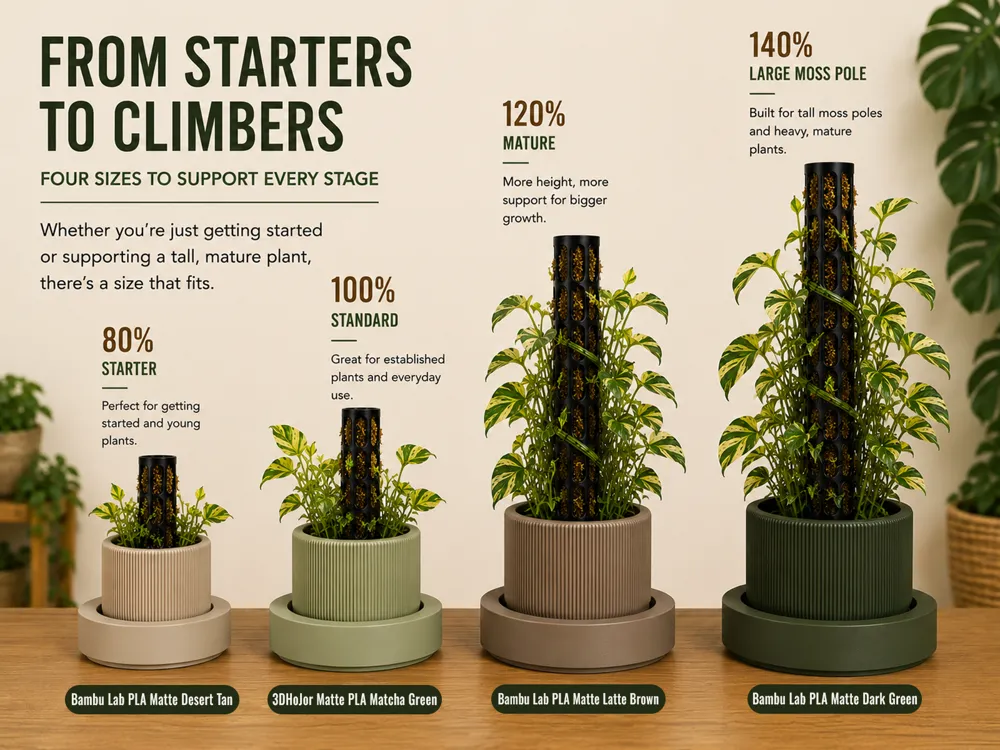
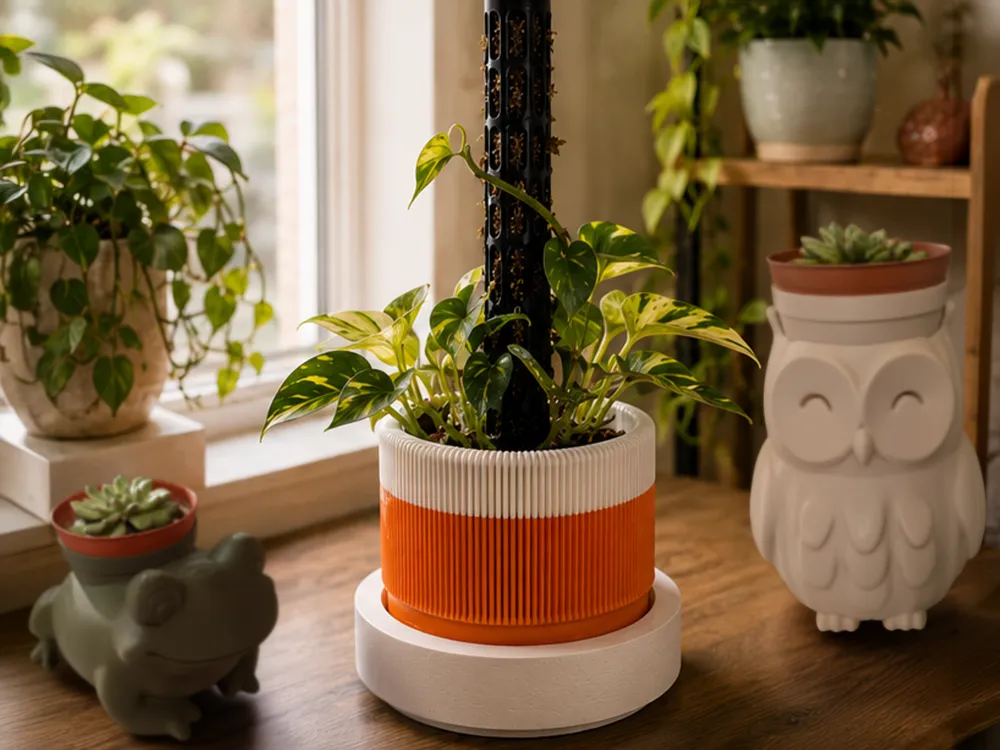
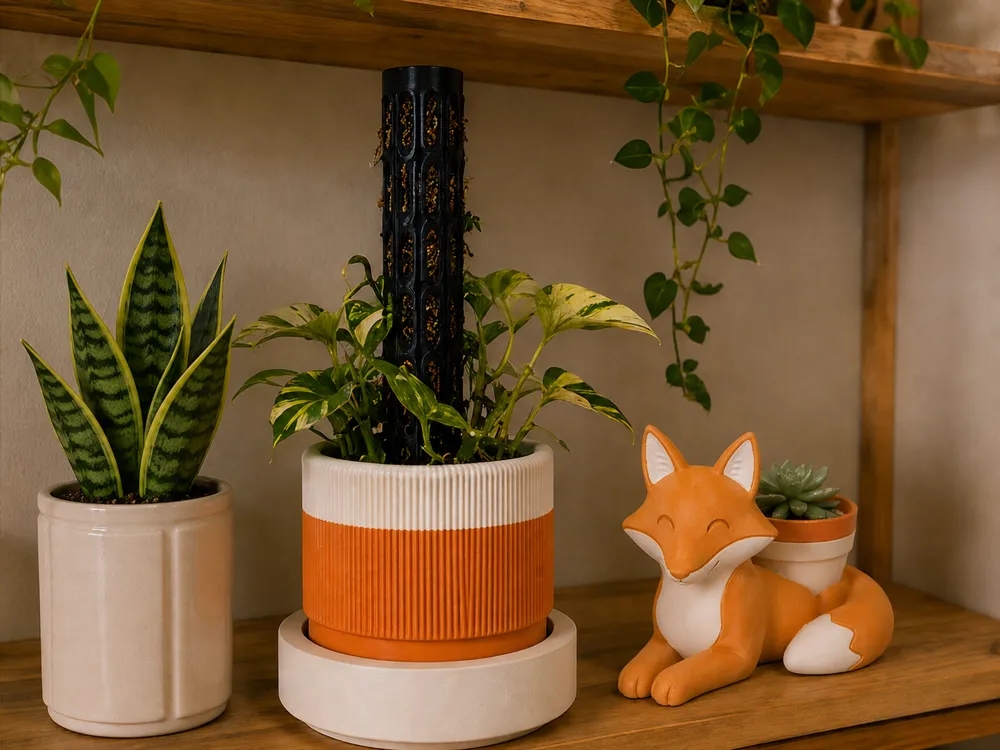
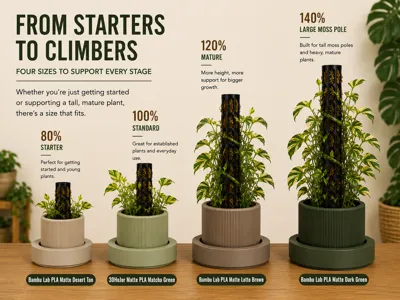
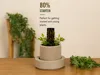
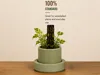
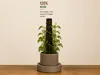
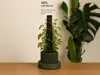
Built for climbing aroids and taller moss pole setups. Wide anti-tip base, drainage system, oversized drip tray, and four included sizes from starter plants to large moss pole builds.
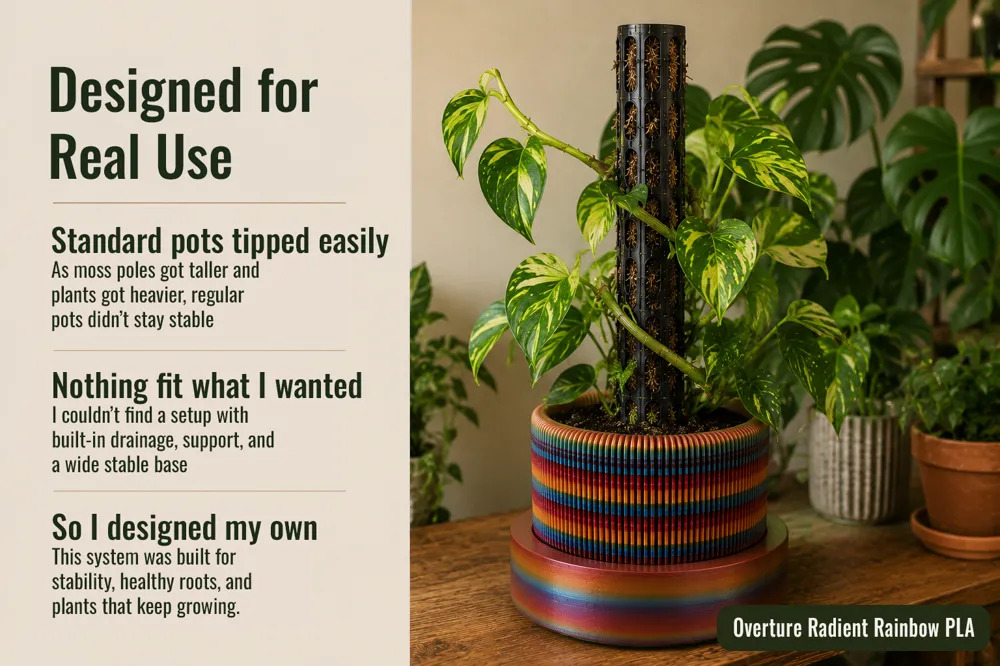
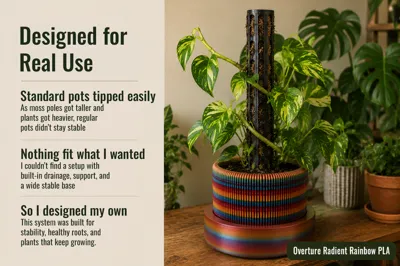
I designed this planter after running into the same problem over and over. As my climbing plants grew and I added more sections to the ModuGrow Modular Moss Pole System, standard pots started becoming unstable.
Taller plants and heavier poles shifted the center of gravity and everything wanted to lean or tip. I looked for a planter built specifically for climbing aroids and moss pole setups but could not find what I wanted.
So I designed my own.
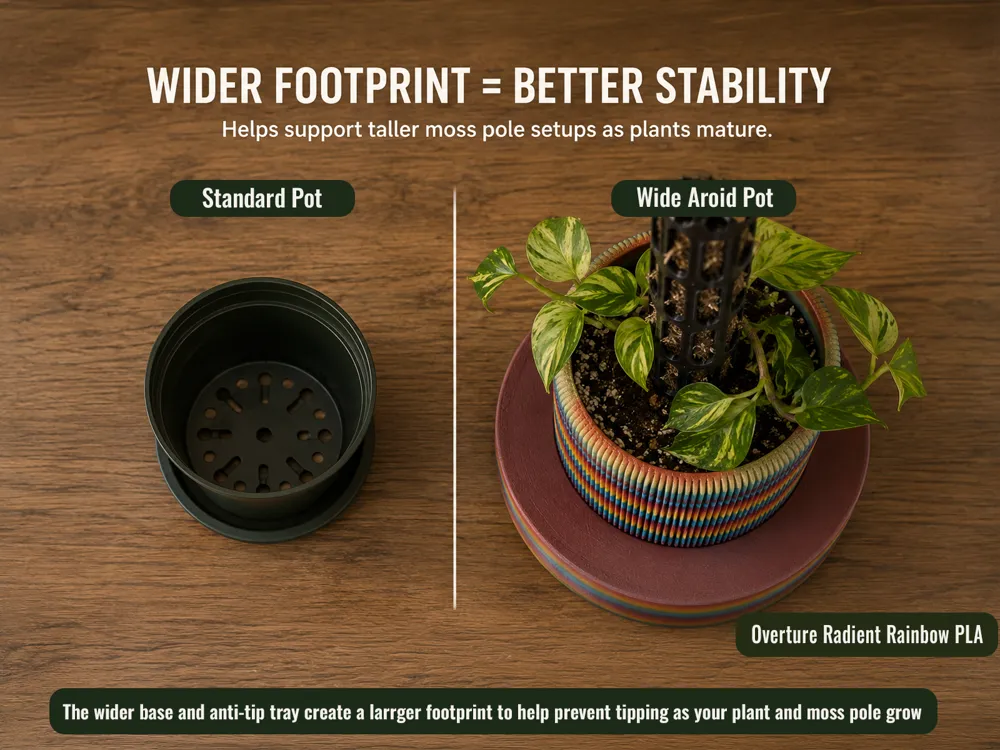
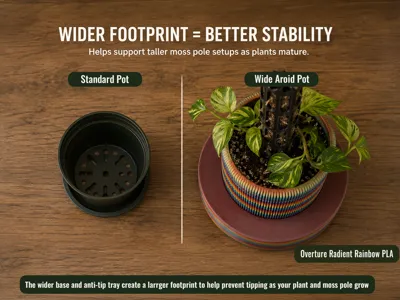
This planter uses an oversized anti-tip drip tray with a much wider footprint than a standard saucer. It uses more filament than a typical planter, but the added stability has been worth it for my own collection.
Designed for:
• Pothos
• Monstera
• Philodendron
• Syngonium
• Other climbing aroids
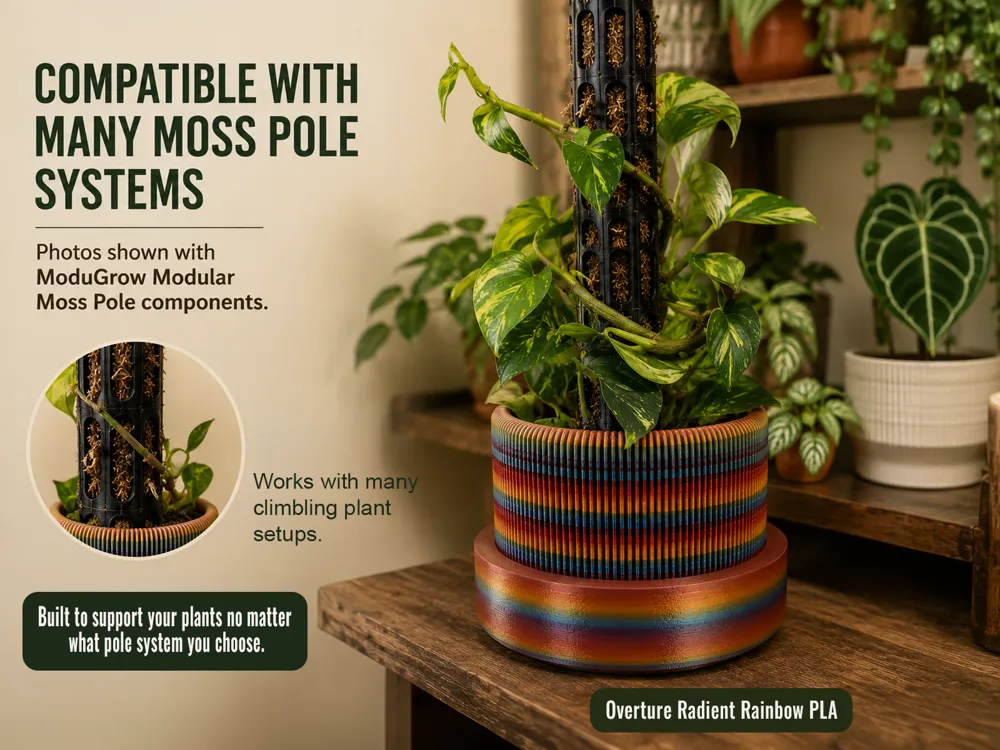
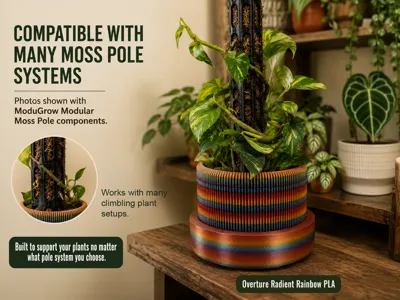
Photos shown with components from the ModuGrow Modular Moss Pole System, but this planter is intended to work with many moss pole systems.
Features
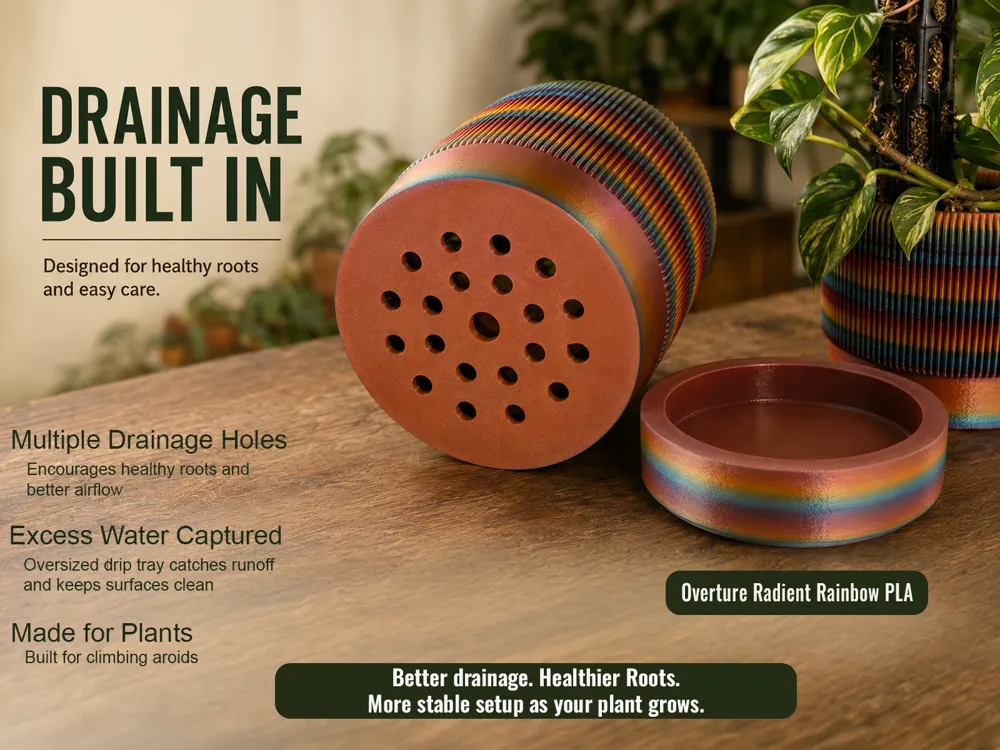
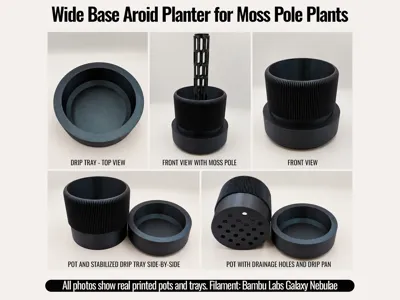
• Oversized anti-tip drip tray
• Wide footprint helps improve stability for taller moss pole setups
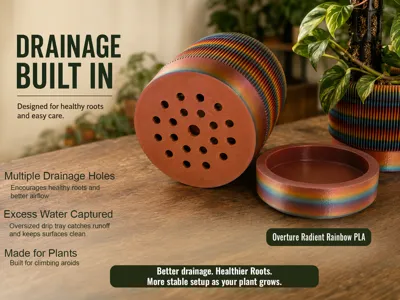
• Drainage holes for root health
• Drip tray catches runoff water
• Built for climbing plants and vertical growth
• Compatible with many moss pole systems
• Separate pot and tray design
• Designed around real indoor plant use
Included Print Profiles
PLA
Starter Aroid Pot → 80%
Standard Aroid Pot → 100%
Mature Aroid Pot → 120%
Large Moss Pole Aroid Pot → 140%
PETG
Starter Aroid Pot → 80%
Standard Aroid Pot → 100%
Mature Aroid Pot → 120%
Large Moss Pole Aroid Pot → 140%
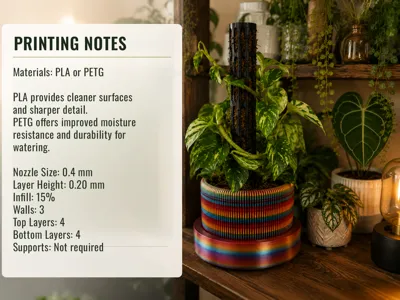
Print Notes
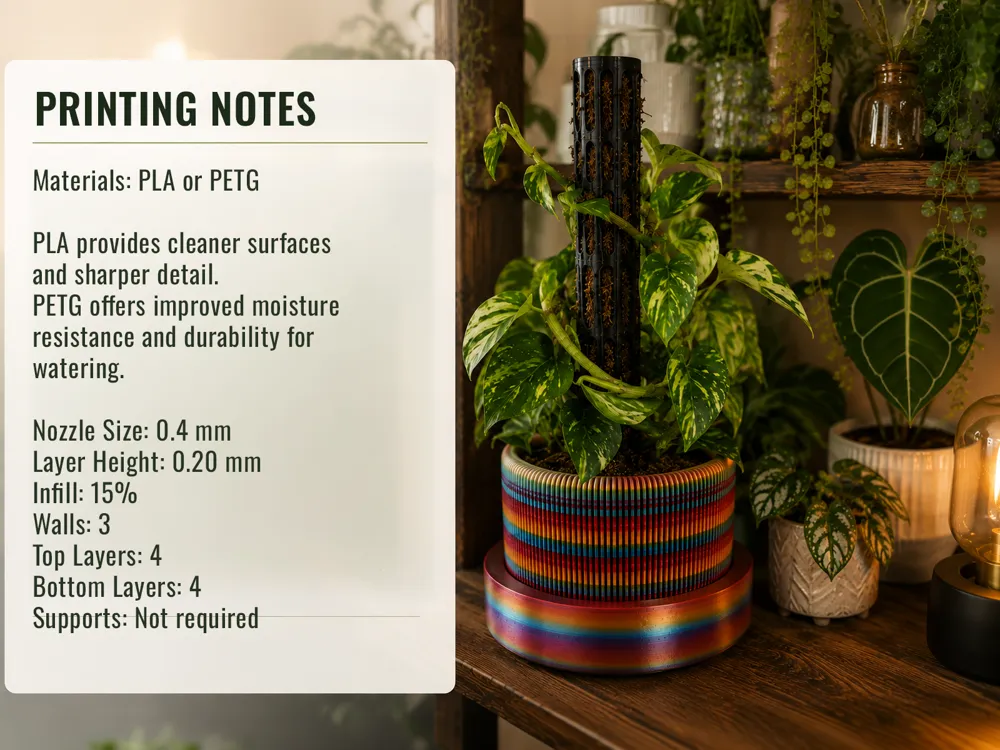
• Built around a 0.4 mm nozzle
• Compatible with most Bambu printers when build volume allows
• Large Moss Pole version may exceed smaller build areas
• PETG recommended for moisture exposure and long-term plant use
• PLA profiles included for decorative use and lighter-duty setups
• Users can adapt profiles to their printer and build volume
I have not creating separate printer profiles for every Bambu printer.
Why The Larger Tray?
This planter intentionally uses more material than a standard pot. The goal was stability.
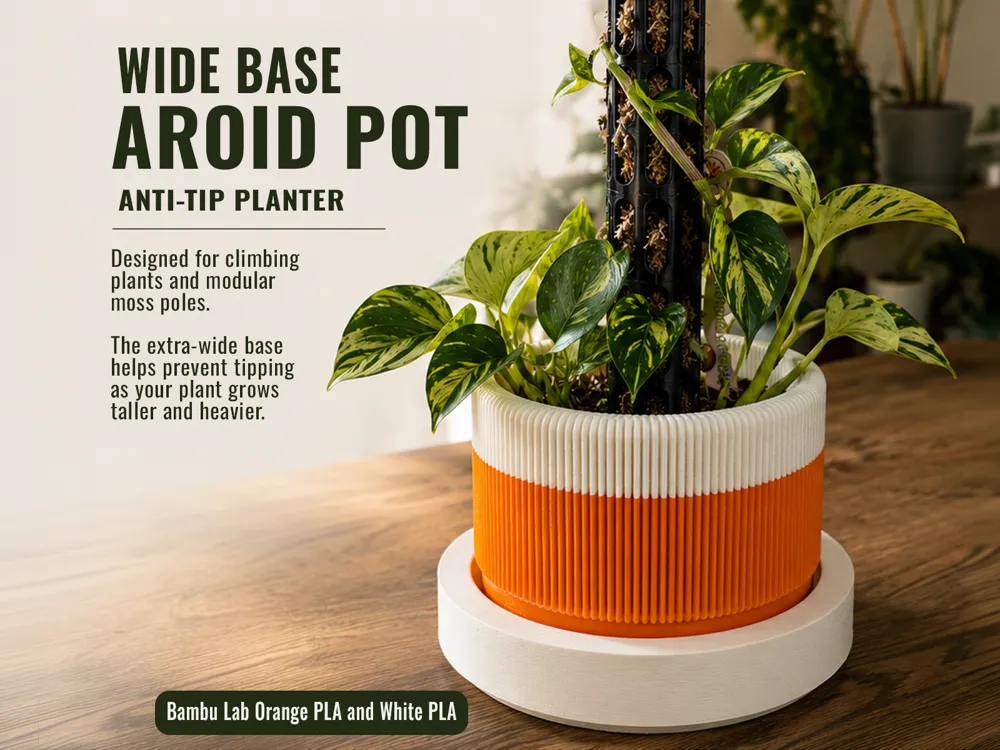
The wider base increases the footprint and helps support taller climbing plants as they mature and moss poles continue growing upward.
If you keep extending moss poles and standard pots start feeling top heavy, this is exactly the problem this planter was designed to solve.
Compatible Moss Pole Systems
Photos currently show the planter paired with the:
ModuGrow Modular Moss Pole System
This planter is not exclusive to ModuGrow and should work with many moss pole systems depending on dimensions and setup.
Suitable Plants
• Pothos
• Monstera
• Philodendron
• Syngonium
• Other climbing aroids
Filament Note
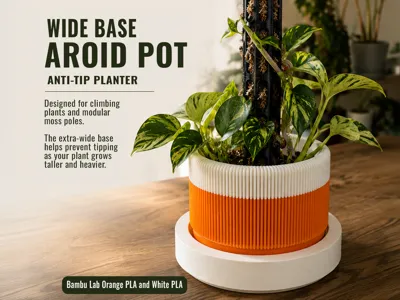
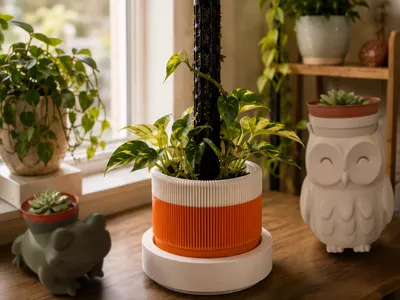
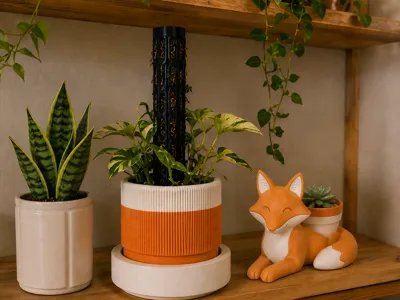
Some of the larger versions use more than one spool of filament for the pot and drip tray combined. When prototyping, I often finish partial rolls before loading a new one. The orange and white example shown in the photos started as orange filament. After the roll ran out, I loaded white into the AMS and continued the print.
The two-color appearance was not intentional, and the model is not designed as a multicolor print, but the final result ended up looking pretty nice so I kept it. An AMS is not required.
The planter prints normally as a single-color model.
License

You shall not share, sub-license, sell, rent, host, transfer, or distribute in any way the digital or 3D printed versions of this object, nor any other derivative work of this object in its digital or physical format (including - but not limited to - remixes of this object, and hosting on other digital platforms). The objects may not be used without permission in any way whatsoever in which you charge money, or collect fees.


Comment & Rating (1)