
The Unbeatable Tolerance Syringe
Print Profile(4)

Description
Membership
Get a licence to modify and even sell the model !

Hello to all my printing friends! I'm back, still recovering a bit, with some news, at least as much as my health allows. For those wondering, I've been very ill and had to undergo therapies and major surgeries that have left me quite weak, and not just physically. That's life. What's more, and this is the saddest part, I had to sell (or rather, give away) all my Bambulab printers and their accessories, practically in perfect condition, to pay for therapies and my recovery. I've now managed to find a small A1 mini (second-hand) which at least allows me to rejoin the community! If you like my work (or even if it's terrible), a little boost from you would be a huge help in getting my lost equipment back :(
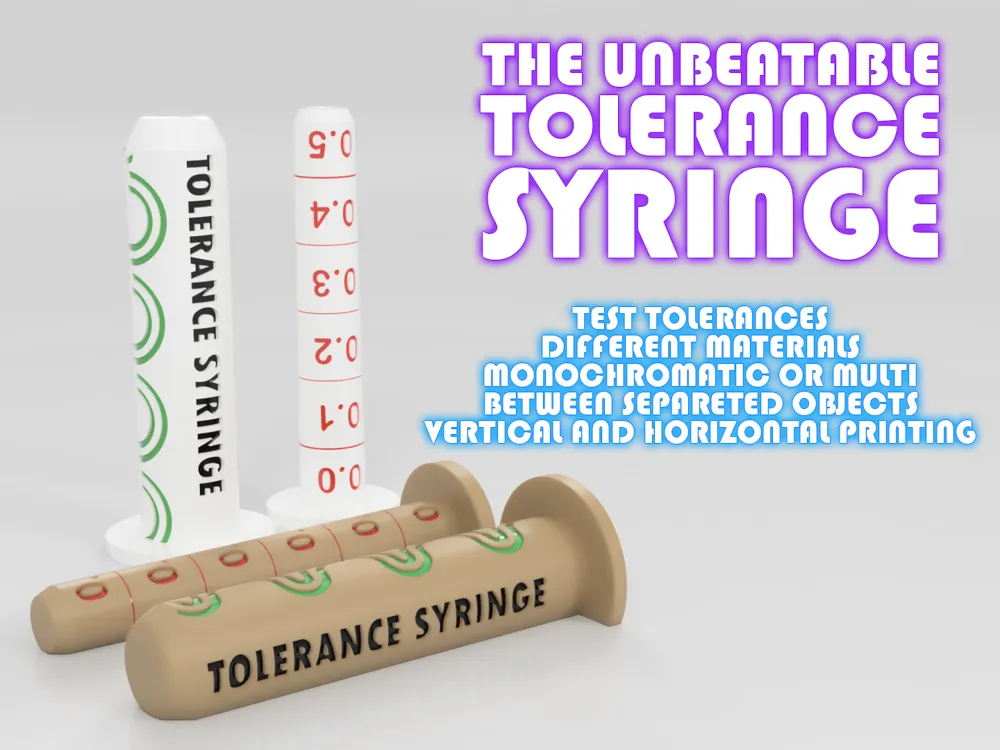
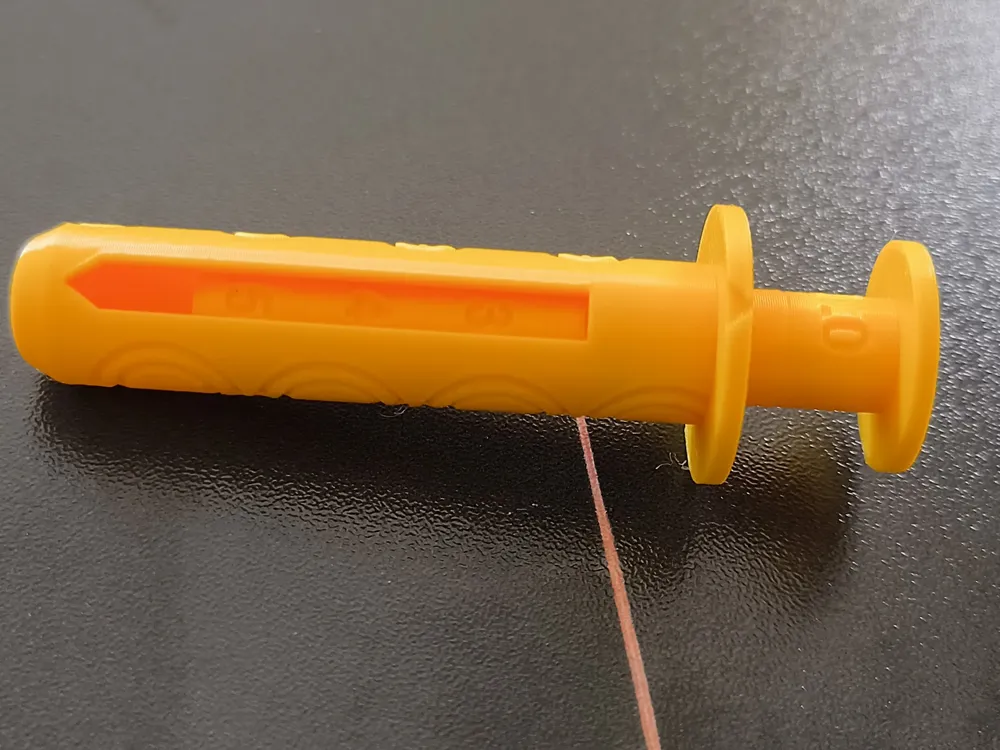
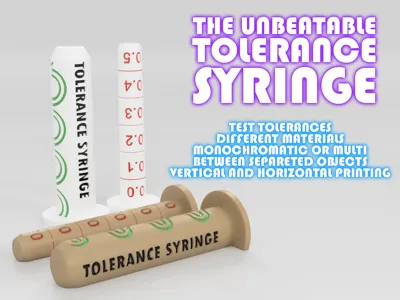
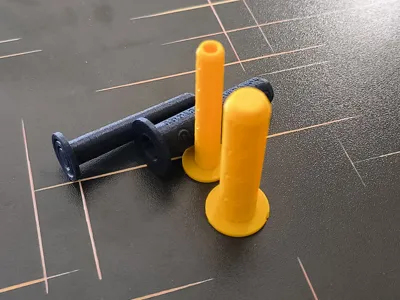
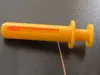
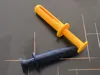
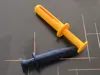
And now we come to this "syringe" (just to stay on topic, hehe) that allows anyone to test the necessary tolerance for the mechanical parts created with their printers. It's worth noting right away that this tool is perfectly usable with any printer and any material you want to use. Most importantly, it allows you to easily compare the differences between identical filaments, different colors or materials, or even those printed with two different printers or nozzles. Of course, it also allows you to adjust flow rates and temperatures, as well as print speeds.
Operation is quite simple and intuitive.
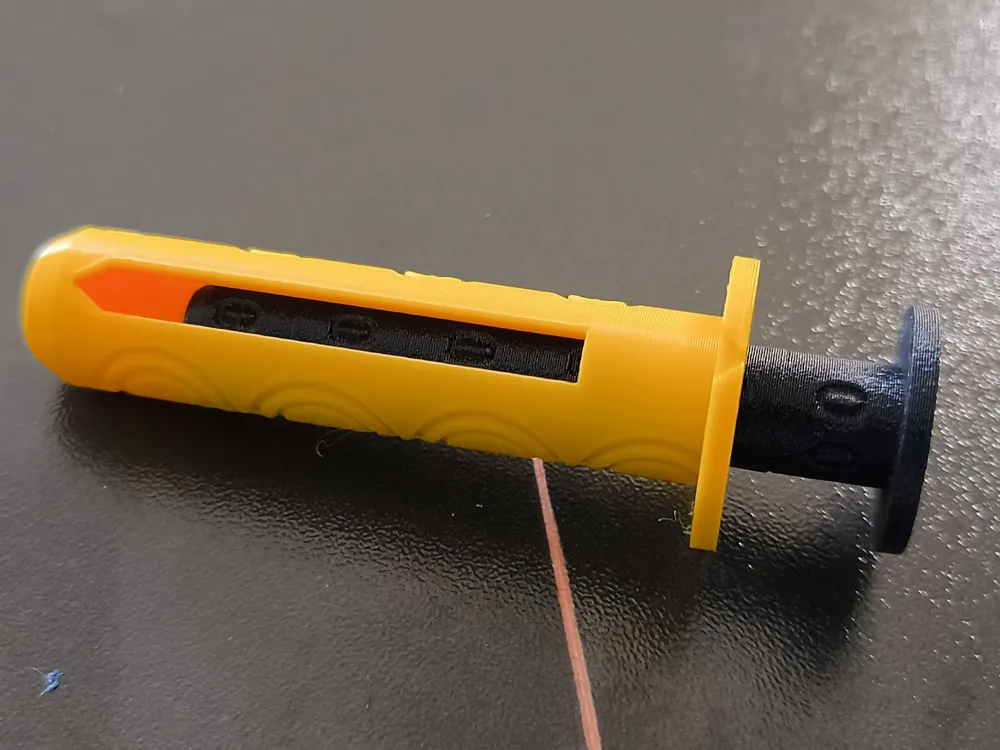
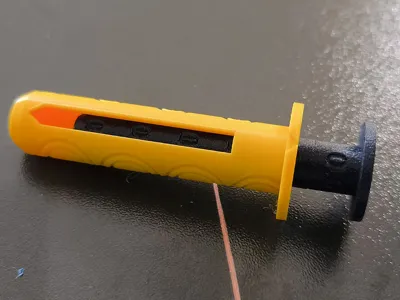
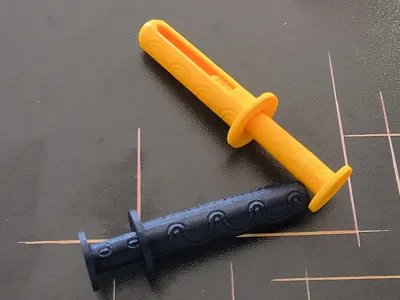
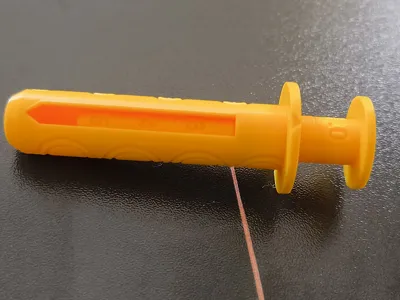
Once the cylinder and graduated piston have been printed, simply insert the latter into the housing and read the number appearing at the level of the outermost crown (indicated by a small arrow).
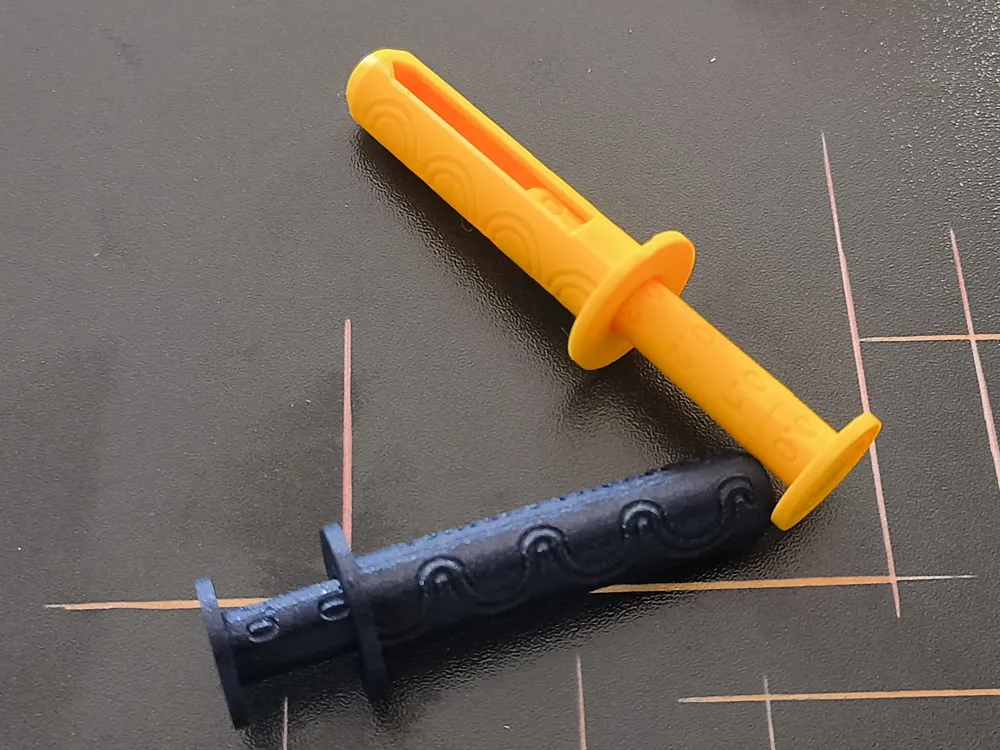
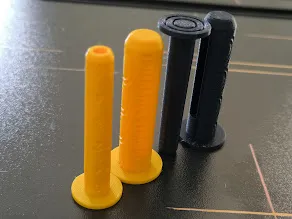
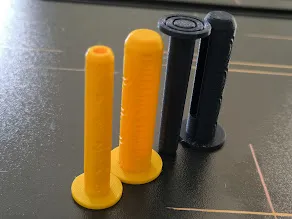
The piston is slightly conical in shape and divided into five sections that gradually decrease in size, allowing a tolerance of 0mm to 0.5mm between the walls. For a good and correct reading, the piston must never be forced and must be free to rotate without any effort; otherwise, you would obtain an incorrect result. If, for example, you obtain a reading three-quarters of the way between 0.2 and 0.3 towards the latter, it would mean that the tolerance should be approximately 0.275mm (0.25-0.30). Also, don't forget that for a successful test, the filaments you use must be dried before printing, as some materials, which absorb moisture, will give you incorrect readings. You can download and print in multicolor or monochrome (since the printer's accuracy may vary when using multiple materials), and above all, you can (and I recommend it) print both vertical and horizontal versions, as you'll likely find some indicative differences between the two printing methods. These profiles are all available and easily customizable in the download menu on this page.
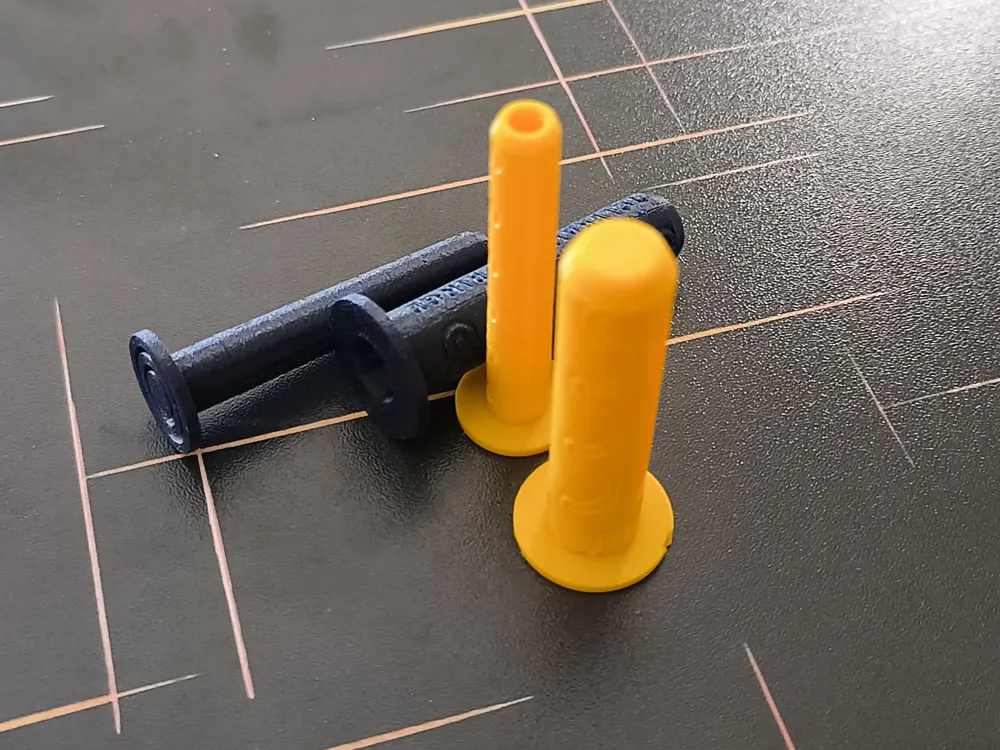
Horizontal syringes uses supports and they are engineered and designed to test what happen to tolerances once using this methods for overhangs and bridges. Find the best way to use, remove and sand the supports from the object to improve tolerance functionalities.
Don't forget to test your printers with the other models I've created previously, which are always up-to-date and functional (e.g., The Great Calibrator revolution).
Hoping for your small but sincere and appreciated help, I leave you with my usual cheerful…
HAPPY PRINTING!
License

You shall not share, sub-license, sell, rent, host, transfer, or distribute in any way the digital or 3D printed versions of this object, nor any other derivative work of this object in its digital or physical format (including - but not limited to - remixes of this object, and hosting on other digital platforms). The objects may not be used without permission in any way whatsoever in which you charge money, or collect fees.


Comment & Rating (0)