
AMS Filament Guide
Print Profile(1)
Bill of Materials




Description
English
Bambu AMS Feeder Funnel Cap | Angled PTFE Wear Fix
Compact PTFE Solution for Worn AMS Feeder Funnels
After many development iterations and extensive real-world testing, this design became the final version of my AMS feeder funnel repair solution
I originally started developing these solutions entirely from scratch to solve problems I personally experienced with worn feeder funnels in my own AMS units
Earlier prototype versions already worked reasonably well, but some still had weaknesses in certain situations. During development, I continuously refined the design step by step until the remaining issues were eliminated
The main goals were always:
- reliable filament feeding with full and nearly empty spools alike
- no spool jumping or unstable spool movement
- no AMS disassembly
- no feeder unit removal
- compact and clean design
- simple installation
- stable and secure PTFE tube mounting
- long-term reliability
The Actual Problem
Over time, the original AMS feeder funnel wears down from constant filament contact
Grooves form inside the plastic funnel, allowing filament to catch or bind during fast feeding and retract movements. During aggressive AMS movements, this can overload the helper motor and cause failed prints
The problem is that the funnel itself is not officially replaceable separately
That means:
- the complete feeder unit normally has to be replaced
- the AMS contains four feeder units
- replacement costs can add up quickly
- even though only a tiny plastic funnel is actually worn
This solution was designed specifically to avoid that
How This Solution Works
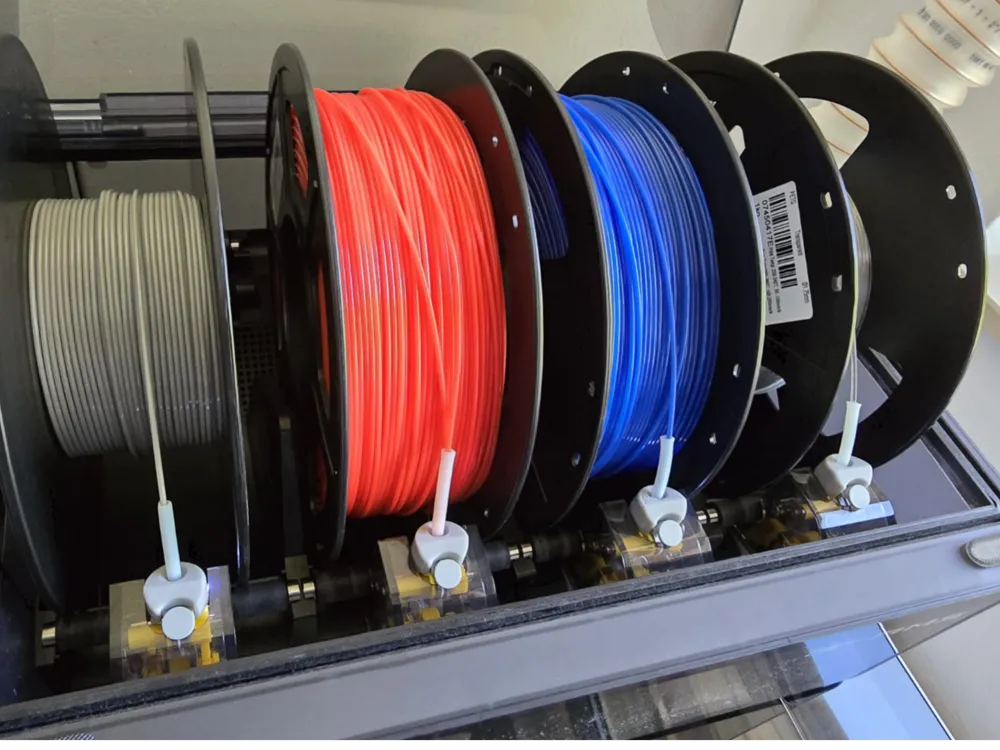
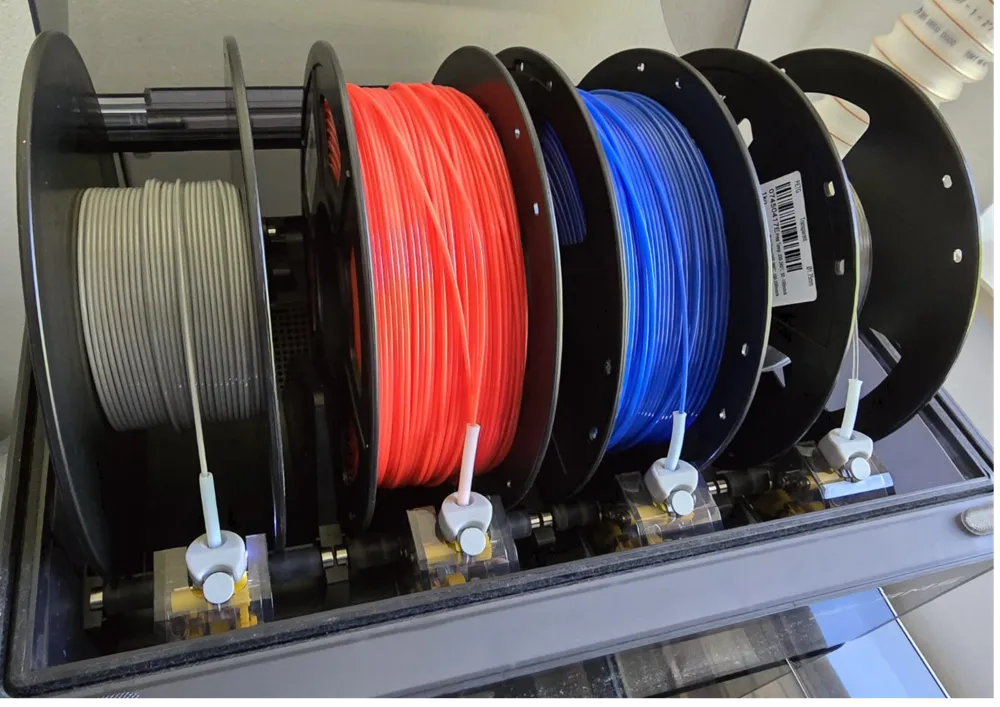
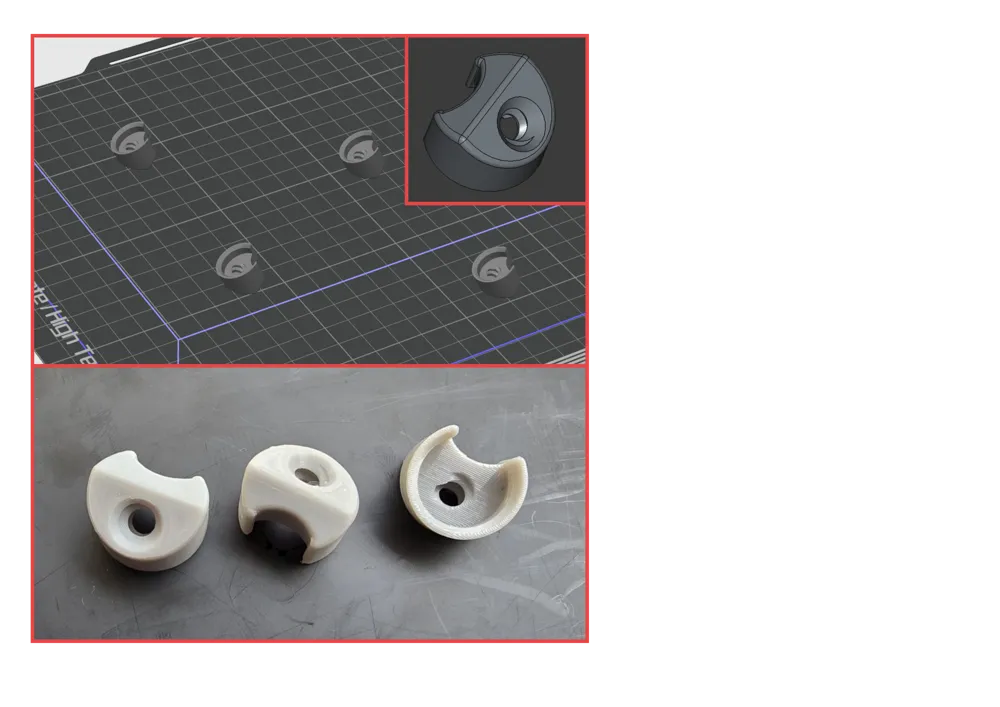
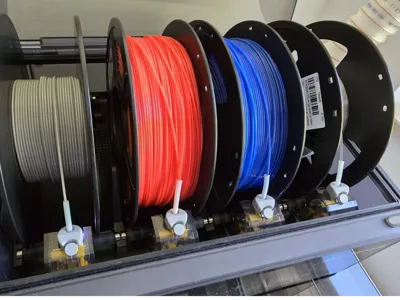
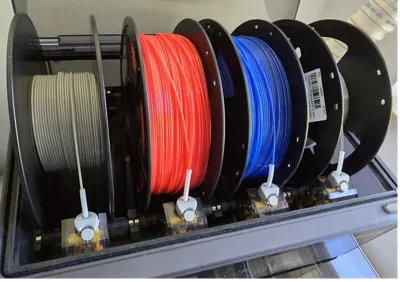
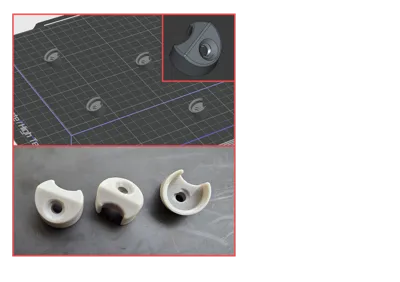
This repair cap presses directly onto the original feeder funnel
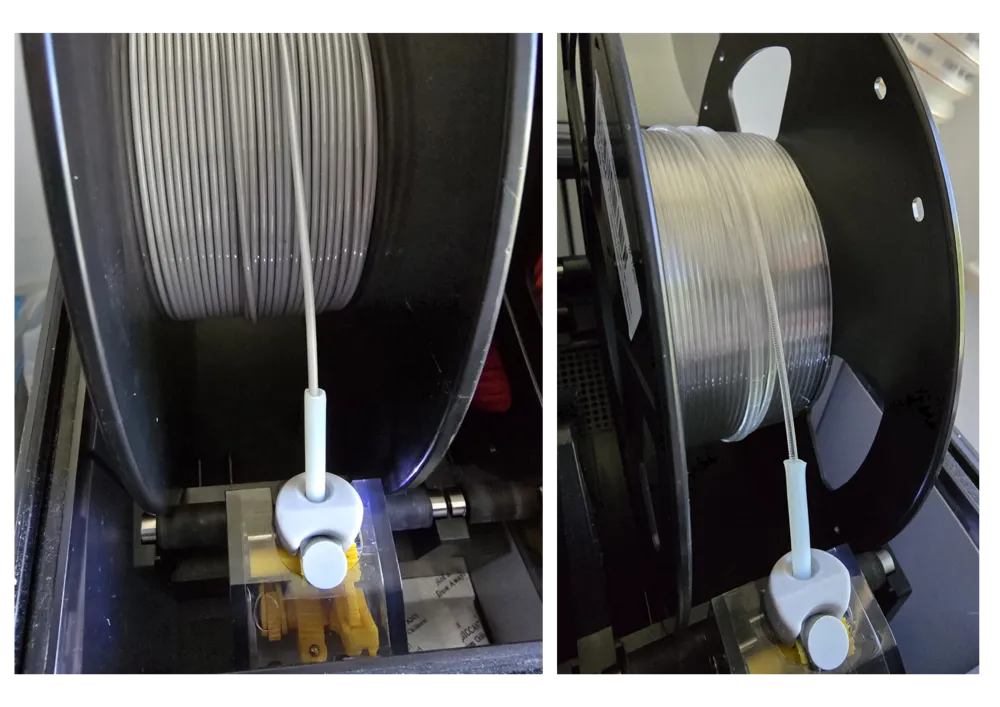
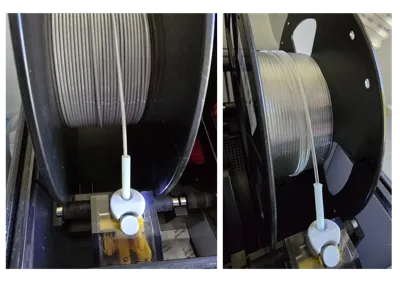
A short PTFE tube is then screwed into the integrated angled channel and guided down to the actual filament entry point
Instead of running across the worn plastic funnel, the filament now runs smoothly through the PTFE tube
This completely bypasses the damaged funnel area
The solution also works when the original funnel is already visibly worn or grooved
The original feeder funnel does not need to be replaced
Why The Angled PTFE Channel Matters
One of the most important improvements of this final version is the intentionally angled PTFE channel
Many simpler solutions only add a vertical PTFE guide. During my own testing and earlier prototype phases, this turned out to create problematic filament pull angles once spools became nearly empty
As filament rolls empty, the filament increasingly pulls toward the center of the spool. With vertical PTFE guides, this can create upward leverage and pulling forces on the spool itself
This may lead to:
- spool hopping
- spool lifting
- unstable filament movement
- increased feeding resistance
- pressure against the AMS lid
- or even the spool partially jumping out of position when the AMS is open
This final version solves those problems by using a PTFE channel intentionally angled toward the spool
The angled filament path creates a much more natural filament entry and exit angle while significantly reducing unwanted upward forces acting on the spool
After extensive long-term testing with:
- full spools
- partially used spools
- nearly empty spools
- and almost depleted rolls
this final version no longer showed spool jumping, lifting, or unstable spool behavior
Filament feeding remained smooth and stable throughout testing
Important Design Details
Several additional details were optimized during development:
- the feeder button remains fully accessible
- the beveled housing shape does not interfere with filament insertion
- the repair cap sits securely on the original funnel
- the PTFE tube is threaded into place instead of loosely inserted
- the shorter threaded section improves installation handling
- the compact shape keeps the setup clean and unobtrusive
Installation
The PTFE opening was intentionally designed with a very tight tolerance
The PTFE tube is not meant to be pushed straight in loosely
Instead:
- gently press the PTFE tube against the opening
- slowly twist the tube into place
The tube is essentially screwed into the channel, creating a very secure fit without additional fasteners
Because the threaded section is shorter than in earlier versions, the PTFE tube no longer needs to be bent during installation
Important PTFE Depth Notice
The PTFE tube should extend approximately 2–3 mm below the printed part
If the tube is screwed in too deeply, the lower end may compress slightly inside the funnel area
This can:
- increase friction
- reduce feeding quality
- or make filament insertion more difficult
If filament becomes difficult to insert, the PTFE tube was most likely screwed in slightly too far
Recommended PTFE Tube Length
After additional testing, a PTFE tube length of approximately 3–4 cm turned out to work very well
This length keeps filament movement stable while reducing mechanical stress on the spool
Whether much shorter or longer tube sections work equally reliably may depend on the individual setup
If the tube turns out to be too long, it can simply be shortened and tested again
Currently recommended:
- approximately 3–4 cm PTFE tubing
Advantages of This Solution
- No AMS disassembly required
- No feeder unit removal required
- No tools required
- Works even with already worn funnels
- Stable filament feeding
- No spool jumping with nearly empty spools
- Very compact design
- Extremely secure PTFE tube fit
- Fast installation
- Very inexpensive
- Wear parts are easily replaceable
Required Parts
- Printed model
- PTFE tubing (recommended: 4 mm outer diameter)
- Scissors, side cutters, or hobby knife
Recommended PTFE dimensions:
- 4 mm outer diameter
- 2.5 mm inner diameter
For example:
- Bambu Lab PTFE Tubes
- Product ID: FAT001
Filament Recommendations / BOM Notes
The filaments listed in the BOM are simply recommendations for achieving especially good print quality, attractive surfaces, and matching colors
The model will also work perfectly with many other filaments
Please note:
Some recommended filaments are available both as regular spool versions and as “Refill” versions
Refill filament does not include a reusable spool and requires a compatible refill spool system
If you do not already own compatible empty spools, you should avoid ordering refill versions
Compatibility
Originally designed for the first-generation Bambu Lab AMS
However, the general concept may also be useful for other AMS systems or filament feeding setups
Disclaimer
This is a community-made solution and not an official repair from Bambu Lab
Installation and use are entirely at your own responsibility
License

You shall not share, sub-license, sell, rent, host, transfer, or distribute in any way the digital or 3D printed versions of this object, nor any other derivative work of this object in its digital or physical format (including - but not limited to - remixes of this object, and hosting on other digital platforms). The objects may not be used without permission in any way whatsoever in which you charge money, or collect fees.


Comment & Rating (0)