
Print Profile(1)
Description
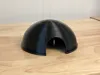
PNW Amphibian Shelter — Dome Hide for Frogs & Toads
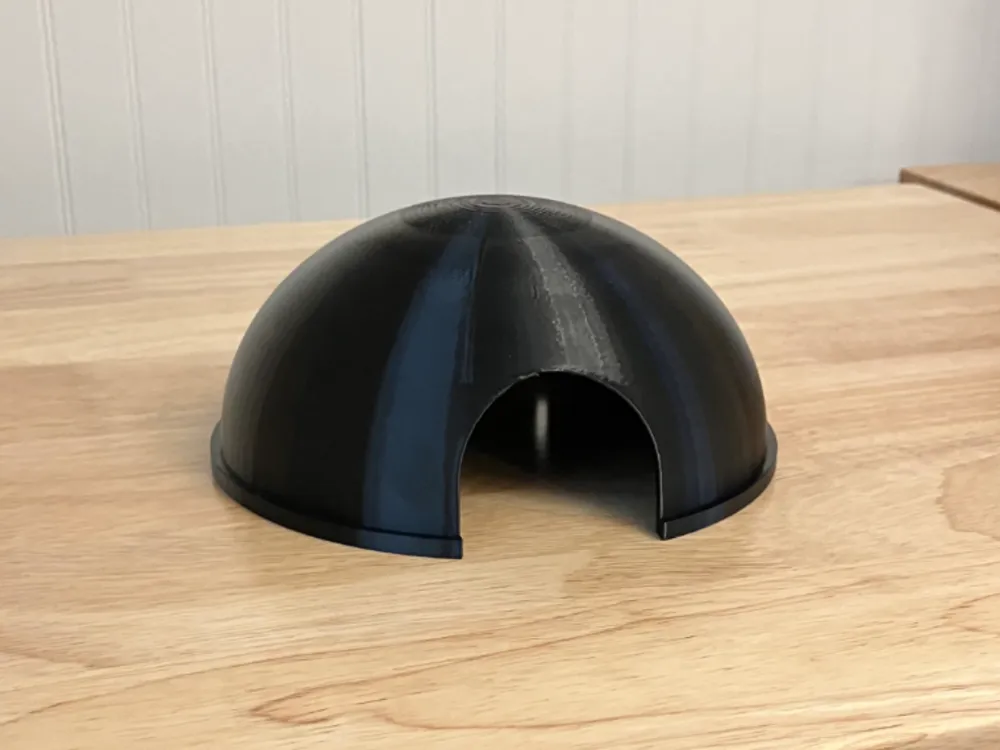
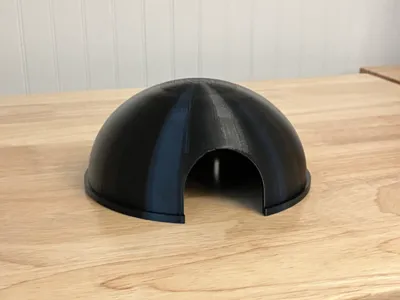
A 3D-printable ground-level shelter designed for small amphibians in Pacific Northwest backyards. The primary target species are the Pacific Treefrog (Pseudacris regilla) and Western Toad (Anaxyrus boreas), but any small frog, toad, or garden critter looking for a shady spot will appreciate it.
Design Features
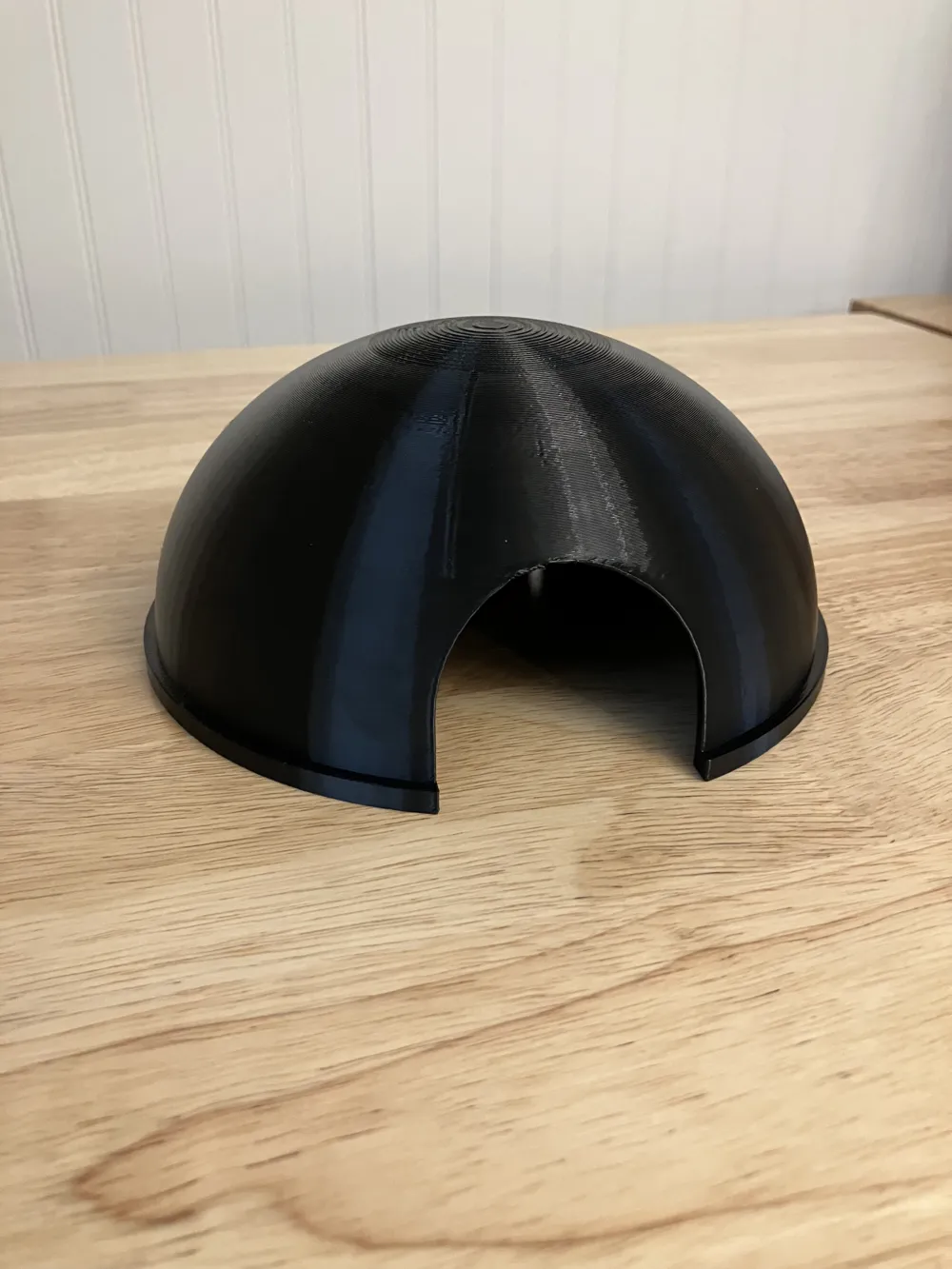
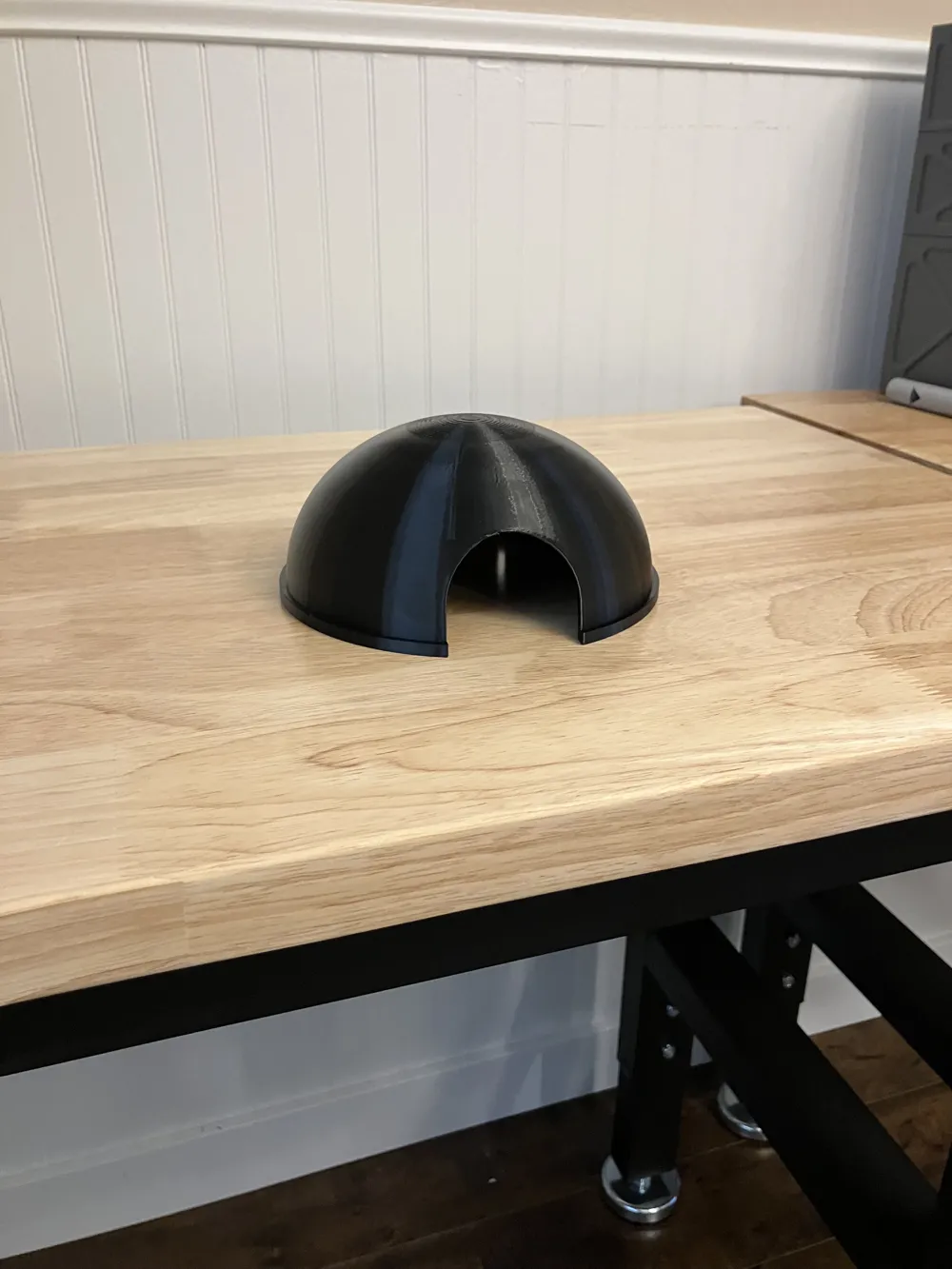
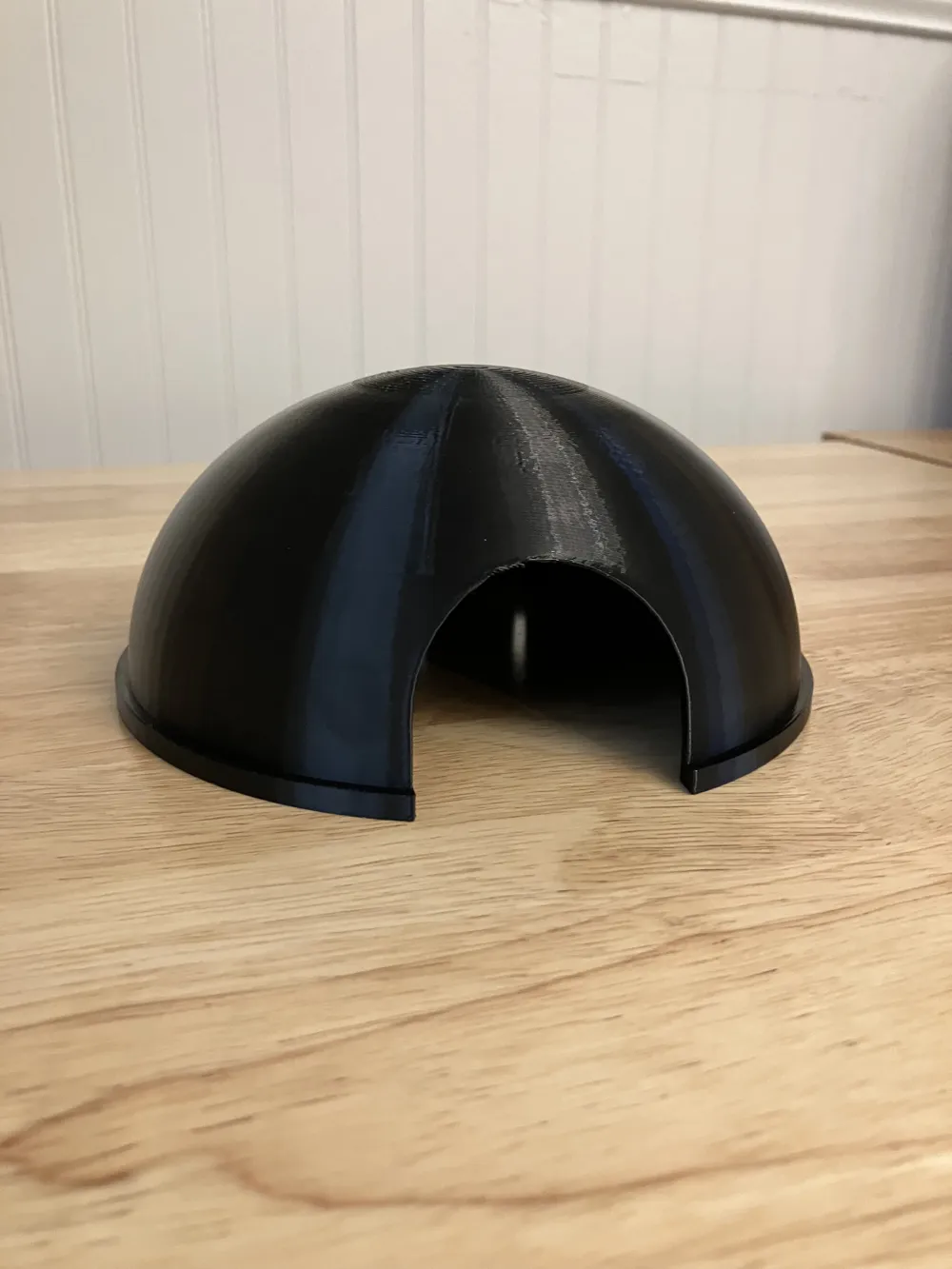
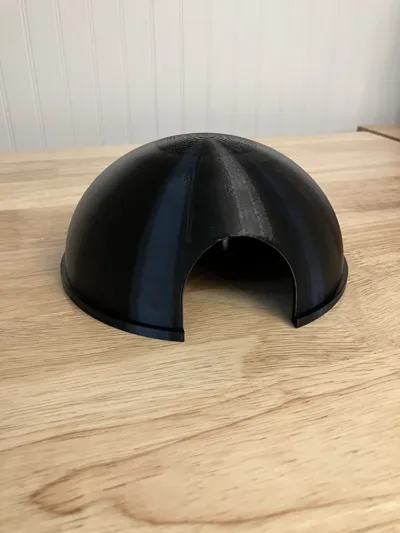
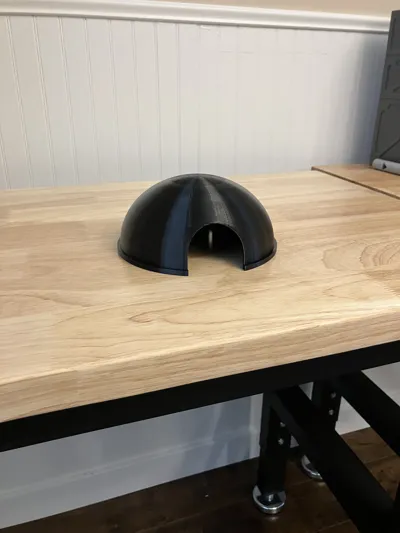
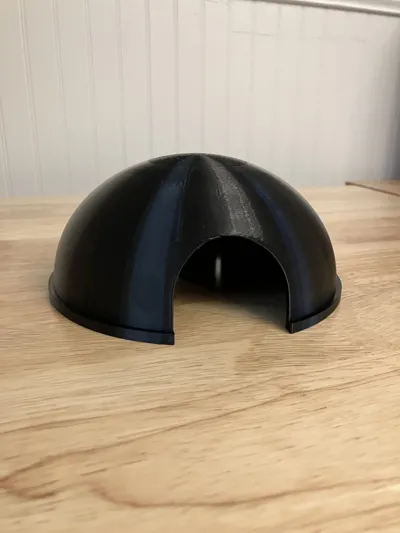
- Oblate dome — Low, wide profile mimics the natural crevices and rock overhangs that Pacific Treefrogs shelter under during dry periods
- Arch entrance — 52mm wide × 38mm tall, sized for adult treefrogs and juvenile toads
- Open bottom — No floor. Sits directly on bare soil so occupants stay in contact with ground moisture, the single most important microhabitat factor for amphibians
- Ventilation slots — Three small slots on the rear wall allow airflow without creating drafts, reducing heat buildup on warm days
- Stability lip — A 3mm lip ring around the base keeps the shelter seated in soil and prevents it from being nudged around by wind or curious pets
Honest Notes
This is a garden habitat accessory, not a fortress. The plastic shell doesn't retain moisture or provide thermal mass the way a ceramic, concrete, or stone shelter would. It creates shade and wind cover, and the open bottom lets ground moisture do the heavy lifting. For best results, pair it with natural materials — nestle it near a log, partially bury the lip in loose soil, and keep it in a shaded bed near a water source. Think of it as a roof over a patch of cool damp earth, not a standalone habitat.
The entrance will not exclude predators like garter snakes. In the PNW, common garter snakes (Thamnophis sirtalis) are a natural predator of treefrogs, and no reasonably-sized entrance hole will keep them out. This is a shelter, not a predator-proof enclosure.
Print Settings
- Material: PETG recommended for outdoor UV and moisture resistance. ASA also works well. PLA will degrade outdoors within a season or two.
- Layer height: 0.2mm
- Infill: 15–20% is plenty — this is a shell, not a structural part
- Supports: None required — dome prints cleanly without support
- Orientation: Print dome-side up as designed
- Nozzle: Standard 0.4mm
- Estimated print time: ~4–5 hours depending on speed settings
- Fits: 256mm+ build plates (prints within 166mm × 166mm footprint)
Optional: Fuzzy Skin for Grip Texture
Pacific Treefrogs have adhesive toe pads and prefer textured surfaces they can grip. Enable fuzzy skin in your slicer on the inner dome surfaces to give them something to hold onto. In Bambu Studio: right-click the model → Fuzzy Skin → set point distance to 0.8mm and thickness to 0.3mm.
Placement Tips
- Location: Shaded garden bed, under shrubs, or along a fence line. Avoid full sun — the plastic will heat up.
- Near water: Within 10 meters of any water feature (pond, birdbath, rain garden, even a drip irrigation line). Pacific Treefrogs are terrestrial outside of breeding season but stay close to moisture.
- On bare soil: Not on concrete, pavers, or decking. The open bottom needs direct soil contact to maintain the cool, moist microclimate inside.
- Bury the lip: Push the stability lip 1–2cm into loose soil so the shelter feels like a natural ground feature rather than something sitting on top.
- Entrance orientation: Face the arch away from prevailing wind (typically face east or south in the PNW).
- Add natural cover nearby: A few rocks, some leaf litter, or a small log next to the shelter gives amphibians a more complex habitat to move through.
Species Notes
Pacific Treefrog — Despite the name, these tiny frogs (3–5cm) spend most of their time on the ground, not in trees. They're the most common frog in Washington and Oregon and the ones you hear chorusing near any pond in spring. Outside of breeding season they shelter in crevices, under bark, in rodent burrows, and under rocks. They need moist but not wet hiding spots.
Western Toad — A true toad that digs shallow burrows in loose soil. Historically common across the Puget Sound lowlands but populations have declined significantly. If you have one in your yard, consider yourself lucky. They'll use any ground-level cover they can find.
License
Creative Commons — Attribution — Non-Commercial
License

You shall not share, sub-license, sell, rent, host, transfer, or distribute in any way the digital or 3D printed versions of this object, nor any other derivative work of this object in its digital or physical format (including - but not limited to - remixes of this object, and hosting on other digital platforms). The objects may not be used without permission in any way whatsoever in which you charge money, or collect fees.


Comment & Rating (0)