
Print Profile(1)
Bill of Materials














Description
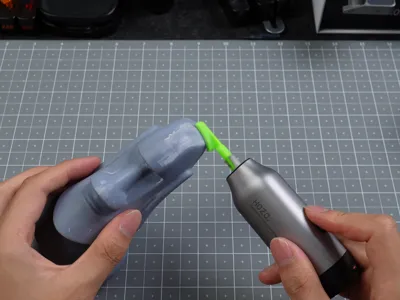
All sanding tools share a key limitation: they only work effectively when the sanding surface maintains full, stable contact with the workpiece.

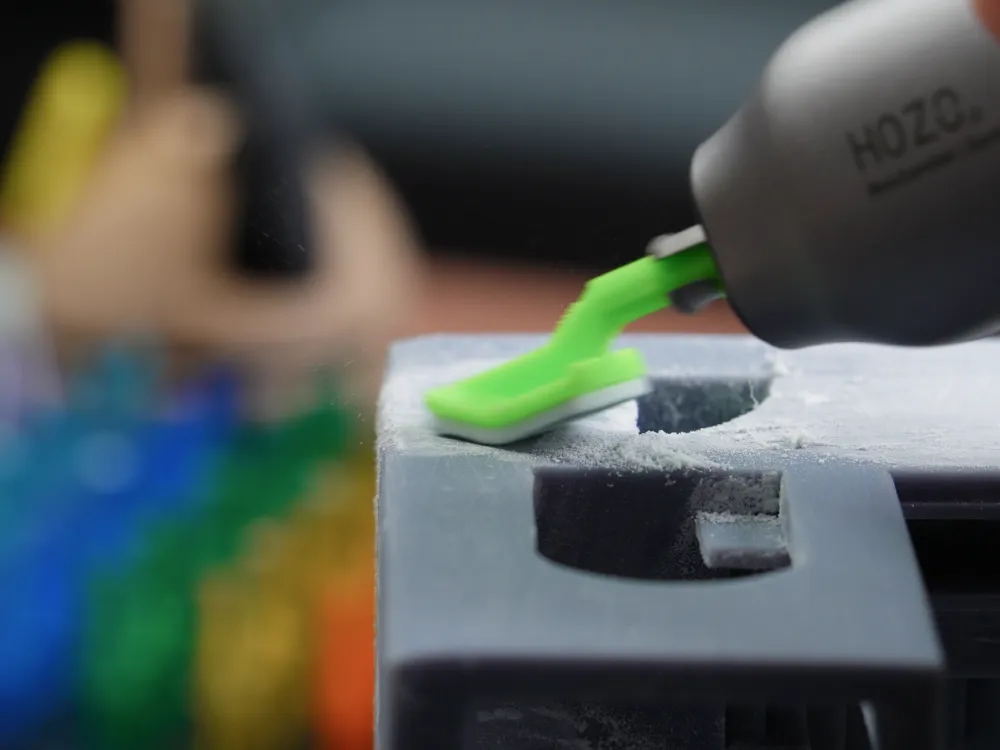
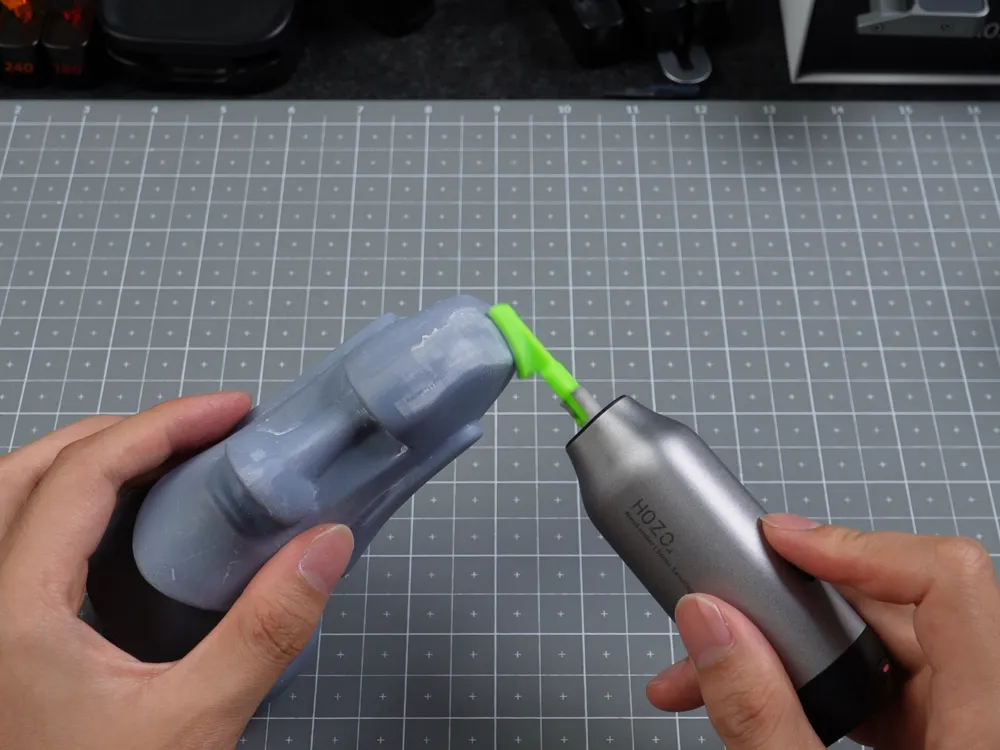
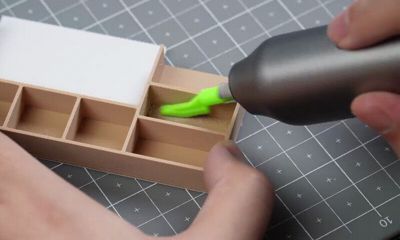

In real use, especially with recessed or larger parts, another limitation appears — not access, but body interference. Even when the sanding head reaches the area, the tool body often prevents proper alignment, forcing work to stay near edges instead of the full surface.

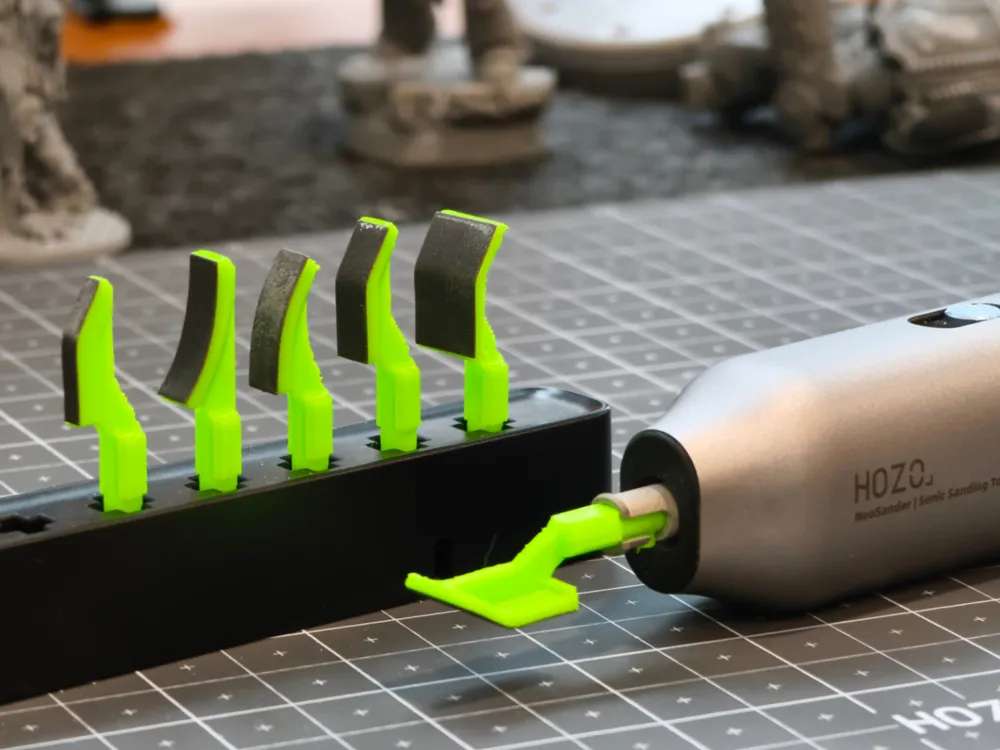
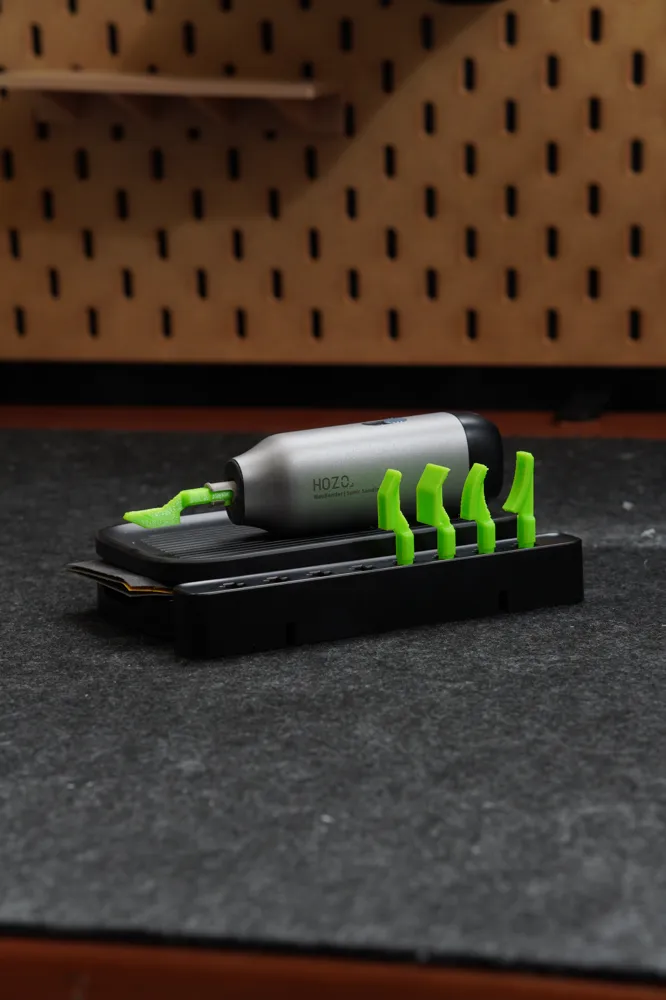
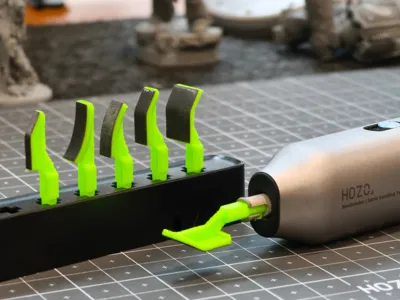
So we’re expanding the NeoSander open-source sanding head set with a new variant designed to address this.
⚠️ Please Read Before Printing
1️⃣ Usage Scope
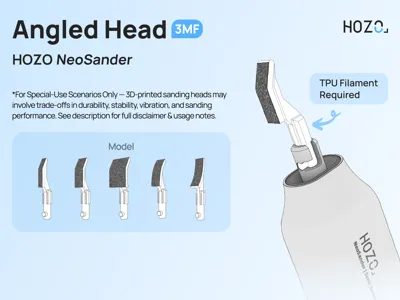
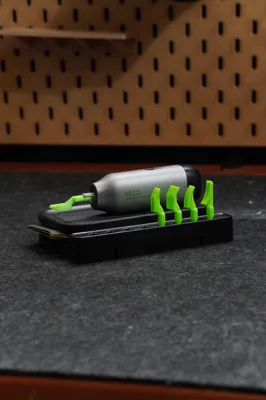
These designs are intended to complement the original 8 NeoSander sanding head shapes, mainly for edge cases and more experimental sanding situations—not to replace the original heads for everyday use, as non-original designs may involve trade-offs in durability and sanding performance.
For normal operation, we recommend always using properly fitted sanding heads. Running NeoSander without a sanding head—or with poorly fitted custom designs—may affect reciprocating balance and can sometimes result in increased noise or additional wear on the tool.
We fully encourage experimentation and customization, but also recommend keeping custom designs within reasonable limits to ensure stable and reliable operation.
2️⃣ Printing Notes
TPU Printing (FDM):
- Must use medium-hard TPU (≈68D / 100A), such as Bambu TPU for AMS
- Do NOT use TPU 90A or softer materials (insufficient support strength)
- Avoid excessive print speed — TPU requires stable, controlled printing for strength and reliability
- Pay attention to model orientation to avoid weak Z-axis strength issues
- Recommended weight: 0.9 – 1.1g. Adjust via infill and wall thickness if needed
Resin Printing:
- Use flexible / tough resin only
- Do NOT use rigid resin (risk of brittle failure during use)
3️⃣ Fit & Assembly Warning
Do not force the sanding head into NeoSander if it feels too tight. Slight oversizing can happen due to printer tolerances, residual support material, or material shrinkage—this is normal for FDM/resin prints. Forcing installation may cause the part to get stuck or break, and in some cases the broken shaft may remain inside the tool.
If the fit is too tight, please lightly sand or trim the printed part before assembly.

4️⃣ Additional Usage Note for TPU Heads
While the TPU material can absorb part of the impact through its flexibility, the reciprocating motion is still partially transferred directly to the workpiece during sanding. As a result, vibration feedback and noise may feel more noticeable compared to other sanding head designs.
For better stability and control, we recommend securing the workpiece with a vise or clamp instead of holding it directly by hand during use.
When replacing the sanding head, hold and rotate the connection shaft instead of twisting the TPU section directly, to prevent breakage and broken shaft fragments becoming stuck inside the tool. During use, avoid excessive downward force to reduce the risk of damage or failure.
💡 A Different Way to Approach Contact
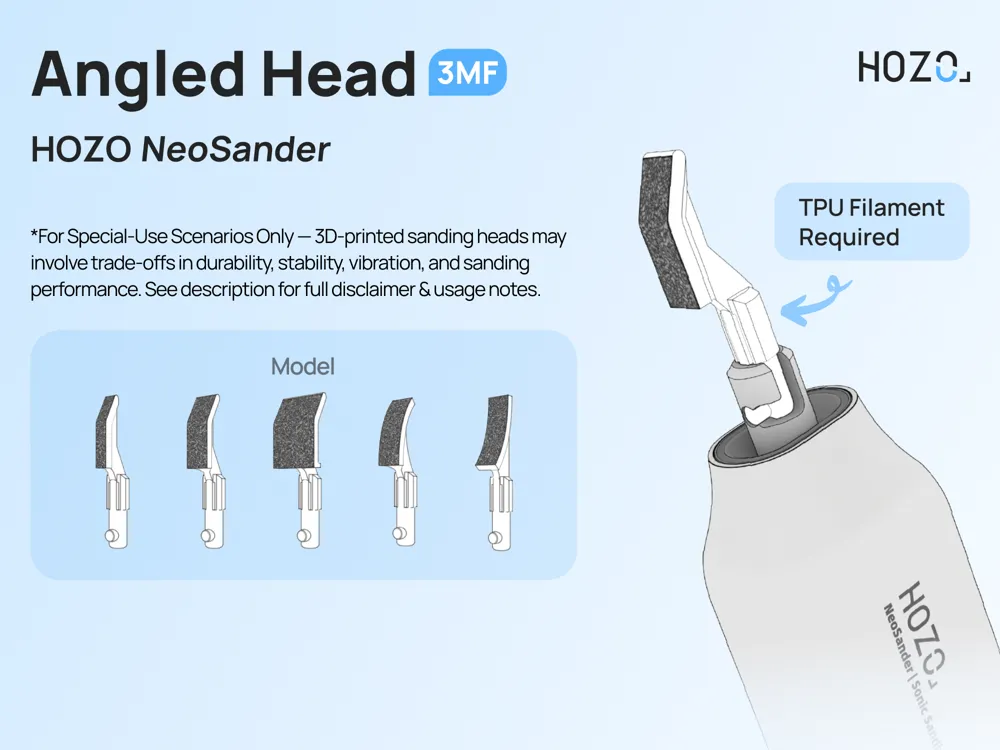
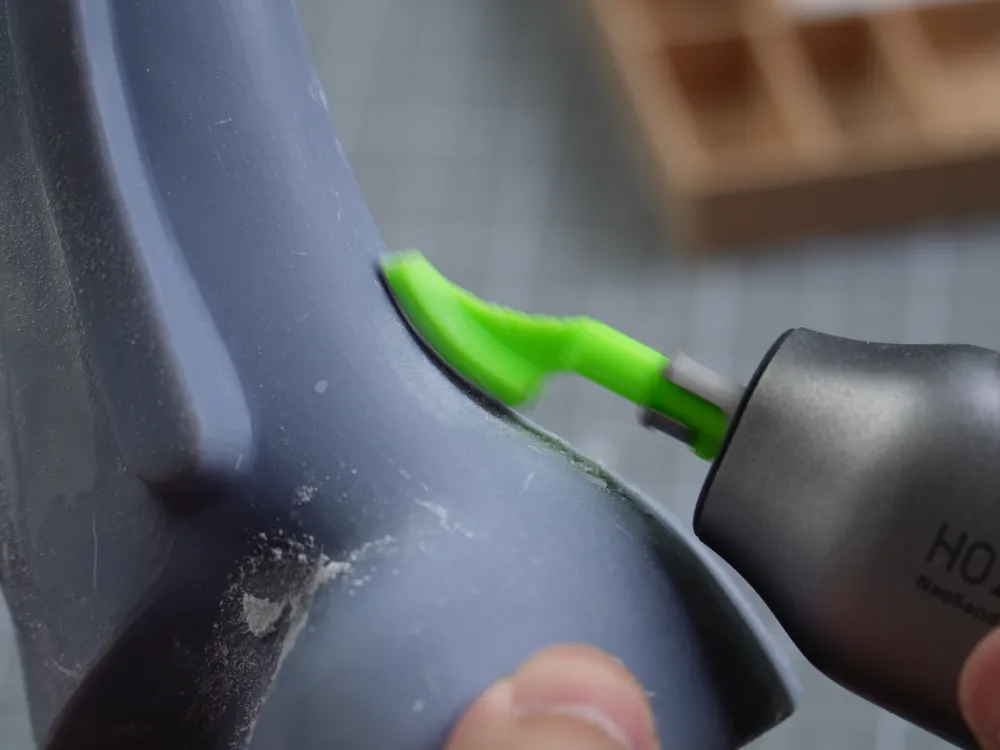
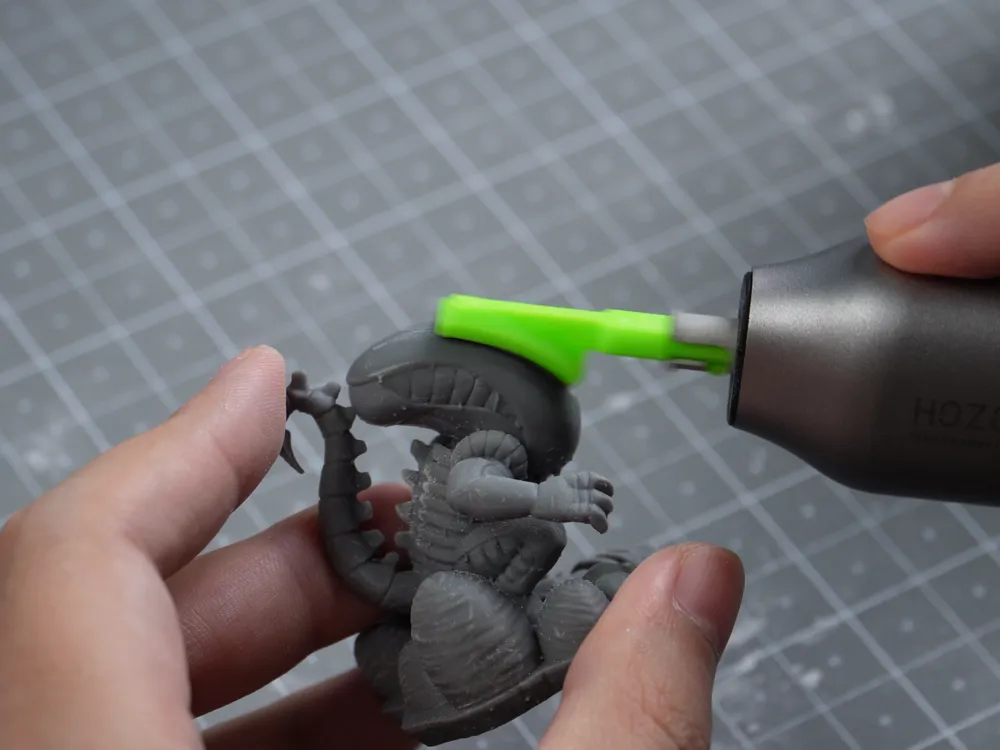
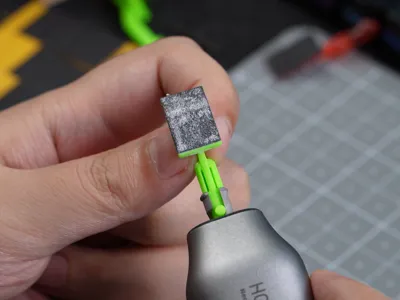
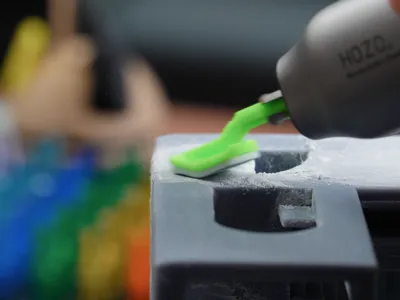
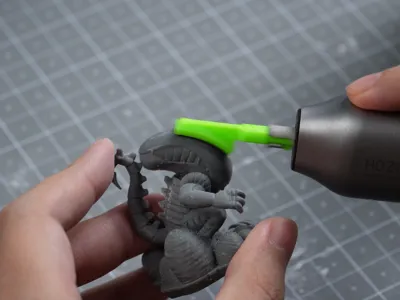
Instead of forcing a fully parallel posture, this design introduces a second working surface. It enables a top-down angled grip position, allowing sanding from above rather than being constrained to flat alignment.

- Surface A handles standard flat contact.
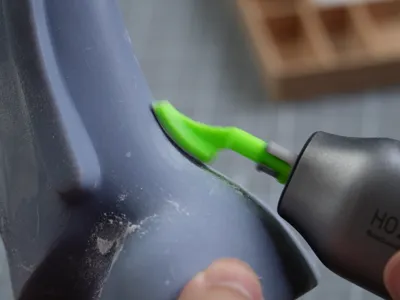
- Surface B enables angled access where the tool body would otherwise interfere.

🧩 TPU here is not just about flexibility — it provides controlled compliance during contact. When Surface B engages the workpiece, slight deformation helps absorb impact and reduces rigid collision, making contact more forgiving.

🔄 Curved surface expansion - this set also includes:
- Inner Radius Head (Concave Surfaces)
- Outer Radius Head (Convex Surfaces)
Extending the system beyond flat geometry for better surface conformity and continuous contact on curved surfaces.
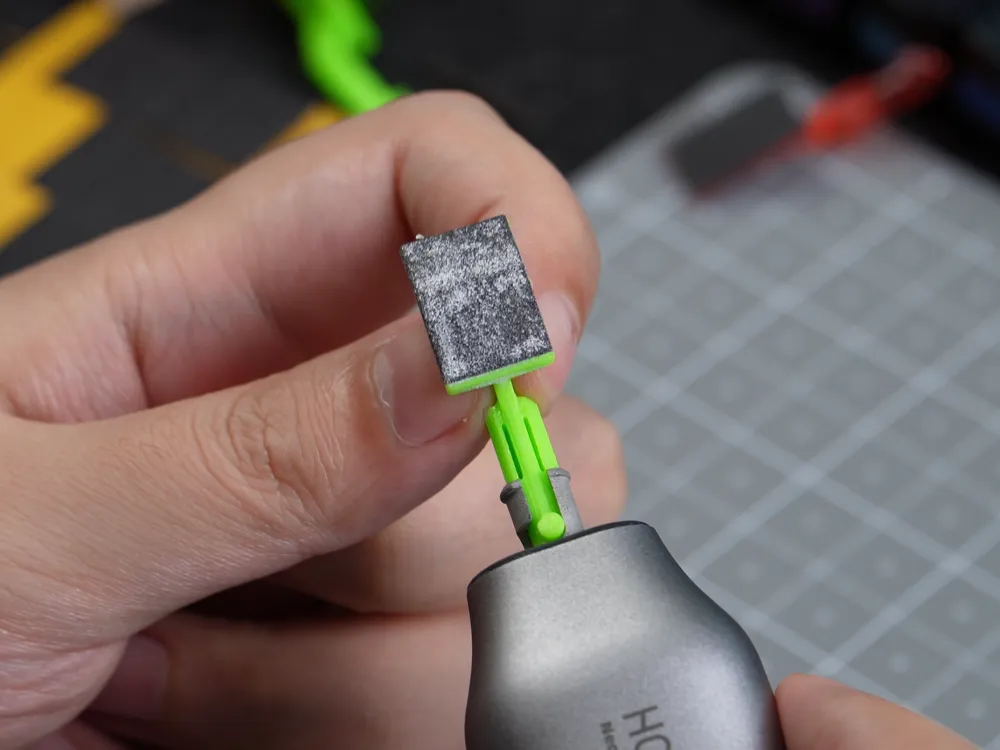
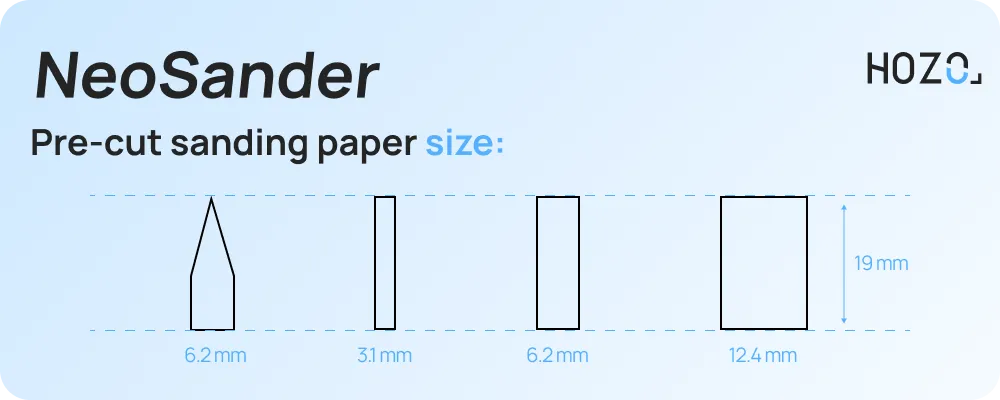
📏 Sandpaper Dimensions
To make things easier for makers, we’ve included reference dimensions for sandpaper sizing, so you can easily cut or match standard sandpaper without guesswork.
Due to 3D printing layer lines and material properties, the surface flatness of the sanding head and the adhesion of the sandpaper are lower than those of the original version, and partial gaps or uneven contact are commonly expected. This is a normal characteristic of 3D-printed parts.
💡 Maker Note
This is an open-source release made for experimentation, iteration, and community-driven improvements.
Feel free to remix, optimize, or build your own sanding workflows on top of it.
License



Comment & Rating (38)