
64x32 HUB75 Matrix Display Clock
Print Profile(1)
Bill of Materials







Description
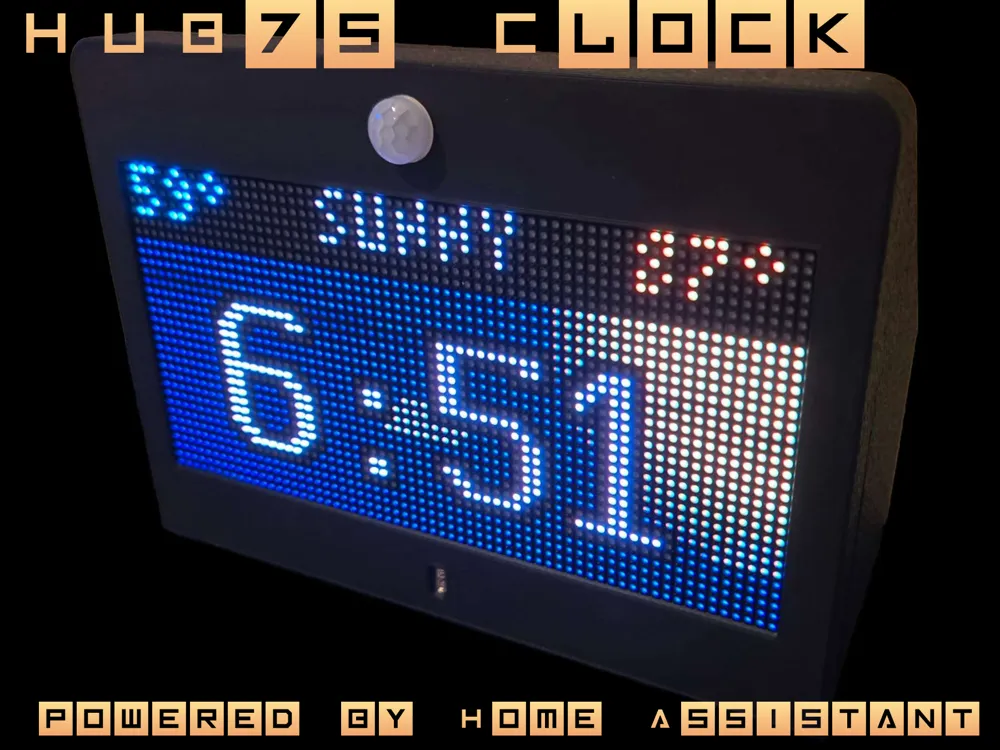
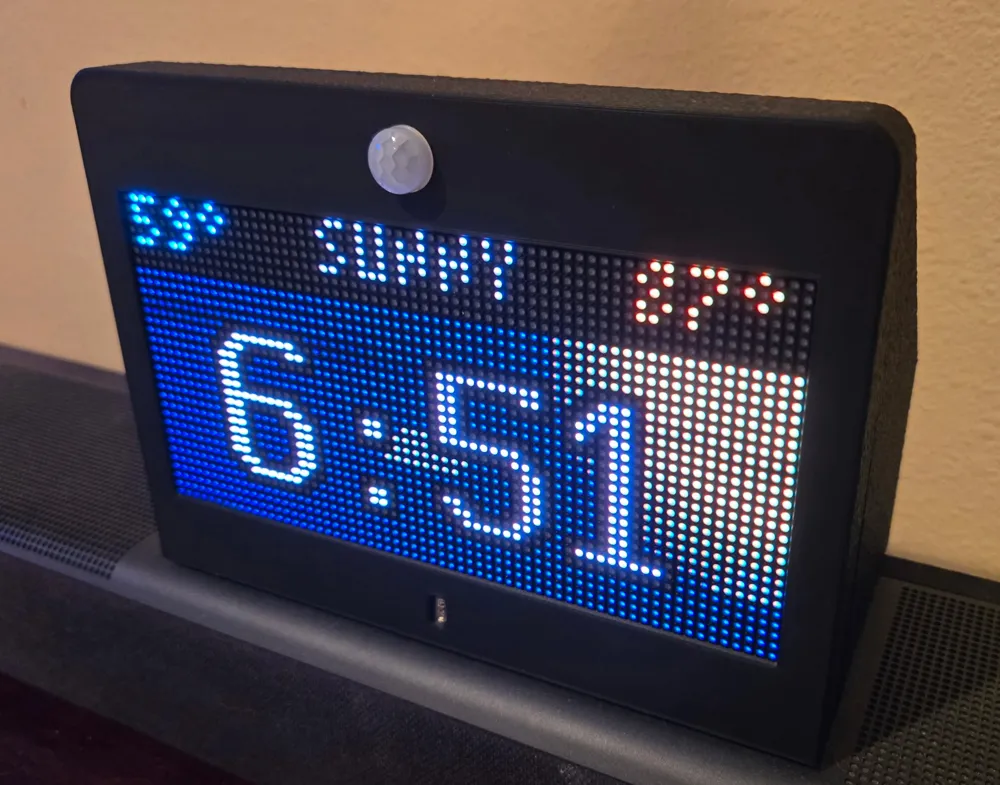
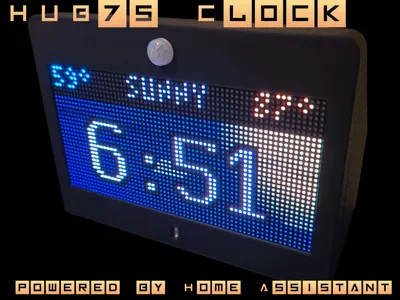
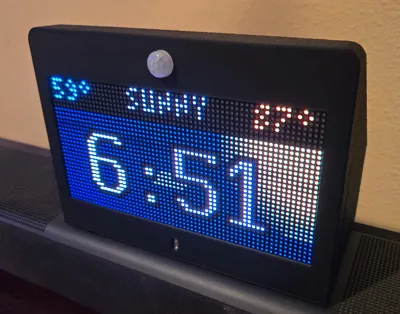
I built this as a bedside clock and it kind of got away from me. What started as "I want to see the time without grabbing my phone" turned into a full smart home display with animated weather, presence detection, and live Home Assistant integration.
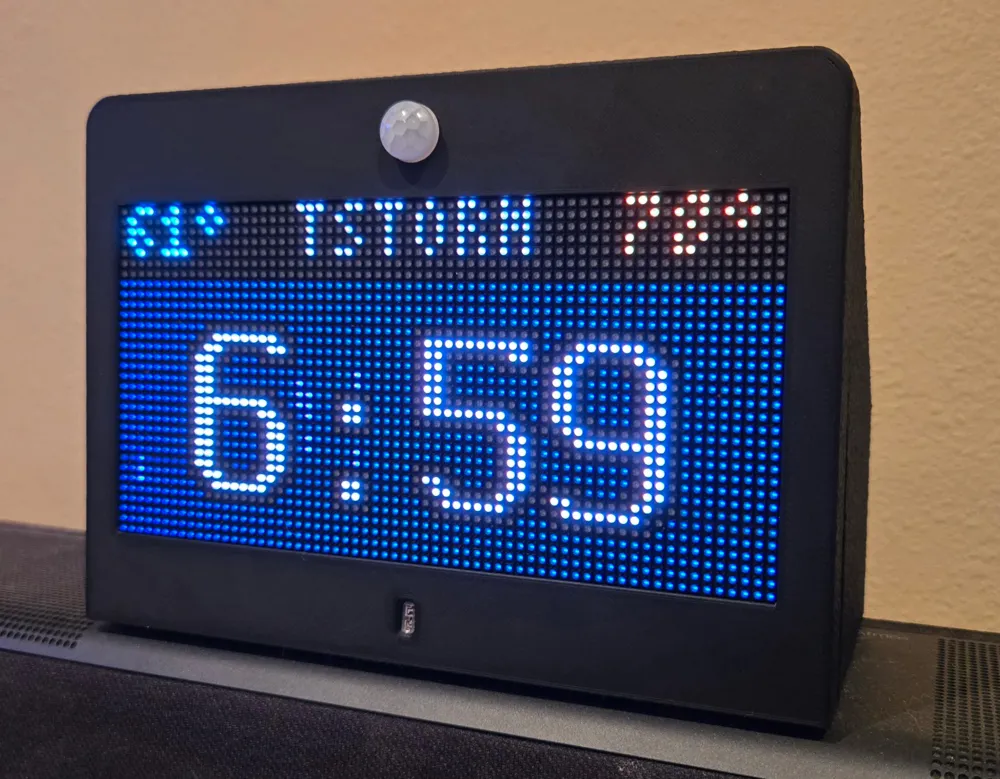
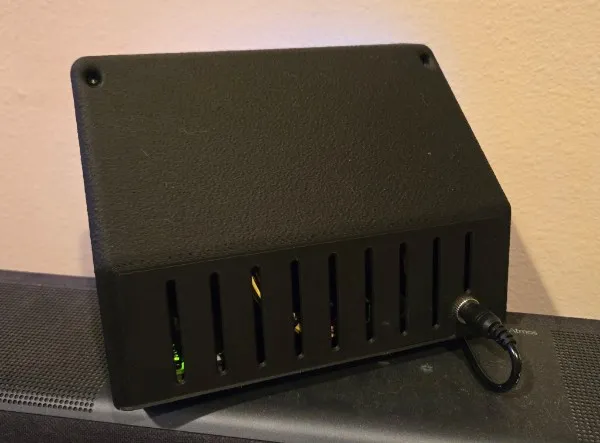
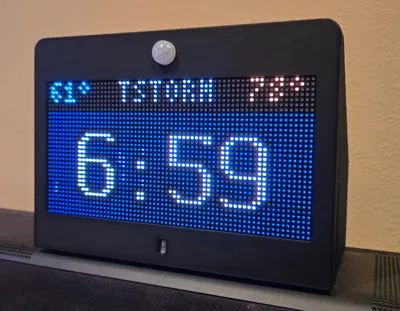
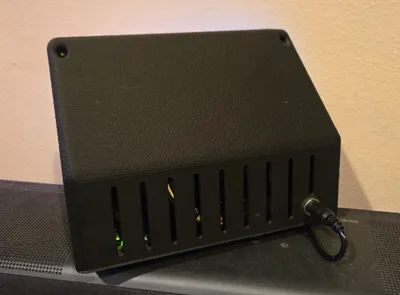
The display is a 64×32 HUB75 LED matrix showing the time big, with weather conditions pulled from Home Assistant over MQTT. The background animations change throughout the day — blue sky with drifting clouds during the day, a sunset gradient in the evening, stars at night with the occasional shooting star. When a tornado warning hits your county, the banner turns red and scrolls the alert. I built two of these, one on a Pi Zero W and one on a Pi 4, hence the two bottom cover variants.
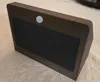
The case holds the LED panel, Pi, and up to three sensors — an HLK-LD2410C millimeter wave presence sensor, a PIR, and an optional VEML7700 lux sensor. The front cover comes in two versions depending on whether you're using the lux sensor. The back cover comes with either a simple barrel jack cutout or full Pi 4 port access. Assembly uses heatset inserts throughout for clean repeatable assembly.
All the firmware, wiring diagrams, Home Assistant automations, and install scripts are on GitHub at https://github.com/ikonis/hub75-clock — clone it, run the install script, answer a few questions, and it configures itself.
Parts needed for assembly:
- Raspberry Pi 4 or Pi Zero W
- 64×32 HUB75 LED matrix panel (I used P2.5)
- HLK-LD2410C mmWave sensor
- Inland PIR motion sensor
- VEML7700 lux sensor (optional)
- 5V/5A power supply with barrel jack
- 10× M3×5×4 heatset inserts
- 6× M3×6 countersunk screws
- 6× M3×6 hex screws
- 4× M2.5×3.5×4 heatset inserts
- 4× M2.5×5 hex screws
License



Comment & Rating (0)