
Nespresso Vertuo Pod Gridfinity Bin
Print Profile(1)
Bill of Materials

Description
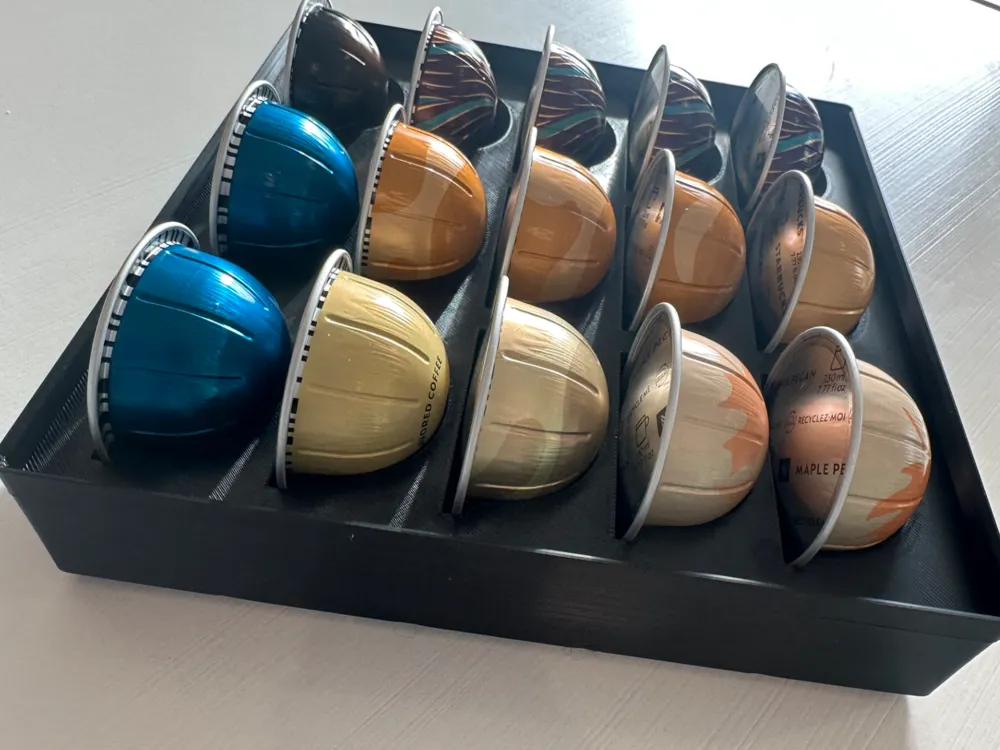
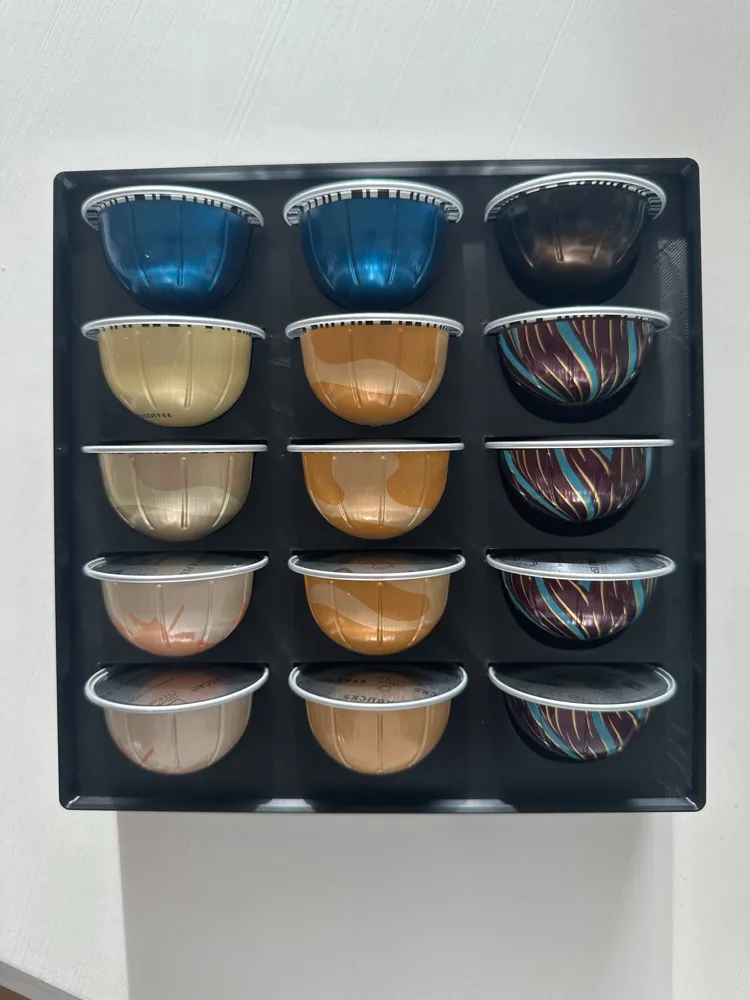
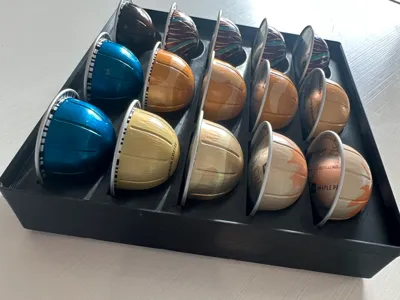
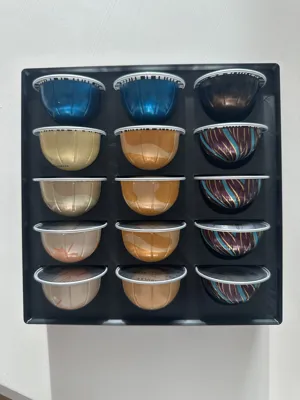
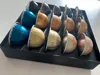
Keep your Vertuo pods organized and within reach with this Gridfinity-compatible storage bin. Holds 15 pods in a 3×5 layout with each pod sitting dome-side up so you can instantly see the variety at a glance. Fits cleanly into any Gridfinity drawer or shelf system.
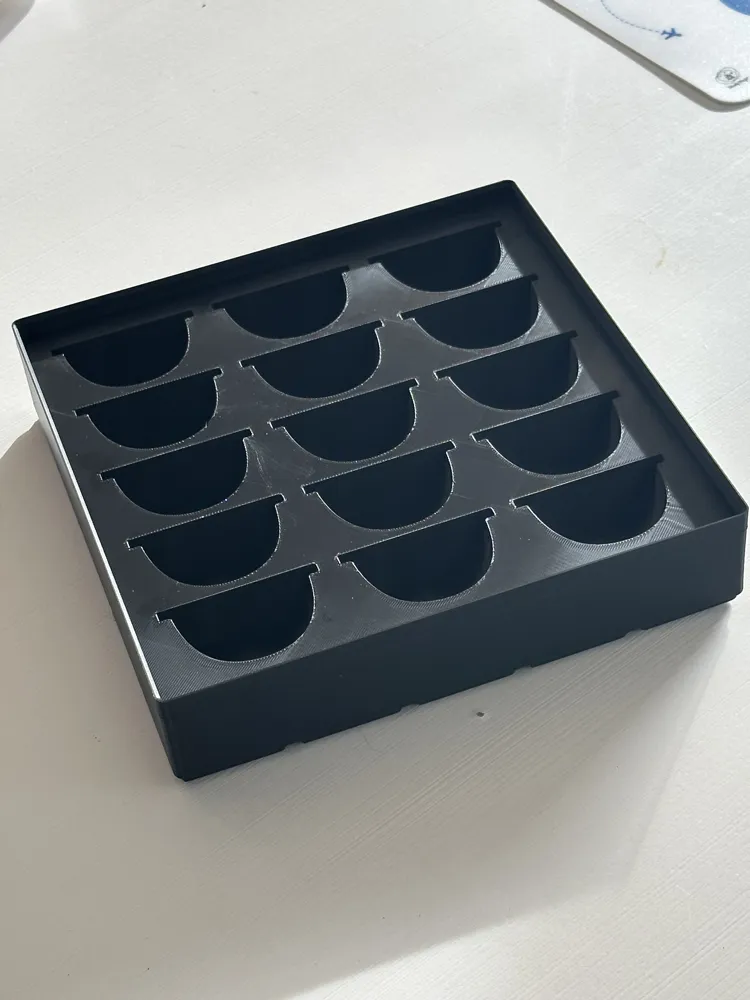
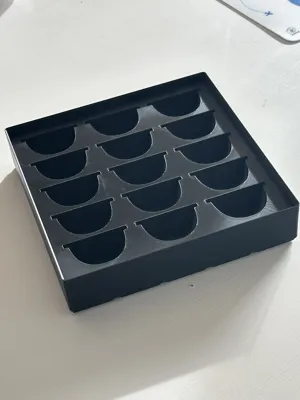
I used the Gridfinity Plugin in Fustion to generate the bin, then modeled a Nesspresso Vertuo pod and cut into the bin.
🧵 Material
PETG — printed in black. PETG is a great choice here: more durable and heat-resistant than PLA, which matters in a kitchen environment near a machine that runs hot.
⚙️ Print Settings
| Setting | Value |
|---|---|
| Layer height | 0.28mm (Extra Draft) |
| First layer height | 0.20mm |
| Wall loops | 3 |
| Top shell layers | 7 |
| Bottom shell layers | 4 |
| Infill | 15% Gyroid |
| Supports | None required |
| Seam | Back |
| Nozzle temp | 245°C |
| Bed temp | 70°C |
| Bed surface | Textured PEI |
| Ironing | Enabled — top surface only (8% flow, 40mm/s) |
✨ Want a Smoother Top Surface? (Optional Tweaks)
The file ships with ironing enabled, which already improves the top finish noticeably — but PETG at 0.28mm can still show layer lines and slight roughness. Here's how to dial it in further if you want a cleaner look:
Switch to a finer layer height. Re-slicing at 0.20mm Standard is the single biggest improvement you can make. The top surface becomes significantly smoother with less ironing needed to clean it up.
Slow down the top surface speed. The file uses 100mm/s for top surfaces. Dropping to 50–70mm/s gives the filament more time to flow and bond, reducing ridging. In Bambu Studio: Quality → Speed → Top surface.
Tune ironing flow. The current setting is 8% flow at 40mm/s. For PETG, nudging flow up slightly to 10–12% and slowing speed to 30mm/s tends to fill in surface texture more effectively. Too much flow will cause blobbing, so increase in small steps.
Lower top surface temperature slightly. Dropping nozzle temp by 5–10°C (to ~235–240°C) for the top layers reduces stringing and helps the surface sit flatter. You can do this with a filament modifier in Bambu Studio targeting only the top few layers.
Increase top shell layers. Already set to 7, which is solid. If you're still seeing infill pattern bleed-through, bumping to 9–10 layers eliminates it entirely.
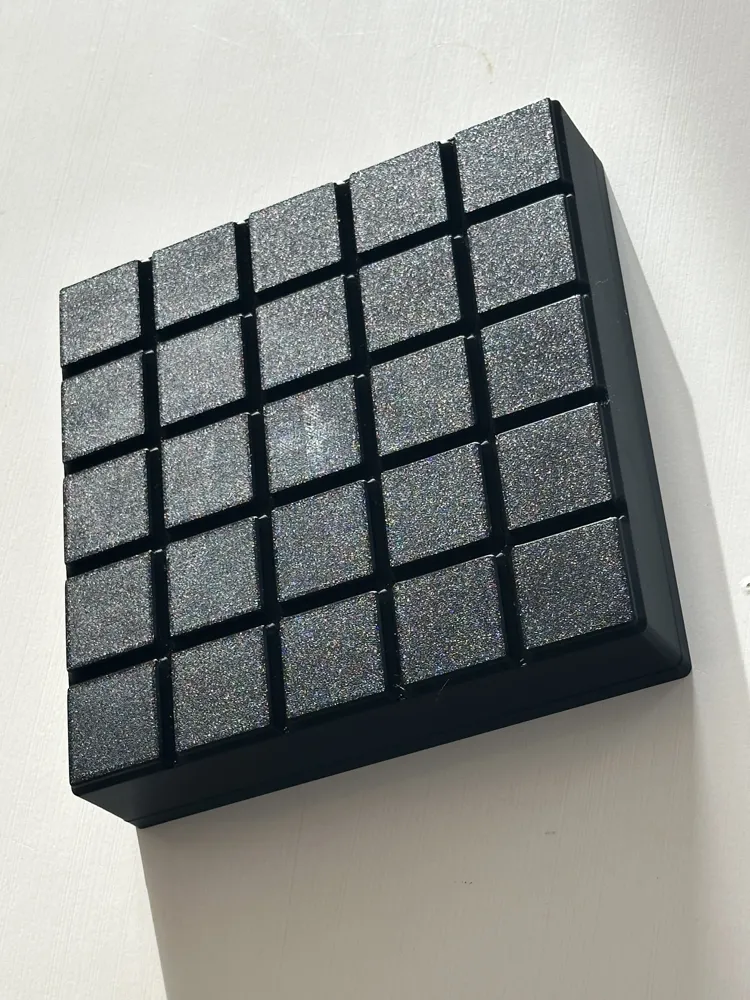
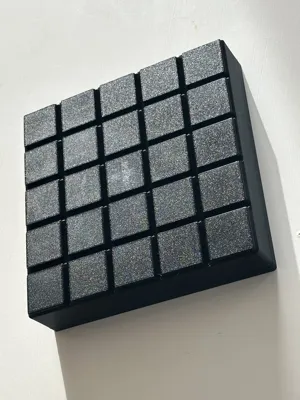
Bed texture is intentional on the bottom. The textured PEI plate leaves a nice matte grain on the underside of the bin (visible in the last photo) — that's a feature, not a bug. It matches the Gridfinity aesthetic well.
⚠️ Special Notes
Textured PEI required for PETG. PETG bonds aggressively to smooth PEI and can damage it. Always use the textured plate — the file is already configured for it.
A1-specific profile. If printing on a P1 or X1 series, re-slice using the appropriate printer profile in Bambu Studio. The geometry is identical; only machine G-code differs.
No brim needed. The large flat footprint on textured PEI gives excellent first-layer adhesion. Auto-brim is enabled in the file but won't generate one at this footprint size.
🗒️ Sliced With
Bambu Studio 02.06.01.55 · Bambu PETG Basic profile · 0.4mm nozzle
Boost Me (for free)
License

You shall not share, sub-license, sell, rent, host, transfer, or distribute in any way the digital or 3D printed versions of this object, nor any other derivative work of this object in its digital or physical format (including, but not limited to, publishing derivative works outside the Makerworld platform or hosting on other digital platforms). The objects may not be used without permission in any way whatsoever in which you charge money or collect fees. Subject to the above restrictions, derivative works may be published only within the Makerworld platform, and all such derivative works must be licensed under the same SDFL‑C license, without modification or additional terms. You may download the digital versions of this object, 3D print it, and display images, videos, or usage demonstrations of 3D printed versions of the object on personal social media platforms or Makerworld official channels, provided that no digital versions of the object are shared or distributed.


Comment & Rating (0)