
Parametric Motorized Spool Turntable x 3D Scanning


Print Profile(0)
Description
Boost Me (for free)
If you like projects that turn simple workshop waste into real functional tools, a Boost helps me keep developing more technical parametric maker designs like this one.
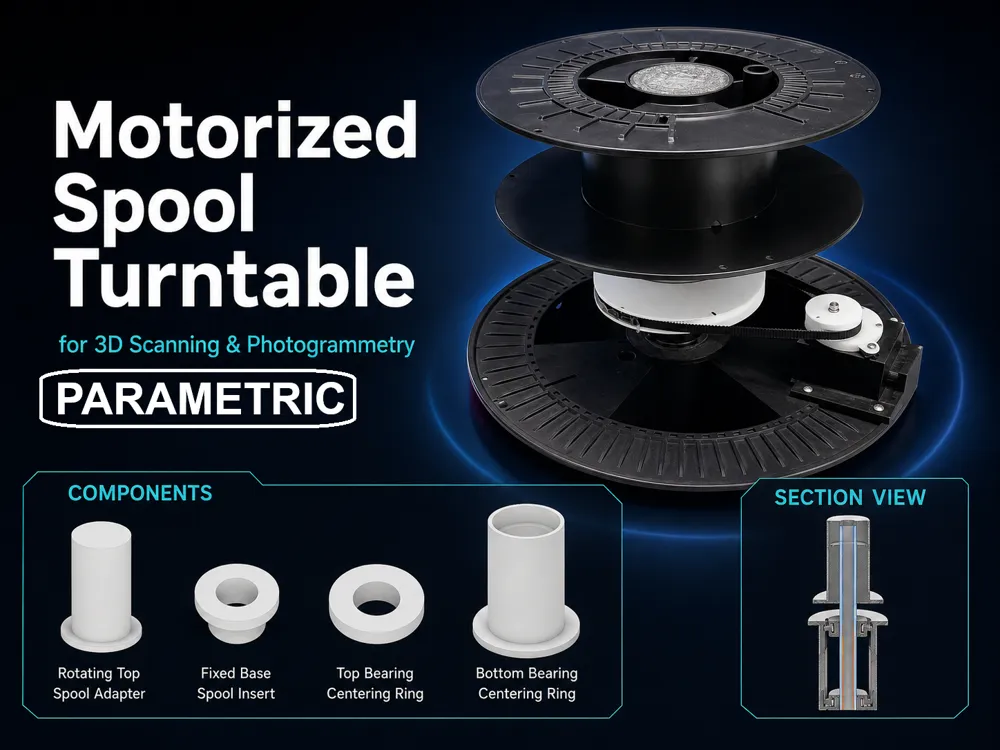
Motorized Spool Turntable for 3D Scanning & Photogrammetry
Turn empty filament spools into a functional motorized turntable for 3D scanning, photogrammetry, product photography and rotating video shots.
This project is built around a simple idea:
reuse what every maker already has: empty filament spools.
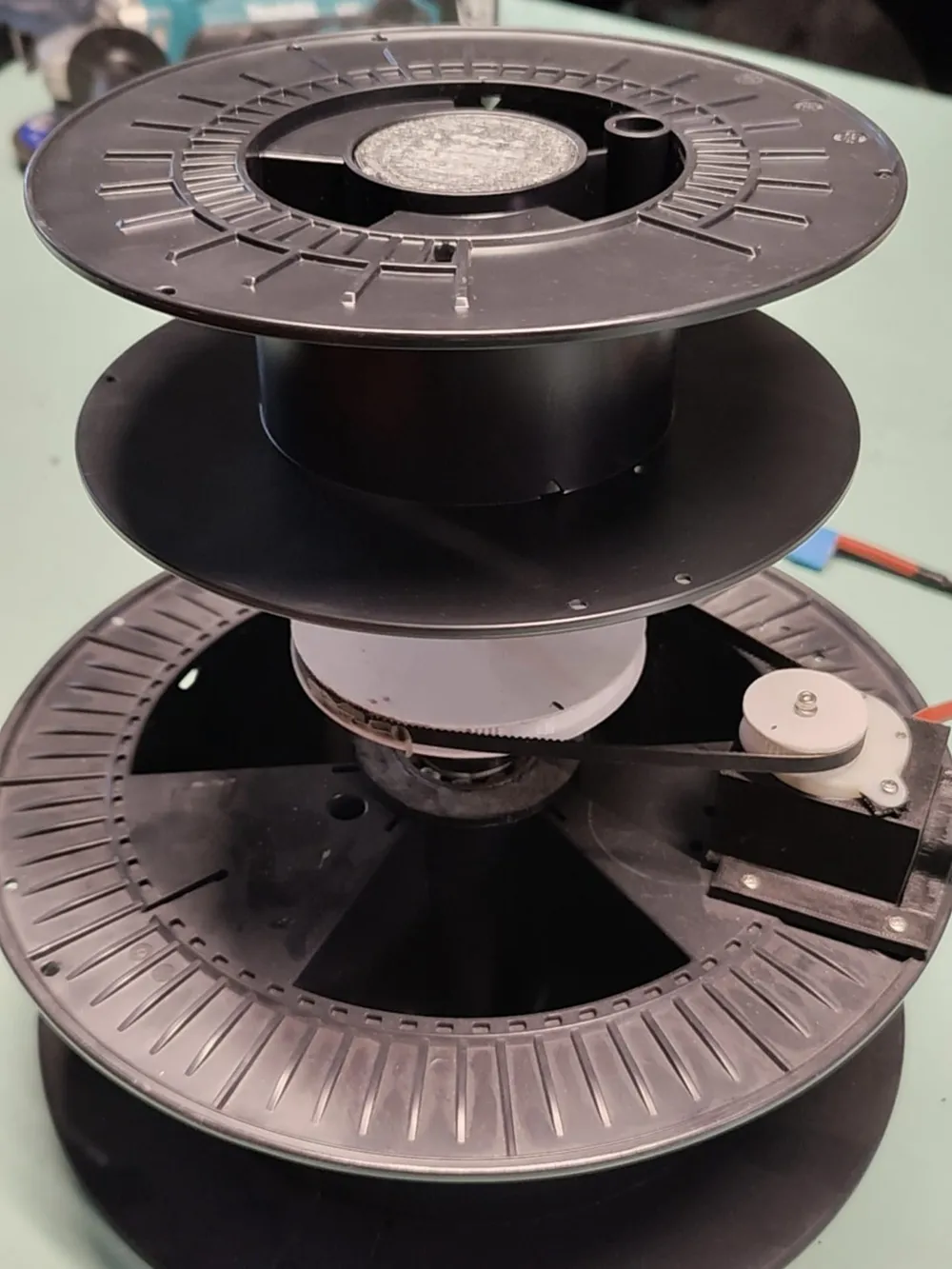
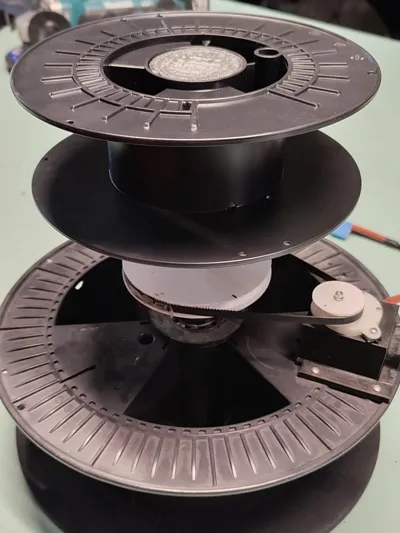
Instead of throwing them away, this system transforms two empty spools into a practical rotating platform:
- one spool becomes the fixed base
- one spool becomes the rotating top platform
- the printed parametric parts create the central hub, bearing support and motorized transmission system
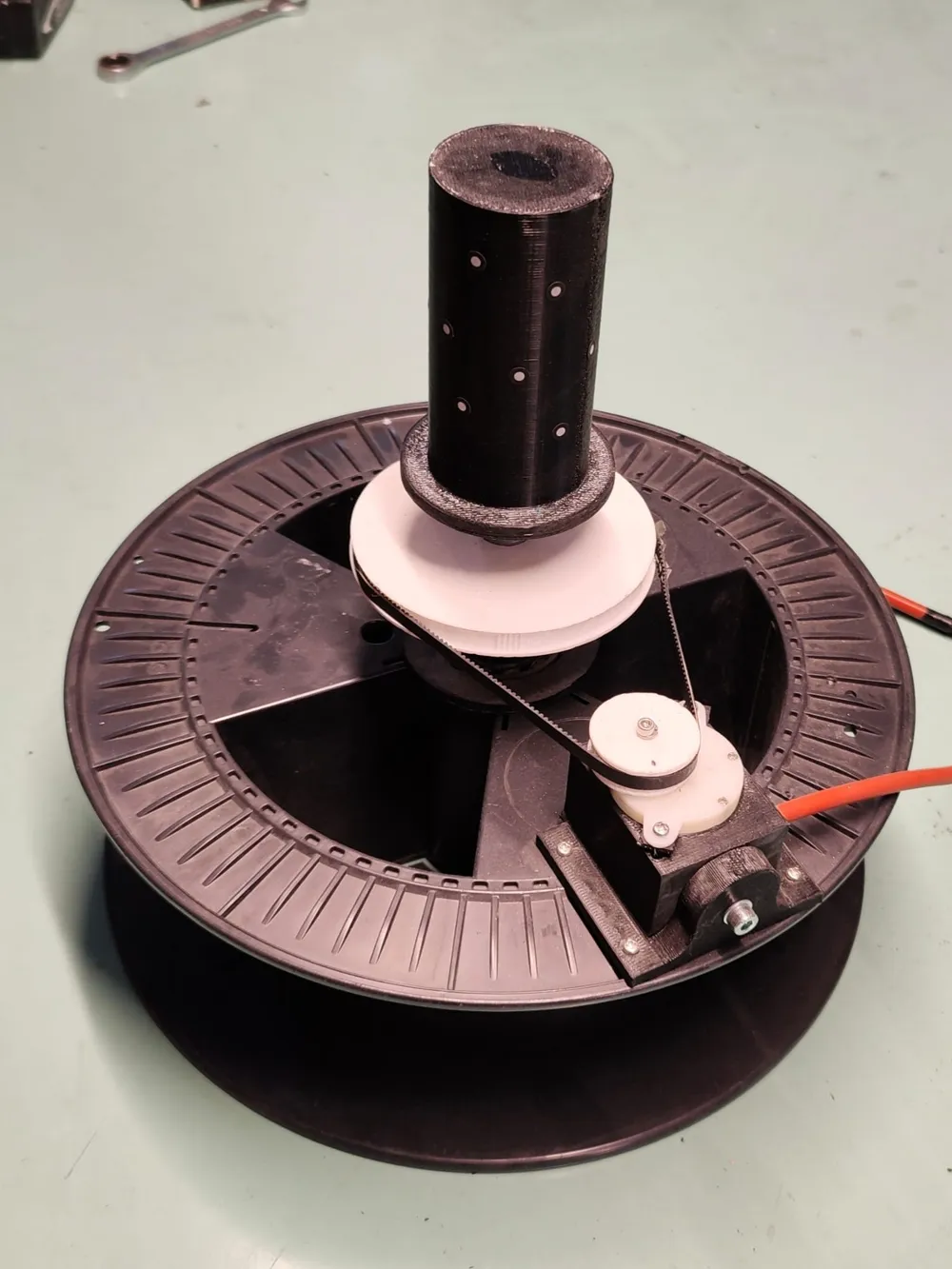
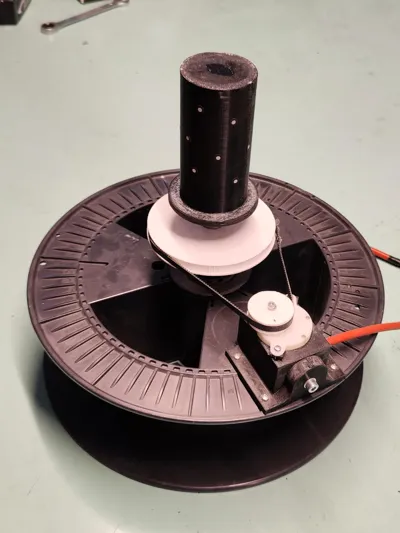
The result is a compact, useful and customizable maker tool made from reusable spool bodies, printed mechanical parts and standard hardware.
Why this project is different
This is not just a fixed turntable model.
The core of the design is a parametric spool adapter system, created to adapt the mechanism to different spool geometries and hardware setups.
Filament spools are not all identical.
Hub diameters, hole heights and internal shapes can vary from brand to brand.
For this reason, the most important internal parts are parametric, allowing the user to adjust the mechanism to their own spool instead of being locked to one specific brand or spool size.
The project combines:
- spool reuse
- parametric design
- bearing-supported rotation
- belt transmission
- a sliding motor tensioner
- real workshop functionality
From waste spool to functional maker tool.
Main features
- Reuses empty filament spools as structural parts
- Motorized turntable for 3D scanning and photogrammetry
- Parametric central adapter system
- Adjustable spool hub dimensions
- Bearing-supported rotating assembly
- Sliding motor mount with built-in belt tension adjustment
- Standard GT2 timing belt transmission
- Supplied driven ring / crown and motor pulley / pinion
- Designed for approximately 1 rpm final rotation with the recommended motor
- Useful for small object scanning, product photography and workshop documentation
Ideal for:
- 3D scanning
- photogrammetry
- small object display
- workshop documentation
- product photography
- rotating video shots
- maker experiments
- spool recycling projects
Spool reuse concept
This project uses the spool itself as part of the mechanical structure.
The lower spool works as a stable base, while the upper spool becomes the rotating platform.
This approach reduces the amount of printed material required and gives a second life to empty filament spools that would normally be discarded.
It is a practical way to turn a common piece of workshop waste into a useful tool for scanning, photography and maker workflows.
Parametric design
The main strength of this project is the parametric central mechanism.
The most important rotating and centering parts can be customized to fit different spool and hardware configurations.
Adjustable parameters include:
- base spool inner diameter
- rotating spool inner diameter
- spool hole height
- bearing outer diameter
- bearing inner diameter
- bearing width
- shaft diameter
- bearing fit offsets
- shaft fit offset
- spool fit offset
This allows the system to be adapted to different:
- spool brands
- spool hub sizes
- shaft diameters
- bearing sizes
- printer tolerances
- material shrinkage / expansion
- assembly preferences
The reference model is based on a tested setup, but the parametric parts are intended to be adjusted by the user according to their own spool, hardware and printer tolerances.
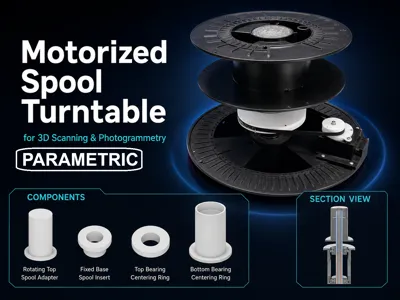
Included parametric hub components
The central spool adapter system includes:
- Rotating Top Spool Adapter
- Fixed Base Spool Insert
- Top Bearing Centering Ring
- Bottom Bearing Centering Ring
These parts create the internal connection between the fixed base spool, the rotating top spool, the central shaft and the bearing-supported assembly.
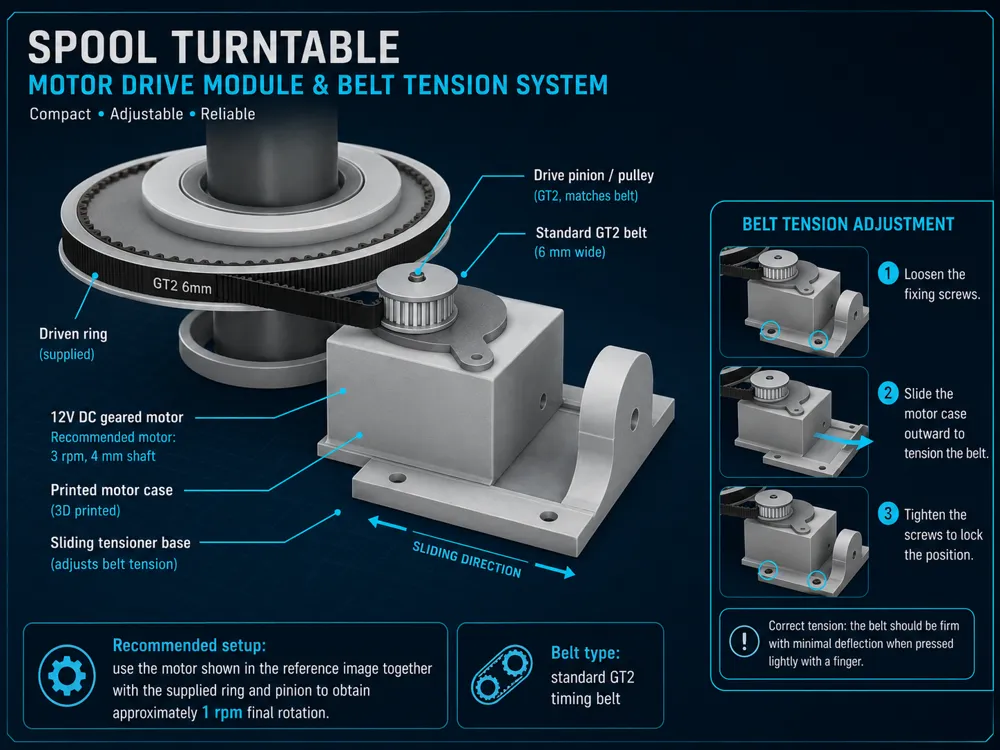
Recommended motor and transmission setup
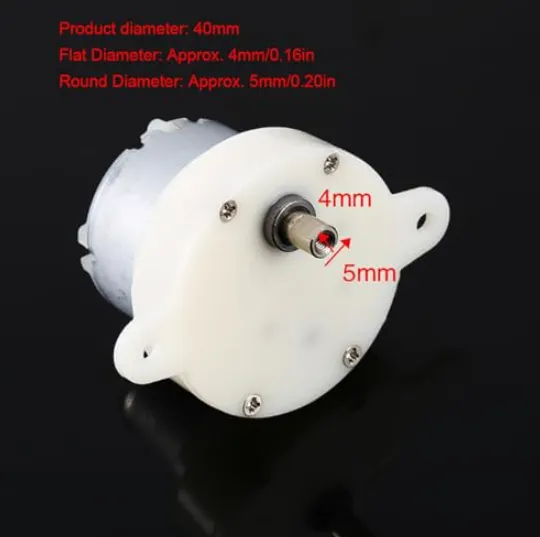
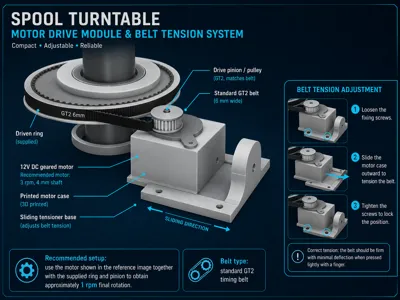
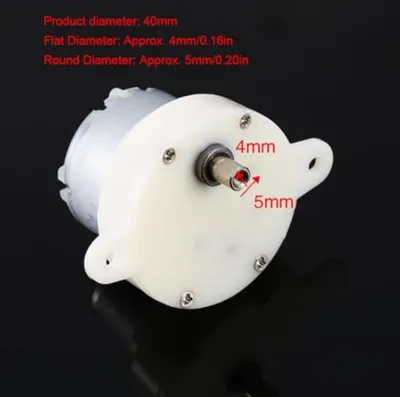
For the easiest and most reliable build, I recommend using the 12 V DC geared motor shown in the reference image, because the included:
- motor case
- sliding tensioner base
- motor pulley / pinion
are designed around that motor format.
Recommended motor specification:
- 12 V DC geared motor
- 3 rpm nominal speed
- 4 mm flat shaft / approx. 5 mm round outer section
- approx. 40 mm front diameter
The supplied driven ring / crown and motor pulley / pinion are designed to work together with this motor setup to provide approximately:
1 rpm final rotation speed
This slow and stable rotation is well suited for scanning, photogrammetry, product display and video rotation shots.
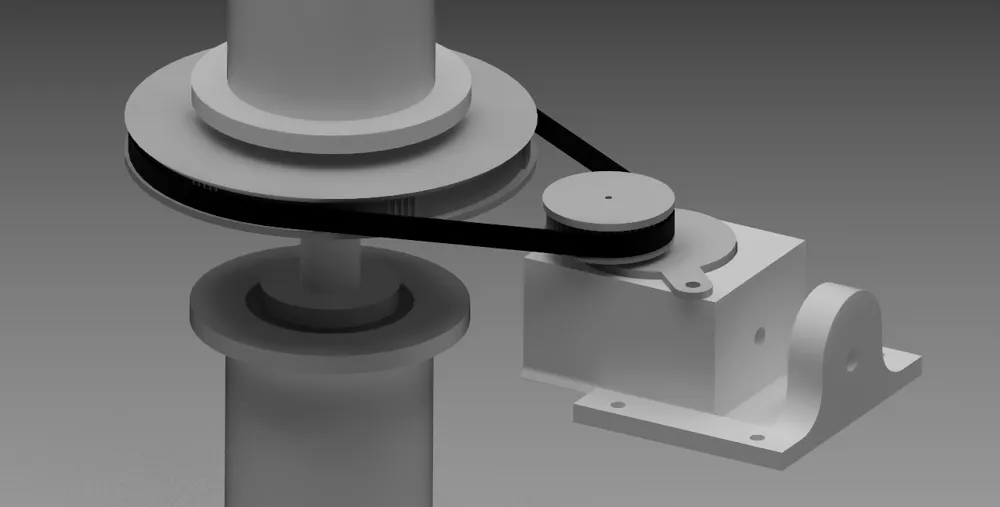
Transmission system
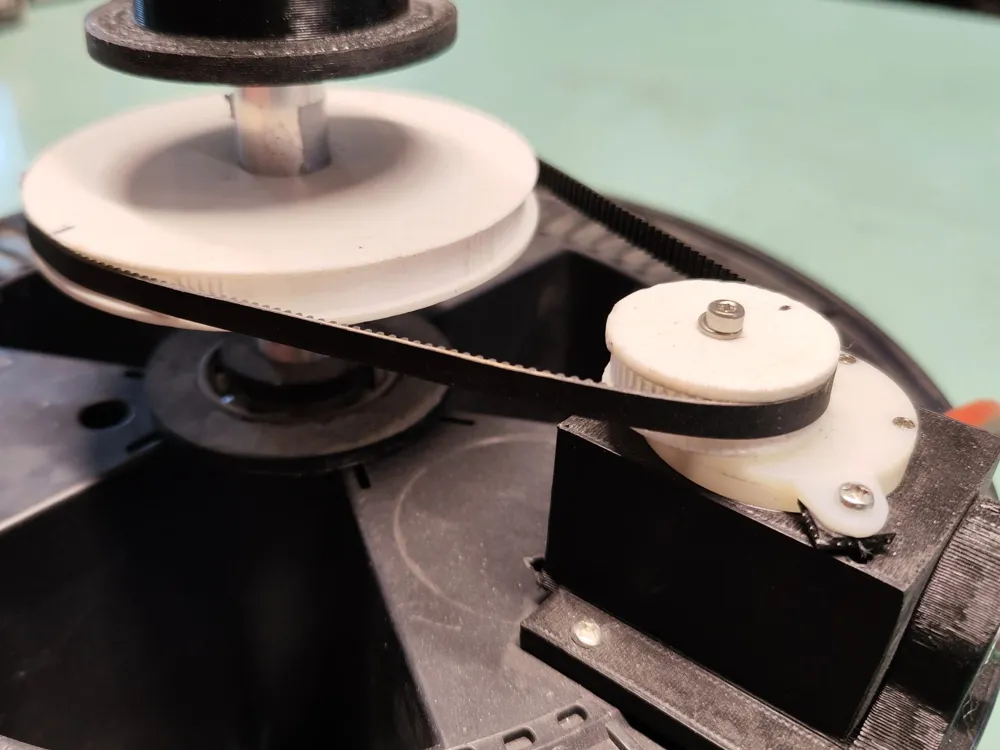
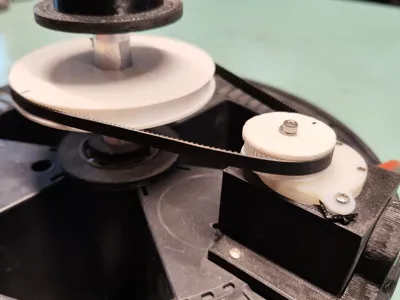
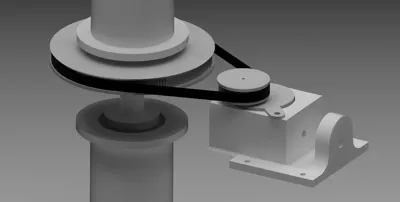
Rotation is transmitted by a standard timing belt system.
The motor drives a printed pulley / pinion, which transfers motion to the printed driven ring / crown mounted on the rotating spool assembly.
Recommended belt type:
- GT2 timing belt
- 6 mm width
The belt length may depend on your final assembly, spool dimensions and motor position.
The supplied driven ring and motor pulley are intended to be used together with the recommended motor to obtain the target slow rotation speed.
Sliding motor tensioner
The motor is housed inside a printed case that slides on a printed base / tensioner rail.
This allows simple belt tension adjustment:
- loosen the fixing screws
- slide the motor assembly outward
- tension the belt
- tighten the screws again to lock the position
The belt should be firm enough to avoid slipping, but not excessively tight.
Excessive belt tension may increase friction, wear, noise or load on the motor and bearings.
Reference example
A practical reference configuration is:
- 15 mm aluminum shaft
- 6004 bearing
- 20 mm inner diameter
- 42 mm outer diameter
- 12 mm width
- standard GT2 timing belt
- recommended 12 V / 3 rpm / 4 mm shaft geared motor
This is only a reference setup.
Because the project is parametric, users can adapt it to other shaft, bearing and spool dimensions if needed.
Included functional groups
The project includes the main printed parts required for the spool-based rotating system and motor drive assembly, including:
- rotating top spool adapter
- fixed base spool insert
- top bearing centering ring
- bottom bearing centering ring
- motor case
- sliding tensioner base
- driven ring / crown
- motor pulley / pinion
Hardware and electrical components are not included.
Depending on your final setup, you will need to provide:
- empty filament spools
- shaft
- bearings
- GT2 timing belt
- screws / fasteners
- 12 V DC geared motor
- 12 V DC power supply
- optional switch / wiring
Print notes
These are functional mechanical parts, so dimensional accuracy and print strength are important.
Recommended print considerations:
- use enough walls for mechanical strength
- gears should be printed with good dimensional accuracy
- check motor fit before final assembly
- use low speed and light loads
- adjust clearances depending on your printer and material
- check bearing seats before final assembly
- test the sliding tensioner movement before installing the belt
- verify that the pulley and driven ring rotate smoothly
- avoid excessive belt tension
Good dimensional accuracy is especially important for:
- spool adapter fit
- bearing seats
- bearing centering rings
- shaft alignment
- motor housing
- sliding tensioner surfaces
- pulley / driven ring transmission parts
Before final assembly, test fit:
- bearings
- shaft
- spool adapters
- motor housing
- belt alignment
- sliding tensioner movement
Some sanding, tuning or parameter adjustment may be required depending on printer, filament and calibration.
Mechanical and electrical disclaimer
This project is intended for light-duty maker, hobby and workshop use.
It is not designed for:
- heavy loads
- high-speed rotation
- industrial machinery
- safety-critical applications
- medical use
- unattended professional equipment
Motor, electronics, wiring and power supply are not included.
Check dimensions, clearances and motor compatibility before use.
This project includes moving mechanical parts, including:
- rotating spool assembly
- central shaft
- bearings
- belt drive
- pulley / pinion
- driven ring / crown
For safe use:
- verify that all parts are correctly assembled
- make sure the belt is properly aligned and tensioned
- check that rotating parts move freely before power-on
- ensure bearings are seated correctly
- secure all screws and fasteners
- keep fingers, hair, clothing, cables and loose objects away from moving parts
- do not overload the turntable
- stop use immediately if vibration, slipping, rubbing, noise or instability occurs
The user is fully responsible for:
- mechanical validation
- assembly quality
- dimensional checks
- hardware selection
- load suitability
- final functional safety
Electrical safety
This project may involve electrical components, including:
- DC geared motor
- power supply
- wires
- connectors
- optional switch or control electronics
For safety:
- use an appropriate low-voltage DC power supply
- verify voltage, polarity and current compatibility
- insulate all electrical connections properly
- keep wiring tidy and away from moving parts
- do not use damaged cables or exposed conductors
- do not leave the system powered unattended
- do not use mains voltage directly on the motor
- if you are not confident with electrical assembly, ask a qualified person for assistance
The user is fully responsible for:
- correct electrical wiring
- power supply selection
- polarity verification
- insulation and protection
- safe operation of the powered system
This project is provided as a mechanical maker design, not as certified electrical equipment.
Tolerance and fit disclaimer
Because the design is parametric and because printers and materials behave differently, some dimensions may require user-side tuning.
You may need to adjust:
- fit offsets
- belt tension
- shaft tolerances
- bearing seats
- spool adapter dimensions
- motor alignment
- assembly clearances
Always test fit parts before final use.
Liability disclaimer
This model is provided as a functional maker project, not as a certified commercial product.
By downloading, printing, assembling or using this design, the user accepts full responsibility for:
- printing results
- material choice
- assembly method
- hardware selection
- electrical setup
- mechanical safety
- operational use
- any modifications made to the original design
The author cannot be responsible for damage, injury, misuse, assembly errors, print failures or unsafe electrical/mechanical implementations.
Bambu profile note
Note: I currently do not provide official Bambu Lab print profiles because I do not own a Bambu printer.
The model has been designed, printed and tested successfully on my Qidi Plus 4.
Verified Bambu print profiles from the community are welcome.
Final note
This project is meant to be a practical, reusable and customizable maker tool.
It combines:
- empty spool reuse
- parametric design
- simple mechanical transmission
- standard hardware
- real workshop functionality
From waste spool to functional turntable.
If you build it, improve it or adapt it to your own scanning workflow, feel free to share your setup and your print profile.
License

You shall not share, sub-license, sell, rent, host, transfer, or distribute in any way the digital or 3D printed versions of this object, nor any other derivative work of this object in its digital or physical format (including - but not limited to - remixes of this object, and hosting on other digital platforms). The objects may not be used without permission in any way whatsoever in which you charge money, or collect fees.


Comment & Rating (0)