
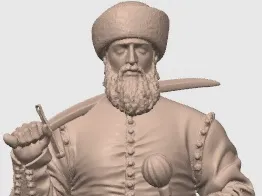
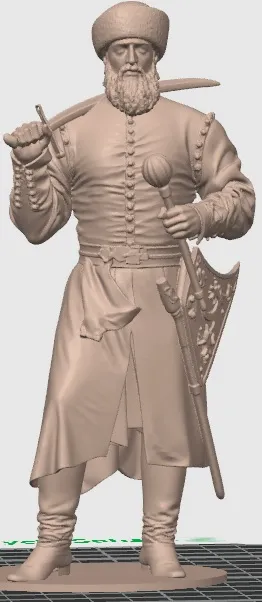
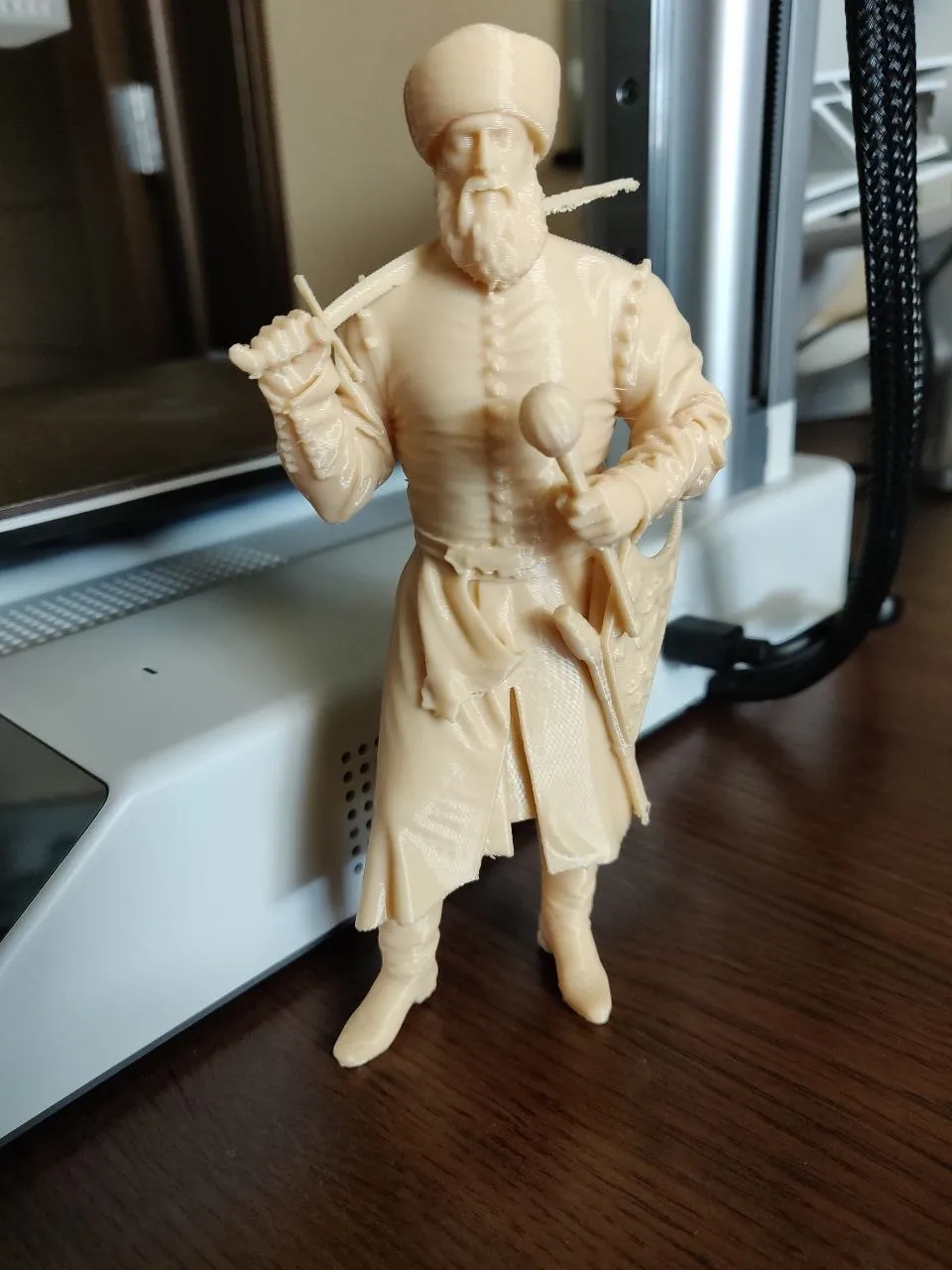
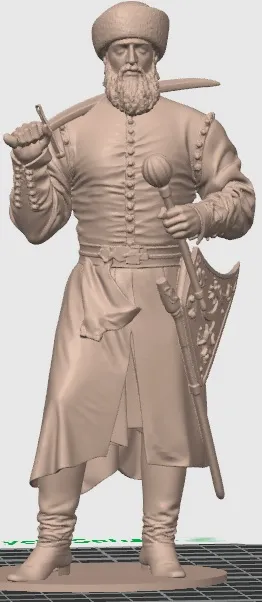
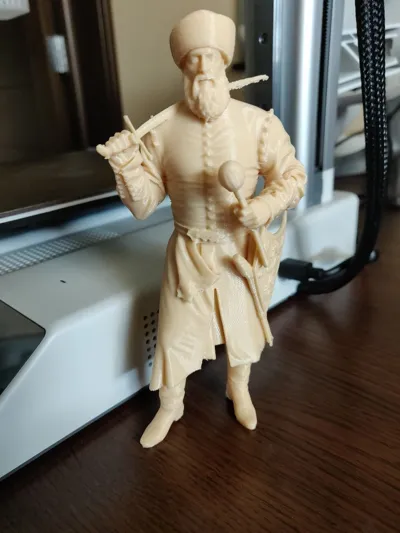
Sahaidachny Hetman of Zaporozhian Cossacks
Print Profile(2)

Description
Military leadership and campaigns
As the leader of the Zaporozhian Cossacks, Sahaidachny reformed the army, making it more organized and disciplined. Under his command, the Cossacks became a powerful force in Eastern Europe.
He led a number of successful military campaigns:
- Against the Ottoman Empire, including naval raids on Black Sea ports such as Kafa (Feodosia), weakening Ottoman influence.
- In 1618, during the Polish–Muscovite War, he led a campaign against the Tsardom of Muscovy. His army advanced deep into Muscovite territory and reached the outskirts of Moscow. This campaign pressured Muscovy into negotiations and demonstrated the strength of the Cossack forces.
Defense of Ukrainian lands
Sahaidachny played a key role in protecting Ukrainian territories from external threats, especially raids by Crimean Tatars and Ottoman forces. He helped secure the southern borders and improved the defensive capabilities of the Cossacks.
Political influence
He strengthened the position of the Cossacks within the Polish-Lithuanian Commonwealth, making them an important political and military factor. His leadership increased recognition of the Cossacks as defenders of the region.
Cultural and religious contributions
Sahaidachny strongly supported Orthodox Christianity and Ukrainian culture:
- He backed the restoration of the Orthodox Church hierarchy in 1620.
- Together with the Cossacks, he joined the Kyiv Brotherhood, which promoted education, printing, and national identity.
Legacy
Petro Konashevych-Sahaidachny is remembered as:
- A talented military commander,
- A defender of Ukrainian lands and faith,
- A leader who strengthened Ukrainian identity and the role of the Cossacks.
Conclusion
In summary, Sahaidachny made a major contribution to Ukraine by reforming the Cossack army, defending the country, supporting culture and religion, and leading successful campaigns—even against Muscovy—proving the strength and importance of the Ukrainian Cossacks in European history.
License



Comment & Rating (2)