
Harmonic Drive - Educational Model

Print Profile(2)


Description
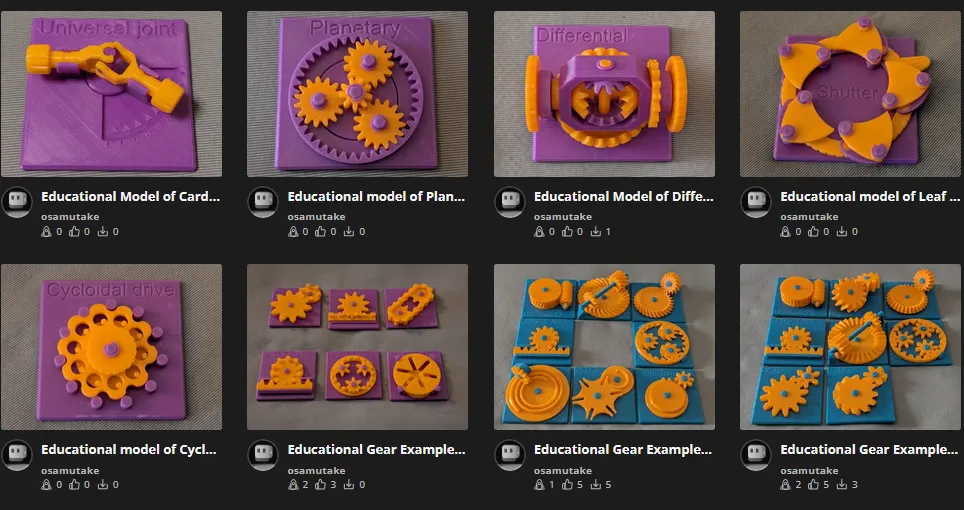
My Educational Mechanical Examples Series
This model is one of my educational mechanical mechanism examples on 80mm x 80mm base plates.
You can find all models of the series in this collection => [Mechanical Mechanism Examples]
The present model
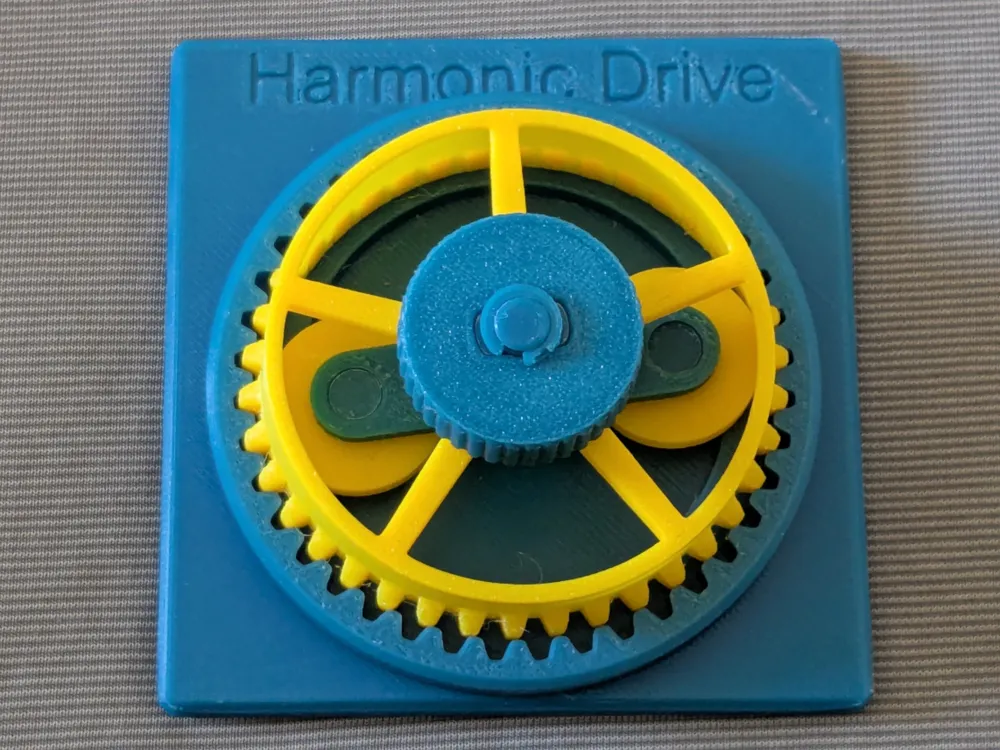
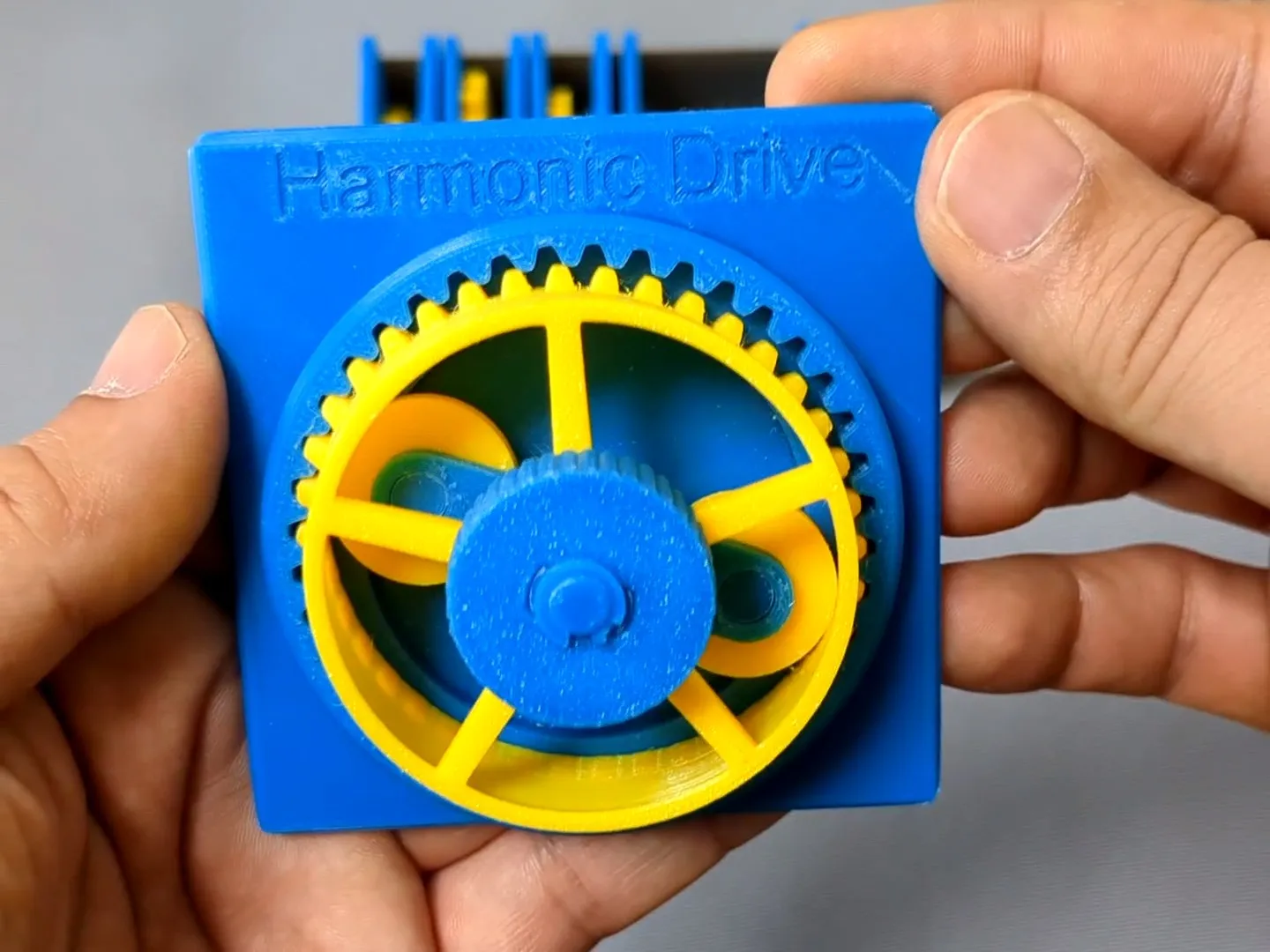
This is an educational model of a strain wave gearing system, also known as a harmonic drive system.
Brief Description
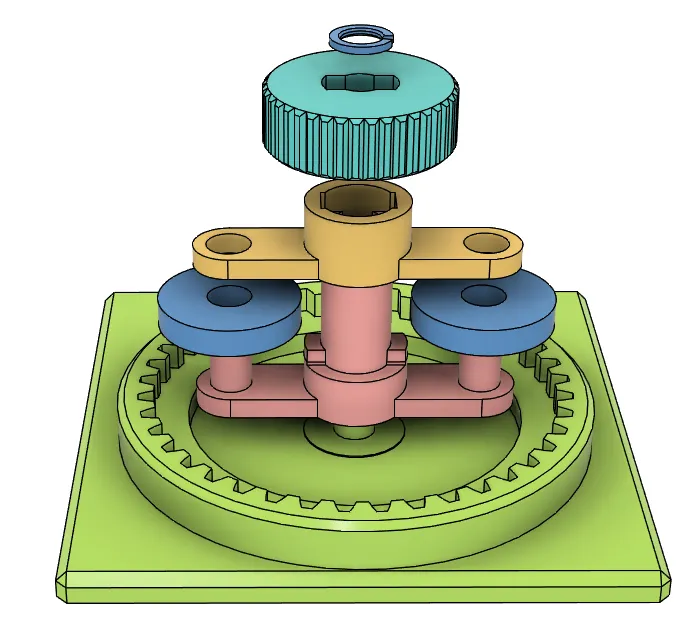
In this model, the outer ring gear has 40 teeth and the inner flexible gear has 38 teeth. The flexible gear is deformed into an elliptical shape by two rotating discs pressing outward from the inside, so that the teeth near the major axis engage with the ring gear while those near the minor axis are completely clear of it.
Because the two gears have different tooth counts, their tooth phases shift progressively as you move away from the major-axis contact zone. When the discs rotate, the major axis of the ellipse rotates with them, causing the engagement zone to travel around the gear. After the discs complete half a revolution, the difference in tooth count causes the flexible gear to rotate backward by exactly one tooth; after a full revolution, it steps back by two teeth. The gear reduction ratio from the input knob to the output flexible gear is therefore 2 : 38, or 1 : 19.
For this model, I used the standard involute tooth shape but I wonder which kind of tooth shape is the best for this type of gear system.
This mechanism shares a notable similarity with the previously introduced Planetary Differential gear system. In both cases, two gears with slightly different tooth counts mesh with each other at only a few points around their perimeters. As those engagement points complete one full revolution, the free gear rotates backward relative to the fixed gear by exactly the tooth count difference. Cycloidal drive system also shares a similar concept.
Related Models


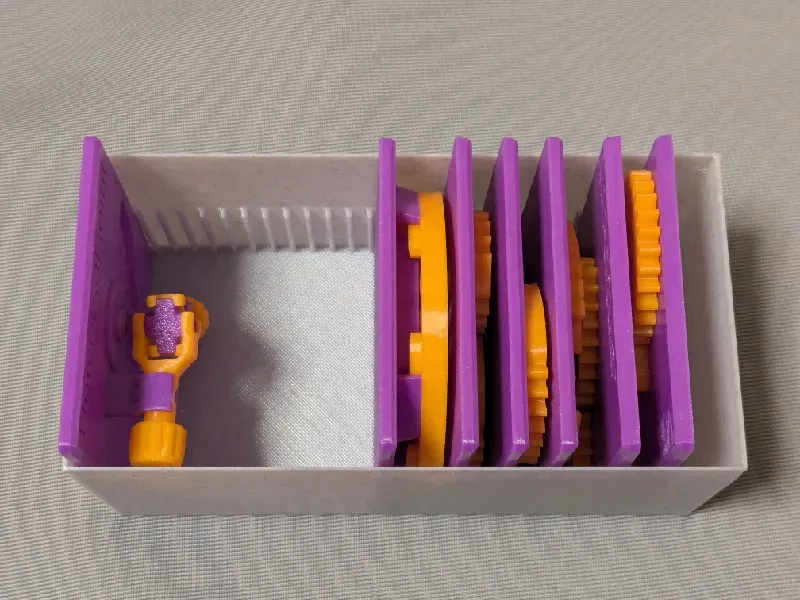
Case
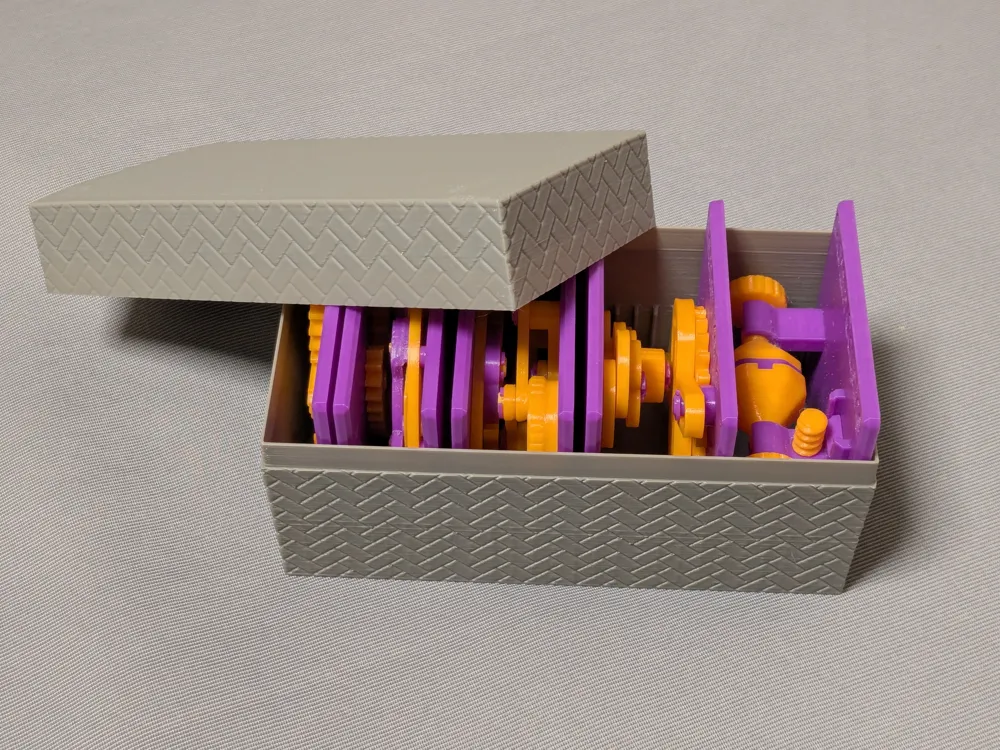
This model is compatible with the case included in my first set.
Printing
- Use the models named ???-printable.stl for printing.
The models named ???-assembled.stl are provided just to show how they should be assembled.
- Use well-dried PETG to have better dimensional accuracy and enough flexibility.
- Use 0.1 mm or 0.08 mm layer height to have smoother surfaces.
- Use slow printing speed for overhangs.
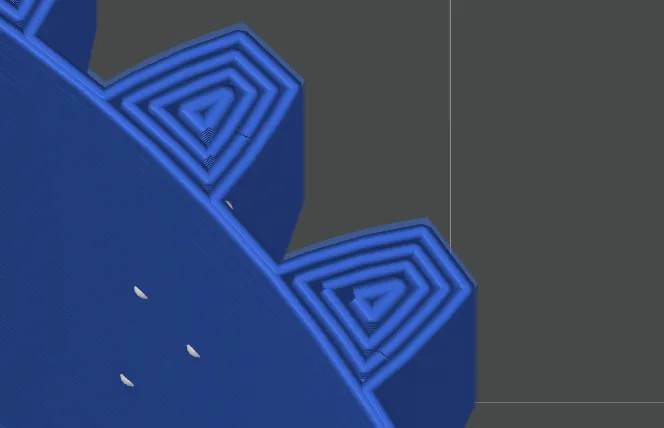
- Select “Random” seam position to have smoother rotation.
Randomly distributed seam should be easily worn out after some wearing.Printing
- The flexible gear must be printed in PETG with the standard wall generation method with a line width smaller than 0.4 mm. Line width of 0.3mm worked for me. Check that its wall has exactly two-lines thickness at the thinnest parts. Note that PETG has more elasticity than PLA.
Sanding and Filing
Note that, in this model, the rotation of the bases for bearings is intentionally made not too smooth.
Sometimes, the gears suffer from the stringing effect and/or elephant foot effect, resulting in a too tight fit to the shafts (they are designed with a 0.15 mm radial clearance).
If you see rough surface on the shafts due to stringing, sand off the roughness with a small piece of sand paper.
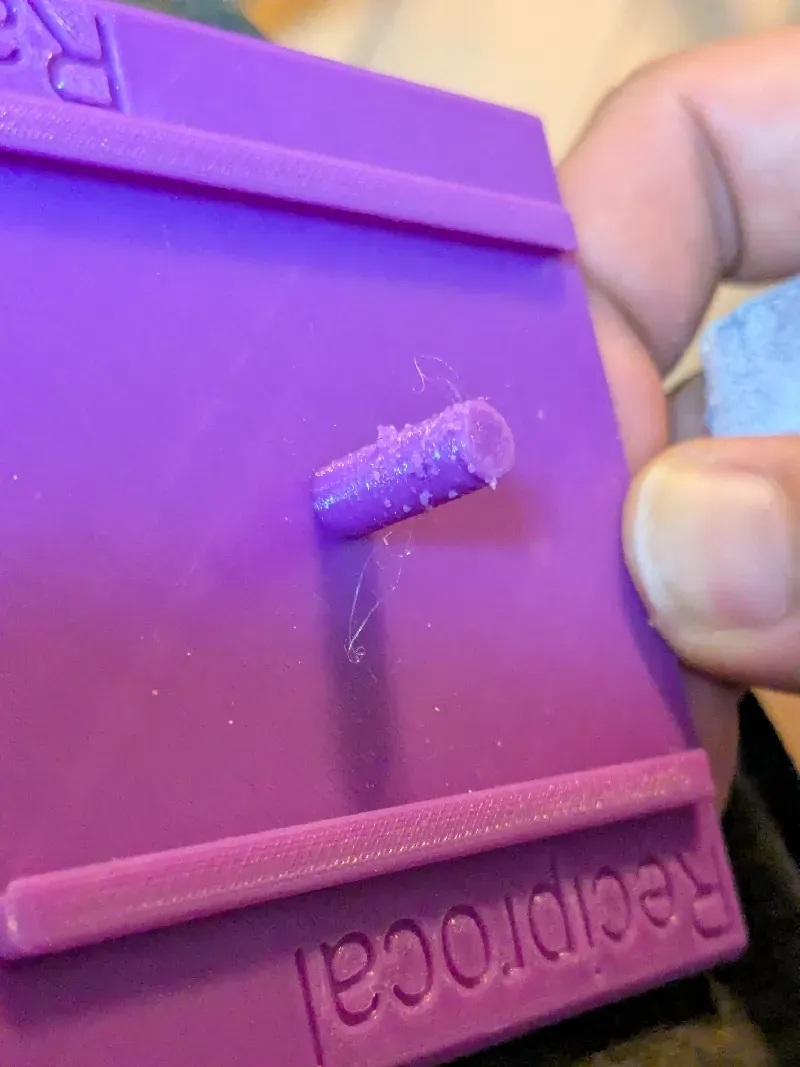
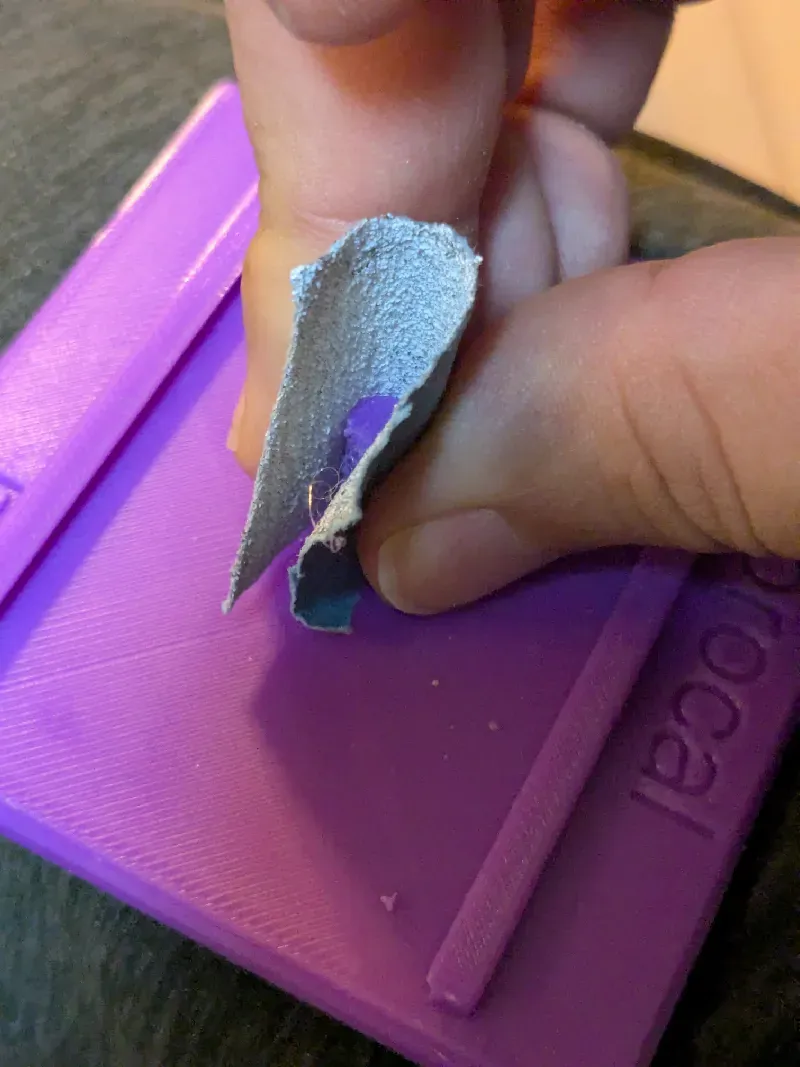
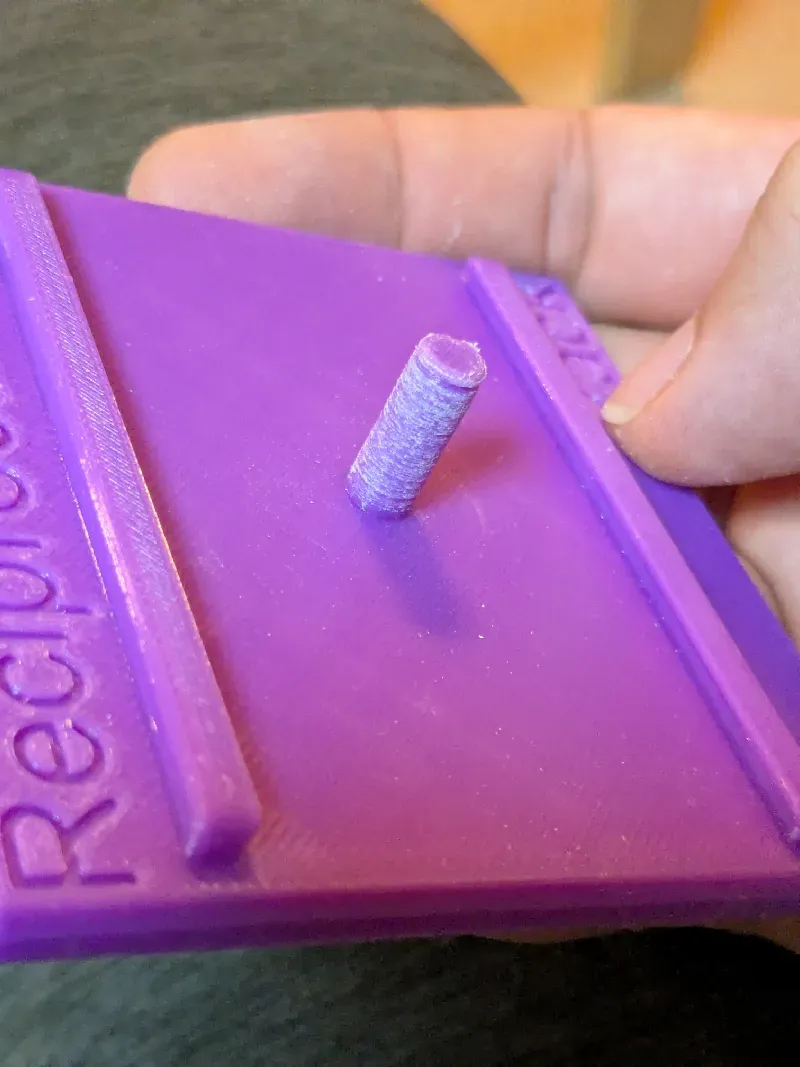
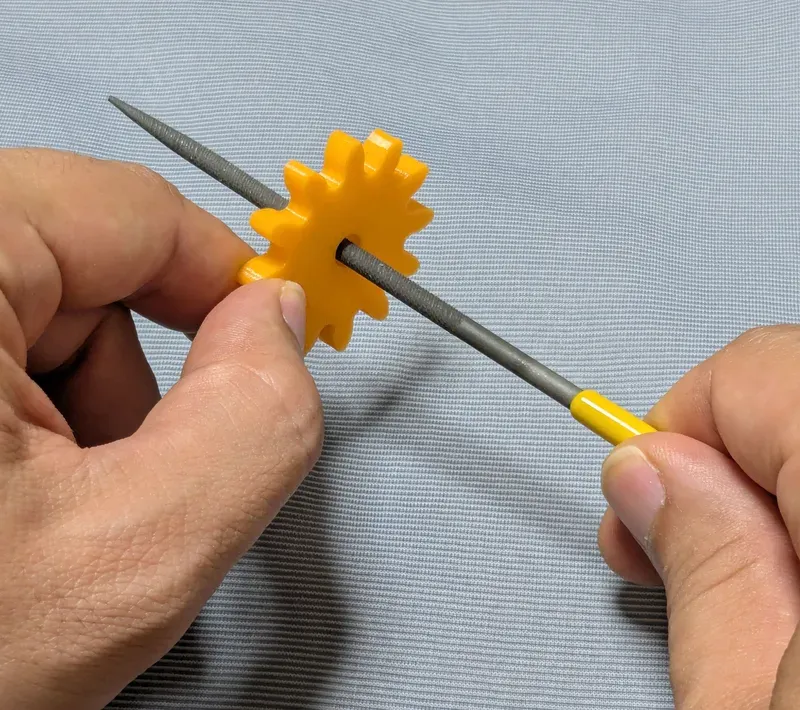
If you feel the gears do not rotate smoothly due to an elephant effect, widen the hole slightly by using a thin round bar file.
Without those issues, the parts should rotate very smoothly with minimal friction.
Assembly
Secure the parts with the retaining ring.
Updates
- 2026-04-26 v154
- Reduced the thickness of the flexible wall down to 0.4 mm, to have more flexibility and smoother rotation.
Other examples
You may also be interested in the models in my educational mechanical mechanism examples.
Find them in this collection:
https://makerworld.com/collections/15048577-my-educational-mechanism-models
Happy printing!
Acknowledgement
I got into gears thanks to K.$uzuki's amazing articles and YouTube videos. Many of the mechanisms shown in this series came from the introductions on his website. He also makes excellent gear models himself. This series wouldn’t have existed without his inspiration.
I learned a lot about technical detail of designing gear tooth profiles from Haguruma-No-Hanashi website. I’m truly grateful for that.
License
- The 3D model(s) are licensed under Creative Commons Attribution 4.0 International.
- However, the text and images on this page are copyright reserved.
License



Comment & Rating (4)