Search models, users, collections, and posts

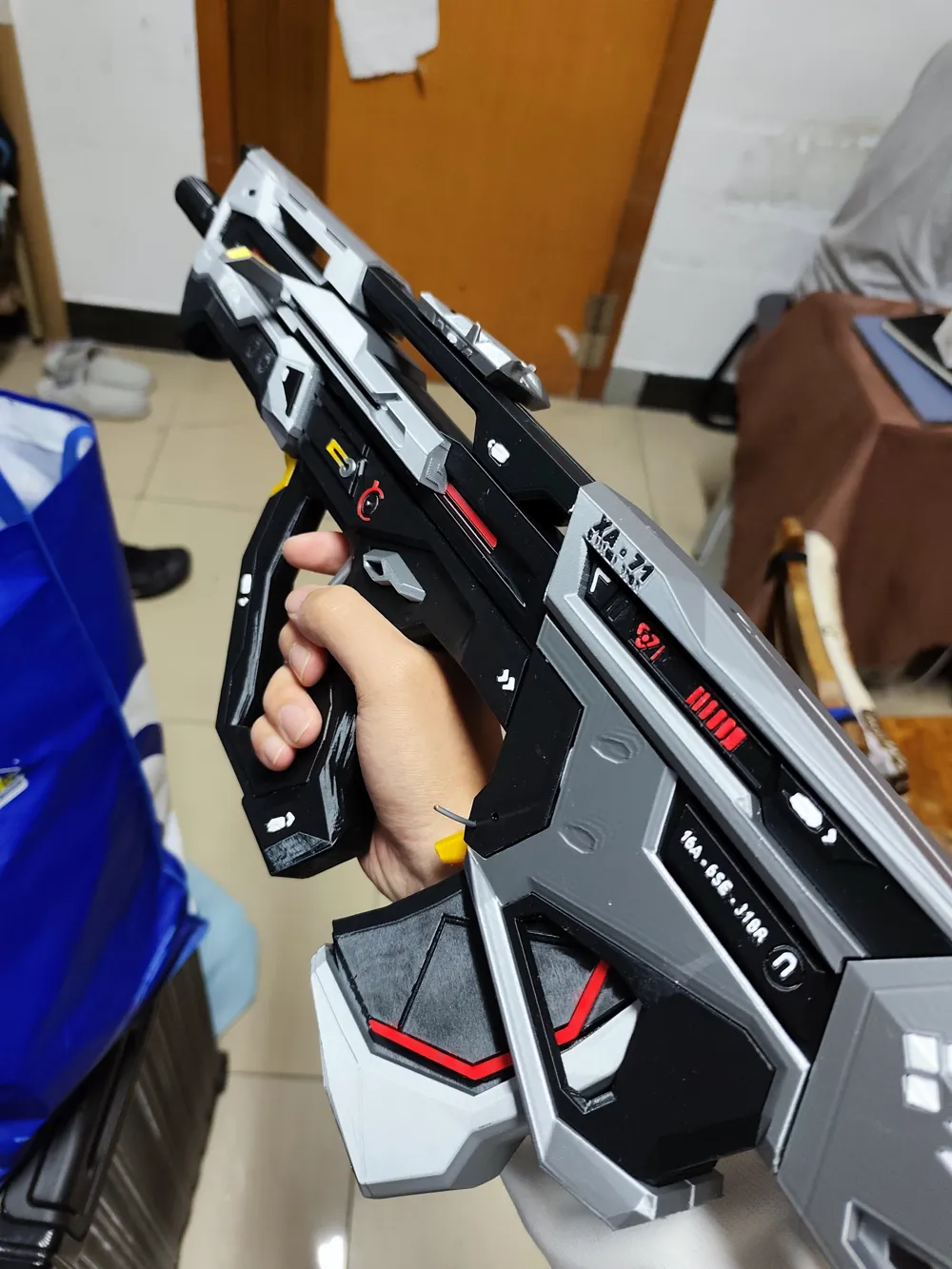
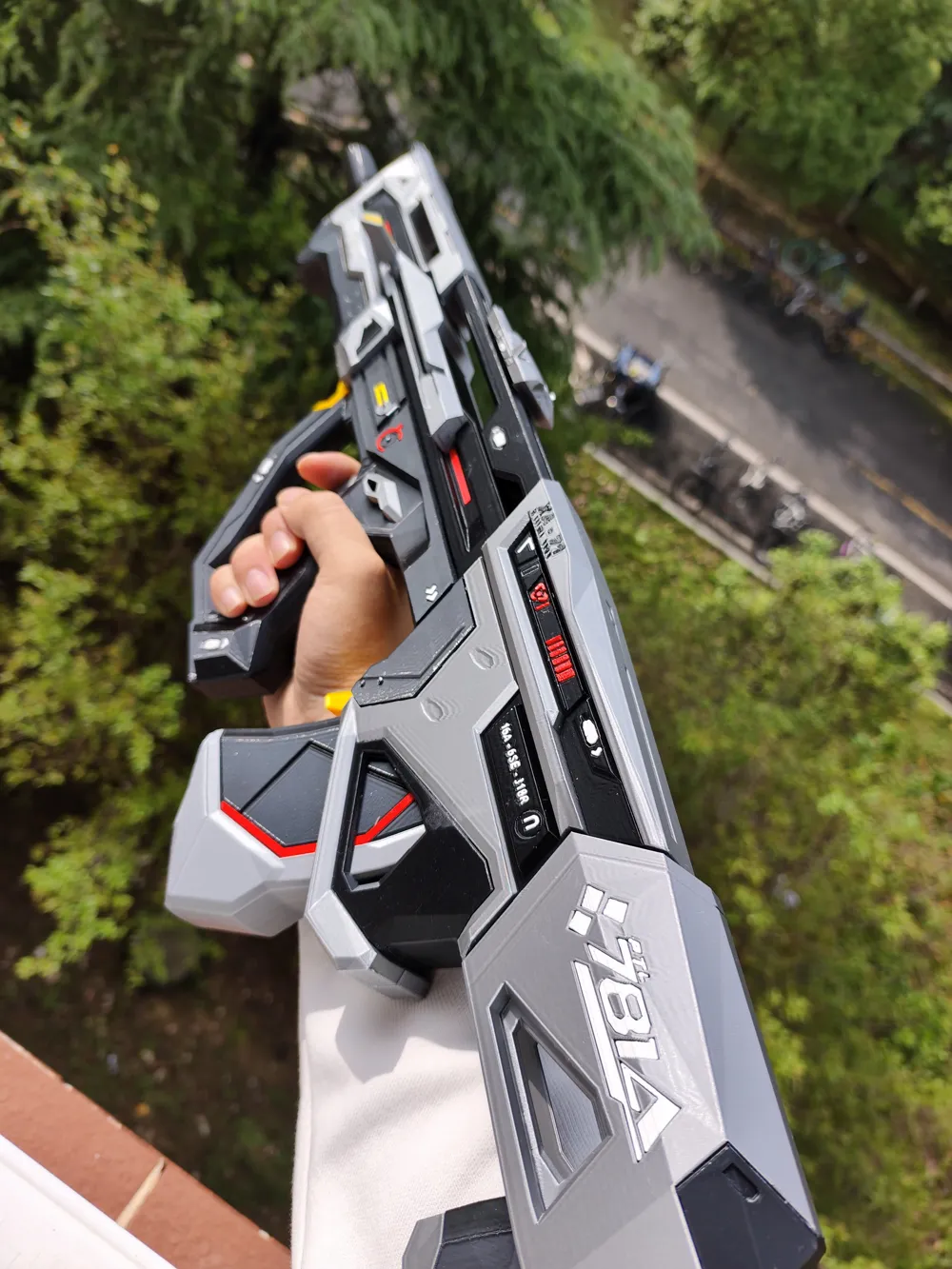
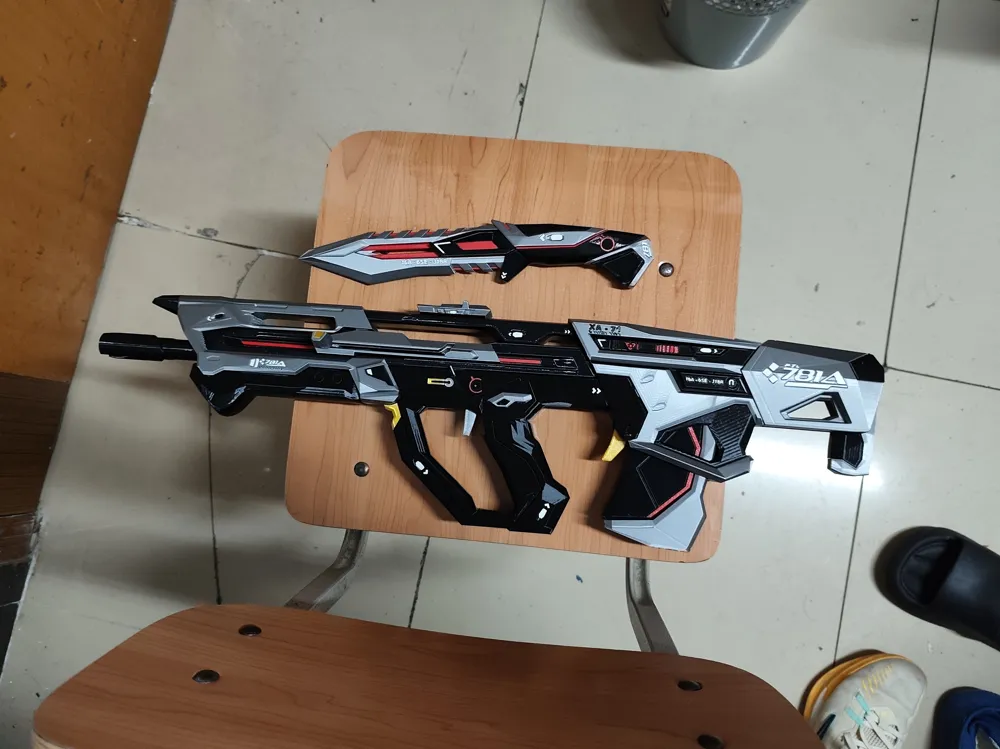

781-A Protocol Boarhound
IP Report
GIF
GIF
GIF
Print Profile(3)
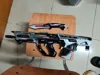
0.2mm layer, 2 walls, 10% infill
Designer
42.6 h
12 plates
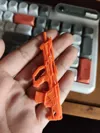
0.12mm layer, 3 walls, 15% infill
Designer
2.2 h
1 plate
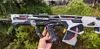
0.2mm layer, 2 walls, 10% infill
Designer
45.9 h
16 plates
Open in Bambu Studio
Boost
1067
2729
15
17
153
38
Released
Description
Content has been automatically translated.
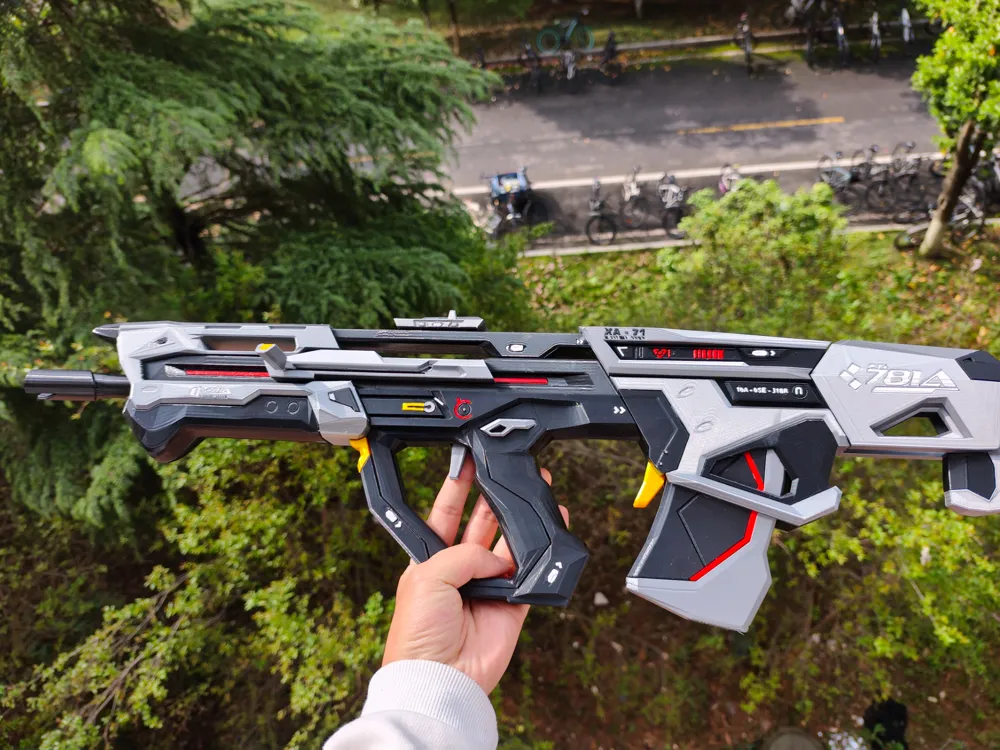



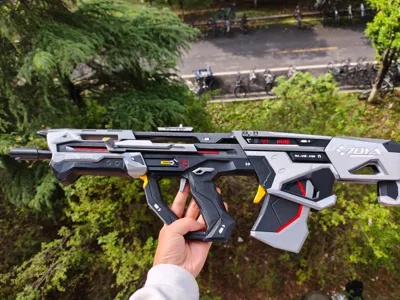
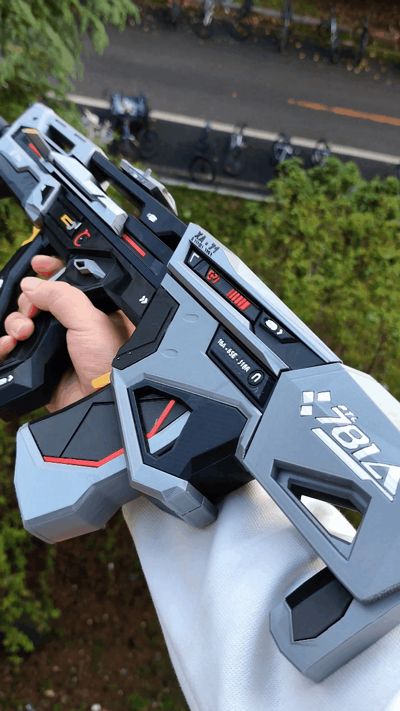
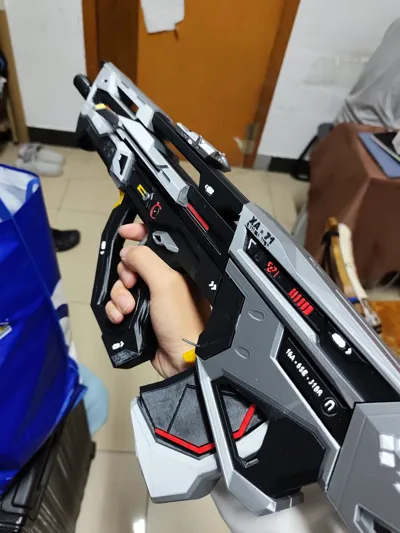
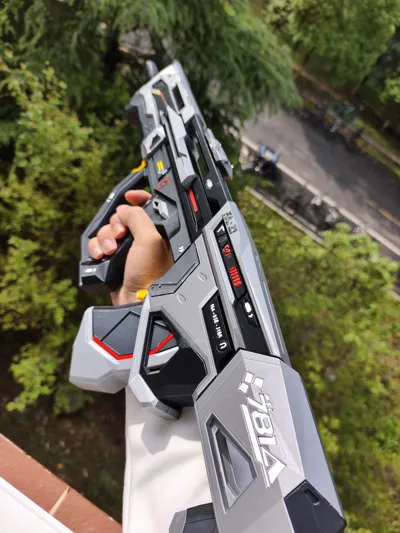
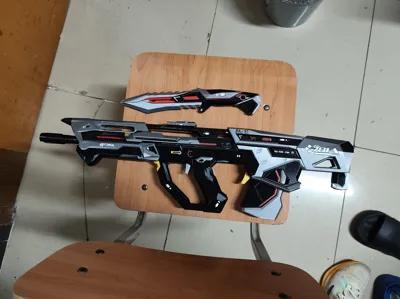
Scale model, approximately 70cm long, non-firing, designed with full color separation and modular parts, no AMS required. Besides the printed parts, two rubber bands are needed; no other hardware accessories.
It is recommended to arrange the model parts on the build plate yourself. It is also advised to enable auto supports and add a skirt. Large parts should be printed separately. My plate arrangement is a simplified version because I am sufficiently familiar with my printer and filament conditions. Under these premises, to pursue printing efficiency, I placed many parts of the same color on the same plate, resulting in a very low print fault tolerance. I only tested one version of this print profile, and no issues like spaghetti or layer shifting occurred; the print result is the current finished product.
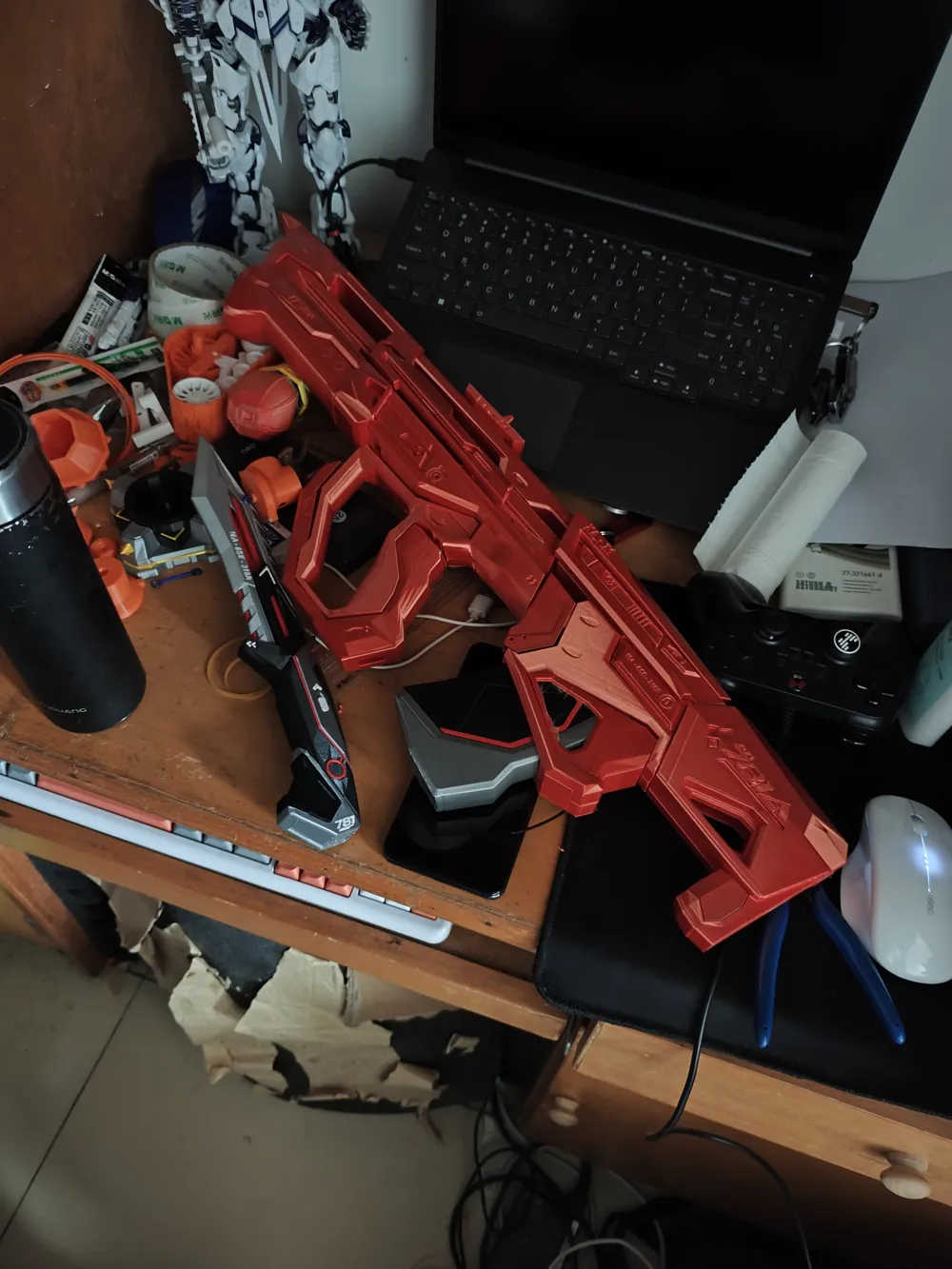
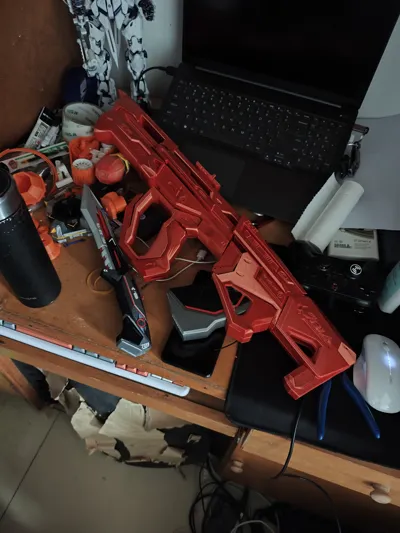
The monochromatic test version in the last image was printed during model testing to identify any serious design flaws and check tolerance fit. PLA Silk was used with two walls and 2% infill, so some areas broke during printing. I believe this amplifies the lack of part strength, also to save my test filament, of course. Therefore, I later made specific modifications to these flawed areas, for example, thickening the base of slender, tall parts in the model, making transition fillets smoother, and using modifiers to individually increase infill in certain sections, ensuring material savings while also improving print success rate.
My personal printer is the Bambu Lab A1. The main filaments used are Dot-W PETG Black and Dajian PETG Silver. The print bed is a PEI golden textured plate (officially included). Nozzle temperature is 260 degrees Celsius, and the print bed temperature is 80 degrees Celsius. I regularly clean the print bed with facial cleanser (about once a week) and never touch the print bed's working area with bare hands. I always allow it to naturally cool to room temperature before removing the model. Smaller, fine print parts of the model are removed with flush cutters and then placed into the installation areas with tweezers. Finally, a small hammer or other hard object with a flat surface is used to press them into the installation holes. After installation, a dab of super glue can be applied to make the model more secure.
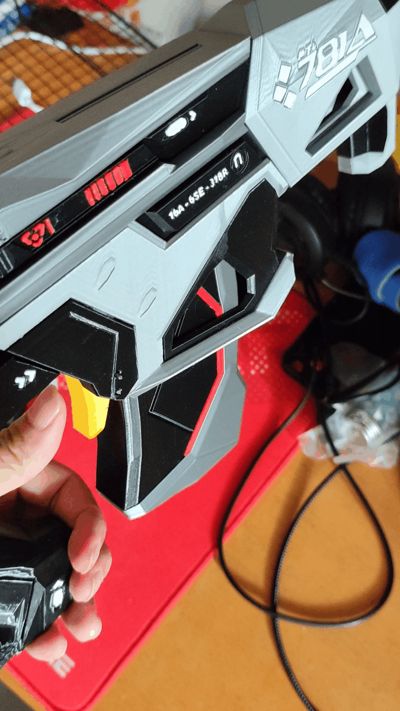
PS: The small text parts are difficult to install and require a lot of patience. Alternatively, they can be colored with a paint pen.
The original files include the model in an assembled state
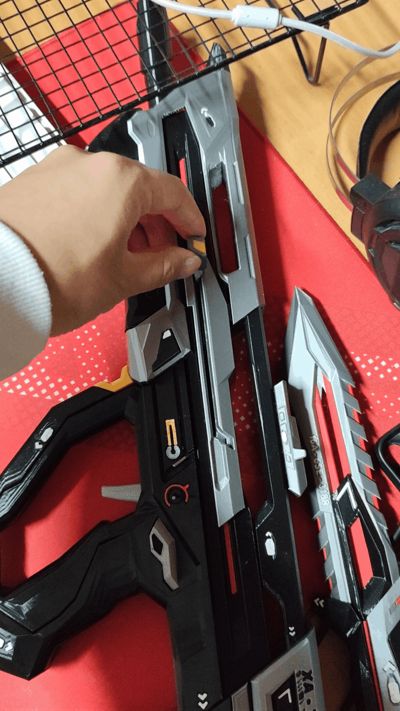
Assembly animation




Trigger part schematic diagram, insert a filament strand into the hole to act as a pivot shaft
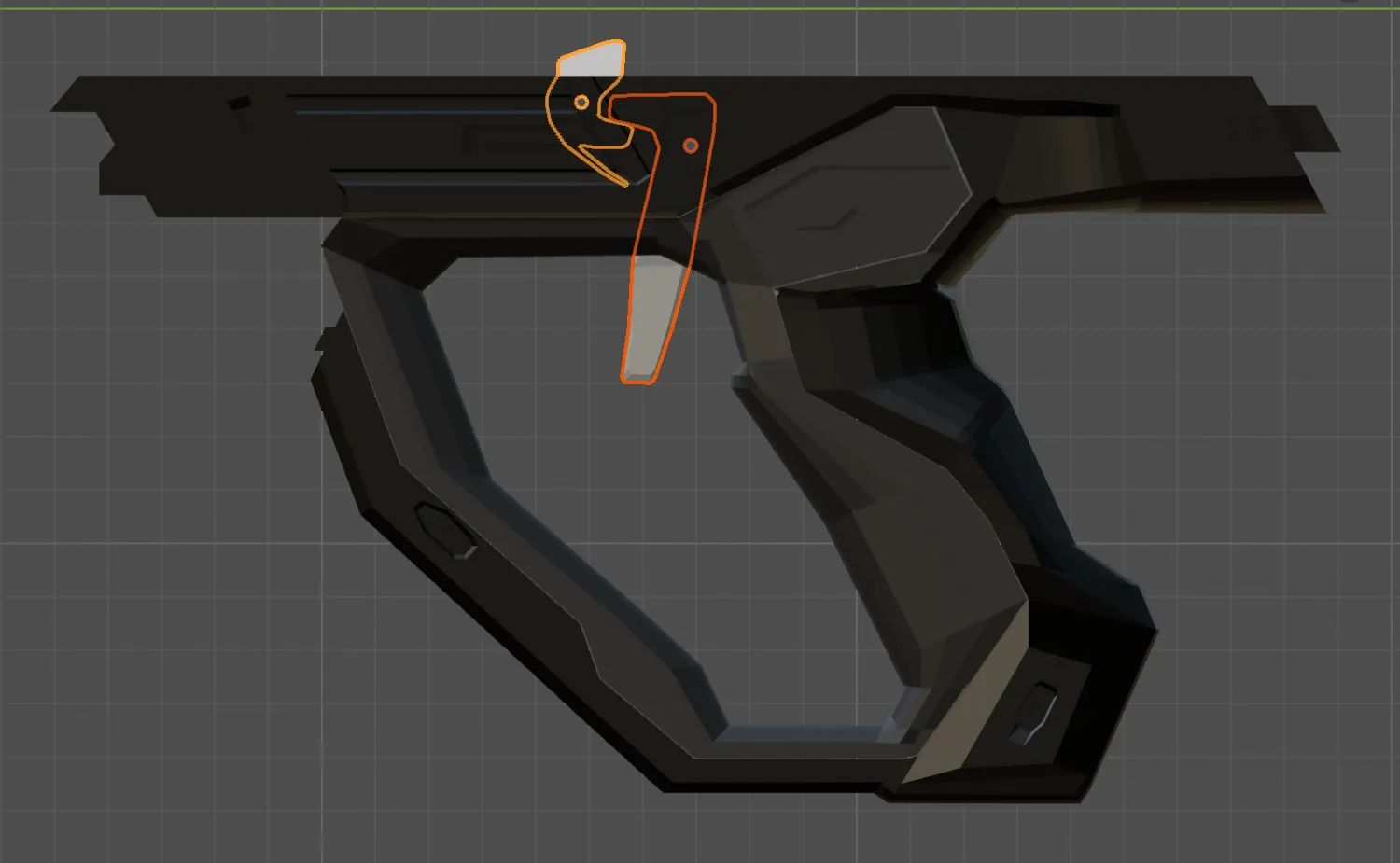
Internal structure schematic diagram of the front bolt

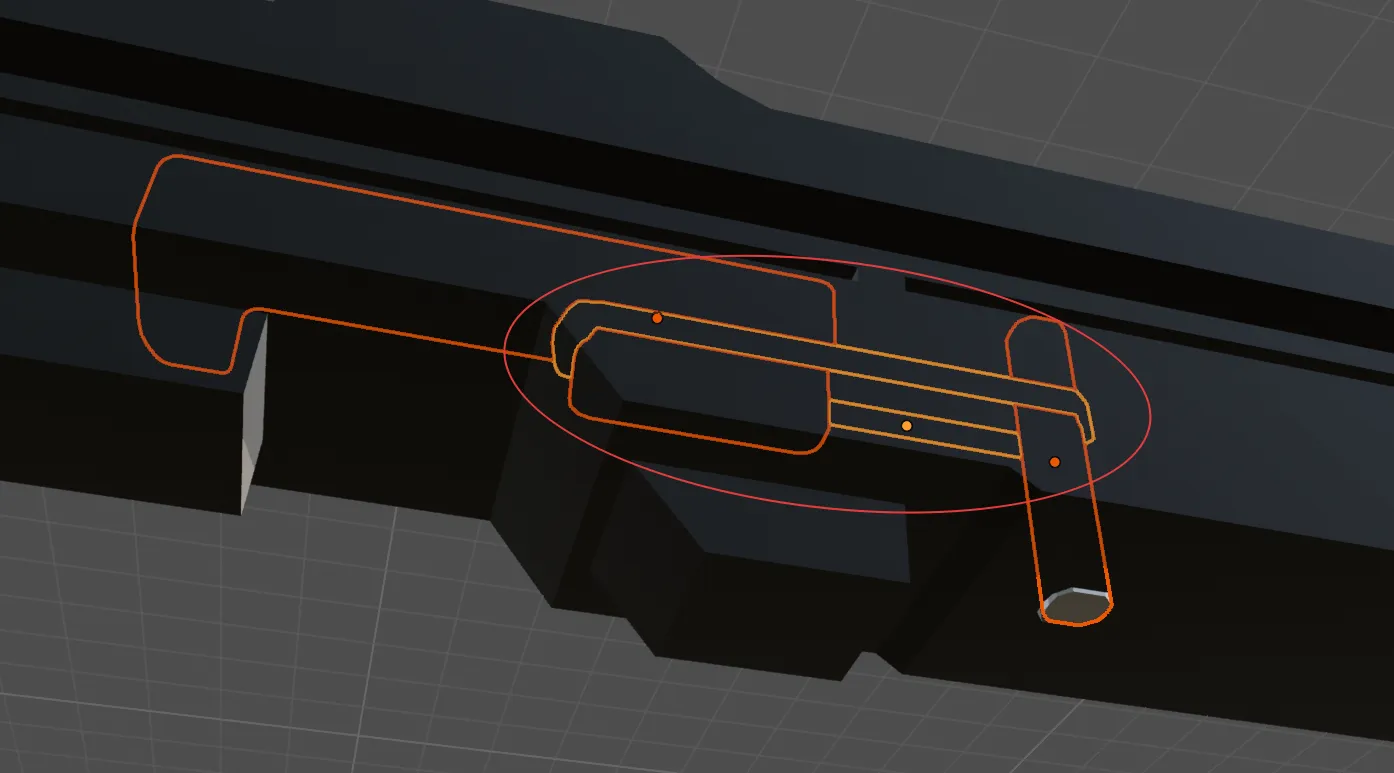


Assembly takes only one minute...
The red circles indicate elastic rubber bands, I used two.
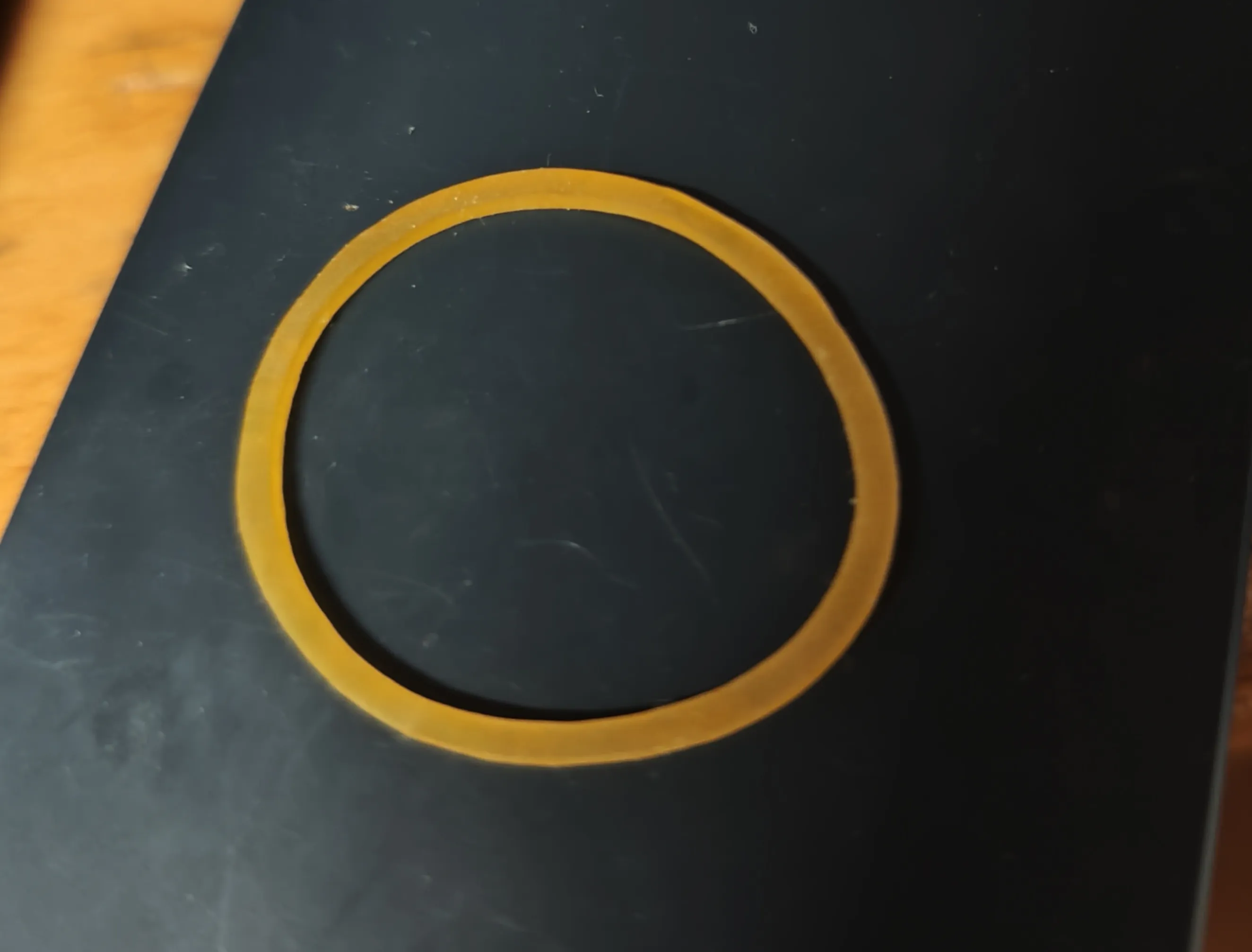
After assembling the above parts, it is recommended to dry-fit them before gluing. It is not recommended to permanently glue any parts prematurely. Decorative labels and text are recommended to be printed and installed last.
License

This user content is licensed under the MakerWorld Exclusive License.
You may create derivative works based on this object, provided that all such derivative works are published exclusively on the MakerWorld platform and include proper attribution to the original creator. You may not share, upload, host, distribute, or publish this object—or any derivative work of this object—on any other digital platform, marketplace, or distribution channel. Commercial use of this object and any derivative works is strictly prohibited. This includes, but is not limited to, selling, renting, sublicensing, or using the object in any context in which you receive monetary compensation or other financial benefits.


Comment & Rating (15)