
Weapons: Early-High Medieval 800-1400 CE ~ 12+ tot
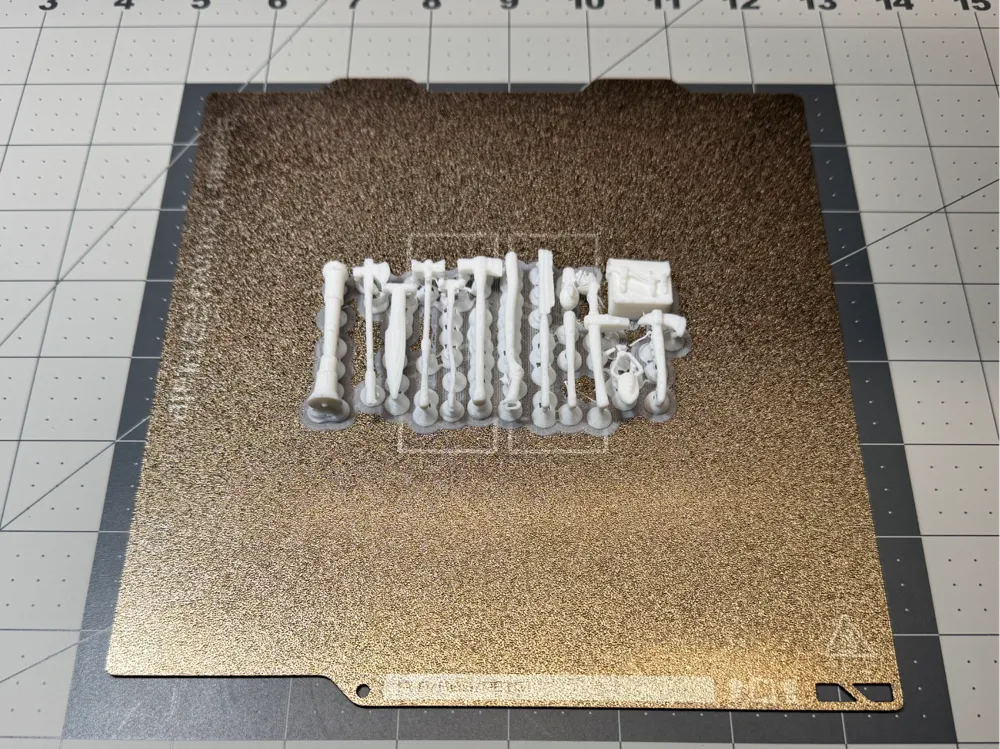
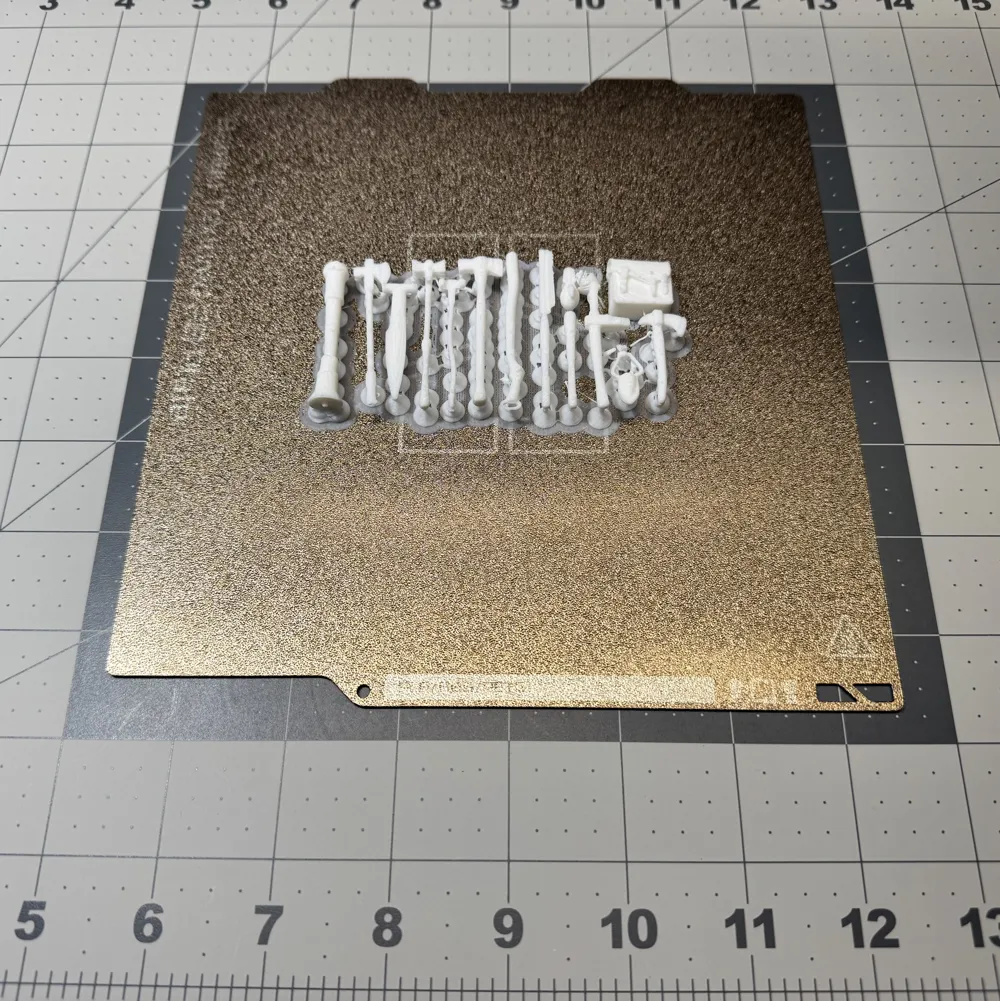
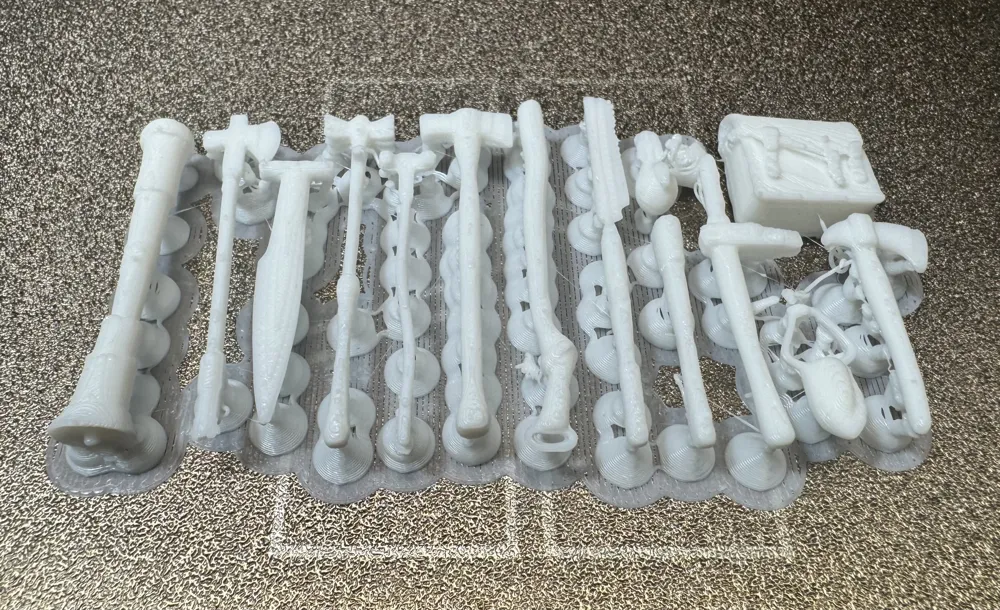
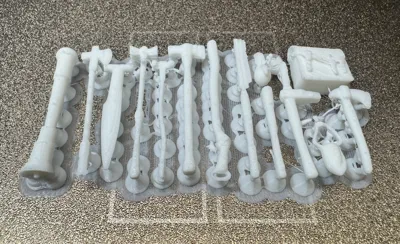
Print Profile(1)
Description
Series 4: Medieval Weapons
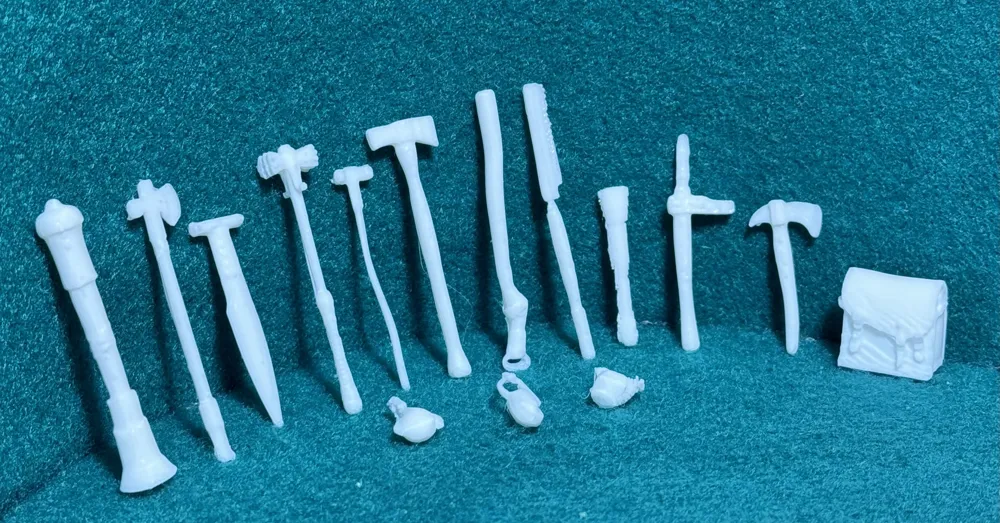
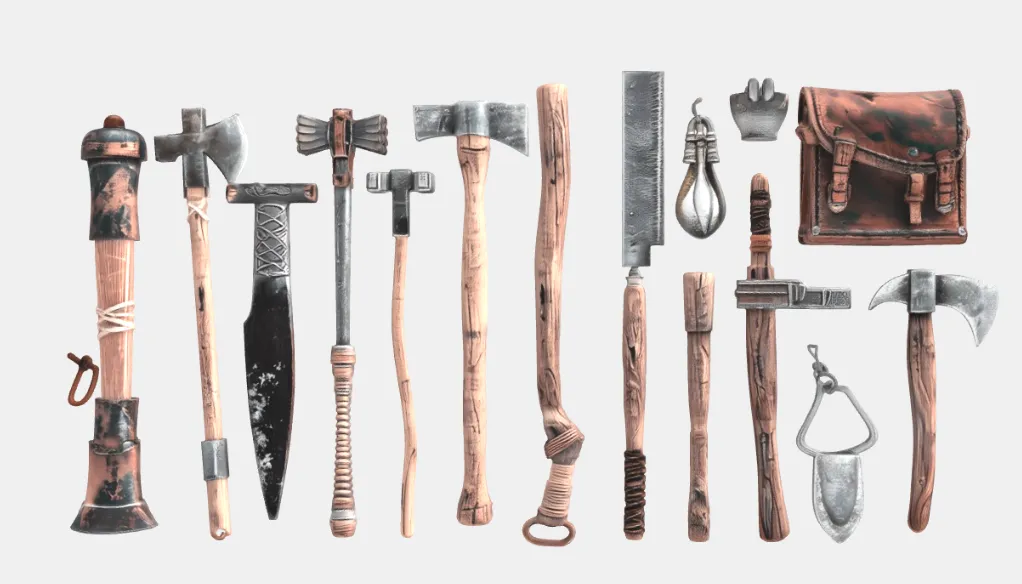
When I asked an AI the following question; “Could you please tell me at what period during history this set of weapons were used?”
I got this reply;
Most of these are typical of the early–high medieval period (roughly 800–1400 CE), with a strong match to Viking Age through High Medieval weapon types.
Reasons (brief):
- Single-bit and bearded-style axes,short wooden hafts and simple forgedheads → common Viking Age (c. 800–1100) and continued into medievalEurope.
- Small hammers/war‑hammers andflanged heads → used from earlymedieval into High Medieval for fightingagainst mail and early plate.
- Simple blades, chisels and tool-likepieces mixed in — some items look likewoodworking/tools that coexisted withweapons across many centuries, so afew could be non-military tools.
Alternative: if these are modern reproductions or mixed tool set, they could be assembled from different periods; visually they most closely match 9th–13th century Northern/Western Europe.
Then I asked;
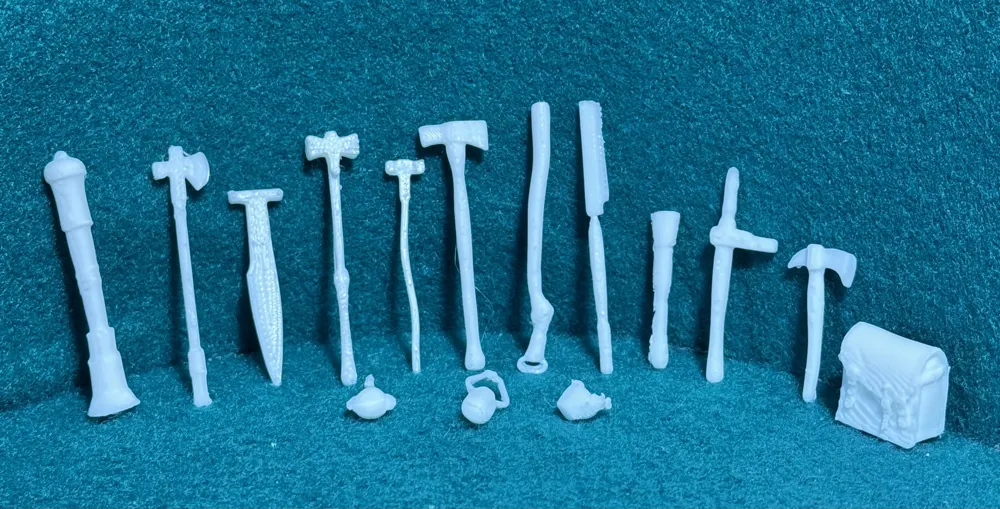
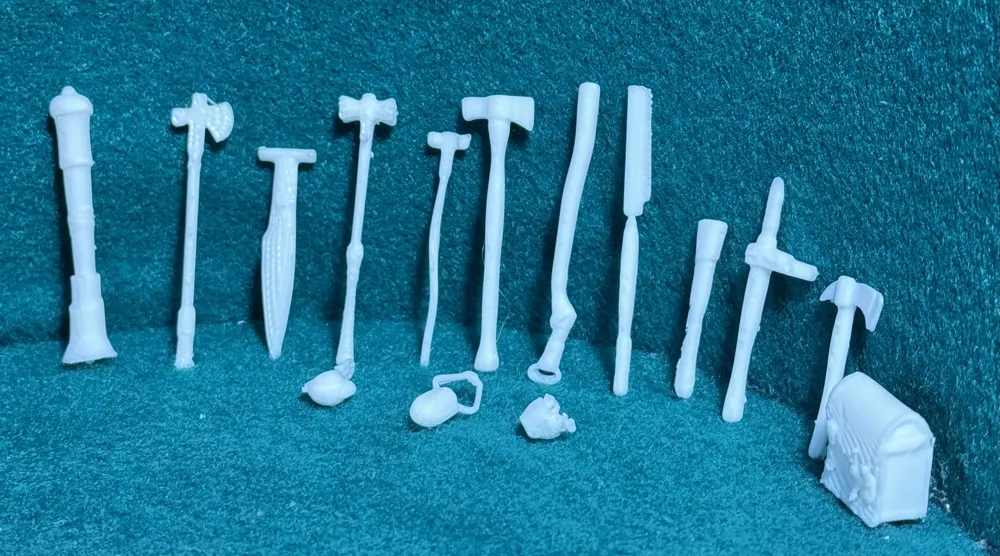
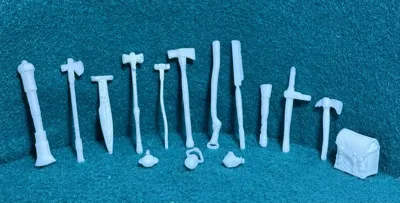
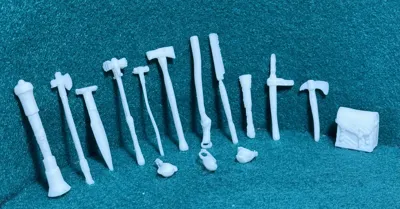
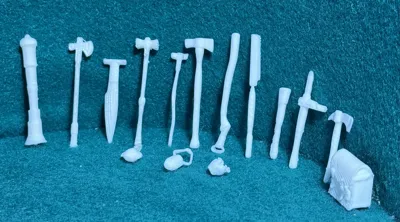
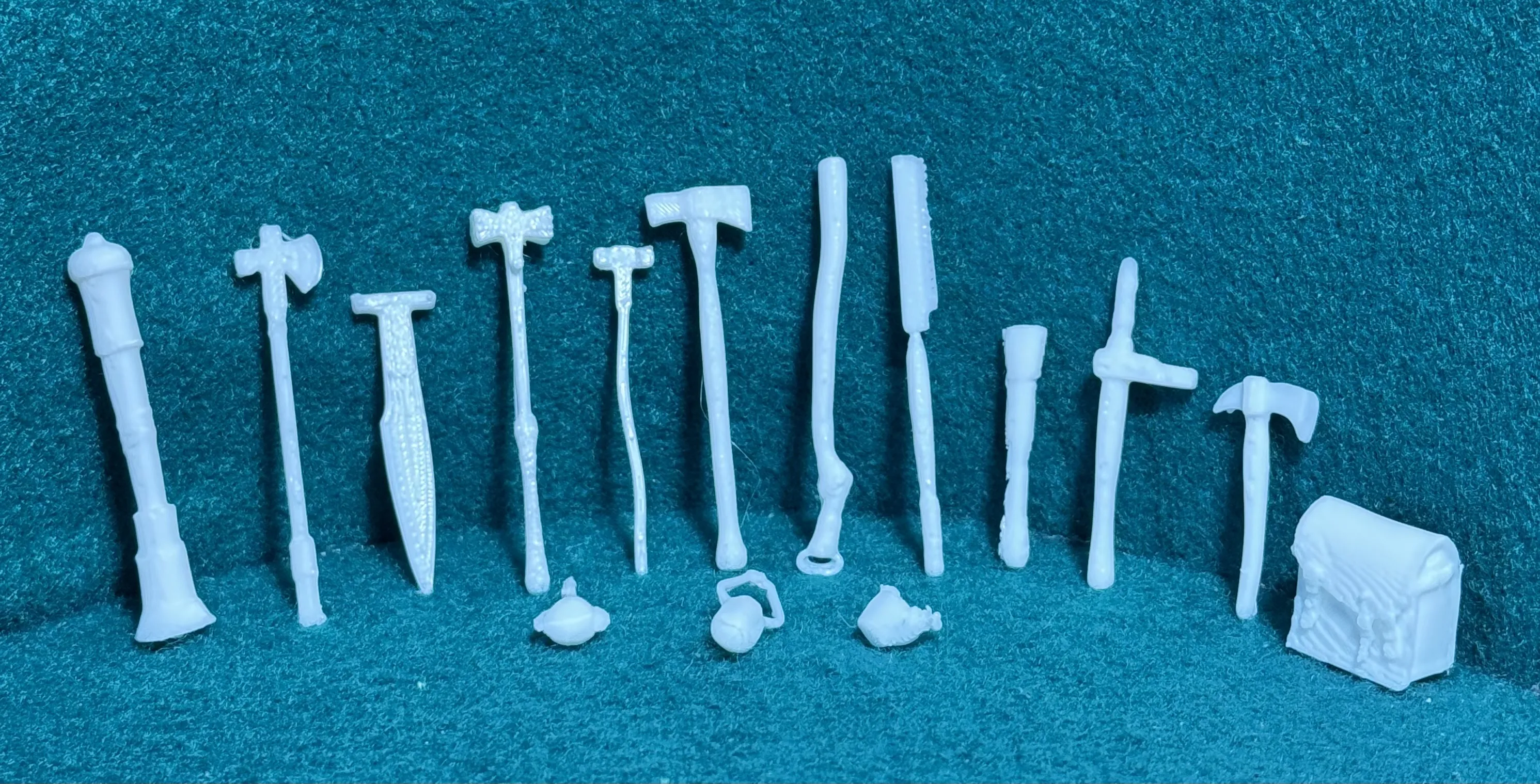
Would you want to take a 'stab' (pun intended) at naming these weapons left to right? :-)
The reply;
- Broad “bearded”/Dane-style axe
- Hand-axe / hatchet
- Light bearded axe (utility/combat)
- Small war hammer / hammer-pick
- Short poll/maul (blunt hammer)
- Horseman’s pick / pickaxe-style warpick
- Long hafted war-hammer / smallpollaxe head
- Broad chopper / cleaver-style blade(tool or short axe)
- Heavy chisel or froe (wood-workingtool)
- Lead/stone throwing weight or plumbbob (could be a slingweight)
- Leather field pouch / bag (not aweapon)
- Small awl / punch (tool)
- Hooked drawknife or sickle-like tool(could be agricultural)
- Seax / short single-edged knife
Many items are tool-like or ambiguous; several forms were used both as tools and improvised weapons in the Viking–Medieval period.
That's it. here are some images:
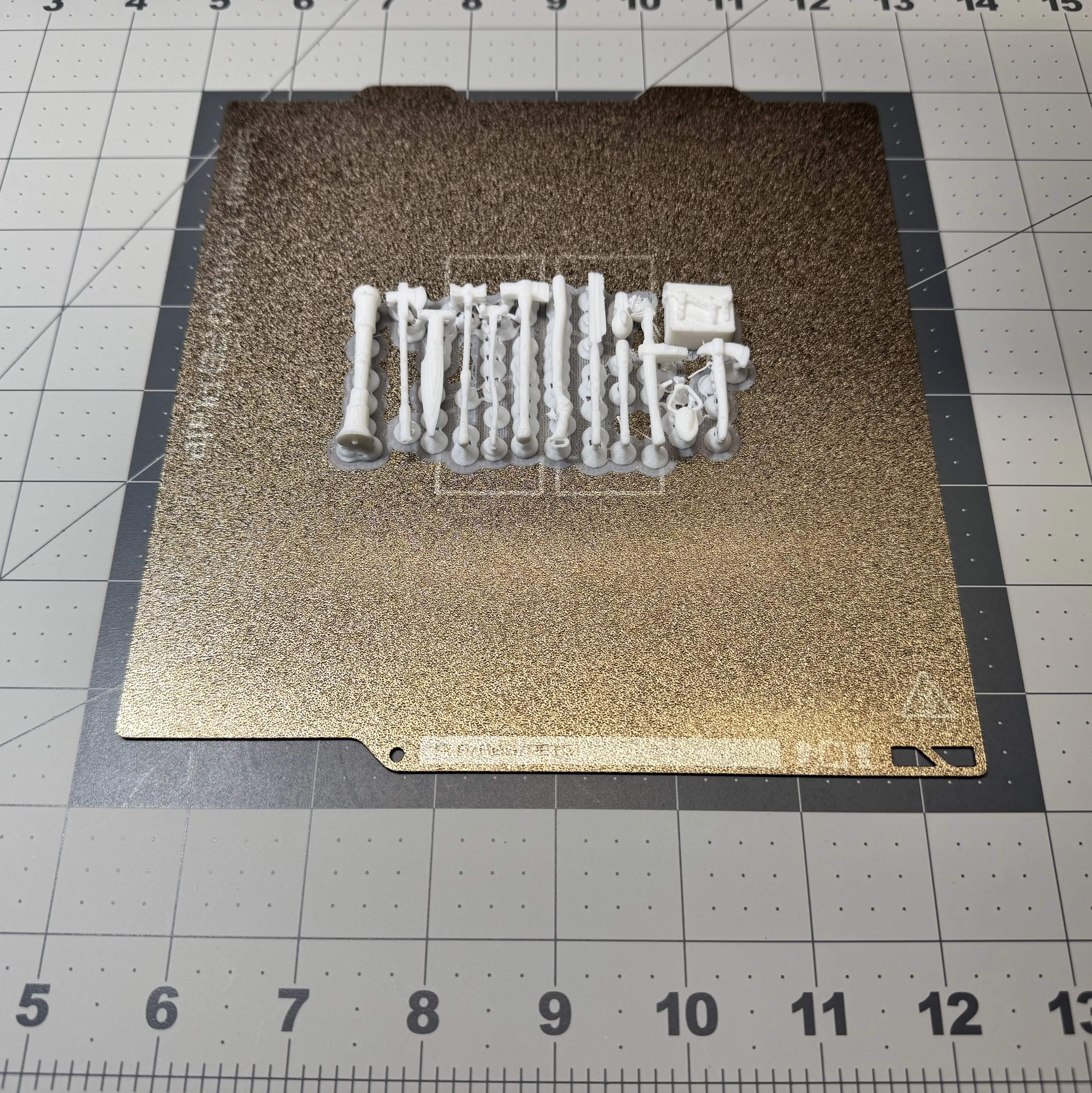
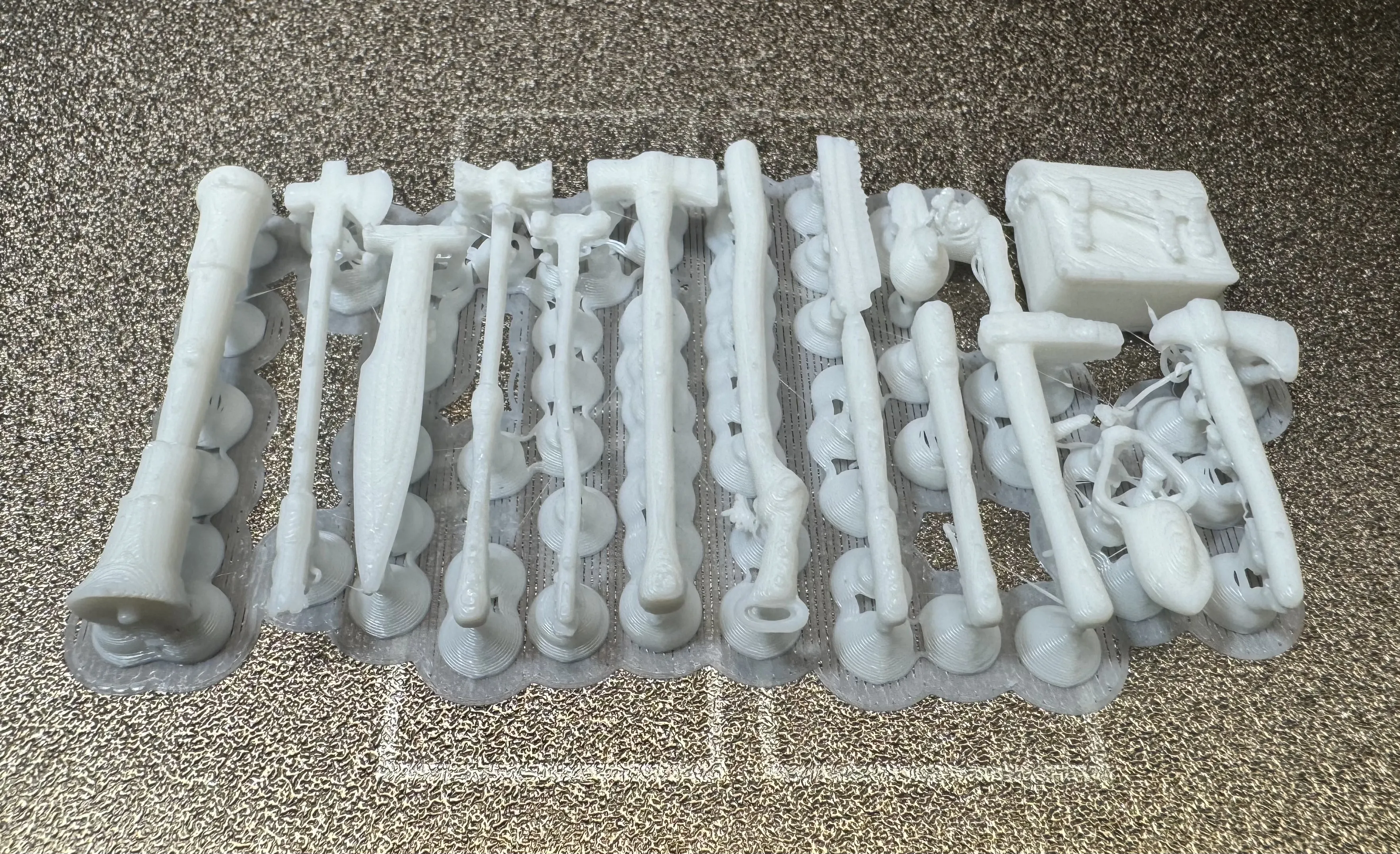
Other AVAILABLE ‘Weapon Themed’ Models
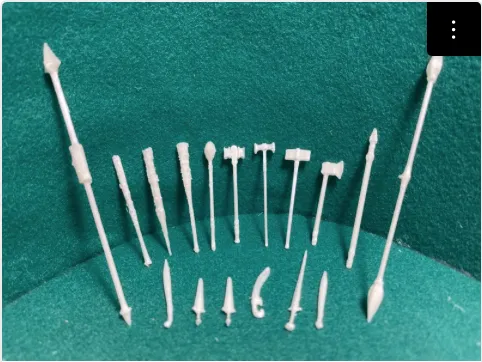
- Medieval Weapons - Used via Persian/Greek Battles found HERE
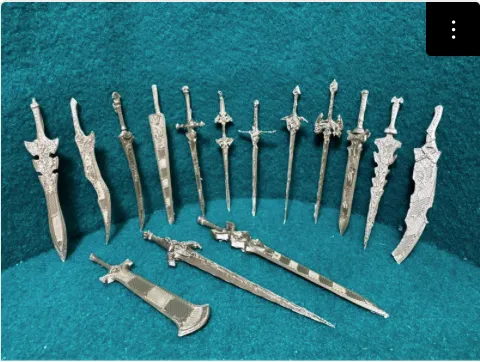
- RPG Swords - 15 Different - Series 3 found HERE
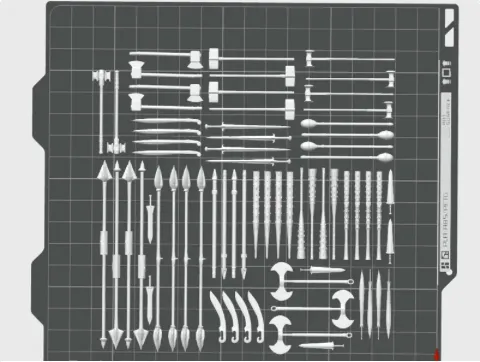
- Medieval Weapons Updated Miniatures RPG 76 total found HERE

—♚—♛—♝—♞—♜—♟—
⚠️ Print & Handling Notes
These models include fine, delicate details.
A strong filament is recommended — or anneal your set for additional strength (see below).
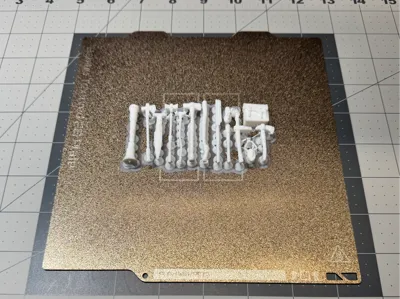
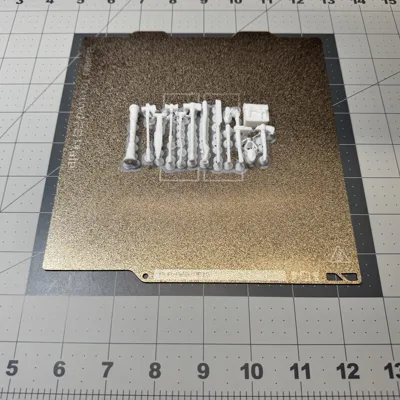
Bambu Studio Settings
Printer Settings
• Nozzle Diameter → 0.4 mm
• Compatible Material → PLA+
Filament Settings
• Nozzle Temperature (first layer) → 205 °C
• Nozzle Temperature (others) → 200 °C
• Bed Temperature (first layer) → 60 °C
• Bed Temperature (others) → 50–55 °C
• Cooling Fan:
◦ Layer 1–2 → OFF
◦ Layer 3+ → 100%
Quality
• Layer Height (Standard) → 0.20 mm
• Initial Layer Height → 0.20 mm
• Line Width → 0.45 mm
• Elephant Foot Compensation → 0.15 mm
Speed
• First Layer Speed → 20 mm/s
• Outer Wall Speed → 35 mm/s
• Inner Wall Speed → 50 mm/s
• Infill Speed → 50 mm/s
• Travel Speed → 120 mm/s
Acceleration / Jerk
• Default Acceleration → 1000 mm/s²
• Outer Wall Acceleration → 500 mm/s²
• First Layer Acceleration → 300 mm/s²
• Travel Acceleration → 2500 mm/s²
• Jerk (XY) → 8 mm/s
Strength / Infill
• Wall Loops → 3
• Top Layers → 4
• Bottom Layers → 4
• Infill Density → 20%
• Infill Pattern → Gyroid
• Sparse Infill Anchor Length → 5 mm (🔔 Note: increase to 10 mm if you see weak infill connections)
Skirt & Brim
• Skirt Loops → 3
• Skirt Distance → 2 mm
• Skirt Layers → 1
Retraction
• Retraction Distance → 4 mm
• Retraction Speed → 40 mm/s
• Z-Hop → 0.2 mm
• Wipe While Retracting → Enabled
• Retract on Layer Change → Disabled
• Minimum Travel Before Retraction → 1.0 mm
Supports
• Support Style → Tree
• Top Contact Z Distance → 0.25 mm (detachable, fixed)
• Support Density → 15%
• Support Interface Pattern → Grid
• XY Distance → 0.5 mm
• First Layer Support Gap → 0.3 mm
—♚—♛—♝—♞—♜—♟—
♨️ ANNEALING — Hardening Your Chess Pieces
Annealing your PLA models can improve strength by 10 – 20 %.
If you plan to play with these sets regularly, annealing is highly recommended.
If your goal is display or occasional play, annealing is optional.
The appearance and finish remain unchanged.
🔗 More info: Annealing PLA Prints for Strength — Easy Ways (All3DP)
https://all3dp.com/2/annealing-pla-prints-for-strength-easy-ways/
—♚—♛—♝—♞—♜—♟—
Please note:
Because I’m retired and on a fixed income, I print these models at a smaller scale to save on filament. All of these models are printed at 70% - 80% of the model uploaded size.
♟️
Thank you! Thank you! To all of you who Boost my uploads. Because of YOU I can get my filament now from “Maker's Supply”, saving me from using real money.
♟️
These creations are made purely for the joy of sculpting and sharing. Printing at a reduced scale can sometimes affect the quality of fine details; printing at full or larger sizes will yield smoother, more refined results.
♟️
Also, as a 77-year-old maker with hands that sometimes have a mind of their own, I occasionally have to use a little hot-glue surgery to reattach delicate parts. Please handle models with care—especially thin necks, joints, and fragile connectors. Take a moment to study your model before removing supports… or you might find yourself reaching for the glue gun too! 🥲


License

You shall not share, sub-license, sell, rent, host, transfer, or distribute in any way the digital or 3D printed versions of this object, nor any other derivative work of this object in its digital or physical format (including - but not limited to - remixes of this object, and hosting on other digital platforms). The objects may not be used without permission in any way whatsoever in which you charge money, or collect fees.


Comment & Rating (0)