
Gridfinity Baseplate That Just Fits Your Drawer
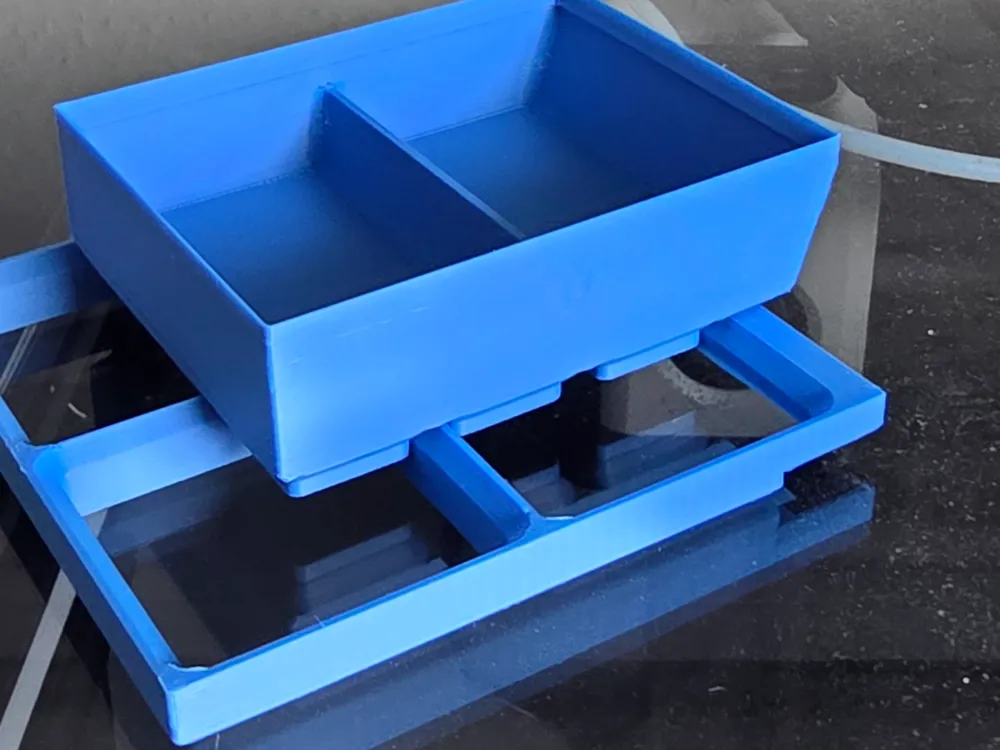
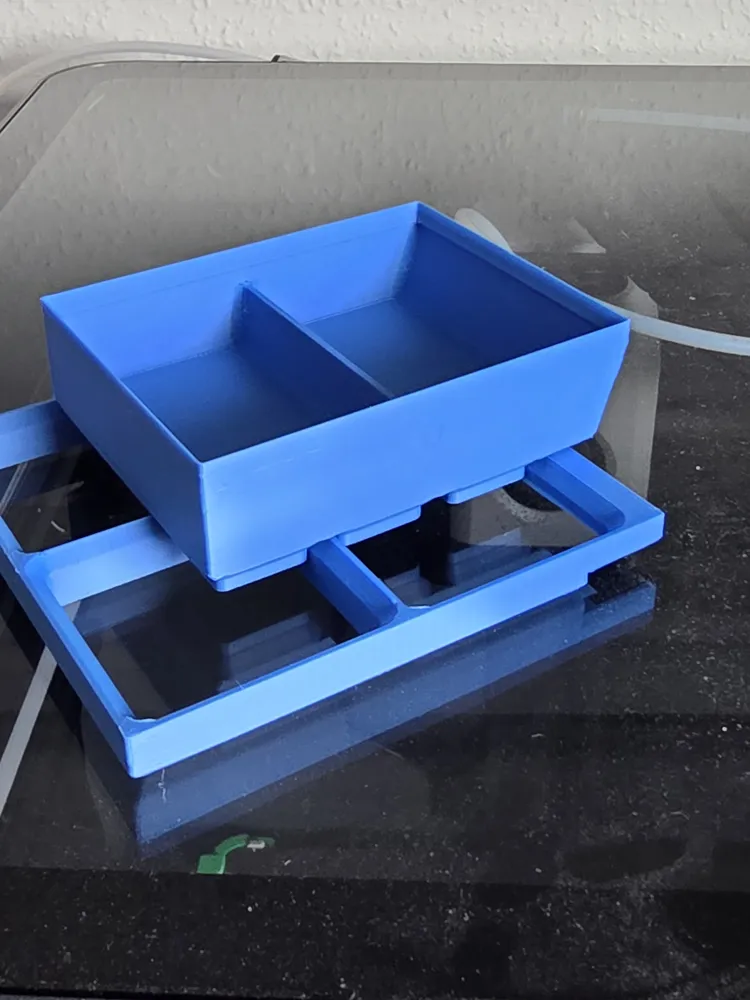
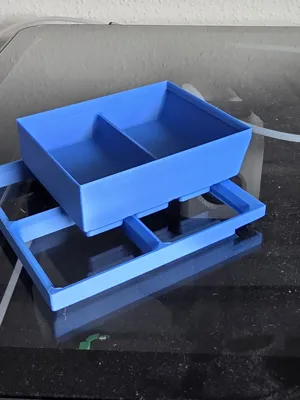
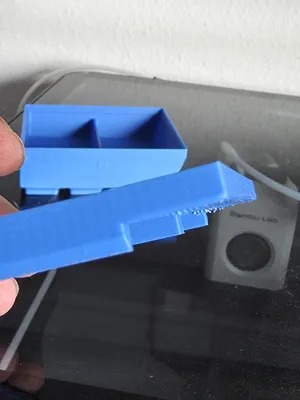
Print Profile(1)
Description
Gridfinity Precision Baseplate Generator
You measured your drawer
You input the measurments into the generator
Add some costemizations like hight or bottom clerance.
Print a perfect fit including half-grid (21mm) and filling.
🗂️ Need Bins to Fill It? Pair this baseplate with my highly costemizeble Gridfinity Parametric Bin Generator — diveders, finger scoop, square corners, flared walls, custom overhangs, and 21 mm pitch support to match every cell this plate can produce.
➡️ [Gridfinity Parametric Bin Generator → link here]
📐 Type Your Size in Any Unit — It Just Works
Enter your dimensions in Gridfinity units, centimetres, or inches — whichever is on your tape measure. Each unit system has its own clearly labelled input section so there is no confusion about which field is active. Sub-21 mm remainders are automatically distributed as equal margins on opposing sides. You get the largest possible grid that physically fits, with no manual arithmetic.
🔲 Every Pocket Is a Real Pocket — No Dead Walls
This is the problem most generators silently have: enter a fractional size like 5.5 units and you get 5 full pockets plus one half-width column with a plain straight wall. Bins cannot seat into a straight wall. This generator uses only whole 42 mm cells for the main grid. Every socket is geometrically complete. Every bin clicks in.
🧩 Optional 21 mm Edge Fill — Correctly Shaped
When you enable half-cell fill, the remaining space at the right and back edges is filled with rectangular pockets — not 21×21 squares stacked in pairs like every other implementation does it. The geometry is:
- Right edge strip — pockets are 21 mm wide × 42 mm deep (one per row, full bin depth)
- Back edge strip — pockets are 42 mm wide × 21 mm deep (one per column, full bin width)
- Corner — one true 21×21 mm pocket where both strips meet
Mini Gridfinity bins seat perfectly. Standard 42 mm bins are never compromised.
🎚️ Pocket Tolerance Adjustment — Dial In Your Printer
Every printer is slightly different. A single pocket_tolerance parameter expands or contracts every pocket opening uniformly. Start at 0.0 mm, print a small test section, and adjust in ±0.1 mm steps until the fit is exactly right — snug but not tight, firm but not stuck. No other baseplate generator on MakerWorld offers this.
🪜 The Drawer Ledge Notch — Unique to This Generator
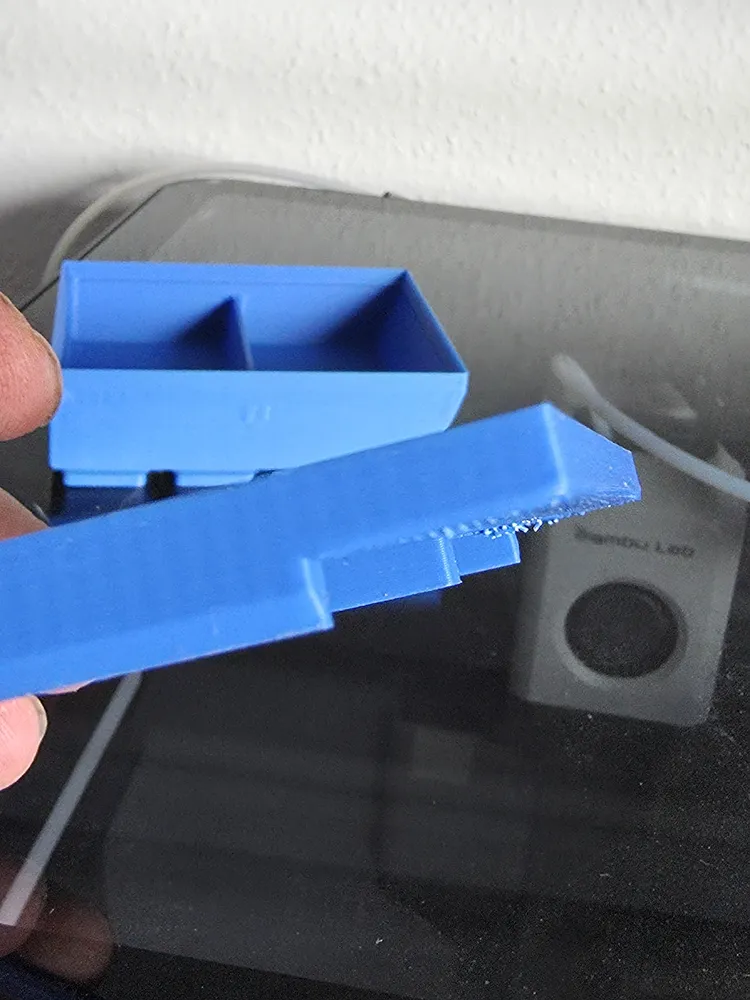
A configurable step relief is cut from the bottom of any edge you select. The plate slides under a drawer lip, locks behind a shelf rail, or sits flush against a frame bracket without shimming or filing. The notch depth is automatically clamped so it can extend freely underneath the grid area without ever reaching the pocket geometry — structurally safe at any width you choose.
✂️ Intelligent Tiling — Cuts Follow the Grid, Not the Ruler
Every other generator that supports tiling cuts wherever the bed boundary falls, slicing straight through grid bars and pockets. This generator places every tile boundary exclusively on a grid seam line. No bisected geometry. No half-sockets at the join. All tiles are exported as separate shells in a single STL — drag it into PrusaSlicer, OrcaSlicer, or Bambu Studio and the tiles are immediately individual objects ready to arrange and print. No re-rendering per tile.
🛡️ Minimum Height — Idiot-Proofed
The Gridfinity pocket is exactly 4.55 mm deep. Enter a base height below 5.10 mm and most generators silently produce a model where the pocket punches straight through the floor. This generator enforces the minimum automatically and prints a clear warning to the console with the actual clamped value. Your print will always have a solid floor.
Boost Me (for free)
If this generator saved you a failed print, a ruined measurement, or 20 minutes of post-processing — a Boost takes three seconds and means the world to me.
Thank you — it genuinely makes a difference.
⚙️ All Parameters at a Glance
| Parameter | What it does |
|---|---|
| sizing_mode + sub-sections | Units / cm / inch with dedicated inputs per system |
| size_x / size_y | Plate dimensions in your chosen unit |
| enable_half_cells | Adds correct rectangular 21 mm edge pockets |
| base_height | Plate thickness — minimum 5.10 mm auto-enforced |
| margin_left/right/front/back | Independent border per side, added on top of auto-remainder |
| pocket_tolerance | Fine-tunes pocket size for your printer: –0.2 … +0.3 mm |
| step_height / step_width | Drawer ledge notch depth and width |
| step_left/right/front/back | Choose which edges get the notch |
| corner_chamfer / chamfer_size | Top corner bevel |
| enable_tiling / bed_x / bed_y | Auto grid-seam split for oversized plates |
| tile_display | Layout (for export) or Assembled (for verification) |
🖨️ Print Settings
Only support needed if using the notch function. Any filament. 15–20% gyroid or grid infill recommended for rigidity on larger plates. The skeleton cutouts already remove significant material from the grid area — infill handles the rest. PETG or ASA recommended for drawer use where the plate may see friction and temperature variation.
Measure once. Generate once. Print once. Done.
This remix is based on

License



Comment & Rating (4)