
Trochoidal Pumps - Educational Model
Print Profile(1)
Description
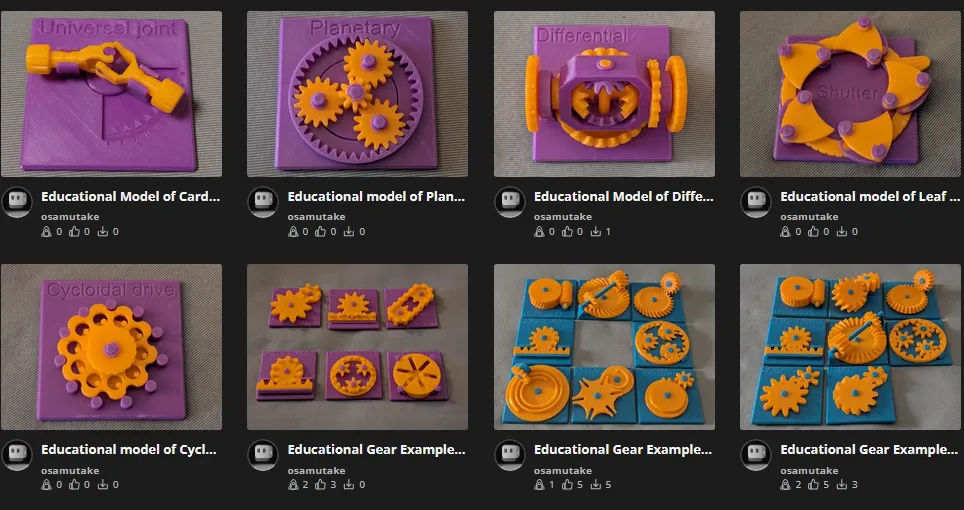
My Educational Mechanical Examples Series
This model is one of my educational mechanical mechanism examples on 80mm x 80mm base plates.
You can find all models of the series in this collection => [Mechanical Mechanism Examples]
The present model
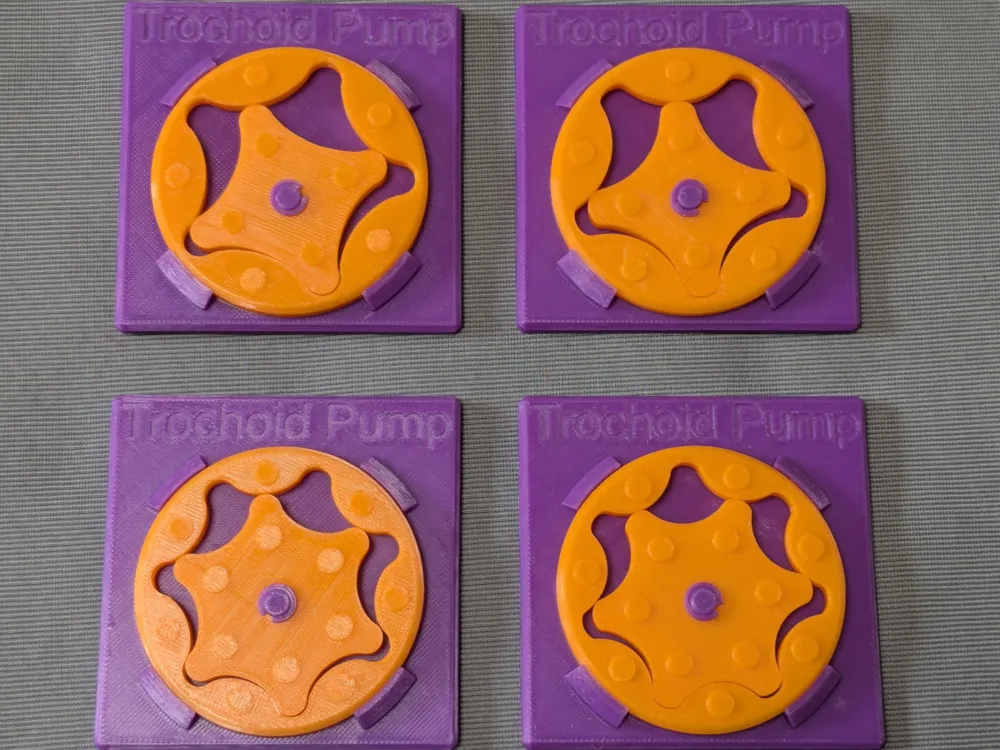
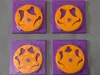
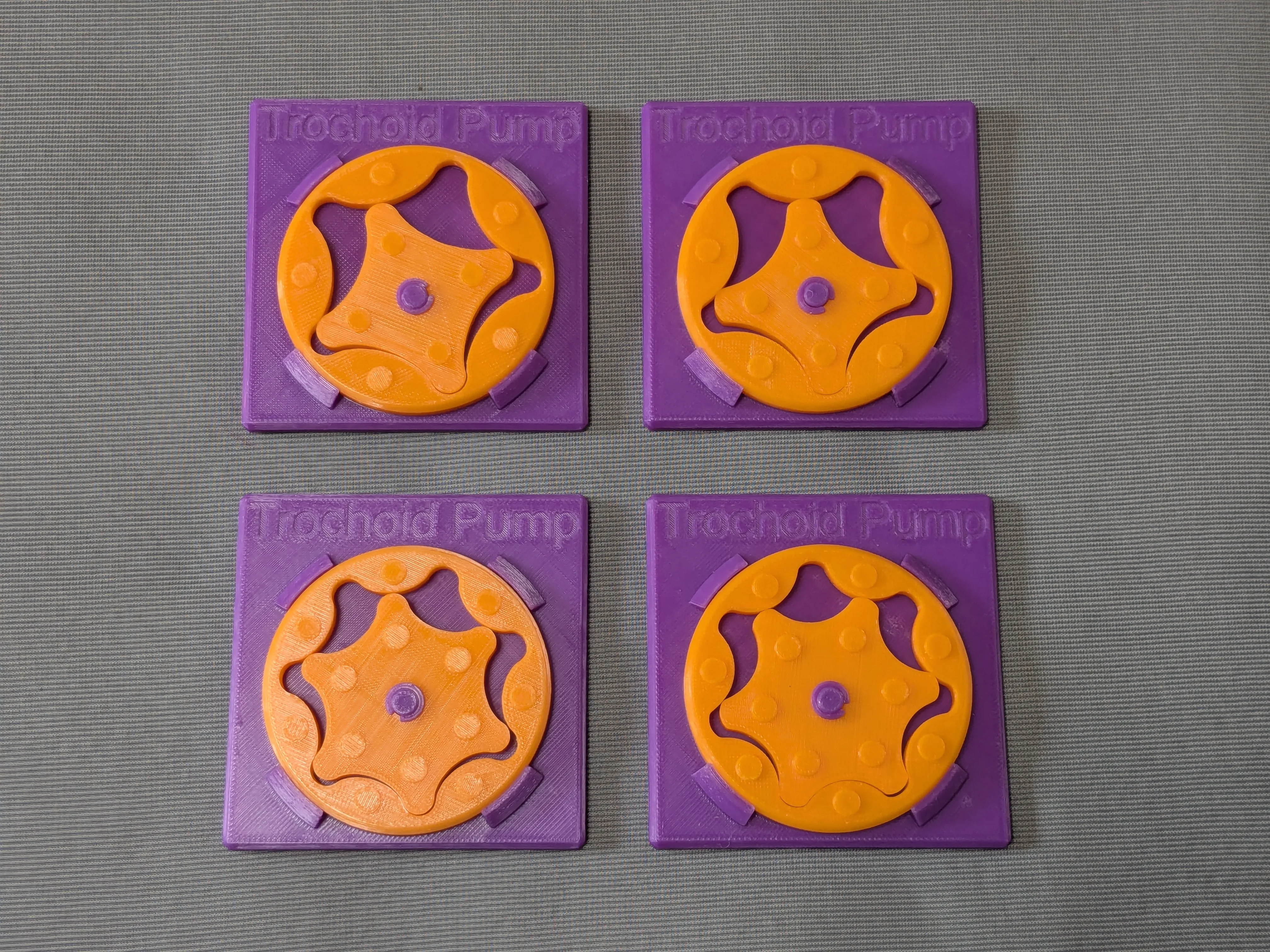
This model shows an educational model of trochoidal pumps.
Brief Description

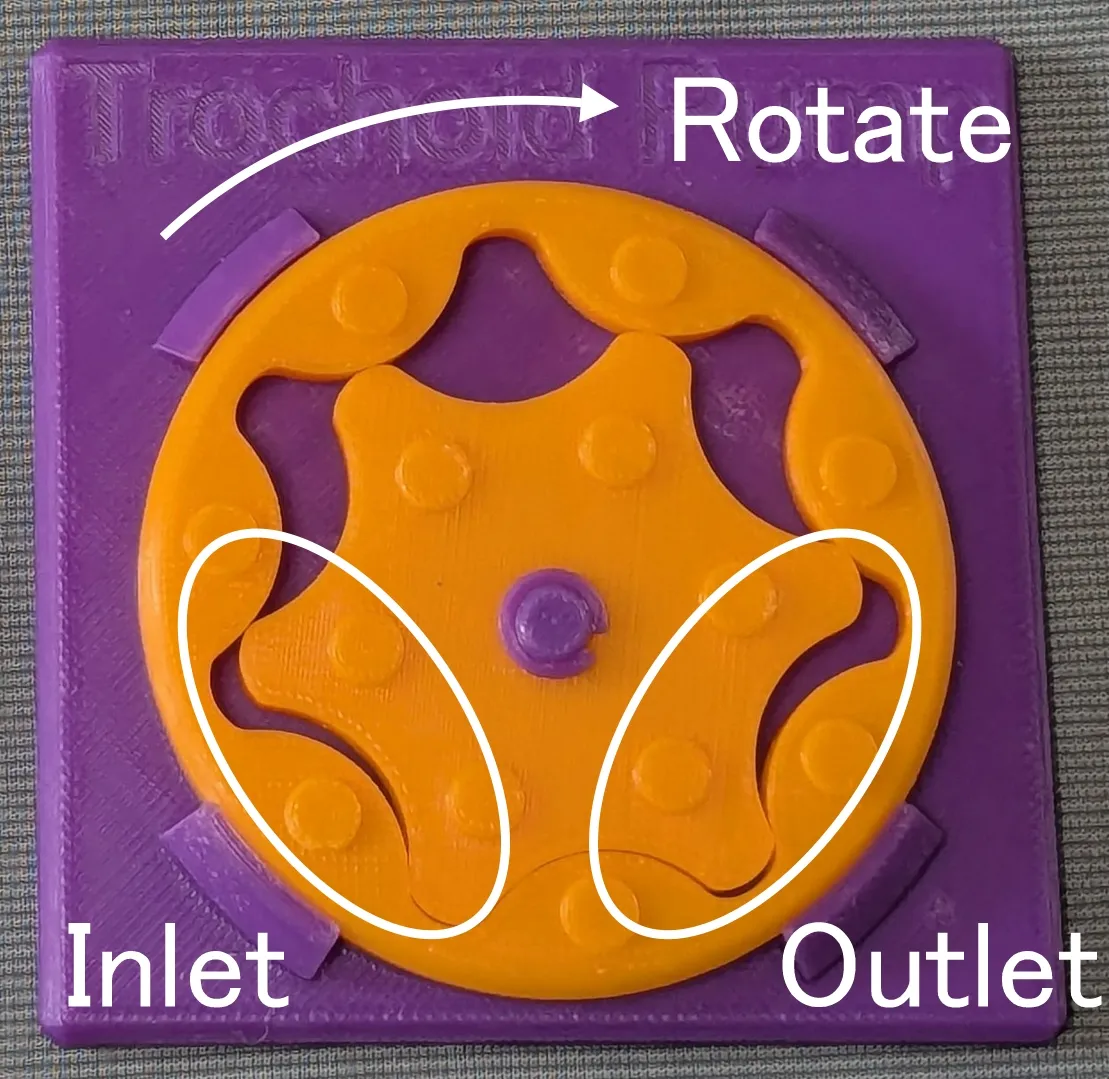
This type of pumps works similarly to the internal involute gear pumps. The inlet and outlet are provided as ports in the side plate, as shown in the figure, which are absent in these models. Sealed pockets are formed between the outer and inner rounded gears, and as the gears rotate, the fluid trapped in these pockets is carried from the inlet side to the outlet side. At the point where the two gears mesh most closely, the clearance between them approaches zero; moving away from that point, the chamber volume increases on the inlet side and decreases on the outlet side. As a result, fluid is drawn into the chambers on the inlet side and expelled from them on the outlet side. So,
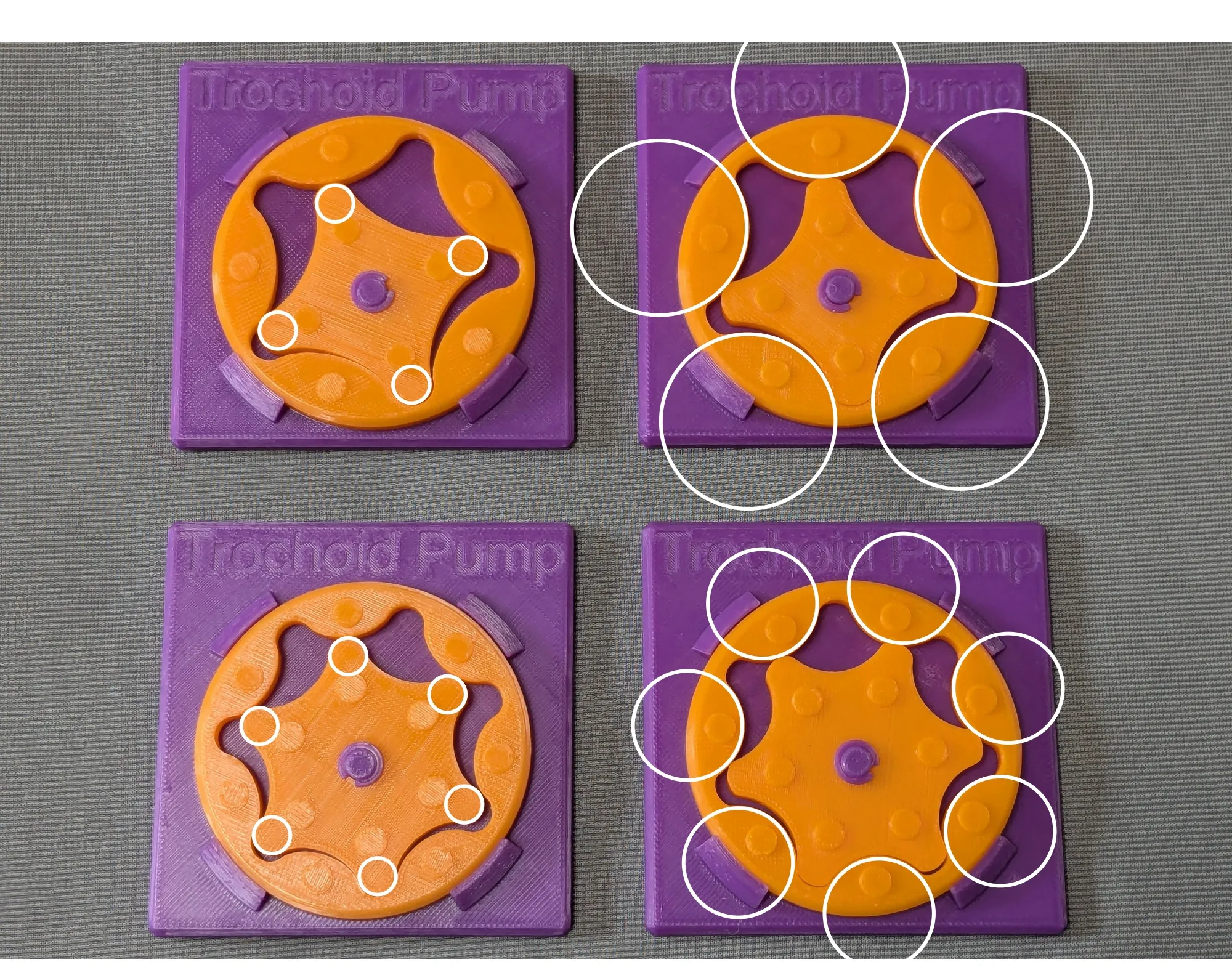

In trochoidal pumps, the tooth profile of one of the two gears — either the inner or the outer — is generated by rolling a gear blank against a pin ring. In the two models on the left in the photo, the inner gear profile is formed by pressing a gear blank against the outside of a pin ring. In the two models on the right, the outer gear profile is formed by pressing a gear blank against the inside of a pin ring. In practice, the latter configuration is more common, well known as 'Gerotor pumps'. When the center of each pin lies exactly on the reference circle, the locus of a pin as seen from the mating gear is a cycloid; when the pin center is offset from the reference circle, the locus becomes a trochoid — hence the name "trochoidal pump." (A cycloid can be regarded as a special case of a trochoid.) So, the tooth shape is conceptually identical to that of the cycloidal disk in a cycloidal drive.
The curve connecting adjacent pins on the pin-ring side — the gear that meshes with the trochoidal gear — can be generated by rolling a gear blank against the trochoidal gear. In the configuration where the pin ring serves as the outer gear (the right-hand models), circular arcs centered on the axis of rotation are sometimes used as an approximation. This introduces a small but nonzero clearance between the gears, which allows a minor amount of backflow.
Related Models
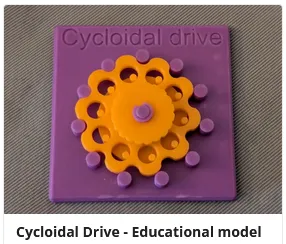
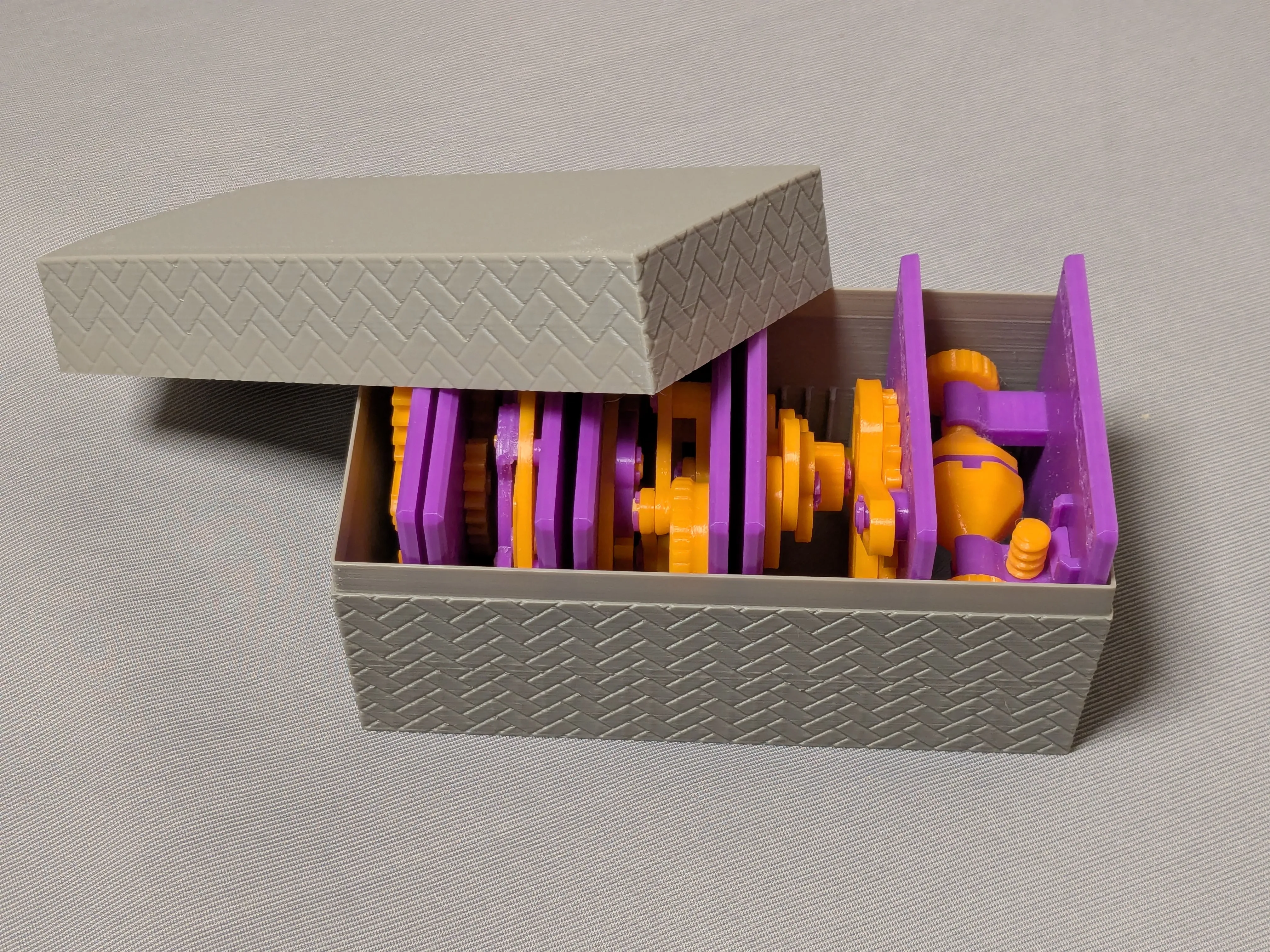
Case
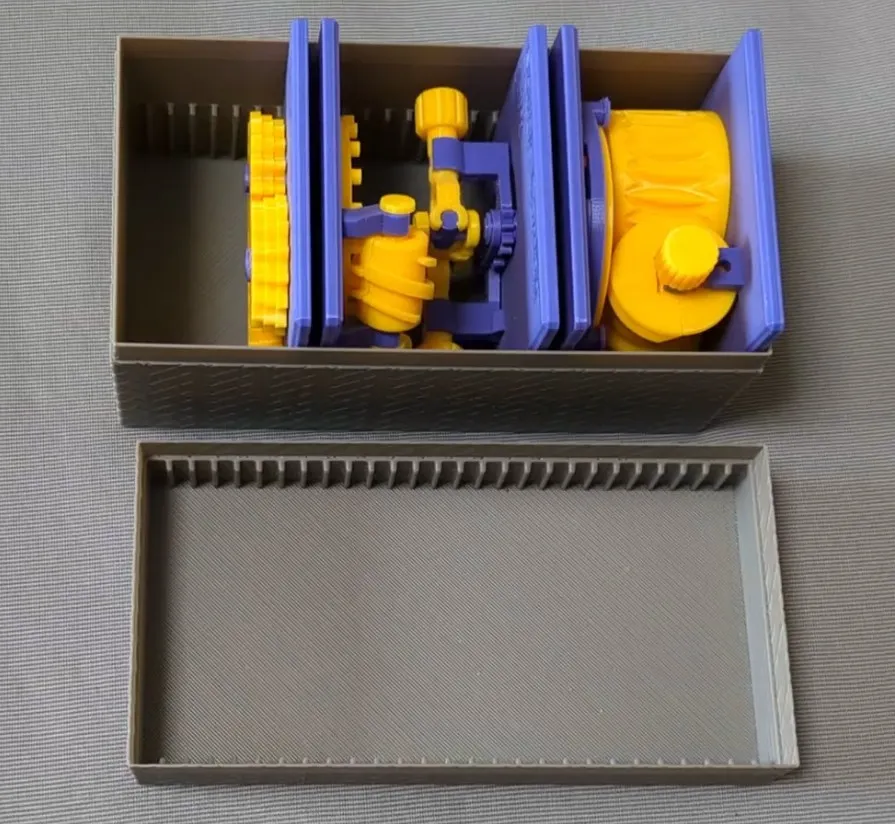
This model is compatible with the case included in my first set.
Printing
- Use the models named ???-printable.stl for printing.
The models named ???-assembled.stl are provided just to show how they should be assembled.
- Use well-dried PETG to have better dimensional accuracy.
- Use 0.1 mm or 0.08 mm layer height to have smoother surfaces.
- Use slow printing speed for overhangs.
- Select “Random” seam position to have smoother rotation.
Randomly distributed seam should be easily worn out after some wearing.Printing
Sanding and Filing
Note that, in this model, the rotation of the bases for bearings is intentionally made not too smooth.
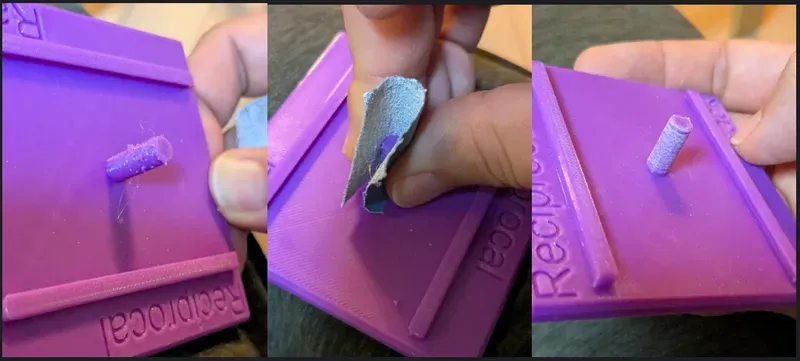
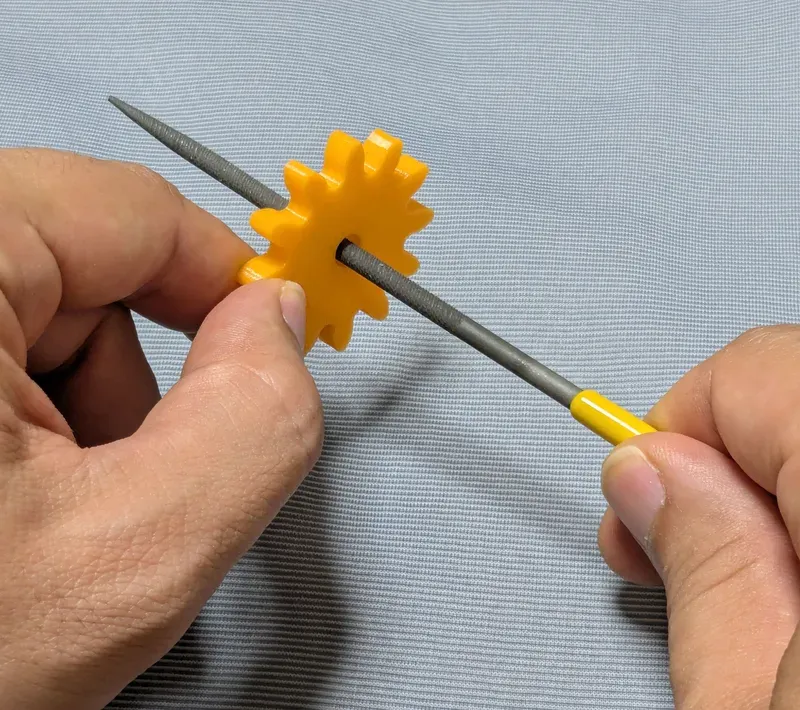
Sometimes, the gears suffer from the stringing effect and/or elephant foot effect, resulting in a too tight fit to the shafts (they are designed with a 0.15 mm radial clearance).
If you see rough surface on the shafts due to stringing, sand off the roughness with a small piece of sand paper.
If you feel the gears do not rotate smoothly due to an elephant effect, widen the hole slightly by using a thin round bar file.
Without those issues, the parts should rotate very smoothly with minimal friction.
Assembly
Just secure the gears by the retaining rings.
Other examples
You may also be interested in the models in my educational mechanical mechanism examples.
Find them in this collection:
https://makerworld.com/collections/15048577-my-educational-mechanism-models
Happy printing!
Acknowledgement
I got into gears thanks to K.$uzuki's amazing articles and YouTube videos. Many of the mechanisms shown in this series came from the introductions on his website. He also makes excellent gear models himself. This series wouldn’t have existed without his inspiration.
I learned a lot about technical detail of designing gear tooth profiles from Haguruma-No-Hanashi website. I’m truly grateful for that.
License (2026-03-13 updated)
- The 3D model(s) are licensed under Creative Commons Attribution 4.0 International. (unchanged)
- However, the text and images on this page are copyright reserved. (added on 2026-03-13)
License

You shall not share, sub-license, sell, rent, host, transfer, or distribute in any way the digital or 3D printed versions of this object, nor any other derivative work of this object in its digital or physical format (including - but not limited to - remixes of this object, and hosting on other digital platforms). The objects may not be used without permission in any way whatsoever in which you charge money, or collect fees.


Comment & Rating (1)