
Bee’s Knees (Knee‑to‑Wall Test Board)
Print Profile(3)


Description
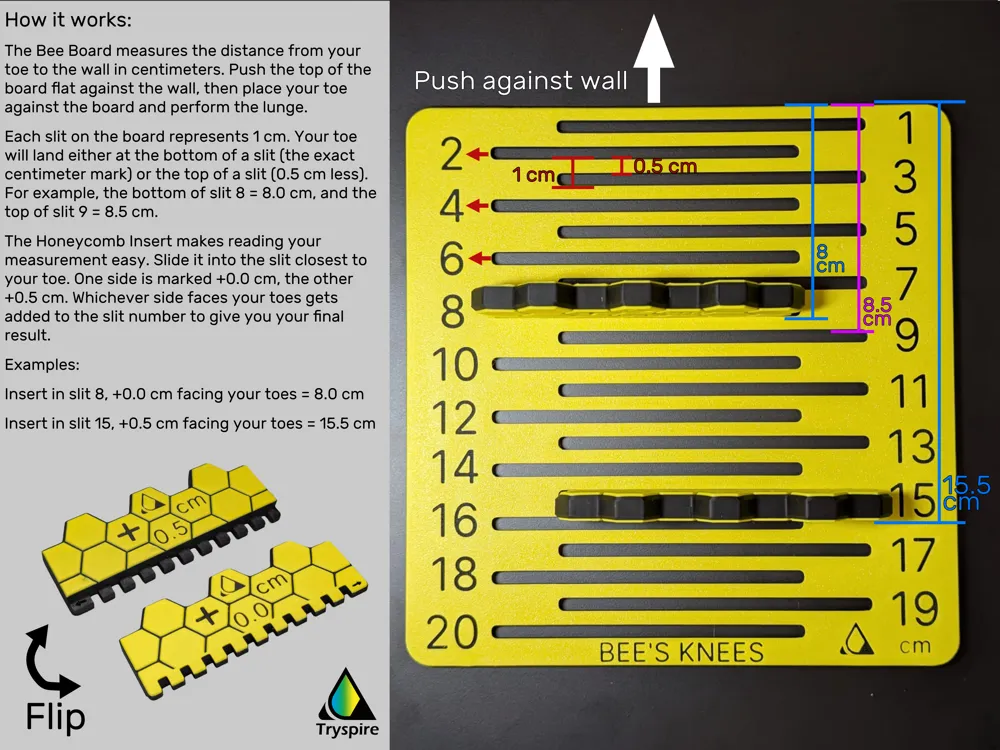
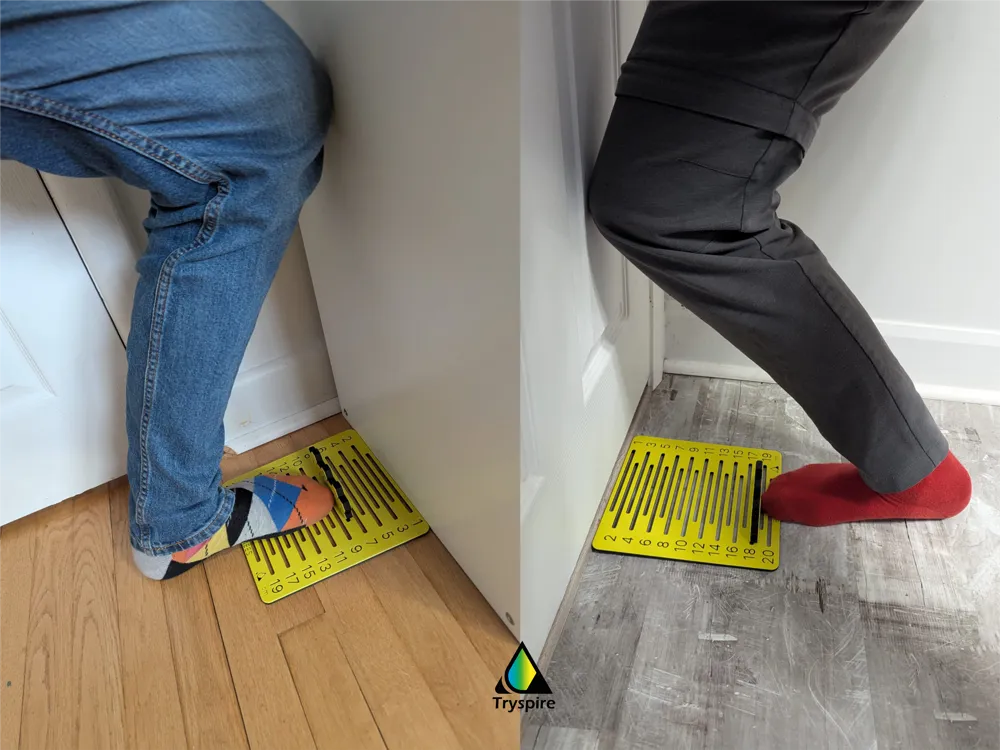
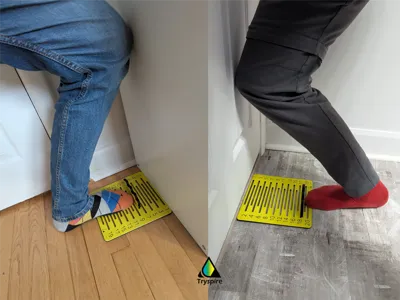
See photos for usage instructions.
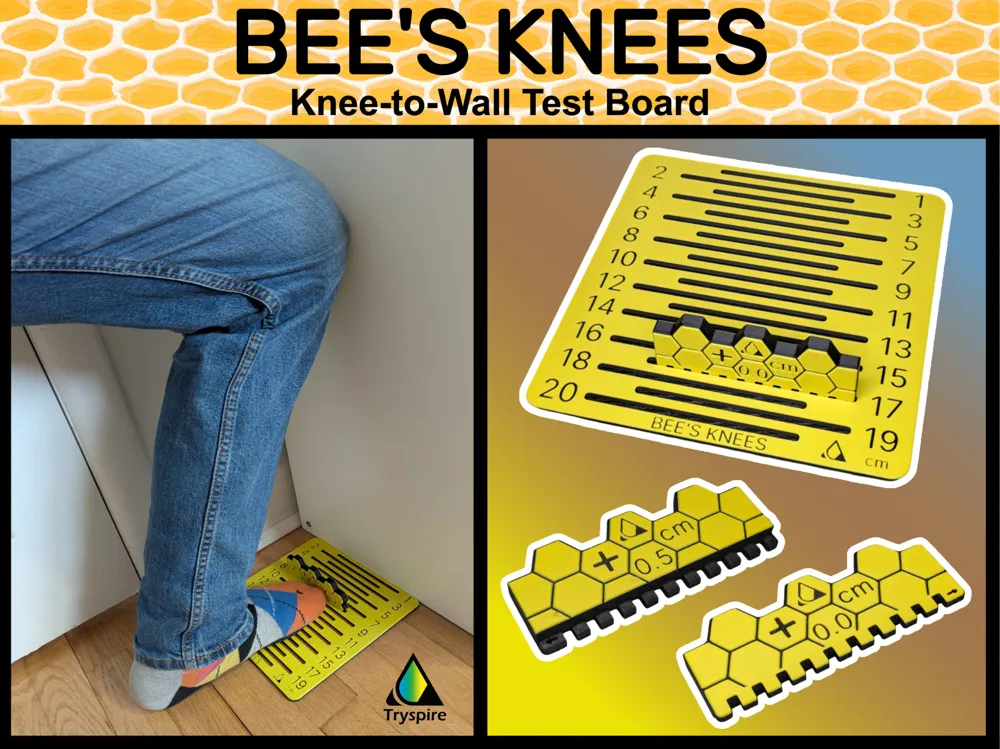
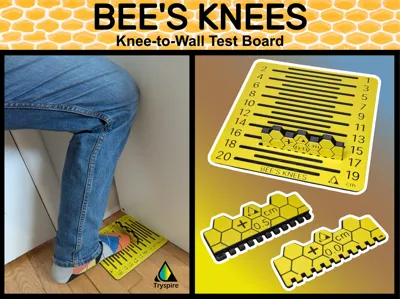
Bee's Knees (Knee-to-Wall Test Board) A knee-to-wall measurement board designed to bring more consistency and clarity to a common physical range-of-motion assessment. The goal is to reduce measurement guesswork and the need to crouch to read small numbers on a standard ruler.
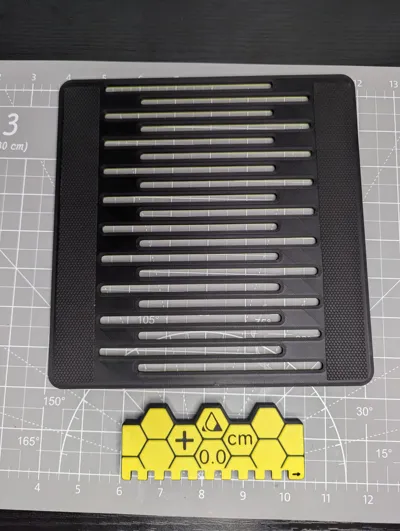
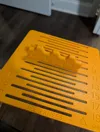
Why the name? "The bee's knees" is an expression meaning something is excellent. Since this is a knee-to-wall test, the design incorporates bee-themed elements. The Bee Board features stripe-shaped slots that resemble a bee's stripes when placed on the ground. The Honeycomb Insert is used to find the "sweet spot" for your specific measurement. I thought the name fit on just about every level.
Project Overview The knee-to-wall test (also known as the weight-bearing lunge test) is a method used to measure ankle dorsiflexion by determining the maximum distance a foot can be positioned from a wall while the knee maintains contact. While simple in theory, using a standard ruler on the ground can introduce inconsistency. Bee's Knees was designed to provide a high-visibility, physical reference system to improve measurement repeatability.
How the test works: Stand facing a wall and position your toes near the wall, stepping back slightly with your other leg. Maintaining an upright posture, lunge by bending your front knee while keeping your heel flat on the ground and moving your knee toward the wall.
If your knee touches the wall easily, move your foot back in small increments (approximately 10 to 20 mm) and try again. Continue until your knee can no longer maintain contact with the wall while keeping your heel grounded. The distance from your heel to the wall is your recorded measurement. Bee's Knees is designed to help you track and measure this distance consistently over time. We recommend working with a qualified professional to assess and interpret your results.
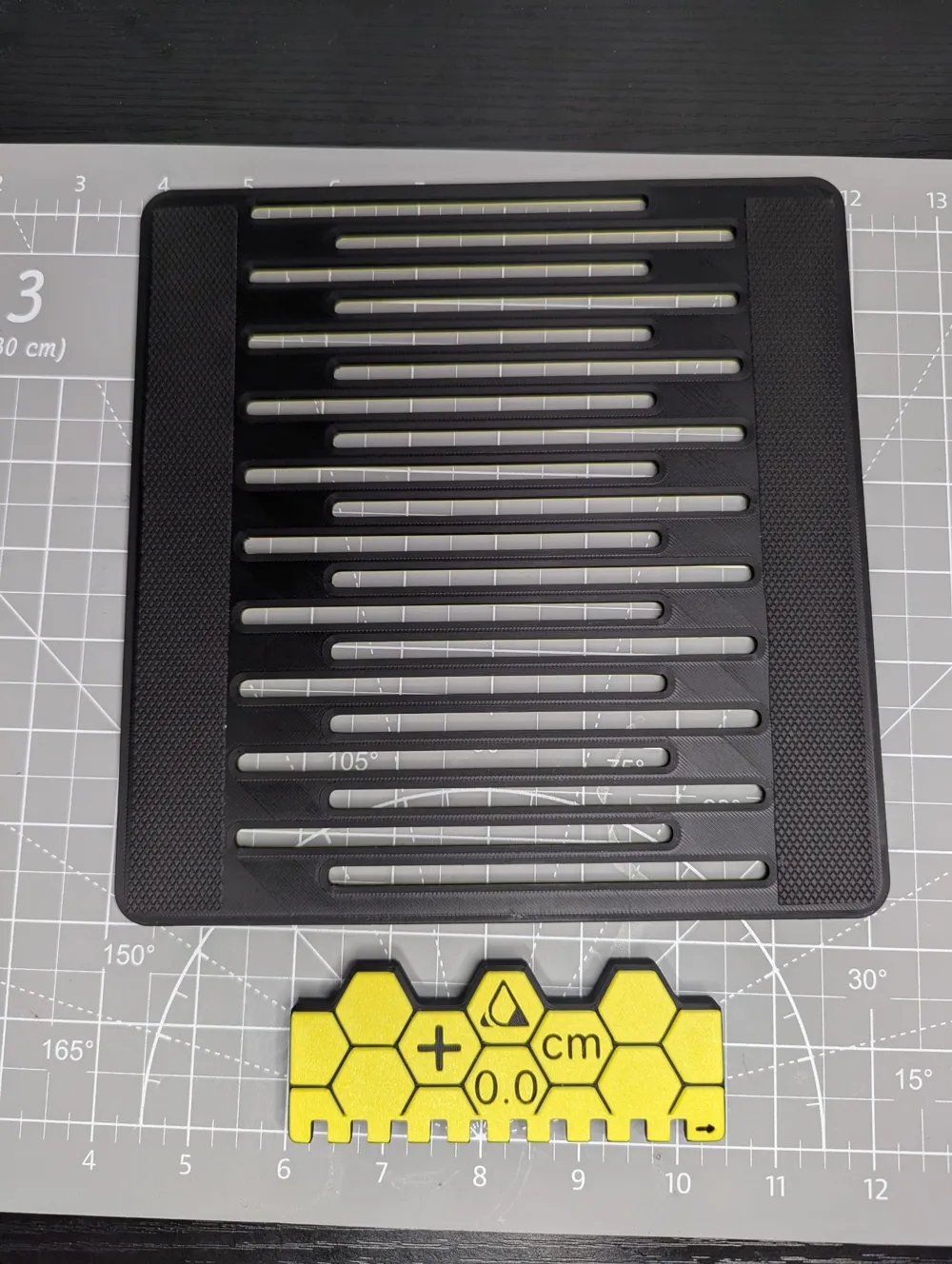
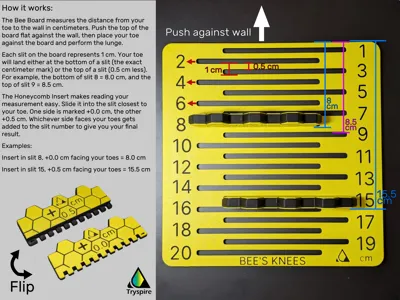
How to use: Place the Bee Board flat against the wall. Slide in the Honeycomb Insert at your starting position. Position your foot. To read your measurement, add the number on the Honeycomb Insert facing your toes to the number of the corresponding slot line on the Bee Board. The board measures up to 205 mm from the wall. The numbers are large enough to read from standing height.
The Bee Board is 4.8 mm thick. Depending on foot size and distance from the wall, the heel may rest on the floor rather than on the board, meaning part of the foot could sit at a slight elevation. In practice, the natural angled position of the foot during the test should compensate for this difference, but this should be considered if comparing results against measurements taken without the board.
The Honeycomb Insert has two sides: one side measures full centimeter increments, and the other adds an extra 5 mm. Flip it depending on the precision required. It also acts as a physical indicator for the foot, providing a consistent stopping point. The board also works without the insert entirely.
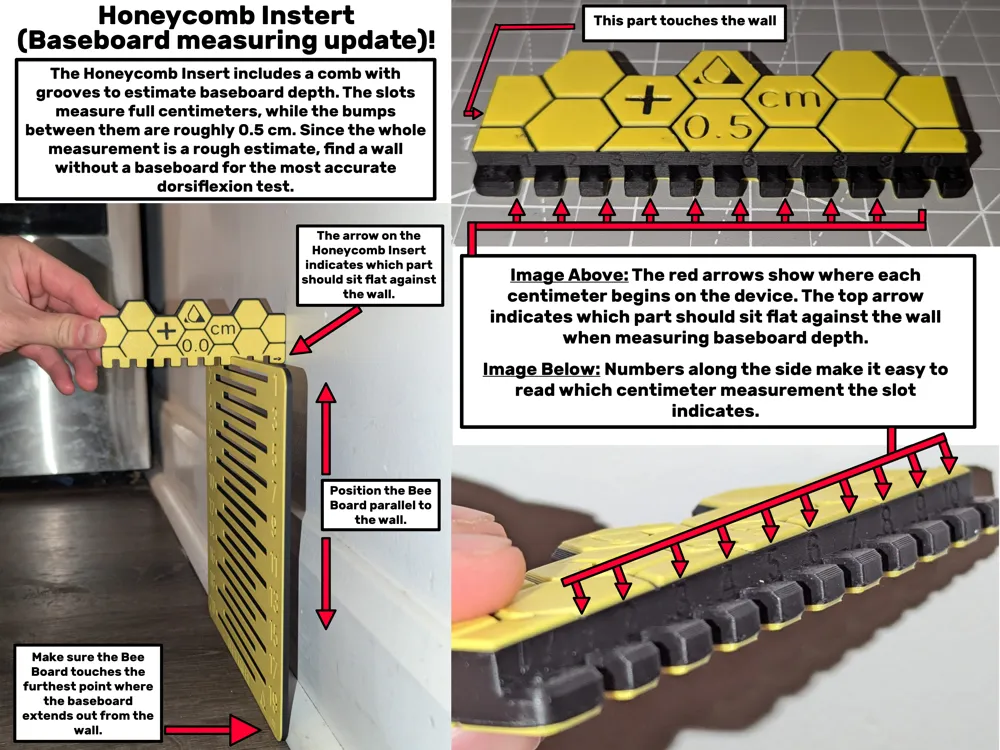
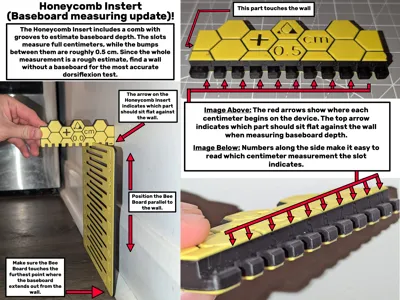
Measuring baseboards: The Honeycomb Insert includes a comb with grooves to help estimate baseboard depth. The slots measure full centimeters, while the bumps between them are roughly 5 mm. For the most accurate results, it is recommended to test against a wall without a baseboard. If testing against a baseboard, press the arrow on the Honeycomb Insert flat against the wall, then align the Bee Board with the furthest point of the baseboard from the wall.
How Bee's Knees came to be: This project was inspired by a conversation with a physical therapist regarding the challenges of maintaining measurement consistency during repeated assessments. I designed Bee's Knees to provide a stable, repeatable solution. Thank you to Julien Trapeau from Kinoveo Physiotherapy for sharing this challenge and inspiring the solution. To learn more about Julien and his practice, visit kinoveophysio.com.
What makes Bee's Knees worth printing:
- Numbers are large enough to read from standing height
- Measurements up to 205 mm from the wall
- Honeycomb Insert doubles as a physical foot stop for consistent positioning
- Two-sided insert for full cm and 5 mm precision
- Works with or without the Honeycomb Insert
- Bee-themed design with functional stripe slots
⚠️ LEGAL AND SAFETY NOTICE
- NOT A MEDICAL DEVICE: Bee's Knees is an experimental ergonomic prototype and measurement aid. It has NOT been evaluated, approved, or endorsed by any medical or regulatory body (such as Health Canada or the FDA). It is not intended to diagnose, treat, cure, or manage any medical condition.
- USER IS THE MANUFACTURER: By downloading this file, you acknowledge that you are the manufacturer of the physical object. You assume 100% responsibility for material selection, print settings, and safety testing.
- CONSULT A PROFESSIONAL: Always ensure measurements are reviewed by a qualified healthcare professional. Consult with a professional before using this device to ensure it is appropriate for your specific needs.
- TERMS OF USE: Downloading this file constitutes your agreement to the full Tryspire Terms of Use and Disclaimer: https://www.tryspire3d.com/disclaimer-and-terms-of-use
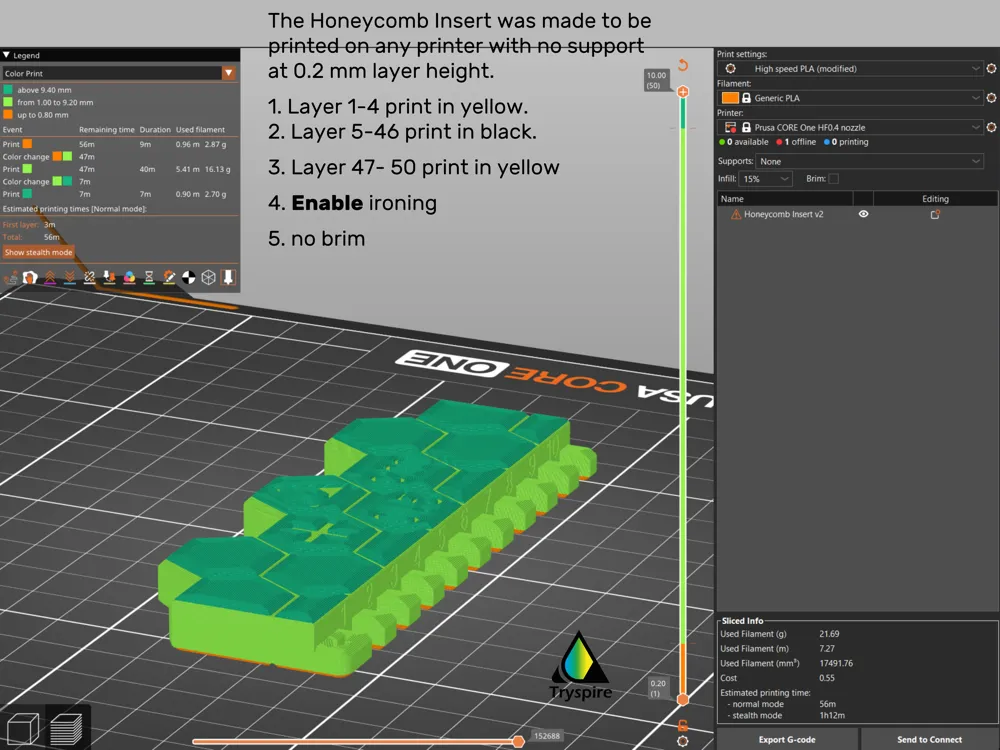
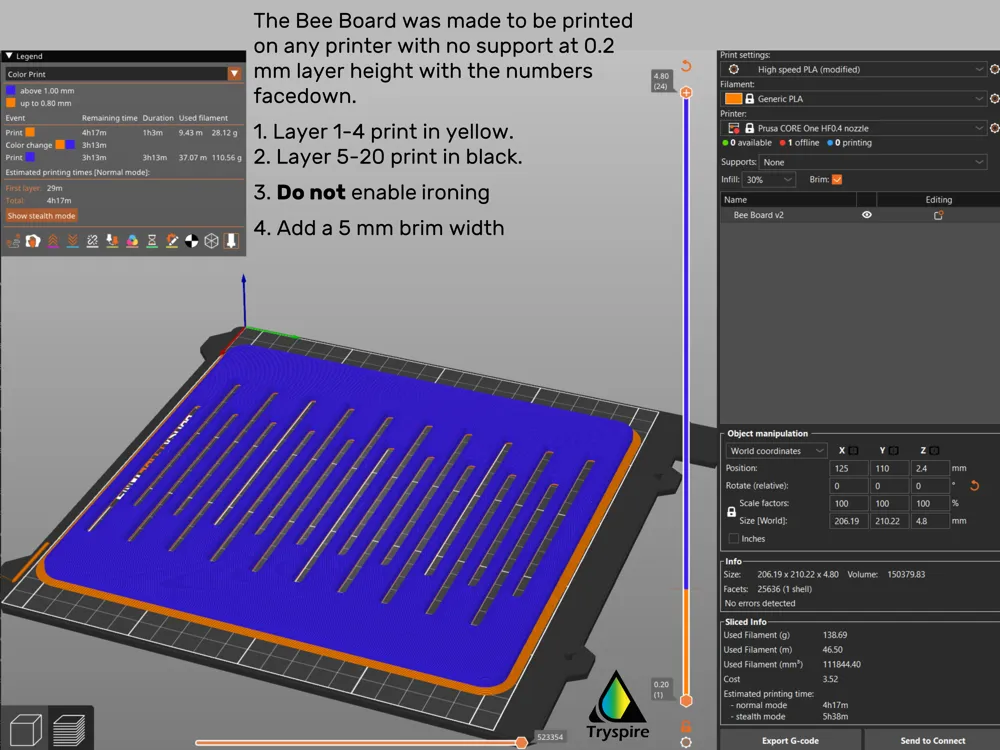
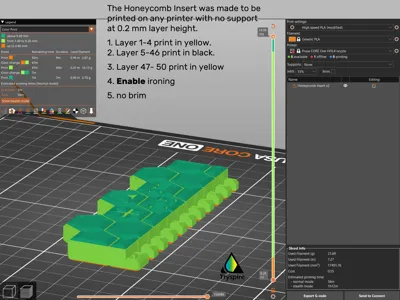
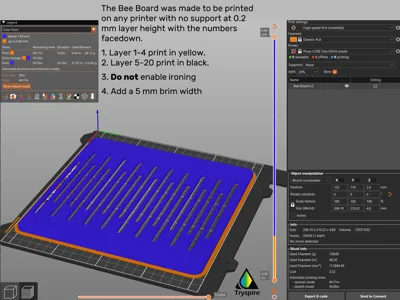
Print Settings:
- Rafts: No
- Supports: No
- Brim: Bee Board (Yes), Honeycomb Insert (No)
- Ironing: Bee Board (No), Honeycomb Insert (Yes)
- Resolution: 0.2 mm
- Infill: 30% (Gyroid)
- Wall count: 5
- Filament material: PLA
- Note: For accurate results, print external perimeters first.
Support and Updates: This design is a work in progress. If you would like to support future Tryspire projects, consider visiting Ko-fi.
- Ko-fi: https://ko-fi.com/tryspire3d
- Instagram: https://www.instagram.com/Tryspire3d/
- TikTok: https://www.tiktok.com/@tryspire3d
License



Comment & Rating (16)