
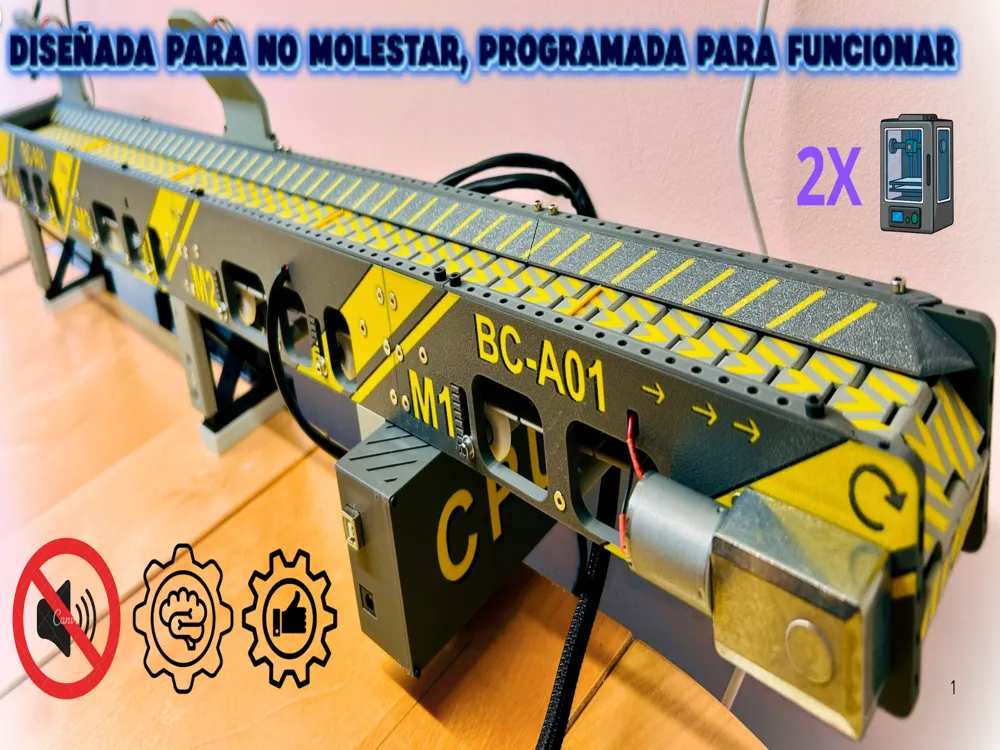

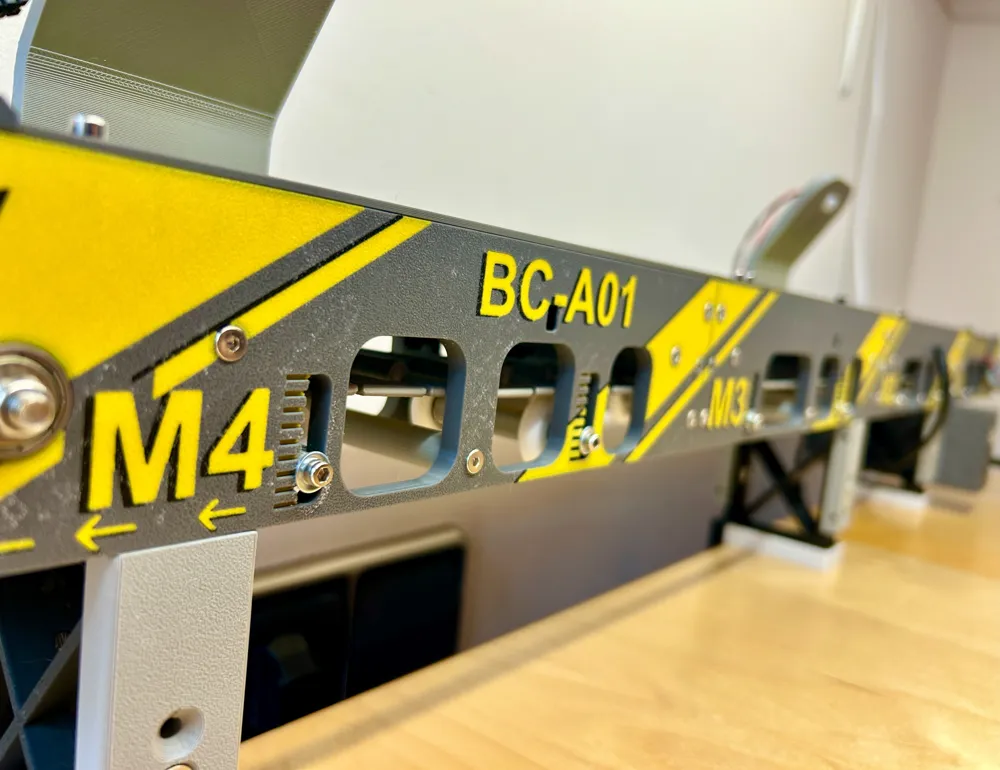
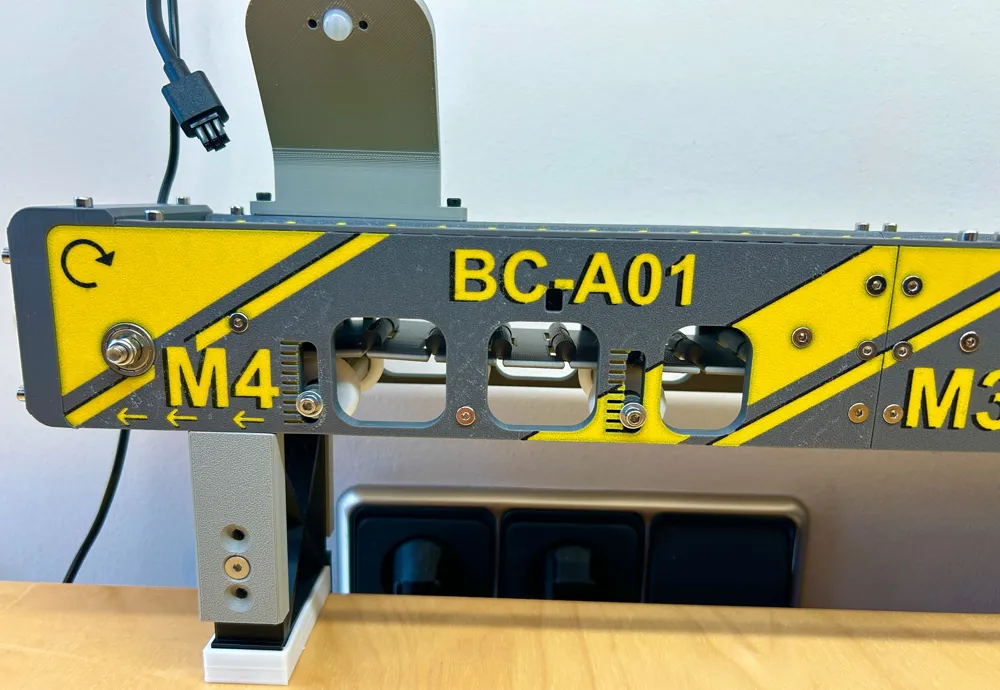
BC-A01 Silent purge conveyor belt
Print Profile(2)
Description
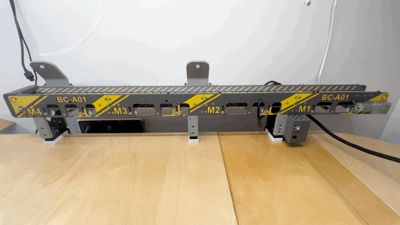
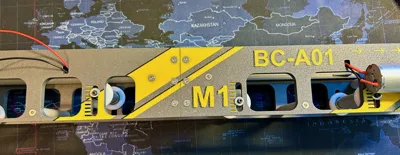
You can now forget about purges! Your machines will now clean themselves!
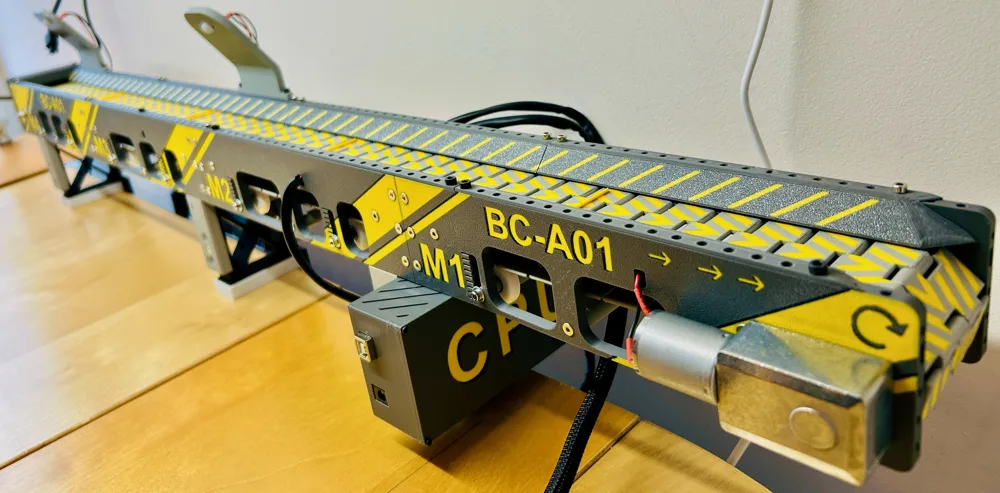
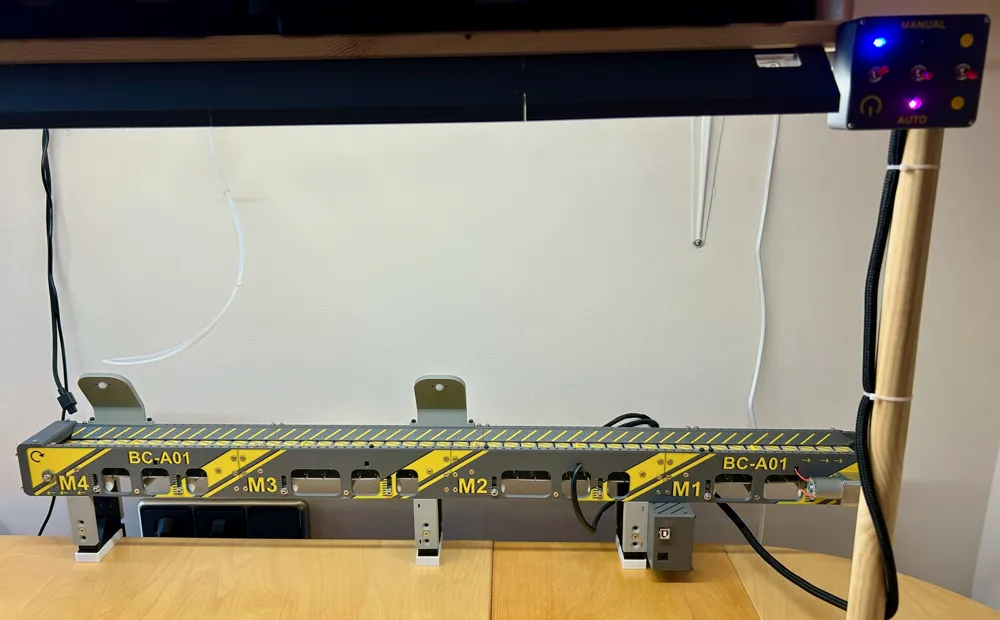
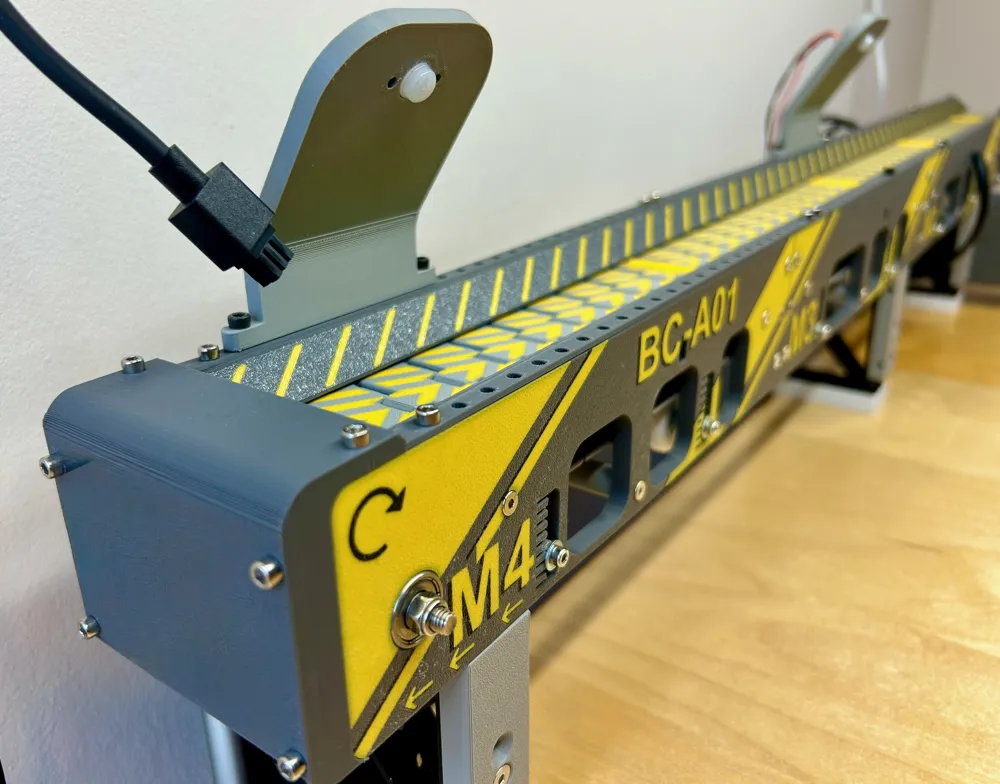
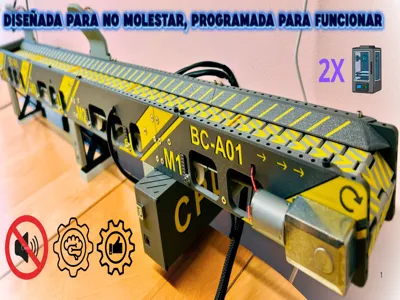
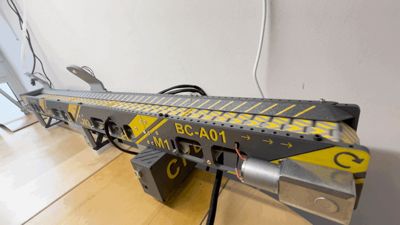
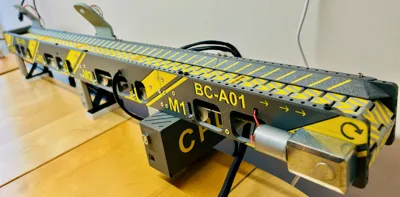
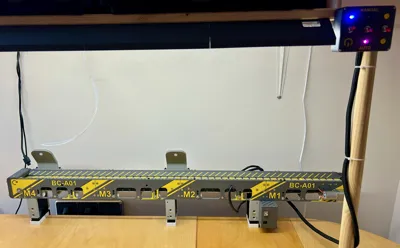
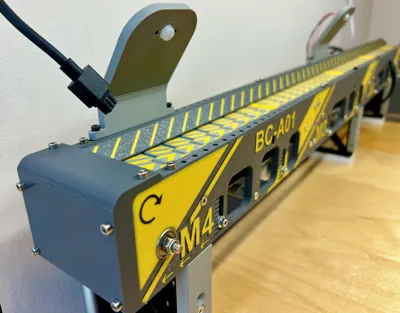
The BC-A01 will reliably, effectively, and most importantly, silently remove purges from all your printers in your work area.
Having 2 or more Bambu printers can be a problem with purges. The machines eject waste from the rear, and it's hard to find a reliable system to collect them.
After searching, building, and testing various options, I decided to design my own purge evacuation system based on my ideas. But I set this condition for myself: the project had to be a reliable system; I didn't want to worry about the conveyor belt failing, losing communication, or breaking down.
But, it also had to be effective! Without purges getting stuck or sensors failing to detect them.
It had to be robust, without annoying cables everywhere or delicate parts that would break just by assembling them.
Furthermore, it had to be a well-designed project, calculating material expansion upon cooling, tolerances in part joints, material cost, and ease of printing during the process. This project should not entail major problems during assembly caused by the design.
And finally, what most encouraged me to design my own conveyor belt was that it had to be silent! I was horrified by the experience of a project where the noise level it produced was much higher than my 2 Bambu printers at full performance. A noise that made it utterly impossible to keep that conveyor belt running at night without having problems with neighbors.
Now, 7 weeks after the start of this incredible project, I bring you my BC-A01, a conveyor belt that will not disappoint you.


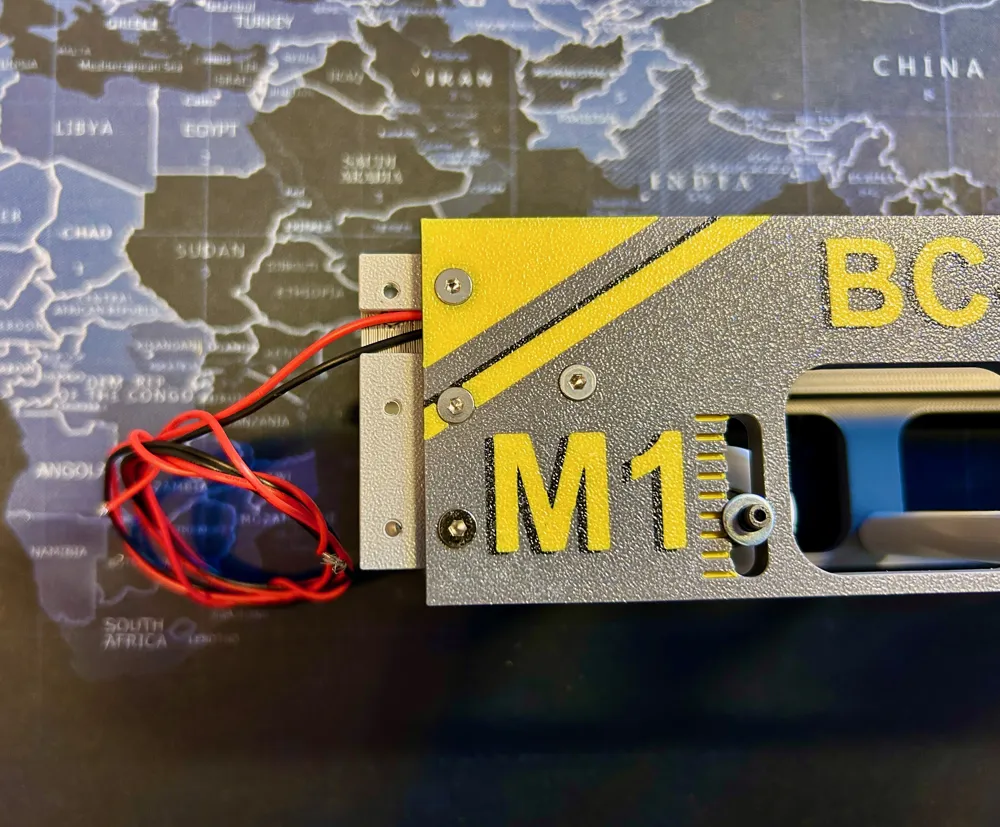
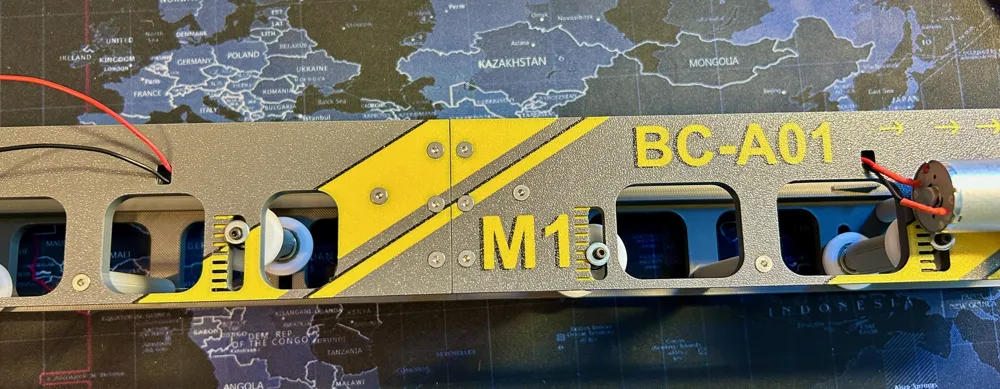
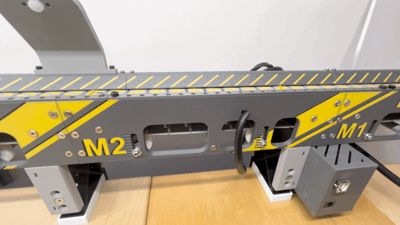
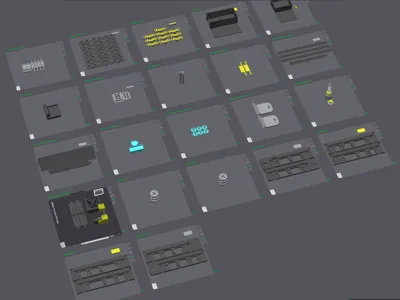
Modular design: Allows for creating different conveyor belt sizes.
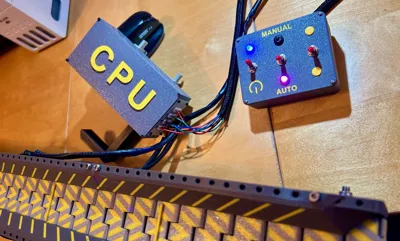
Automatic purge detection: Using PIR sensors.
Robust, well-sized helical gear motor.
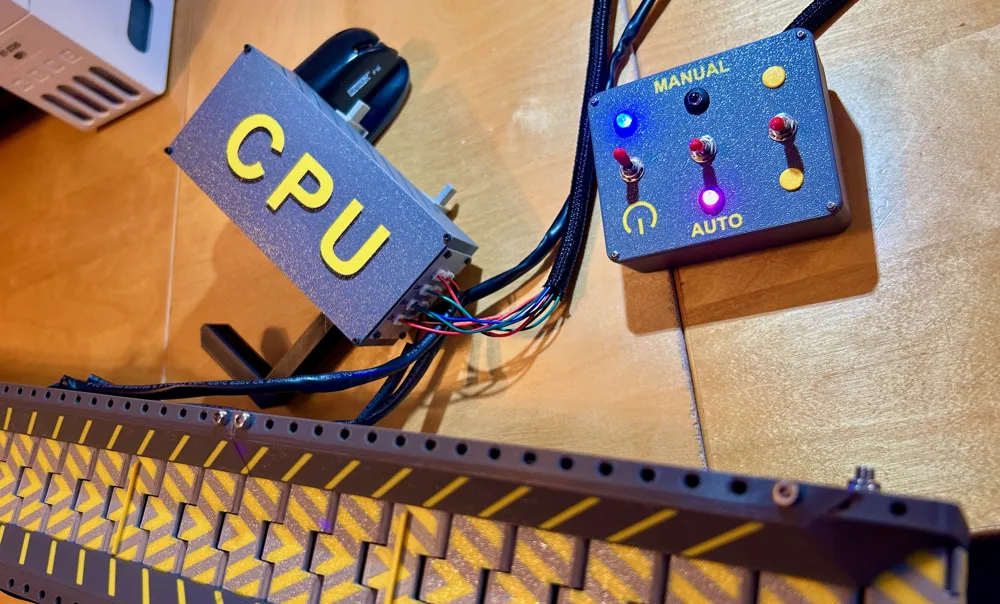
Process management using Arduino UNO.

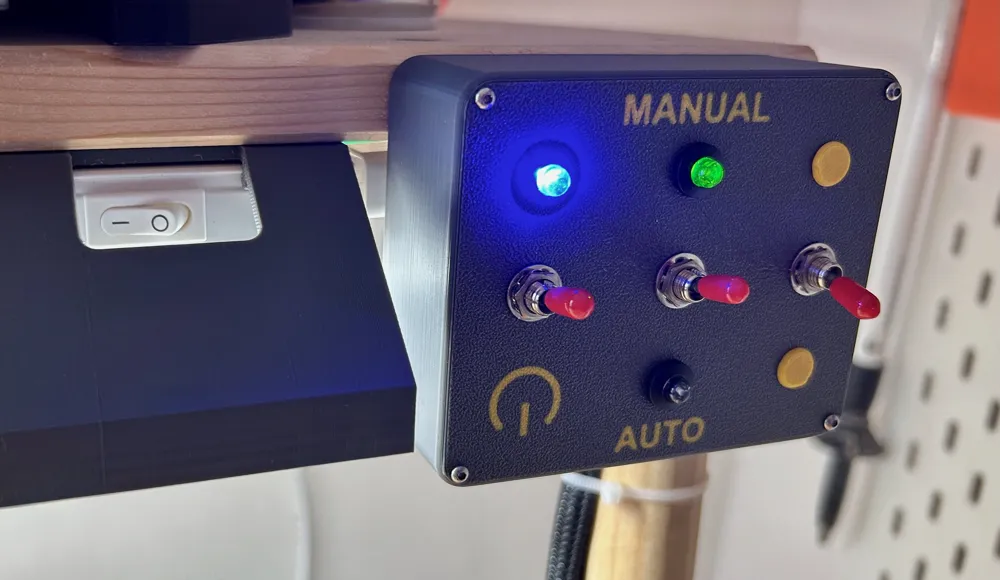
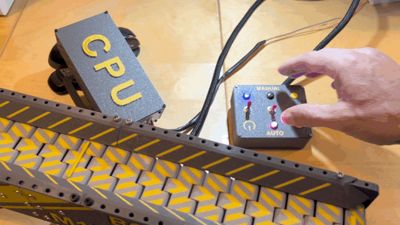
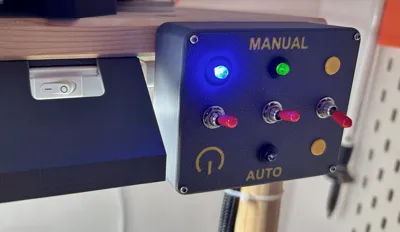
The conveyor belt has a deployable, and therefore accessible, control panel where you can easily turn it on and off. Using this panel, you can select whether you want to set the belt to manual or automatic mode. In the latter, the belt will only turn on for a limited number of seconds, which will be different for each of the 2 machines.
In the design of each part of this project, minimizing potential noise has always been considered. Therefore, TPU has been used to print some specific parts. You will also notice parts with somewhat strange designs. These are not to make them pretty, but to reduce contact and friction between parts as much as possible.
In the project, you will find a detailed manual with the assembly process for the BC-A01, and clear explanations of each component and its operation.
You will also have a well-developed, commented, and fully functional Sketch for Arduino UNO.
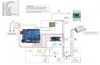
A very clear and detailed wiring and connection diagram.
A list of the materials with their links that you will need and that is always nice to have.
- And of course! My attention and help for any questions you may have.
And what makes this belt different?
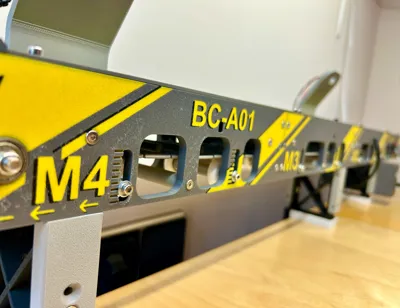
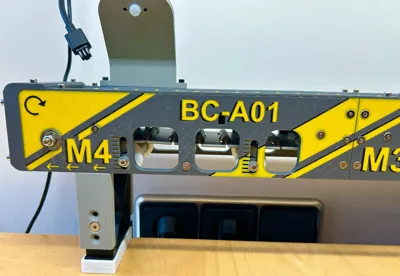
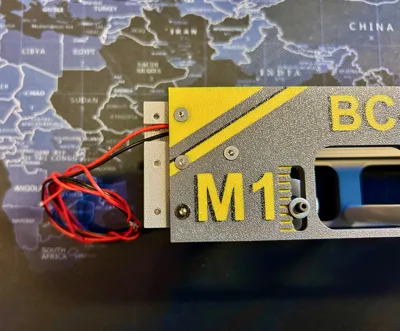
A completely unprecedented system in this type of project for cable concealment. All cables are channeled within the walls of the modules, thus preventing them from bothering or being damaged.
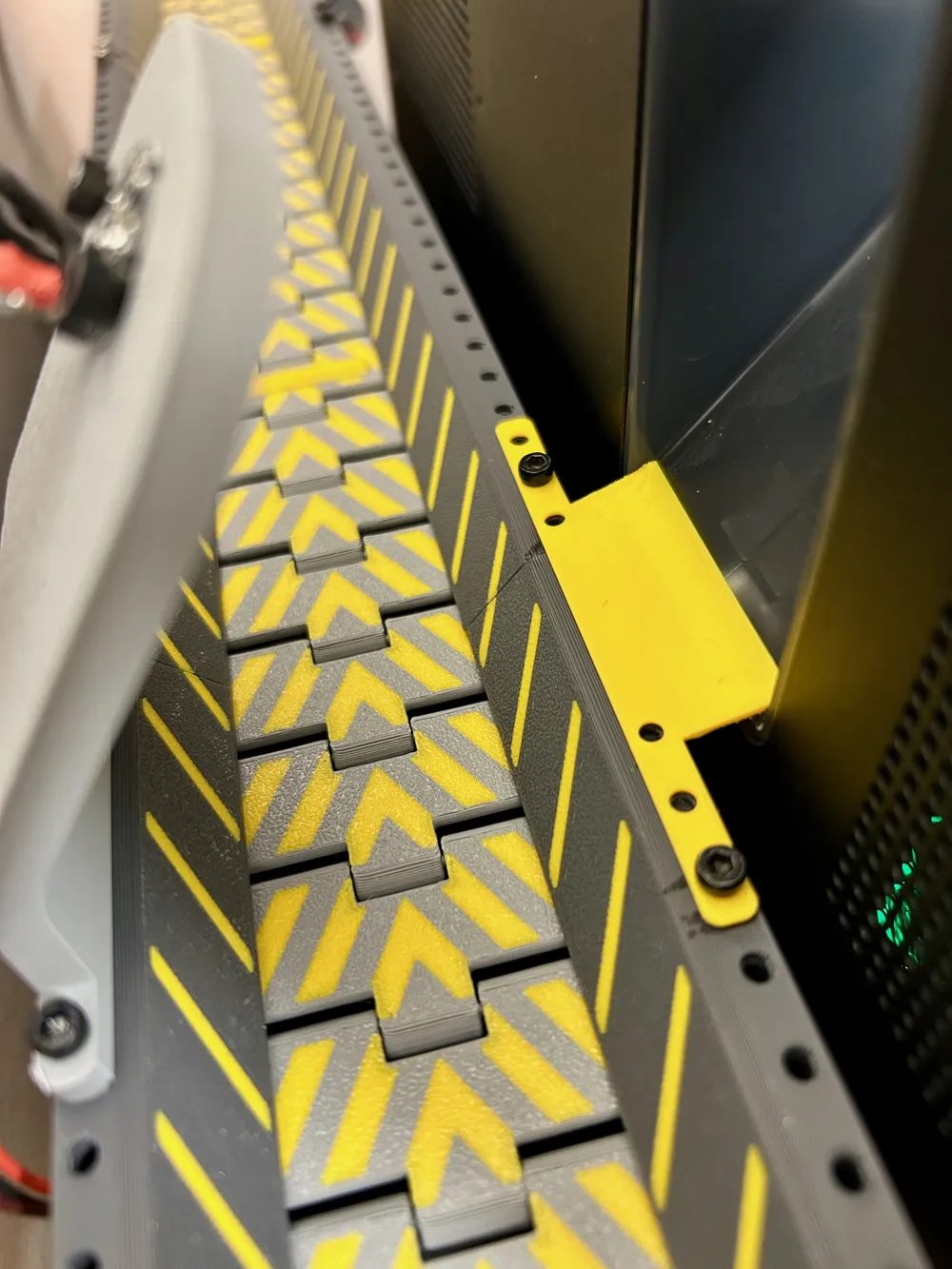
Also unprecedented. A system I have designed for the automatic repositioning of the chain link pins, which allow for its articulation. These links occasionally tend to come loose, and if they do so too much, they can cause a breakdown. You will discover that the BC-A01 has this system that will return them to their place with each circulation.
A well-sized motor for the needs of this project.
Efficient and very suitable purge sensors, the SR602PIR.
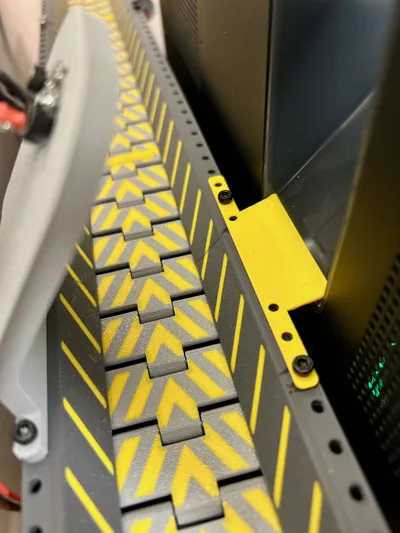
A system, also unprecedented, for tensioning, guiding, and supporting the conveyor belt which prevents it from making noise during collection.
Unprecedented anchoring and fastening system for the BC-A01, which allows for height adjustment. This is especially useful if your machines are on some type of platform. The belt supports I have designed will allow you to raise the conveyor belt and compensate for the height of that platform.

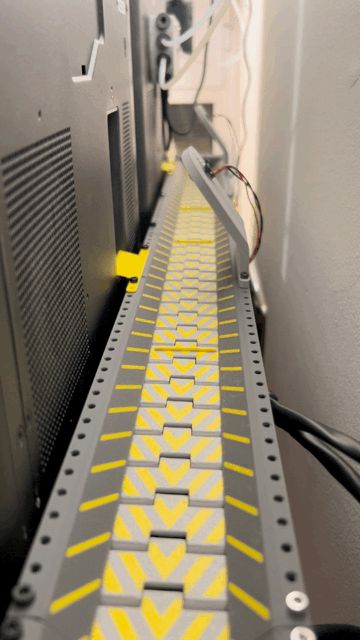
Also unprecedented are the 2 lines of the purge centering system. These prevent purges from getting caught in the existing joint between the belt and the module structure, causing an obstruction. They also prevent purges from falling off the belt in an uncontrolled manner.
A modular assembly/disassembly system. Using JST-XH cable connectors for cable extraction and insertion.
Use of flange coupling connectors for motor transmission.
Some warnings to keep in mind:
This is a multidisciplinary project; it is necessary to know how to print, of course! but also to know how to solder electronic components, and to have notions of electronics, notions of Arduino operation (although in the manual I provide an explanation of the steps to follow).
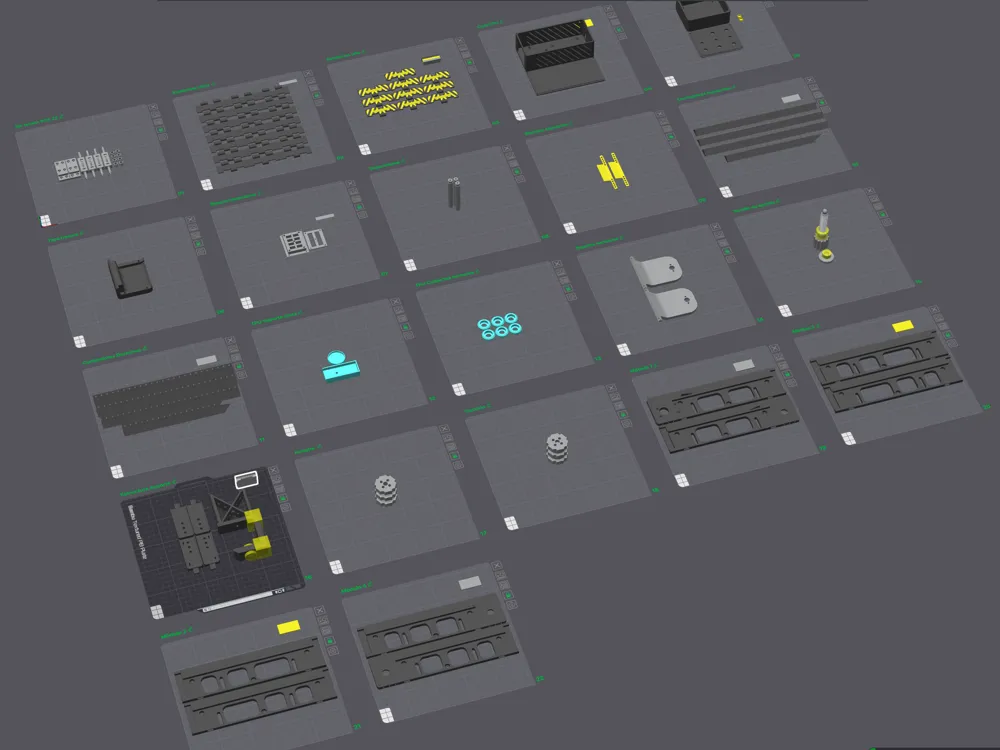
Also, keep in mind that there are parts printed in TPU, and furthermore, this is a fairly large project, and you will need various components for its creation that you will have to acquire if you don't already have them. The manual provides a list of all of them. I recommend that, before embarking on printing, you read these lines and that manual.
It has been a total of 7 weeks since I started with the trials, choosing the appropriate components and the new systems I was going to implement. Since then, it has involved the project design, the wiring, the printing of all parts, redesigning when something didn't convince me. Drafting the manual, the sketch. Over 70 hours of testing the belt emitting 1 purge every 90 seconds, etc., etc…
Now, with my BC-A01 up and running and working at full capacity day and night, I want to share the project with you, hoping that it won't disappoint you, that it makes you enjoy this multidisciplinary project as much as I have, and that it definitively solves your purge problem. If you decide to build it for your machines, share photos! I would love to see them!
It has been a lot of work with many parts. Although everything has been checked 2, 3, and 4 times, it is expected that there may be some small error with an print profile, parameter, etc. If you detect any, please let me know as soon as possible for its correction.
Documentation (3)
License



Comment & Rating (5)