
Desiccant Container for 3d Fuel Spools
Print Profile(2)
Description
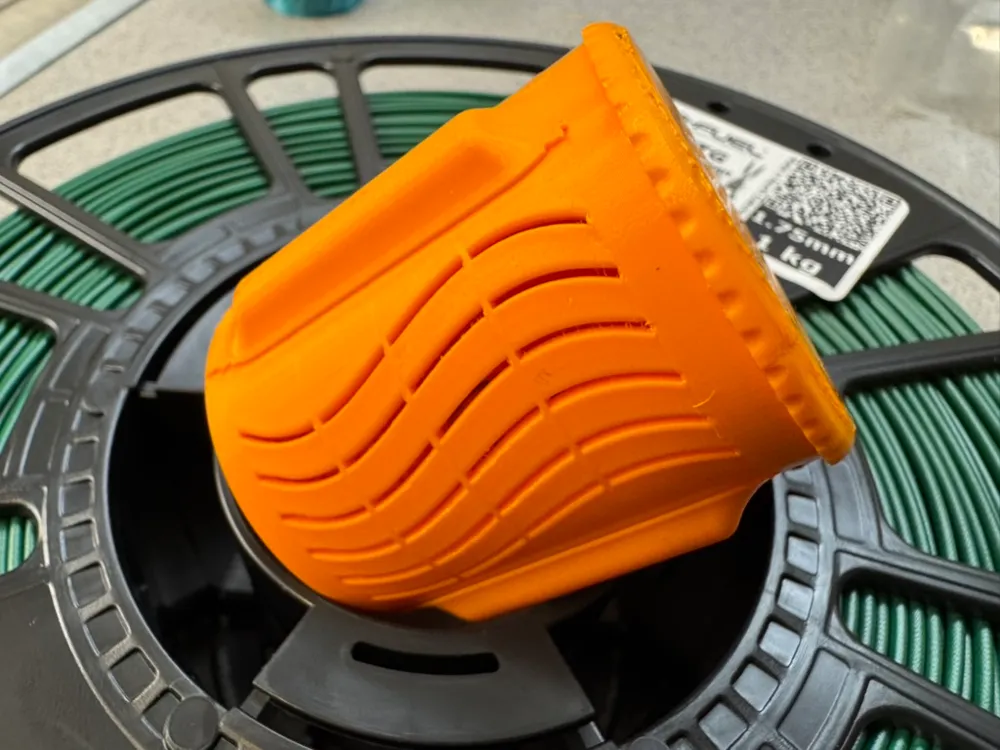
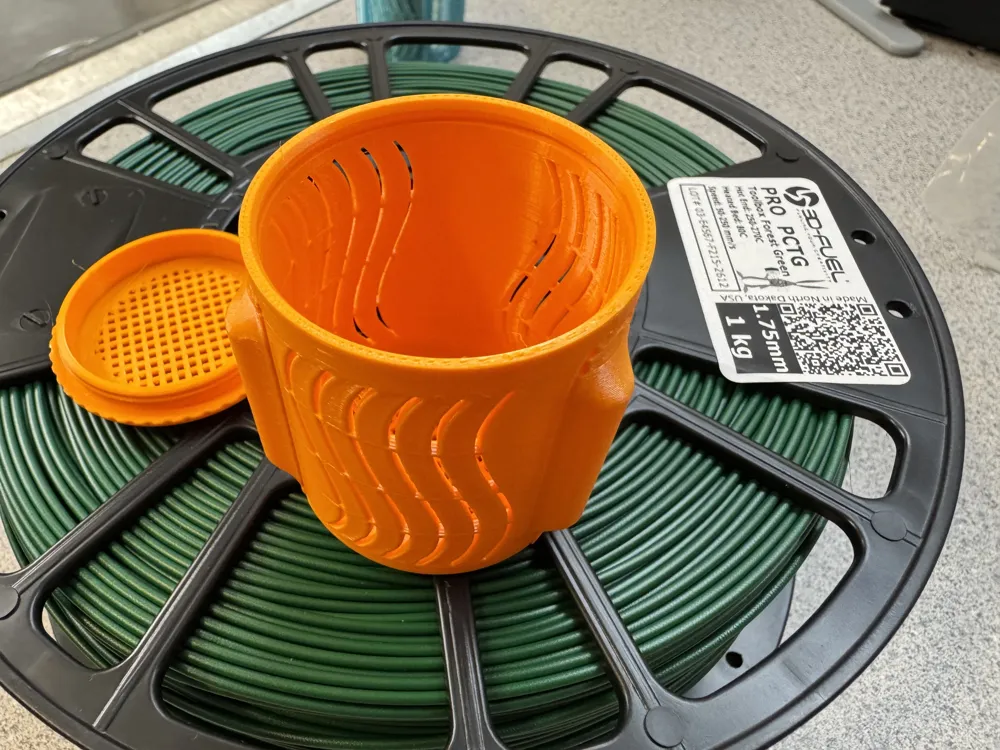
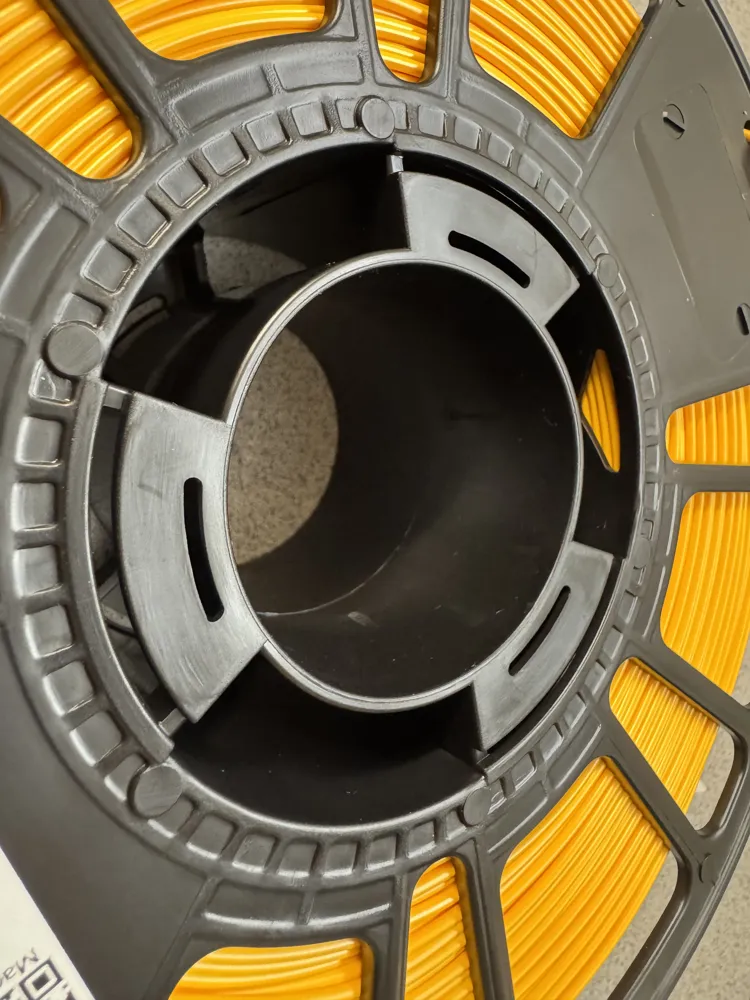
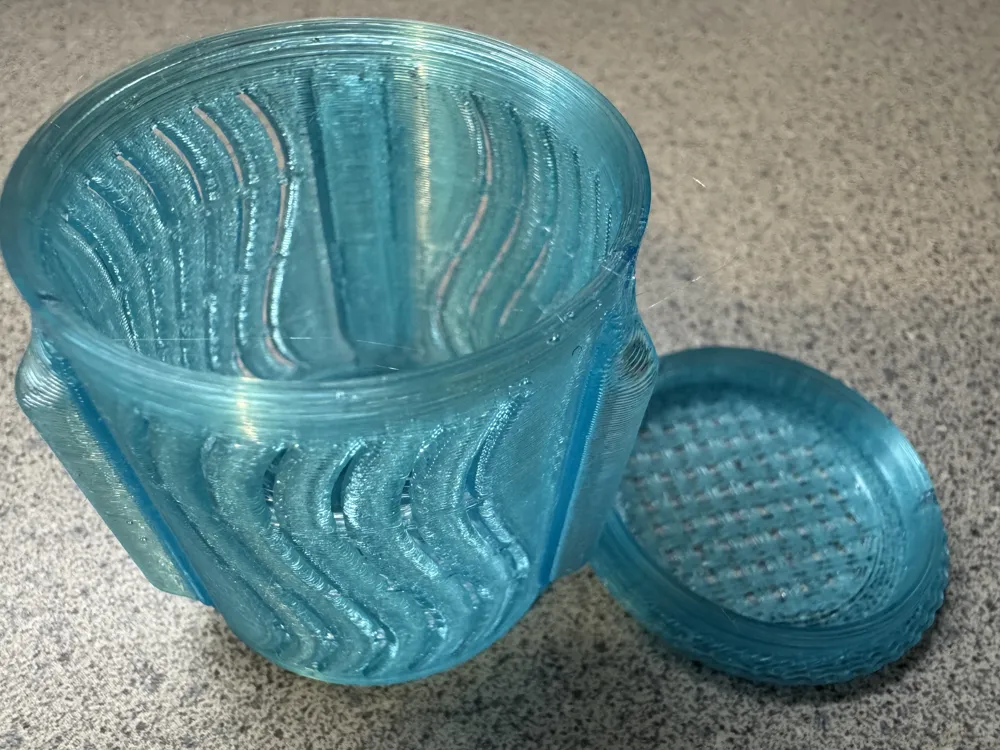
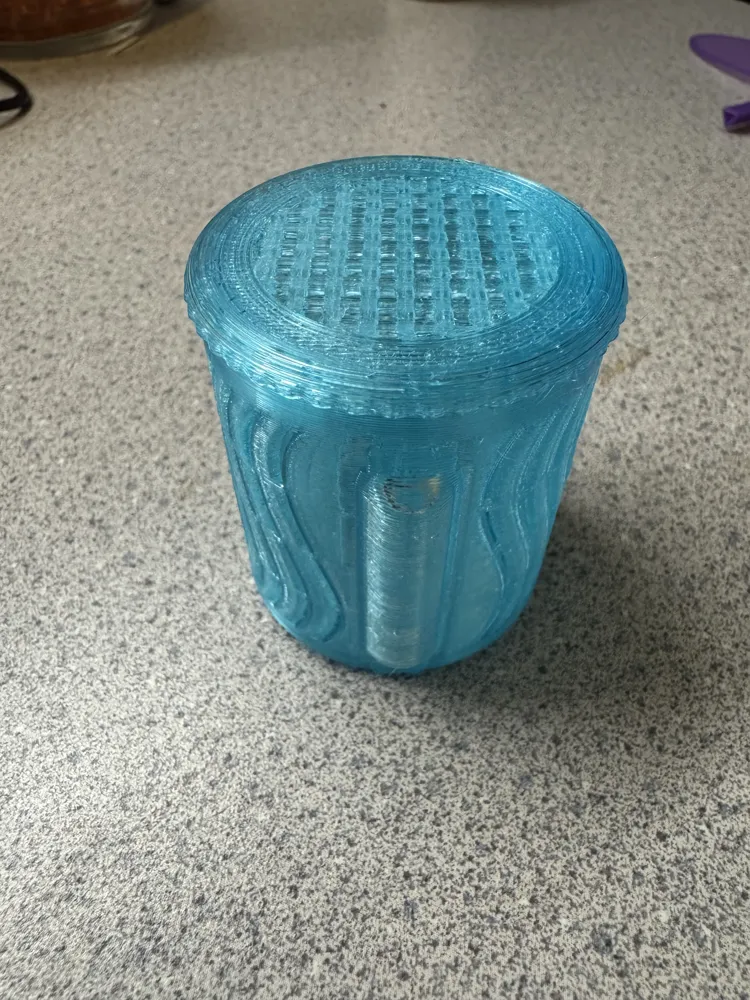
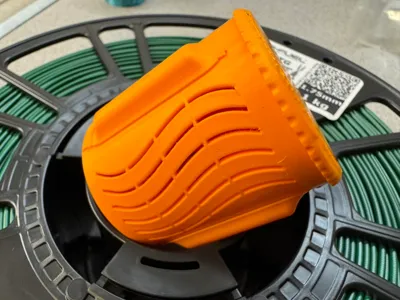
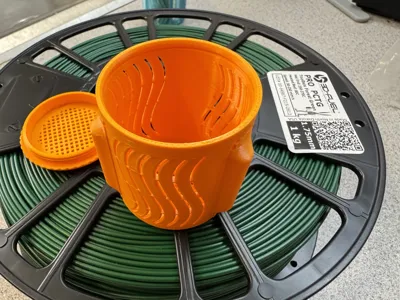
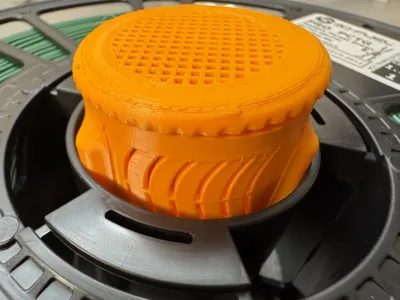
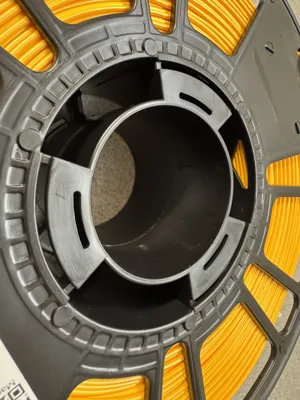
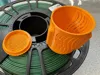
This is a friction-fit desiccant holder for 3D-Fuel spools, specifically the spool style they seem to be using most often in early 2026.
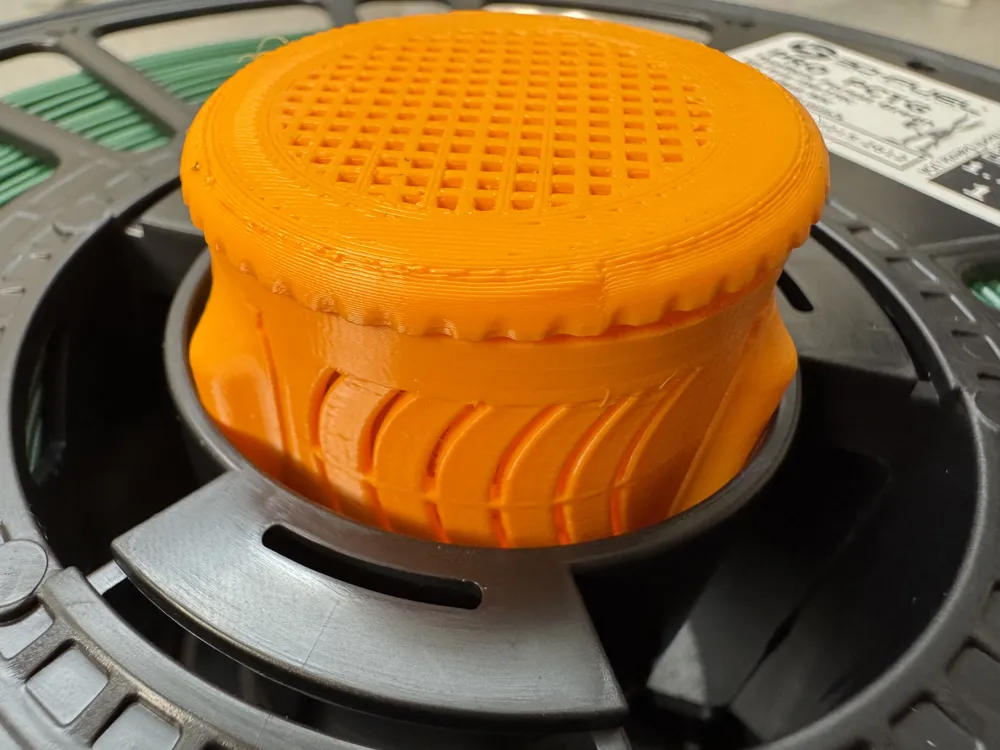
It presses into the inside of the spool and holds securely without extending past the width of the spool. The goal is a snug fit that stays in place during normal handling, while still being easy to remove when needed.
Why I made this
Most spool desiccant containers use rings or flanges on the ends to keep them in place. That works well on many spools, but 3D-Fuel spools are about 70 mm wide, and those extra rings make the spool too wide for my rack.
With the rings, I can no longer fit four 3D-Fuel spools on my spool rack. Without the rings, I can.
Because these 3D-Fuel spools have a smooth inner surface, unlike many Bambu, SUNLU, or Polymaker spools, a simple friction-fit holder works well and keeps the spool profile low.
Improved friction ribs
This newer version uses redesigned compression ribs for the friction fit.
Instead of making the ribs thick and rigid, the ribs are designed as a single-wall flexible feature. When printed in PCTG, they flex nicely against the inside of the spool, giving a snug fit that still releases cleanly when you pull the holder out.
This makes the fit feel much better than the original version: secure, but not annoyingly tight.
Stronger body
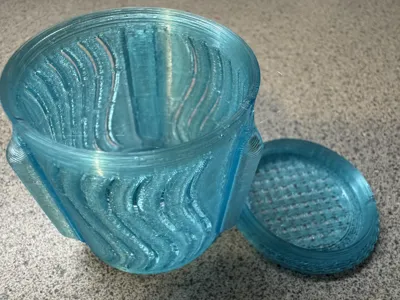
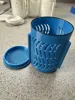
I also increased the wall thickness compared with the first version.
The original was intentionally very thin and lightweight, but this newer version is stronger and feels more durable while still using a modest amount of filament.
Lid
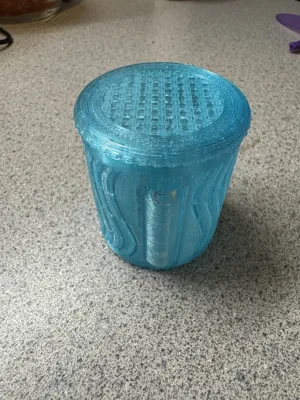
The lid snaps into place and holds well in my testing, while still being easy to remove.
I have printed the lid in both PETG and PC, and both worked fine. PCTG is also a good choice for this design, especially for the flexible compression ribs.
Print notes
Use a well-tuned filament profile and avoid printing it too fast. The compression ribs are thin, functional features, so print quality matters.
PCTG works especially well for the rib design because it has enough flex to create a smooth, snug friction fit.
Compatibility note
One of my 3D-Fuel filaments came on a different-looking spool, and this holder did not fit snugly in that one.
License



Comment & Rating (0)