
Scissor Stair model
Print Profile(1)
Description
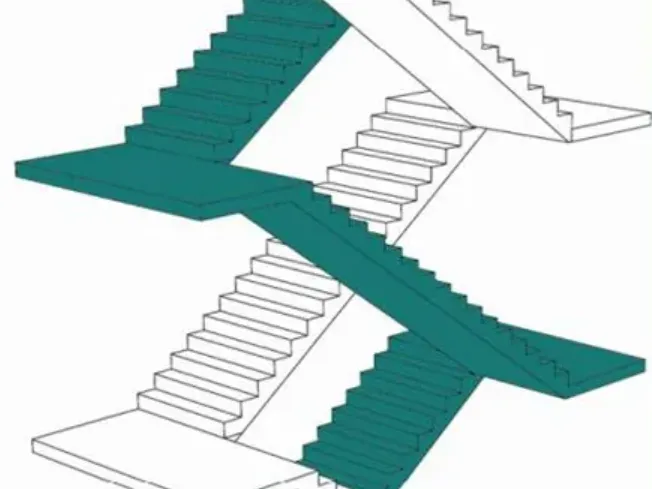
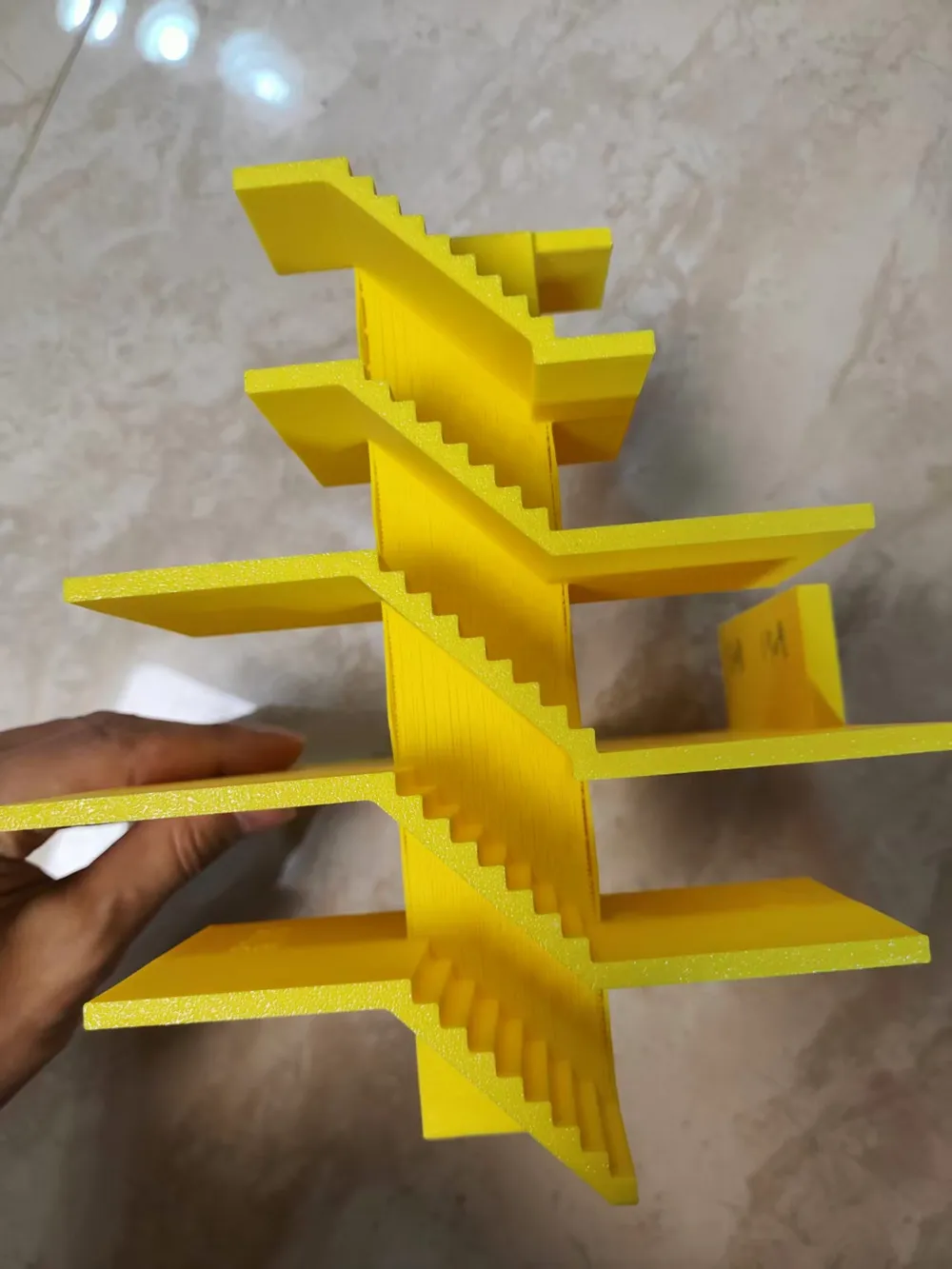
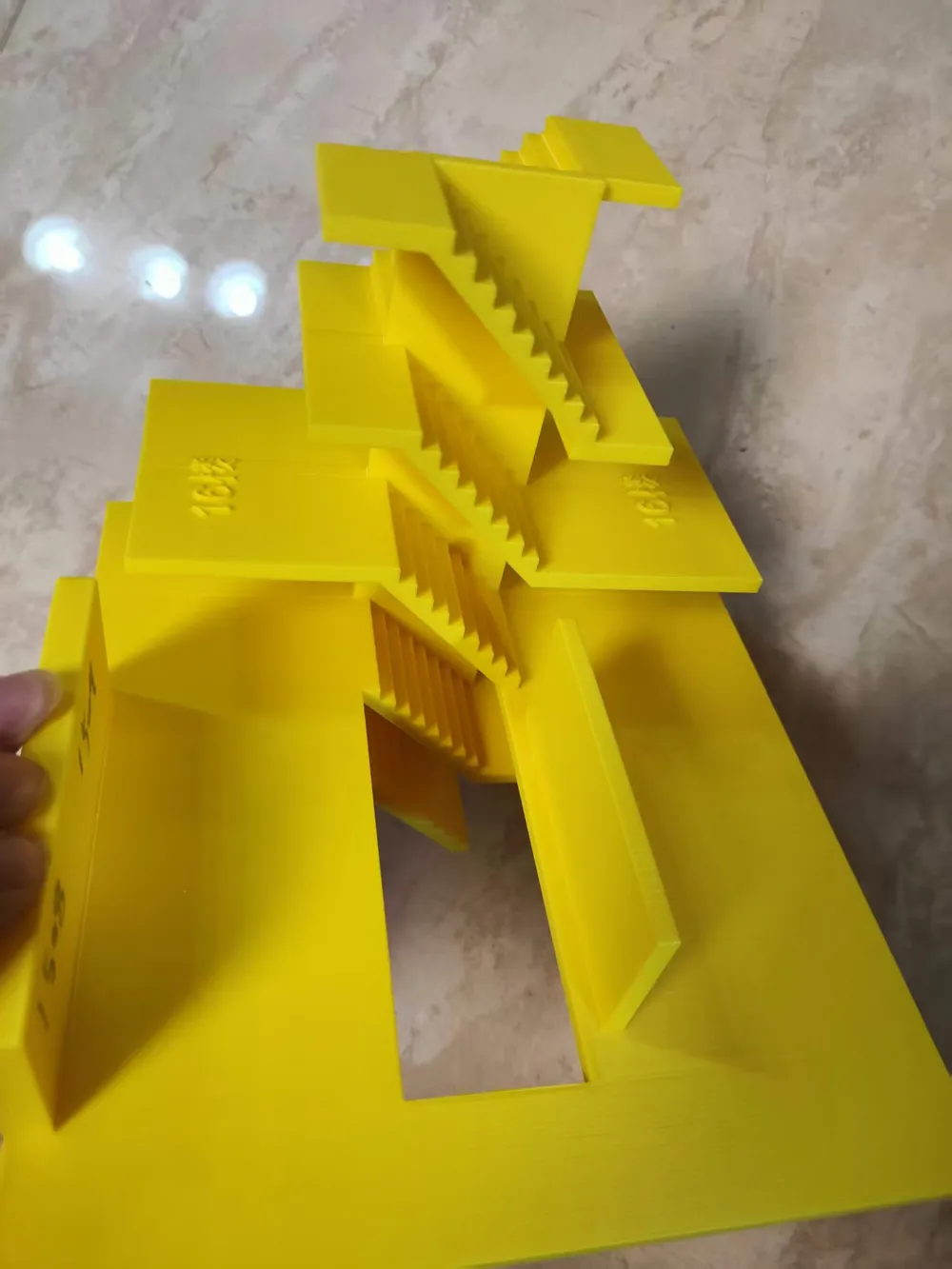
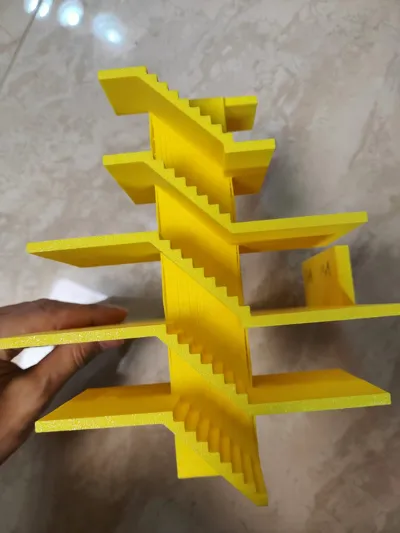
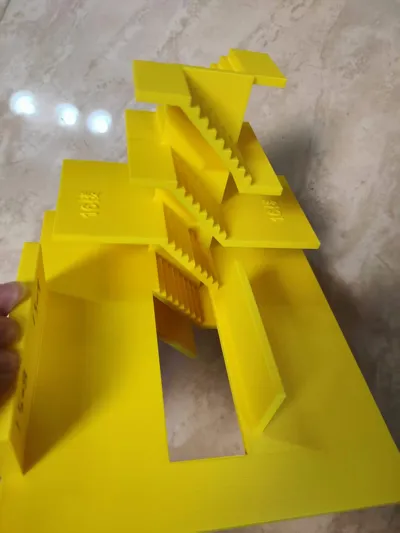
This stair design indeed easily creates a sense of spatial disorientation, and this model will highlight its structural features and the difficulties in direction recognition.
---
## Scissor Stair: The Folded Labyrinth
### Chinese Introduction
The scissor stair, also known as the interlocking stair or stacked stair, is a form of vertical circulation that arranges two straight flights of stairs intersecting within the same stairwell. The two flights ascend in an "X" shape around a central dividing wall, independent yet tightly nested, much like a pair of open scissors.
**The Mystery of the Structure**
In plan, the core of a scissor stair lies in "one shaft, two stairs" — within the same stairwell, the left and right flights each have their own independent entrances and landings. The steps of the two flights are vertically offset by half a story; when you step onto the first step of the left flight, the tread of the right flight is directly above your head. This three-dimensional intersection compresses the structural thickness of the stairwell to its extreme, saving a significant amount of core area in high-rise buildings.
**The Confusion of Disorientation**
However, it is precisely this extreme spatial efficiency that creates profound cognitive confusion. First-time users often face three levels of bewilderment:
**The First Layer: The Choice of Entrance** — Faced with two almost symmetrical doorways, without clear signs, the choice itself becomes a gamble. You instinctively step into one side, yet you don't know if this flight will take you to an odd or even floor.
**The Second Layer: The Paradox of Direction** — In a scissor stair, the concepts of "up" and "down" become relative. As you ascend one flight, through the gaps in the railing you can see people on the other side moving towards you, but you are both actually "going upstairs," just assigned to different floor sequences. This visual encounter, coupled with the physical impossibility of intersecting, creates a surreal, mirror-like experience.
**The Third Layer: The Misalignment of Floors** — The most fatal disorientation occurs mid-journey. When you finally reach your target floor, out of breath, and push open the fire door, you find that the floor number in front of you differs by one from your expectation. It turns out that the flight you chose only leads to odd floors, while your destination is on an even floor. You must cross the corridor to find the stairwell at the other end, or return to the ground floor and choose again. This "ghost-wall"-like sensation of looping endlessly stems from the scissor stair's forced division of the complete floor sequence into two mutually inaccessible subsystems.
**The Dialectic of Space**
The scissor stair is a product of the interplay between modern building density and fire safety regulations. It exchanges cognitive complexity for extreme physical space compression, and directional confusion for redundant evacuation safety. The key to understanding it is to remember: this is not one stair, but two stairs folded into a single shell. Every entry is a spatial philosophy lesson on choice and consequence.
---
### Scissor Stair: The Folded Labyrinth
The scissor stair, also known as the interlocking or stacked stair, is a vertical circulation form that crosses two straight stair runs within a single stairwell. The two flights wind around a central dividing wall in an "X" configuration—intertwined yet independent, like the blades of an open pair of scissors.
**The Architectural Enigma**
In plan, the scissor stair's essence lies in "one shaft, two stairs." Within the same stairwell, the left flight and right flight each possess independent entrances and landings. The steps of the two flights are vertically offset by half a story: as you mount the first step on the left, the tread directly above your head belongs to the opposite flight. This three-dimensional intersection compresses the structural depth to its absolute minimum, saving significant core area in high-rise buildings.
**The Disorientation**
Yet this extreme spatial efficiency creates profound cognitive confusion. First-time visitors typically confront three layers of bewilderment:
**First Layer: The Choice of Entrance** — Facing two nearly symmetrical doorways with minimal signage, the act of selection itself becomes a gamble. You step through one side on intuition, unaware whether this flight will deliver you to odd or even floors.
**Second Layer: The Paradox of Direction** — In a scissor stair, the concepts of "up" and "down" become relative. As you ascend one flight, through the railing gaps you glimpse travelers on the opposite side moving toward you—yet you are both "going upstairs," merely assigned to different floor sequences. This visual head-on encounter coupled with physical impossibility of meeting creates a surreal, mirror-like experience.
**Third Layer: The Misalignment of Floors** — The most disorienting confusion occurs mid-journey. Gasping, you push open the fire door at your target level, only to find the floor number differs by one from your expectation. Your chosen flight serves only odd floors; your destination lies on an even level. You must traverse the corridor to locate the opposite stairwell, or return to the ground floor and choose again. This "ghost-wall" sensation of looping endlessly stems from the scissor stair's forced division of the complete floor sequence into two mutually inaccessible subsystems.
**The Dialectic of Space**
The scissor stair is the offspring of modern building density wrestling with fire safety codes. It trades cognitive complexity for extreme spatial compression, and directional bewilderment for redundant evacuation safety. The key to understanding it is simple: this is not one stair, but two stairs folded into a single shell. Every entry is a spatial philosophy lesson on choice and consequence.
---
If you need to adjust the style (more academic/more popular) or add technical details (fire safety regulations, specific dimensions, etc.), please let me know.
License

You shall not share, sub-license, sell, rent, host, transfer, or distribute in any way the digital or 3D printed versions of this object, nor any other derivative work of this object in its digital or physical format (including - but not limited to - remixes of this object, and hosting on other digital platforms). The objects may not be used without permission in any way whatsoever in which you charge money, or collect fees.


Comment & Rating (0)