
Print Profile(1)
Description
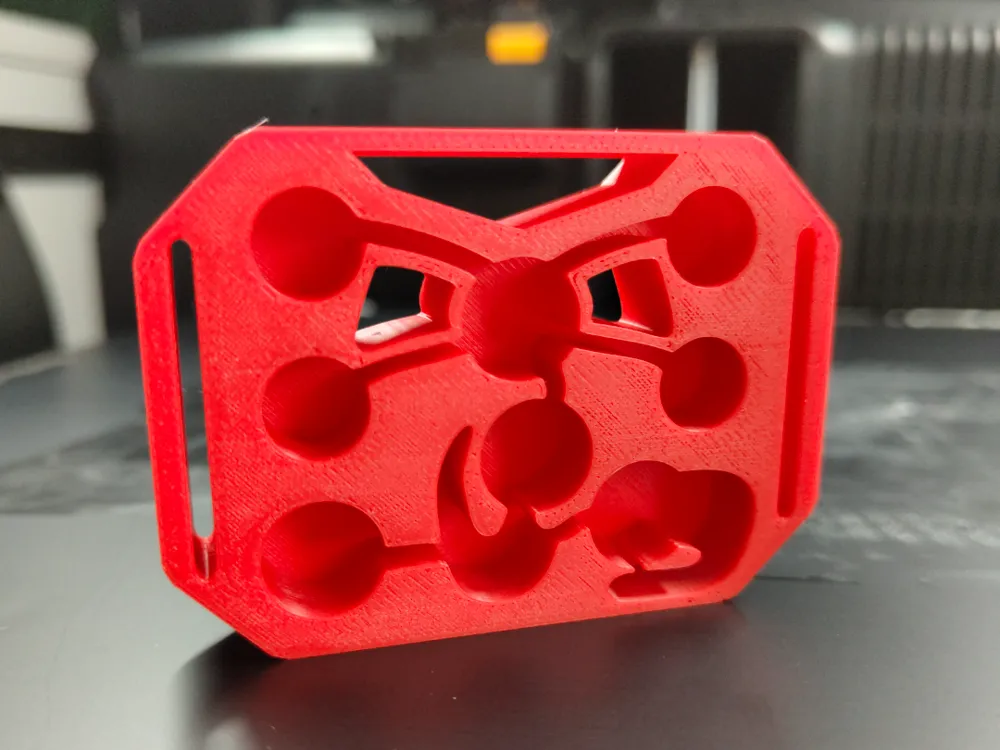
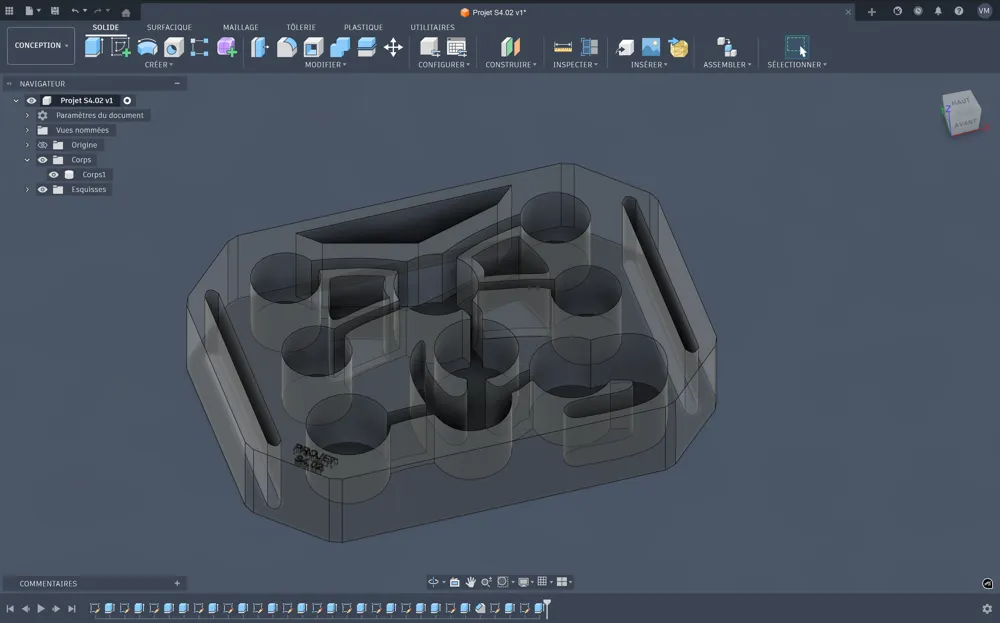
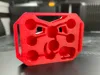
Body-on-Chip (BOC) – Educational Microfluidic Cell Culture Device
This Body-on-Chip (BOC) device was developed as part of a school project to demonstrate the principles of microfluidics and cell culture systems. The model can be 3D printed and used for educational presentations, demonstrations, or conceptual prototyping of organ-on-chip / cell culture platforms.
The design includes multiple wells connected by microchannels, allowing visualization of how fluid circulation and compartmentalized culture environments can be created in a compact device.
Technical Information
- Each well volume: approximately 500 µL
- Designed for FDM 3D printing
- Can be printed in PLA or PETG
- Transparent or translucent materials improve visualization during demonstrations
Functional Prototype Possibility (Advanced Use)
Theoretically, it is possible to develop living cells inside the device under experimental conditions if additional steps are performed:
- Print the device in translucent PETG
- Modify the slicer settings to 100% infill to improve structural integrity and reduce porosity
- Seal internal channels using a medically approved biocompatible resin or coating to ensure:
- Fluid tightness
- Improved surface compatibility for cell viability
- Install threaded inserts for mechanical closure
- Close the system with a polycarbonate cover to achieve a hermetic seal
These steps are essential because standard FDM printing produces microscopic porosity that is not suitable for direct biological use without post-processing.
Material Considerations
- PETG is recommended over PLA if sterilization is required, as it has better thermal resistance and mechanical stability.
- PLA and PETG are generally considered biochemically compatible for short-term contact with biological media, depending on filament additives.
- PLA may deform under high-temperature sterilization (autoclave), while PETG offers better resistance, although neither material is fully autoclave-grade without deformation risk.
Important Notice
This model is primarily intended for educational, research, and prototyping purposes only. Any biological use requires proper sterilization protocols, validated materials, and laboratory safety procedures.
If you print this model for a presentation or research demonstration, feel free to share your results!
License

You shall not share, sub-license, sell, rent, host, transfer, or distribute in any way the digital or 3D printed versions of this object, nor any other derivative work of this object in its digital or physical format (including - but not limited to - remixes of this object, and hosting on other digital platforms). The objects may not be used without permission in any way whatsoever in which you charge money, or collect fees.


Comment & Rating (0)