
Ludus Corivalli Board Game
Print Profile(1)
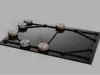
Description
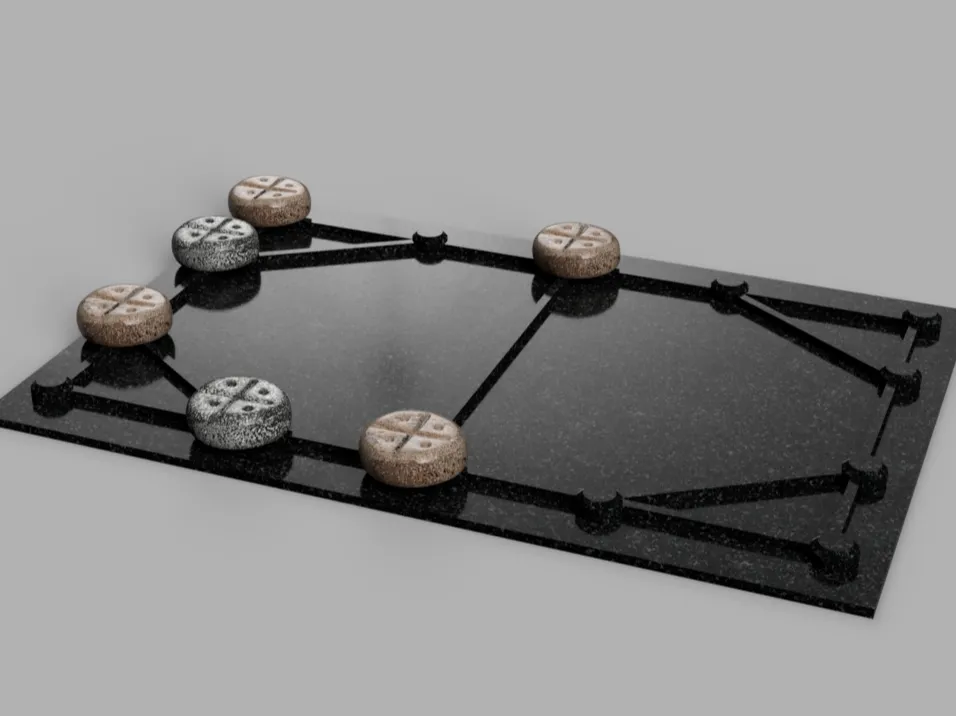
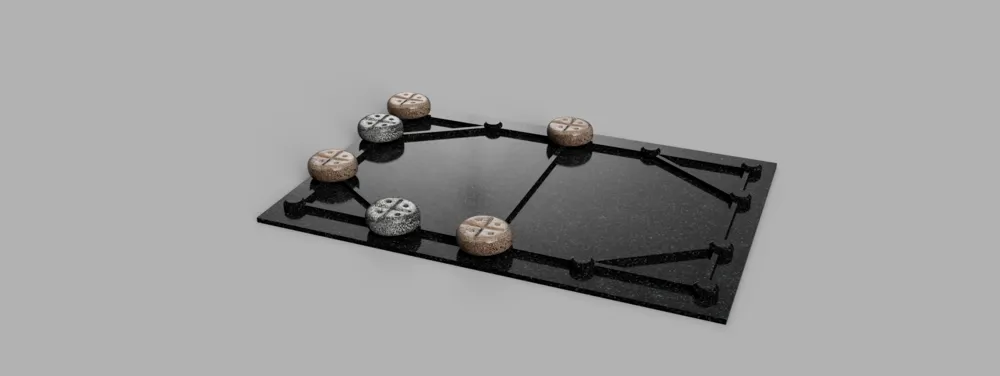
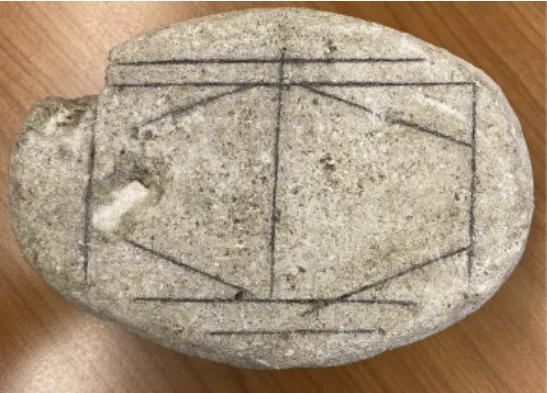
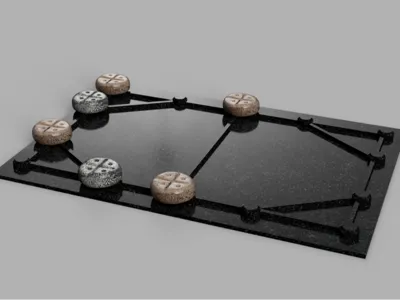
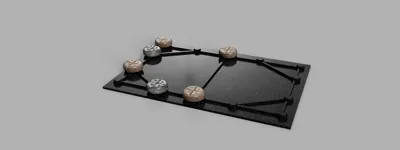
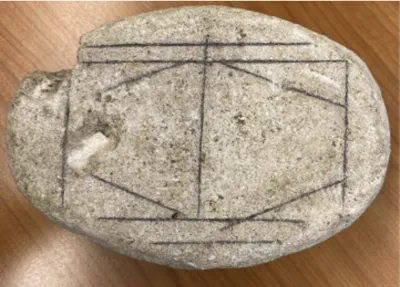
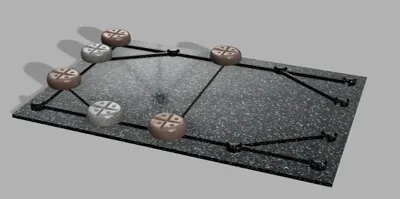
This is a game developed from the finding of an ancient Roman board game. Ai has been used to develop possible rules and style of playing pieces. I have then devised other alternative rules to allow an evader to win the game.
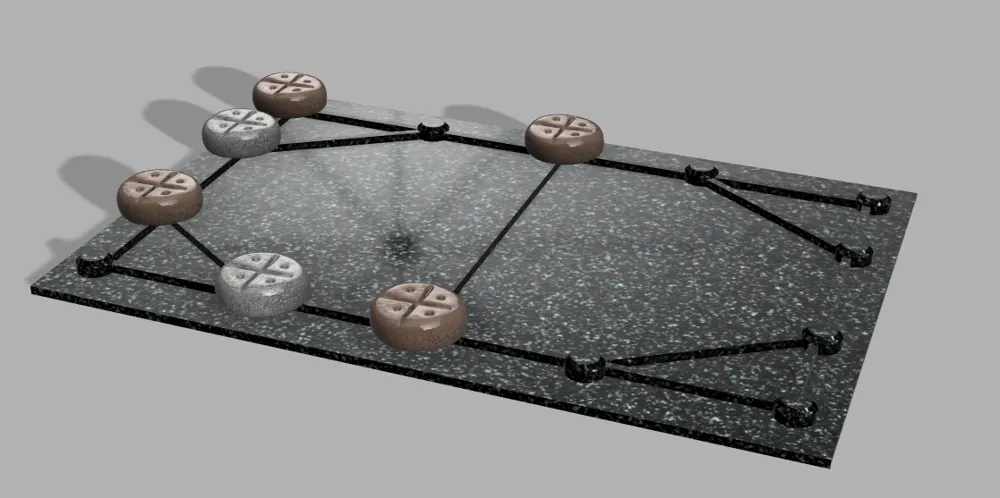
Place the board between the two players.
One player controls four pieces; the other controls two pieces.
Pieces start off the board or on designated starting points (not explicitly known so it's up to you).
AI simulations suggest pieces were placed on intersections of grooves. My suggestion is an alternative placing of stones starting with the Blocker (who has 4 stones and places the last two stones).
Turn Structure
Players alternate turns.
On your turn, you:
Move one of your pieces along a groove to an adjacent intersection.
Moves are limited by the paths on the board (straight or diagonal).
Pieces cannot jump over other pieces or move off a path.
(This is similar to abstract strategy games that only allow movement along inscribed lines.)
Objective
The aim is for the blocker to block the evader from moving:
If your opponent cannot make a legal move on their turn, you win.
The fewer open moves remaining for the opponent, the stronger your position.
My variation(s) -
You might limit the moves played to allow the evader to win the game by running the moves out.
Blocker must immobilise within 12 moves (this can be changed depending on difficulty level), if not the evader wins.
Other variations might include:
If either evader reaches one of a designated space(s) and survives one full turn, they win.
If both evaders occupy opposite edges simultaneously, they win.
License



Comment & Rating (0)