
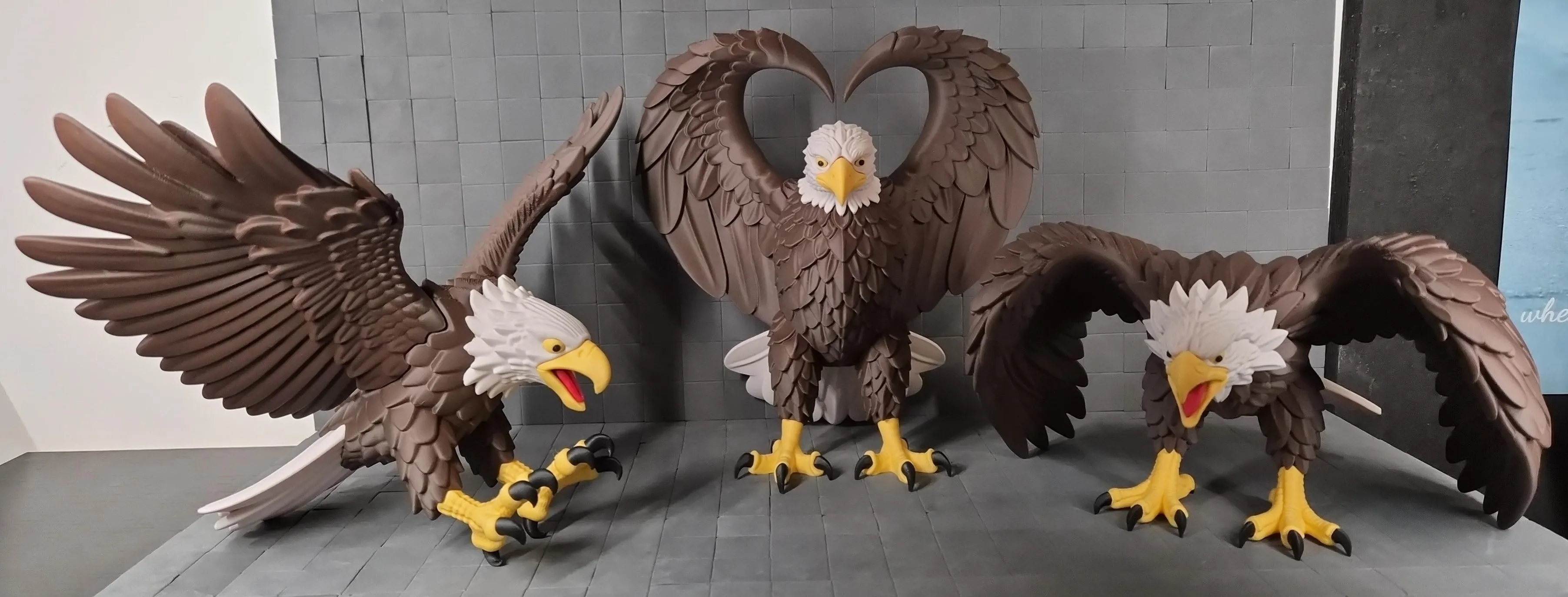
Bald Eagle Riftwind Crest| Multicolor Multipart
Print Profile(3)
![[LARGE] 0.2mm layer, 2-3 walls, 3-15% infill](https://makerworld.bblmw.com/makerworld/model/USc4e9dd371e35f6/656470485/instance/02994ab523ce7b2a.jpg?x-oss-process=image%2Fresize%2Cw_100%2Fformat%2Cwebp)
![[MEDIUM] 0.16-0.20mm layer, 2-3 walls, 5-20% infill](https://makerworld.bblmw.com/makerworld/model/USc4e9dd371e35f6/694451088/instance/ecbfa2da1110917d.jpg?x-oss-process=image%2Fresize%2Cw_100%2Fformat%2Cwebp)
![[SMALL] 0.12-10.16mm layer, 2-3 walls, 10-30% infill](https://makerworld.bblmw.com/makerworld/model/USc4e9dd371e35f6/816784110/instance/34a8fc4b3d5c9bf3.jpg?x-oss-process=image%2Fresize%2Cw_100%2Fformat%2Cwebp)
Bill of Materials







Description
Boost Me (for free)
Boost = fuel for the next design! If you’ve enjoyed my work, hit Boost and be part of the creative streak. Also, tap Follow to catch the next drop.
Membership
You can sell physical prints of this model as long as you subscribe to my Commercial License Membership.
- 2026-02-26 Added LARGE print profile
- 2026-02-27 Updated MEDIUM print profile
- talons and talon tips were little loose, so modified to snugger fit
- updated talons and talon tips raw files
- 2026-03-11 Added SMALL print profile
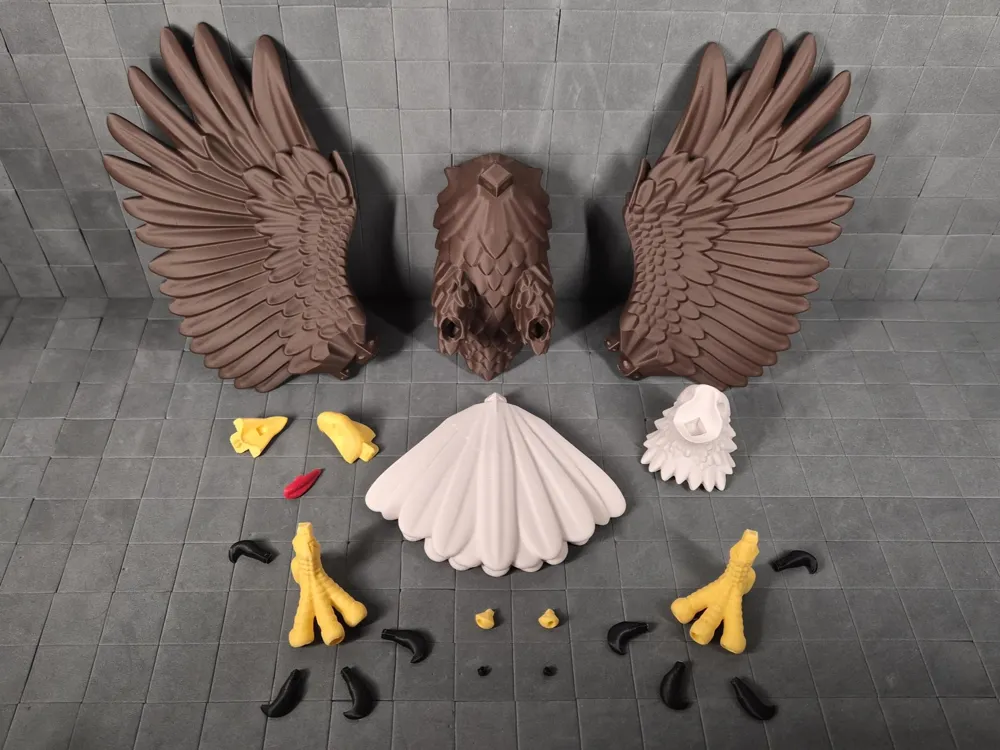
- the beak, tongue, and eyes are joined with the head
- the tips are joined with the talons
- the head and talons require AMS for multicolor printing, but a single-color option is also available
- raw files for the head and talons have been added as well
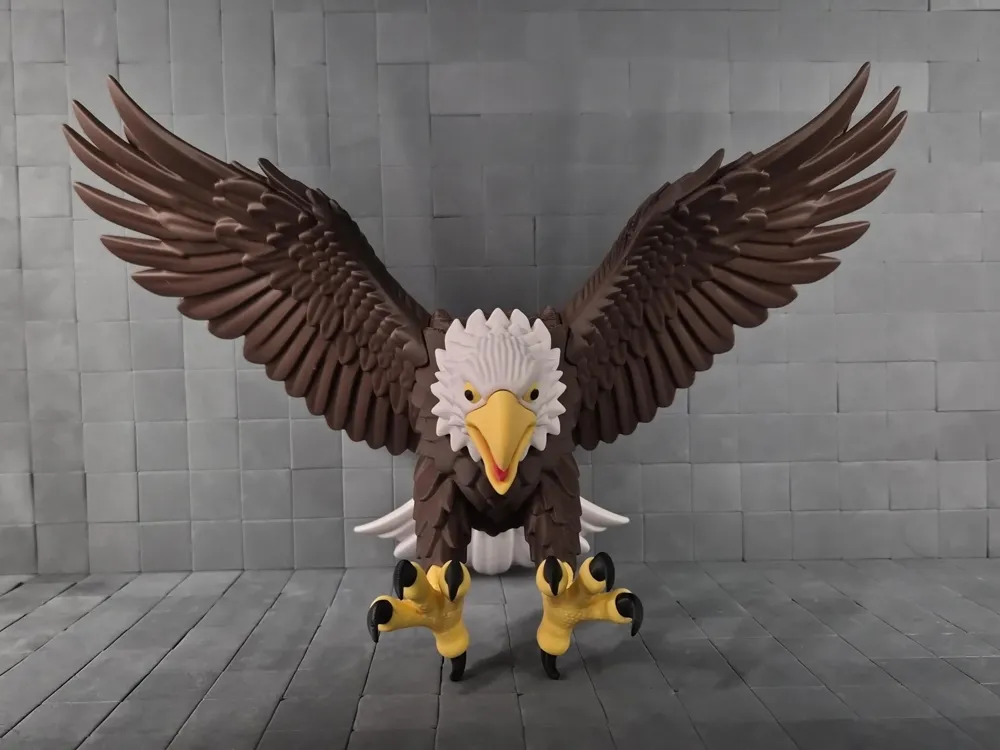
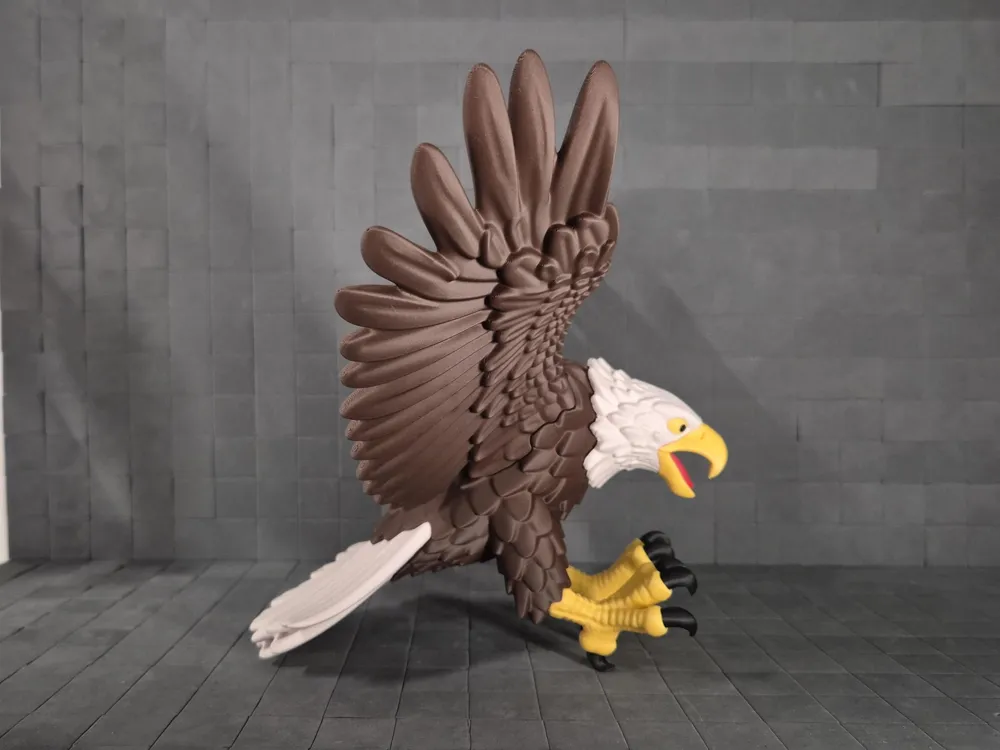
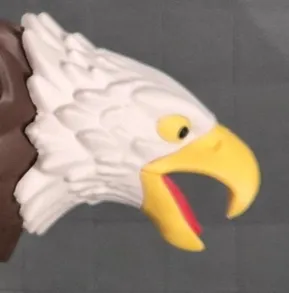
Eagle of the Riftwind Crest
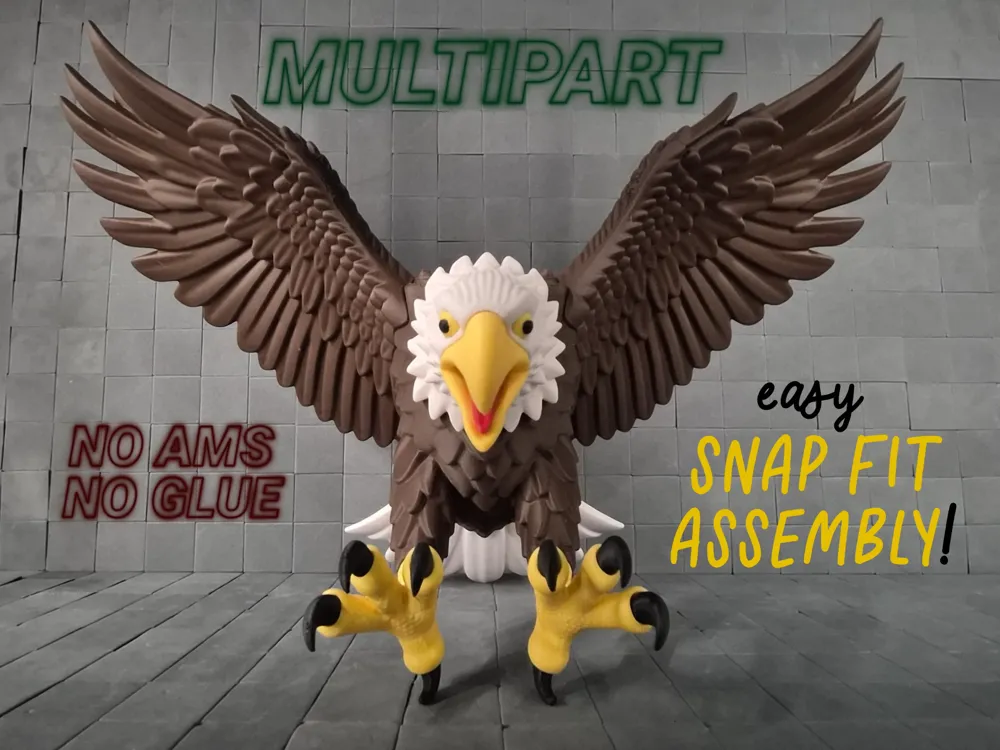
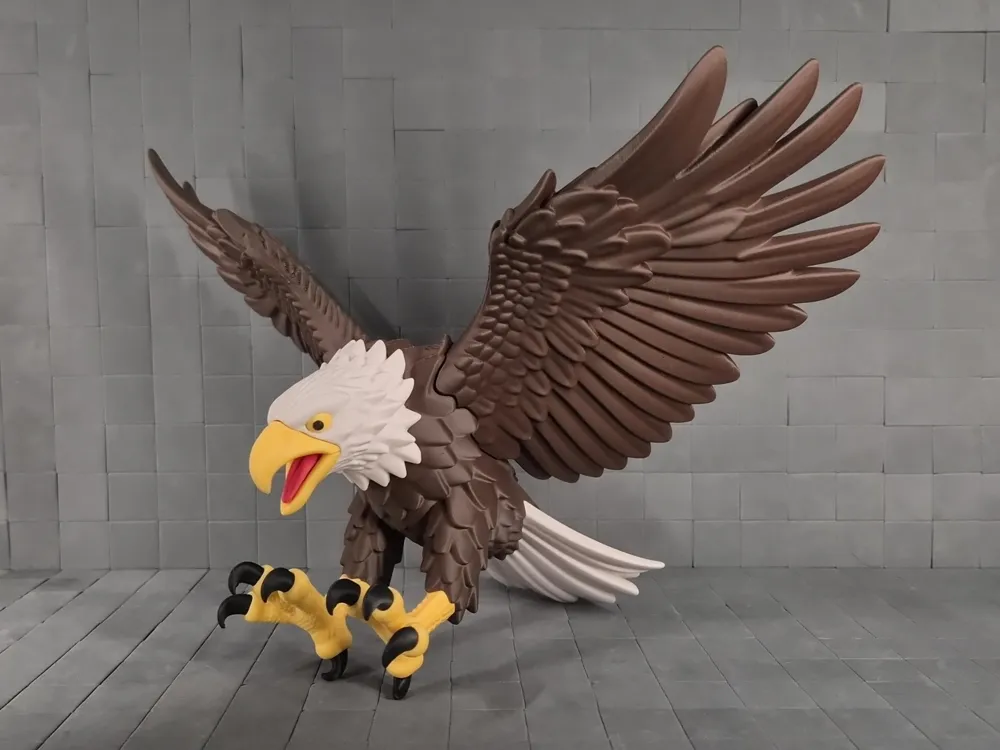
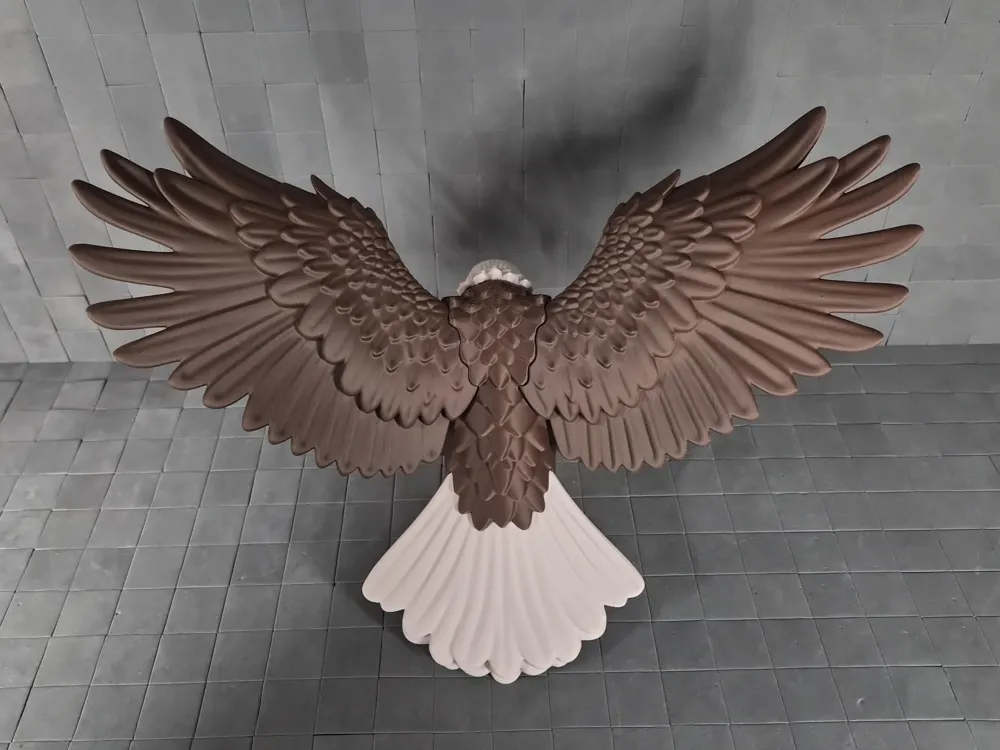
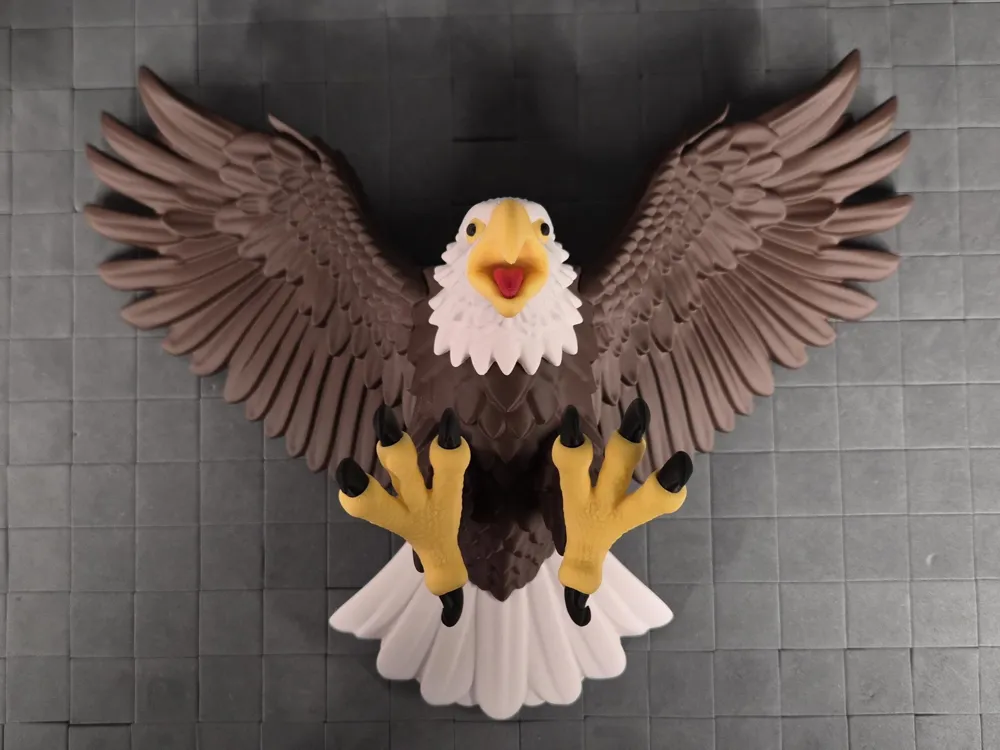
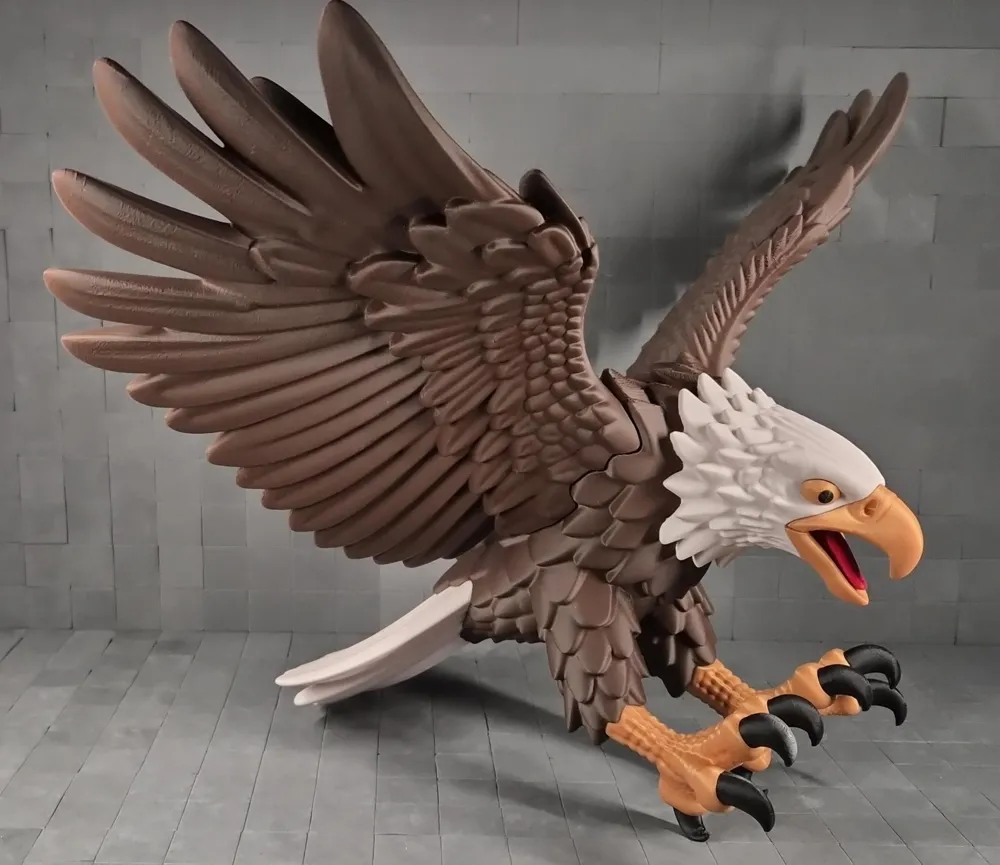
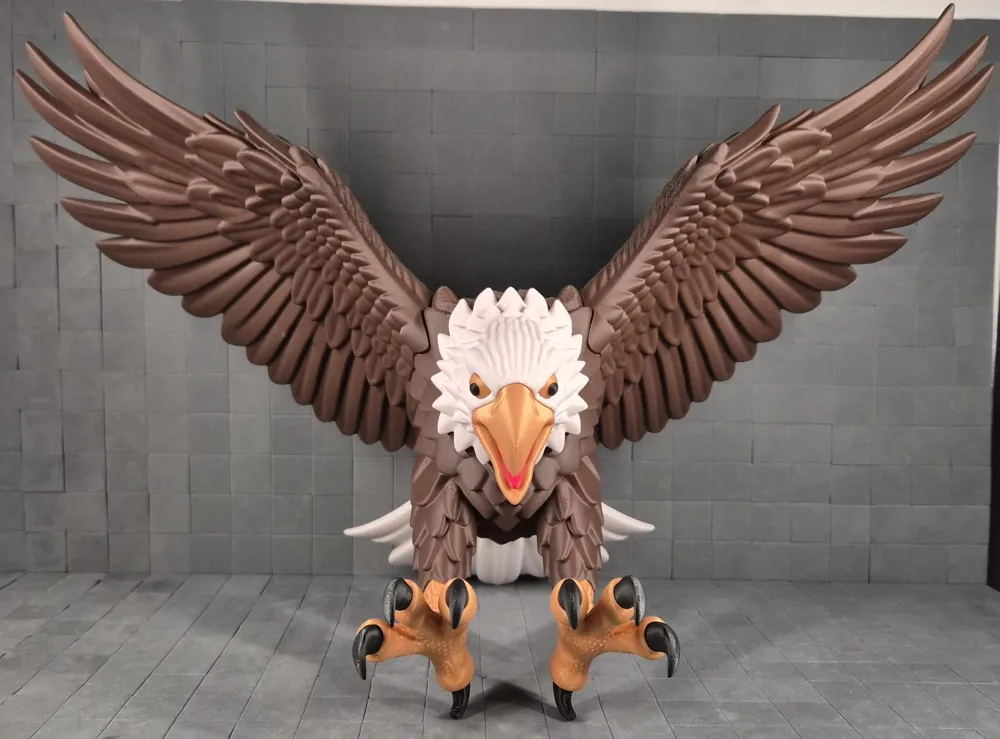
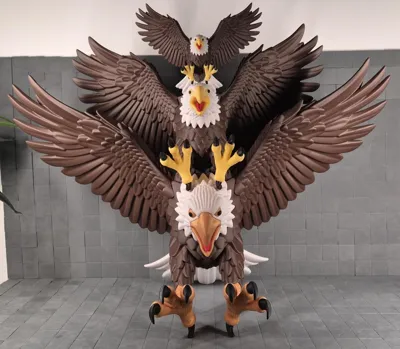
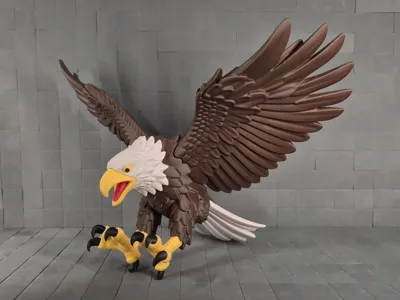
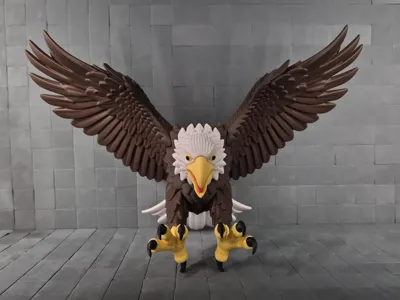
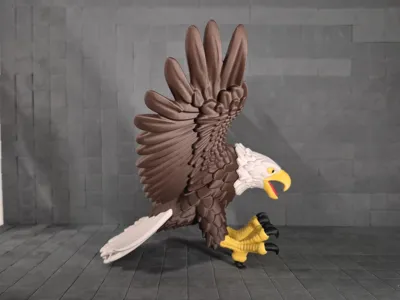
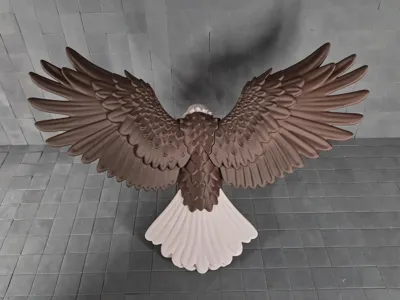
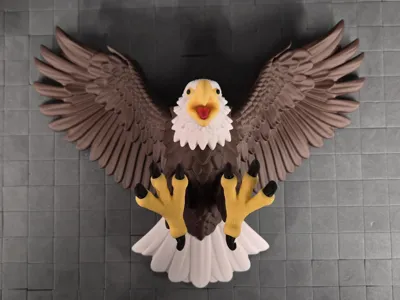
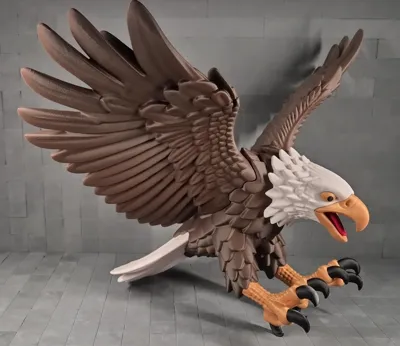
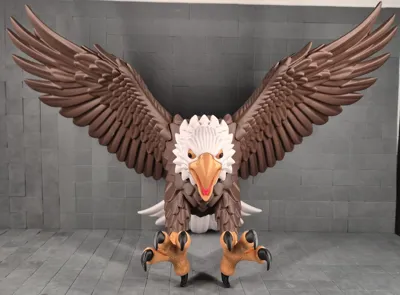
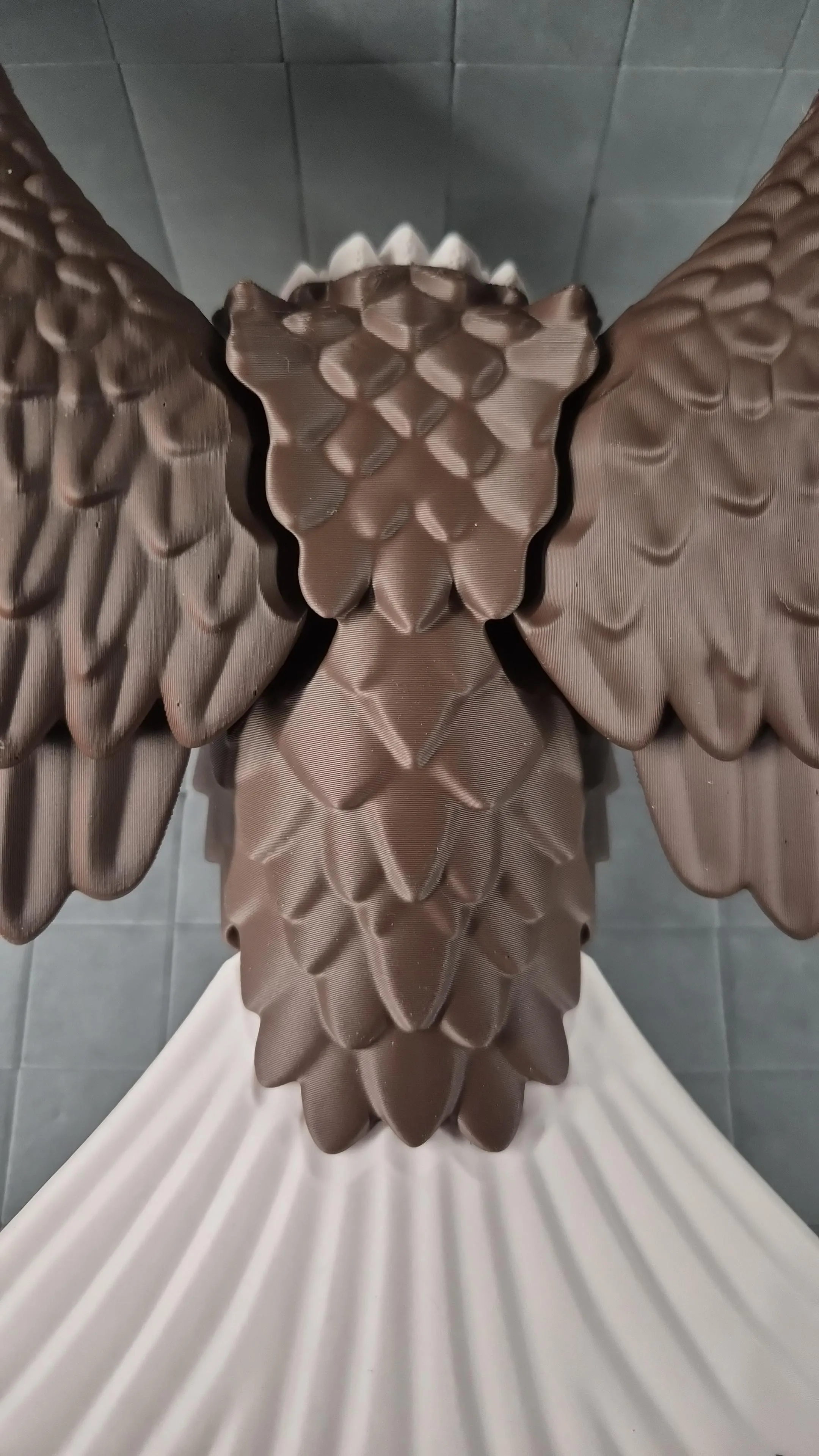
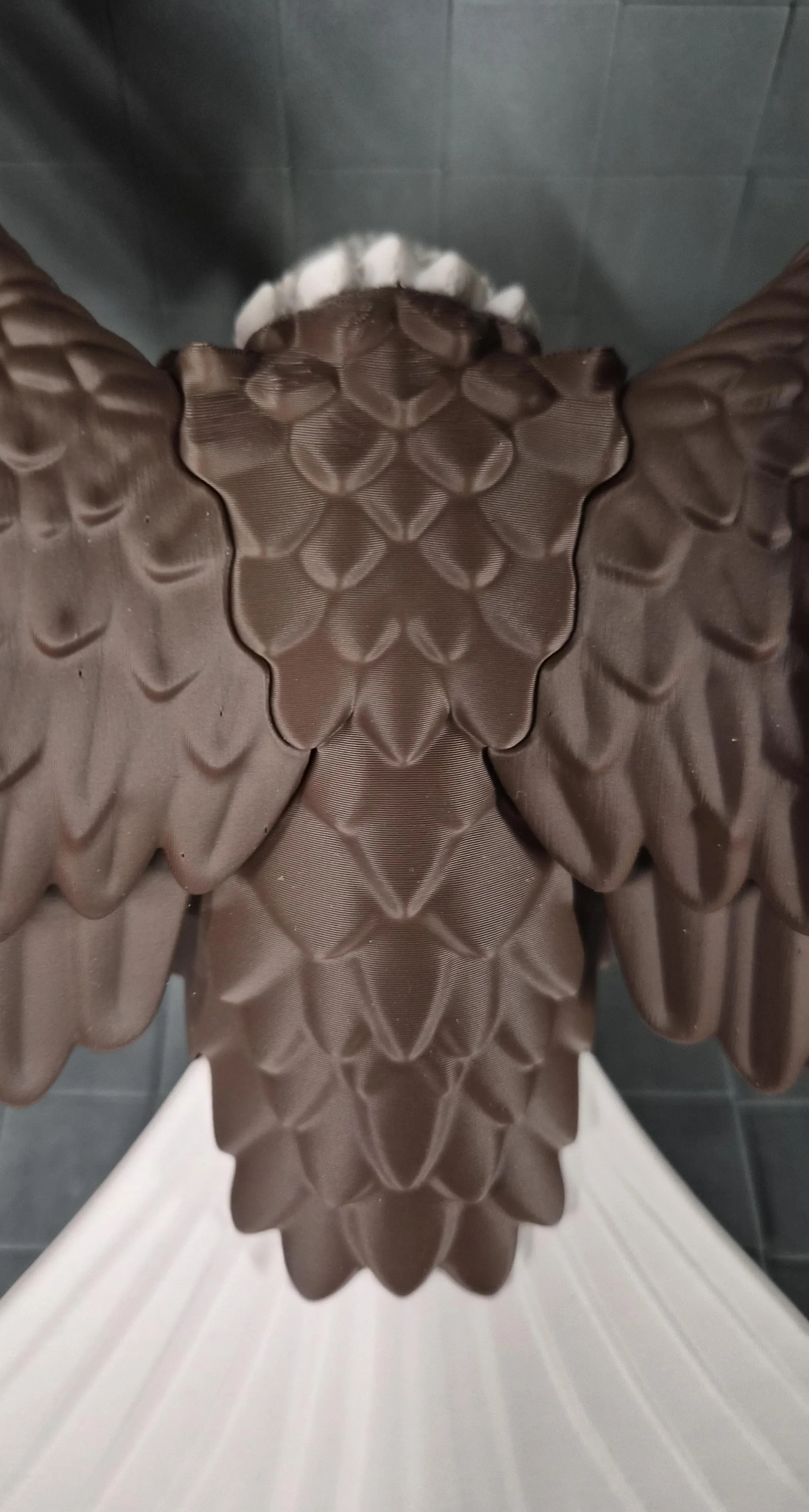
A dynamic bald eagle captured mid-landing, wings flared wide for balance, talons thrust forward and spread as if gripping an invisible perch. The body leans forward in controlled descent, with the head showing prominent backward-swept feather stripes that evoke a powerful gust rushing over it. The eyes are alert and intense, yet with a subtle hint of startlement in that frozen moment of touchdown. The open beak adds urgency without overpowering the overall vibe of majestic power meeting unexpected wind force.
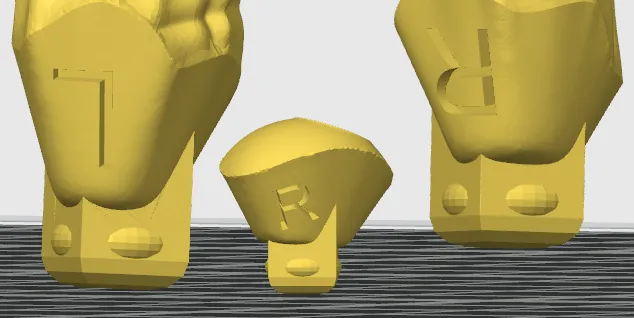
No base or rock required! The forward-leaning pose and extended talons ensure natural freestanding stability. Designed as a clean multipart snap-fit model, with tight pegs and embedded orientation texts for easy assembly.
Assembly Instructions
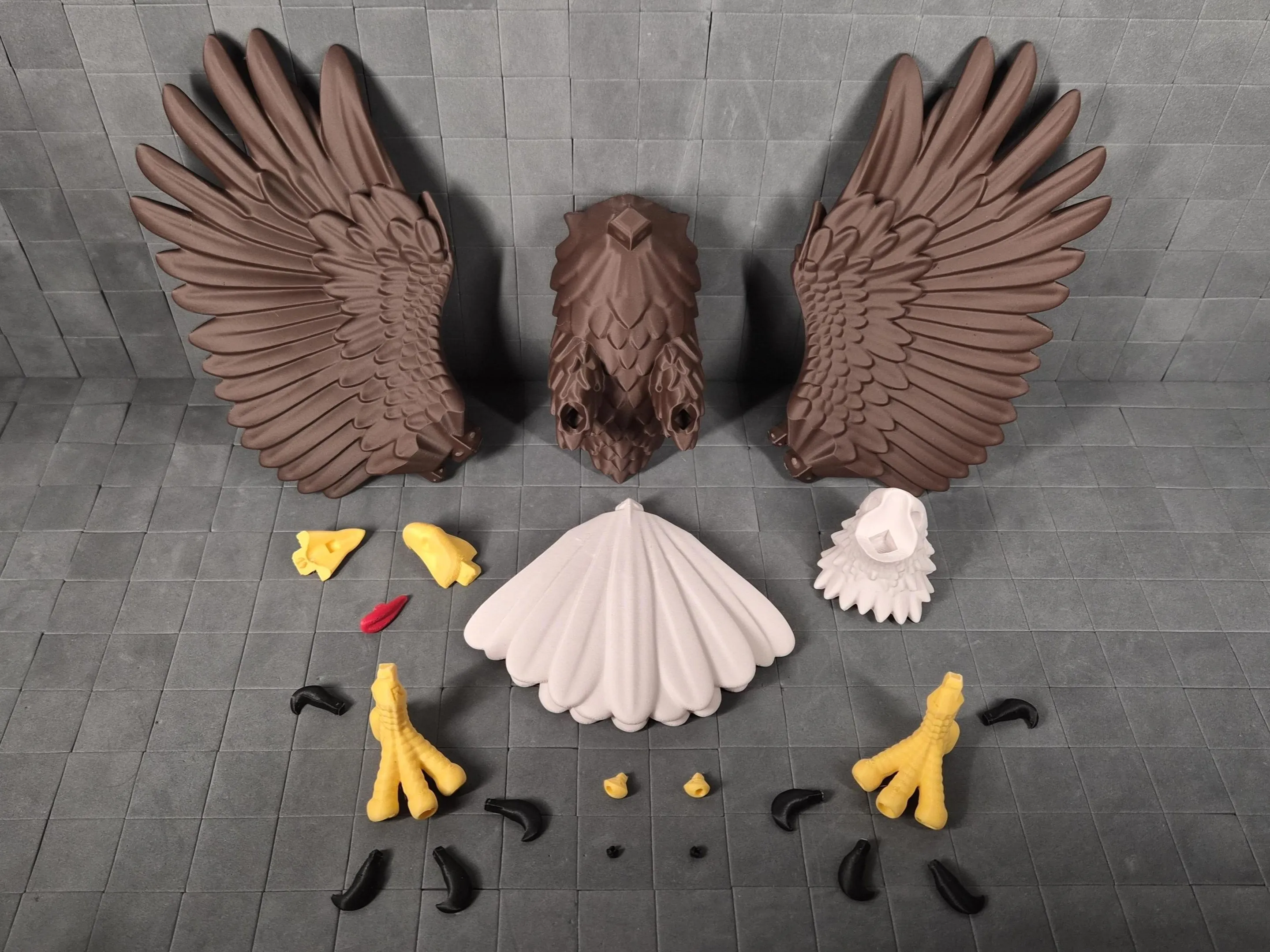
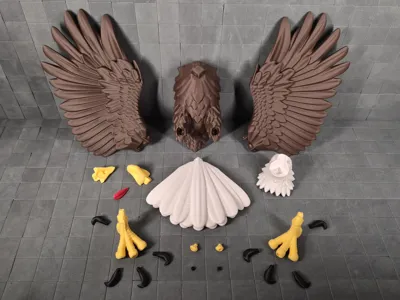
This multipart model is designed for effortless, glueless assembly! Snap everything together using the peg connectors. No glue required for a secure, satisfying fit.
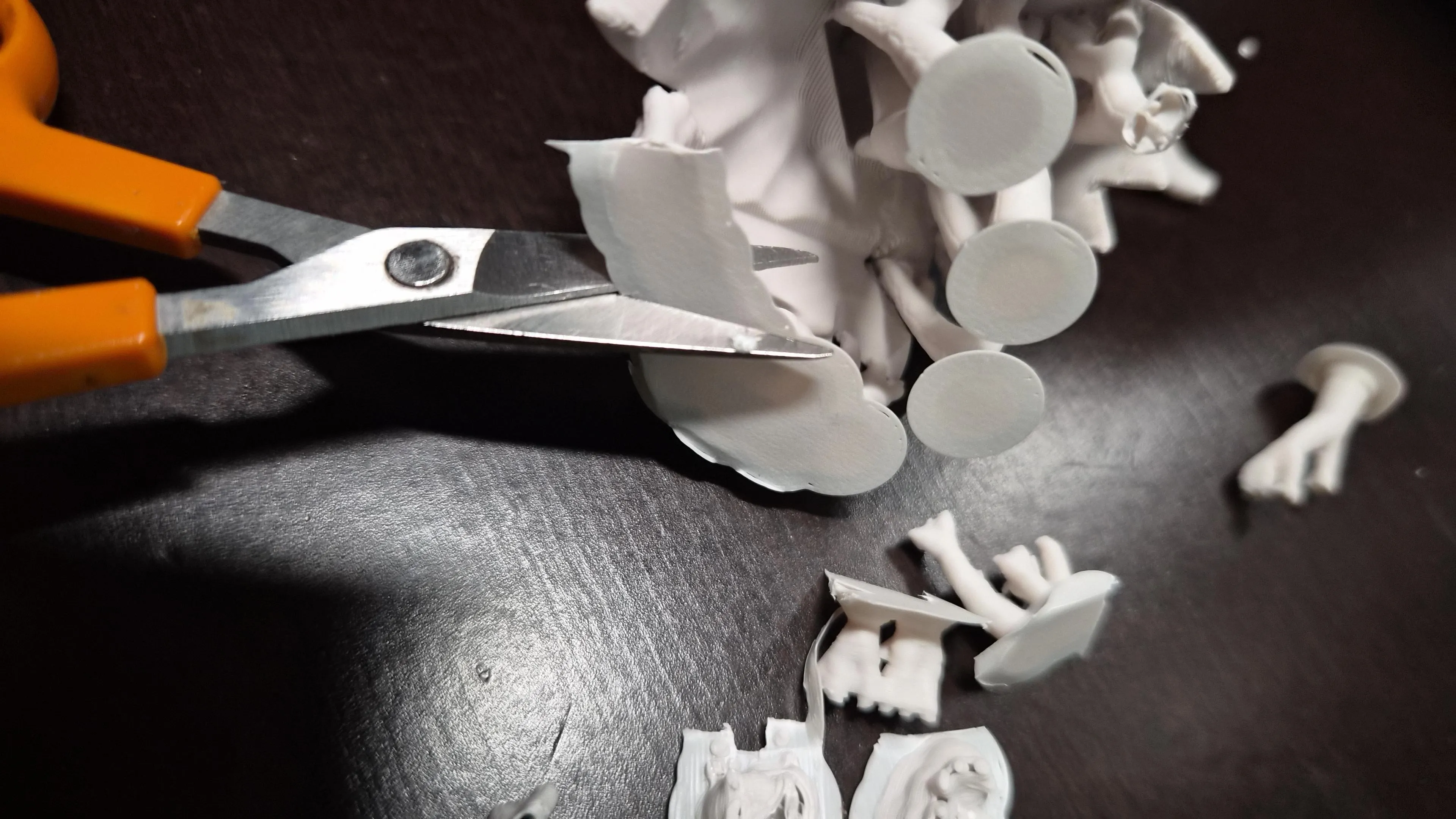
- Preparation Carefully remove tree supports before assembly. Tree supports release most cleanly when cut between branches… snap them away without stressing surfaces.
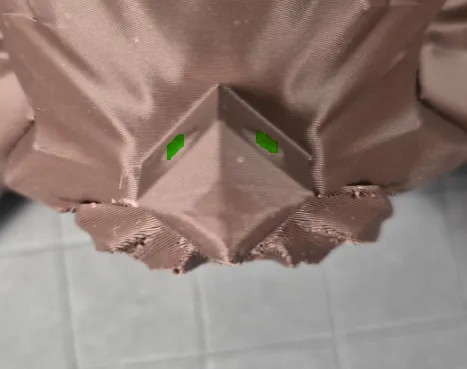
- Peg Connections Almost all parts use the same snap-fit peg system:
- Pegs are intentionally tight for rock-solid hold → align and then push firmly until you feel/hear the snap.
- If too tight → lightly trim peg domes with a hobby knife or sandpaper (test fit first).
- If slightly loose → a tiny drop of superglue fixes it instantly.
- Smaller pegs may feel less "clicky" than larger ones but still provide reliable strength.
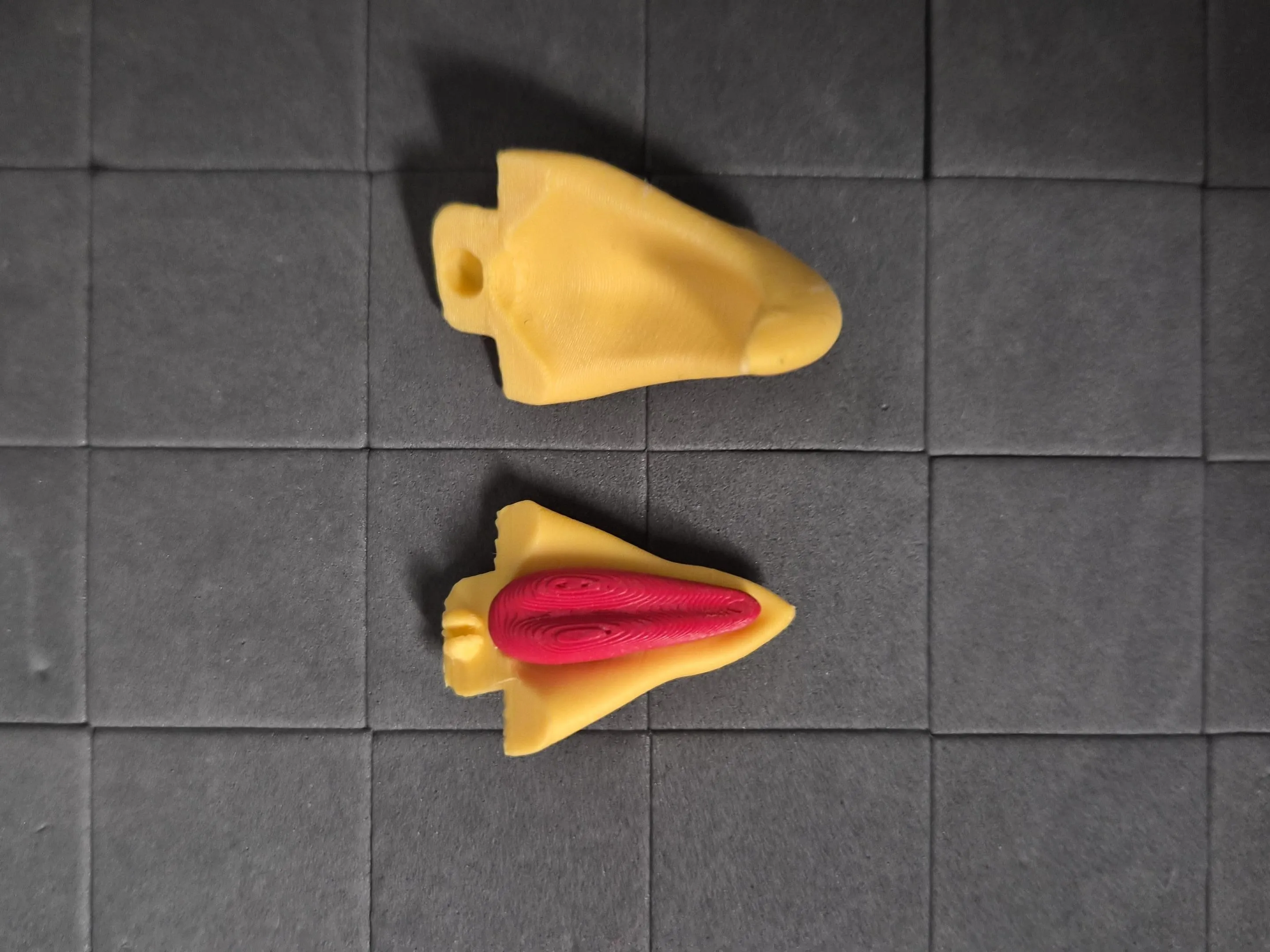
- Beak Assembly
Insert tongue to bottom beak
Connect top and bottom beak together
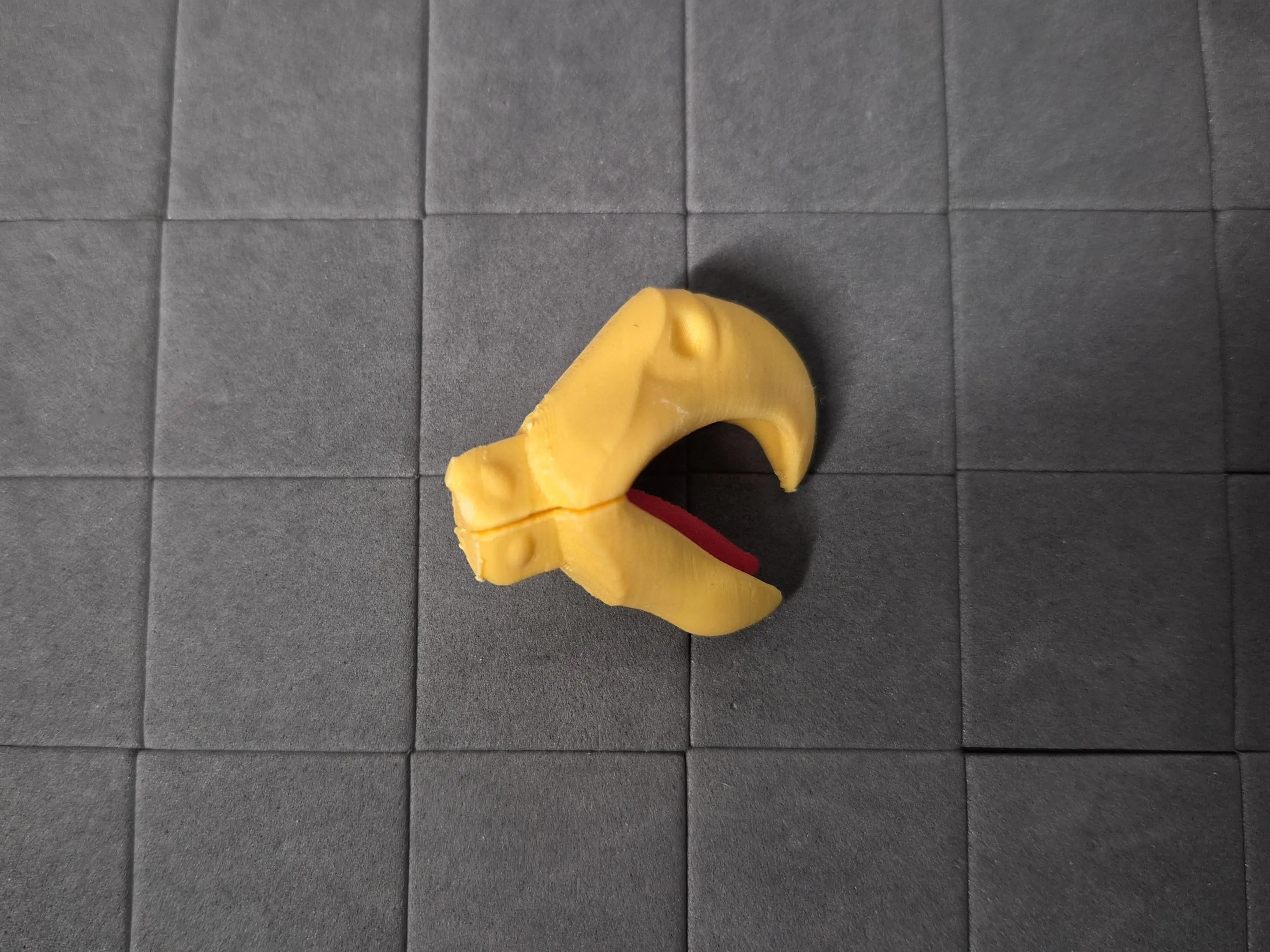
Insert assembled beak to the head.
- Orientation Aid Embedded text guide correct orientation.
Assembly Troubleshooting & Tips
The parts are designed with a tight, secure fit so your model stays strong and stable once assembled. The pegs and sockets usually require a small amount of force to fully lock in; this is intentional for a reliable connection.
Common issues & quick fixes:
- Parts don’t seem to click fully together
- Clean all support remnants thoroughly from the pegs and inside the sockets.
- Check for small blobs, strings or printing artifacts on the peg or in the hole (light scraping or sanding usually solves it).
- While pushing, try a gentle back-and-forth rotation or slight twisting motion → this helps the parts align and slide in once everything lines up.
- Connection feels too tight
- Lightly sand or scrape the peg domes → only a very small amount is usually needed.
- Connection feels too loose after cleaning
- A tiny drop of glue in the joint will lock it permanently and securely.
Still not fitting smoothly? Upload close-up photos of the peg/socket area (or the problematic joint) in the comments → I’ll take a look and give specific advice. Your photos and feedback help improve future versions and profiles for everyone!
Happy assembling! 🦅🛠️
Print Profiles
MEDIUM
- 100% scale = 322 mm (width) × 194 mm (depth) × 207 mm
- Layer Height: 0.16–0.20 mm
- Walls: 2–3
- Infill: 5–20% (uses lower end for large parts like body/wings to save filament/time; higher end for small/functional parts like talon tips and connectors to boost durability and prevent breakage during repeated assembly/disassembly)
- Supports: Tree supports (auto-generated). Manually painted supports on head.
- Color Handling: Multipart design → no AMS required. Print plates separately in desired filaments.
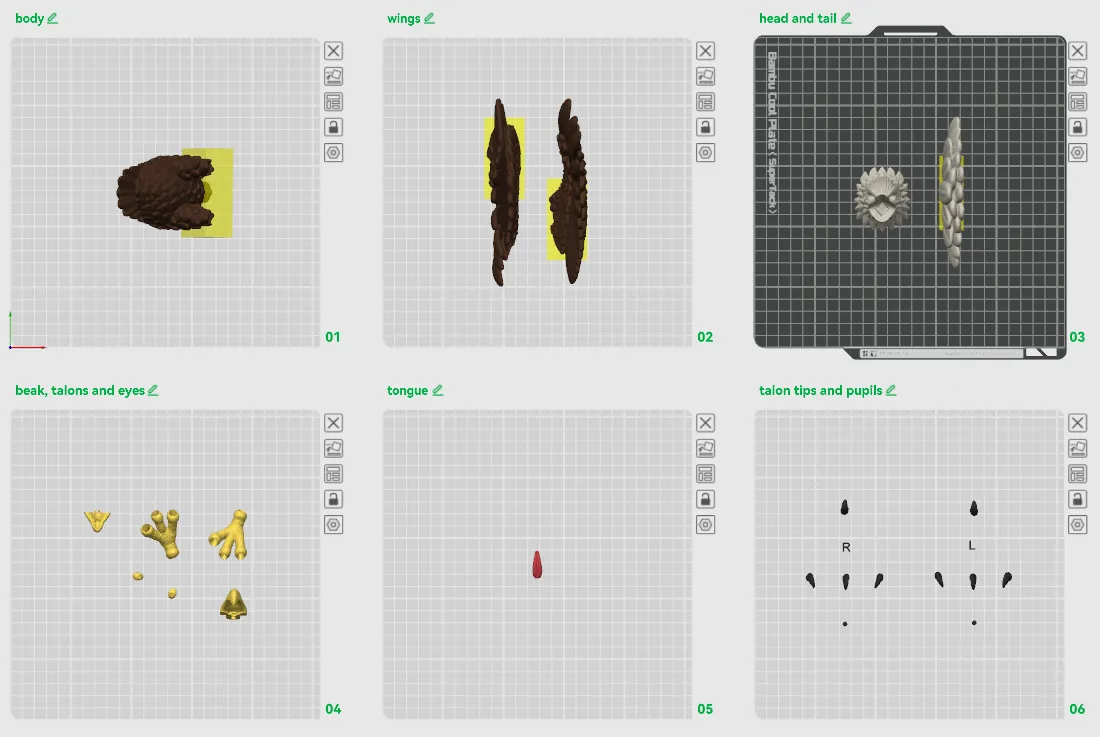
Plates
- Body
- Wings
- Head and Tail
- Talons, Beak and Eyes
- Tongue
- Talon tips and Pupils
LARGE
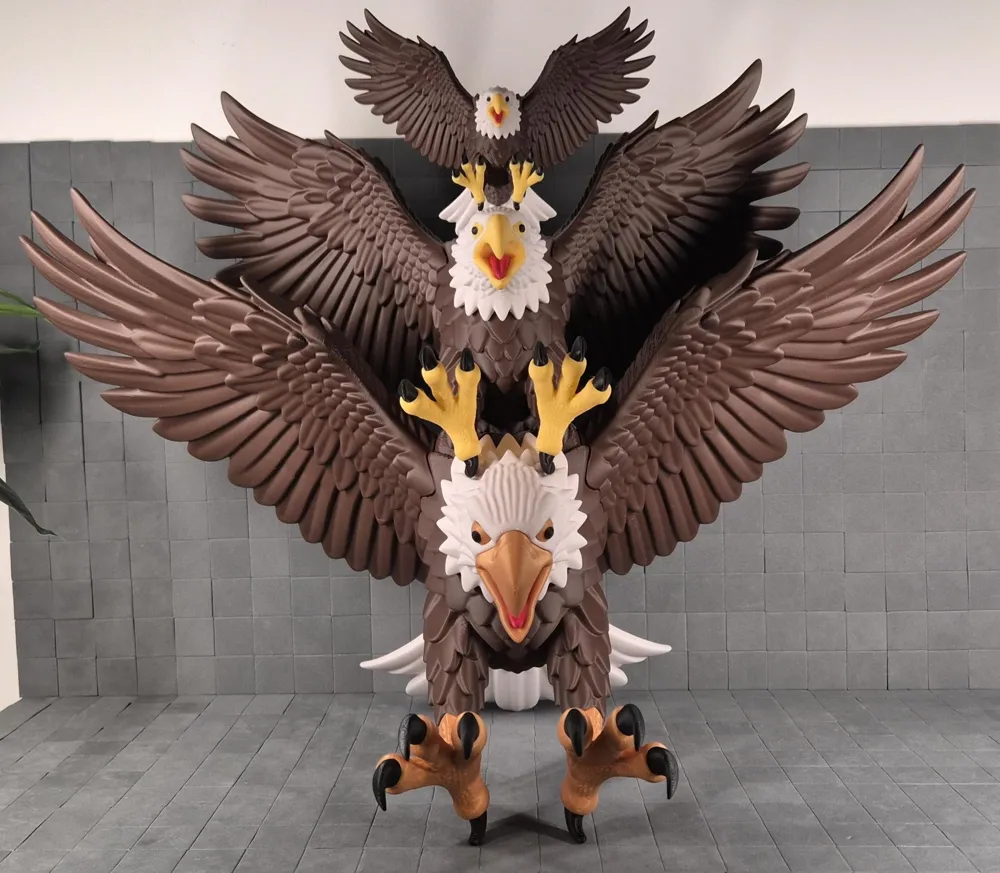
- 100% = 458×276×294 mm (Originally 142.14% of the medium size, but micro adjustment caused mixed percentages → reset to true 100% for consistent scaling across parts.)
- Layer Height: 0.20 mm
- Walls: 2–3
- Infill: 3–15% (uses lower end for large parts like body/wings to save filament/time; higher end for small/functional parts like talon tips and connectors to boost durability and prevent breakage during repeated assembly/disassembly)
- Supports: Tree supports (auto-generated). Manually painted supports on head.
- Color Handling: Multipart design → no AMS required. Print plates separately in desired filaments.
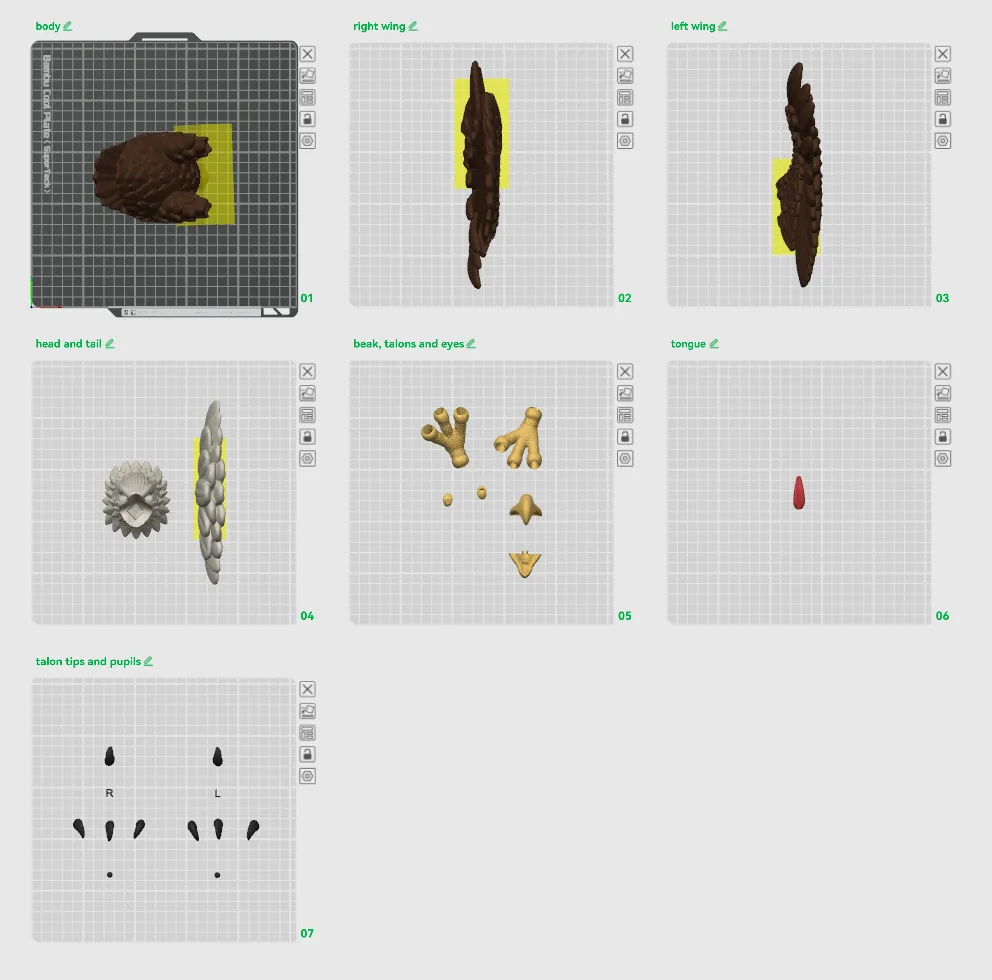
Plates
- Body
- Right Wing
- Left Wing
- Head and Tail
- Talons, Beak and Eyes
- Tongue
- Talon tips and Pupils
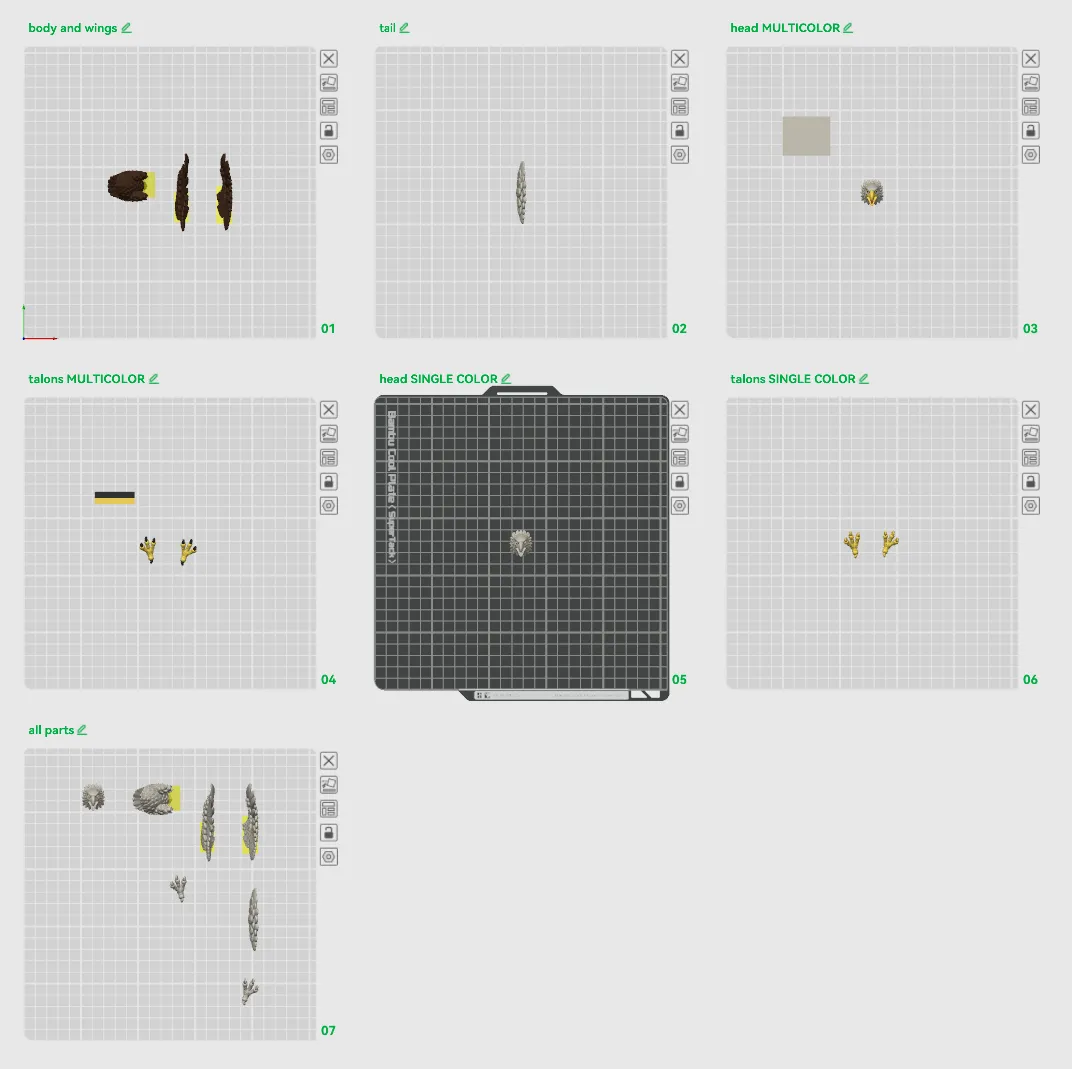
SMALL
- 100% scale = 142×85×91 mm (44% of the medium print profile)
- Layer Height: 0.12–0.16 mm
- Walls: 2–3
- Infill: 10–30% (uses lower end for large parts like body/wings to save filament/time; higher end for small/functional parts like talon tips and connectors to boost durability and prevent breakage during repeated assembly/disassembly)
- Supports: Tree supports (auto-generated). Manually painted supports on head.
- Color Handling: Multipart design. AMS required for head and talons. Single color options also available.
Plates
- body and wings
- tail
- head AMS
- talons AMS
- head SINGLE COLOR
- talons SINGLE COLOR
- all parts SINGLE COLOR
Scaling Advice
- 100% Scale Reference: At default 100%, the assembled eagle measures approximately 322 mm (width) × 194 mm (depth) × 207 mm.
- Scaling Up: Larger sizes should work well but not extensively tested yet. The peg connectors are robust, but connections may need minor tolerance tweaks (e.g., slight peg sanding or scaling adjustment) if fit feels off after upsizing.
- Scaling Down: Smaller sizes should also be possible, but connections might not be as clicky or secure → use glue if needed. Eyes are sculpted little bigger this time, but pupils are still probably the limiting factor.
- Best Practice: Always scale all parts uniformly with the exact same percentage in Bambu Studio before slicing. Apply scaling globally to the entire project to keep peg/socket alignments perfect.
- Verification: After scaling, review the sliced preview in Bambu Studio. Ensure supports generate correctly on overhangs, and confirm no thin walls appear on small features like talon tips or pupils.
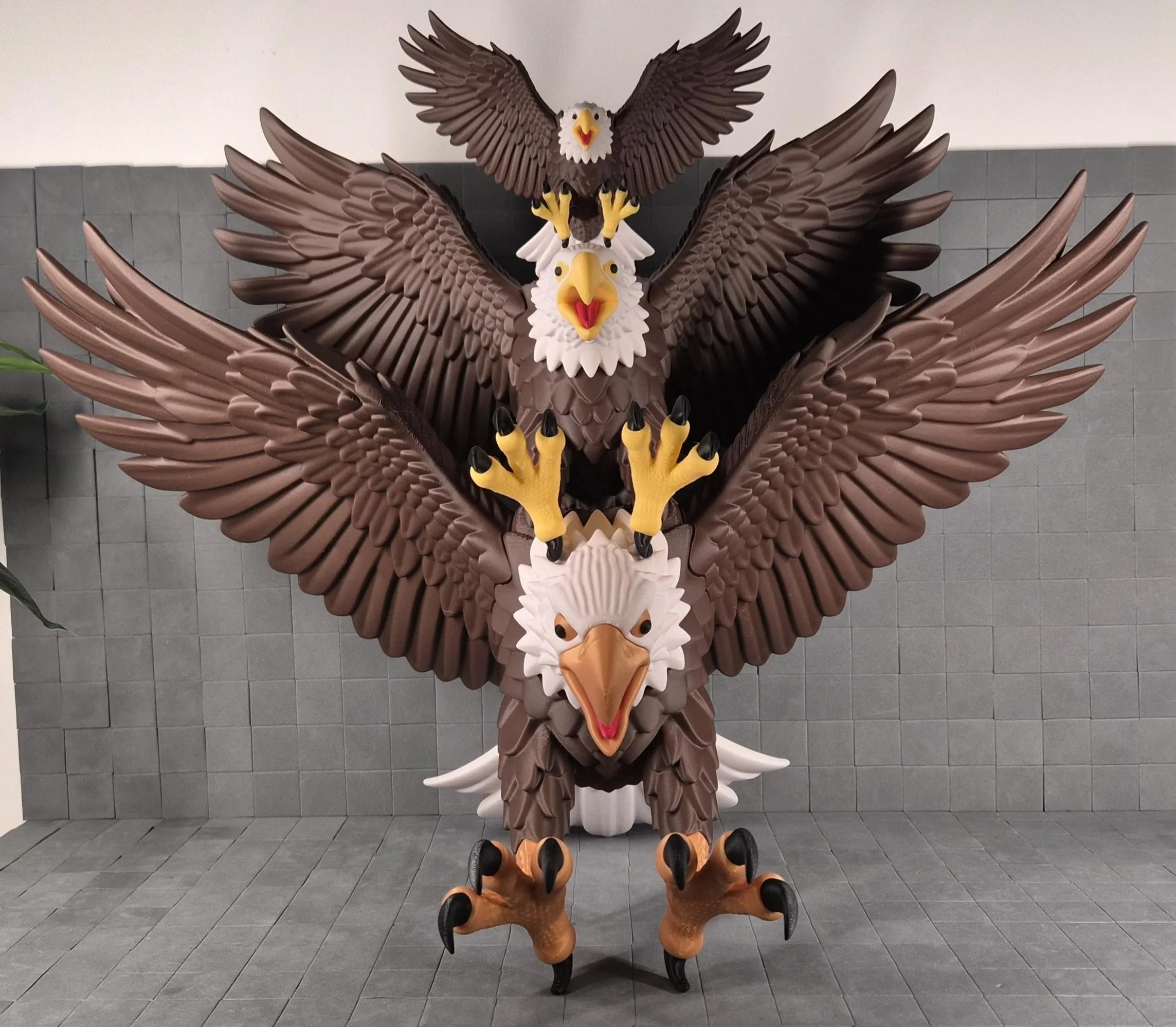
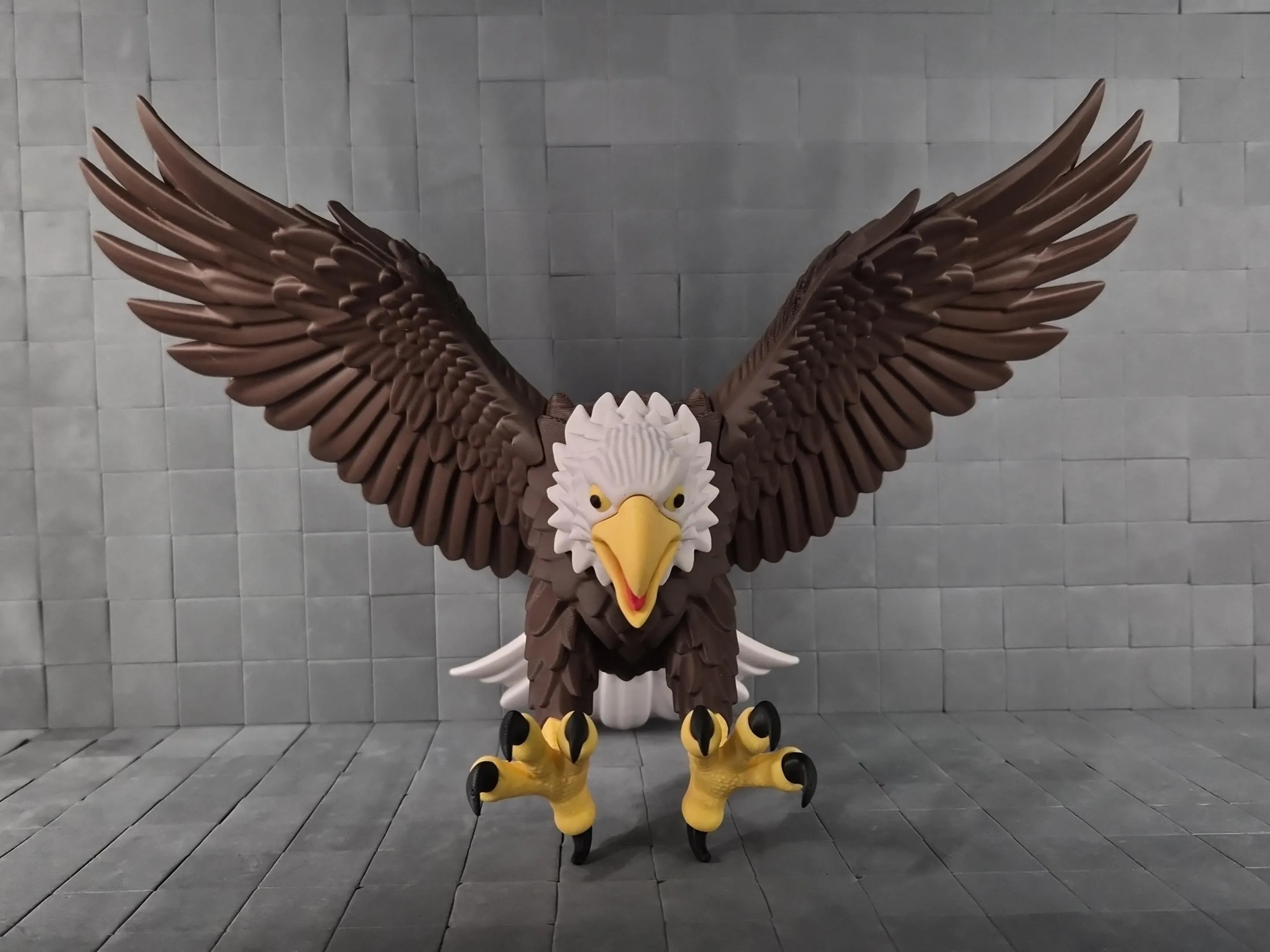
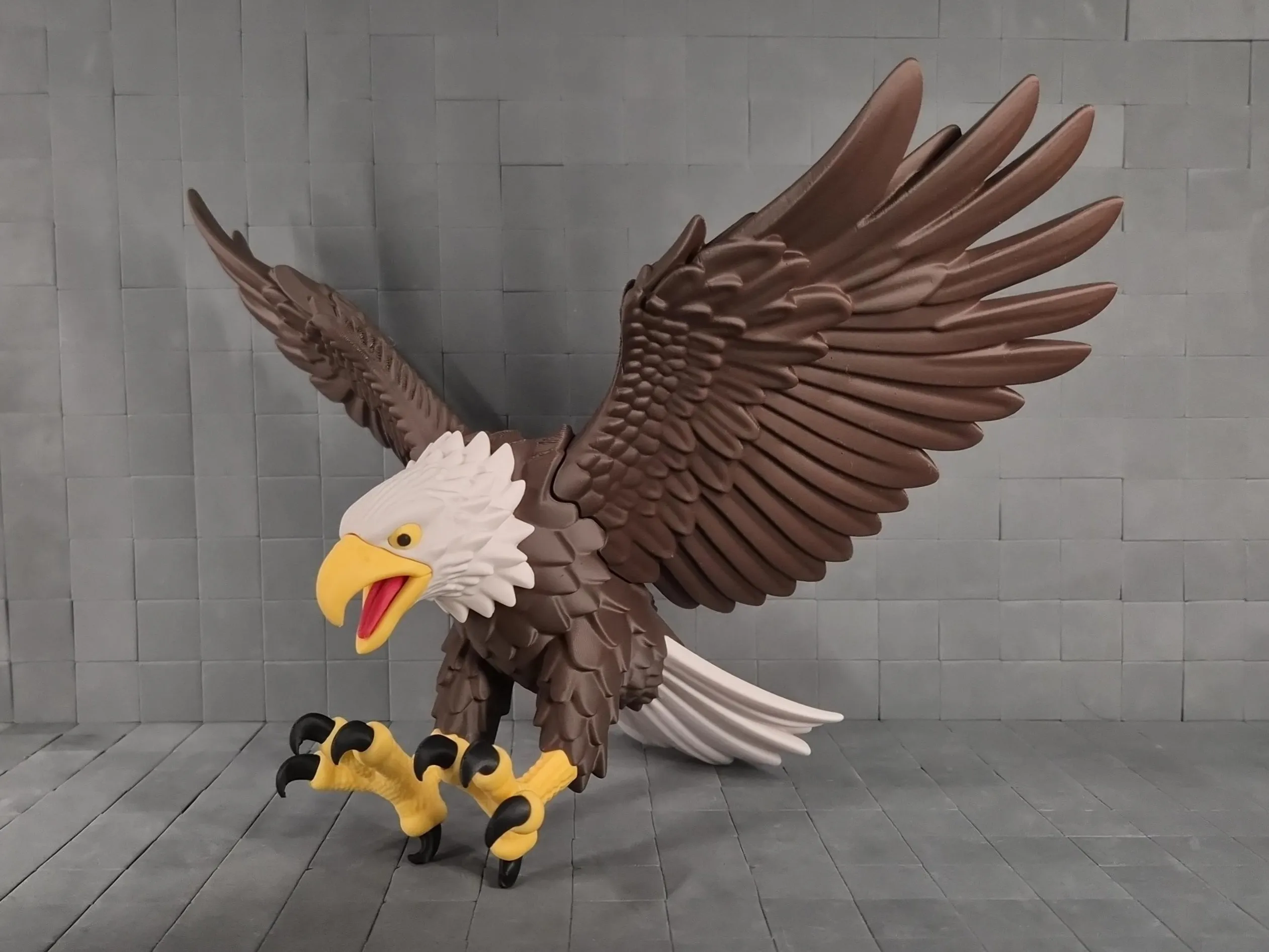
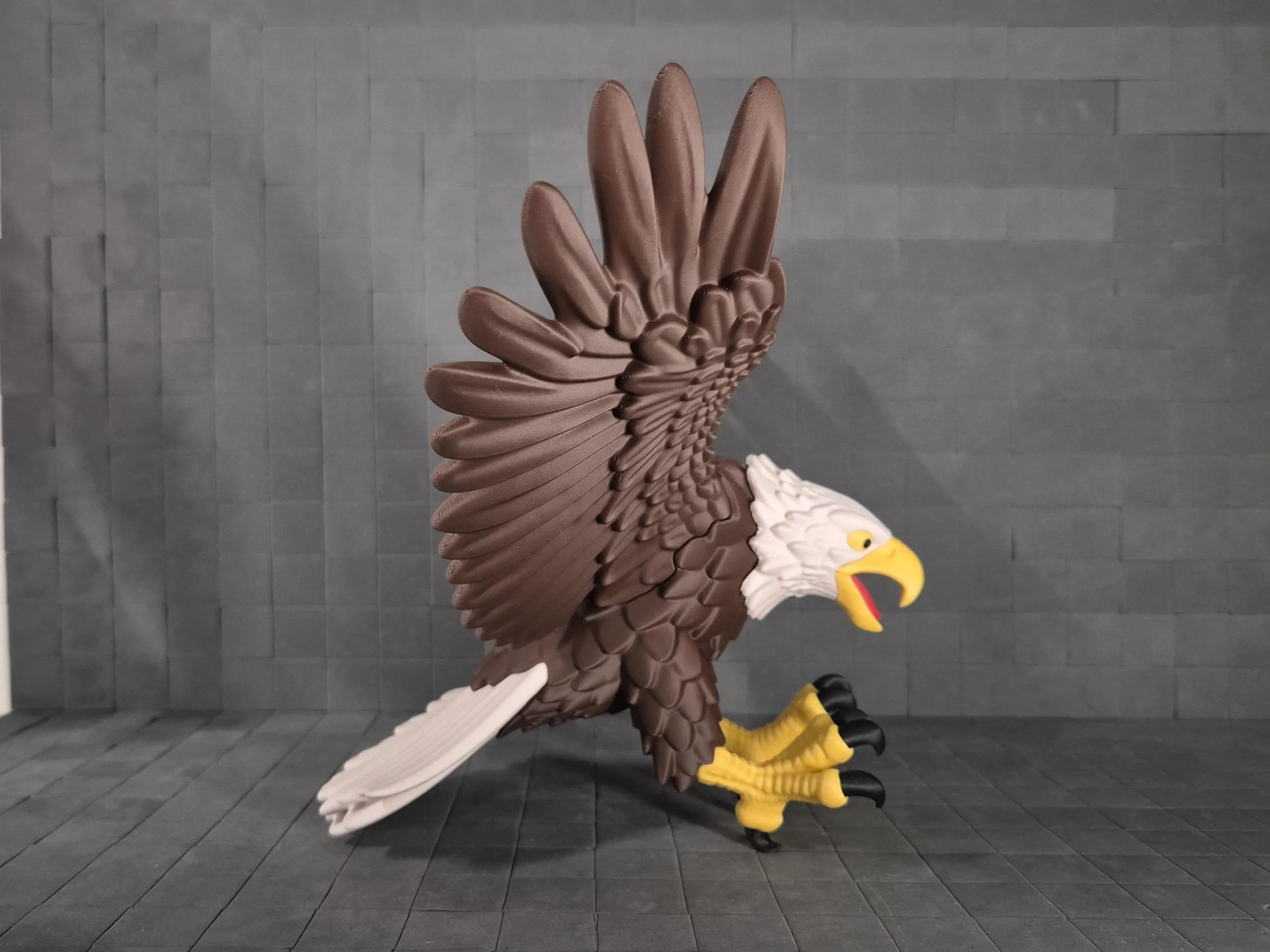
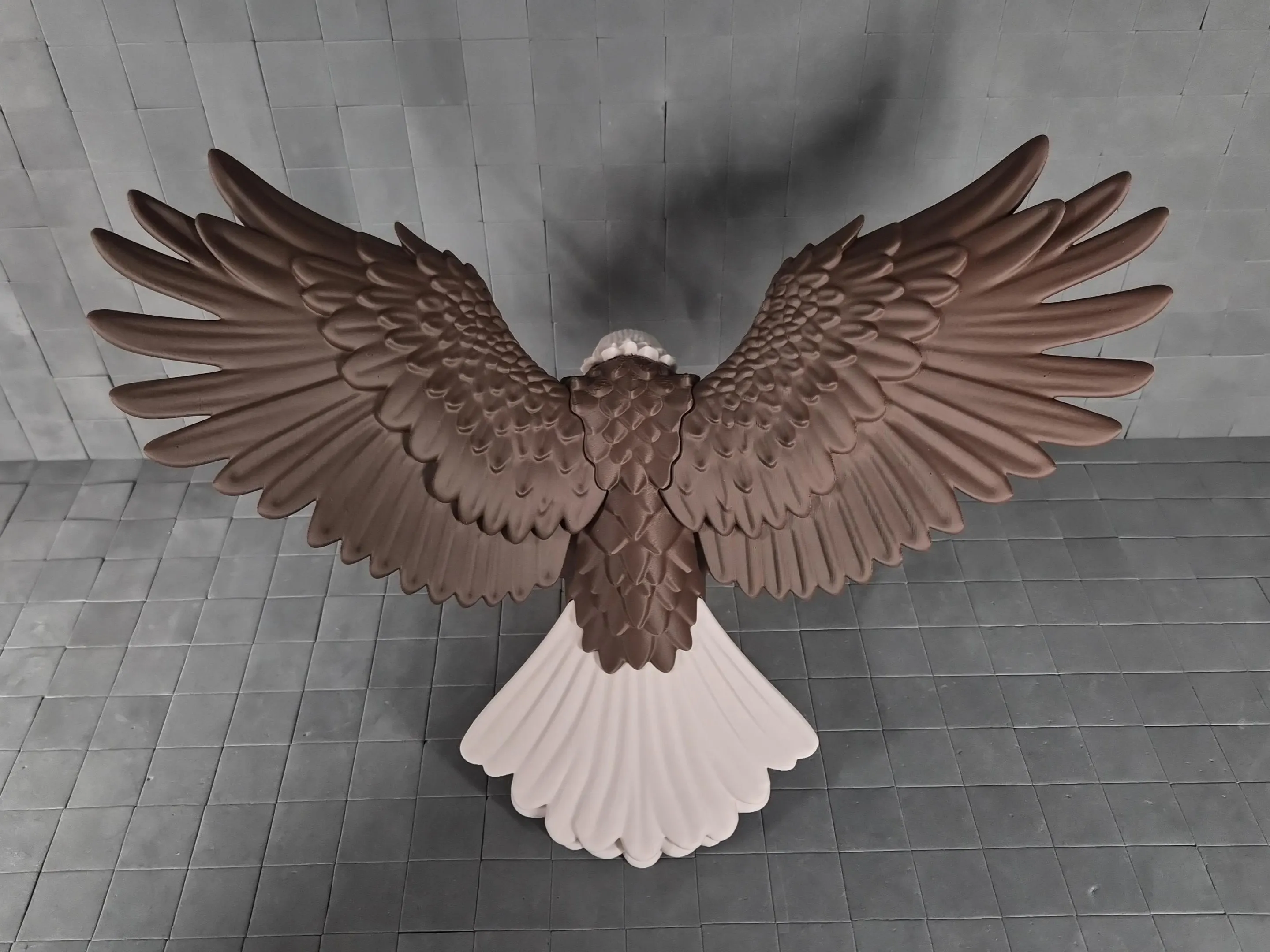
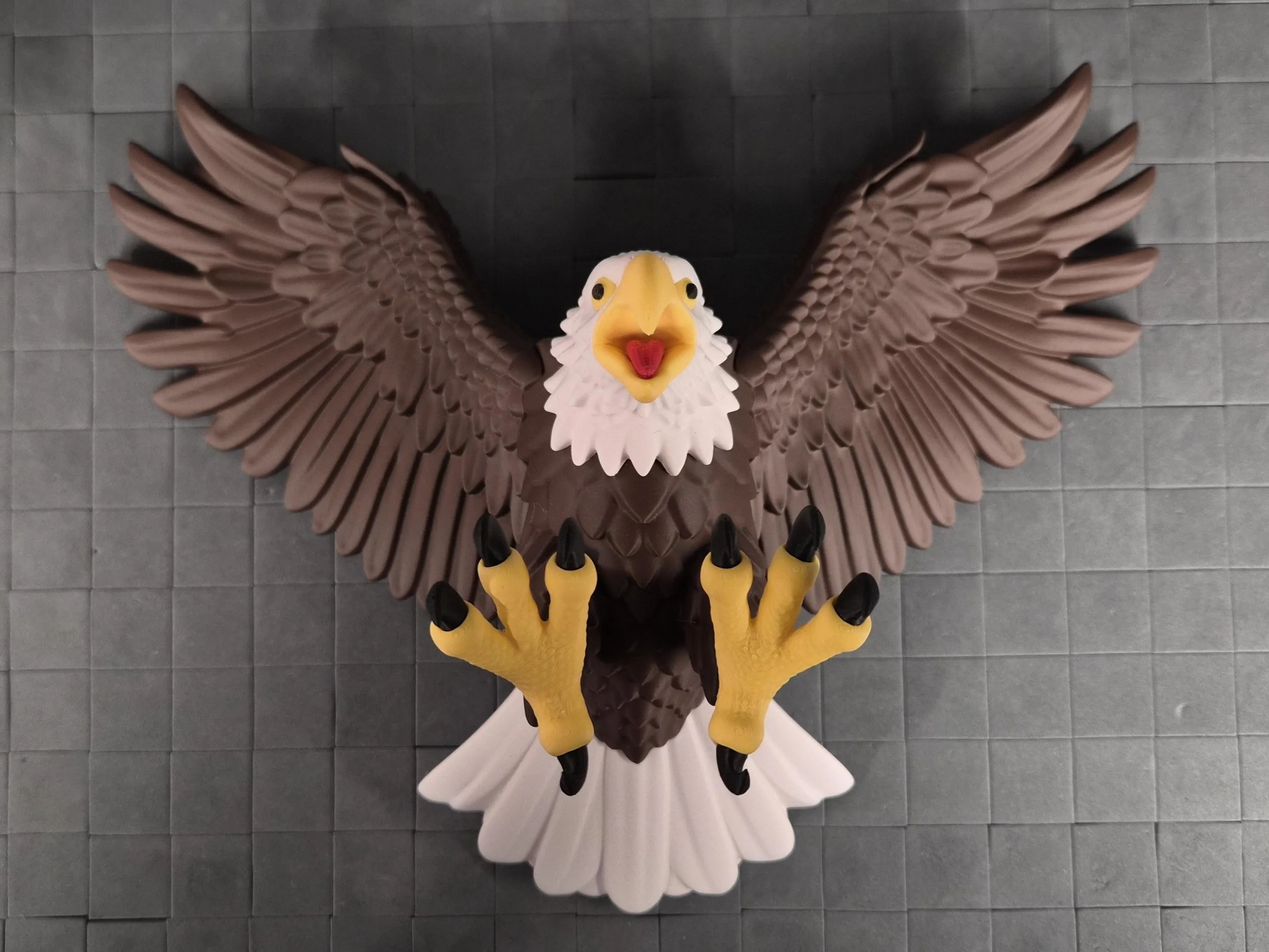
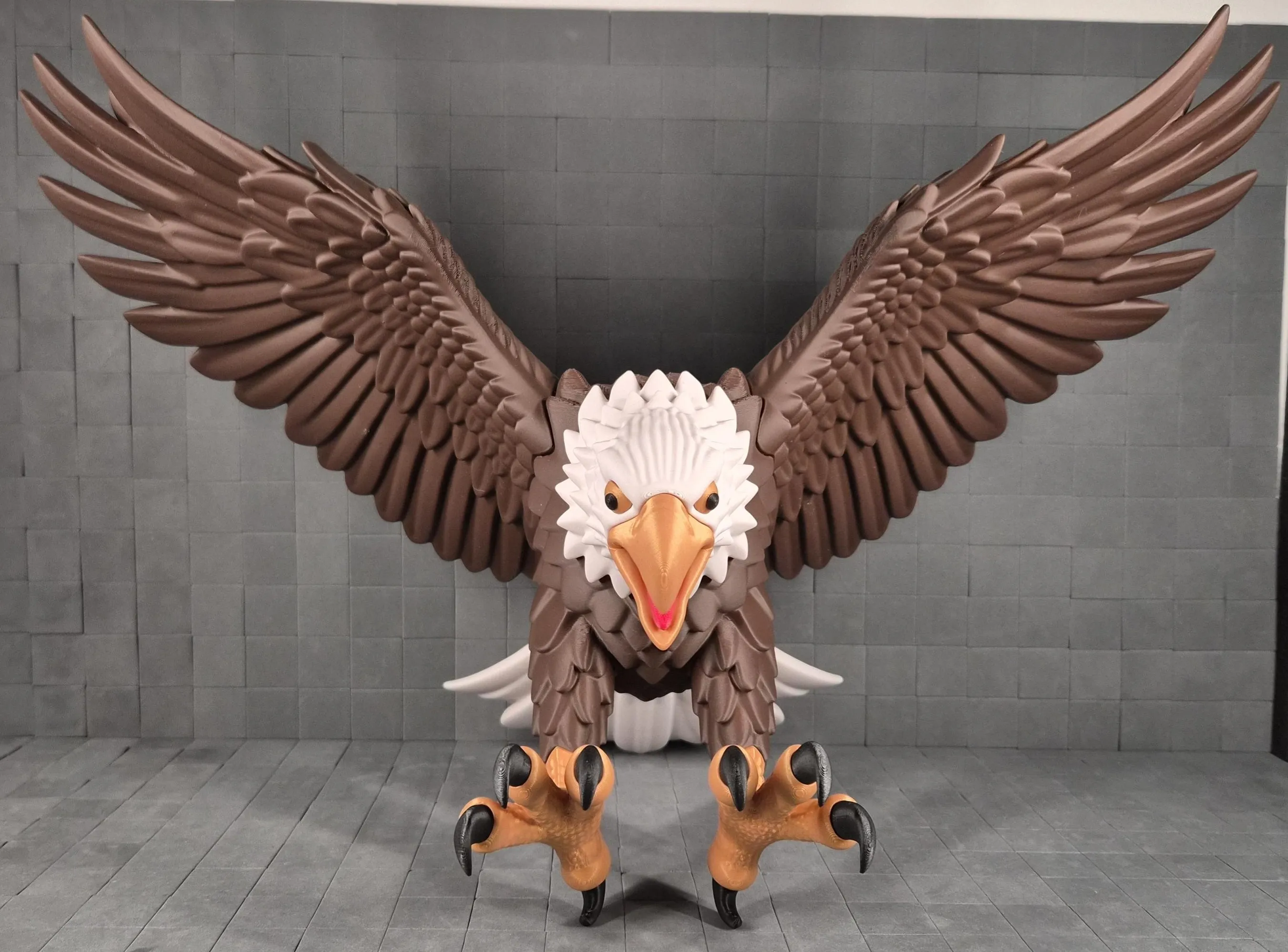
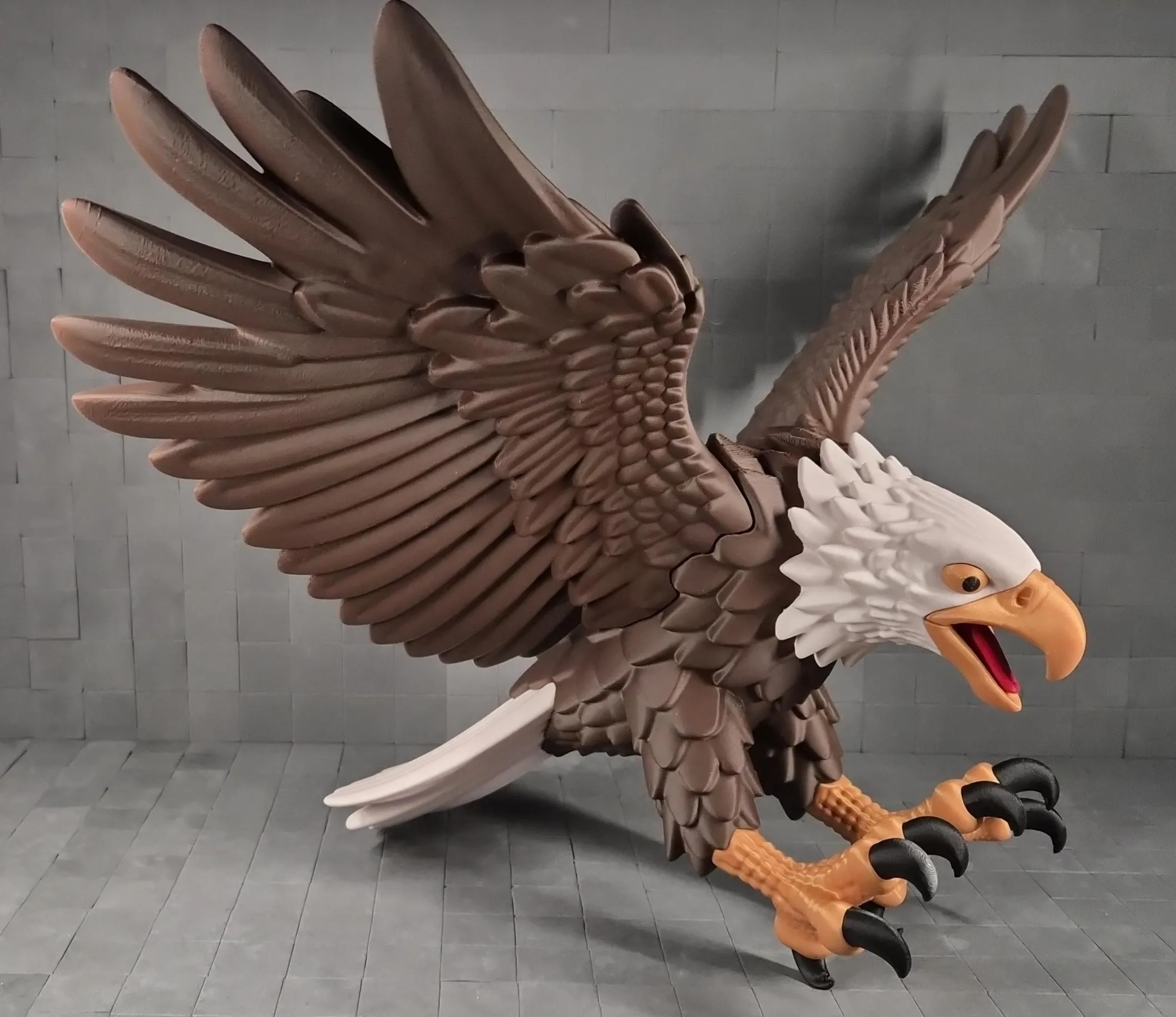
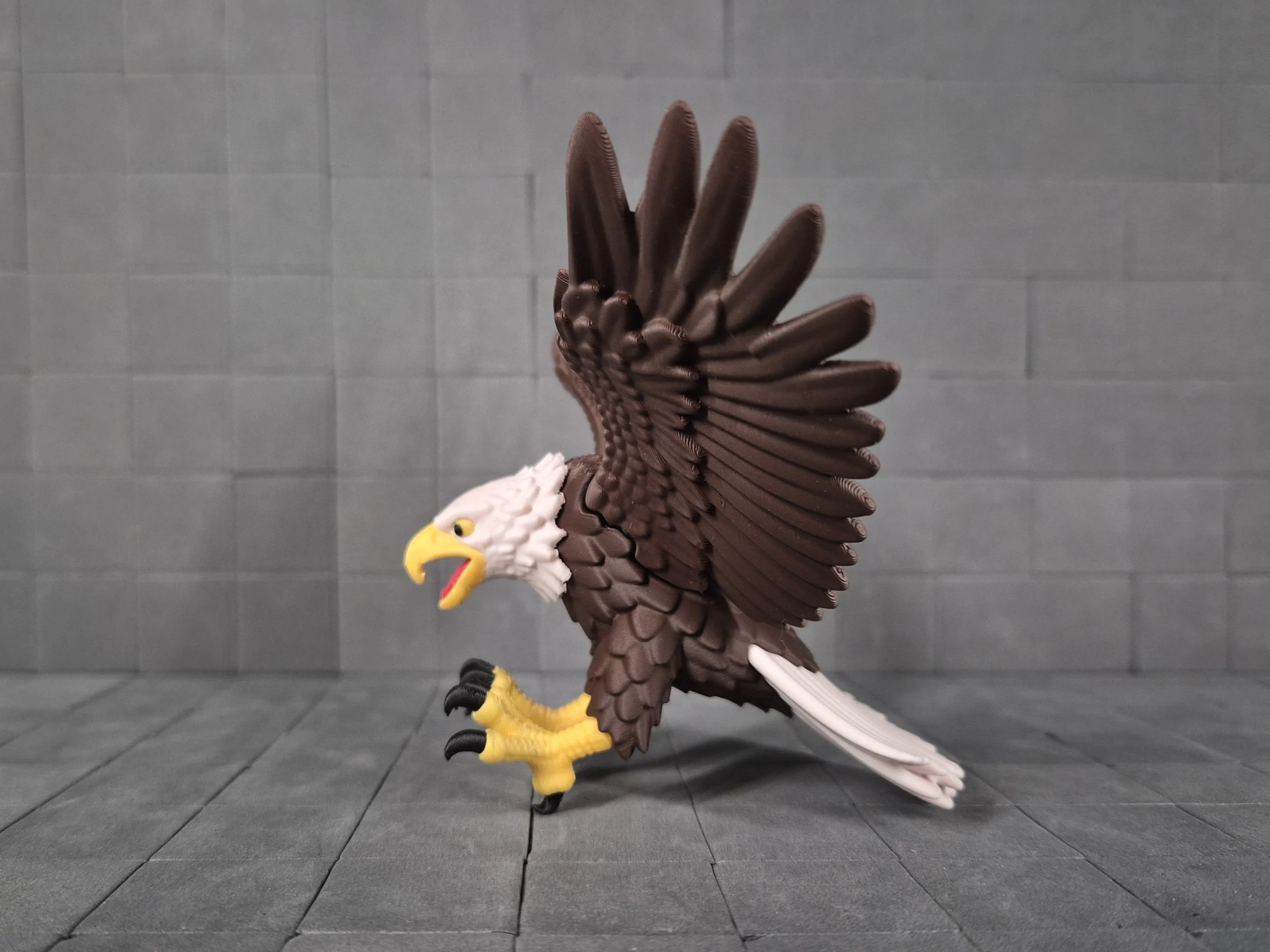
Thanks for all the photos and feedback on the Eagle of the Ironcry Crest! The positive comments were awesome, and the troubleshooting insights have directly shaped improvements in this new release.
Key upgrades applied here:
- Head sculpted thicker from the base up in Blender → much better scalability for smaller print sizes.
- Added painted-on supports for more reliable head printing.
- Standardized 100% scale across all parts → easier custom scaling in Bambu Studio without distortion issues.
- Improved assembly instructions with clearer guidance and issue-handling tips for smoother snap-fits.
Keep the photos, prints, and comments coming…
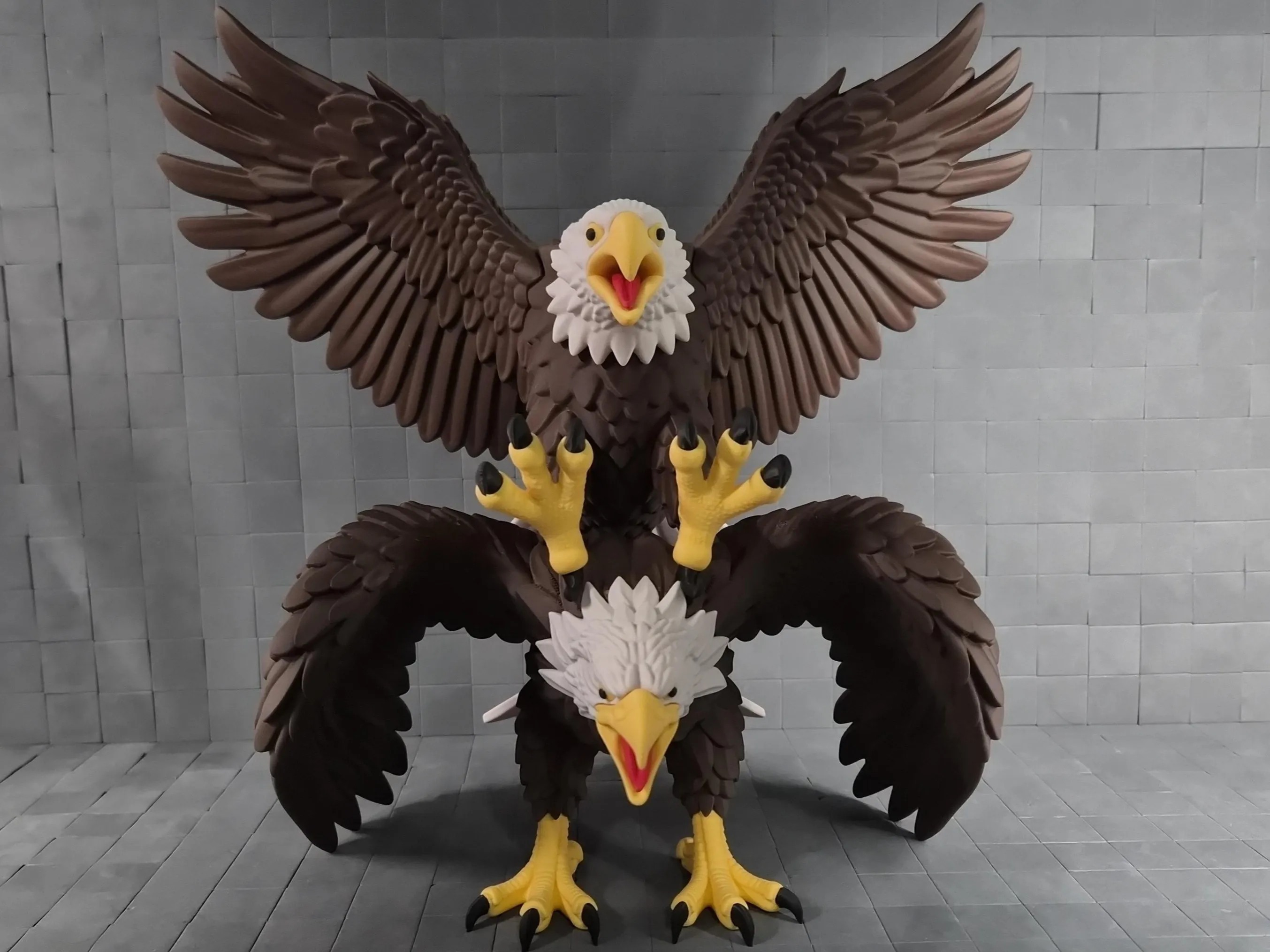
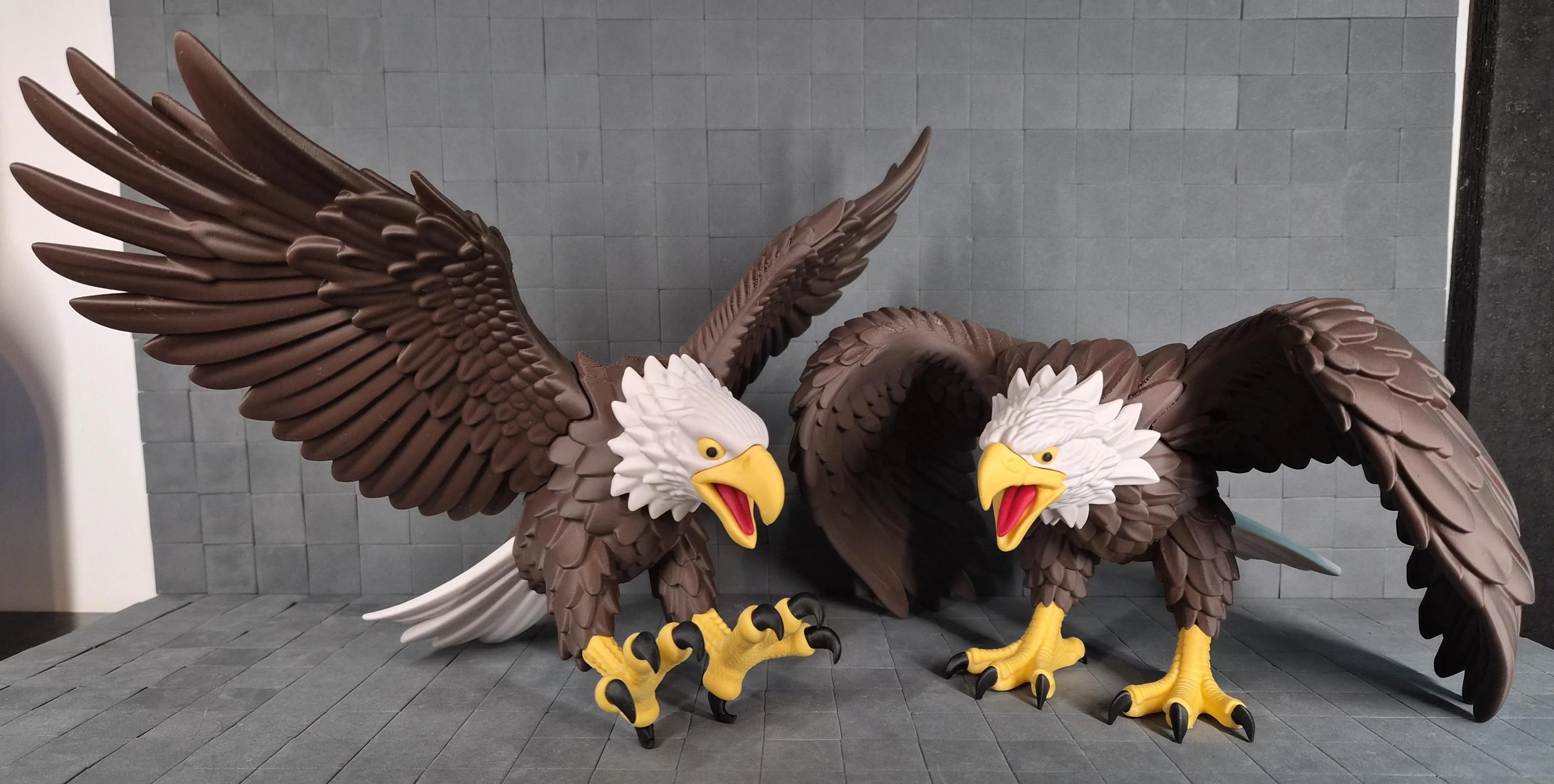
Key Printing Tips:
- Disable “Strength → Detect Thin Wall” → gives smoother, cleaner surfaces on detailed parts.
- Always check the slicing preview in Bambu Studio before starting the print.
- Support removal trick: Cut supports into small chunks first, then gently loosen → they usually pop off cleanly without damage.
- Some plates use lots of supports, if so → for reliable prints use these filament settings:
- Filament Overrides
- Z Hop When Retract: 0.6 mm
- Z Hop Type: Spiral
- Travel Distance Threshold: 1 mm
- ✅ Enable Retract When Changing Layer
- Also, disable these settings in Bambu Studio if Variable Layer height is used:
- Supports
- ❌ Disable Independent Support Layer Height
- Others
- ❌ Disable Reduce Infill Retraction
- I’ve found that a 0.15 mm top Z distance works best when printing with variable layer height.
- Supports
- Filament Overrides
Happy printing! Can't wait to see photos of your prints! If you're scaling, experimenting or encounter any issues, let me know → your input helps the next iteration. Please share your feedback for any rating below ⭐⭐⭐⭐⭐ so we can work on improving, thank you!
Boost Me (for free)
Boost / like / collect / follow if it made your day! 🚀
Membership
Now that you’ve printed this model, are you happy with the results? If so, why not sell it? With a subscription to my Commercial License Membership, you’re free to do so.
Documentation (1)
License

You shall not share, sub-license, sell, rent, host, transfer, or distribute in any way the digital or 3D printed versions of this object, nor any other derivative work of this object in its digital or physical format (including - but not limited to - remixes of this object, and hosting on other digital platforms). The objects may not be used without permission in any way whatsoever in which you charge money, or collect fees.


Comment & Rating (73)