
Roberval Balance – Easy-Print Educational Scale
Print Profile(1)
Description
Roberval Balance – Easy-Print Educational Scale (No Supports Required)
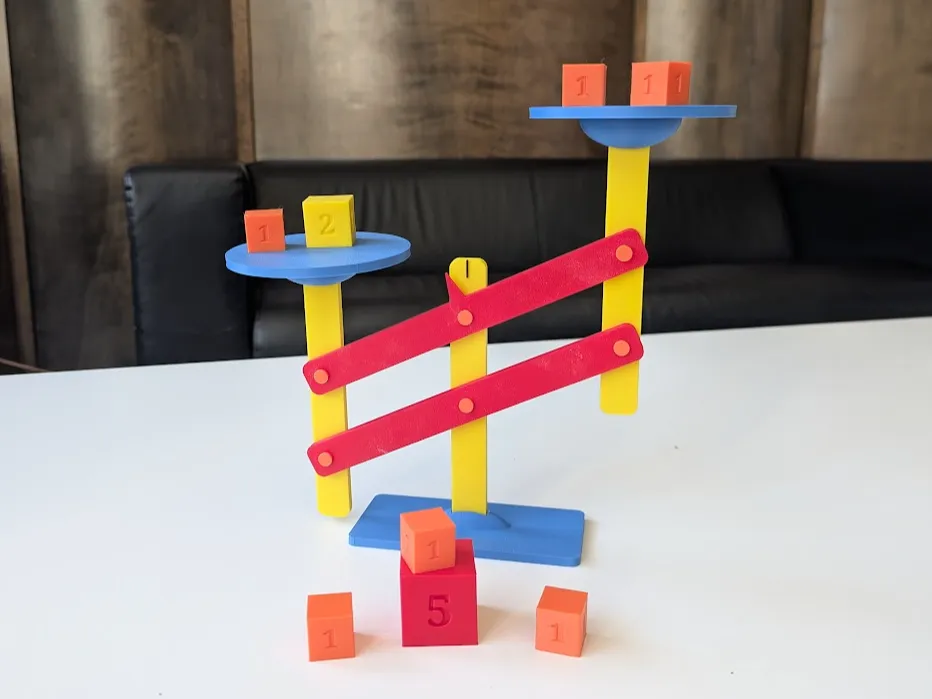
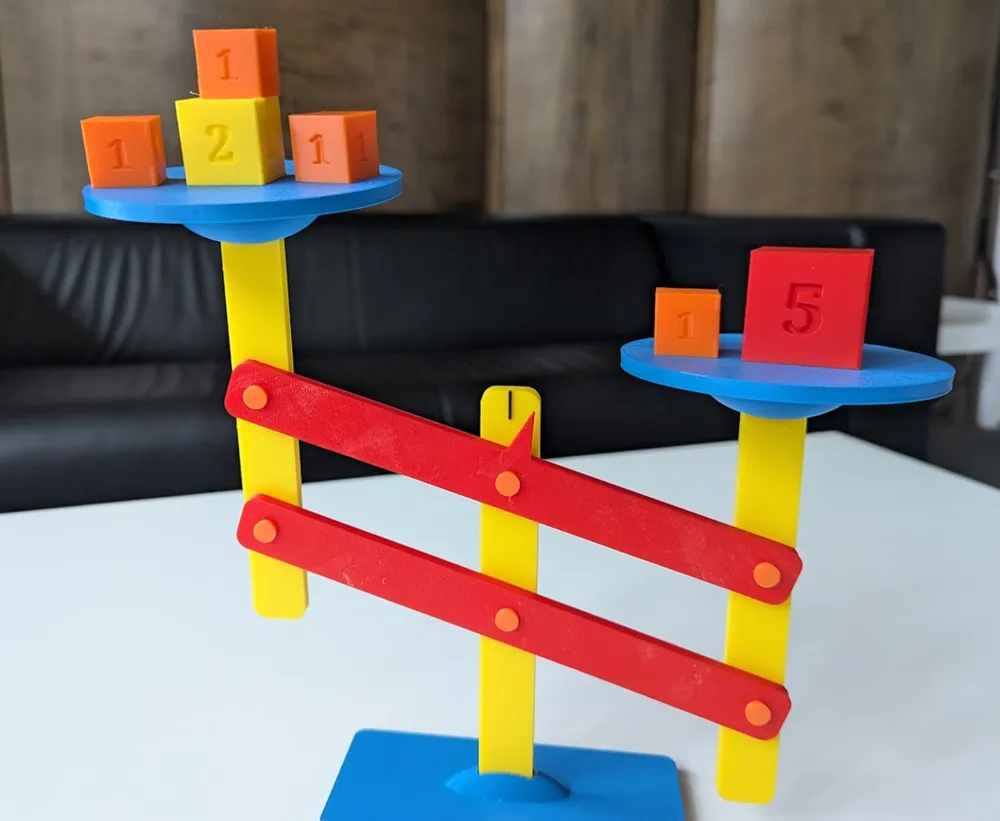
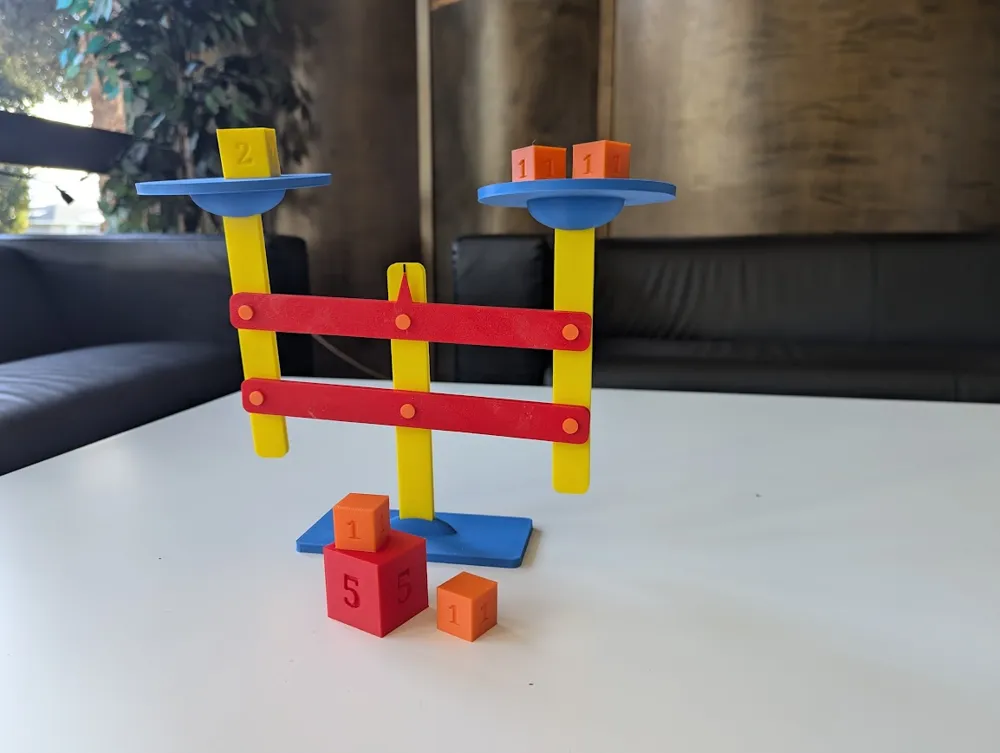
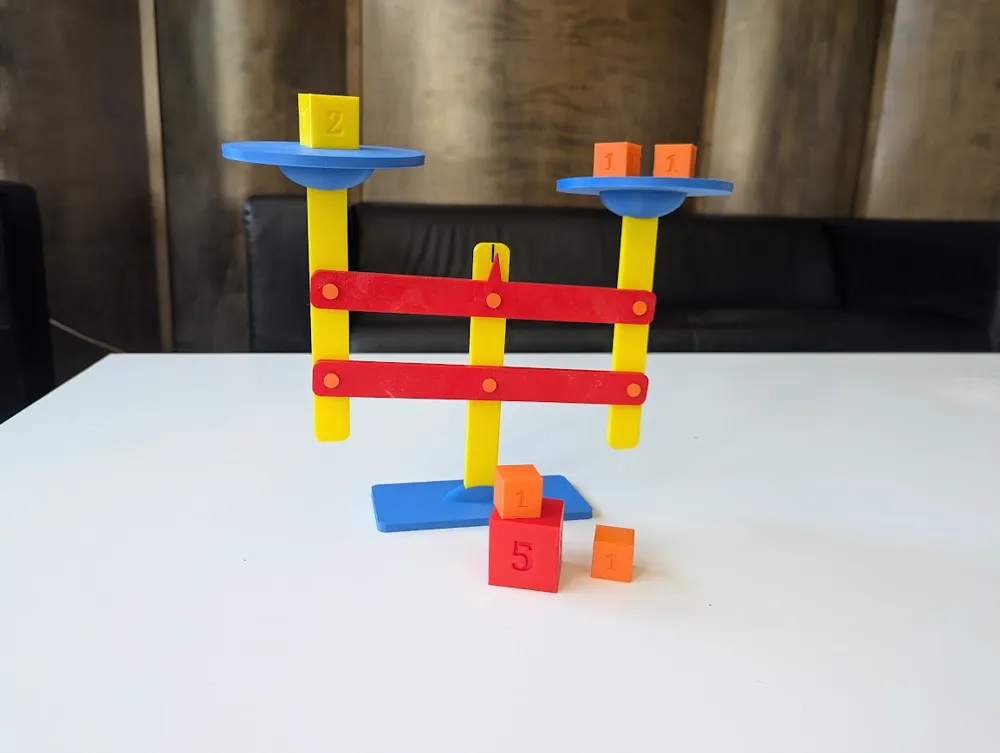
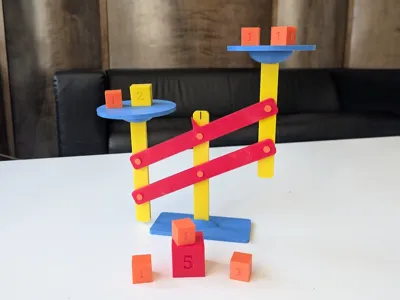
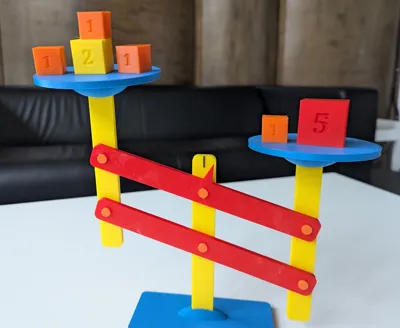
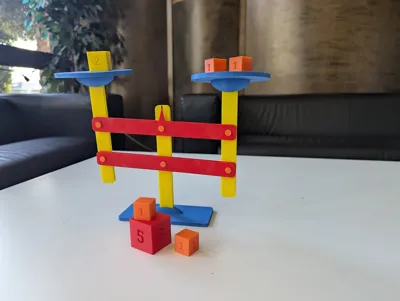
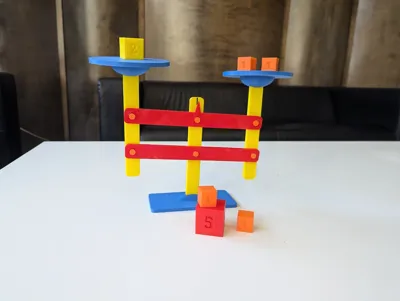
This model is a fully 3D-printable Roberval balance, a classic mechanical scale invented in the 17th century by Gilles Personne de Roberval. A Roberval balance uses a clever parallelogram linkage that allows weight to be placed anywhere on the pan without affecting the measurement. The vertical linkages transmit force in a way that keeps the scale accurate regardless of where objects sit on the trays.
This elegant mechanism makes the balance both historically significant and an outstanding hands-on teaching tool.
What It Teaches
This balance is ideal for classrooms, homeschool environments, maker spaces, and STEM clubs.
Early Math Concepts
- Comparing quantities (more, less, equal)
- Addition (combine objects on one pan)
- Subtraction (remove objects and observe the change)
- Number sense and equivalence
- Measurement using non-standard units (blocks, coins, counters, etc.)
- Modeling equations (what makes both sides equal?)
Elementary & Middle School STEM
- Mass vs. weight
- Measurement and calibration
- Mechanical linkages and parallelogram mechanisms
- Constraint motion
- Why load position does not affect measurement in this design
One of the most powerful demonstrations is placing the same object at the edge versus the center of the pan and observing that the reading does not change — a great way to challenge intuition and spark discussion.
How to Use the Scale
Using the balance is simple and hands-on:
- Place objects or weights on both pans.
You may compare unknown objects to known weights, or compare two groups of items. - Gently move the scale to its centered (balanced) position.
This ensures the mechanism starts from a neutral position. - Let the scale move freely.
Allow it to swing and settle naturally without touching it. - Read the result.
- If the scale settles level → both sides are equal.
- If one side lowers → that side is heavier.
- Add or remove weight as needed until the scale balances.
For best results, make sure the balance can move freely and is placed on a flat, stable surface.
Designed for Easy Printing
This model was specifically designed to be:
- ✅ No supports required
- ✅ Easy to print
- ✅ Minimal post-processing
- ✅ Beginner-friendly
All parts are oriented to avoid overhang issues and print cleanly. Standard PLA works great.
Simple Assembly
Assembly is quick and straightforward:
- Parts fit together cleanly
- No special tools required
- No complicated calibration process
- Some supper glue is recommended, but not required
You can go from printed parts to a working balance in a short session, making it ideal for teachers, parents, and club leaders.
Why This Model?
This is more than a scale — it’s a physical model of mathematical equality and mechanical engineering principles. It connects:
- Arithmetic
- Measurement
- Physics
- Engineering design
- Historical innovation
Whether introducing addition to young learners or demonstrating mechanical systems to older students, this Roberval balance provides a durable, reusable, easy-to-print educational tool that assembles without frustration and works beautifully in the classroom.
License



Comment & Rating (2)