
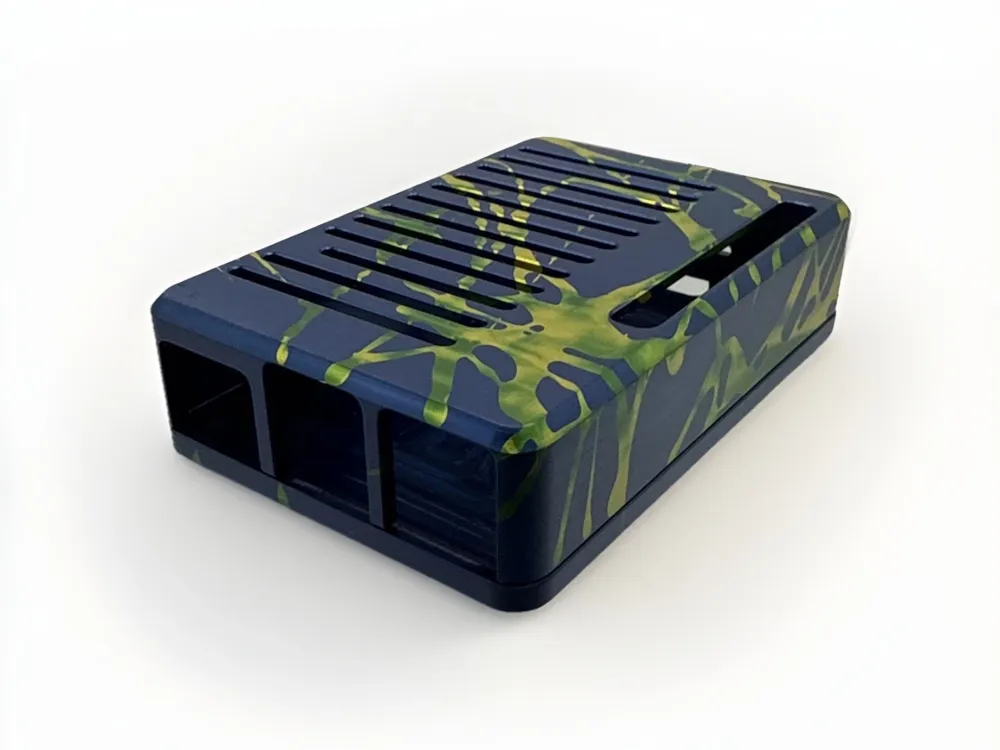
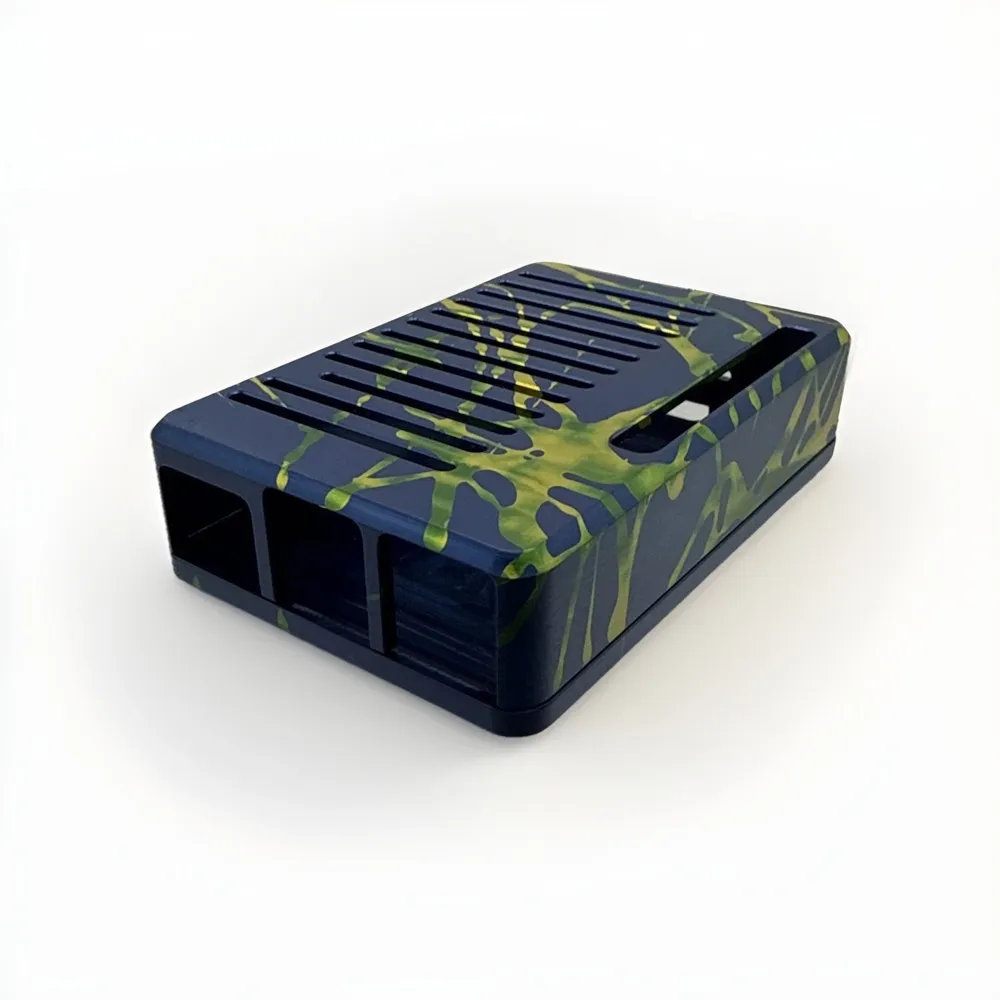
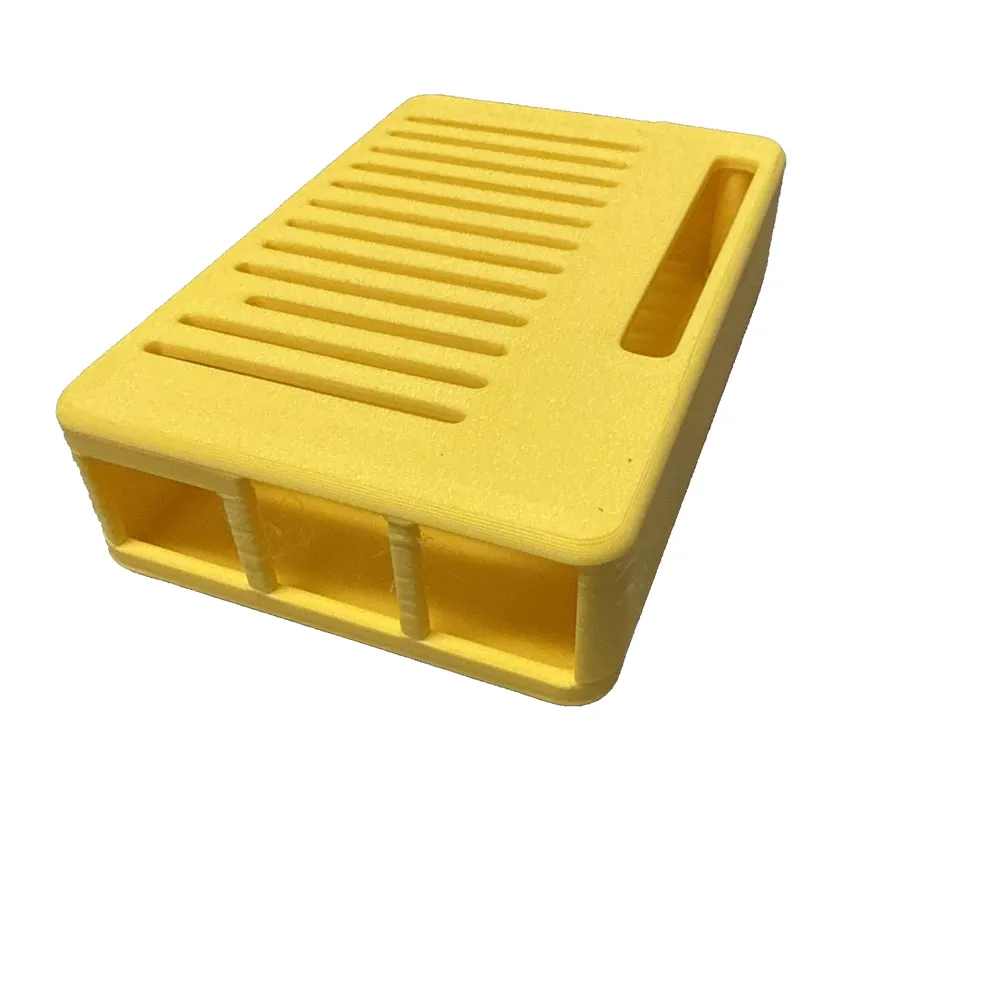
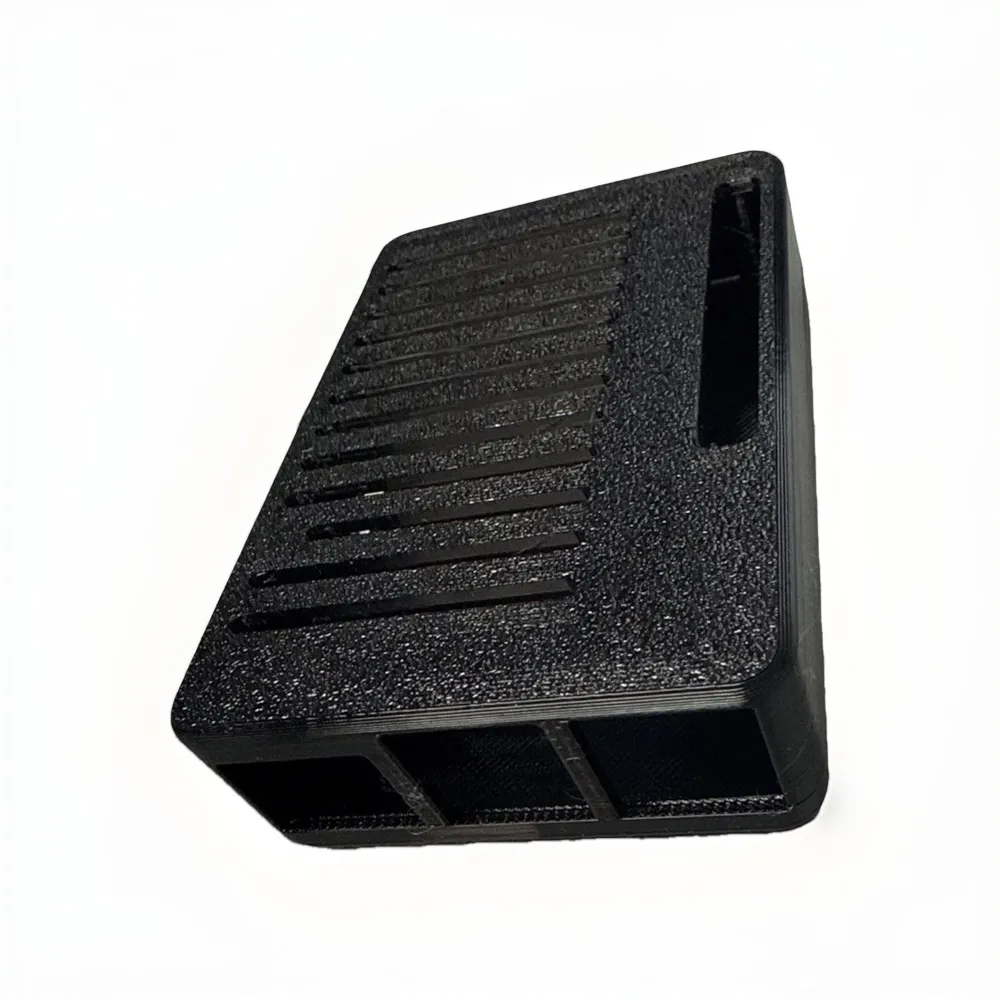
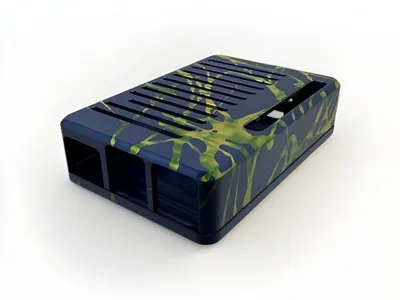
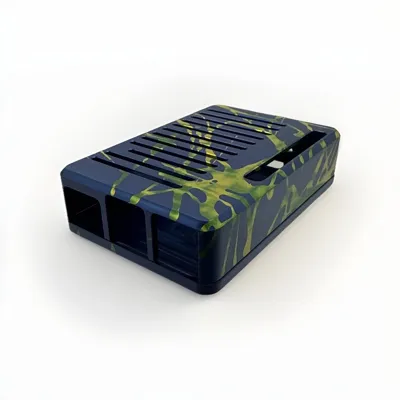
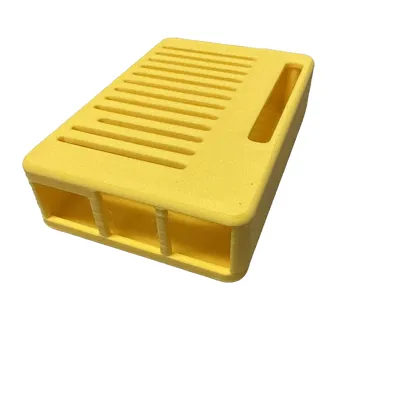
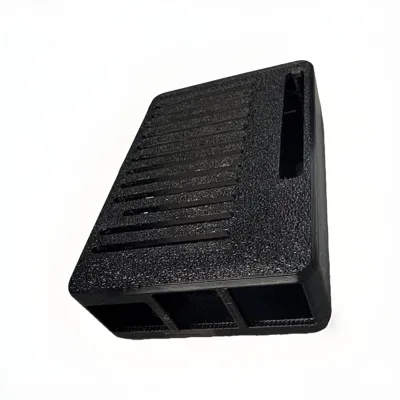
Raspberry Pi 5 test print for billet aluminum case
Print Profile(1)
Bill of Materials
- M2.5x8mm Stainless Steel Countersunk Flat Head Phillips Machine Screws x 4: Screws paid link (https://amzn.to/3OkCwHL)
Description
Screws paid link (https://amzn.to/3OkCwHL)
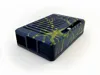
This is a test print / fit-check prototype for an upcoming premium billet aluminum case for the Raspberry Pi 5 (designed for the 8GB version, with easy adaptation for 4GB via thermal pad shim).Use this 3D printable version to verify fit, port alignment, tolerances, thermal pad / heatsink placement, screw holes, and overall ergonomics before committing to CNC machining the final aluminum enclosure. Many high-end Pi 5 aluminum cases start life exactly like this—3D printed proofs that save time and material.Why this test print exists
I’m developing a sleek, durable, passive-cooled (or fan-optional) billet 6061 aluminum case with precise cutouts, excellent heat dissipation via integrated thermal contact points, and a premium machined finish. This prototype lets the community test the design early, provide feedback on real-world tolerances (shrinkage, layer lines affecting fit, etc.), and help refine the final machined version.Key Features of this Test Print
- Exact 1:1 scale replica of the planned aluminum case internals and externals
- Precise cutouts for all Pi 5 ports: dual HDMI, USB 3×2, USB-C power, Gigabit Ethernet, PCIe FFC slot, microSD, GPIO access
- Openings for official/active cooler or custom heatsink pillars
- Mounting points for M2.5 screws (paid link https://amzn.to/3OkCwHL)
- Clearance checks for RAM/SoC height differences (8GB vs 4GB)
- Optional top vent slots for airflow testing
- Easy snap-fit or screw-together assembly (print top/bottom separately)
Printing Recommendations
- Printer: Bambu Lab X1C / P1S / A1 series (or any FDM printer with good dimensional accuracy)
- Material: PLA or PETG (for better durability during repeated test fits); ABS/ASA if you want closer thermal expansion match to aluminum
- Layer height: 0.20 mm (0.16 mm for tighter tolerances on critical fit areas)
- Infill: 15–25% grid
- Walls: 3–4 perimeters (1.2–1.6 mm wall thickness)
- Supports: None
- Tolerances tip: Print a small calibration cube first if your printer is not dialed in; most users find 0.1–0.15 mm horizontal expansion compensation works well for snug Pi board fit.
- Print time: ~1-1.5 hours depending on settings and printer
License

You shall not share, sub-license, sell, rent, host, transfer, or distribute in any way the digital or 3D printed versions of this object, nor any other derivative work of this object in its digital or physical format (including - but not limited to - remixes of this object, and hosting on other digital platforms). The objects may not be used without permission in any way whatsoever in which you charge money, or collect fees.


Comment & Rating (2)