
Innovation Competition Entry: Song-style Eight-Purlin Dougong Bracket Set 3D Design Modeling and 3D Printed Assembly
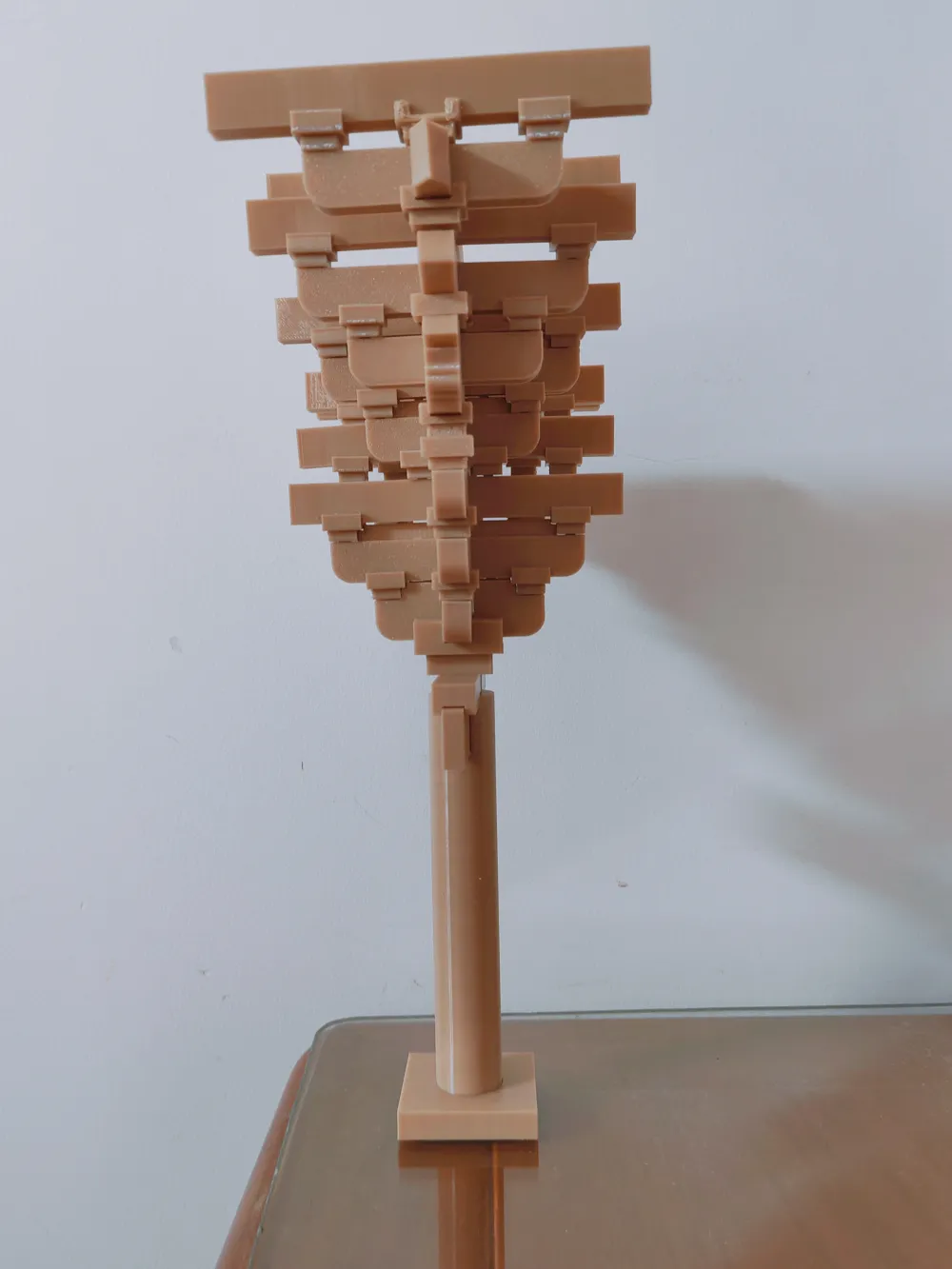
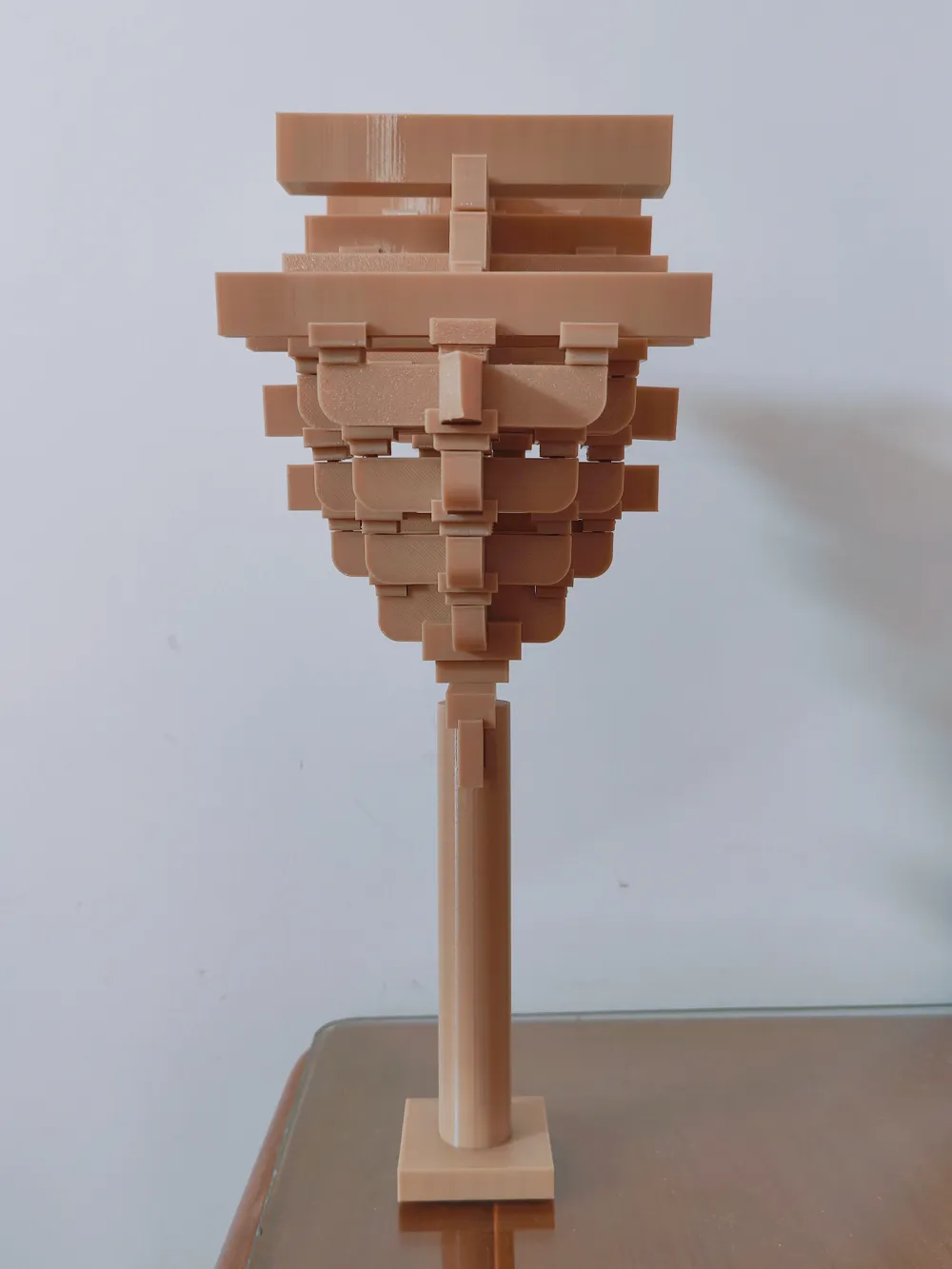
Print Profile(1)
Description
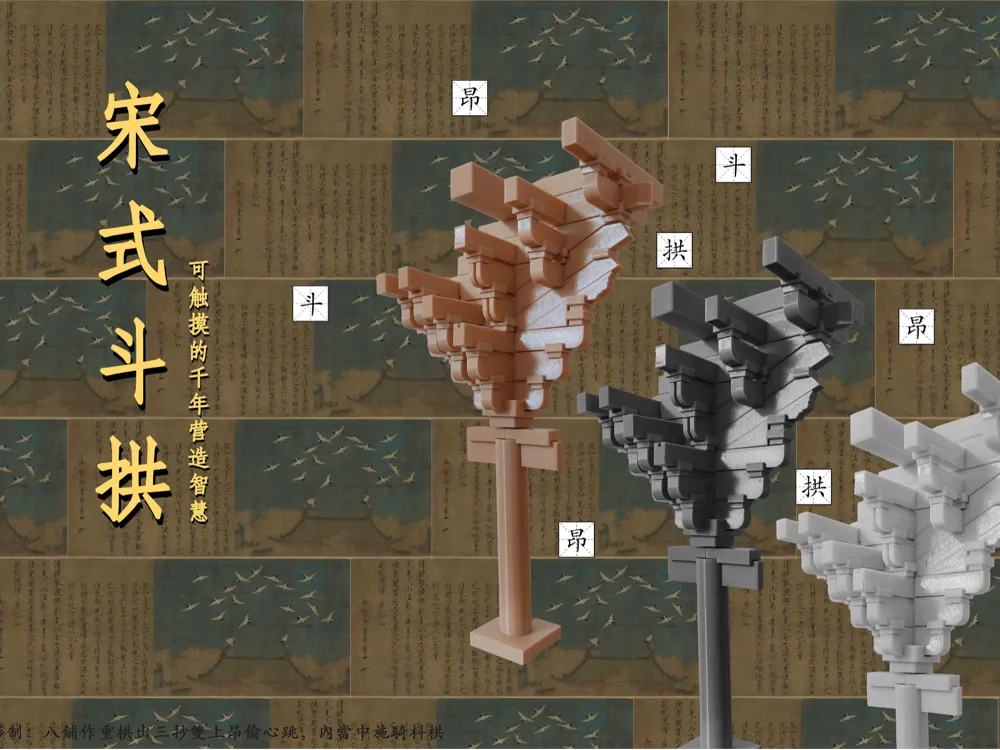
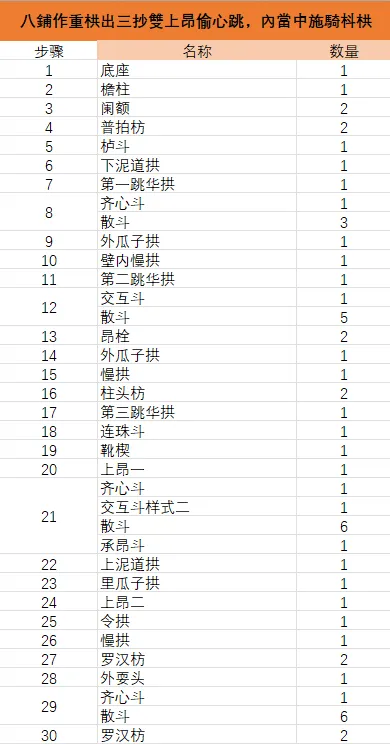
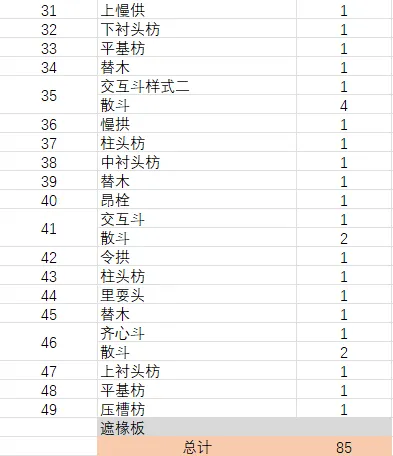
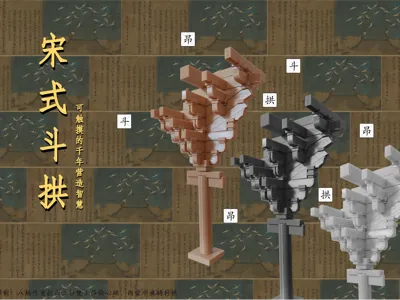
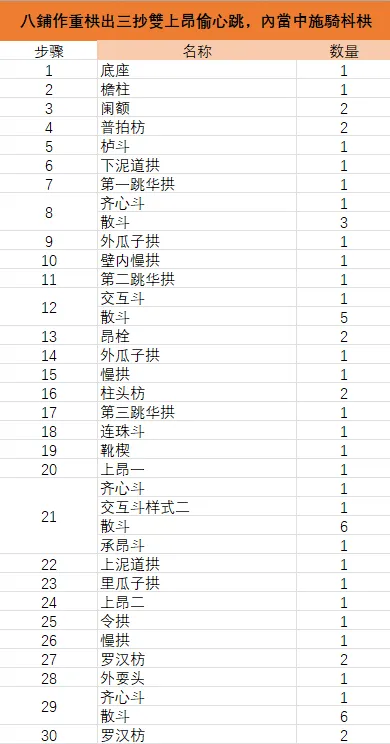
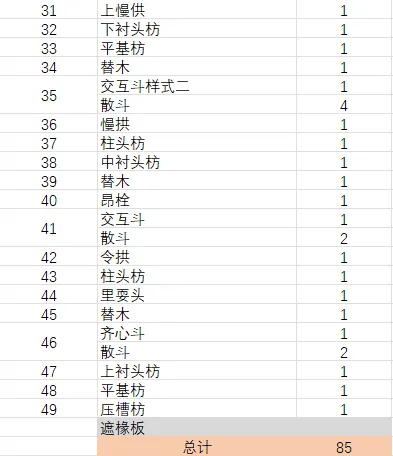
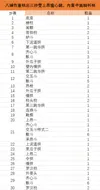
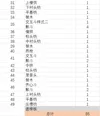
26.4.5: Assembly sequence and component names have been uploaded as images
Commercial use of this work is strictly prohibited. An introduction video has been uploaded to Bilibili:
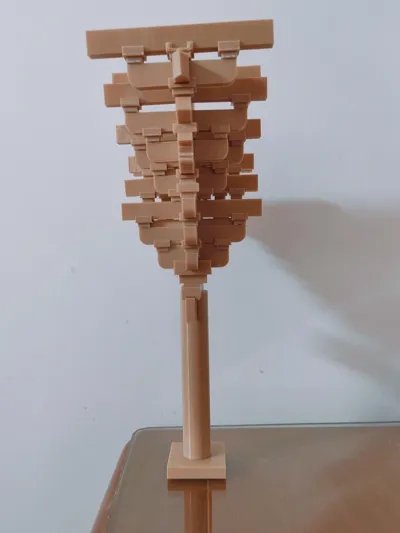
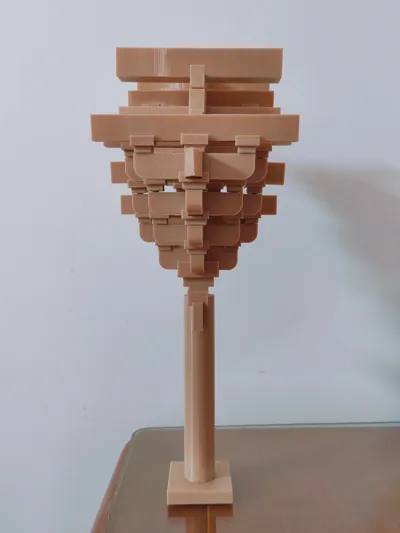
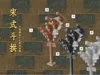
Song-style Eight-Puzuo Dougong 3D Designed, Modeled, and 3D Printed for Assembly
Project Introduction
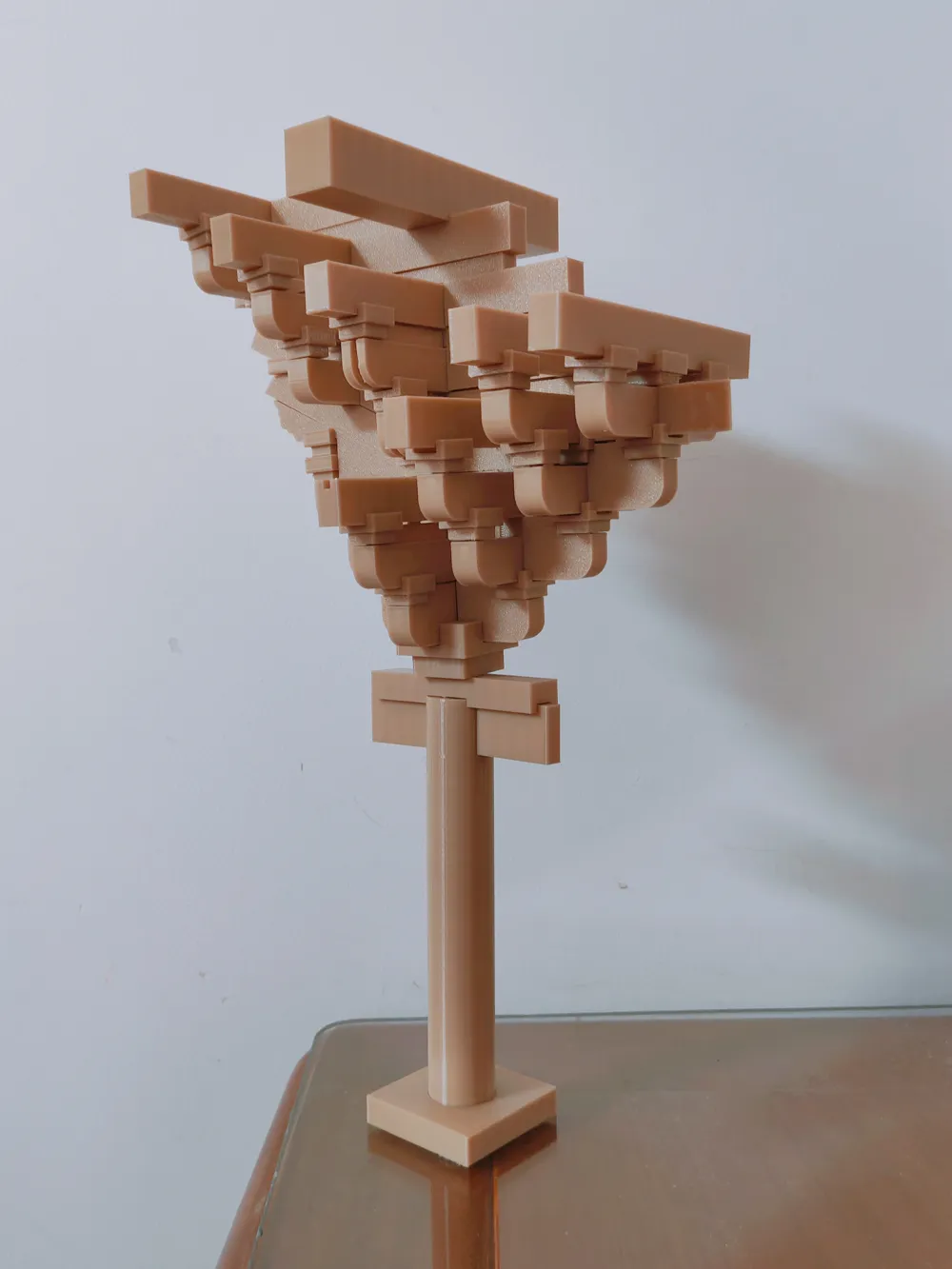
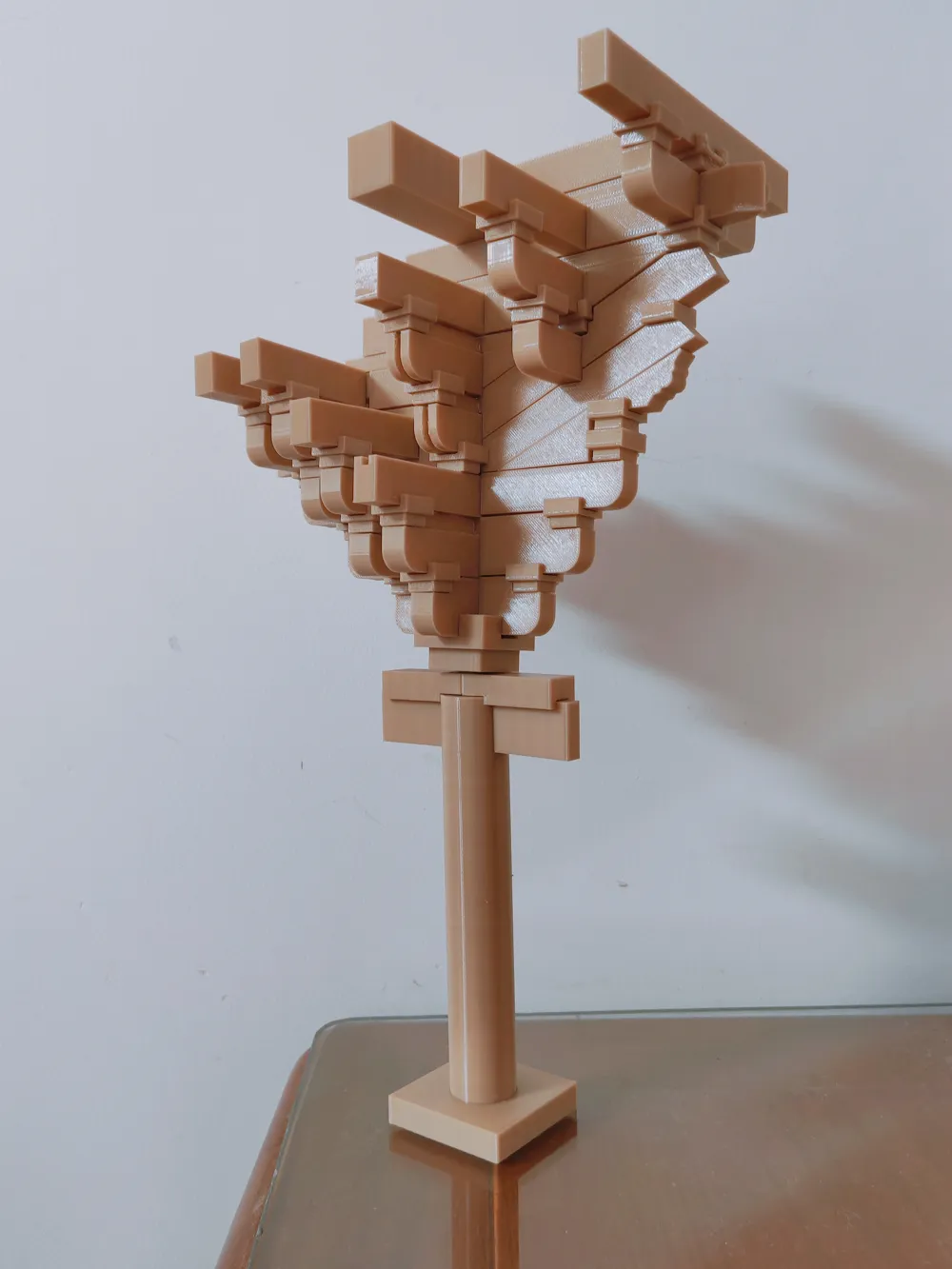
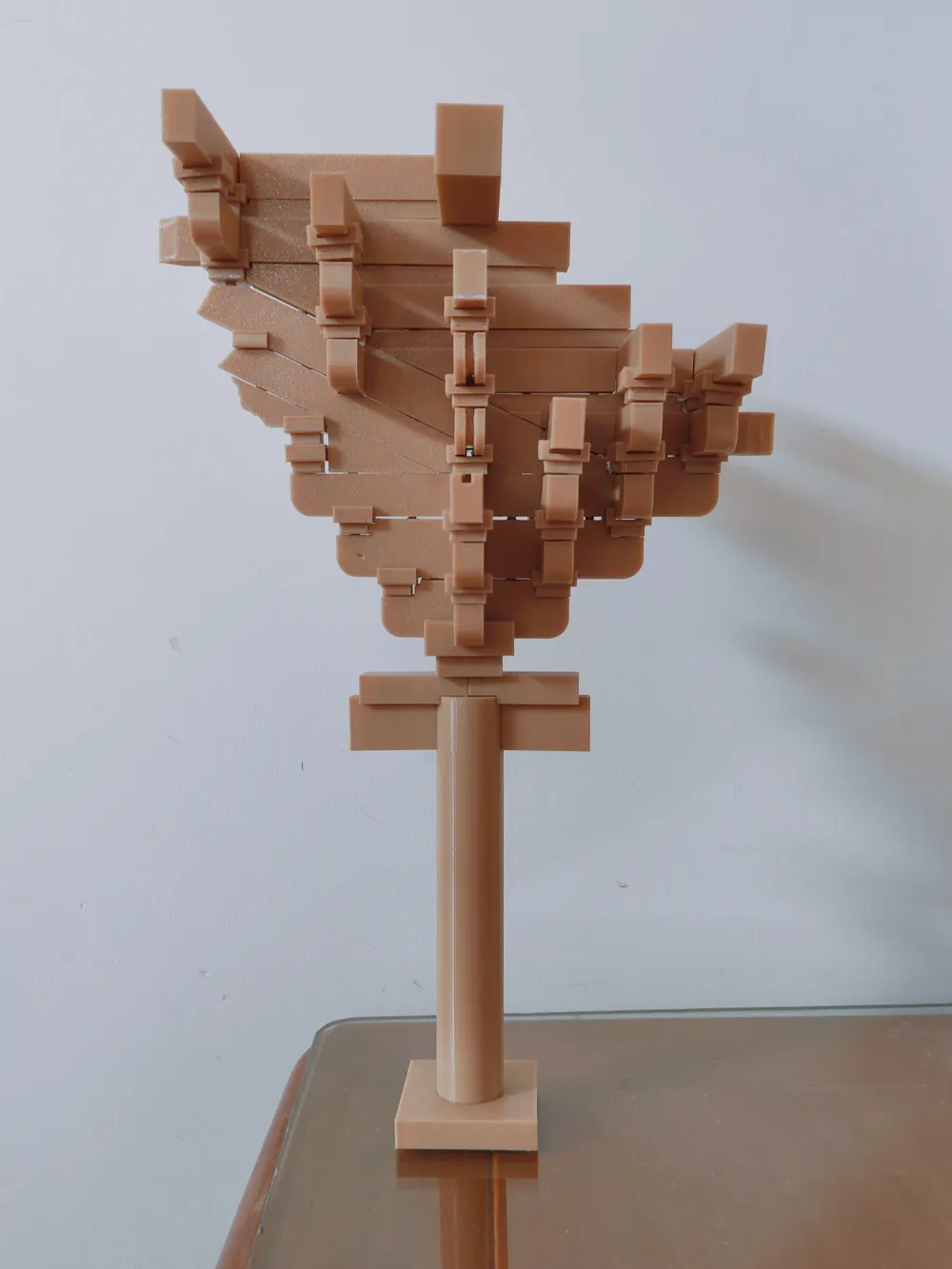
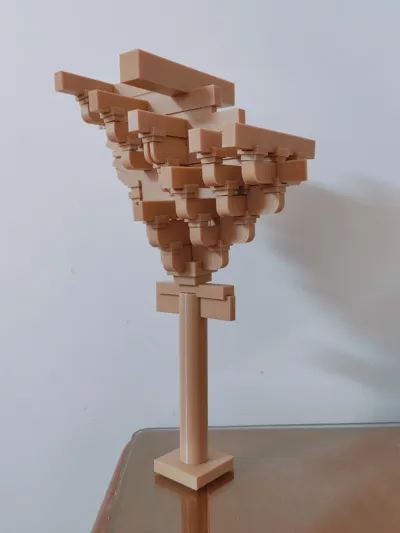
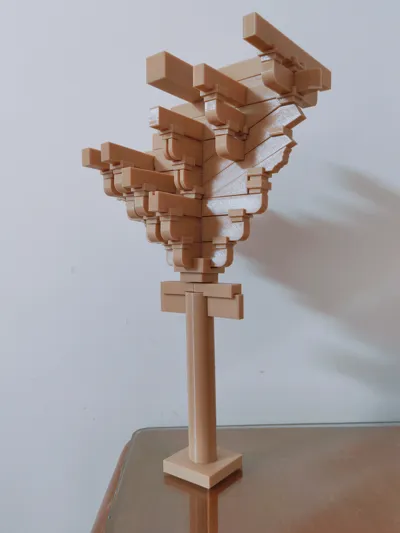
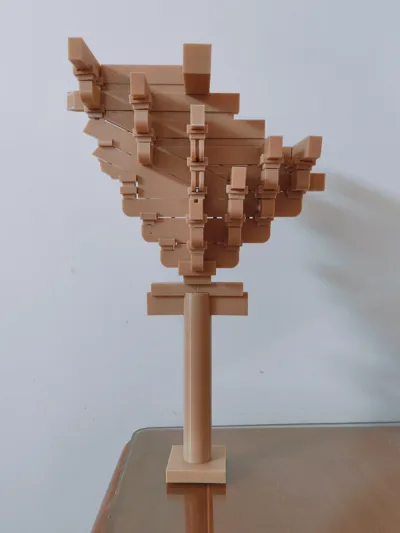
This work references the Song-style Dougong regulations in "Dougong" (authored by Pan Dehua), selecting the form of "eight-puzuo, double-layered brackets with three outward extensions, double downward-pointing arms, hidden heart beam, and Qidougong applied in the middle", which was disassembled into 85 parts. Autodesk Fusion software was used for 3D design and modeling, precisely restoring the details of mortise-and-tenon joints and layered stacking. The 3D model was then imported into 3D printing slicing software (compatible with Bambu Lab A1 printer, PETG filament) for slicing debugging, and all parts were 3D printed. Finally, it was assembled layer by layer into a complete model. This work uses digital technology to reproduce the essence of Song-style Dougong craftsmanship, aiding in ancient architecture cultural research and educational display, allowing traditional construction techniques to regain vitality in the digital age.
Inspiration
Although ancient and modern architecture differ greatly in form, both carry the brilliance of their times and civilizations. Dougong, a unique component in traditional Chinese timber-frame architecture, is located at the transition between columns and the roof. Dougong can be traced back to the early Western Zhou Dynasty, appearing on cast bronze wares. During the Han Dynasty, it became an important part of architecture with diverse forms. During the Northern and Southern Dynasties, the style of Dougong became more refined and mature, with the emergence of "Renzi Gong" (herringbone brackets) and "Ang" (downward-pointing arms). During the Tang Dynasty, the form of Dougong was basically mature, becoming an important component supporting the weight of the roof. During the Song Dynasty, the form of Dougong became more standardized; "Yingzao Fashi" (Treatise on Architectural Methods) put forward clear requirements for various types of Dougong, and specified material specifications based on Dougong height to determine overall building dimensions. In the Yuan Dynasty, Dougong gradually became smaller, and during the Ming and Qing Dynasties, Dougong no longer served a primary load-bearing function, their size decreased, emphasizing more decorative and hierarchical roles. Song-style Dougong is a landmark timber component of Song Dynasty architecture, located at the junction of beams and columns, serving both load-bearing and decorative functions, renowned for its intricate structure and distinct layers, and is one of the core representations of traditional Chinese construction techniques. Song-style Dougong is in a golden balance period of function and form, not only continuing the structural practicality of the Tang Dynasty but also achieving standardization through "Yingzao Fashi", and not yet becoming as decorative as in the Ming and Qing Dynasties, making it a "standard sample" for studying Chinese ancient Dougong and a key research object in the field of ancient architecture. This project aims to use 3D design modeling and 3D printing technology to reproduce the essence of Song-style Dougong craftsmanship, aiding in ancient architecture cultural research and educational display, allowing traditional construction techniques to flourish anew in the digital age.
Production Process
This project references the Song-style Dougong regulations in the book "Dougong" (authored by Pan Dehua), selecting the complex form of "eight-puzuo, double-layered brackets with three outward extensions, double downward-pointing arms, hidden heart beam, and Qidougong applied in the middle", disassembling the Dougong into 85 parts. Autodesk Fusion software was used to 3D design and model all parts, precisely restoring the details of their mortise-and-tenon joints and layered stacking. The 3D model was then imported into 3D printing slicing software for debugging and printing the part models. Finally, it was assembled layer by layer according to reference images to form the complete final model.
References
[1] Pan Dehua. Dougong [M]. Jiangsu: Southeast University Press, 2004
Documentation (2)
License

You shall not share, sub-license, sell, rent, host, transfer, or distribute in any way the digital or 3D printed versions of this object, nor any other derivative work of this object in its digital or physical format (including - but not limited to - remixes of this object, and hosting on other digital platforms). The objects may not be used without permission in any way whatsoever in which you charge money, or collect fees.


Comment & Rating (0)