
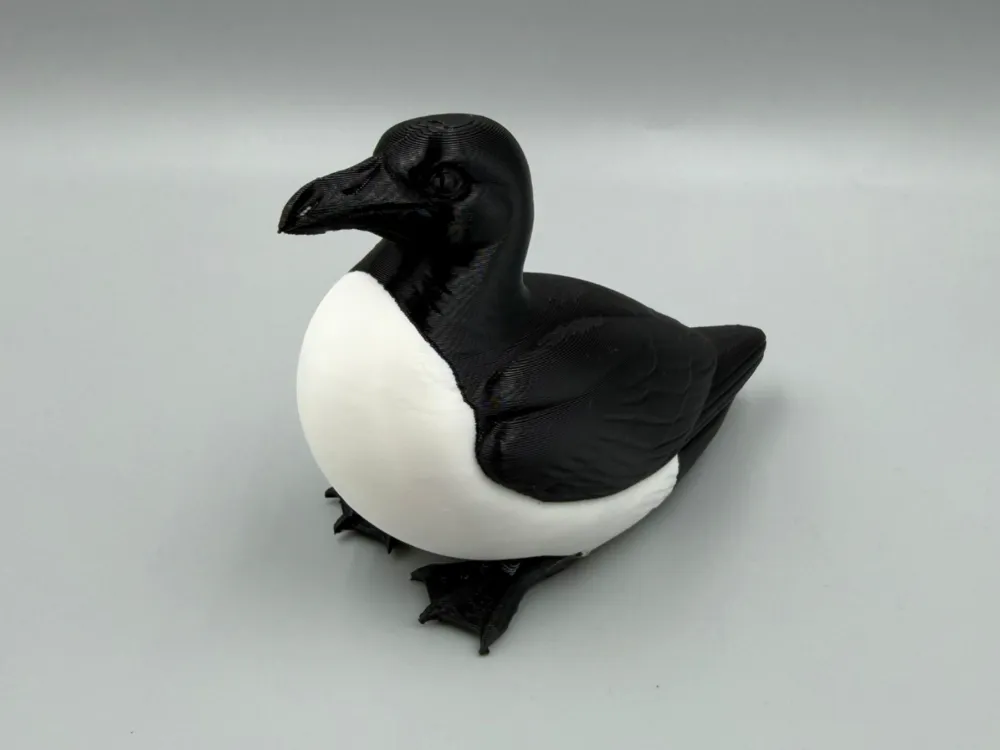
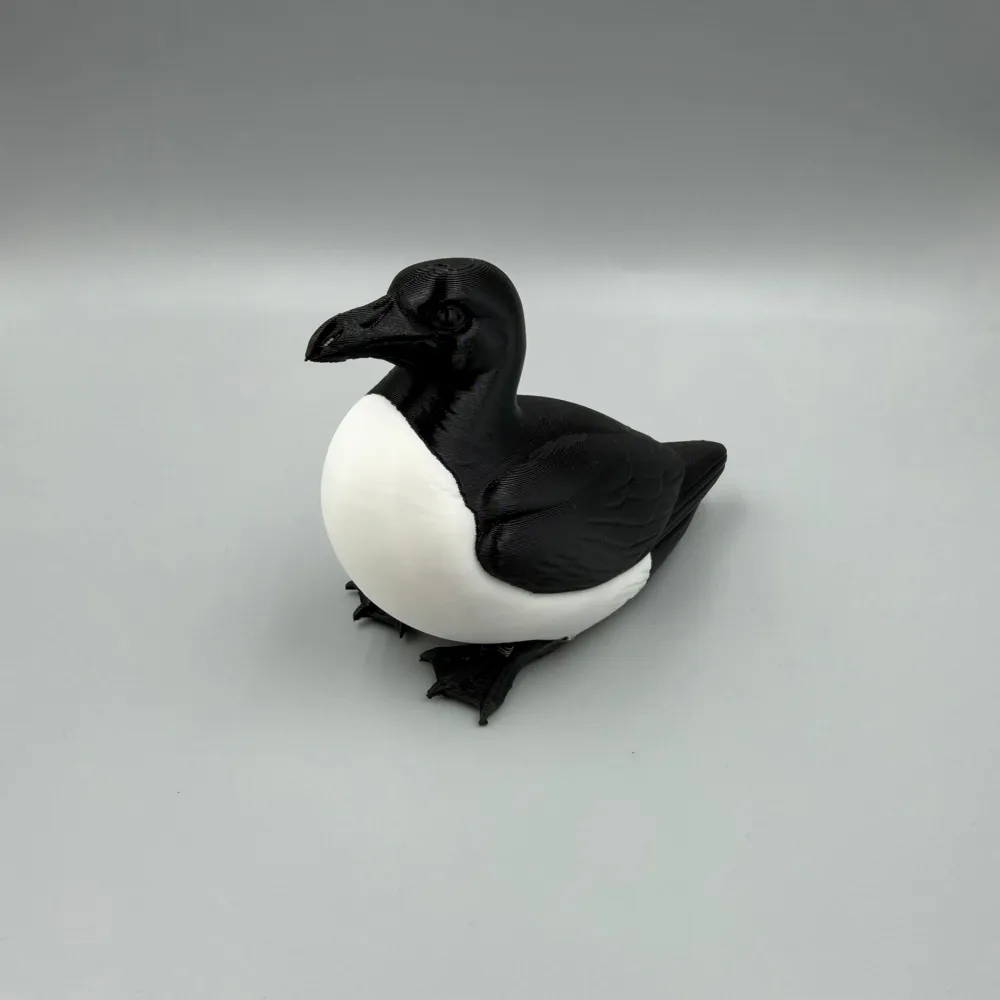
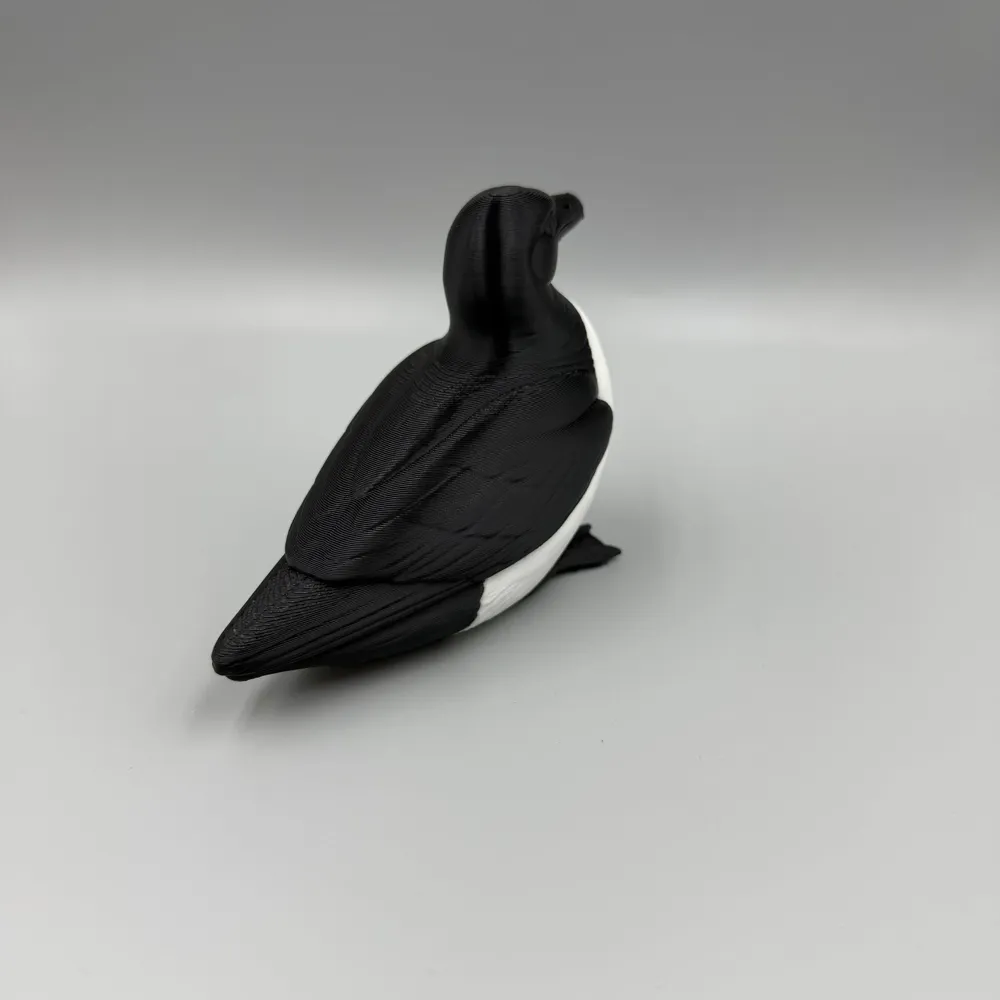
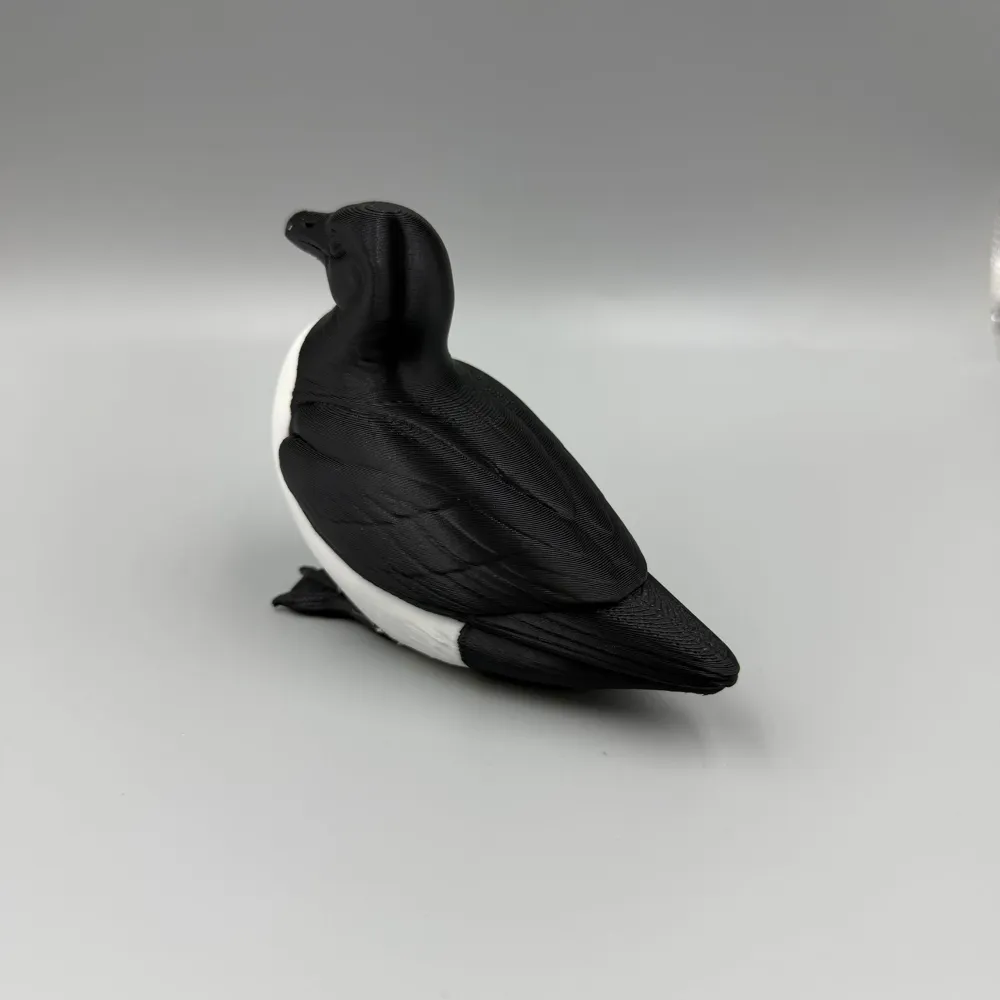
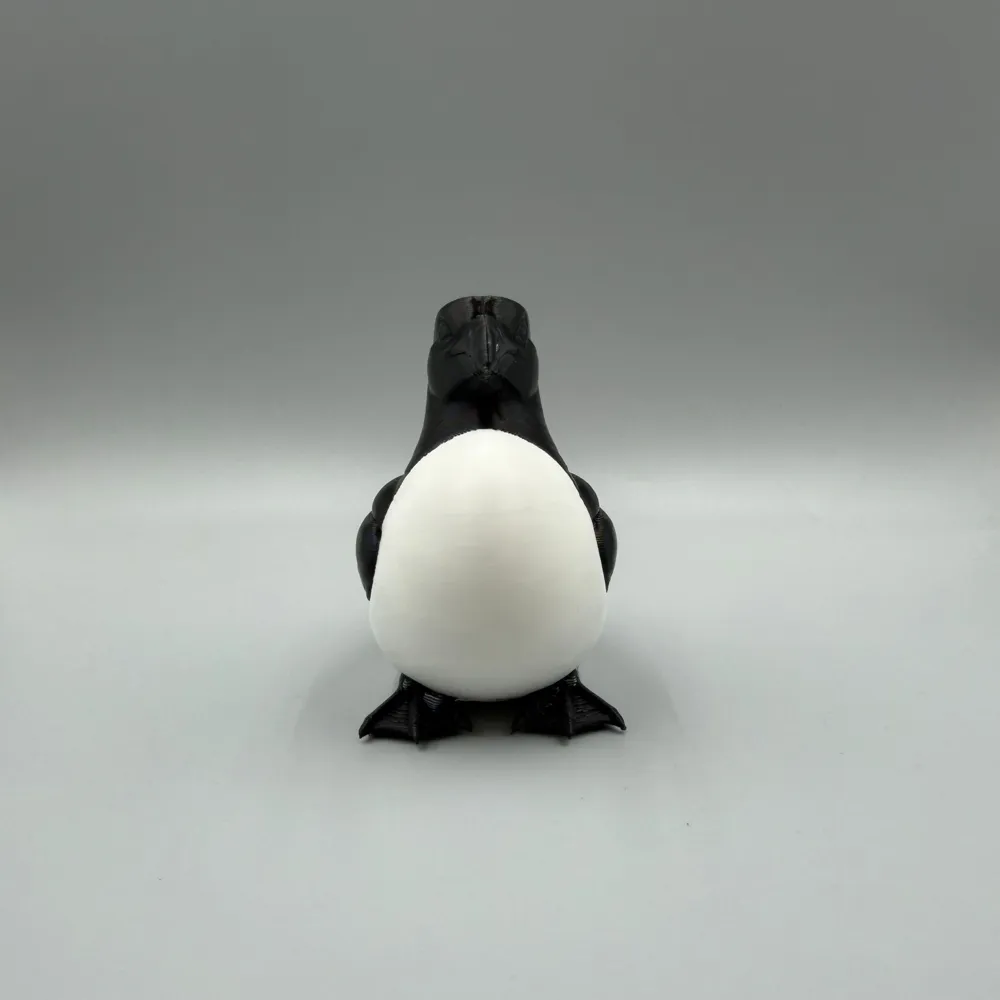
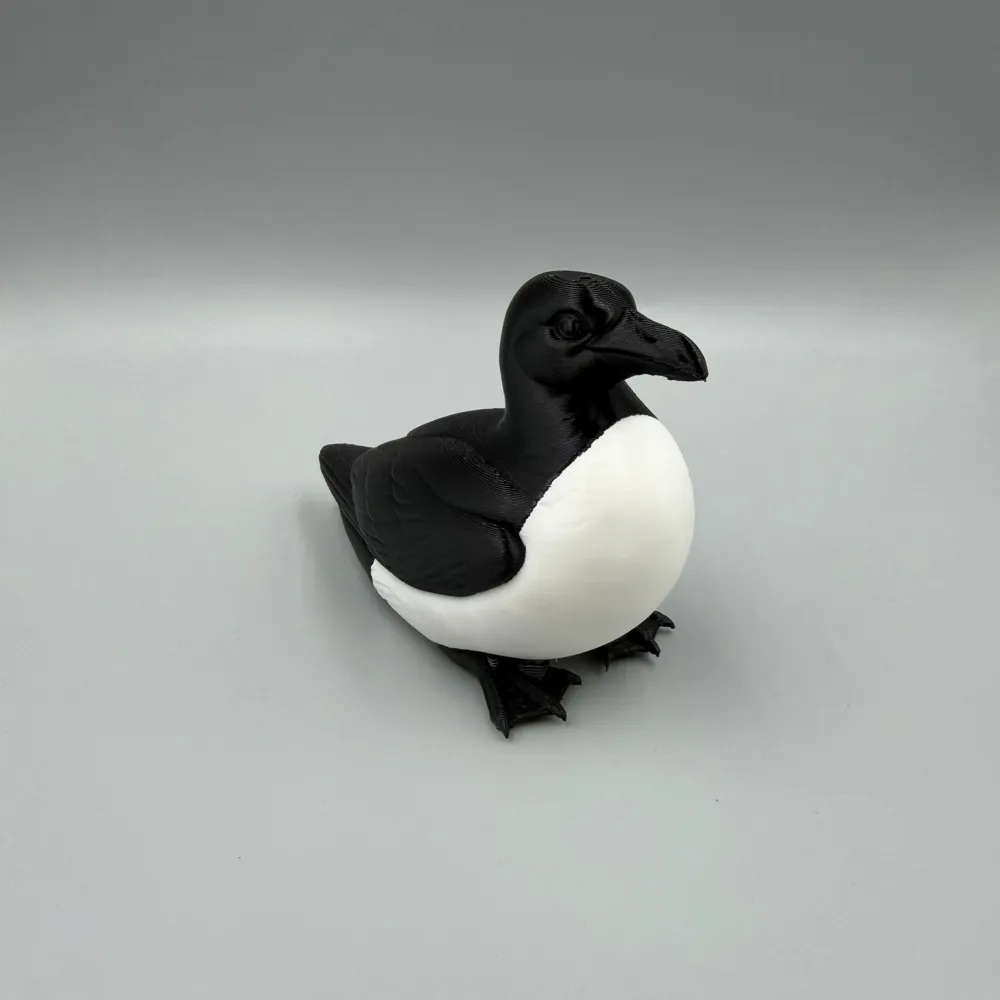
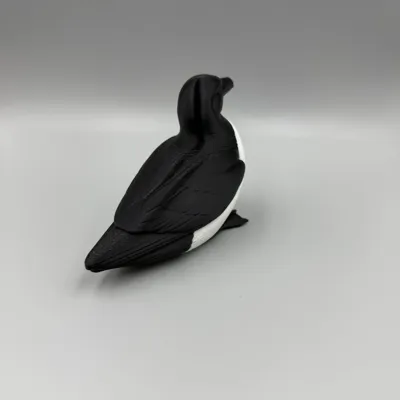
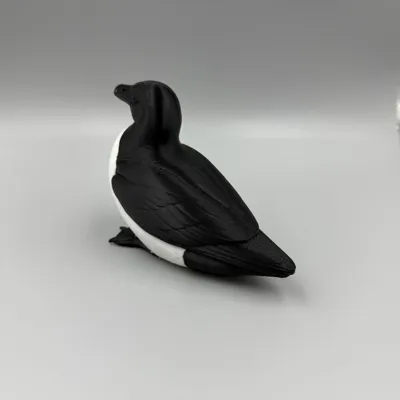
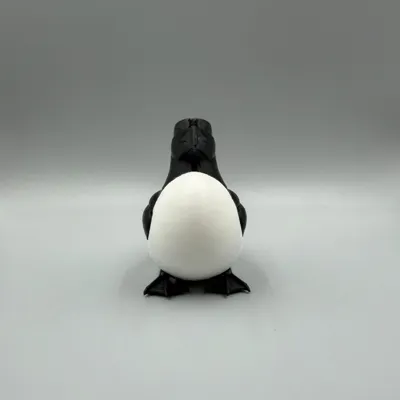
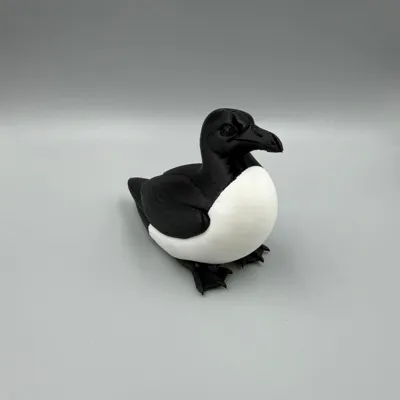
Midnight Coastal Auk
Print Profile(1)
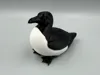



Description
Midnight Coastal Auk 🌙🌊🖤
Along the wind-carved cliffs where the sea breathes in silver and shadow, the Midnight Coastal Auk keeps its quiet vigil. 🌊✨ Perched above restless tides, it watches the horizon long after the last light has faded, when the world softens into shades of ink and pearl.
Its dark feathers seem woven from the very fabric of night, absorbing starlight without reflection. Only its pale chest glows softly, like a distant lantern guiding lost sailors home. 🌌🤍 In the hush between waves, it listens. Not merely to water, but to memory. To old currents that have circled the earth for centuries. To the stories carried in foam and wind.
Storms do not frighten it. The auk stands firm when thunder rolls and waves crash against stone. ⚡🌊 It does not flee. It observes. It understands that even the fiercest tempest must one day calm, and that the sea, like the heart, is always returning to stillness.
Fishermen whisper that when the moon is high and the coast is silent, you may glimpse its silhouette against the silver surf. A quiet guardian of midnight shores. A watcher of tides unseen. 🌙🖤
On your desk or altar, this small sentinel carries that same energy. Calm. Steady. Watchful. A reminder that even in darkness, there is guidance. Even in silence, there is strength.
True story of Great Auk (Pinguinus impennis) is extinct
The Auk was a seabird shaped by wind and cold water, built like a polished black stone with a white chest flashing against grey Atlantic skies. The most famous of its kind, the Great Auk, once nested along the rugged coasts of the North Atlantic, from Canada to Iceland and beyond.
Unlike most seabirds, it could not fly. Its wings were short, more paddle than feather, perfectly engineered for underwater pursuit. In the sea it moved like a torpedo, chasing fish beneath the surface with startling agility. On land, however, it stood upright and steady, almost dignified, gathering in dense colonies on rocky islands.
The Great Auk grew to about 75 to 85 centimeters tall, with a heavy black beak marked by white grooves. It laid a single large egg each season, often on bare rock, trusting the isolation of its nesting grounds to keep it safe.
But isolation proved fragile. By the 18th and 19th centuries, humans hunted the bird for meat, feathers, oil, and even as collectors’ trophies. With no fear of people and no ability to escape into the air, the species declined rapidly. The last known pair was killed in 1844 on Eldey Island, Iceland.
Today, the Auk stands as a symbol of extinction caused by overexploitation. Its story reminds us that even abundant wildlife can vanish when protection comes too late. Silent now, it lingers in museum halls and old illustrations, a seabird that once ruled the northern waves.
Membership
Behold, dear mortal, your tiny mischievous overlord has arrived. If my cute little creations made you grin or feel unexpected sparkles in your heart, consider supporting me. Your membership feeds my mini villain squad with the magic they need to become sneakier, brighter, and even more adorably chaotic. I will keep releasing playful troublemakers for you. Thank you for empowering my kawaii mischief takeover.
License

You shall not share, sub-license, sell, rent, host, transfer, or distribute in any way the digital or 3D printed versions of this object, nor any other derivative work of this object in its digital or physical format (including - but not limited to - remixes of this object, and hosting on other digital platforms). The objects may not be used without permission in any way whatsoever in which you charge money, or collect fees.


Comment & Rating (0)