
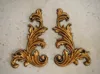
Rococo style gilt bronze foliate furniture mounts
Print Profile(1)
Bill of Materials

- Metallic Water Colors x 1: Bronze, Copper, Old Gold, Light Gold
Description
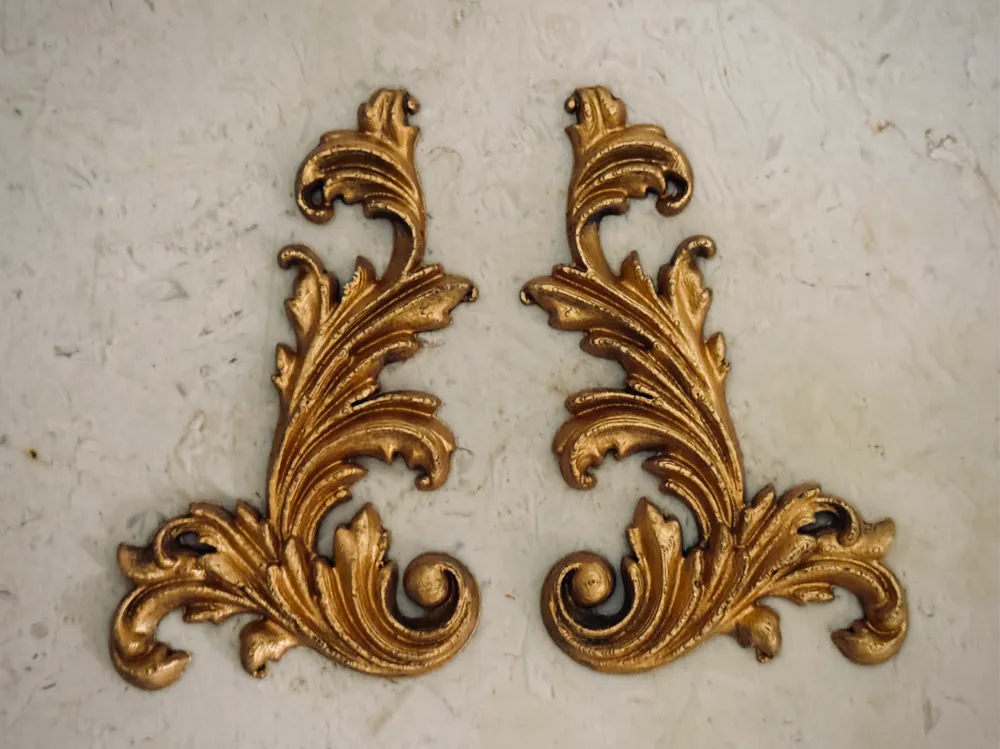
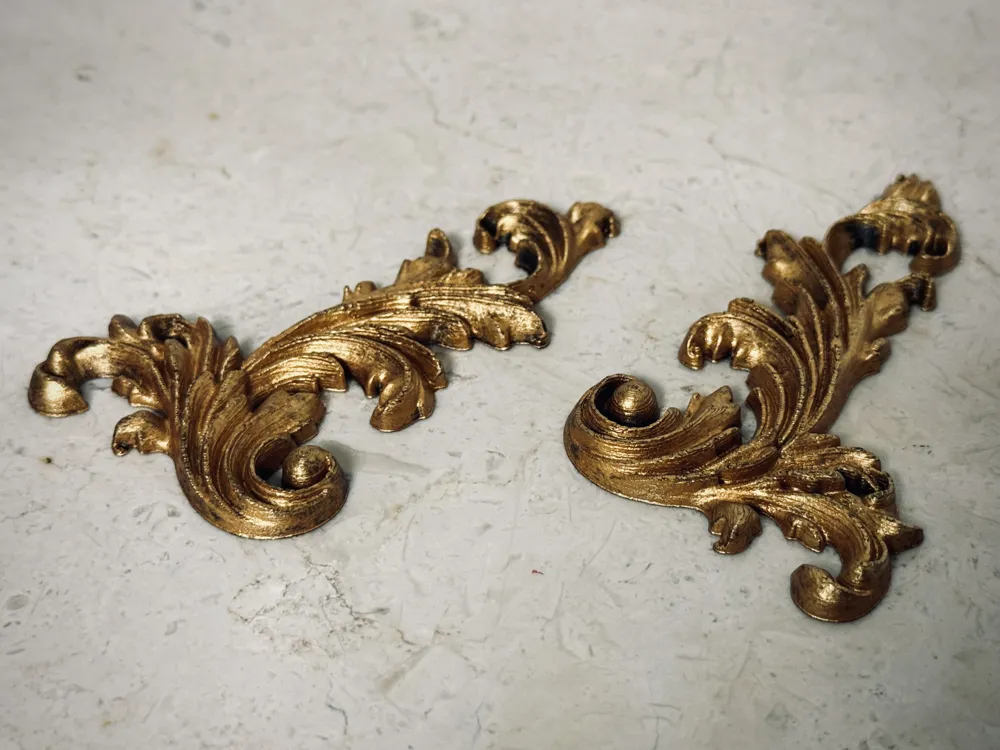
A PAIR OF FRENCH ROCOCO STYLE GILT-BRONZE FOLIATE FURNITURE MOUNTS OR APPLIQUÉS
CIRCA LATE 19TH / EARLY 20TH CENTURY
Each finely cast and chased in the exuberant Rococo taste (rocaille), featuring dynamic scrolling acanthus leaves, C-scrolls, and detailed floral motifs. The bronze doré exhibits a rich, warm gilded finish with a contrast between highly burnished areas and a matte ground, effectively highlighting the sculptural depth of the pieces.
These versatile items were commonly utilized during the Napoleon III period as high-quality decorative furniture mounts, such as corner chutes or apron appliques, or integrated into fine mirror or wall decoration.
Style: Rococo Revival (Louis XV style)
Origin: France
Material: Gilt Bronze
Dimensions: 75 x 46 x 5 mm
Boost Me (for free)
* To achieve a convincing gilt-bronze finish through dry brushing with metallic watercolors, you need a range of warm, brownish/gold tones to mimic the aged bronze underneath and the 24-karat gold surface: Bronze (Base Tone), Copper (Undertone/Warmth), Old Gold/Antique Gold (Main Color), Light Gold/Pale Gold (Highlight).
The Legacy of Bronze Doré in the French Interior
These elegant mounts are representative of the enduring appeal of gilt-bronze (bronze doré) in the French decorative arts, a tradition that flourished from the late 17th century through to the early 20th century. While serving a functional purpose—protecting vulnerable edges, corners (chutes), and keyholes (escutcheons) of fine case furniture—these pieces primarily acted as vital decorative elements that emphasized the contours of the furniture they adorned.
The artistry of French bronzes relies on a sophisticated collaboration between the fondeur (founder) and the ciseleur-doreur (chaser-gilder). The current mounts exhibit characteristics of high-quality chasing, where the surface has been meticulously tooled to create a vibrant contrast between highly burnished, light-reflective areas and textured, matte surfaces. This technique lends the objects great vitality and sculptural depth, a hallmark of exquisite bronze doré production.
Stylistically, these mounts draw heavily from the Rococo period (known in France as rocaille), which favored asymmetry, fluid lines, and naturalistic motifs such as scrolling acanthus leaves, flowers, and shells over the rigid symmetry of the preceding Louis XIV era. The 19th-century Rococo Revival championed this opulent and romantic aesthetic, incorporating such elements into a wide variety of interiors and furniture. These mounts, with their dynamic, unrestrained scrolling forms, perfectly capture the whimsical elegance and luxurious taste of the Louis XV style that became a significant part of 19th-century romanticism.
License

You shall not share, sub-license, sell, rent, host, transfer, or distribute in any way the digital or 3D printed versions of this object, nor any other derivative work of this object in its digital or physical format (including - but not limited to - remixes of this object, and hosting on other digital platforms). The objects may not be used without permission in any way whatsoever in which you charge money, or collect fees.


Comment & Rating (3)