
NICE Whistle 2
Print Profile(1)
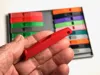
Description
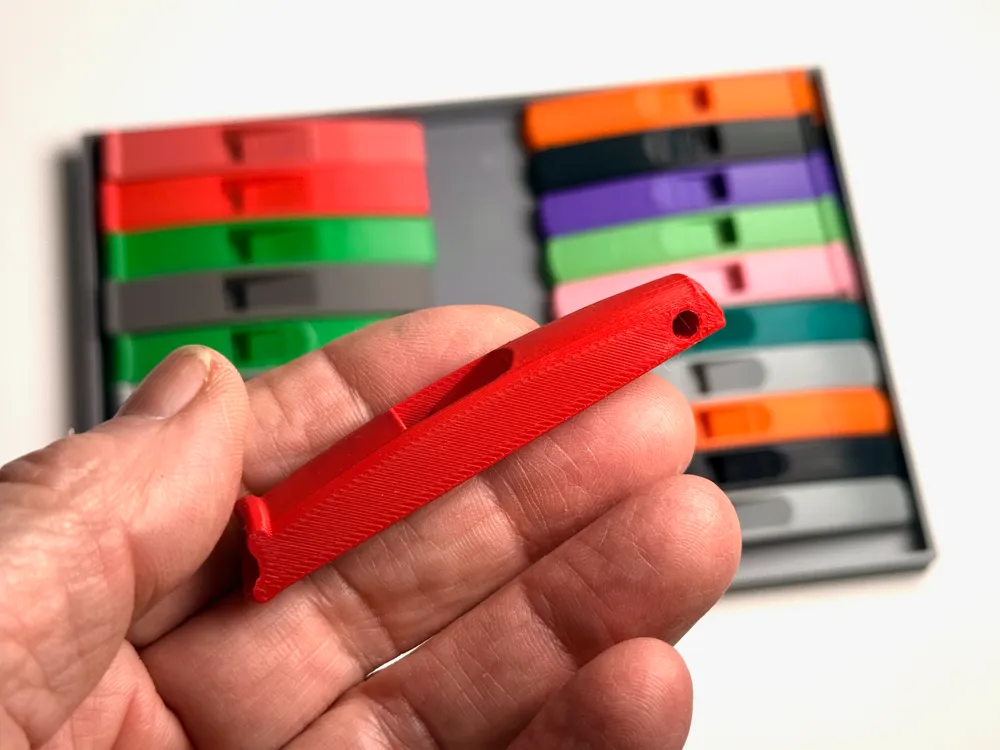
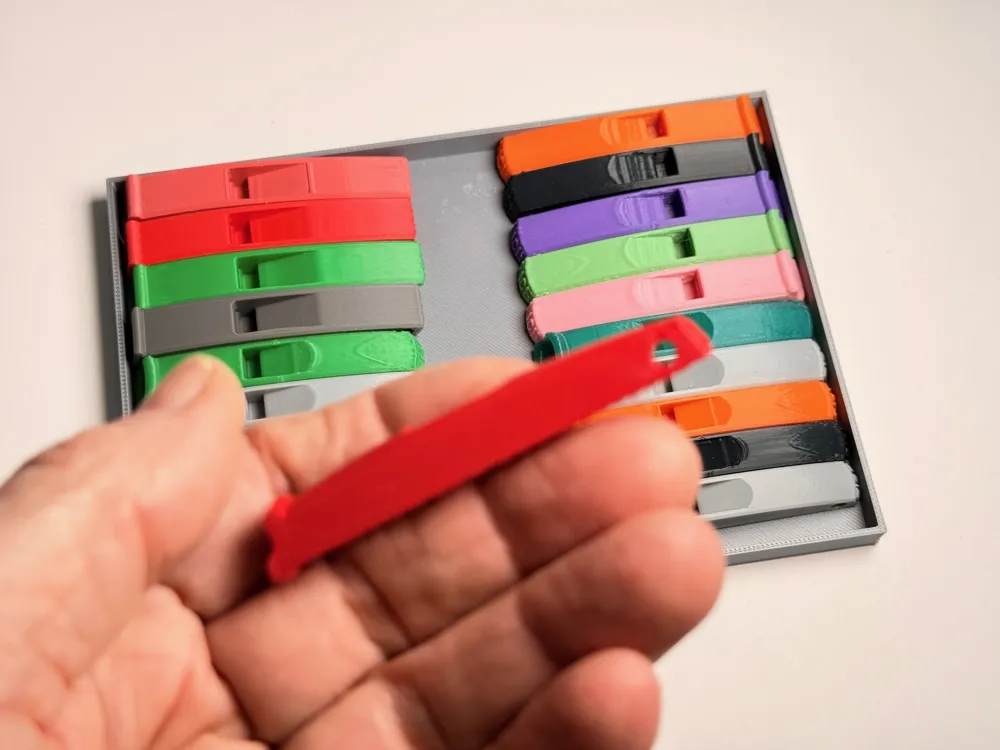
An all new follow-up to the original FICE Whistle
FICE Whistle 2
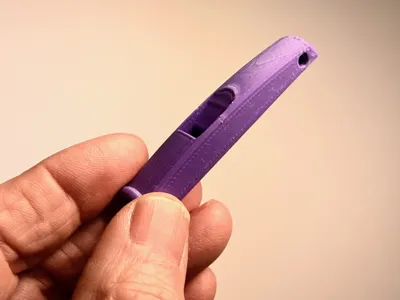
This is not an updated Whistle 1 design but a whole new whistle. When developing, testing and uploading revisions of FiCE Whistle 1, I began to design an entirely new whistle. The result is FICE Whistle 2.
What’s different
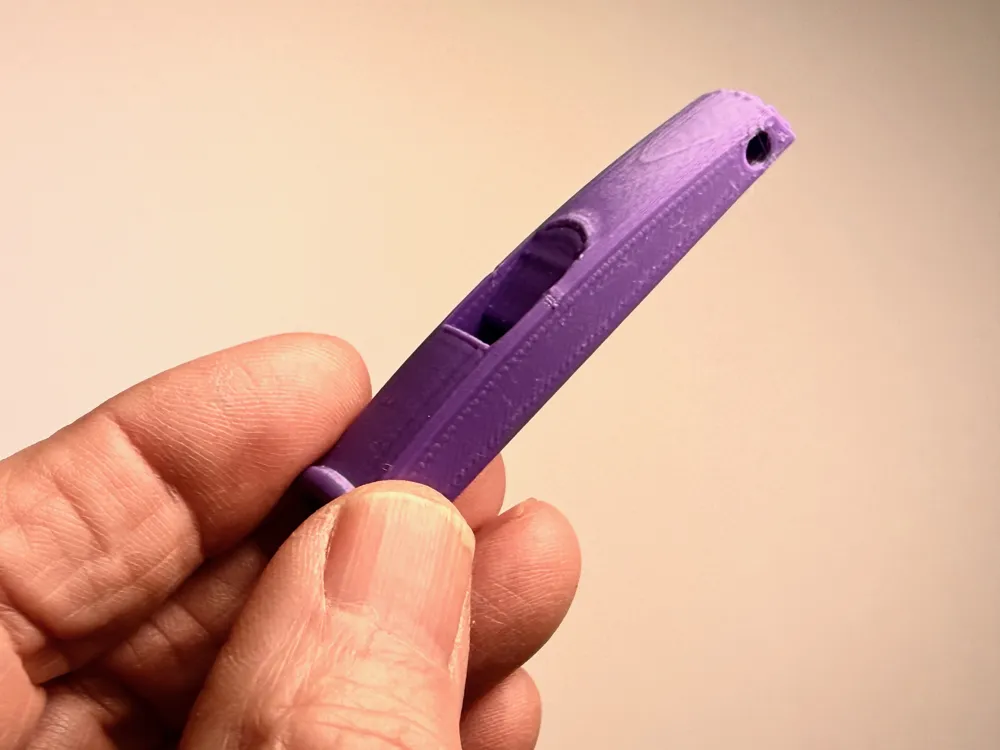
Everything. I wanted a much better whistle so I studied up on the physics of whistles and similar musical instruments. Armed with that information Whistle 2 has much better air flow, takes less pressure for a full sound, a new sound chamber, a better window, a new fipple, and Improved turbulence. The result is a whistle that has a richer, fuller, more resonant sound and is better tuned. Plus, it even prints better and faster.
Like the original, Whistle 2 can be customized for local organizations.
Why Whistles
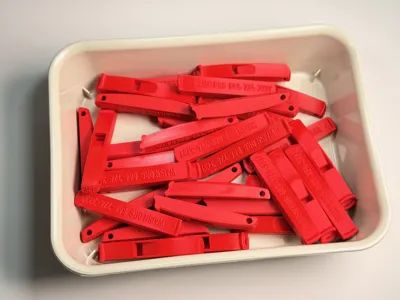
This whistle is designed to warn a neighborhood of the presence of ICE agents. As a 3D printer owner you can help by making lots of whistles. Help local organizations that need whistles to hand out vulnerable community members.
These whistles also make excellent protest whistles. Bring whistles to local events and hand them out to fellow protesters.
I'm a designer and been using 3D printers for design development and prototyping. This is a new single tone whistle that's distinctive in sound, intense, easy to print successfully. It’s designed to be used a warning tool.
Soon, I will add two new dual tone whistles for protest events and general needs
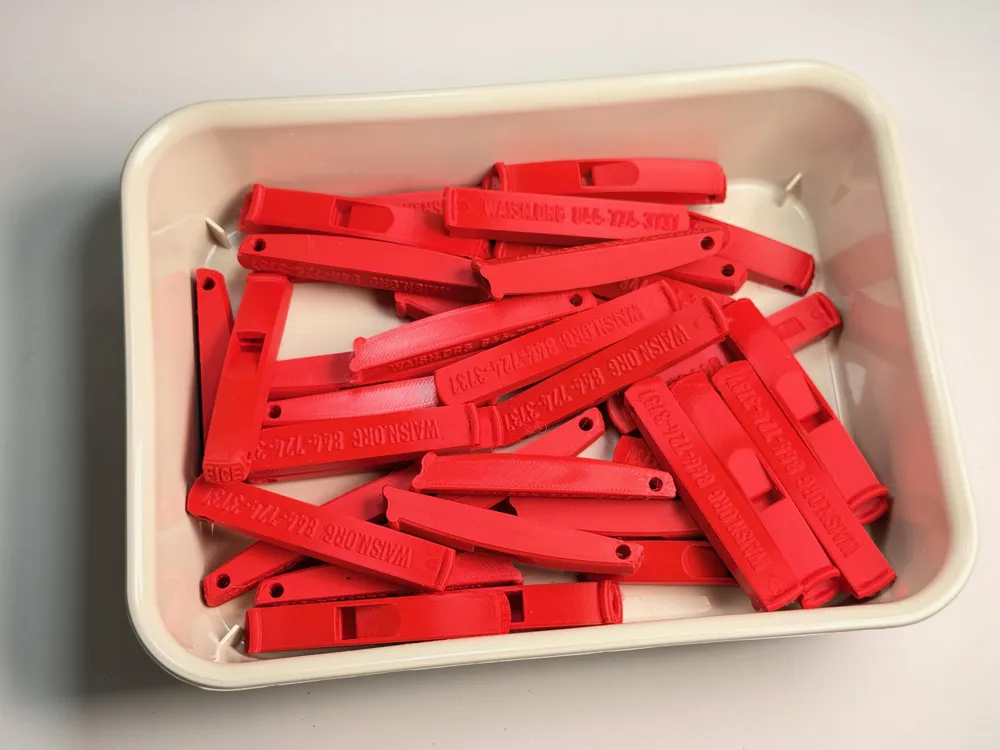
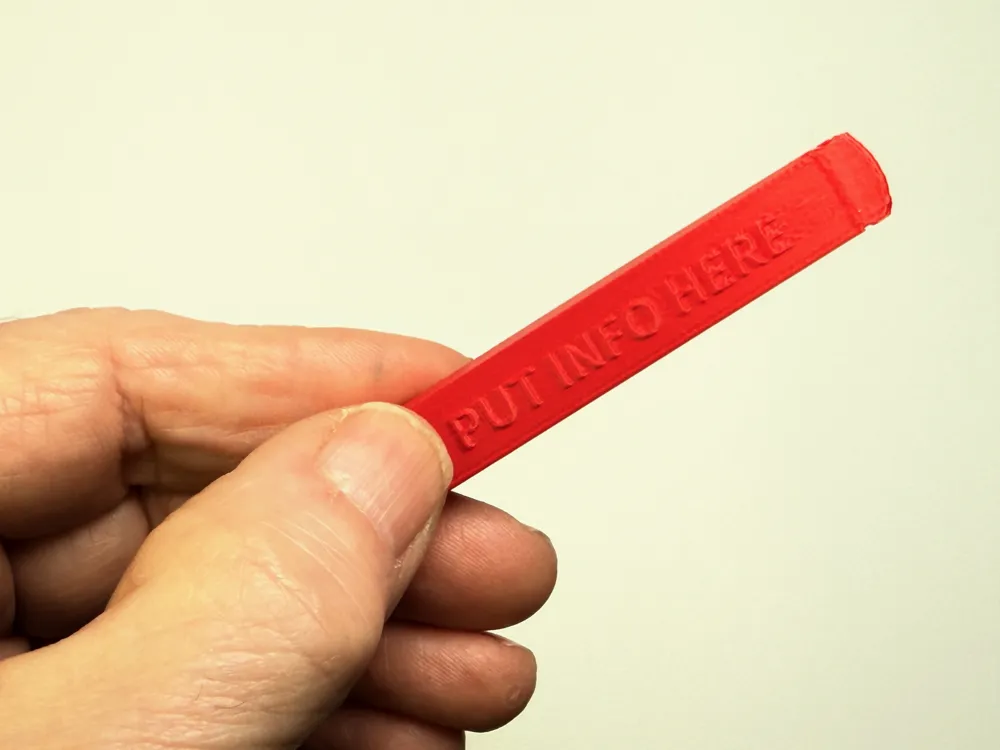
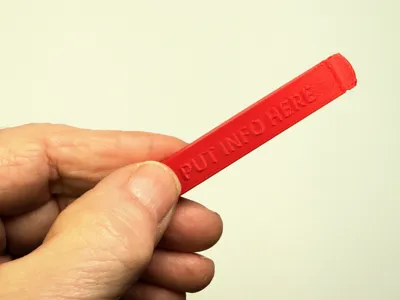
What makes this whistle different? The design goals: The sound needs to be full and distinctive. The exterior is customizable for local organizations to add contact information in readable form. To that end, add local contact info/phone number, etc on the side as an emboss (pushing out) using the add text tools in your Prusa/Bambu/Orca slicer.
FICE whistles are printed on the side to get best print quality on the critical fipple, sound slot, and sound chamber. Printing on the side also gives you more readable text than if printed on top or bottom print surfaces. Look at the included Washington version to see what I mean. Note that the information actually is on the bottom of the completed print.
The whistle is tuned to C# (depending on how hard you blow of course., The tone is distinctive and deliberately a little uncomfortable. Because of the new sound chamber, window and fipple designs, the sound is full for a small whistle and very intense. Warning: it is 118 - 120db so be careful with your ears. Unlike many 3D printed whistles, this one works under both low and high pressure blowing. Finally, if you follow recommended print settings, it should print well on just about any of 3D printer. Over 40 prototypes and lots of testing
The whistle is small with a horizontal lanyard hole so it rests flat when worn. Printing takes 4.5 grams of filament and around 18-20 minutes to print. Earlier designs printed quicker but are not as rugged.
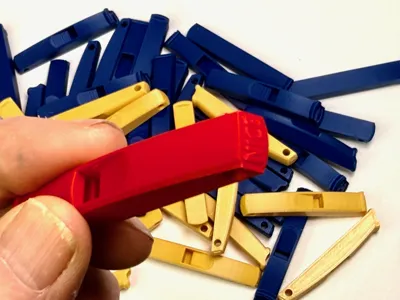
There are three model versions of this single note whistle.
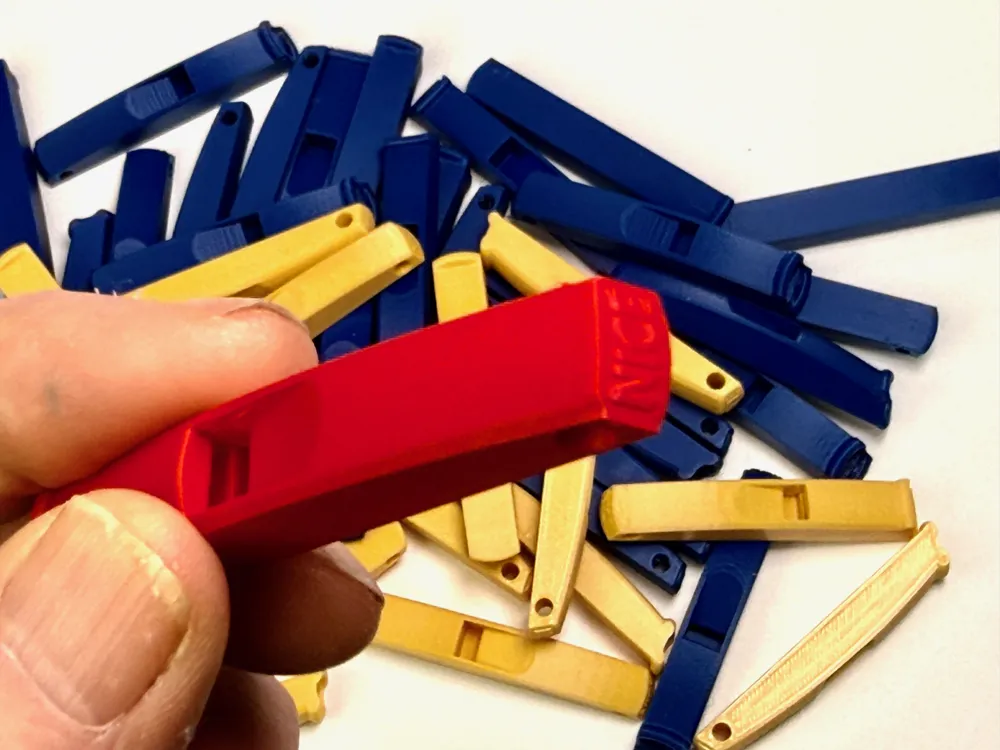
• FICE whistle that has FICE printed on the end. This is the one you can customize for your local organization.
• Washington State version of the FICE whistle with website and phone number in place for the Washington Immigrant Support Network (WAISN.org)
• A blank version if you don't like FICE or just want a nice whistle.
Finally, this is a very small 3D printed item often printed in large quantities. Printing models this small requires different techniques. Please read recommended print settings.
Printing
Printer's I used for testing: Prusa XL, Prusa Mk4s, Prusa Mini, Bambu X1C, Bambu Mini
- Rafts: No
- Supports: No
- Resolution: .15 or .16 depending on your slicer
- Infill: 15-20%
Notes:
As a designer, I’ve created a lot of models for 3D printing that are very small. I’ve printed around 20,000 so I’ve have a few of recommendations about printing small items. . Successfully printing small things in quantiles require different methods, settings, and techniques than average medium to large 3D prints.
Settings
Though the whistle models are tiny, but they have a lot of mass for their size. Much of that mass is vertical. That means they can easily get knocked off the plate. So, I recommend the following.
• Use smooth printing plates if possible, not textured plates. Textured plates are fine when printing small things in PETG. Not so much when printing small things in PLA. Smooth plates are often the best solution when bed adhesion issues are likely.
• When printing items of this small on a smooth plate I always use a thin layer of some sort of plate fixative and refresh it every few prints. Various dedicated 3D printing products work fine but so does a thin layer of glue stick. Serious and professional 3D printer users know this trick and always use a fixative as insurance when printing small items.
• Slow things down. Set print speeds slower. I slow down outer walls and particularly the first layer. I run first layers at 30mm. Small contact area models really benefit from a perfect first layer.
PLA
The model was designed to be printed with inexpensive PLA filaments. The idea is to use up left over spools to print lots of whistles with whatever filament you have around. That way you can donate lots of whistles. Best to stick to regular PLA and not use filaments with added materials. IE carbon fiber, glitter, etc. Also avoid silk as these filaments are weak. Because of the details it's a good idea to dry your filament before printing. Wispy strings inside the whistle cause whistles to not work and other problems. If using PETG that’s more prone to whispy stringing drying before printing is even more important.
The included 3MF files include recommended print settings. Note that Prusa, Orca, Bambu and Cura slicers can all open 3MF files.
Related Models
FICE Whistle 1
https://makerworld.com/en/models/2040050-fice-whistle#profileId-2200878
NO KINGS Collection
https://makerworld.com/en/models/1572553-no-kings-collection#profileId-1654139
License



Comment & Rating (3)